The verified selection
Find the tour that fits your trip
252 offers that take a traveler to the Giza Plateau — each with price, duration, and the number of reviews behind its rating. Choose what is already decided for you.
 Best reviewed
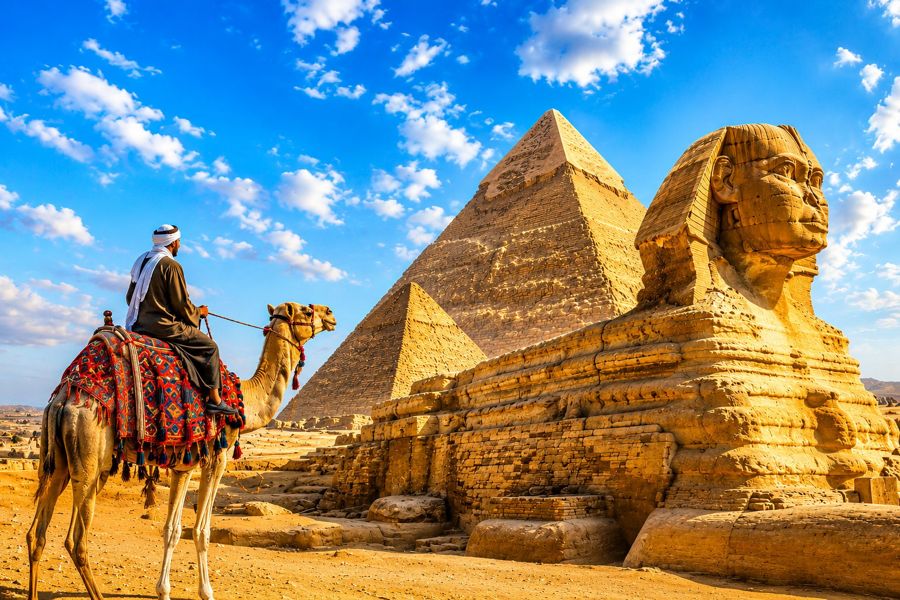
Cairo: Private Tour to the Pyramids and the Great Sphinx with Camel Ride
★ 4,97.579·4–8 hfrom 51 €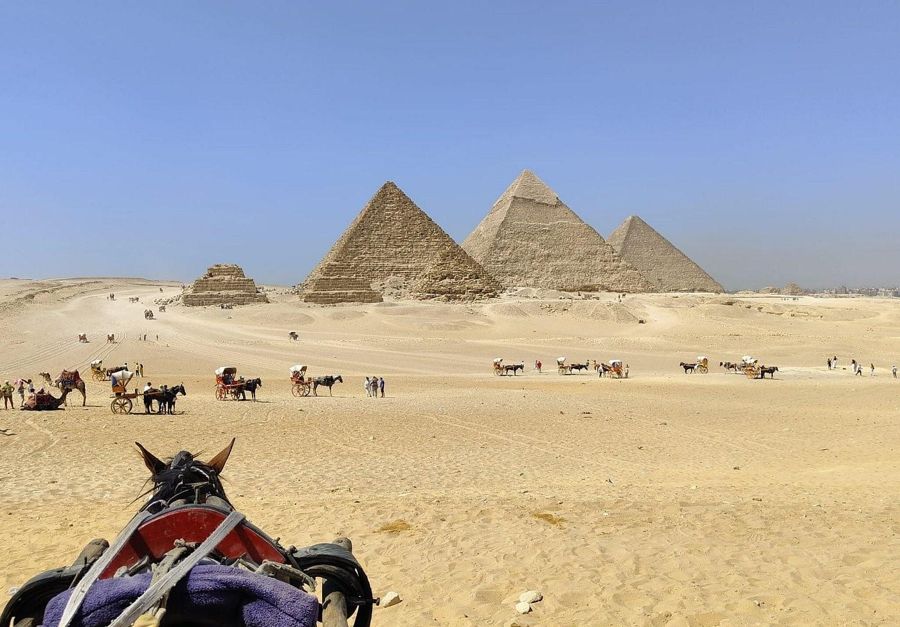
Hurghada: Day Trip to Cairo by Flight, Pyramids, Sphinx and Museum
★ 4,93.361·16–17 hfrom 239 €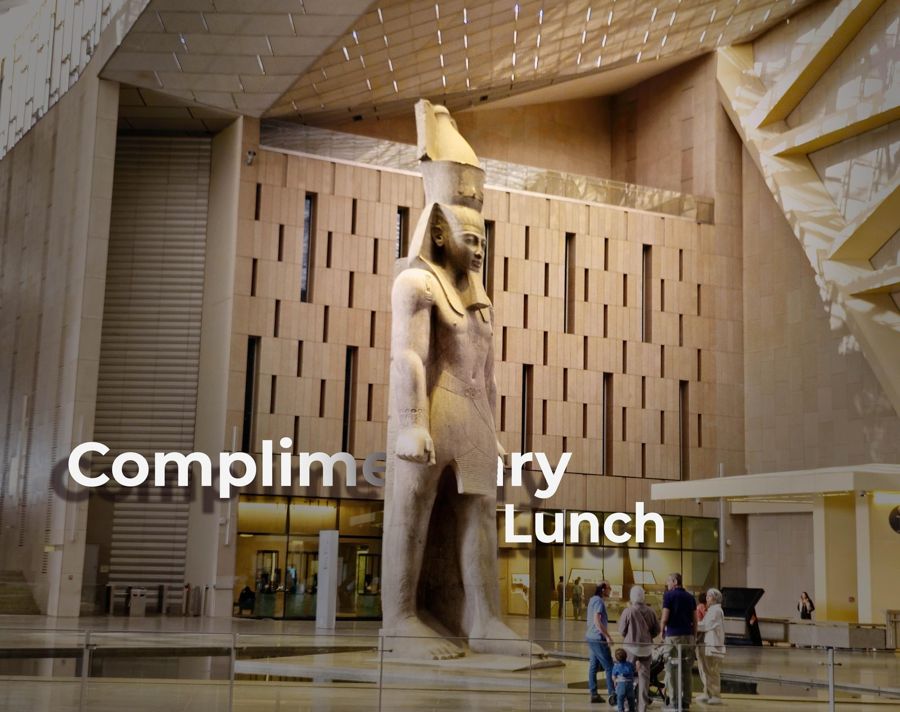
Cairo: Grand Egyptian Museum, Pyramids, Sphinx Tour and Lunch
★ 4,74.382·7–8 hfrom 83 €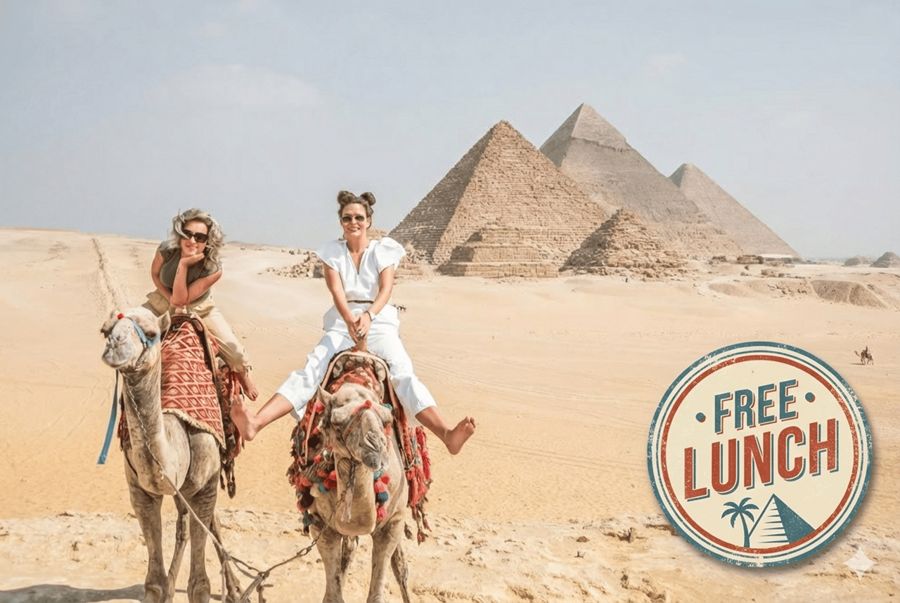
Cairo: City Tour with Female Guide to Pyramids, Sphinx and Museum
★ 4,81.697·8 hfrom 52 €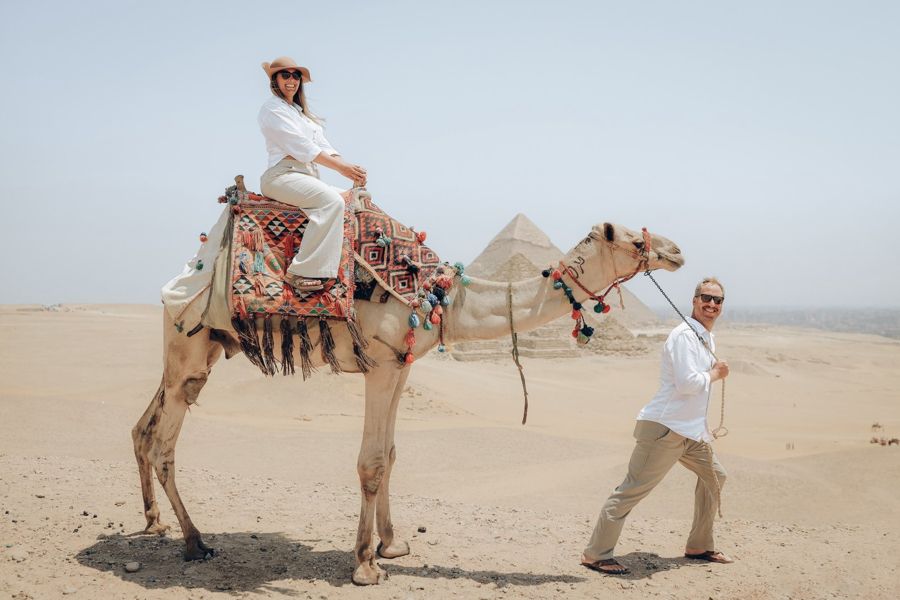
From Cairo: Tour to the Pyramids of Giza, Sphinx, Saqqara, and Memphis
★ 4,73.587·8 hfrom 62 €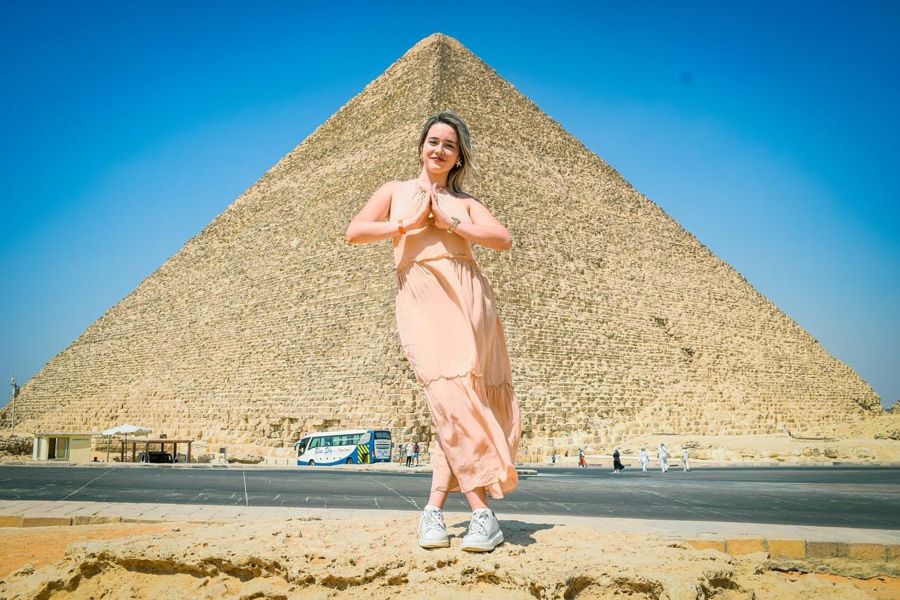
Hurghada to Cairo: Pyramids and Museum for First-Time Visitors
★ 4,81.255·1 dfrom 80 €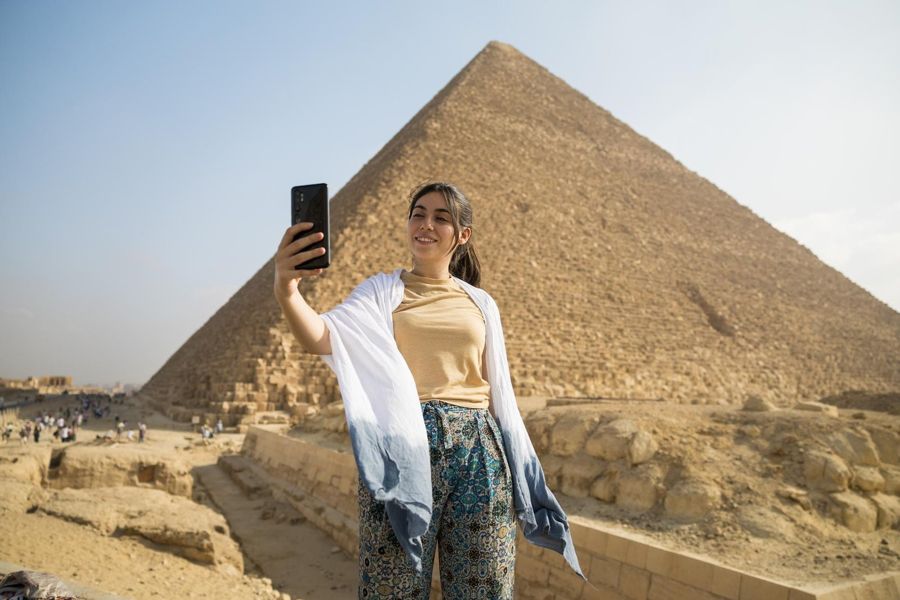
From Hurghada: Day Trip to the Highlights of Cairo and Giza
★ 4,67.111·15–20 hfrom 65 €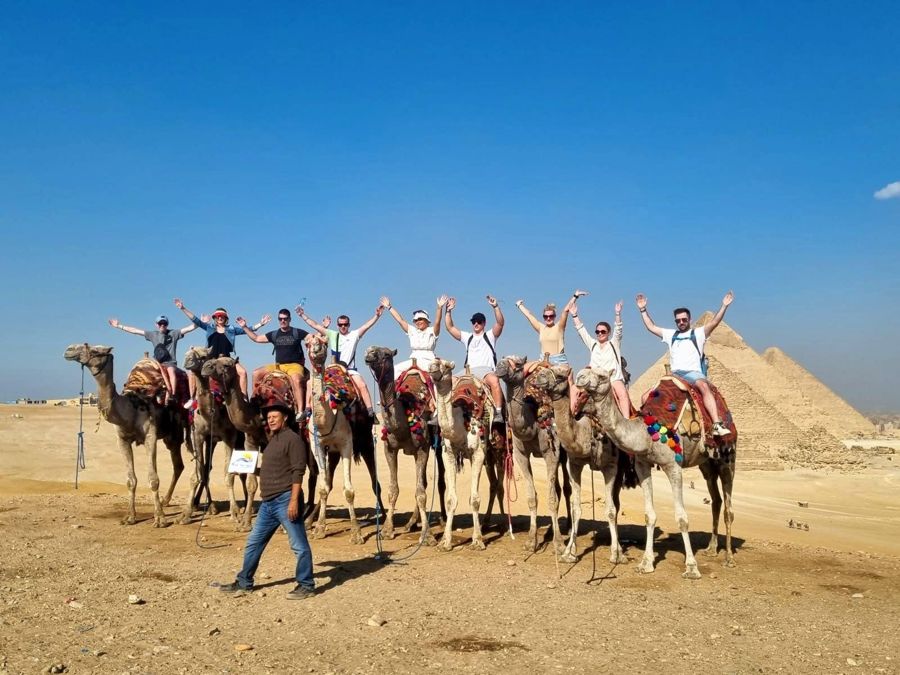
Sharm El Sheikh: Day Trip to Cairo, Pyramids, Sphinx and Giza Museum by Bus
★ 4,81.050·1 dfrom 81 €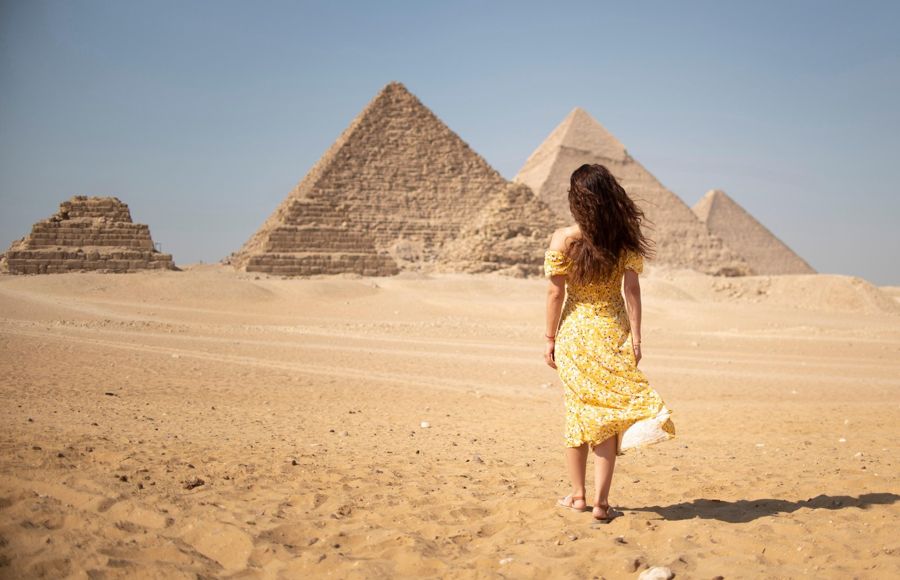
From Cairo: Half-Day Tour to the Pyramids of Giza and the Sphinx
★ 4,63.758·5–6 hfrom 35 €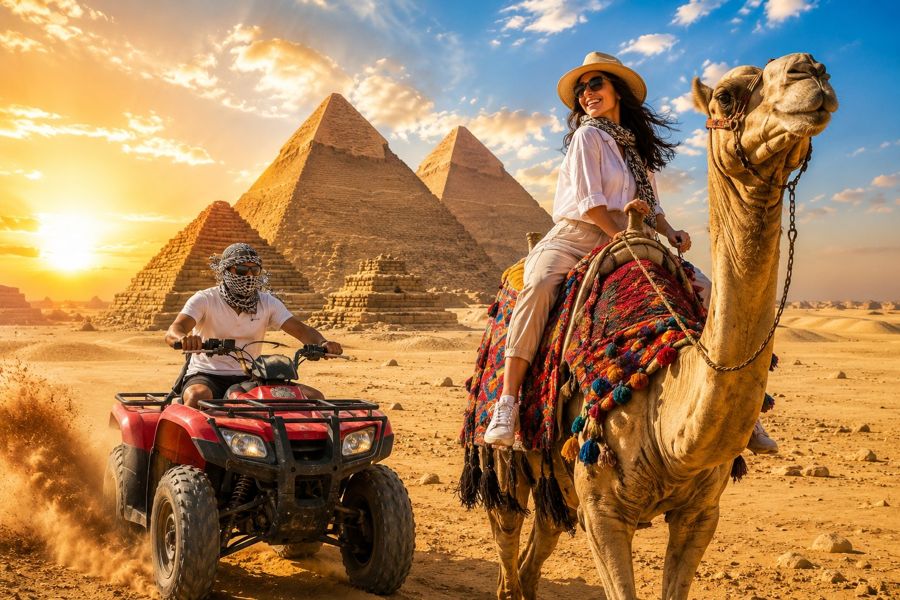
Cairo: Pyramids, Sphinx and Camel Ride, with ATV Option
★ 5,0385·4–8 hfrom 43 €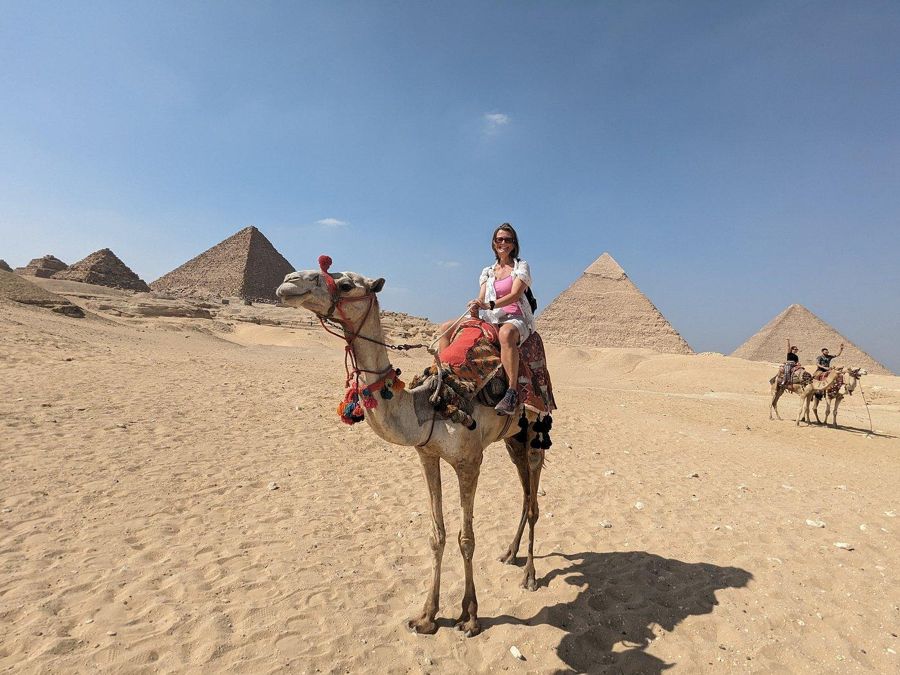
Pyramid Tours with German-Speaking Guide
186 Offers · from 12 €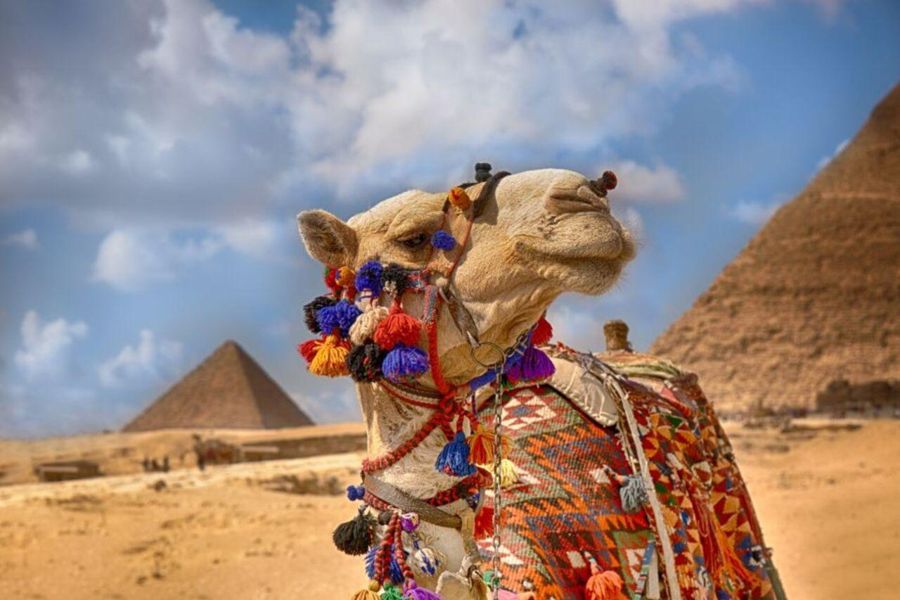
Private Tours
131 Offers · from 25 €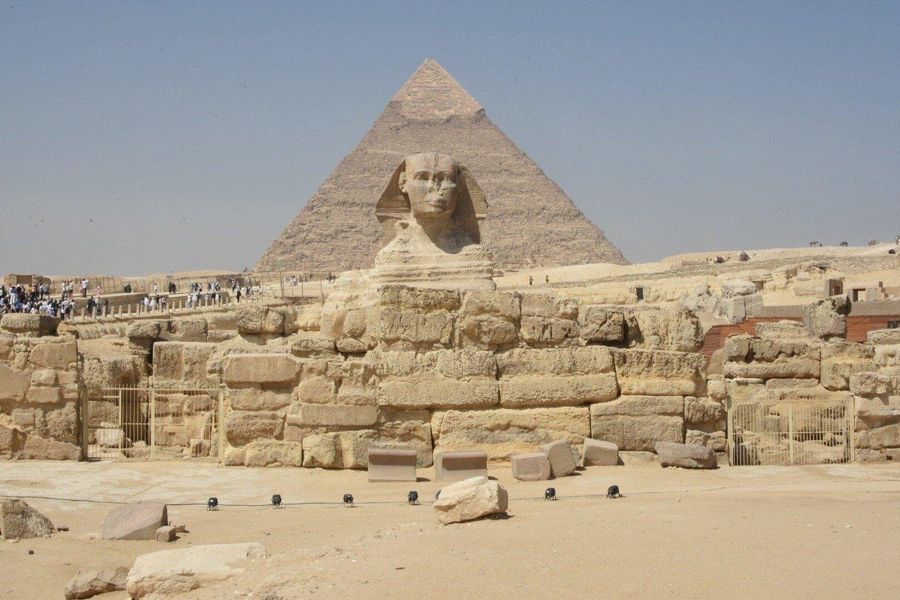
Tours from 100 euros
127 Offers · from 103 €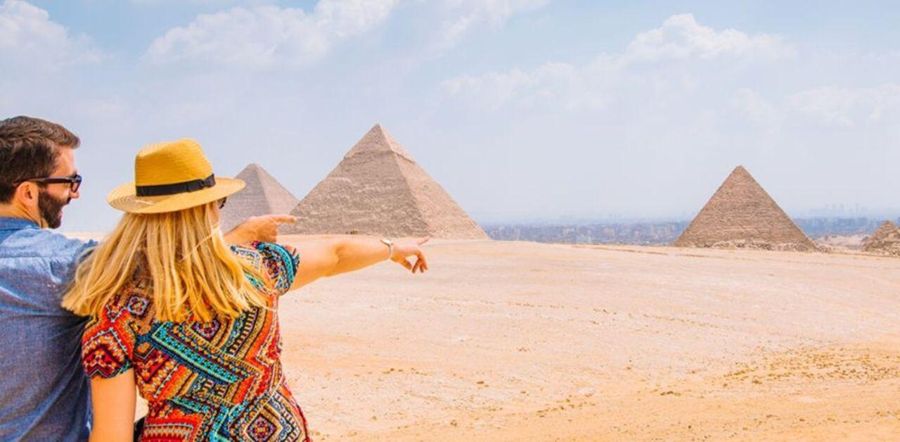
Tours from Cairo
126 Offers · from 14 €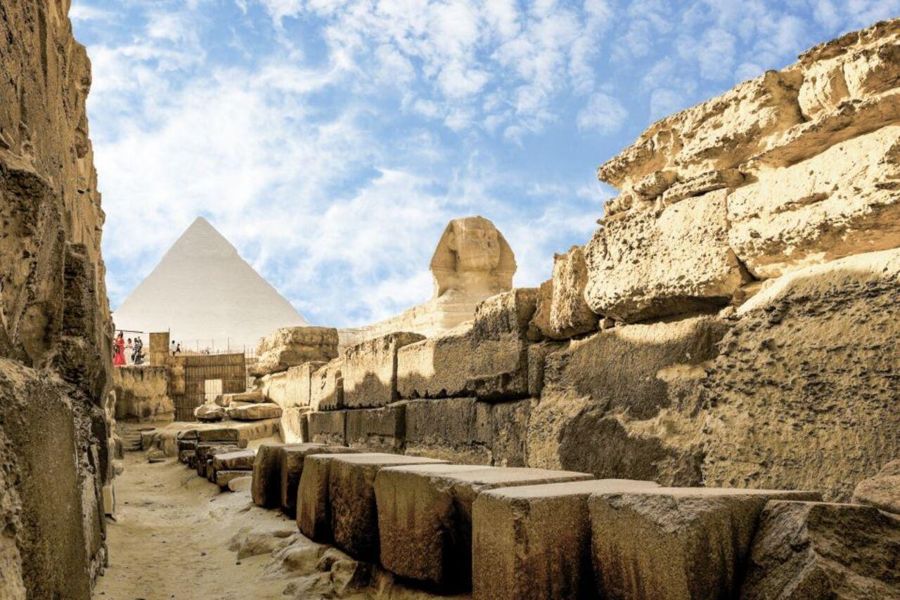
Full-Day Tours
87 Offers · from 29 €
Tours between 50 and 100 euros
79 Offers · from 50 €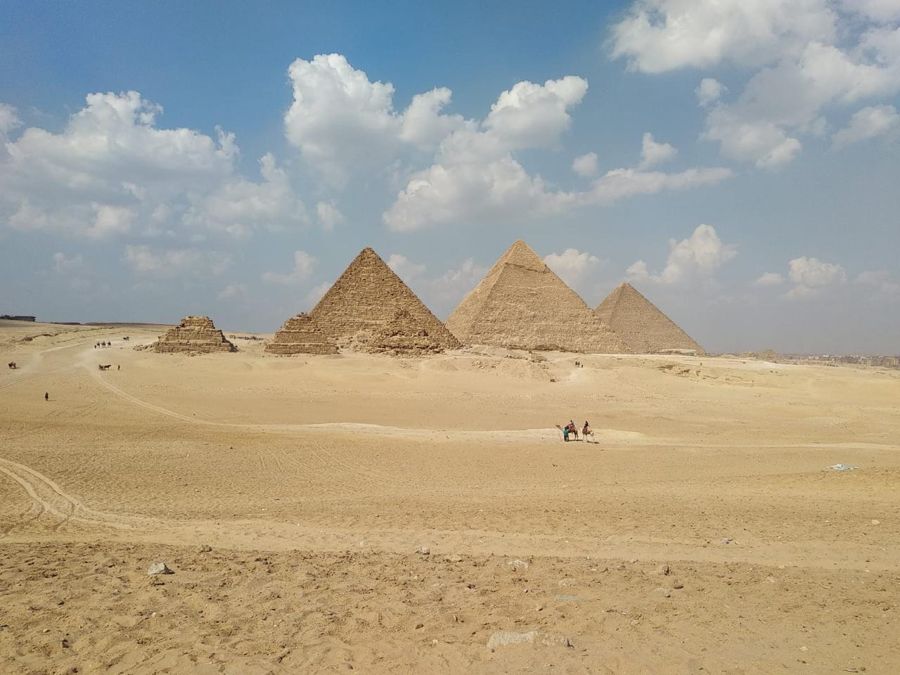
Multi-Day Tours
68 Offers · from 58 €
Tours up to four hours
47 Offers · from 12 €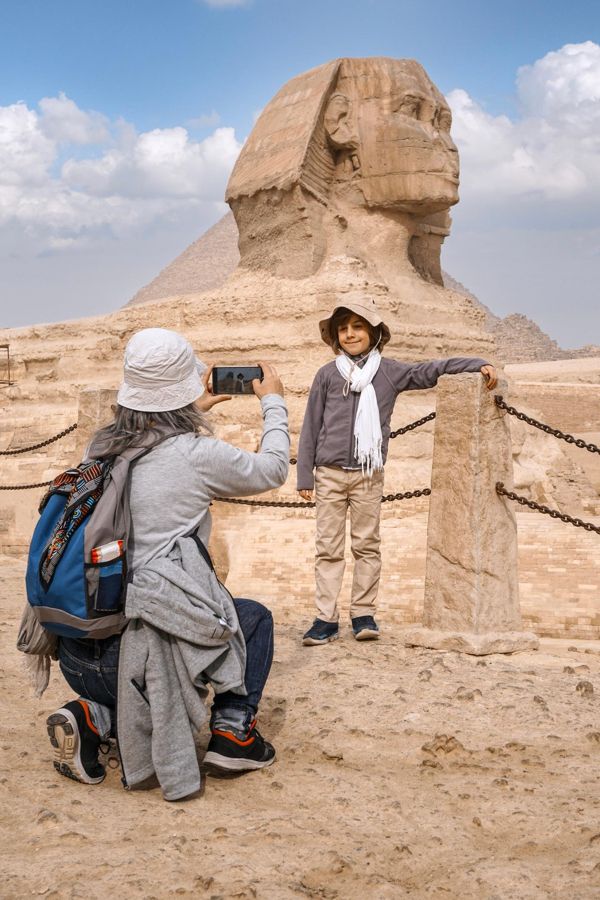
Tours up to 50 euros
46 Offers · from 12 €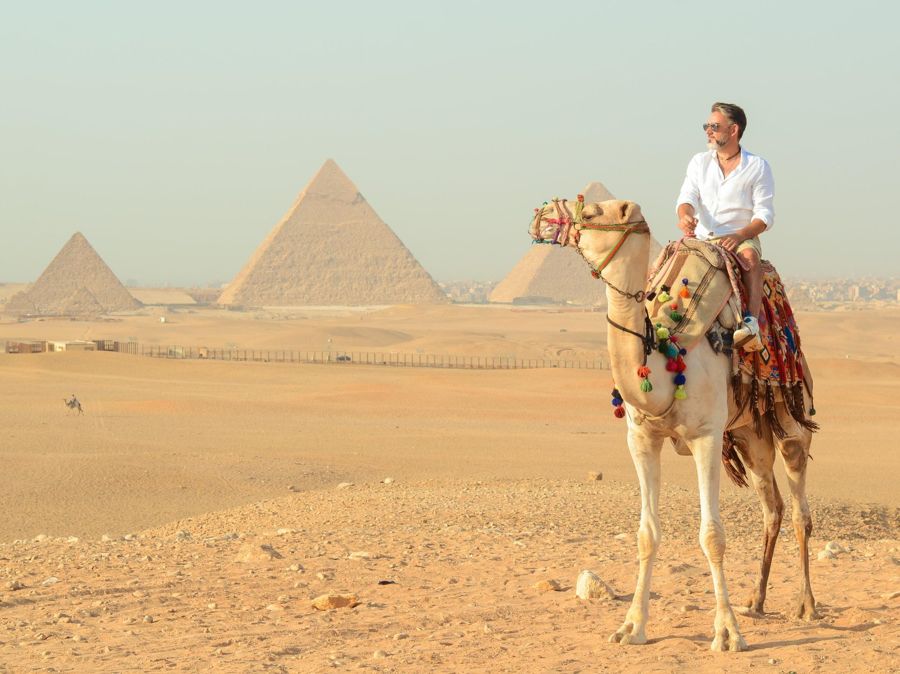
Tours from Giza
43 Offers · from 12 €Tours from Hurghada
36 Offers · from 55 €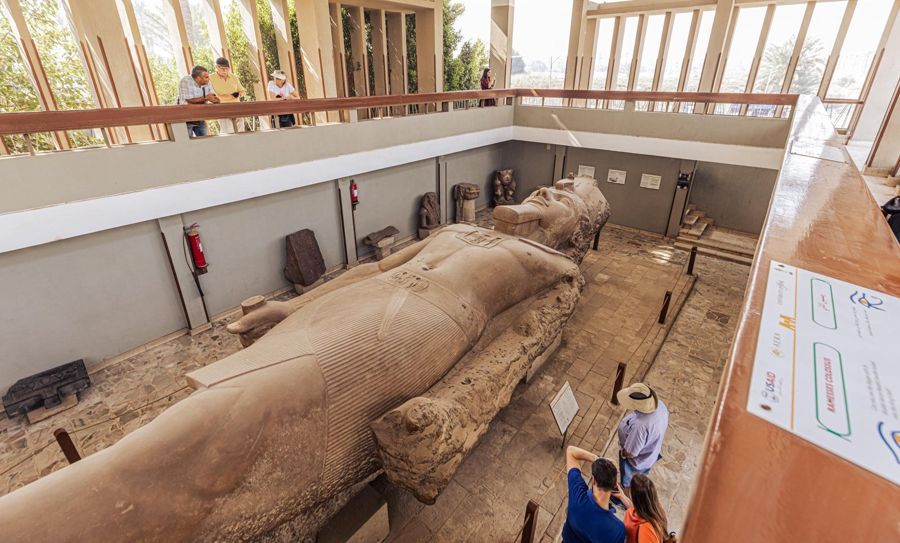
Small Group Tours
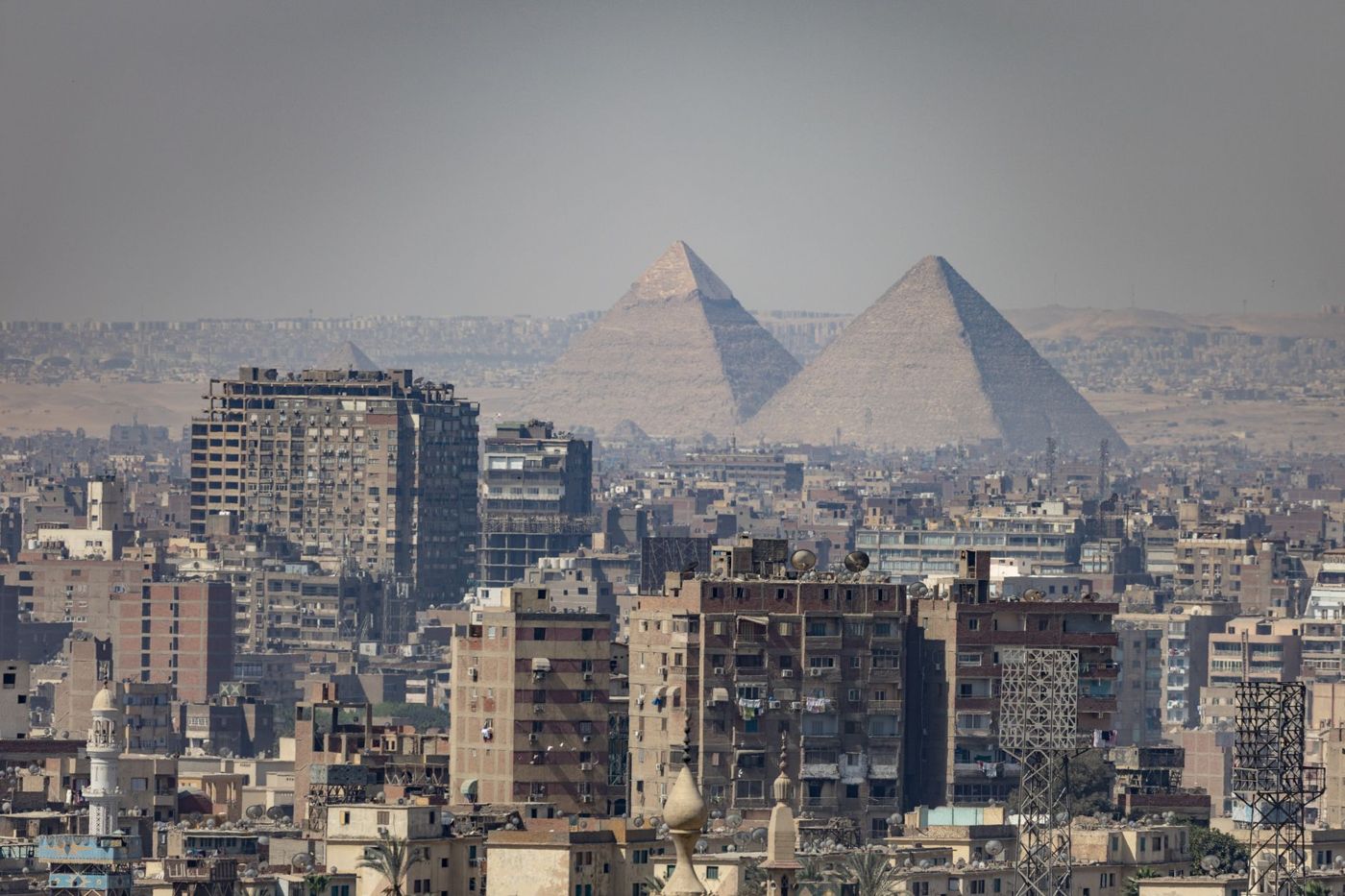
27 Offers · from 12 €On the western edge of Cairo, the city ends almost seamlessly. Behind the last row of houses, a limestone plateau rises, and on it stand three structures from the 26th century BC. The Pyramids of Giza are the only one of the Seven Wonders of the Ancient World that still exists. Everything else on that list has vanished.
The largest of the three originally measured 146.6 meters. That made the Great Pyramid of Khufu the tallest structure in human history for about 3,800 years. It was only surpassed in 1311, by the tower of Lincoln Cathedral in England, by about a meter. Between the completion of the pyramid and the day it lost its record lies more than five times the time that has passed since.
In photos, the dimensions seem harmless. On site, they are not. A single limestone block at the base of the pyramid often reaches an adult's chest, and about 2.3 million of them are stacked on top of each other, without mortar, without wheels, without pulleys.
Its reputation as a travel destination is also old. When the Greek historian Herodotus visited the plateau in the 5th century BC, the pyramids were already over two thousand years old. He was closer in time to them than we are to him today. What you see there was already admired by people who are themselves long since history.
If you go now, however, you will encounter a site that has changed dramatically since 2025. The main entrance is on a different road, private vehicles are no longer allowed up, and part of what used to be seen up there is now in the museum next door. Printed guidebooks from before that time will send you to the wrong place.
Almost all providers visit the same three structures. The difference lies in what is included in the price and how much of the day is planned. Three options that make the difference clear.
 Interior bookable
Museum, Plateau, and Bazaar in One Day
- Plateau entry
- English-speaking guide
- Hotel pickup
- Lunch
- Pyramid interior as an add-on
- Free cancellation up to 24 hours before
For those who want to include the museum and keep the interior chamber open
 Most booked
Grand Egyptian Museum, Pyramids, and Sphinx
- Plateau entry
- English-speaking guide
- Hotel pickup
- Lunch
- Pyramid interior
- Free cancellation up to 24 hours before
Most first-time visitors who have one day for Cairo
 Private & flexible
Private Day with Museum and Plateau
- Plateau entry
- English-speaking guide
- Hotel pickup
- Lunch
- Free cancellation up to 24 hours before
For those who don't want to wait for a group and want to set their own pace
- Where
- Giza, on the western edge of Cairo, Egypt
- Built
- around 2560 BC, 4th Dynasty of the Old Kingdom
- What stands there
- three large pyramids, smaller queen's pyramids, the Great Sphinx, temples, and cemeteries
- Largest structure
- Great Pyramid of Khufu, originally 146.6 meters
- World Heritage
- since 1979, as part of "Memphis and its Necropolis"
- Plateau entry
- low double-digit euro range, interiors cost extra
- Time needed
- half a day for the main points, a full day with tombs and museum
Not Three Triangles, a City of the Dead
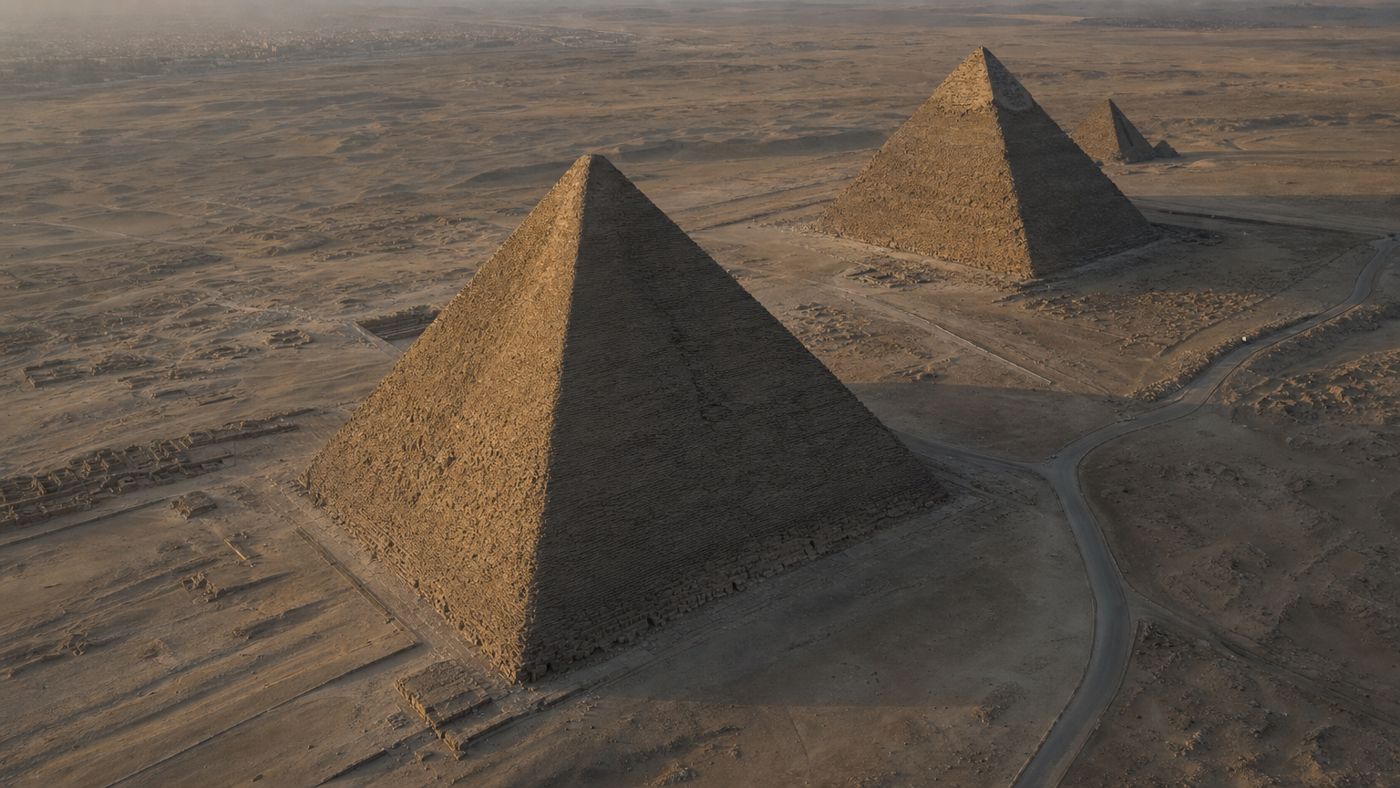
From a distance, Giza looks like three triangles in the sand. In fact, a whole necropolis lies there. Each of the three great pyramids had a complete complex: a valley temple at the bottom near the fertile land, a covered causeway leading up the slope, and a mortuary temple on the east side of the pyramid. In addition, there are smaller pyramids for queens, boat pits cut into the rock, and entire fields of mastabas, the flat tomb structures of officials, priests, and craftsmen.
The three main pyramids belong to three kings of the 4th Dynasty: Khufu, his son Khafre, and his successor Menkaure. In German, they are usually called Cheops, Chephren, and Mykerinos, after the Greek forms transmitted through Herodotus.
The location was no whim. The plateau offered three things at once that are rarely found together: solid rock as a foundation, limestone right on site as building material, and a Nile branch close enough to transport heavy loads. The quarries for the bulk of the masonry lay a few hundred meters south of the Great Pyramid, practically on the construction site. Only the fine white limestone for the outer casing came from further away, from Tura on the other side of the Nile, and the granite for the King's Chamber even came from Aswan, a good 900 kilometers to the south.
The entire necropolis has been on the UNESCO World Heritage List since 1979, together with the pyramid fields of Abusir, Saqqara, and Dahshur, under the title "Memphis and its Necropolis". The protected area thus extends far beyond what you can walk in a morning.
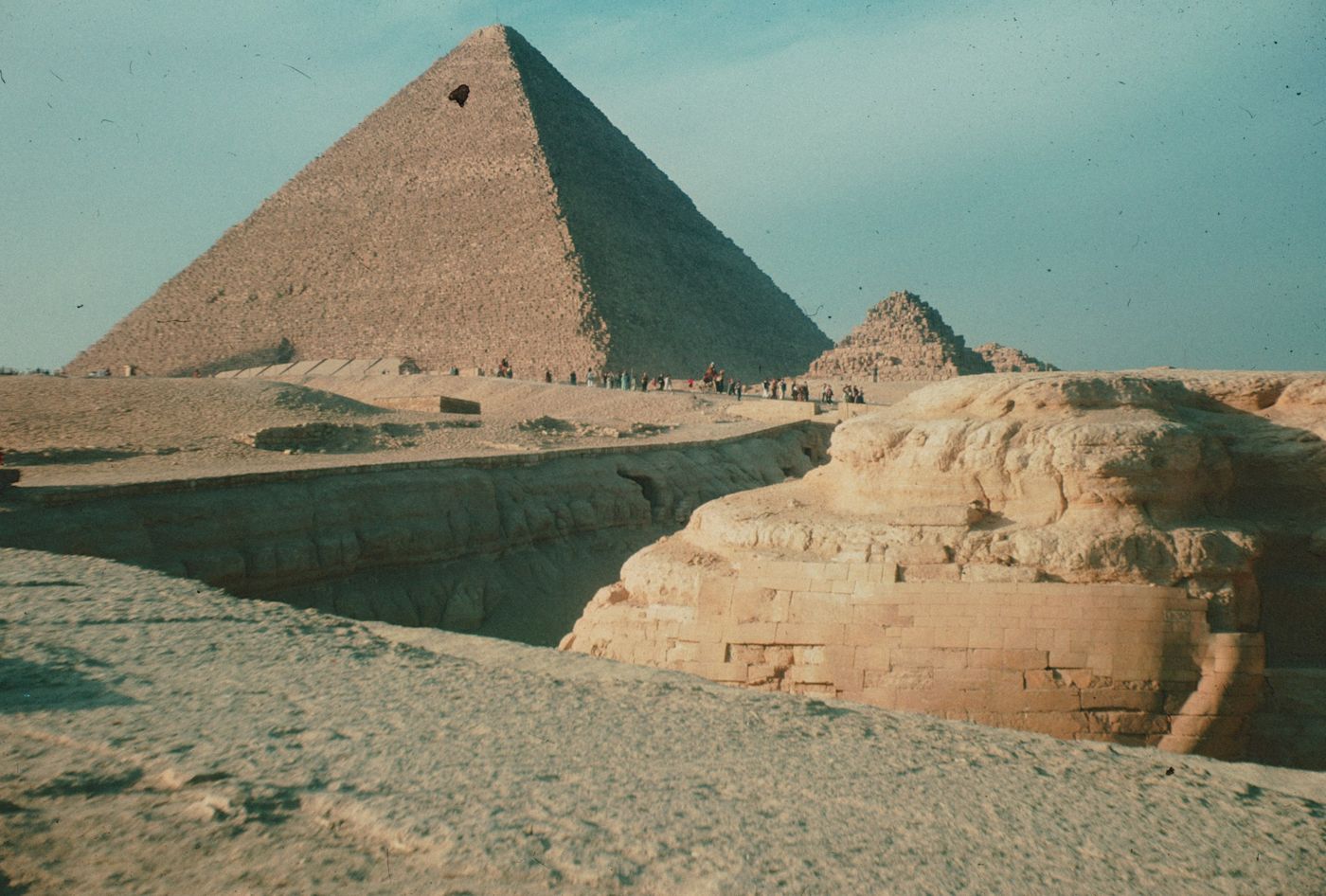
A note on orientation on site: The plateau is not a flat surface; it slopes down to the east. The Pyramid of Khafre stands on higher rock than the Great Pyramid and therefore appears larger in many photos, although it is smaller. The Sphinx lies much lower, in a hewn depression on the eastern edge.
The Three Great Pyramids in Comparison
The differences are greater than they appear from a distance.
| Pyramid | Built for | Original height | Today | Base side |
|---|---|---|---|---|
| Great Pyramid of Khufu | Khufu | 146.6 m | about 138.5 m | 230.3 m |
| Pyramid of Khafre | Khafre | 143.5 m | about 136.4 m | 215.25 m |
| Pyramid of Menkaure | Menkaure | 65 m | about 61 m | 102.2 m |
- Built for
- Khufu
- Original height
- 146.6 m
- Today
- about 138.5 m
- Base side
- 230.3 m
- Built for
- Khafre
- Original height
- 143.5 m
- Today
- about 136.4 m
- Base side
- 215.25 m
- Built for
- Menkaure
- Original height
- 65 m
- Today
- about 61 m
- Base side
- 102.2 m
The loss in height occurred because the smooth outer casing is missing. At the top of the Pyramid of Khafre, a remnant of it is preserved and clearly visible from below.
Eighty Years, Then It Was Over
Construction took place in a remarkably narrow time window. All three great pyramids were built within about eighty years, in the 26th century BC, under three successive kings of a single dynasty. Before and after, Egypt never again built on this scale. Even the Pyramid of Menkaure is significantly smaller, and the kings after him abandoned the format entirely.
The purpose is now largely clear: they are tombs. In the Great Pyramid, the King's Chamber contains a granite sarcophagus that is wider than the passage through which it could have been brought in. So it was already there before the construction above it was finished. Such details speak for a tomb planned from the start and against the idea that the chambers were added later.
Why in this form is the more interesting question. The pyramid represents the king's ascending path to the sun god, and its tip was originally gilded or set with bright stone to reflect the light. At the same time, the structure is an economic and political instrument. A state that can feed, house, supply, and coordinate tens of thousands of people in shifts for two decades proves with the finished building above all one thing: that it can do it.
Mummies were never found in the three great pyramids, by the way. The burial chambers were already emptied in antiquity. What remains are the empty sarcophagi, a few tool marks, and the structures themselves.
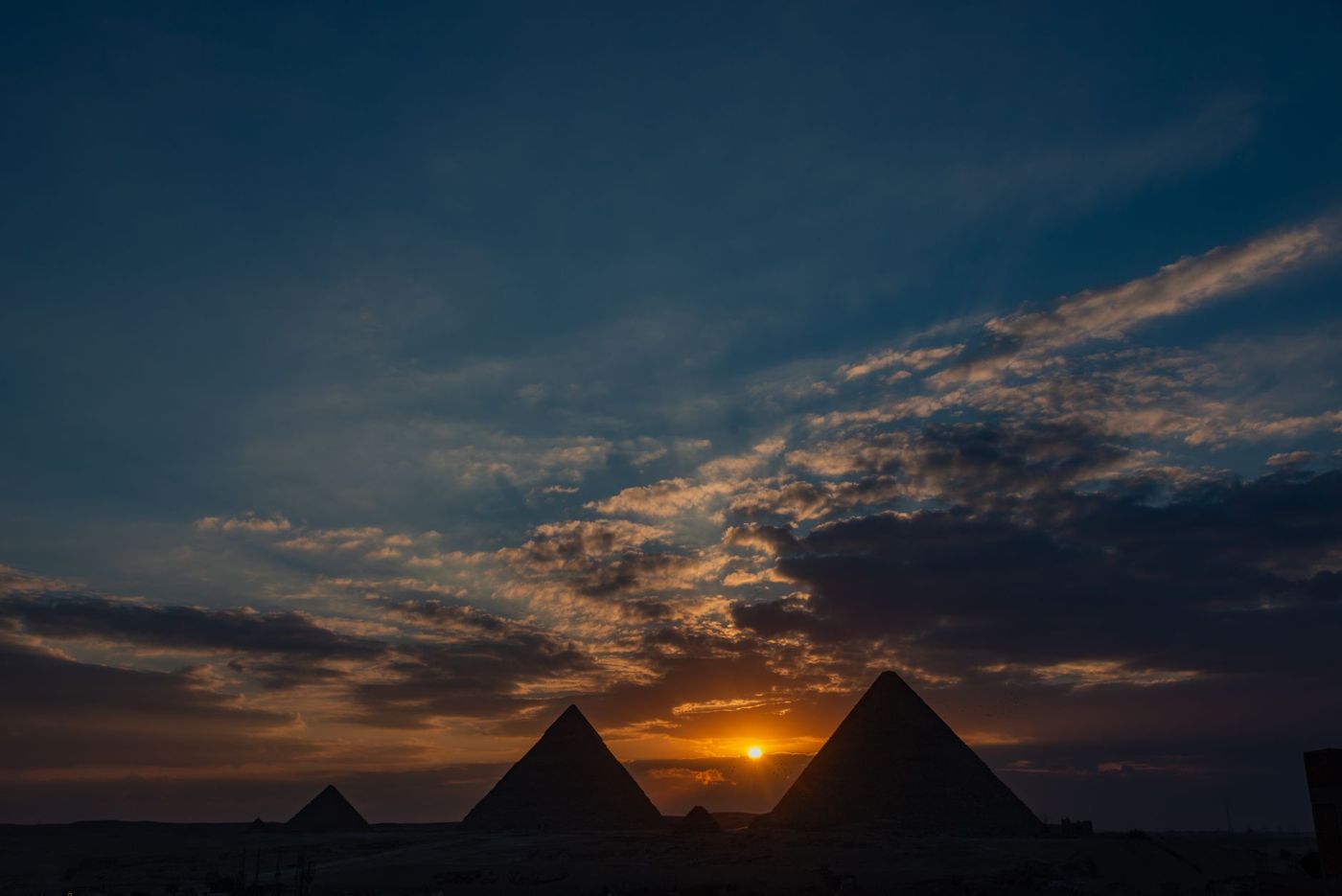
How It Was Built, and by Whom
Exactly how the blocks got up is still not fully resolved, and serious Egyptology says so. Currently discussed are ramps, an external spiral ramp, and combinations of both. There is archaeological evidence for individual methods, but no overall solution.
What is clear, on the other hand, is who built it. Southeast of the pyramids, a workers' settlement was excavated, with bakeries, breweries, dormitories, and an administration that recorded deliveries of cattle and grain. In the associated tombs, healed bone fractures were found that had been medically treated. Slaves were not buried or treated that way. They were paid, fed, and organized Egyptian workers, many of them seasonal.
Since 2013, there is a source for this that could hardly be invented better. In old harbor galleries on the Red Sea, at Wadi al-Jarf, a French-Egyptian team under Pierre Tallet found the oldest inscribed papyri in Egypt. It is a service log. An inspector named Merer noted in it, day by day, how his crew of about two hundred men brought limestone blocks from the quarries of Tura by boat to Giza. The text is dated to the 26th regnal year of Khufu, i.e., during the construction period. Thus, we have a work log from the construction site of the largest structure of antiquity, written by a middle-ranking official who had no idea that anyone would ever read it.
A second detail says a lot about the precision of the builders. The sides of the Great Pyramid deviate by less than a tenth of a degree from true north. This was achieved without a compass, presumably through observation of the stars.
The Great Pyramid of Khufu in Numbers
- Original height
- 146.6 m
- Height today
- about 138.5 m
- Length of a base side
- 230.3 m
- Stone blocks
- about 2.3 million
- Construction time
- about 20 years
- Deviation from true north
- less than 0.1 degrees
- Tallest structure in the world
- about 3,800 years
The Sphinx Is Not an Accessory
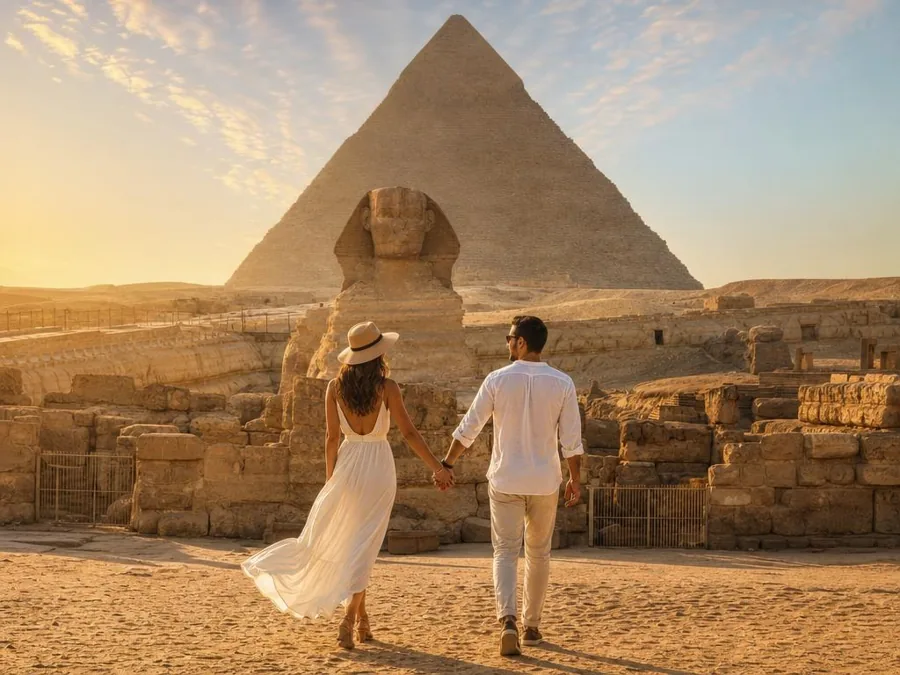
The Great Sphinx is not an accessory to the pyramids, but a structure in its own right with its own history. It was not built up, but carved from the bedrock, in a pit that was created in the process. About 73 meters long, about 20 meters high, lion's body, king's head. Most experts attribute it to Khafre, i.e., the middle pyramid.
Directly in front of the paws lie the remains of a temple made of massive limestone blocks, and right next to it is the Valley Temple of Khafre with its polished granite pillars. Both are included in the entrance fee and are overlooked by many visitors because the gaze goes up to the pyramids.
The nose has been missing for centuries. Napoleon's soldiers did not shoot it off; that is an invention of the 19th century: drawings from before the French expedition show the Sphinx already without a nose.
For a long time, the figure lay buried up to its shoulders in sand, and that is exactly what protected it. The exposed parts have since weathered much faster, making restoration a permanent task. On the flanks, you can see the repairs as lighter, regular layers of stone.
Between the front paws stands a granite stela, erected by Thutmose IV. It tells how he fell asleep as a prince in the shadow of the Sphinx and it promised him kingship in a dream if he freed it from the sand. It is the oldest surviving promotional message for monument preservation.
Four Claims You've Surely Heard
- False
Slaves built the pyramids.
The excavation of the workers' settlement shows provisions, medical treatment, and honorable burial in sight of the pyramid.
- False
From the moon, the pyramids are visible to the naked eye.
Even from low Earth orbit, they are only discernible under good conditions and with aids. From the moon, the Earth is a sphere without recognizable structures.
- False
The pyramids always looked this rough and stepped.
Originally, they were clad in polished white limestone and dazzlingly smooth. A remnant of this skin still sits on the top of the Pyramid of Khafre.
- False
The Solar Boat of Khufu is in a museum right next to the pyramid.
The boat museum on the plateau no longer exists. The boat was moved to the Grand Egyptian Museum. The empty boat pits are still visible up there.
The Second History: Looting and Excavation
The pyramids have not come through the millennia unchanged. Their second history is almost as long as the first.
In the Middle Ages, a large city grew a few kilometers to the north, and the smooth casing of Tura limestone was the best building material available far and wide. It was stripped and went into mosques, palaces, and city walls of Cairo. What today looks like a rough staircase is thus the exposed core masonry that was never meant to be seen.
At the same time, the wind worked. Over centuries, sand blew over the plateau and buried everything that lay lower. The Sphinx lay buried up to its shoulders, entire cemeteries disappeared. Early photographs from the 19th century therefore show a landscape that is hardly recognizable.
The use also changed. In the Middle Ages, the chambers were the target of treasure hunters; in the 19th century, the pyramids became a climbing adventure: images from that time show travelers being pulled up the blocks by guides. Today, climbing is forbidden, and for good reason, because the steps are irregularly high and the edges are worn smooth.
The systematic view began in 1798 with Napoleon's Egyptian campaign, which brought not only soldiers but also draftsmen, surveyors, and naturalists. The resulting plate work made Egypt popular in Europe and laid the foundation for Egyptology as a discipline. The excavations that brought the plateau to its present state then stretched over two centuries.
When you stand up there, you therefore see not a preserved original, but a structure after four and a half thousand years of use, looting, burial, and excavation. That does not make it less impressive. It just makes the rough edges explainable.
What Most Visitors Leave Behind
Most visitors see three pyramids, the Sphinx, and the panorama point, and then drive away. In doing so, they leave behind the most unusual thing.
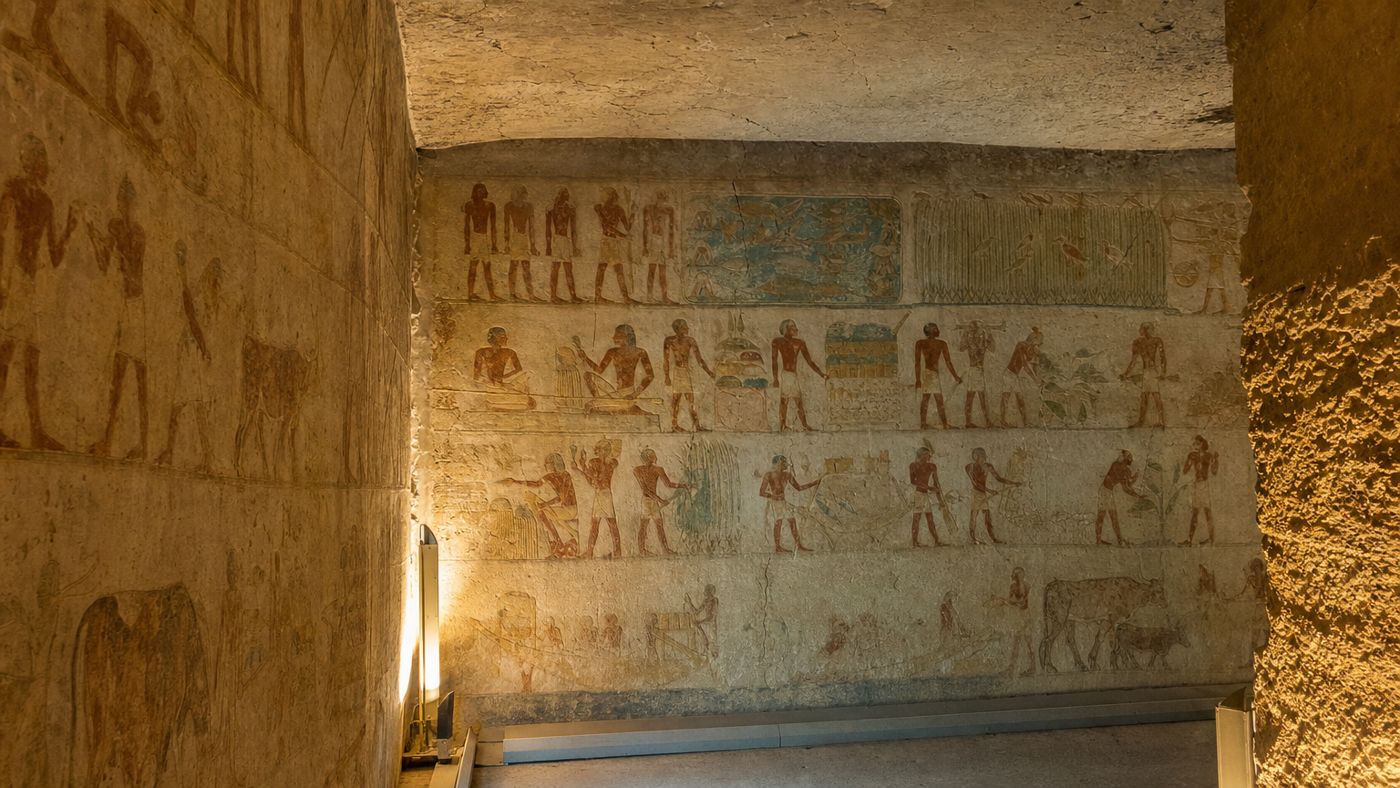
In the eastern cemetery, a few steps from the Great Pyramid, lies the rock tomb of Queen Meresankh III, a granddaughter of Khufu. It is one of only a few tombs on the plateau that are open at all, and by far the best preserved. The walls show in vivid colors what was part of everyday life in the Old Kingdom: baking bread, brewing beer, driving cattle, smelting metal, chiseling statues. Figures carved from the rock stand in a niche as if they were finished yesterday. The Egypt Exploration Society describes it as the most extensive of the accessible tombs. It costs a small additional ticket and is often almost empty.
Also underestimated: the boat pits around the Great Pyramid, from which the disassembled cedar boats were recovered, and the causeway of Khafre, which still makes the line between the valley temple and the pyramid visible today.
So if you have to choose between a second pyramid interior and a painted tomb: The interior of a pyramid is a narrow, bare, hot passage to an empty chamber. The tomb is the place where this culture painted itself.
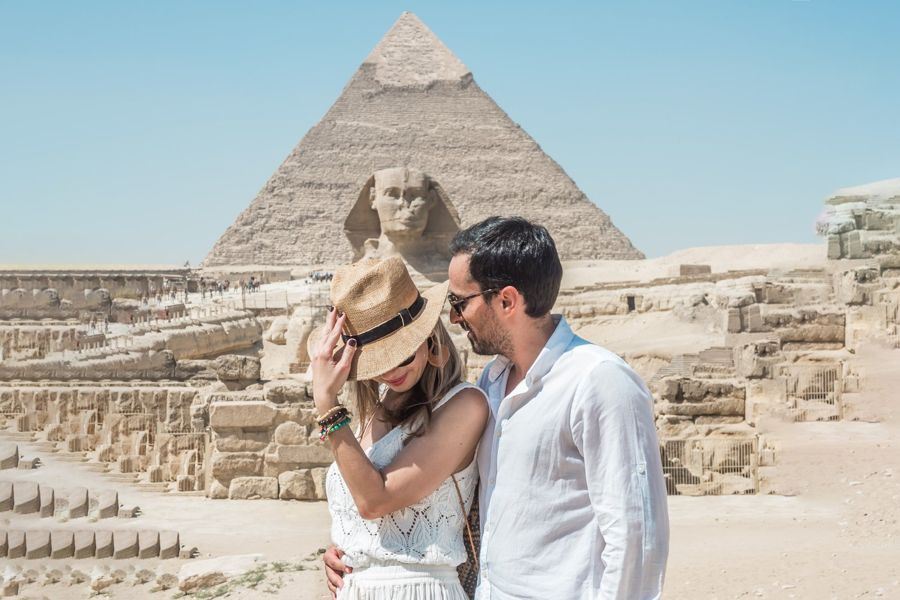
Private Half-Day Tour of the Giza Plateau
If you want to see the quieter corners, you need time and someone who knows the way. A private tour gives you both, with pickup and without group pace.
The Renovation Since 2025
Since 2025, the largest renovation in decades has been underway on the plateau. It is operated by a private consortium with a ten-year concession, while ticket revenues continue to go to the state. For visitors, three things have fundamentally changed as a result.
The main entrance has moved. It is now at a new visitor center on the desert road to Fayyum, in the southwest of the site, no longer at the old gate near the Mena House. The eastern Sphinx Gate is still open, but has no ticket office there. If you stand in front of it without a ticket, you cannot get in.
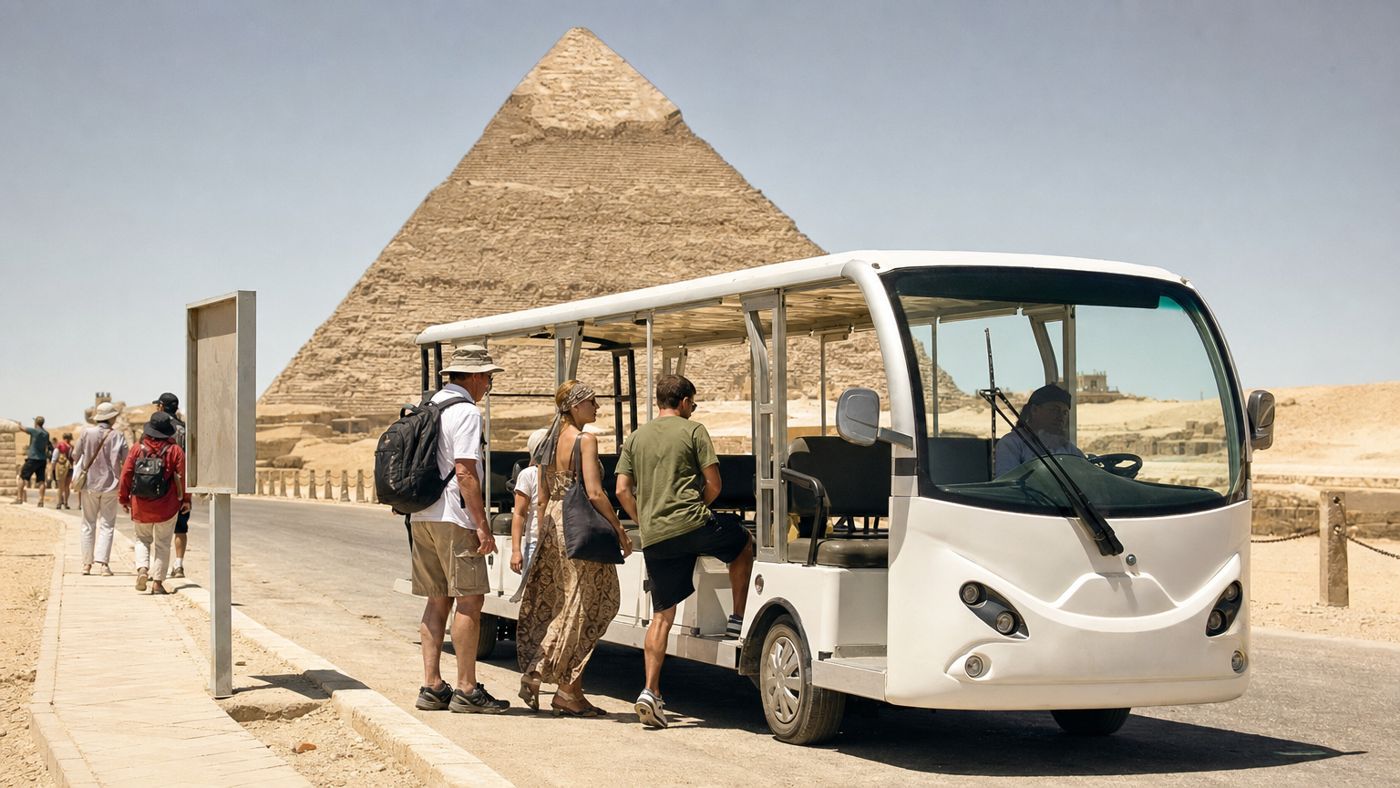
Private cars and tour buses are no longer allowed on the plateau. Your driver drops you off at the gate and waits outside. Instead, electric shuttle buses run as a circular route with stops including at the panorama point and the Sphinx. The ride is included in the entrance fee; you do not need a separate ticket. For the paths, this is a real relief, because between the Great Pyramid and the Pyramid of Menkaure lies a good kilometer of open, shadowless sand.
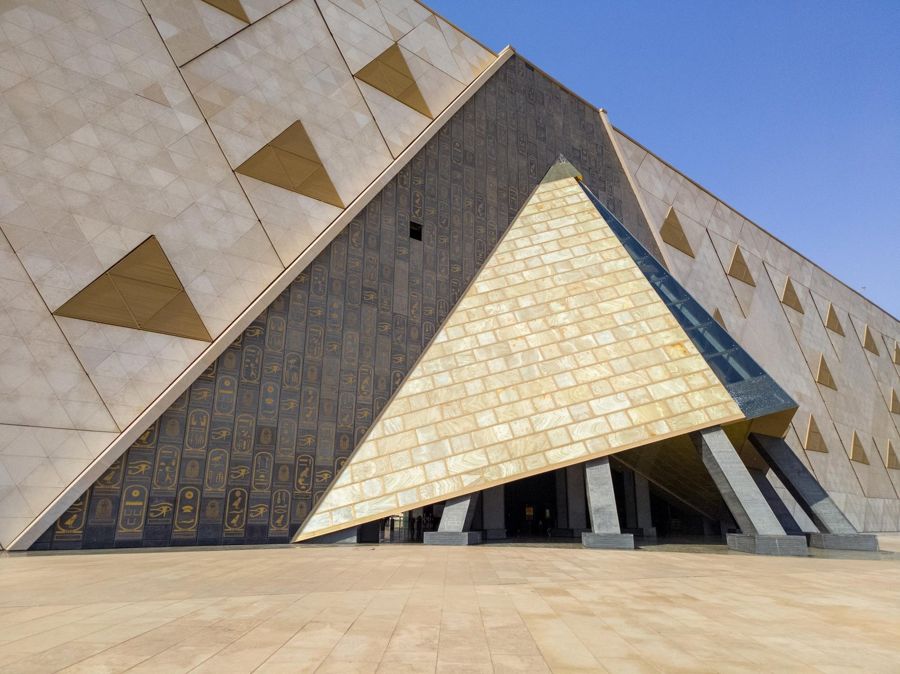
And a good part of the old program now stands elsewhere. The Grand Egyptian Museum opened in November 2025 a few minutes' drive away. There lie the finds that were previously scattered across Cairo, including the Solar Boat of Khufu. The second boat has been assembled in public since the end of 2025, from about 1,650 pieces of wood, over several years. If you want to see both in one day, you should start with the plateau while it is cool and save the museum for the midday heat.
Desert or Big City?
Giza is not a desert oasis far out. It is a district in the greater Cairo area with millions of inhabitants, and the buildings reach right up to the foot of the plateau. If you stand on the east side and turn around, you look at residential blocks, traffic, and billboards. This juxtaposition irritates many visitors because the well-known photos always show only sand. Both are true: to the west and southwest, behind the pyramids, there is indeed open desert; to the east, the city begins immediately.
From the center of Cairo, it is about 20 kilometers. Depending on the time of day, the journey takes between forty minutes and well over an hour, because traffic in Cairo is hard to predict. The international airport is on the opposite side of the city, so even further. If you want to fit the pyramids into a stopover, you should allow plenty of buffer.
Since the change, it also matters which gate your driver heads for. The main entrance in the southwest has counters and machines; the Sphinx Gate in the east does not. So name the destination specifically instead of just saying "to the pyramids". A pleasant side effect of the new order: because no vehicles drive up anymore, it is noticeably quieter up there than in previous years.
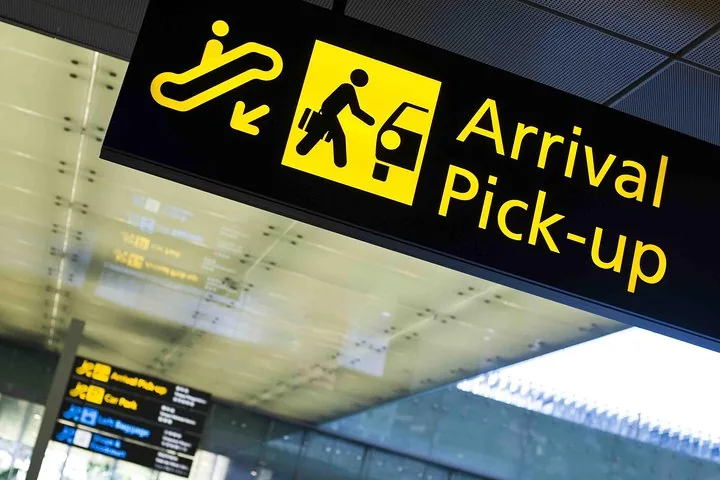
VIP Reception and Private Hotel Transfer from Cairo Airport
- The driver waits with a name sign in the arrivals area, instead of you having to choose between offers at the exit
- The price is fixed at booking and does not change with traffic
- Private vehicle to your address in Cairo or Giza, even at night
- Free cancellation, instant confirmation, booking in German
Come Early, and Keep Two Tickets Apart
A visit sensibly begins early. The site opens around eight o'clock, and the first hour is the most pleasant of the day: cooler, emptier, and the flat light is good for photos. From late morning, the group buses arrive and the temperature rises. There is practically no shade up there; in summer, afternoon values regularly exceed 38 degrees.
When entering, you should keep two levels apart. The plateau ticket gets you onto the site and to all structures from the outside. For the interior of a pyramid, you need an additional ticket, and that for the Great Pyramid costs a multiple of the normal entrance fee. The number of these interior tickets per day is limited; they are regularly sold out by morning. The cheaper interiors of Khafre and Menkaure are often still available when Khufu has long been sold out.
For the plateau itself, the entrance fee is currently in the low double-digit euro range. All prices are set in Egyptian pounds, so the euro equivalent fluctuates with the exchange rate. Tickets are available online via the official portal of the Ministry of Antiquities as well as at machines and counters at the main entrance. Cards are now widely accepted, but you still need some cash for tips and toilets. Also expect that a ticket is valid for one entry only. If you leave the site, you cannot re-enter with the same code.
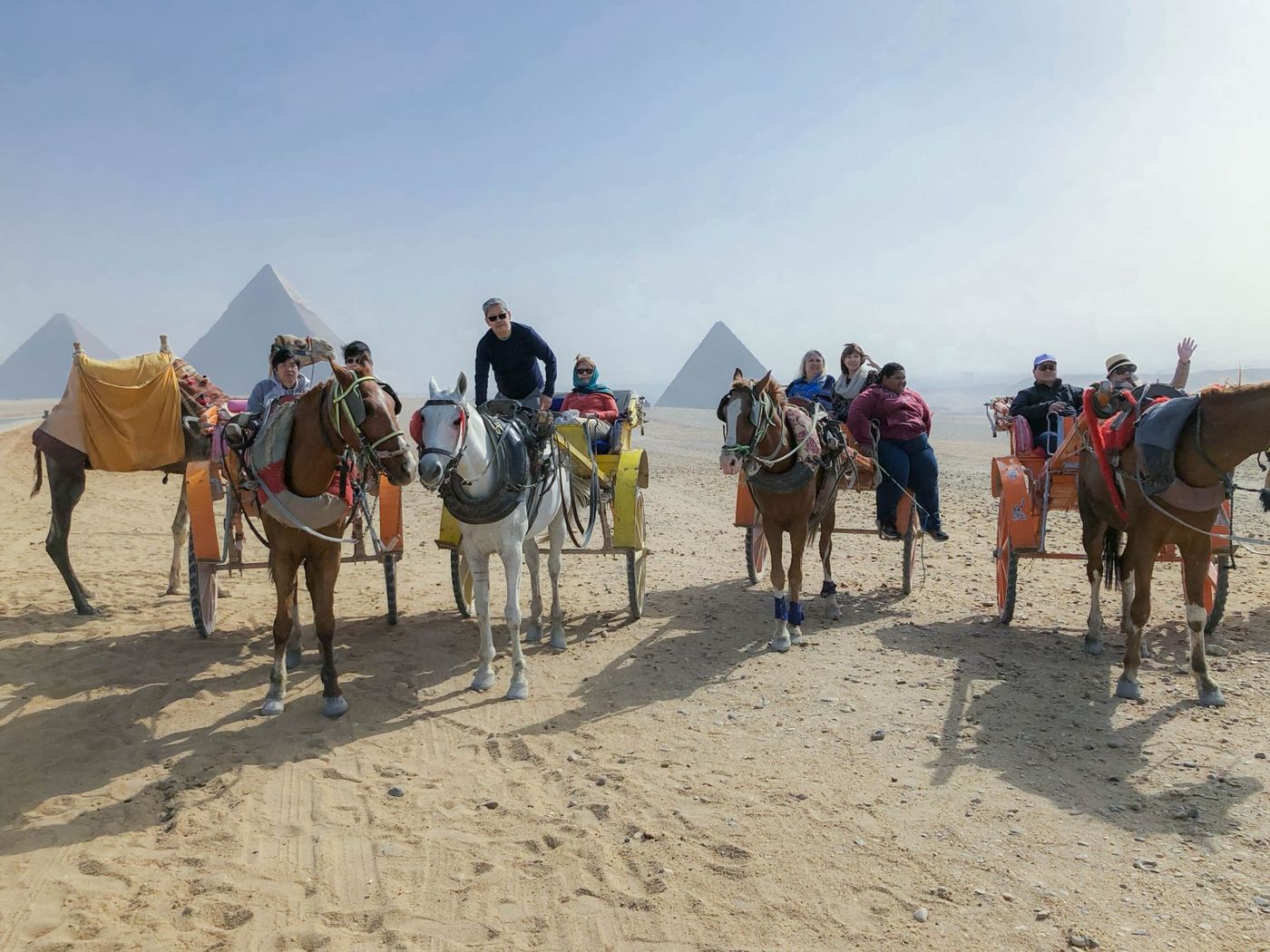
Regarding the security situation: The Federal Foreign Office currently assesses Cairo and Giza as safe to travel and does not list them in its regional warnings. What actually concerns visitors are not security issues, but pushy vendors of camel rides, tours, and souvenirs. If you agree on the full price in advance, i.e., amount, currency, duration, and number of people, and otherwise decline politely but clearly, you will get through the day well.
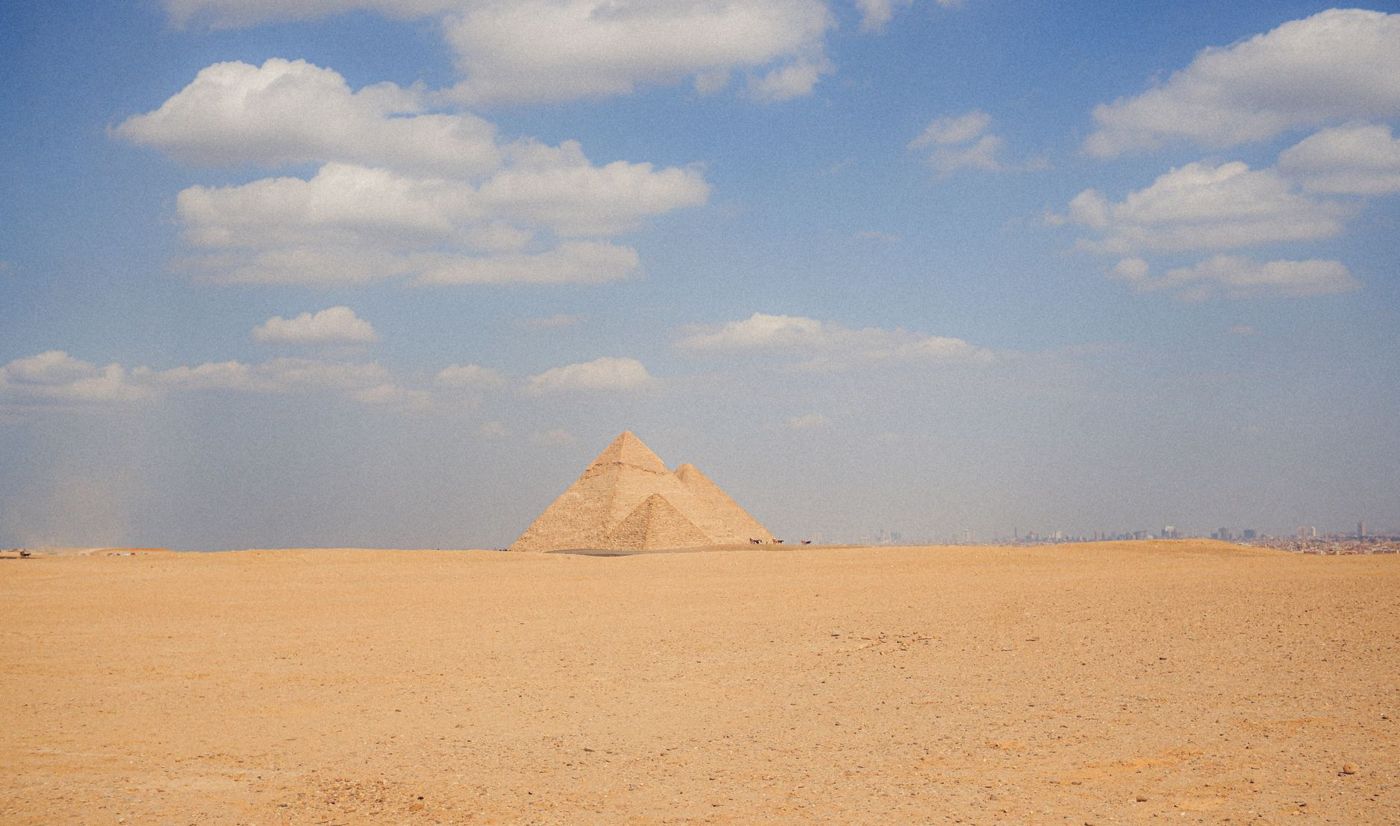
Already a Sight in Antiquity
What distinguishes Giza from most historical sites is the span of time over which it has functioned. These structures were already ancient sights when Rome was founded. Greek travelers scratched their names into the walls, Roman officials came as tourists, Arab scholars of the Middle Ages measured them and puzzled over them.
Research is not complete. Using cosmic muon radiation, voids have been detected inside the Great Pyramid that no one has entered, including a corridor behind the north facade that was confirmed by three independent measurement methods in 2025. A structure that has been openly accessible for four and a half thousand years thus still has spaces about which nothing can be said.
So keep some distance from the headlines. Around Giza, announcements regularly circulate about hidden chambers, sealed doors, and imminent revelations, often from individuals and without published measurement data. What is reliable is what a specialist journal reviews and prints. Everything else is for now a claim, even if it sounds good.
Perhaps that is the real appeal. Not the height and not the age, but the fact that something stands here that every generation measures anew, interprets anew, and still does not resolve.
Hotels with a view of the pyramids. See the plateau from your room, in the morning before everyone else. Three properties that cover this:
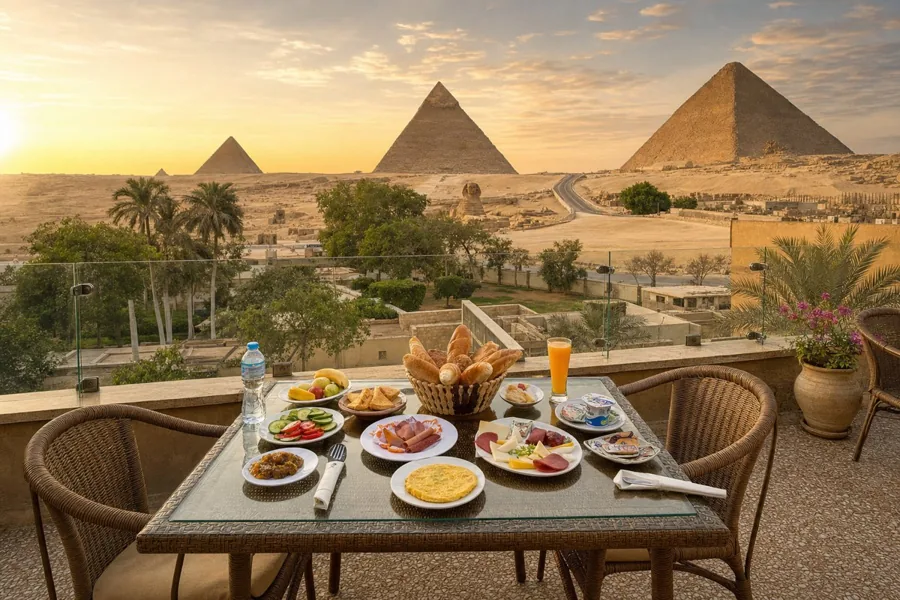 At the Sphinx
Giza Pyramids View Inn
- Good breakfast
- Airport shuttle
- Two restaurants
- 24-hour reception
- Free Wi-Fi
For those who want to see the Sphinx from their breakfast chair
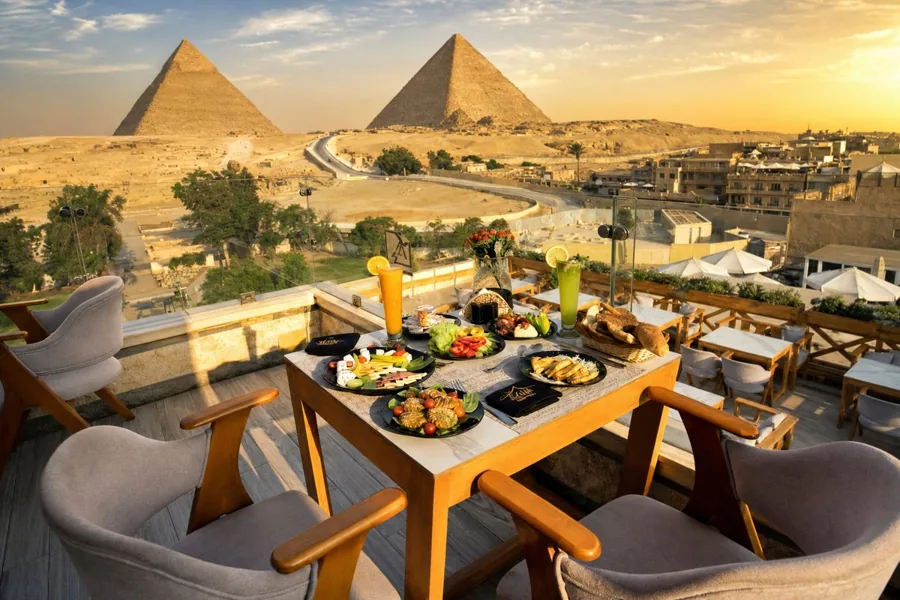 Most reviewed
Great Pyramid Inn
- Fabulous breakfast
- Rooftop terrace restaurant
- Bar
- Airport shuttle
- 24-hour reception
Most who want to stay in the neighborhood
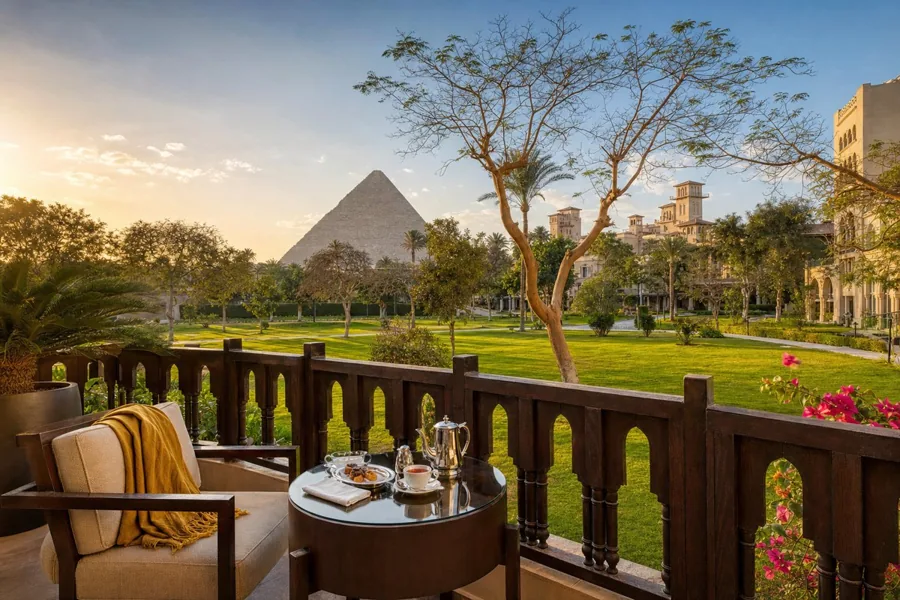 Garden & pool
Marriott Mena House
- Excellent breakfast
- Outdoor pool
- Spa and wellness center
- Three restaurants
- Fitness center
For those who want space, garden, and pool instead of a rooftop terrace