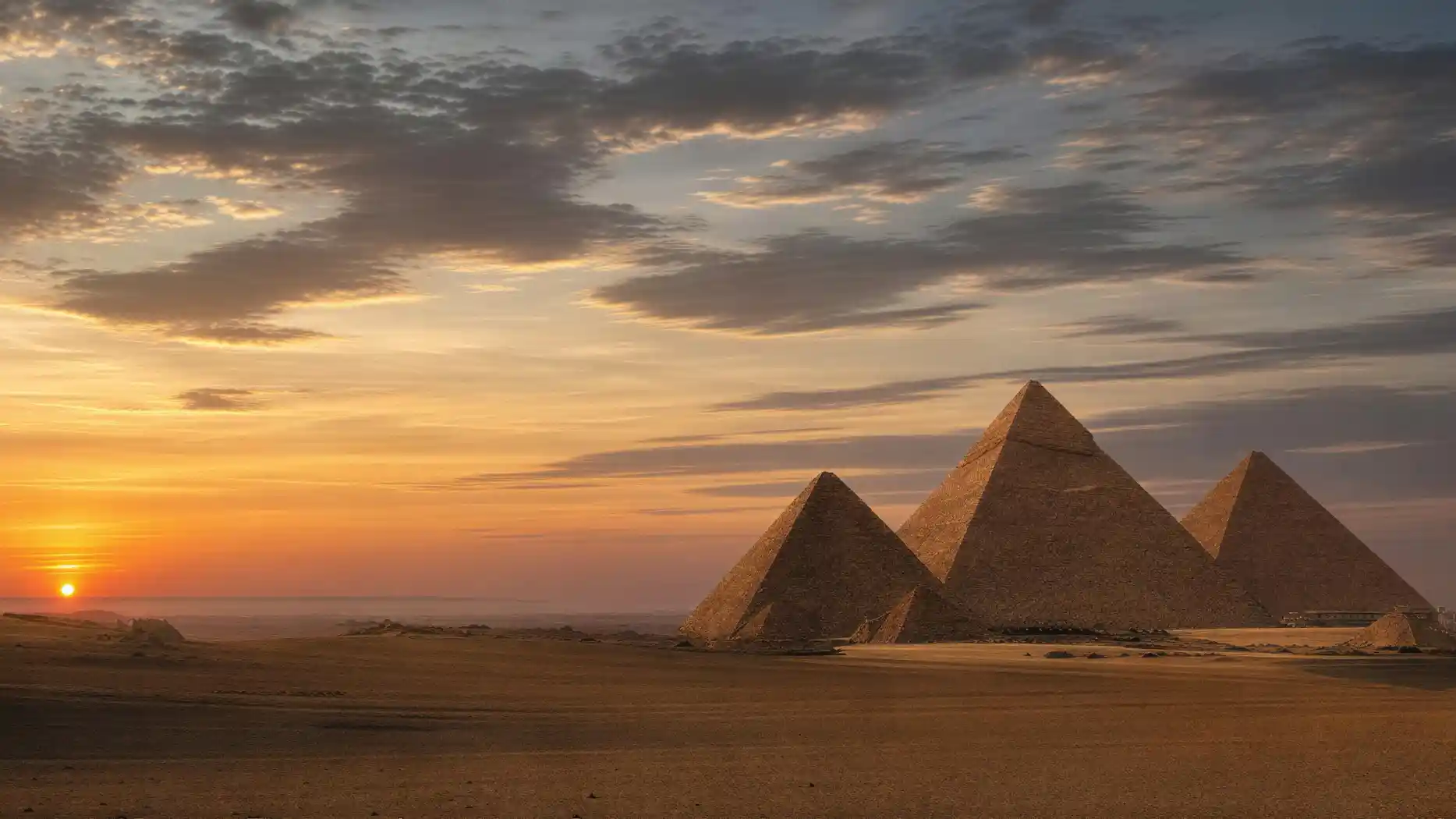
There are millions of photos of this place, and the vast majority show one of six motifs. That's not due to a lack of imagination, but to geography: the plateau is open, the structures are huge, and there are only a handful of spots where something worthwhile comes together.
Once you know the six, you'll read every photo differently. You won't just see a pyramid; you'll recognize where it was taken from, at what time of day, and with what focal length. And you'll know in advance which picture you can take yourself and which you can't.
The six recurring views
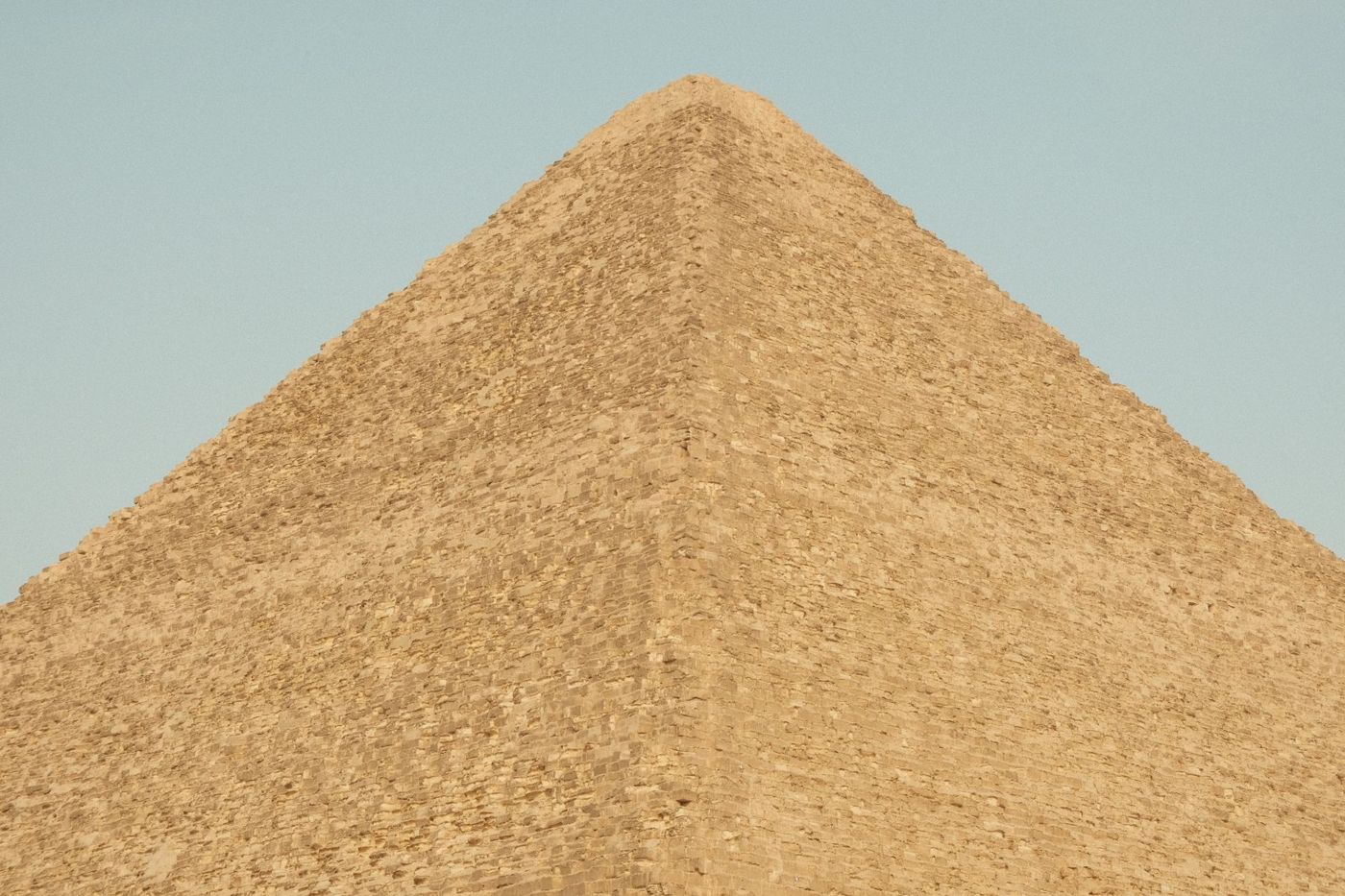
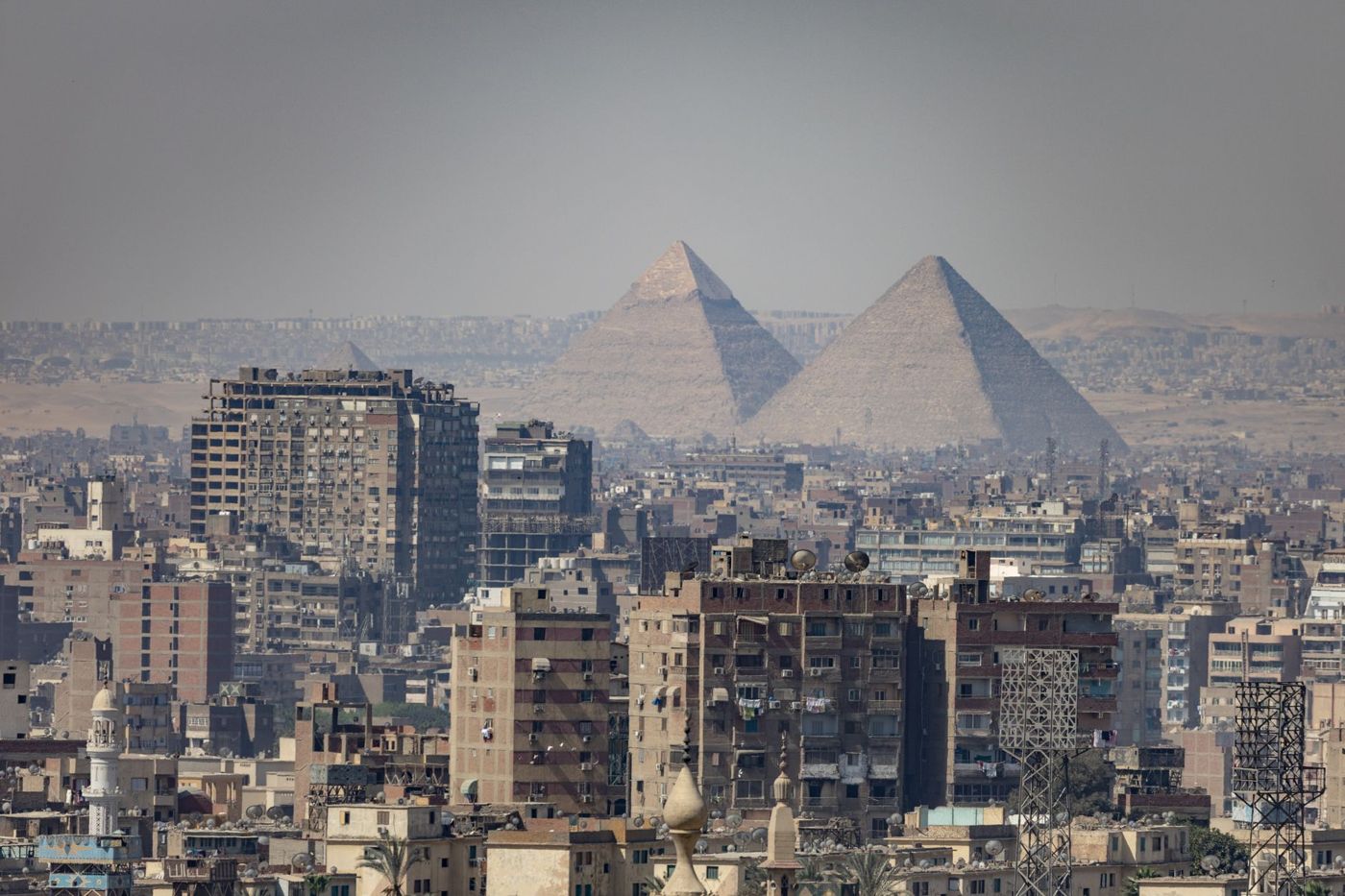
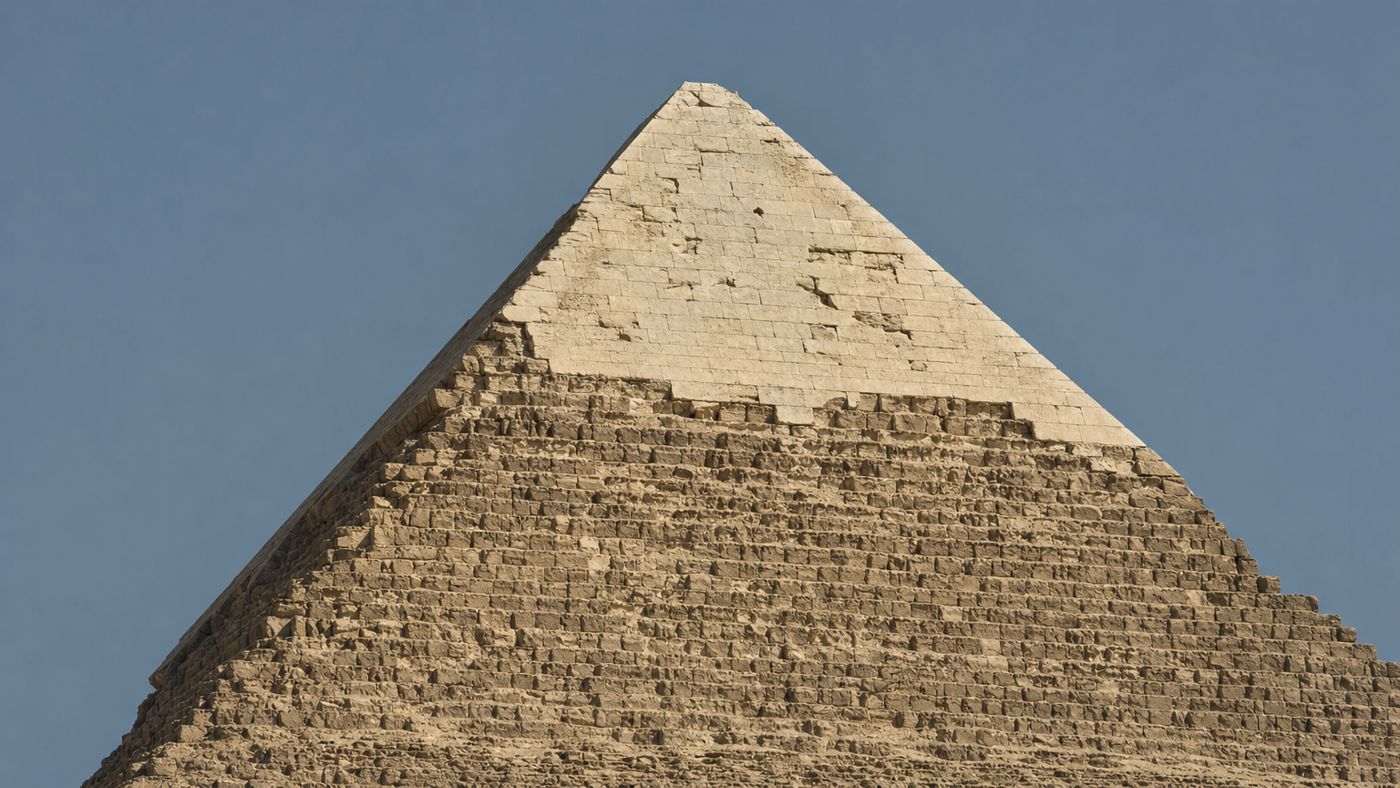
Why everyone takes the same photo
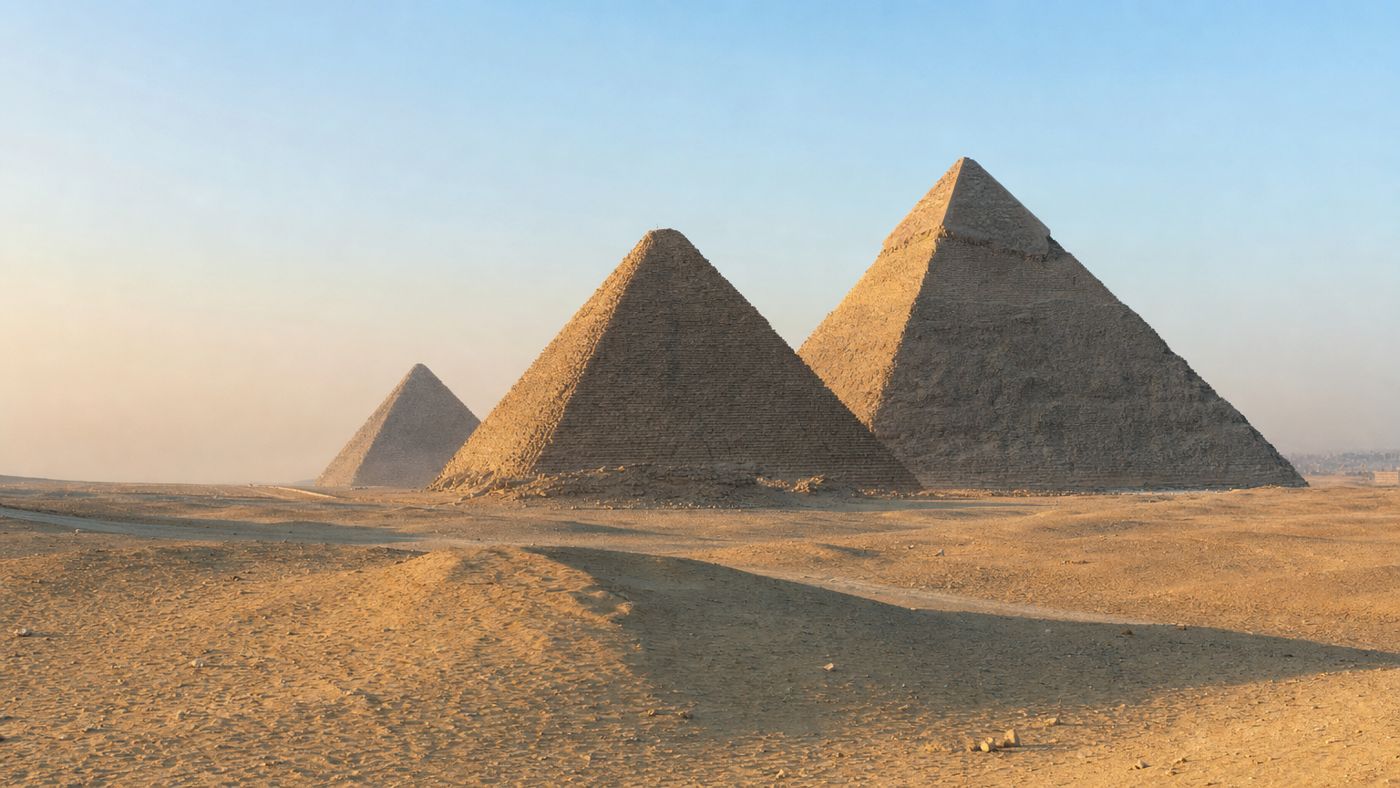
The first motif deserves an explanation because it shapes almost all expectations of this place. The three structures only fit side by side in the frame from one single area: the panoramic viewpoint in the southwest. It is away from the structures, about a half-hour walk from the main entrance, and is served by the shuttle.
There, photos are almost always taken with a short telephoto lens, which creates the second effect: the focal length visually compresses the structures, making them appear closer together than they are. In fact, there is a good kilometer of open sand between the first and third pyramids. Photos of the Great Pyramid of Khufu alone therefore often look less spectacular than the group, even though the structure is the largest.
Early morning is worth it time-wise. Tour groups reliably reach the spot between nine and ten o'clock; before that, it's quiet and the light is flatter.
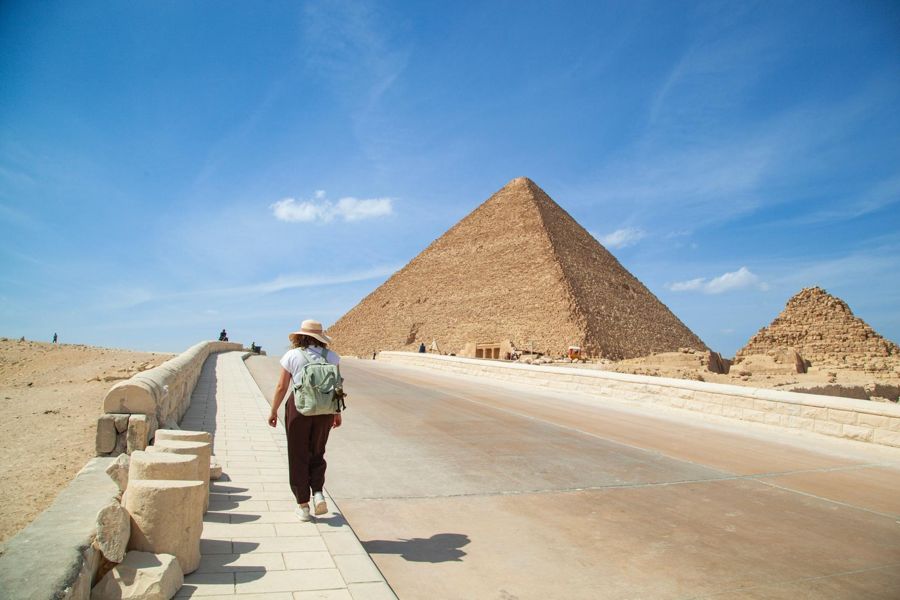
Short guided tour of the plateau on foot
Three hours on foot, with someone who knows the spots. For photos, the order in which you visit them matters more than the equipment.
Location, time, and focal length for each motif
If you want to bring home a specific picture, it's best to plan backwards from the motif.
| Motif | Location | Best time | Focal length |
|---|---|---|---|
| Three pyramids in a row | Panoramic viewpoint, southwest | early morning | short telephoto |
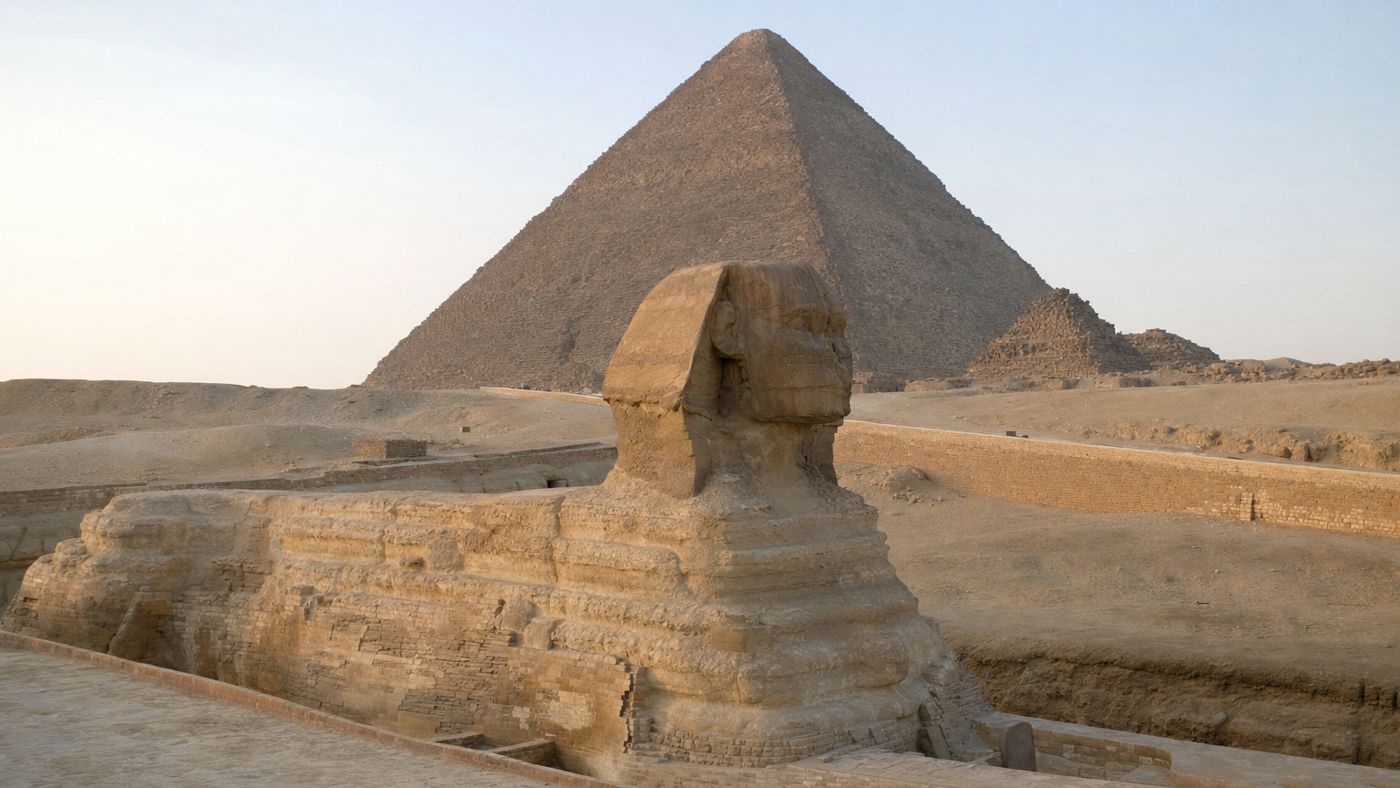
| Sphinx with pyramid | Viewing terrace, east | first hour after opening | standard lens |
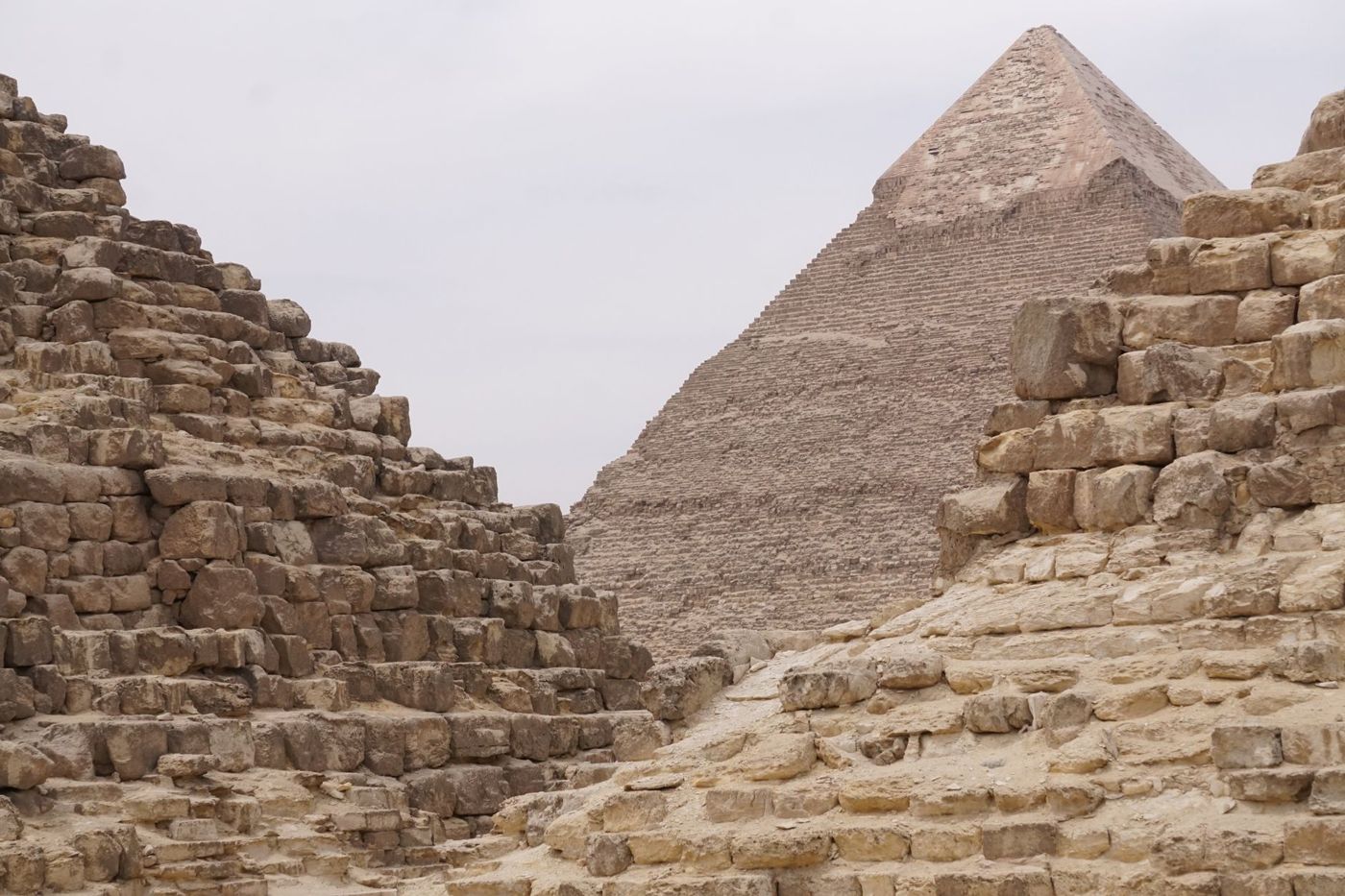
| Stone layers in detail | Base of the Great Pyramid of Khufu | anytime, shadows help | wide-angle to standard |
| Edge going up | directly at a corner | noon, harsh shadows | ultra-wide-angle |
| Pyramids above the city | Rooftops in Giza, outside | late afternoon | strong telephoto |
| Casing stone remnant | South side of the second pyramid | morning | strong telephoto |
- Location
- Panoramic viewpoint, southwest
- Best time
- early morning
- Focal length
- short telephoto
- Location
- Viewing terrace, east
- Best time
- first hour after opening
- Focal length
- standard lens
- Location
- Base of the Great Pyramid of Khufu
- Best time
- anytime, shadows help
- Focal length
- wide-angle to standard
- Location
- directly at a corner
- Best time
- noon, harsh shadows
- Focal length
- ultra-wide-angle
- Location
- Rooftops in Giza, outside
- Best time
- late afternoon
- Focal length
- strong telephoto
- Location
- South side of the second pyramid
- Best time
- morning
- Focal length
- strong telephoto
The terrain slopes down to the east. If you walk uphill, you gain an overview but lose proximity to the blocks.
What you can photograph yourself
There are now clear rules for taking your own photos of the Pyramids of Giza, and they are more relaxed than many expect.
Taking photos with your phone or a regular camera is free on the site, including with DSLR and mirrorless models. According to the official regulation, photo umbrellas, artificial lighting, and equipment that occupies or blocks public paths require a permit. A tripod is not mentioned there. But don't rely on that: on site, it is often objected to, and a set-up tripod can quickly fall into the third category. For interior shots inside a pyramid, a separate regulation applies, which is clarified at the ticket office.
The situation with drones is clear: they are prohibited without a permit, and the necessary approval must be applied for from the aviation authority before entry. For travelers, this is practically unattainable. Any aerial footage you see was taken with special permission, from an airplane, or via satellite.
Why it looks different on site
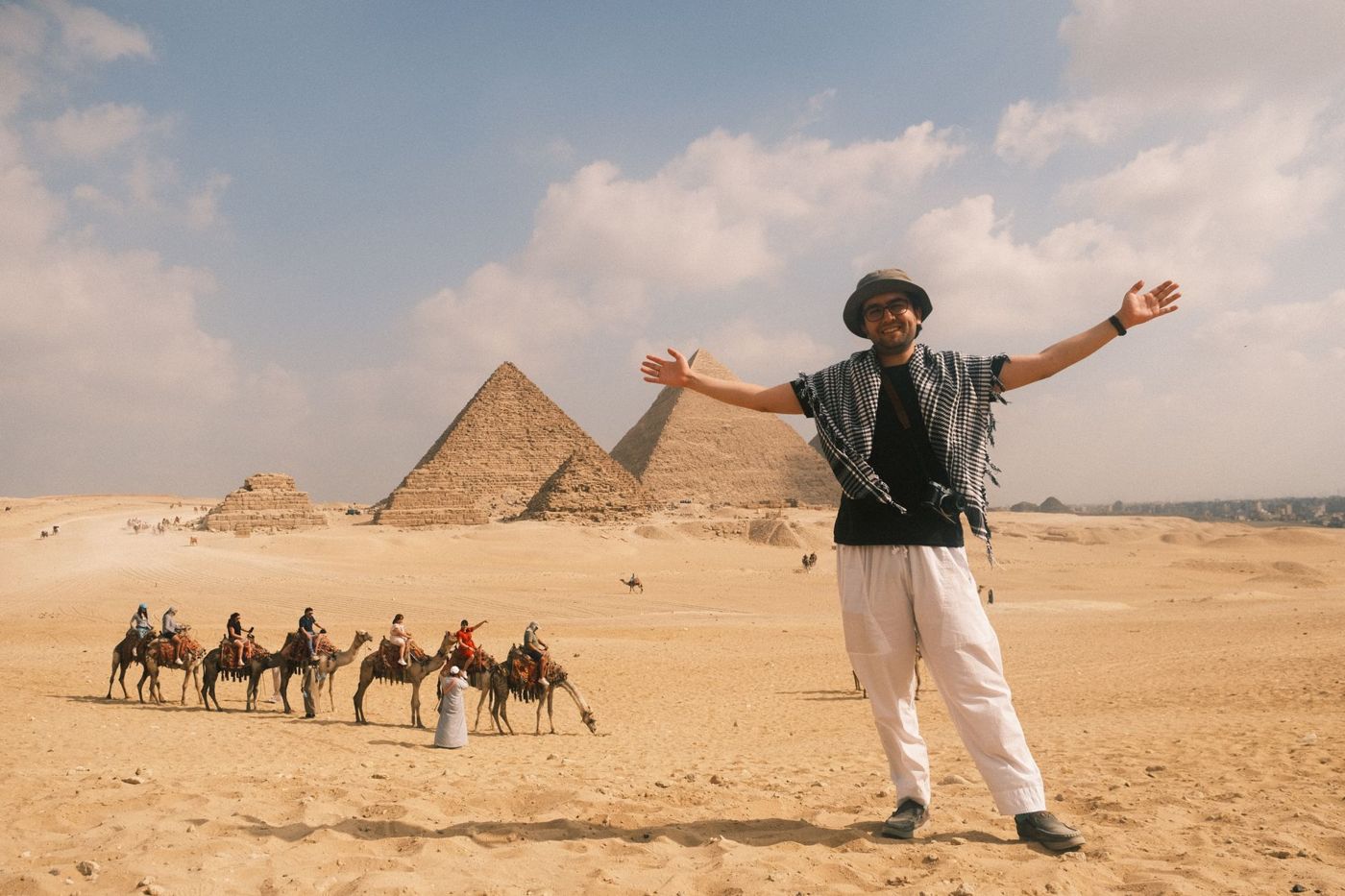
One final note on expectations. The famous photos show empty sand because they were taken that way: early, with a chosen direction of view, often outside regular opening hours. On site, the place is busier, dustier, and louder than any picture suggests.
That doesn't make the motifs wrong. It just means that a good photo here is not a snapshot but a decision about location and time. If you master these two variables, you'll get better pictures with your phone than someone with expensive equipment at midday. The entire site has been on the UNESCO World Heritage List since 1979, and the barriers that disturb some photos are the price for its continued existence.