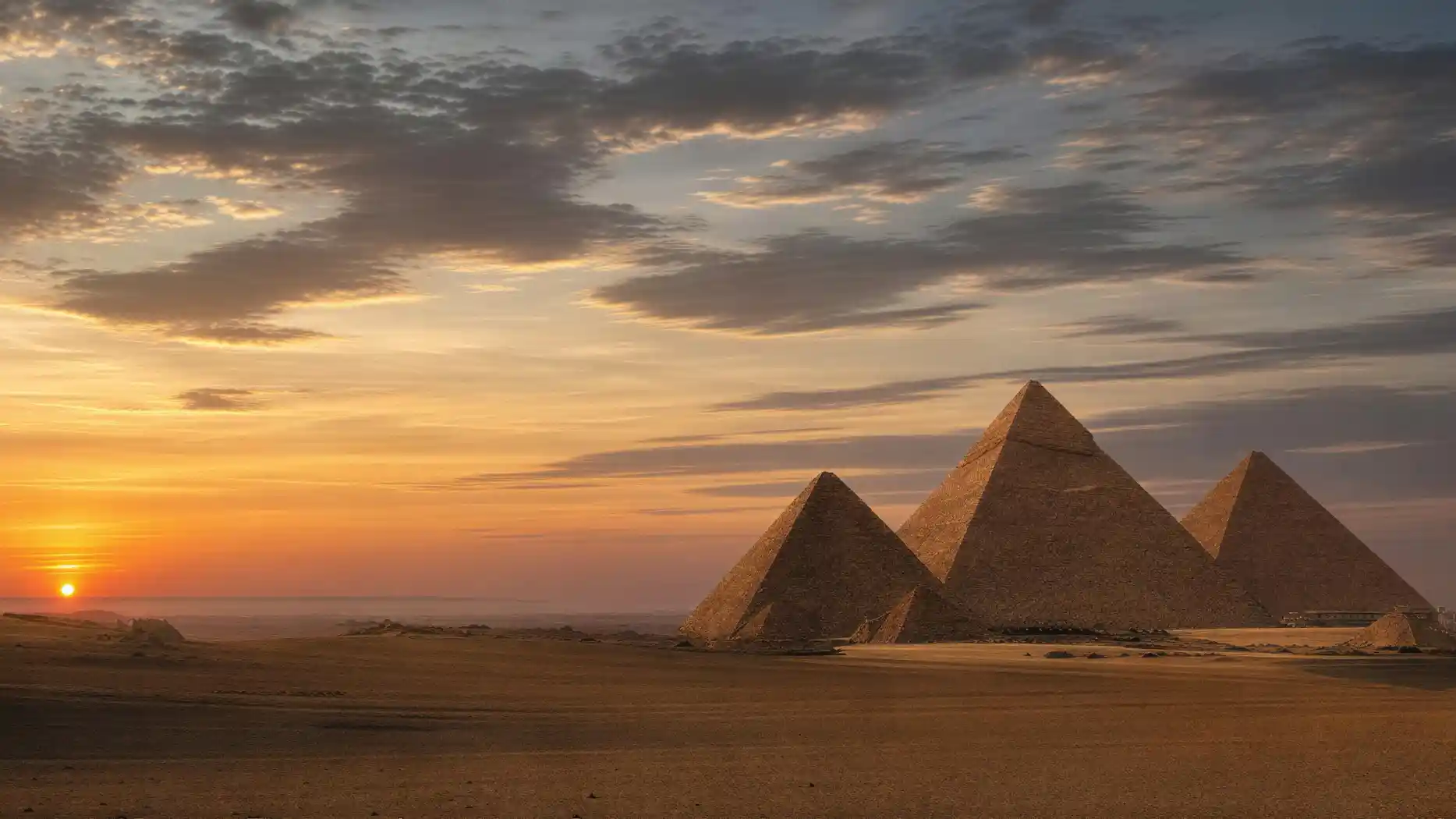
Entry to the Giza Plateau is cheap. That is the starting point you need to know before thinking about tours, because it changes the whole calculation. A guided tour costs a multiple of the entry fee alone, and this surcharge goes almost entirely into two things: someone to explain what you are seeing, and someone to take you there and bring you back.
Whether it is worth it therefore depends less on the price than on how much you want to organize yourself. If you are staying in Giza, walk to the gate in the morning, and are prepared, you do not need anyone. If you are coming from central Cairo, do not want to haggle with drivers, and want to know why the middle pyramid looks bigger than the largest, you get a lot for your money.
There is, however, one thing that is almost never included in the price, and it happens to be the most expensive: the ticket for the interior of the Great Pyramid of Khufu. In a catalog of around one hundred and forty guided offers starting in Cairo or Giza, the interior was included in a handful. In all others, it was either explicitly excluded, listed as a paid add-on, or not mentioned at all.
This is not a trick by the providers, but a consequence of the quota system. The number of interior tickets per day is limited, they are tied to time slots, and no organizer can reliably guarantee them for a group. If you want to go inside, you have to arrange it separately, and if you do not know that, you will end up disappointed at the entrance.
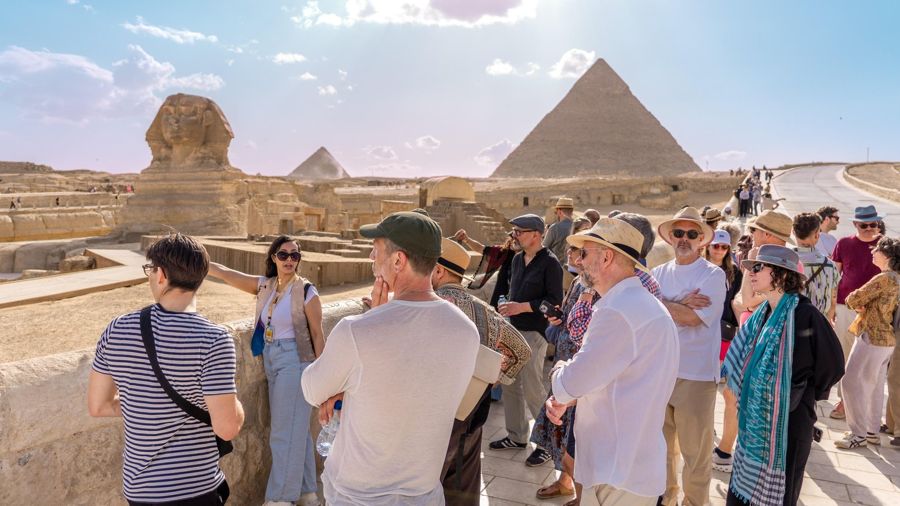
A second point belongs here because it shapes the expectation of the word "tour." On the Giza Plateau, there is no fixed route, no circular path with numbers, and no audio guide stations like in a museum. The site is open, several square kilometers in size, and the buildings are far apart. What a guided tour therefore mainly does is make choices: it decides where you go in the limited time and where you do not, and this decision is more valuable on such a large site than any individual piece of information.
This page therefore does not sort by price, but by type: what kinds of tours exist, what is reliably included, what you pay extra for, and in which cases the honest answer is that you are better off going without a tour.
What a Decent Tour Should Include
- Entry to the plateau, not just transport there
- Pickup and return from your accommodation, with a fixed time
- A licensed guide, not just a driver with local knowledge
- A clearly stated duration so you can plan the rest of the day
- A free cancellation period, usually 24 hours
- A clear statement on whether the pyramid interior is included, usually it is not
- Clarity on whether a shopping stop is part of the program
If any of these points is missing from the description, ask before booking. The answer usually comes quickly and is more binding than an assumption.
Four Formats, Sold Under a Hundred Names
In practice, almost all offers boil down to four formats, and once you know these four, you can immediately categorize any description online.
The first is the short guided tour of the plateau, usually on foot, three to four hours. It covers the three great pyramids, the panoramic viewpoint, and the Sphinx, and it ends where the hustle begins. This option suits you if you are staying nearby, have other plans for the afternoon, or simply do not want to sacrifice the whole day.
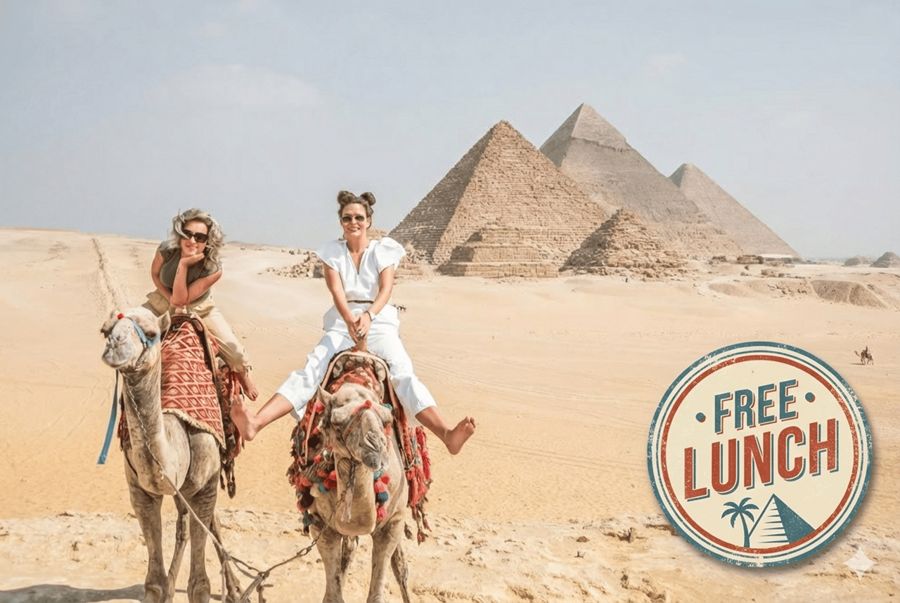
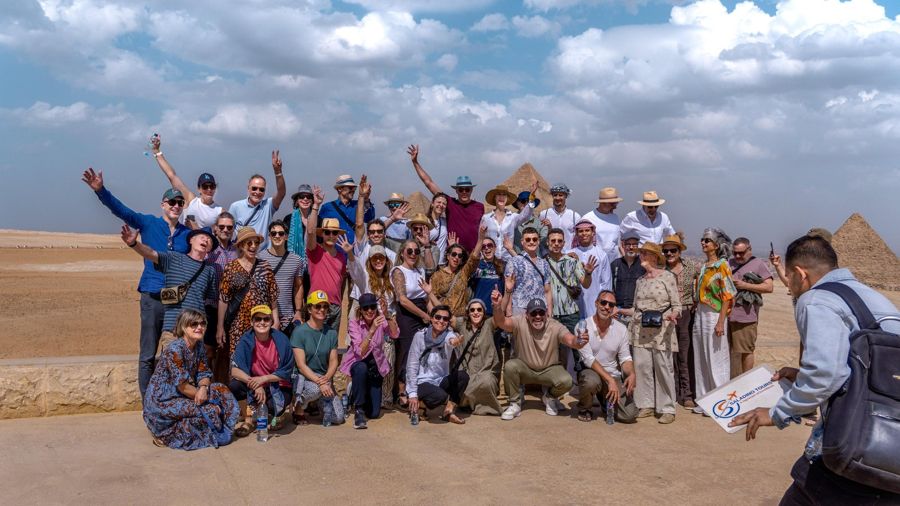
The second is the classic half-day tour with pickup, five to six hours. This is by far the most common booking, and it is the reason most travelers see the plateau in the morning. Included are transport, entry, and guide, often a camel ride as an extra, sometimes lunch.
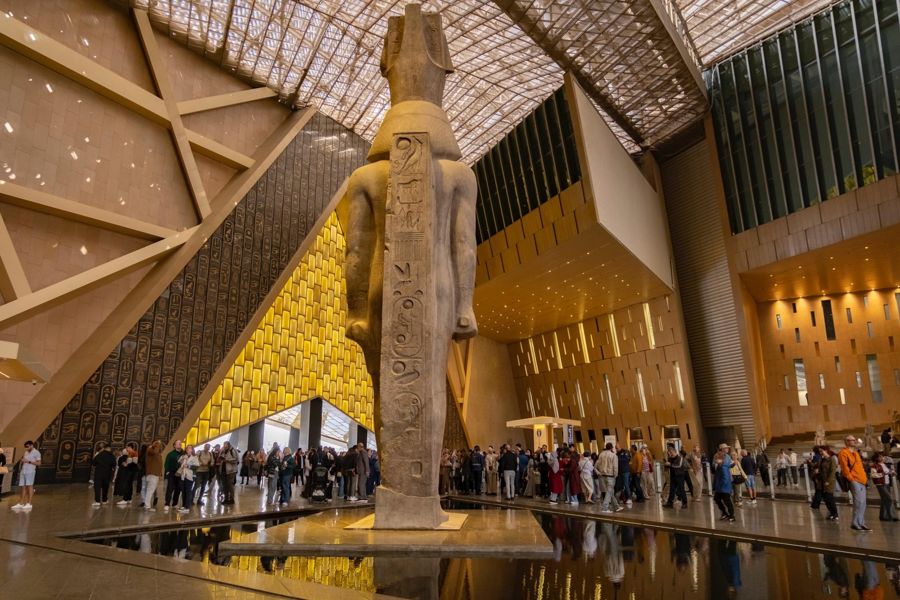
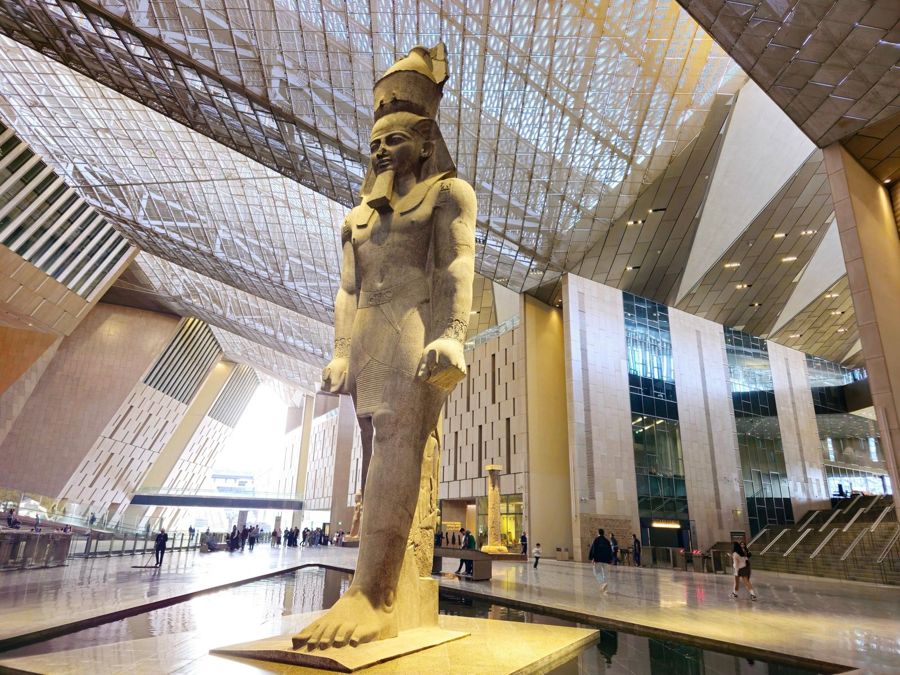
The third is the full day, seven to nine hours, usually combined with the Grand Egyptian Museum or with Memphis and Saqqara. It is especially worthwhile for travelers staying further away, because it makes the long journey necessary only once instead of twice.
These four formats are freely combined by providers and sold under ever-new names, which gives the impression that there are hundreds of different products. In fact, most differ only in three variables: duration, additional stops, and whether private or in a group. When you read a description, therefore, look first for these three pieces of information and ignore the rest of the headline. Names like "VIP," "Deluxe," or "All Inclusive" are not protected terms and say nothing in themselves about what is included.
The fourth is the private tour, which exists in all three lengths and differs less in content than in pace. Among the offers evaluated, about every second one was also bookable as a private variant. The median duration across all day tours was around six hours, which is a good reference point for planning.
The same three formats as concrete offers. The difference lies less in content than in the time you plan for, and in whether you are picked up.
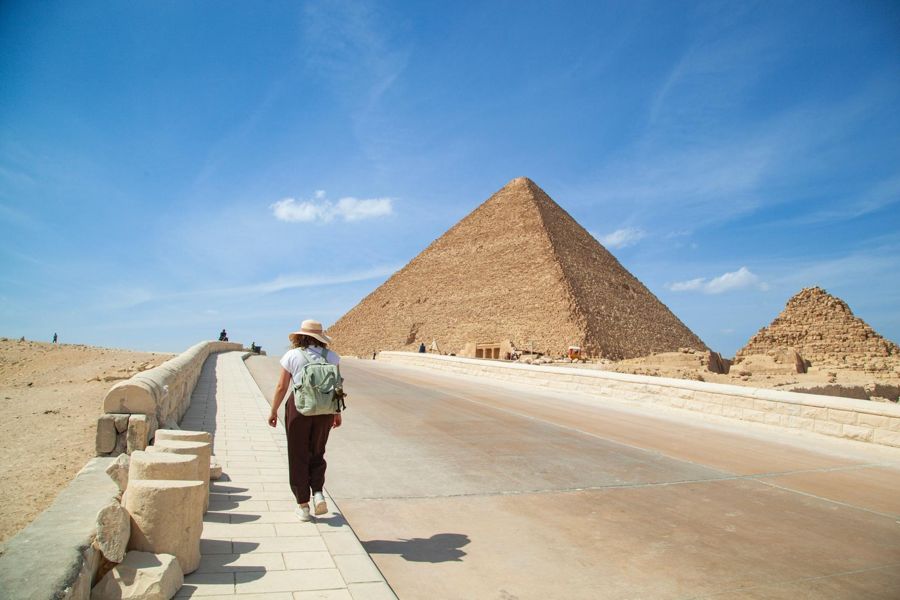 Start in Giza
Short and on Foot
- Plateau entry
- English-speaking guide
- Hotel pickup as an add-on
- Pyramid interior as an add-on
- Free cancellation up to 24 hours before
Accommodations within walking distance, or as a supplement to an otherwise full day
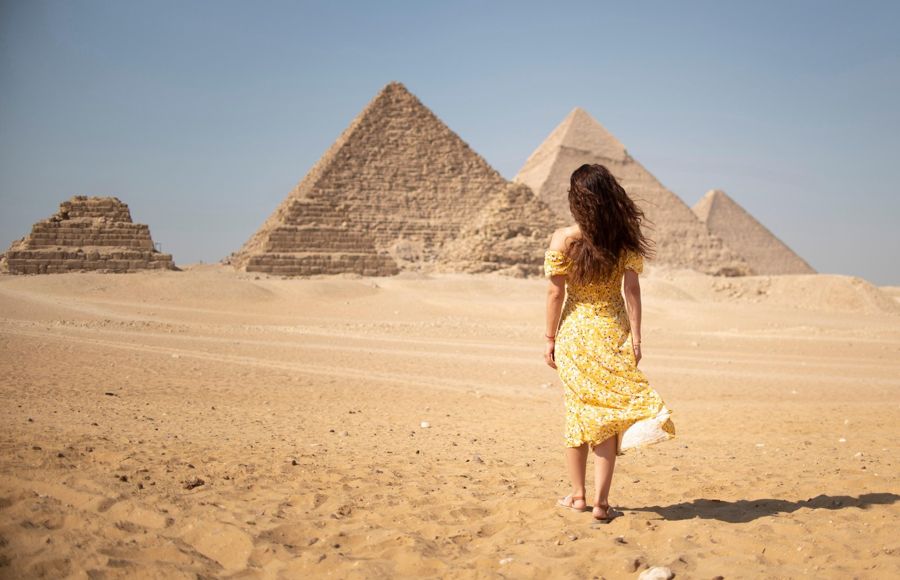 With Pickup
Classic Half-Day Tour
- Plateau entry
- English-speaking guide
- Hotel pickup
- Lunch as an add-on
- Pyramid interior
- Free cancellation up to 24 hours before
The first visit and accommodations in central Cairo
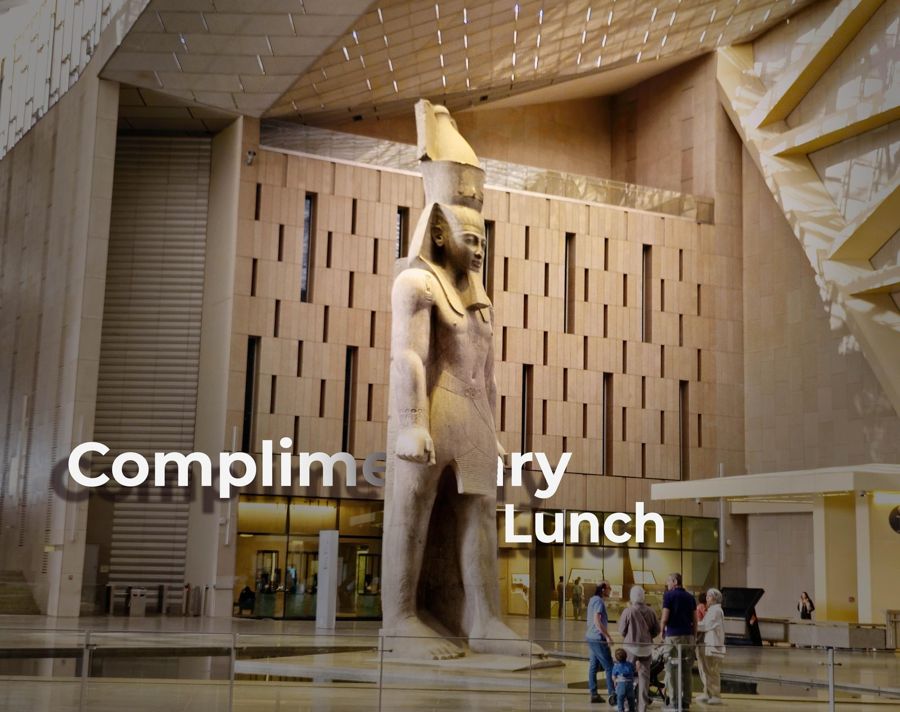 Most Booked
Full Day with Museum
- Plateau entry
- English-speaking guide
- Hotel pickup
- Lunch
- Pyramid interior
- Free cancellation up to 24 hours before
Those with few days in Cairo who want to see both
Group or Private?
The question most often asked is: group or private. It cannot be answered in general, but the differences are very concrete and can be weighed well.
In a group, you travel with eight to twenty people in a minibus, and the schedule is timed. That has advantages: it is significantly cheaper, the guide tells the same thing to everyone and therefore has to be well prepared, and the procedures at the entrances are well-rehearsed. It also has disadvantages, and the most important is time. A group moves at the pace of its slowest member, and a photo stop lasts as long as the last person needs.
Private costs noticeably more depending on group size, but often less than many expect, because the price is shared among all participants. For two people, the surcharge is considerable; for four, it shrinks; from six people, a private tour is often cheaper than six individual places in a group.
The real gain is in content. You can ask questions without holding up the group, you can stay longer at one spot and skip another, and you can change the order if the light or the crowds suggest it. Those who are truly interested in the monuments get the biggest difference for their money here.
There is an intermediate form that is rarely advertised and for many is the best solution: the small group with a limited number of participants. It is priced between the two variants, retains the advantage of a shared price, and avoids the disadvantage of the large coach. Among the offers evaluated, such a limit was often listed as a feature, and it is worth searching specifically for it in the description, because the number of participants shapes the experience more than almost any other detail.
A third point concerns families. With small children, a private tour is almost always the better choice, because breaks, heat, and attention spans do not have to follow a group schedule.
Who Is Allowed to Explain Things to You
Who explains things to you is a regulated matter in Egypt, and that is more important for your choice than it initially sounds.
A tour guide license in Egypt requires a completed university degree, usually in Egyptology, archaeology, or history, from a recognized Egyptian university. The license is issued by the Ministry of Tourism, and licensed guides carry an official ID. That is a real quality filter: someone who can explain the development of tomb architecture from Saqqara to Giza has studied it.
Two other groups are to be distinguished from this. First, drivers and assistants who help organizationally but are not allowed to explain. Second, people who approach you on the site, pose as guides, and show an ID that may be borrowed or invented.
This can be checked with reasonable effort. Travel companies in Egypt must be registered, and the Egyptian Travel Agents Association maintains a public directory of licensed firms. When booking through a large platform, this check is usually done by the provider, which is why platform bookings require less attention on this point than an agreement made on the spot.
A good guide is recognized by something other than the ID anyway: they answer a question even when the answer is "that is not known," and they do not tell you that the pyramids are visible from the moon.

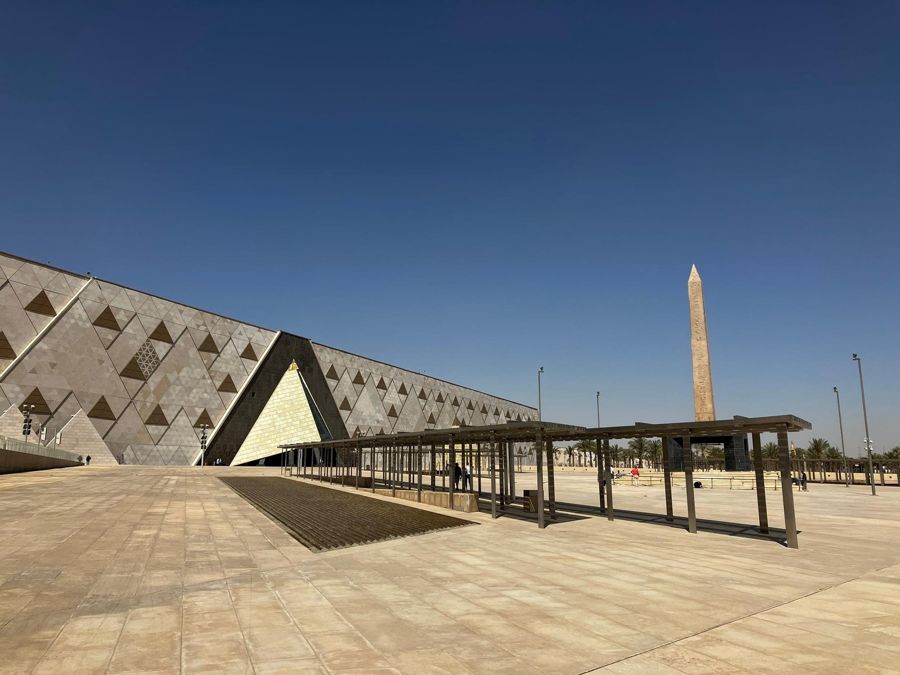
Private Tour to the Grand Egyptian Museum and the Giza Plateau
- Your own pace, your own order, questions without regard for a group
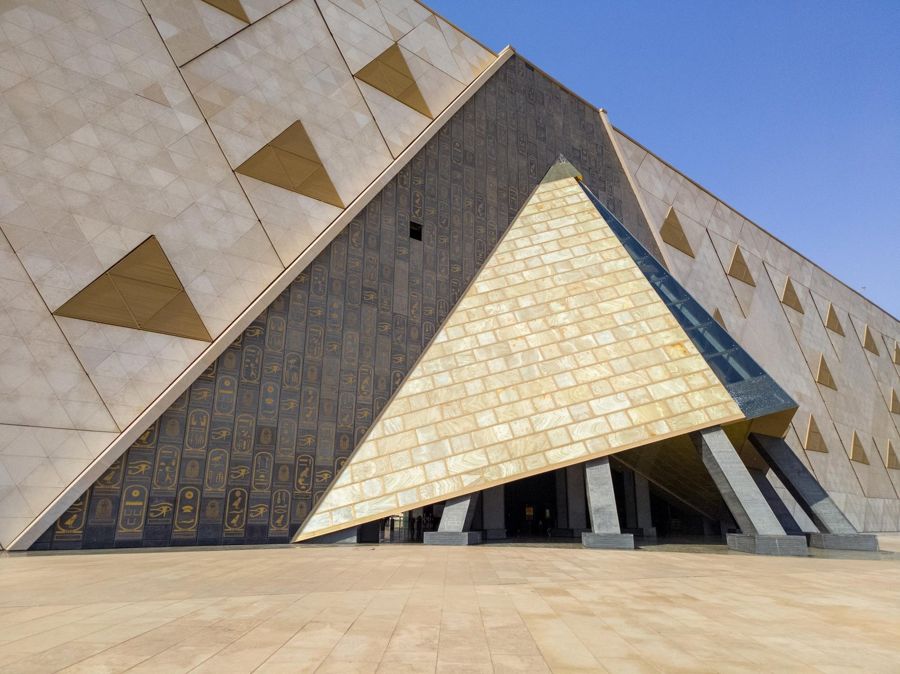
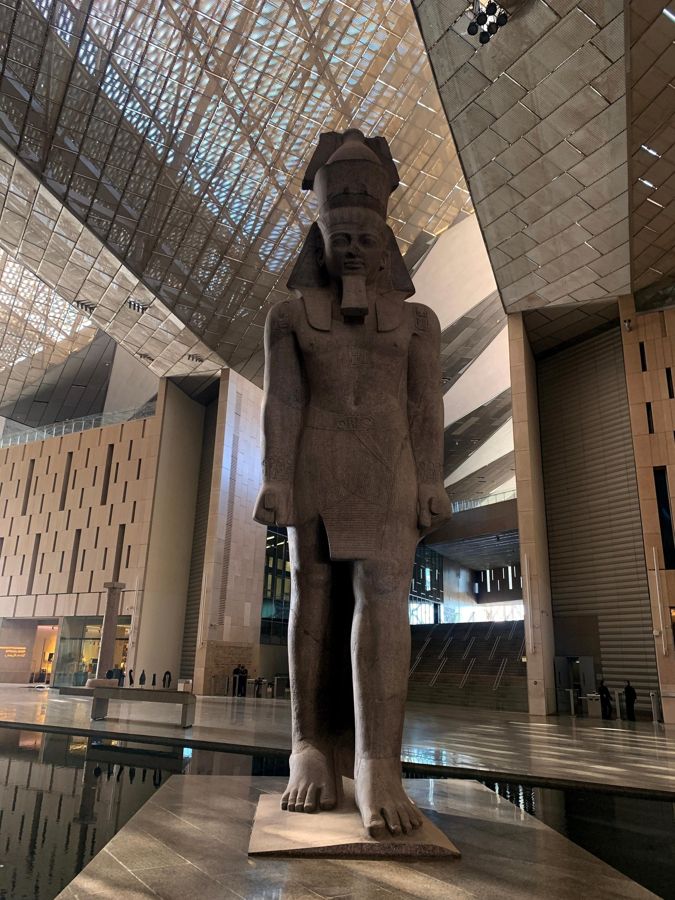
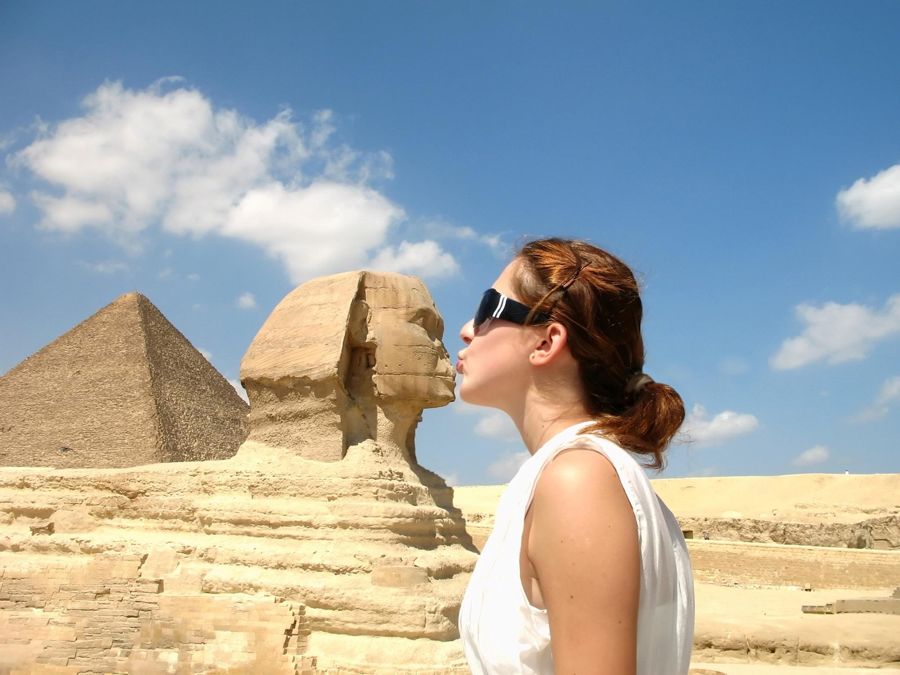
- Seven hours for museum and plateau in one day
- Plateau entry, German-speaking guide, pickup, and lunch included
- Free cancellation up to 24 hours before
What You Pay Extra For
Now to the part that descriptions like to keep short: what you pay extra for.
First again is the interior. The ticket for the interior of the Great Pyramid of Khufu costs a multiple of the plateau entry, is limited daily, and is almost never included in guided tours. The cheaper interiors of Khafre and Menkaure are also extra, but cost significantly less and are more often available. The plateau entry itself is in the low double-digit euro range.
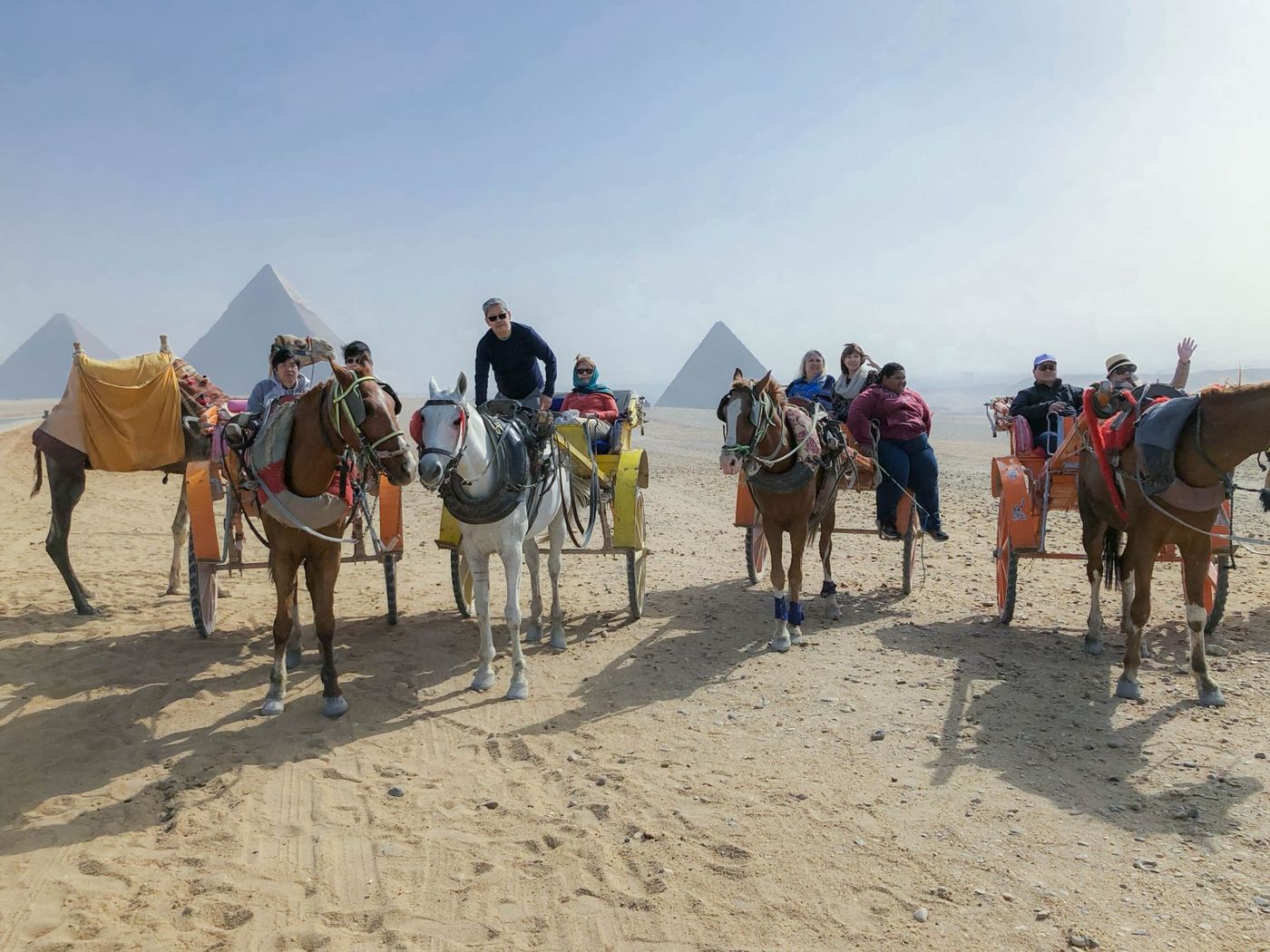
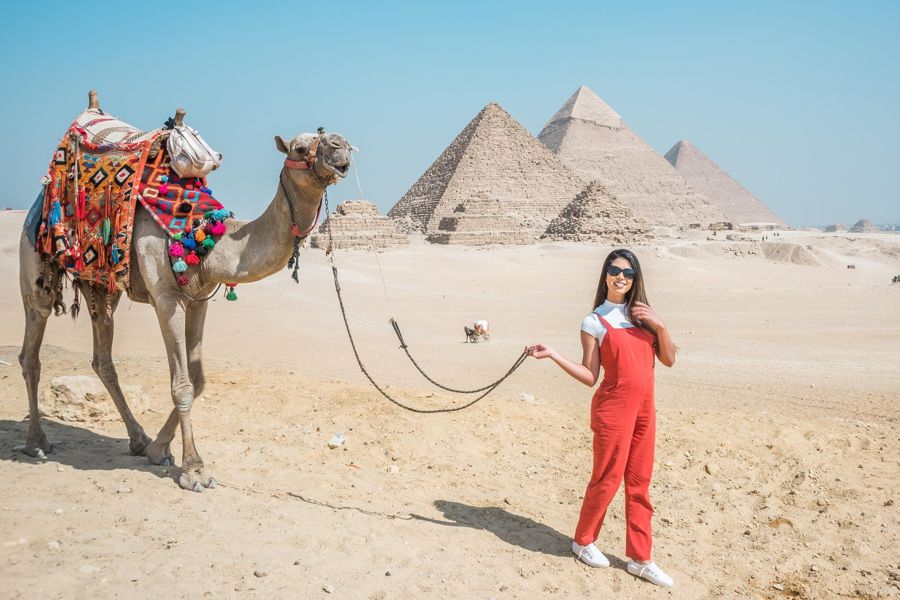
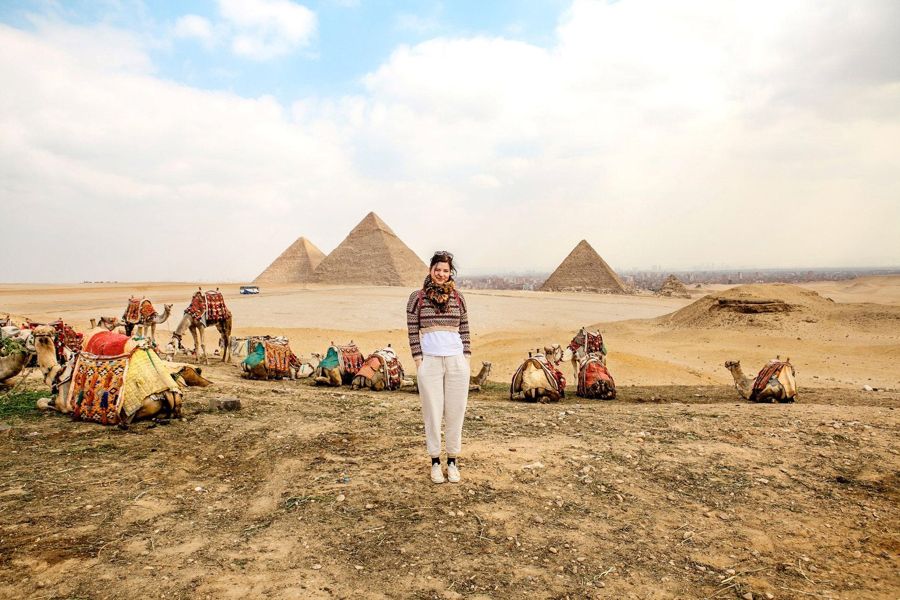
Second are camel and carriage rides. They are mentioned as program items in many tours, but not always paid for, and the line between "included in the price" and "to be arranged on site" is exactly where trouble arises. Clarify this beforehand and have the full price stated: amount, currency, duration, and number of people.
Third is the tip. In Egypt, it is not a bonus but a fixed part of income in tourism, and it is expected separately for guide and driver. For a day, budget an amount in the order of a good lunch for the guide and about half that for the driver. Having cash in small bills makes life easier.
A fourth item is almost always forgotten: drinks and water. There are vendors on the plateau, but at prices significantly higher than the same bottle costs two hundred meters further down, and at over thirty degrees you drink more than you plan. Two large bottles per person per day is realistic, and buying them at the hotel saves a double-digit percentage of the day's costs.
And finally, the shopping stops. Some tours include a visit to a papyrus or perfume factory. That is not inherently bad, but it costs time from the actual program. If you do not want that, say so beforehand, not on the way.
How to Recognize a Bad Offer
That leaves the question of how to recognize a bad offer before you have booked. There are some patterns that reliably repeat.
The clearest warning sign is a promise that no one can keep. If a description guarantees access to the interior of the Great Pyramid of Khufu, either the add-on is meant, which must be paid separately, or it is simply dubious. The daily quotas are limited and tied to time slots, and no organizer has them. The same applies to offers that promise access to tombs or chambers that are not open to the public.
The second pattern is the incomplete price. Reputable offers state amount, currency, duration, and number of people in one sentence. Where one of these four pieces of information is missing, there is room for later renegotiation. This especially affects camel and carriage rides, where a stated price is regularly meant per person and per direction, while the customer understood it as a total price.
The third pattern concerns the place of contract. An offer made to you at the entrance, in the parking lot, or from a stopped vehicle has no cancellation conditions, no reviews, and no contact person if something goes wrong. That does not have to mean it is bad. It means you bear the risk entirely.
The fourth pattern is pressure. Phrases like "only today," "last place," or a cash deposit on site are simply unnecessary in a market where almost everything can be canceled free of charge up to twenty-four hours before. Whoever denies you time to think has a reason for it.
And one last, friendlier pattern: an offer that openly states what is not included is almost always better than one that only lists what is included. Honest exclusion lists are a quality feature, not a deficiency.
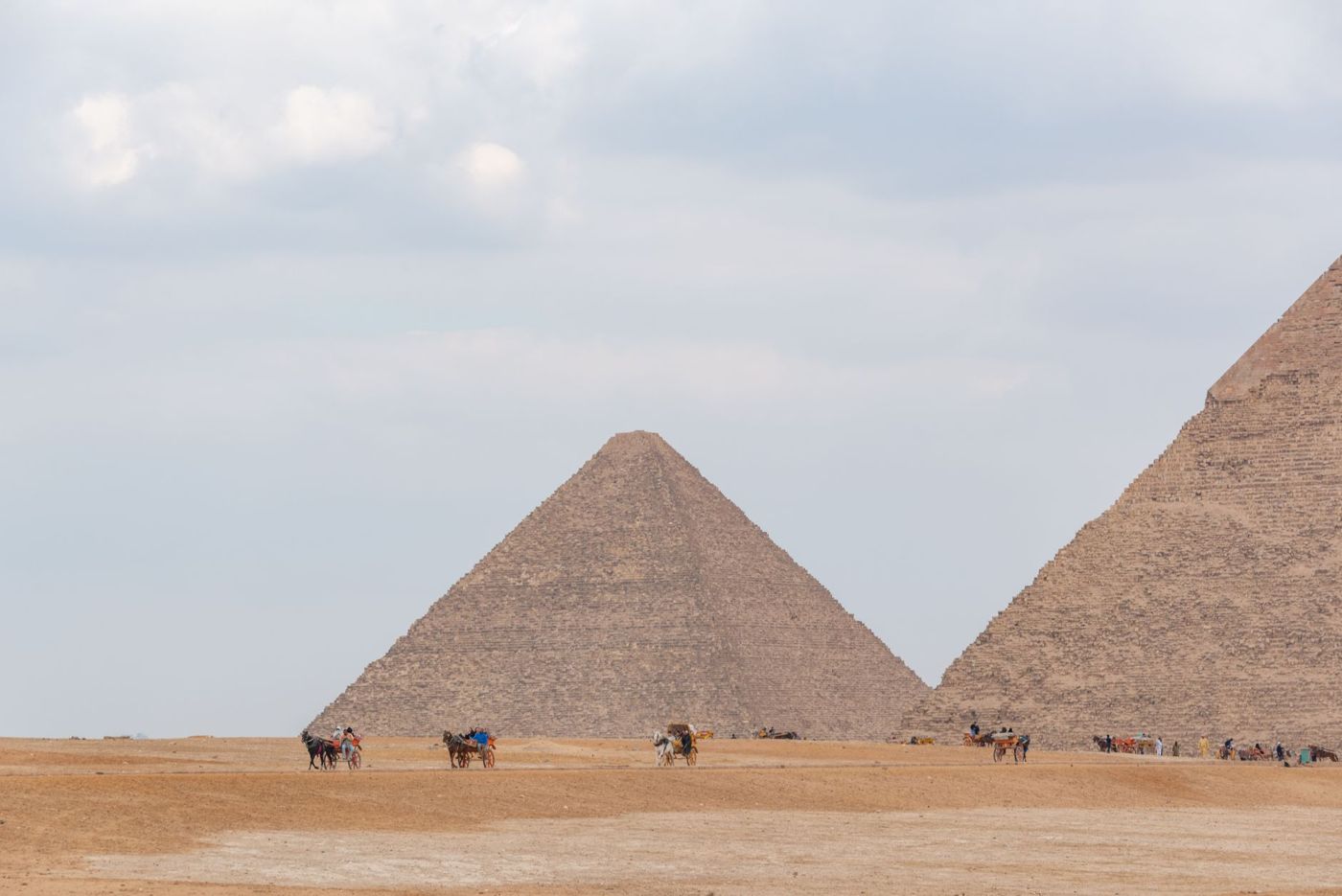
What the Day Costs in Total
All amounts are set in Egyptian pounds; the euro equivalent fluctuates with the exchange rate.
When No Tour Is the Better Choice
Now the section you will not find on booking sites: the cases where no tour is the better decision.
The first case is proximity. If you are staying in a hotel at the plateau from which you can reach the gate on foot, a tour with pickup is a detour. You then buy transport you do not need and tie yourself to a time that restricts your freedom. Buy the ticket in advance via the official portal of the Ministry of Antiquities, be at the gate at opening, and have the first hour almost to yourself.
Conversely, it is worth asking what a good guide shows you that you would overlook alone, because that is exactly where the value lies. It is rarely the three great monuments, which you find anyway. It is the quarry marks south of the Great Pyramid, where you can count the size of the cut-out blocks. It is the causeway of Khafre, which still traces the line between the valley temple and the pyramid in the terrain. It is the empty boat pits, the remains of the original casing at the top of the second pyramid, and the valley temple with its granite pillars, which most visitors pass by because from the outside it looks like a wall.
Add to that the order. From which point you look when determines whether the proportions are right and whether the sun is at your back. Someone who knows the site places the panoramic viewpoint at the right point of the morning and the Sphinx at another. That is not information you can read up on, but local knowledge, and it is the part of the price that pays off most.
The Second Visit and the Tight Schedule
The second case is the second visit. If you have already been there with a guide, you know the site and do not need the explanations again. A second visit on your own is the best way to photograph in peace, seek out the less visited corners, and spend time where it interests you.
The third case is a very tight schedule with a fixed end, such as a stopover with a return flight the same day. Here, a private transfer with a fixed return time is often more reliable than a group tour whose end depends on the group.
And the fourth case concerns travelers who prefer to read for themselves anyway. If you read up beforehand and on the way you want to look rather than listen, a guide is not a gain for you but background noise. That is not a flaw but a preference, and it saves considerable money.
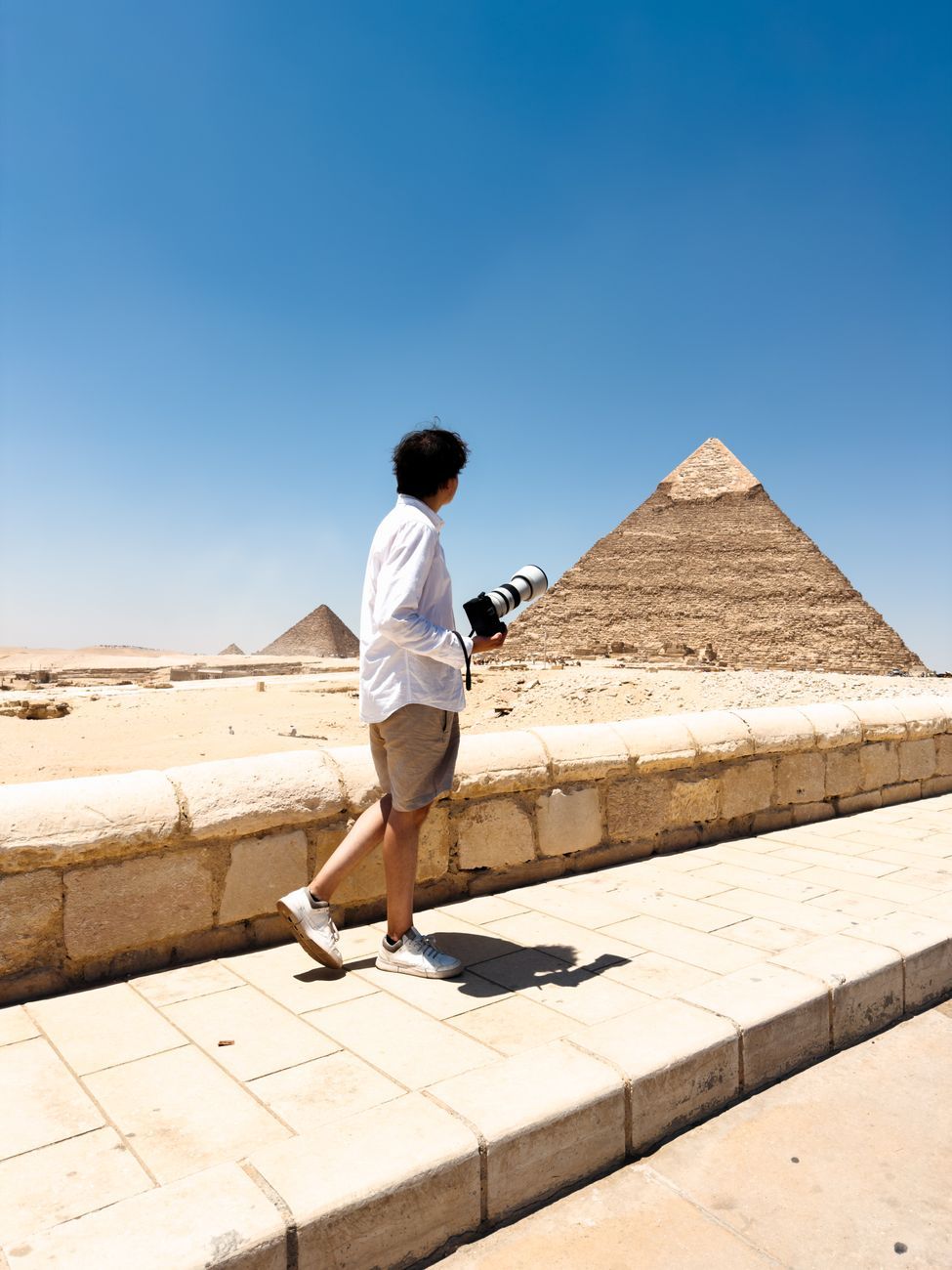
Plateau entry as QR code, without a guide
The option for all four cases above: buy entry in advance, go yourself, manage your time freely.
What Matters When Booking
If you have decided on a tour, the booking decides the rest, and three points have become more important since the plateau was redesigned.
First, the pickup. In the offers evaluated, it was almost always included, and since 2025 that is worth more than before. Private vehicles are no longer allowed on the site, the main entrance has moved, and a driver who knows the current regulations saves you the argument at the wrong gate. When booking, give the exact address, not just the hotel name, because in Giza similar names occur several times.
Second, the time. Early is better, for three reasons at once: fewer people, cooler, and the flat light is good for photos. Tours that start only around ten o'clock meet the full bustle on the plateau. If you are choosing between two otherwise equal offers, take the earlier one.
Third, cancellation. In all offers evaluated, a free cancellation period of twenty-four hours applied. That is practical because you can book early without committing, and because weather, arrival time, or mood may still change until the day before.
Also compare what happens at the end. Some tours end at the plateau and leave the return journey to you, others drop you back at your accommodation, and still others attach the return journey to a shopping stop. That is in the descriptions but rarely read, and it decides whether your afternoon still belongs to you. For a half-day tour in the morning, this point is often more important than the price difference between two offers.
A fourth point concerns language. German-speaking tours are plentiful, but they are not the standard. Check the language field before booking instead of relying on it working out.

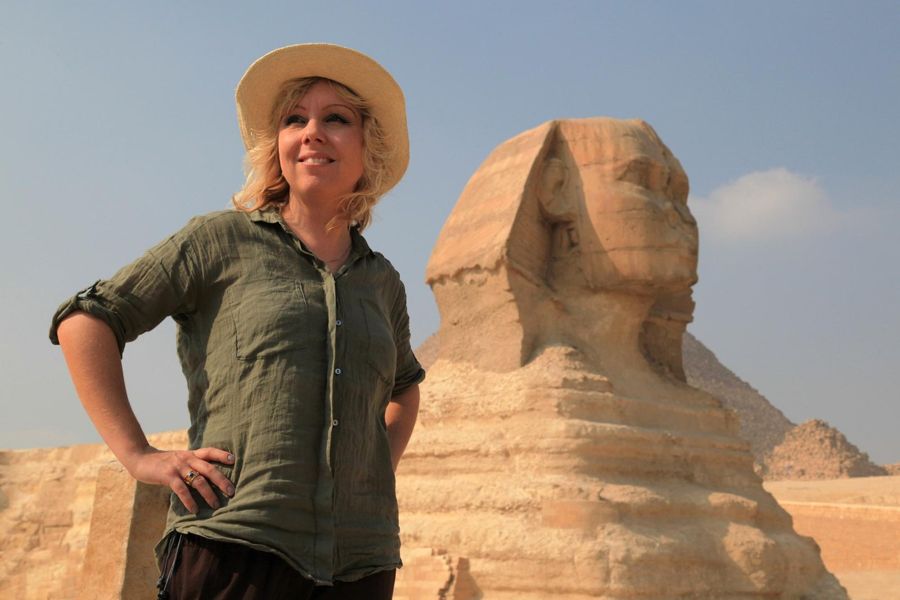
Full-Day Tour to Pyramids, Sphinx, and Museum with Female Guide
- Over a thousand reviews, which speaks for reliability in pickup times and procedures
- Plateau entry, German-speaking guide, pickup, and lunch included
- The pyramid interior can be added as an add-on
- Free cancellation up to 24 hours before
Frequently asked questions
Is entry included in the tours?
The plateau entry is almost always included. The ticket for the interior of a pyramid almost never, because daily quotas are limited and no organizer can guarantee them.
How long does a typical tour take?
The average across day tours is around six hours. Short guided tours take three, combination tours with the museum need seven to nine.
Is a private tour worth it for two people?
In terms of content, yes; in terms of price, the surcharge is greatest for two. From about four people, the two variants converge significantly.
Can you go without a tour?
Absolutely. Buy the ticket online, organize the journey yourself, arrive at the main entrance in the southwest. That is the cheapest option and often the better one for a second visit.
What a Tour Really Sells
Strictly speaking, a tour to the Great Pyramid of Khufu sells you nothing that you could not get on your own. The ticket is public, the site is open, and the way there is not an expedition.
What it sells is frictionlessness and context. Frictionless means: no haggling at the roadside, no wrong gate, no argument about the return journey, no uncertainty about how long the drive takes. Context means: someone tells you why the causeway runs where it runs and what the light blocks on the flanks of the Sphinx are.
The most honest comparison is therefore not tour versus no tour, but tour versus preparation. Both cost, one money, the other time. Whoever invests two evenings to understand what stands on the plateau gets a large part of what a guided tour delivers, while keeping full control over the schedule. Whoever does not have those evenings or does not want to invest them buys them, and that is a completely legitimate exchange.
Whether the surcharge is worth it depends on the type, and both answers are defensible. Whoever is in Egypt for the first time, has little time, and wants to understand the monuments is better off with a guided tour. Whoever has been there before, likes to plan themselves, and seeks the calm of the early morning hours gets along without one.
The entire site has been on the UNESCO World Heritage List since 1979, and that is not a label for the brochure but the reason for some of the rules you encounter on site: barriers at the Sphinx, the climbing ban, the restriction of interior tickets, the driving ban on the plateau. A guide who explains these rules instead of presenting them as harassment is a good sign.
The only wrong decision is to book the most expensive tour in the assumption that everything will then be included. That is nowhere the case, and precisely the point that matters most to most people is almost always outside the price.
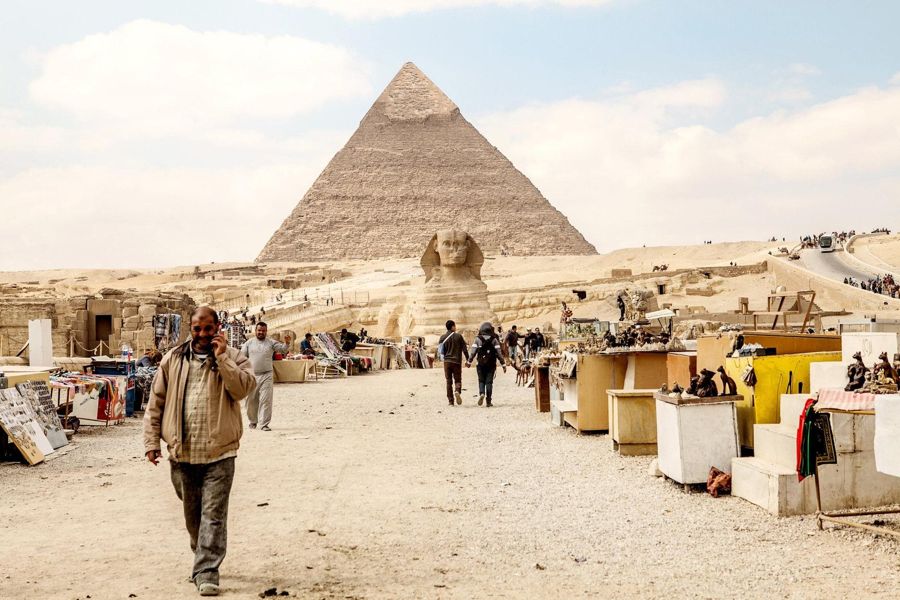
Half-Day Tour to Pyramids and Sphinx with Licensed Guide
- Four hours, the classic format for the first visit
- Plateau entry, German-speaking guide, and pickup included
- Short enough to plan the afternoon differently
- Free cancellation up to 24 hours before