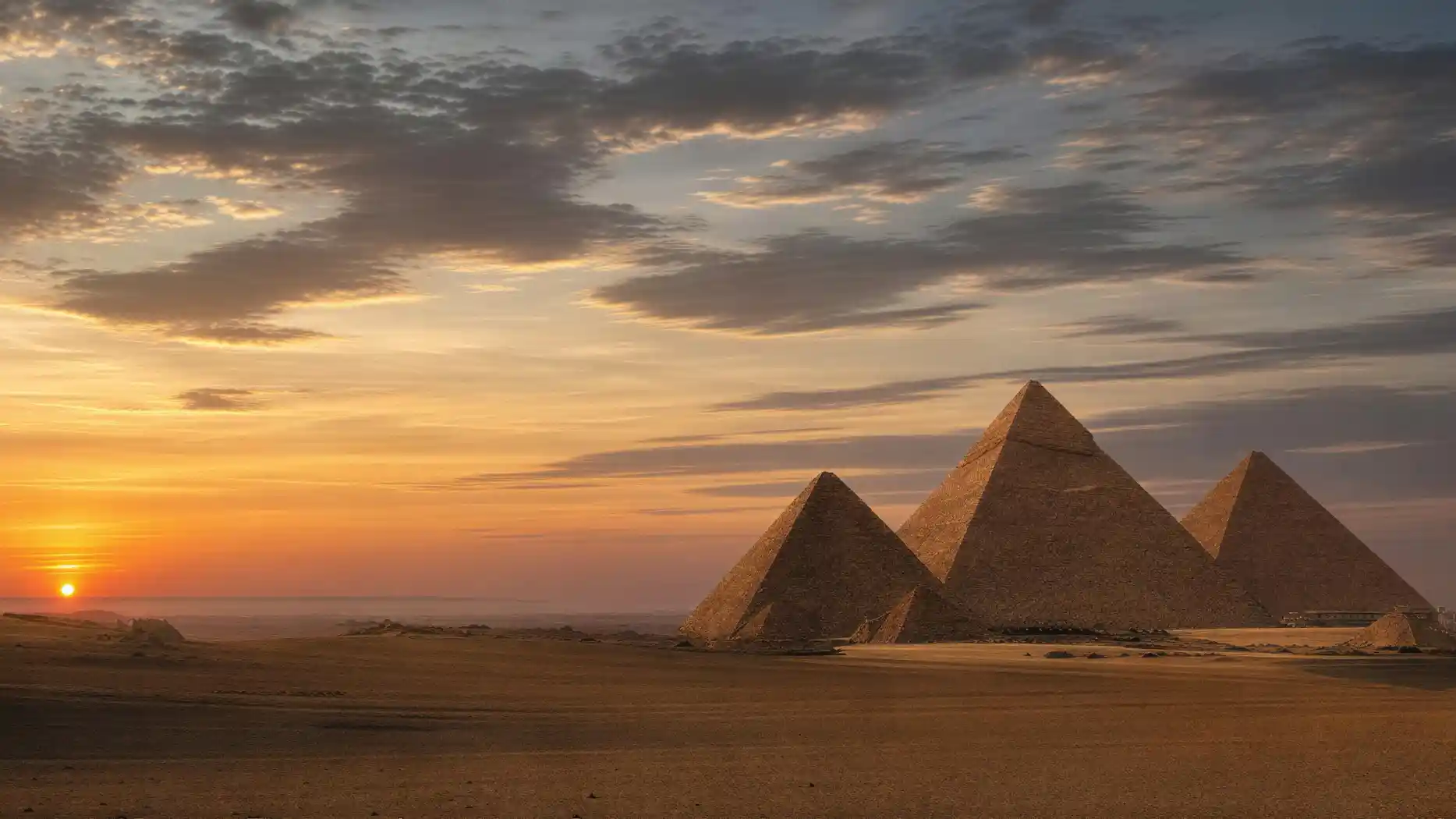
The Sound and Light Show at the Pyramids of Giza is the only way to legally get onto the site after sunset. That is its greatest advantage, and it is currently also its biggest problem.
This is because the production that has been running there for around forty years is currently being replaced. The operator has commissioned a completely new show, and work is underway. While it continues, performances are cancelled at short notice. No firm date for the new production has been announced.
This page therefore does not recommend buying a ticket. It describes what the show is today, what is good about it and what is dated, what is set to replace it, and under what conditions an evening can still be planned.
For context, this show was once something special. When it was first staged in the 1980s, there were hardly any comparable productions at ancient sites worldwide, and the format inspired imitators from Giza to Luxor and Abu Simbel. What seems old-fashioned today was the template back then.
If you need a short answer: As a fixed part of a brief trip, the show is not suitable at the moment. As a spontaneous decision on an evening when it is confirmed to take place, it can be worthwhile.
What to Expect and What Not
The most common expectations for such an evening, compared with what the production actually delivers.
| Expectation | Reality |
|---|---|
| Moving projections on the monuments | No. Colored floodlights illuminating the monuments one after another. |
| A walk around the nighttime site | No. A fixed seating stand east of the Sphinx, with no access to the excavation site. |
| A short program item | Roughly 45 minutes to an hour, plus travel time in evening traffic. |
| Narration in German | German-language performances exist, but not every evening. Check beforehand. |
| Reliable schedule | Not currently. Performances are cancelled at short notice due to renovation work. |
- Reality
- No. Colored floodlights illuminating the monuments one after another.
- Reality
- No. A fixed seating stand east of the Sphinx, with no access to the excavation site.
- Reality
- Roughly 45 minutes to an hour, plus travel time in evening traffic.
- Reality
- German-language performances exist, but not every evening. Check beforehand.
- Reality
- Not currently. Performances are cancelled at short notice due to renovation work.
The show continues to operate during the renovation but may occasionally be cancelled at short notice. The ticket is separate from the day ticket and costs extra.
Floodlights and a Narrator, Not Projections
What takes place in the evening is not a projection show in the modern sense, and this expectation is the most common disappointment.
The evening show at the Pyramids works primarily with floodlights and a spoken narrative. Colored spotlights illuminate the Sphinx, the valley temple, and the pyramids in turn, accompanied by a text about the history of the site, narrated from the perspective of the Sphinx. Music and sound effects accompany the whole. Moving images on the monuments, as known from modern facade projections, do not exist.
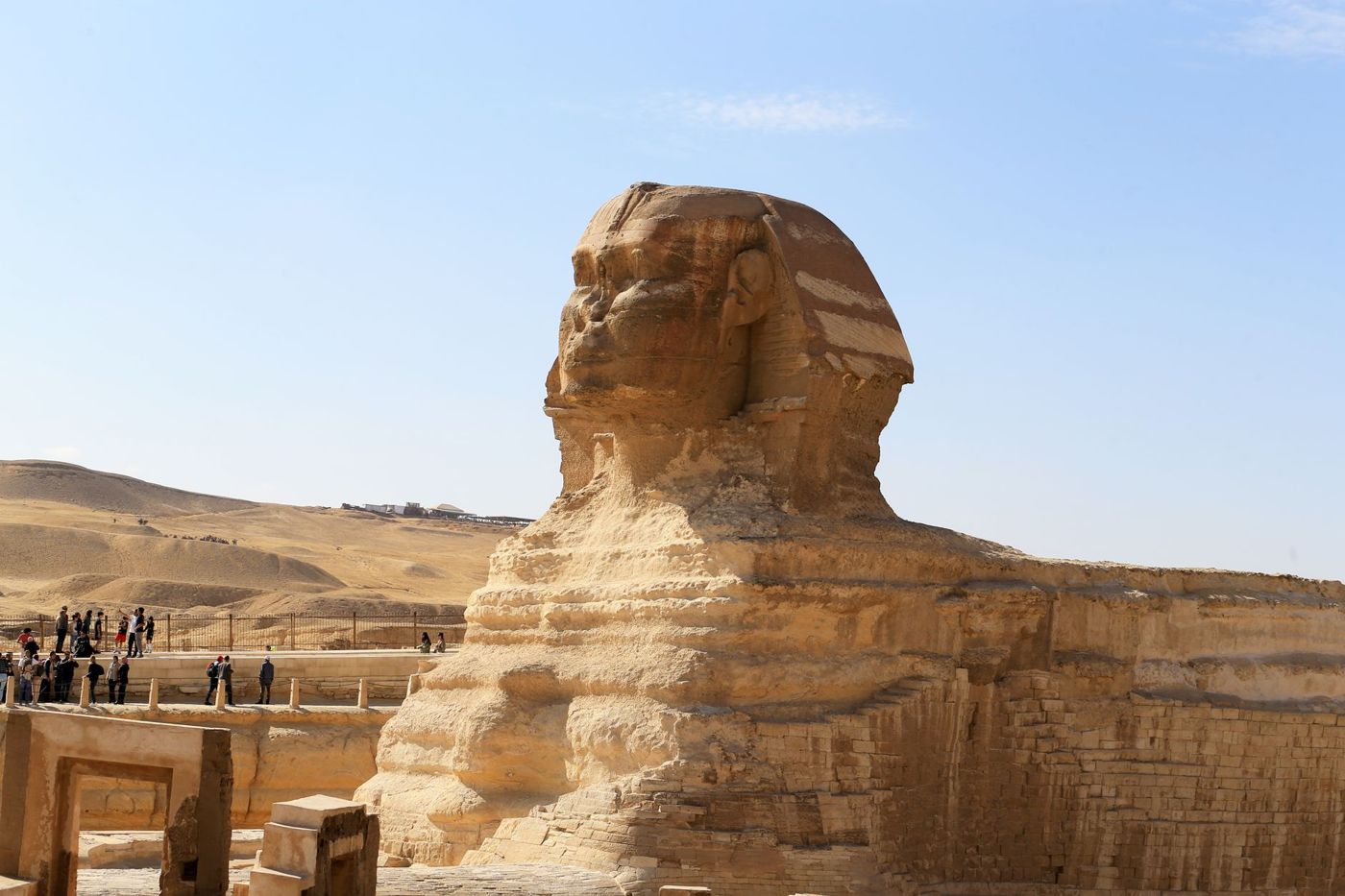
The audience sits on a fixed stand east of the Sphinx, i.e., outside the actual excavation site, with a view of the Sphinx and the Pyramid of Khafre rising behind it. A performance lasts about 45 minutes to an hour. There is no walking; you sit.
In practical terms, this means for the course of events: You arrive in the late afternoon or early evening, go through a separate entrance control, take your seat, and then sit quietly. Drinks are available at the edge, but no food. If you want to take photos, be aware that the monuments are brightly lit but the distances are large; without a fast lens or tripod, you won't get much.
The text and dramaturgy are clearly from another era. Depending on taste, that is either kitsch or charm, and both judgments are defensible. What is undisputed is the second part of the experience: seeing the monuments illuminated at night, from a distance where they fill your entire field of vision, is an impression that the daytime visit does not provide.
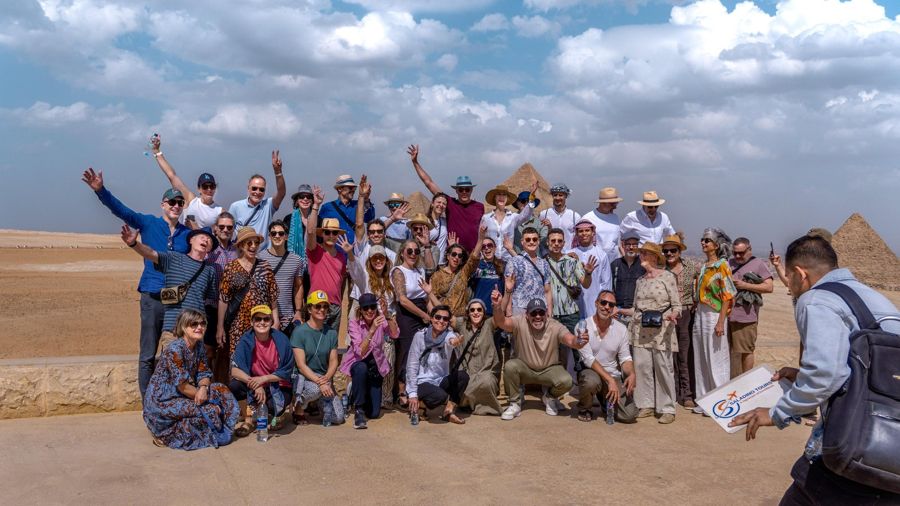
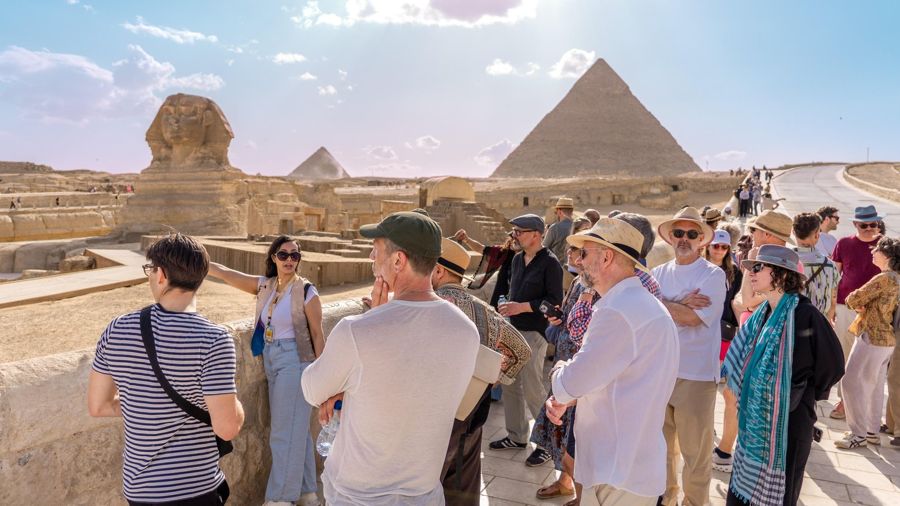
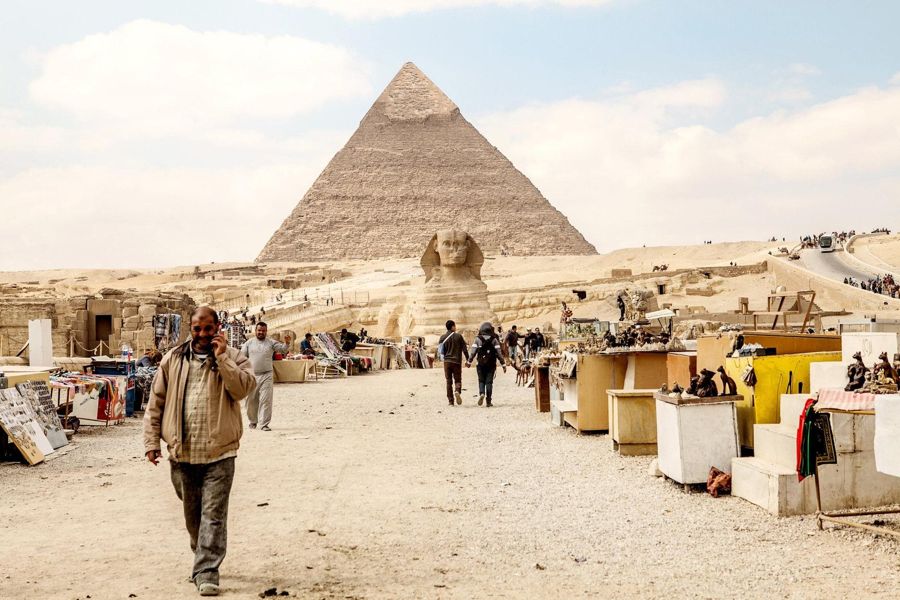
Half-day tour to the plateau and the Sphinx
- The daytime visit is the reliable part and currently the better investment of the evening
- Four hours, German-speaking guide, with pickup and preferred entry
- Plateau entry included, including the electric shuttle
- Free cancellation up to 24 hours before start
The Renewal Has Already Been Commissioned
The reason for the unreliability is not an operational problem but a construction project.
The operator of the plateau has commissioned the renewal of the show and has set up a separate company for this purpose. In July 2025, the chairman of the parent company publicly announced a new production, and an Egyptian bank approved medium-term financing for it. Varying figures circulate about the scale of the amounts, which is why none are mentioned here.
The new show is being designed by a Berlin studio for scenic media. According to its own project description, the valley temple, Sphinx, and pyramids are to be treated as three interconnected voices, with projections across the entire plateau, multilingual narration, and specially composed soundscapes. The narrative is to span from construction and use, through damage and rediscovery, to the present-day Egyptian reality.
That sounds like a considerable leap from the existing show, and it probably is. Only: The studio itself lists the project as planned for 2026, in development, without a confirmed opening date, and explicitly as not yet viewable.
A thought on this, because it puts impatience into perspective. A production that simultaneously plays across three monuments without damaging the fabric of a World Heritage site is not a stage set that you put up in one season. Lighting and projection technology must work without being attached to the existing structures, cable routes need approval, and any installation in the ground touches archaeologically sensitive terrain. That such a project takes years and dates slip is more the rule than the exception.
As long as that remains the case, the uncomfortable interim situation applies: The old show is still running, but not reliably, and the new one does not yet exist.
Why This Page Does Not Sell Tickets
Why this page does not sell tickets for the show needs to be said plainly, because other pages do.
There are providers that broker tickets for the performance. In the reviewed partner catalog, their ratings are between 2.99 and 3.25, across four independent providers. The rest of the Giza inventory in the same catalog ranges between 4.6 and 4.9. Such a gap across multiple providers is not coincidence or an outlier, but a pattern.
Add to that the probability of cancellation. Recommending a product whose performance can be cancelled at short notice due to ongoing construction shifts the risk entirely onto you. As long as that is the case, we consider it unjustifiable, and we will change it as soon as the new production is running and can be assessed.
This restraint applies expressly only to the show. For the daytime visit and for evening offers that do not depend on the performance schedule, we do provide recommendations, and the difference lies precisely there: A restaurant with a view of the illuminated site opens whether or not the show takes place.
What this means in practice: If you want to go, buy the ticket at the evening box office or through your accommodation, on the same day, after having confirmed by phone that the show is taking place. This sequence costs you nothing and saves you the most common annoyance.
The One Rule for This Evening
Call first, then drive. A confirmation from the same day is worth more than any advance booking, because cancellations are decided at short notice. Also, do not plan this evening for your last travel day: If the show is cancelled, the opportunity is gone.
For Whom the Show Is Worthwhile at the Moment
The question remains: For whom is a light and sound show in Giza currently worthwhile at all?
It is worthwhile for travelers with time. If you have a week in Cairo, you can set the evening spontaneously if it takes place, and you lose nothing if it does not. It is also worthwhile for repeat visitors who know the site by day and seek the nighttime view as a complement, not a replacement.
It is also worthwhile for those who enjoy the narrative. If you appreciate historical productions of this kind, you get here a well-preserved example of a genre that has long been replaced elsewhere by projection technology.
It is not worthwhile for short stays. If you have two or three evenings in Cairo, you would spend one on an event that, with noticeable probability, will not take place, and the drive in evening traffic costs additional time. In that situation, the museum in the evening or a dinner with a view of the illuminated site are the more reliable choices.
A special case is travelers with children. Sitting still for an hour in the dark, with a solemn narration in German or English, is a long time for younger children, and the journey home falls in evening traffic. For families, the evening is therefore seldom the best choice, however tempting the backdrop sounds.
And it is not worthwhile as a substitute for the daytime visit. From your seat, you see the Sphinx and one pyramid from a fixed distance. The scale that defines the daytime visit is experienced at the foot of the monuments, and you cannot get there in the evening.
A word about the journey, which often makes the evening longer than the show. Access to the stand is on the east side, i.e., on the city side, and the route there goes through the evening traffic of Giza. If you stay near the plateau, you are there in minutes; if you come from the center of Cairo, you should allow plenty of time for the outward journey and the same again for the return.
If you do go, take a jacket. The desert cools down quickly after sunset, the stand is outdoors, and sitting for an hour in the wind feels different from the walk from the car to the entrance.
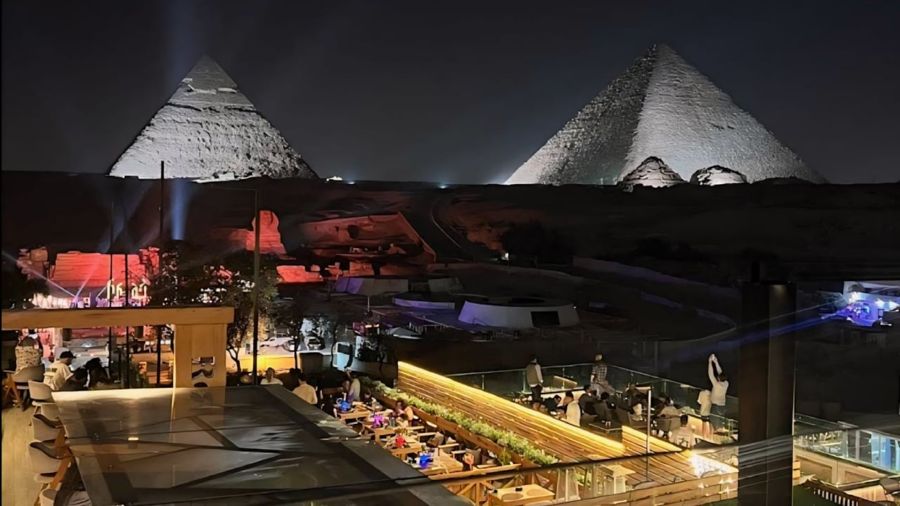
Dinner with a view of the illuminated site
The reliable alternative to the evening: four hours on a rooftop terrace with a view of the illuminated monuments, German-speaking support and pickup, independent of the show's schedule.
Frequently asked questions
Is the show currently taking place?
It generally continues to run, but is cancelled at short notice due to renovation work. Make sure on the same day before you go.
Is there a performance in German?
German-language performances exist, but not every evening. The language sequence changes, so ask beforehand.
Is the entrance included in the day ticket?
No. It is a separate ticket for an event outside the opening hours of the site.
Do you get onto the plateau?
Not onto the excavation site. The audience sits on a stand east of the Sphinx.
When will the new show premiere?
No date has been confirmed. The commissioned design studio lists the project as planned for 2026 and still in development.