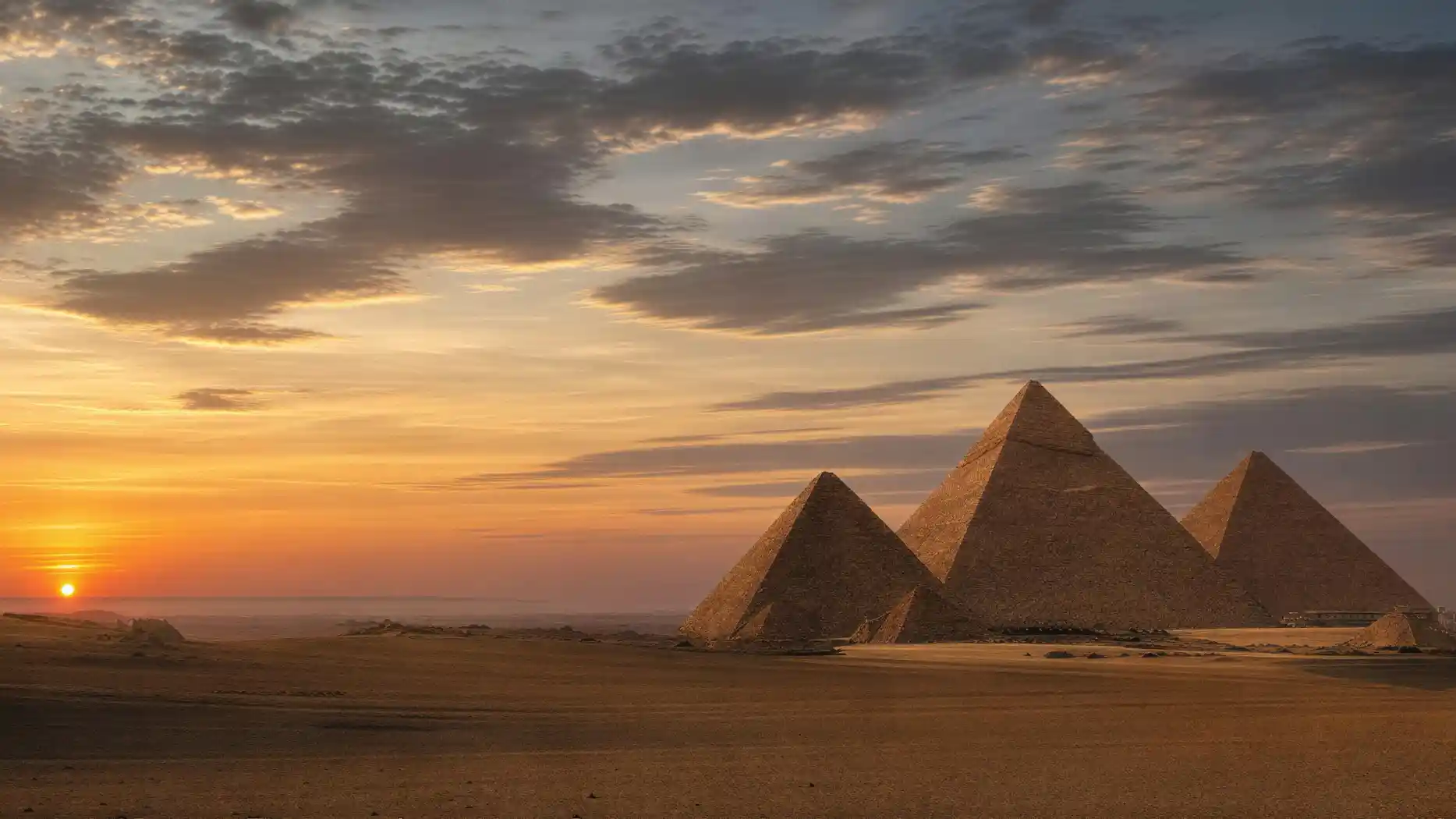
Sunrise at the Pyramids of Giza is one of Egypt's most sought-after photo subjects, and almost no one has seen it from inside. The reason is a calculation that takes less than two minutes.
The sunrise time in Giza ranges from just before six in June to just before seven in December, depending on the season; you can look up the sun times for Cairo for any day. The site officially opens at eight. So if you're at the gate when it opens, you've already missed the sunrise—by more than two hours in summer, and by just over an hour in winter.
At the other end of the day, it's the same in reverse. The sun sets just before five in December and just before eight in the evening in June, but the site closes in the late afternoon. So sunset also falls outside visiting hours.
This is not a minor detail; it's the most important piece of information on this page. Everything that follows answers the obvious follow-up question: Where do the photos come from then?
Sun Times vs. Opening Hours
Time
| Month | January | March | June | September | December |
|---|---|---|---|---|---|
| Sunrise | 06:50 | 05:59 | 05:54 | 06:44 | 06:47 |
| Sunset | 17:22 | 18:06 | 19:59 | 18:51 | 16:59 |
| Site Opening | 08:00 | 08:00 | 08:00 | 08:00 | 08:00 |
The closing time varies by source and season and is therefore not shown. It is always before sunset.
Sun times for Cairo, rounded to the nearest minute. Opening time according to the official overview of the Antiquities Authority.
The Famous Shots Are Taken Outside
The famous shots are therefore almost all taken outside the fence, and that's not cheating—it's simply the only way.
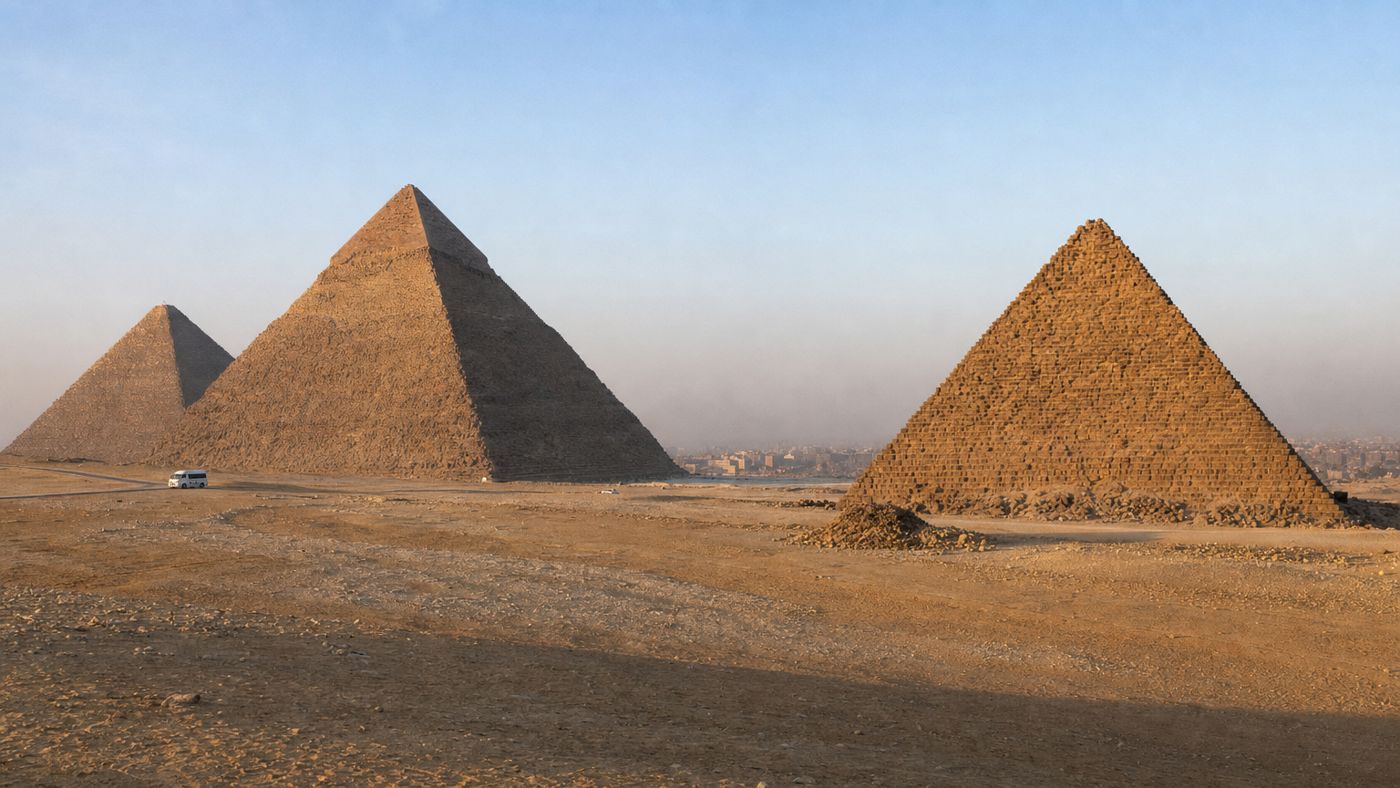
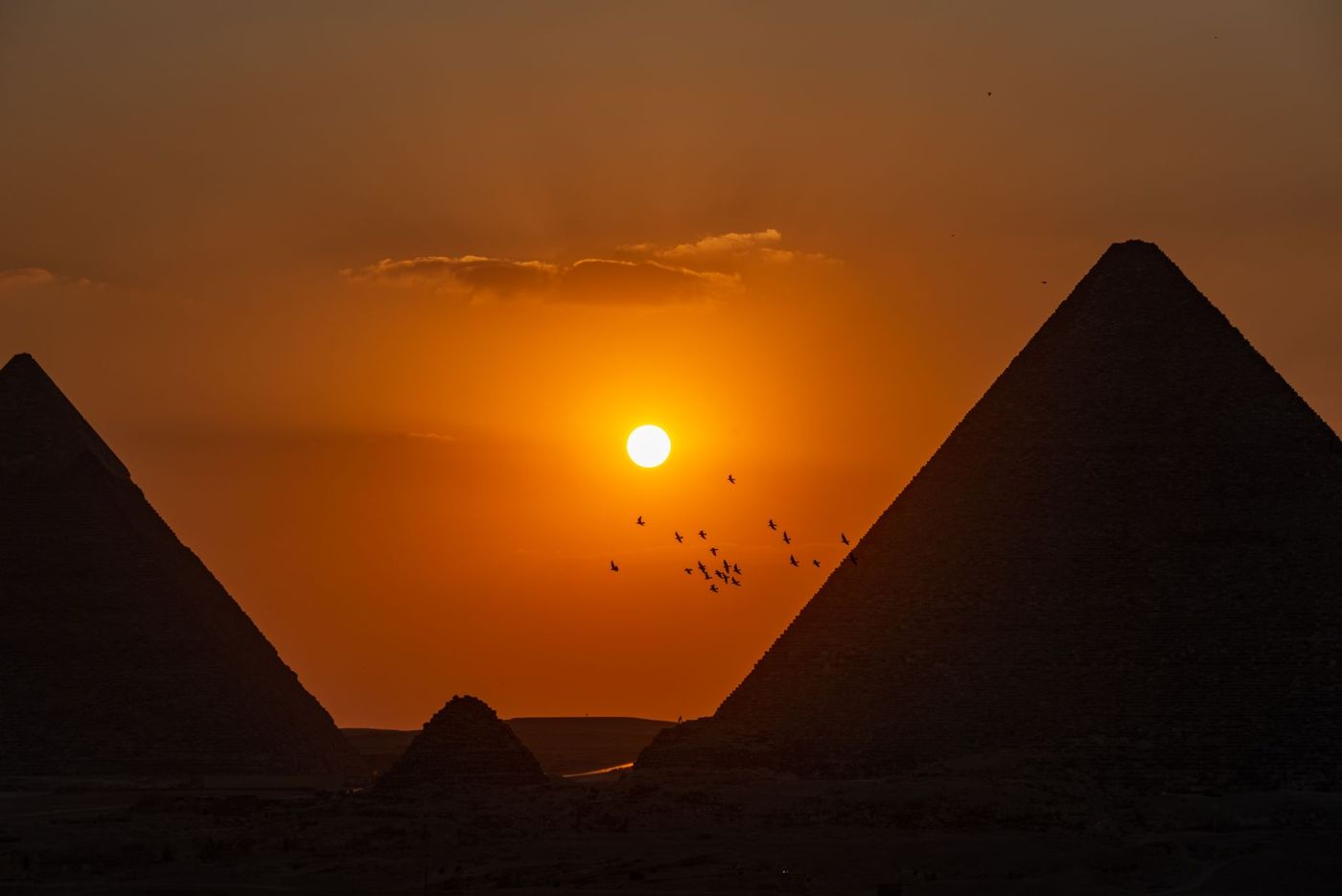
Three locations produce the majority of what you see online. First, the rooftop terraces of hotels and guesthouses east of the site: they face the eastern flank and see the sun rise behind them, so the monuments are bathed in the first light. Second, the open desert to the west and southwest, from where a sunset at the pyramids works with the monuments as silhouettes against the sky. Third, the streets and rooftops of the city, from which the shots with houses in the foreground come.
The direction of view is everything. From the east, you see the monument illuminated, colorful, with texture in the stone. From the west, you see it dark against a bright sky, as a silhouette. Both images are good; they just show different things, and if you want one, you're in the wrong place for the other.
Accommodations with a view of the plateau. The rooftop terrace is the only place from which you can truly see dawn and sunrise. Three places that cover this:
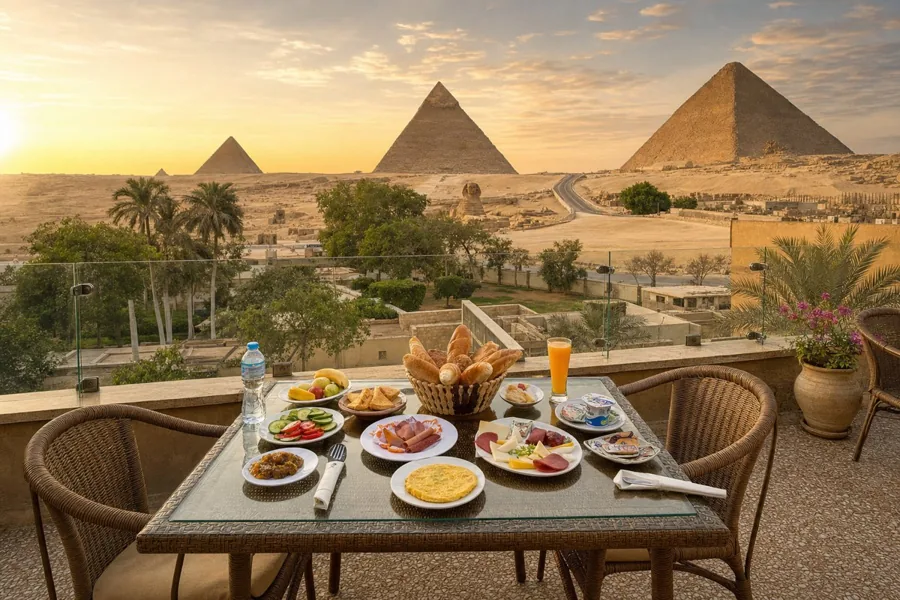 At the Sphinx
Giza Pyramids View Inn
- Good breakfast
- Airport shuttle
- Two restaurants
- 24-hour reception
- Free Wi-Fi
For those who want to see the Sphinx from their breakfast chair
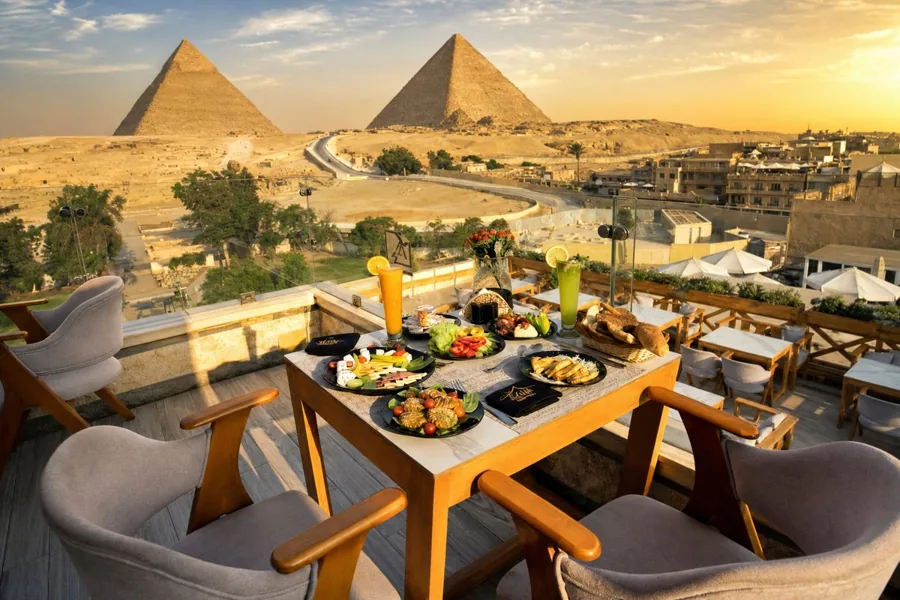 Most reviewed
Great Pyramid Inn
- Fabulous breakfast
- Rooftop terrace restaurant
- Bar
- Airport shuttle
- 24-hour reception
Most who want to stay in the neighborhood
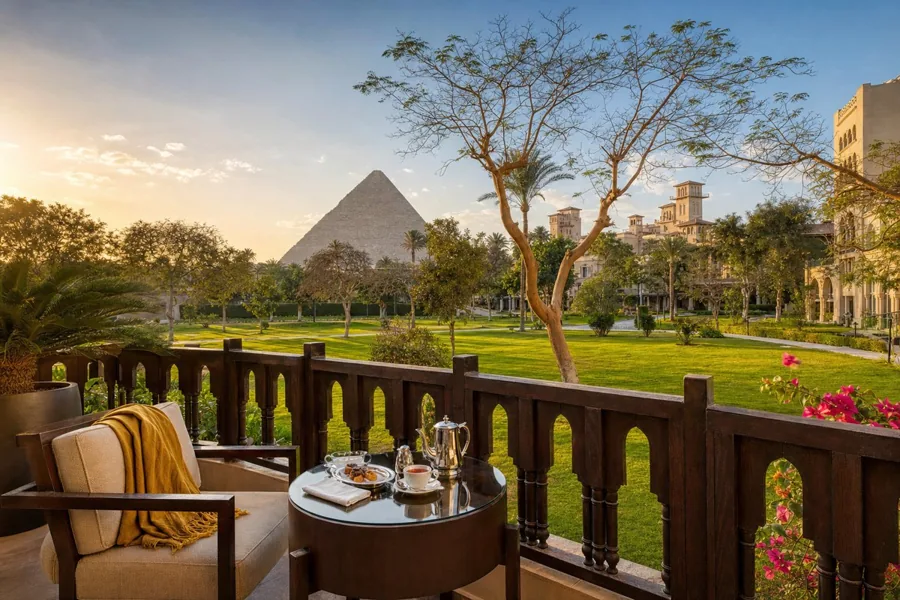 Garden & pool
Marriott Mena House
- Excellent breakfast
- Outdoor pool
- Spa and wellness center
- Three restaurants
- Fitness center
For those who want space, garden, and pool instead of a rooftop terrace
What Sunrise Tours Really Deliver
That leaves the question of the tours that explicitly advertise sunrise. They exist, and they don't quite deliver what the name promises.
A so-called sunrise tour starts early in Cairo and reaches the site at opening time. What you get is the first light inside the fence and a largely empty site, because the group buses arrive later. What you don't get is the sunrise itself, because it happens before opening.
It's similar with dawn over Giza. The blue hour before sunrise is photographically the most interesting phase of the day, and it's simply not available from the site. If you want it, you need a location outside, and the best is a rooftop within sight.
So the decision is actually made: for the first light on the site, book an early tour. For sunrise and dawn, book accommodation with a view.
Winter Is the Better Season
Which season is better can be clearly answered, and it's in favor of winter.
Between November and February, the sun rises late, which reduces the gap to opening to just over an hour, and it stays lower all day, making shadows longer and the monuments more three-dimensional. Add to that better air: haze increases noticeably in spring, and on days with dust in the air, the third pyramid disappears into the gray.
In summer, the opposite is true. The sun rises early and high, the light becomes harsh by nine, and the gap between sunrise and opening grows to more than two hours.
One practical note to close: the official overview lists eight as the opening time, while the closing time is given differently in various sources and falls in the late afternoon in the winter half-year. Don't rely on the longer version for the evening.
Private Half-Day Tour of the Site
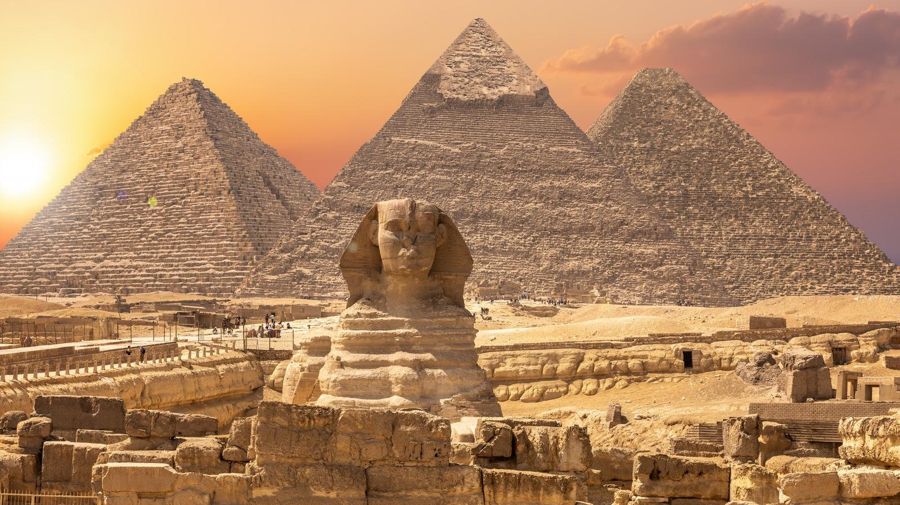
For the first light inside the fence: privately guided, four hours, with pickup and included plateau entry, so you can set the start yourself.
Frequently asked questions
Can you see the sunrise on the site?
No. The site opens at eight, and the sun rises between just before six and just before seven, depending on the season.
And the sunset?
Also not. The site closes in the late afternoon, and sunset is after that.
What does a sunrise tour deliver then?
The first light inside the fence and an empty site, because the groups come later. Not the sunrise itself.
From where can you see both?
From rooftop terraces to the east for dawn and sunrise, and from the desert to the west for sunset as a silhouette.
Which season is better?
Winter. Later sunrise, lower sun angle, longer shadows, and usually clearer air.