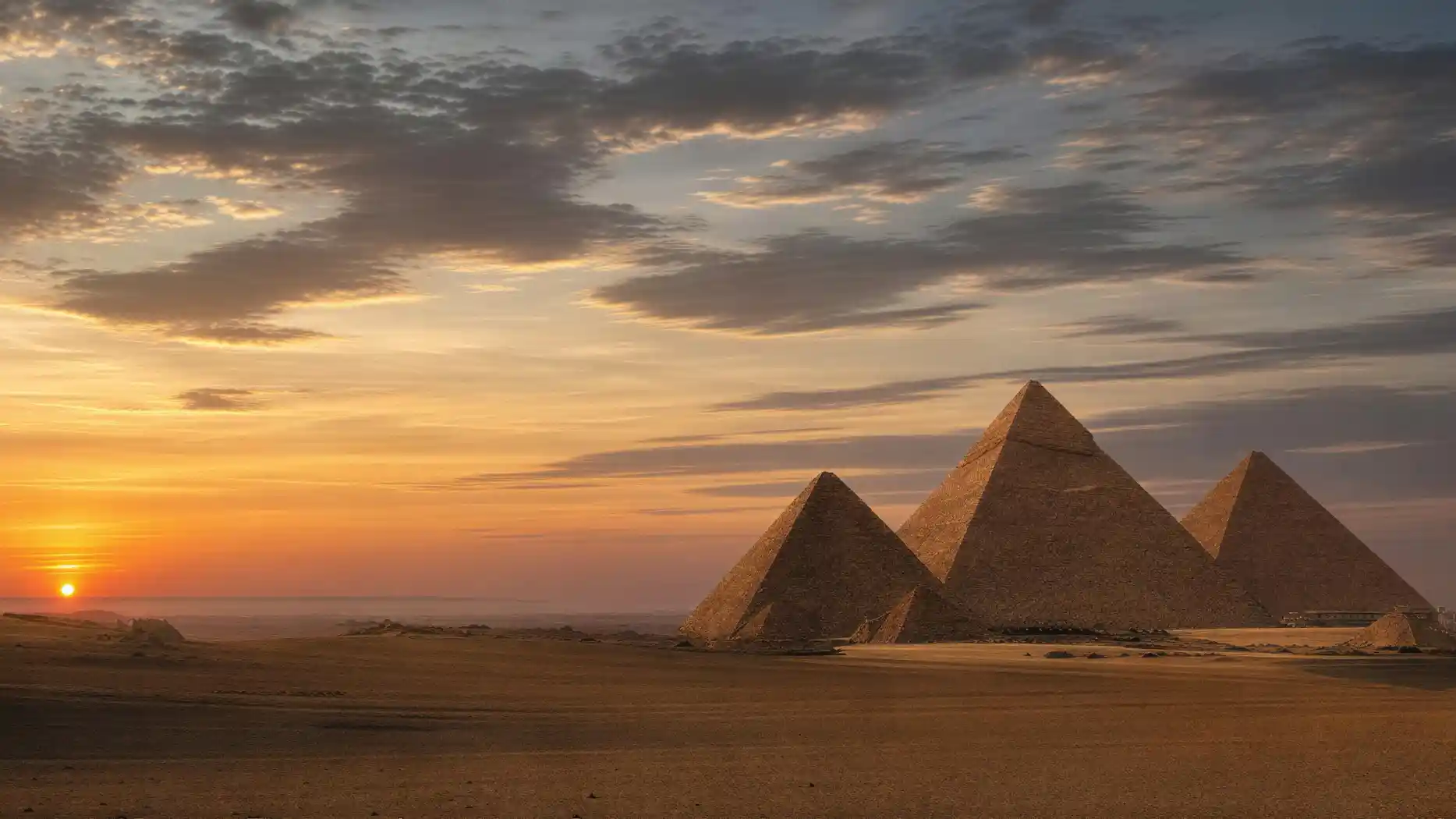
If you want to visit the Pyramids of Giza and consult a guidebook from before 2025, you'll get wrong information in three places: the entrance, the approach, and what the ticket includes. The site has been thoroughly redeveloped in recent years.
The main entrance is no longer where it was for decades. Private vehicles are no longer allowed on the site. And the ticket you buy at the gate doesn't get you inside any pyramid.
So if you just type "visit pyramids" into a search engine, you'll often get instructions that no longer apply. That sounds like trouble, but in reality it's just a matter of preparation. If you know the handful of points that have changed, you'll have a much better day than someone who arrives with old assumptions and spends the first hour searching.
This page is your starting point. It answers the questions that come before all others and passes on every detail to the page that covers it in depth.


Entry ticket for the site as a QR code
- Solves exactly the problem at the eastern gate, where there is no ticket booth
- The code is on your phone; no printing or pickup needed
- Valid for one day and covers the site; interiors not included
- Free cancellation up to 24 hours before the chosen day
- Main entrance
- New gate on the desert road in the southwest, no longer at the old hotel in the northeast
- Second access
- Gate at the Sphinx in the east, without a ticket booth
- Opening
- Around 8 a.m., closing in the late afternoon
- Site entry
- low double-digit euro range, interiors each cost extra
- On site
- No private vehicles, electric shuttle included in the ticket
- Payment
- Card at machines and ticket offices, some cash for tips and toilets
Which Gate You Choose Determines Your Day
Let's start with the gate, because this one point decides whether your day begins relaxed.
There are two entrances, and they are at opposite ends of the site. The new main entrance is in the southwest on the desert road, with a visitor center, ticket offices, and parking for the driver who waits outside. From there, the shuttle departs, and the first stop is the viewpoint with a view of all three structures. If you're visiting for the first time, this is the right place.
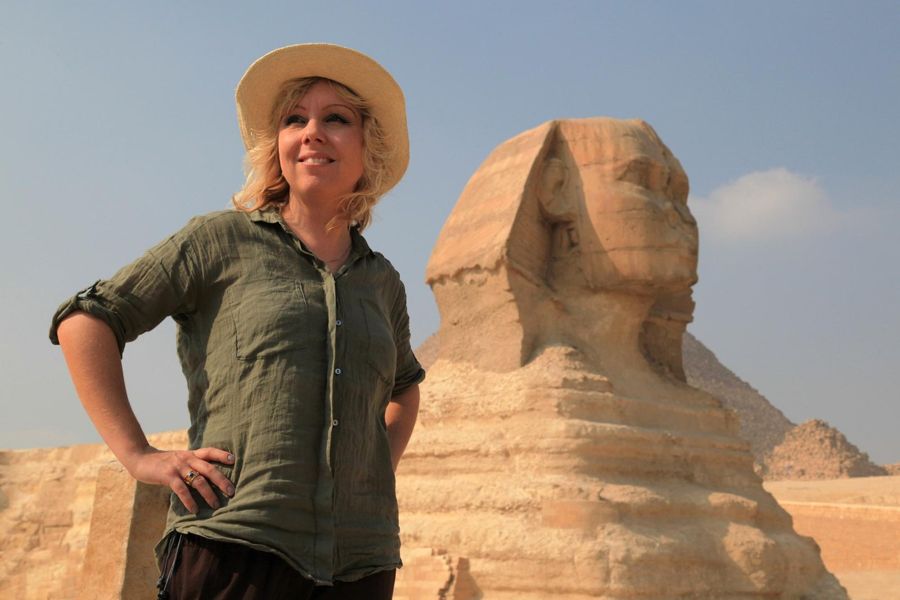
The second entrance is in the east, right next to the Sphinx, on the edge of the city. It's much closer to Cairo and for many the obvious choice. But it has one characteristic you need to know beforehand: there is no ticket booth there. If you arrive without a ticket, you can't get in and have to go all the way around the site to the other gate.
At the new main entrance, there is now a visitor center with ticket offices, machines, food outlets, and toilets. That's more than it sounds. Previously, the visit began directly on a busy street where arrivals, vehicles, and vendors blocked each other. Today, the start is orderly, and if you arrive half an hour early, you can spend that time usefully instead of standing in a crowd.
Both gates serve as entrance and exit. A common strategy is therefore to start at the main entrance and come out at the Sphinx, because the path then goes downhill and the Sphinx forms the finale, rather than overshadowing everything else at the beginning.
No tickets are sold at the eastern gate
This is the most expensive avoidable mistake on the entire site. If you arrive there without a ticket, you'll face a barrier and, depending on traffic, have a three-quarter-hour detour ahead of you. Buy the ticket in advance if you want to use this entrance.
The Ticket Does Not Cover Any Interior
Now to the ticket, and here lies the biggest misunderstanding of all.
There is a ticket for the site. It covers the area: all three great pyramids from the outside, the smaller subsidiary pyramids, the area around the Sphinx including the viewing terrace, the valley temple, the boat pits, the viewpoints, and the shuttle ride. The price is in the low double-digit euro range, about half for students.
What it explicitly does not cover is any interior. The official site overview lists five areas with their own tickets, including all three pyramids from the inside and the workers' necropolis. The information circulating online that an interior visit is included in the basic price or is opened in rotation is thus refuted. If you want to go inside, you pay a second time, and for the largest pyramid a multiple. The official price list of the ministry lists each of these items individually and is the benchmark against which any offer must be measured.
Payment is by card. On the plateau, there are now four machines for ticket purchase with bank card, alongside the ticket offices and sales via the authority's website. The safest way to reach official sales is via the antiquities authority's own website, rather than typing in an address: there are imitation pages circulating that look real but don't deliver valid tickets. You'll still need some cash for toilets and tips.
Getting There and Getting Around
That leaves the question of how you get there and how you move around. Something fundamental has changed here too.
Private cars and tour buses are no longer allowed on the site. Your driver drops you off at the gate and waits outside or picks you up later. Inside, electric shuttle buses run as a circular route with stops including the viewpoint, the three great structures, and the Sphinx. The ride is included in the ticket; you don't need an extra ticket, and anyone trying to sell you one is selling you nothing.
For walking, this is a real relief. Between the largest and the smallest pyramid lies a good kilometer of open, shadowless sand, and in summer that's no small matter. Walking is still possible, and the most beautiful stretches are better walked than ridden.
When approaching, the main thing is that the driver knows which gate is meant. The two are far apart, and a misunderstanding costs more time than any queue at the entrance.
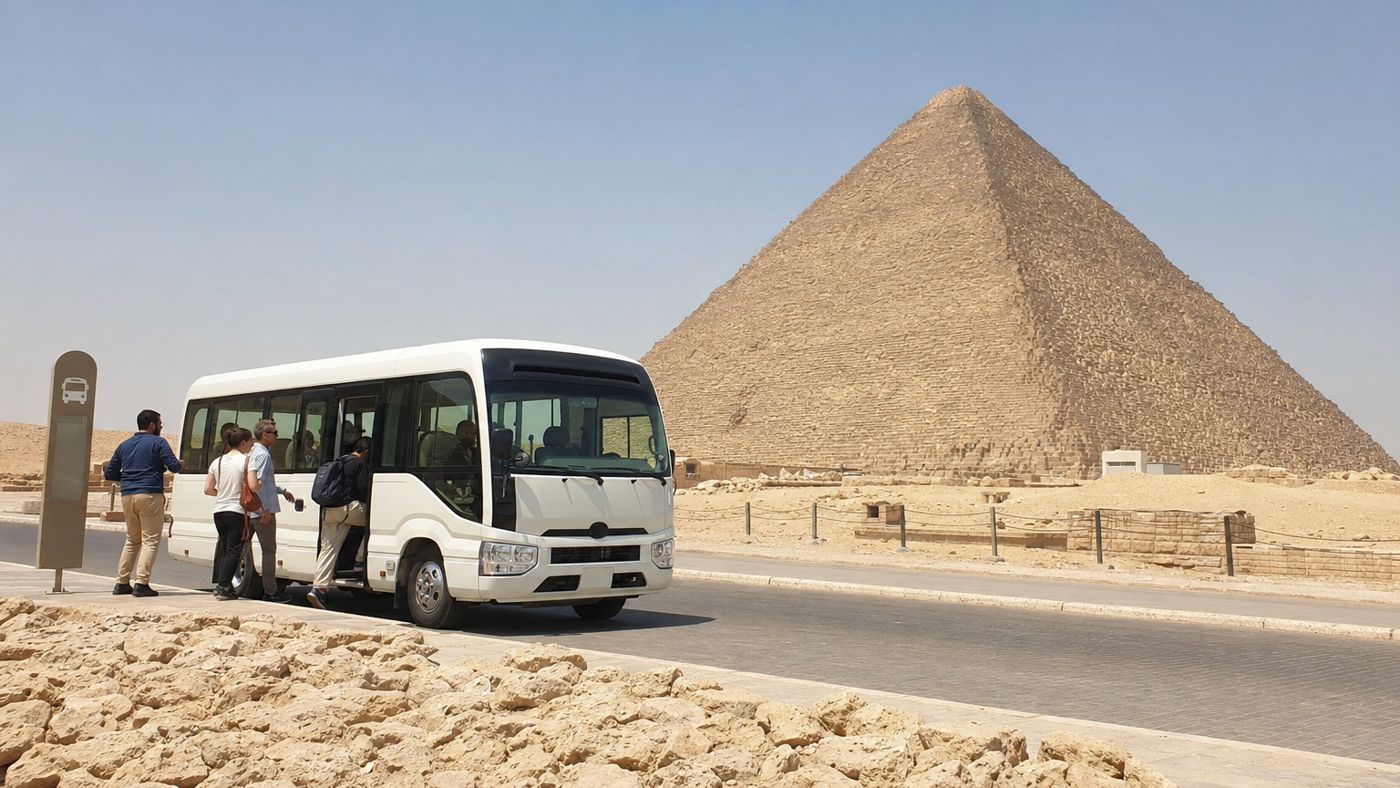

Private transfers to and from Cairo Airport and to hotels in Cairo and Giza
Planning includes the journey at both ends, and it's the part most likely to go wrong. A pre-booked private car fixes the price before you're in the country and serves both locations between which this page lets you choose. Free cancellation.
Three Options and How They Feel
Half day, site only
The three structures, the viewpoint, and the Sphinx in three to four hours without rushing.
- Good for
- Those who have other plans or want to avoid the midday heat
- Watch out
- Time is tight for an interior, and queuing isn't planned for
Full day on the site
Plus the valley temple, boat pits, cemeteries, and paths away from the three photo stops.
- Good for
- Those who want to understand the place, not just tick it off
- Watch out
- Without shade and without a break, the afternoon becomes a strain in summer
Site and museum
Morning on the plateau, afternoon at the Grand Egyptian Museum two kilometers away.
- Good for
- Those who have only one day in Giza and want to see both
- Watch out
- This is a full day with two journeys, and both get less time than they deserve
Three guided options that correspond exactly to these three options. All three with German-speaking guide, pickup, and included site entry.
 With pickup
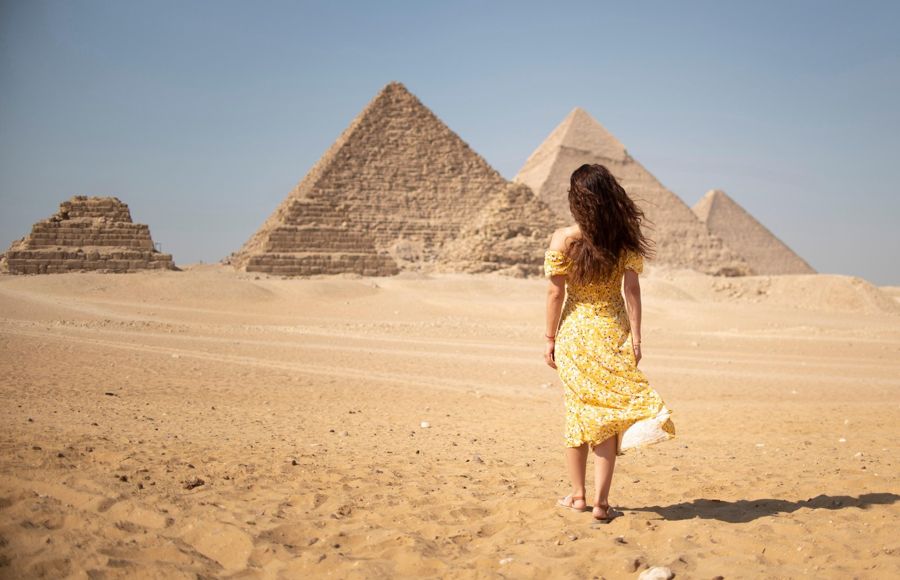
Half day to plateau and Sphinx
- Plateau entry
- English-speaking guide
- Hotel pickup
- Lunch as an add-on
- Pyramid interior
- Free cancellation up to 24 hours before
A first visit without a full day's effort
 Best rated
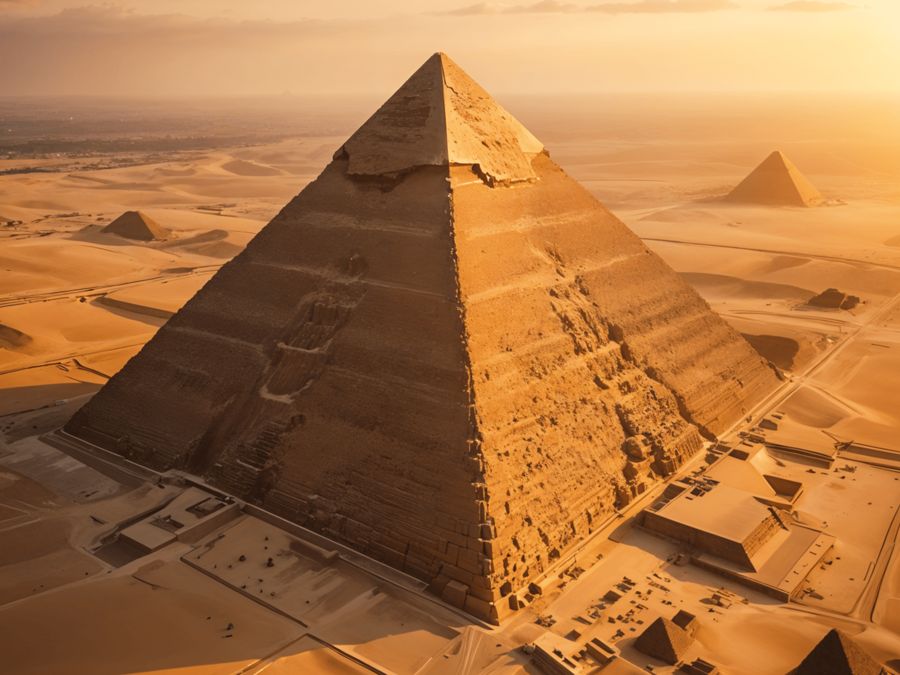
Plateau with selectable modules
- Plateau entry
- English-speaking guide
- Hotel pickup
- Lunch
- Free cancellation up to 24 hours before
Those who want to set the length of the day themselves
 Most booked
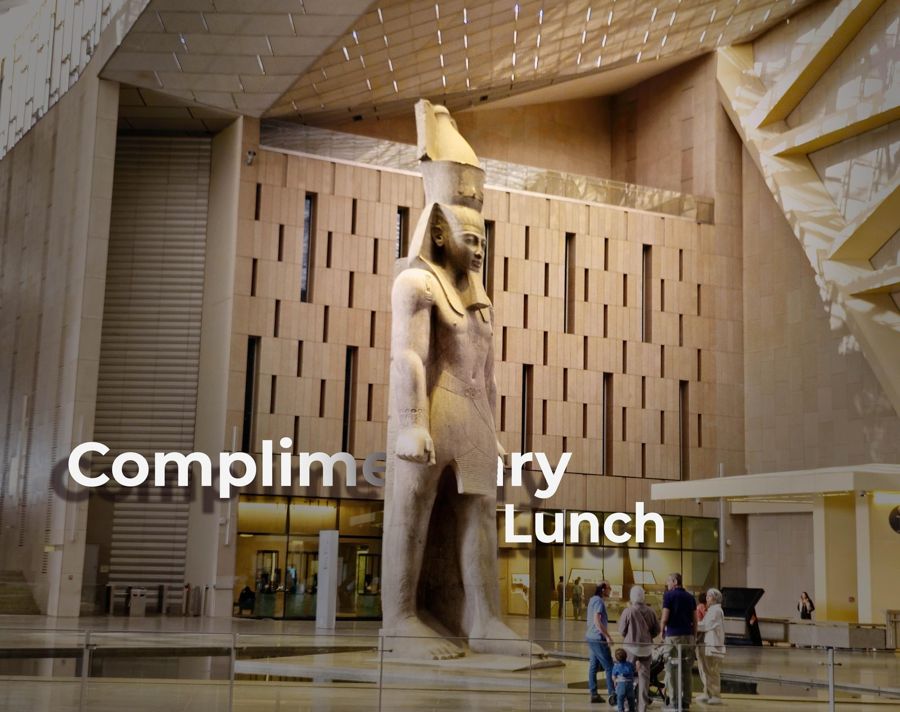
Full day with the museum
- Plateau entry
- English-speaking guide
- Hotel pickup
- Lunch
- Pyramid interior
- Free cancellation up to 24 hours before
The one day when both should be included
In the End, It's Two Decisions
If you want to plan a visit to the Giza Plateau, you only need to make two decisions: when during the day and for how long.
For the when, there's little leeway. The site opens in the morning, and the tour buses from Cairo and the Red Sea reliably arrive between 9 and 10 a.m. The first hour after opening is therefore the only time when it's truly quiet at the well-known spots, and it's also the coolest. If you come at midday, you get neither.
For the how long, a simple rule of thumb applies: three to four hours are enough for what most people come for. A full day is worth it as soon as the valley temple, cemeteries, or an interior are added, and then it should include a break.
One factor is new in this calculation. Since November 1, 2025, the Grand Egyptian Museum stands two kilometers to the northwest, and that significantly shifts day planning. Where previously a day for the plateau and a second for a museum in the city center were needed, today both lie side by side. That's convenient, but it tempts you to want too much in one day. Both houses only tolerate a half day if you decide beforehand what will be left out.
What you can safely skip: the attempt to see all three pyramids from the inside in one day. The tickets are individual, the waiting times add up, and the interiors are more similar than you'd expect. One interior is enough to know what it's like, and the time is better spent outside.
Frequently asked questions
What's the best way to visit the Pyramids of Giza?
Buy your ticket in advance, be at the main entrance in the southwest at opening time, take the shuttle to the viewpoint, and work your way from there toward the Sphinx. That way you get the quiet hour and walk downhill.
Can you visit the site without a guide?
Yes, absolutely. There's little signage, but orientation has become easy thanks to the shuttle. A guide adds explanation, not access.
Is the interior included in the ticket?
No. Each pyramid has its own ticket for the inside, and for the largest it costs a multiple of the site entry.
How much time should you plan?
Three to four hours for the usual, a full day for the quieter parts of the site or an interior.
Can you drive there in your own car?
Yes, up to the gate, but not onto the site. Only the electric shuttle buses run there, and their use is included in the ticket.
Do you need cash?
Not for the entrance, where you pay by card. But for toilets, tips, and small items, yes.