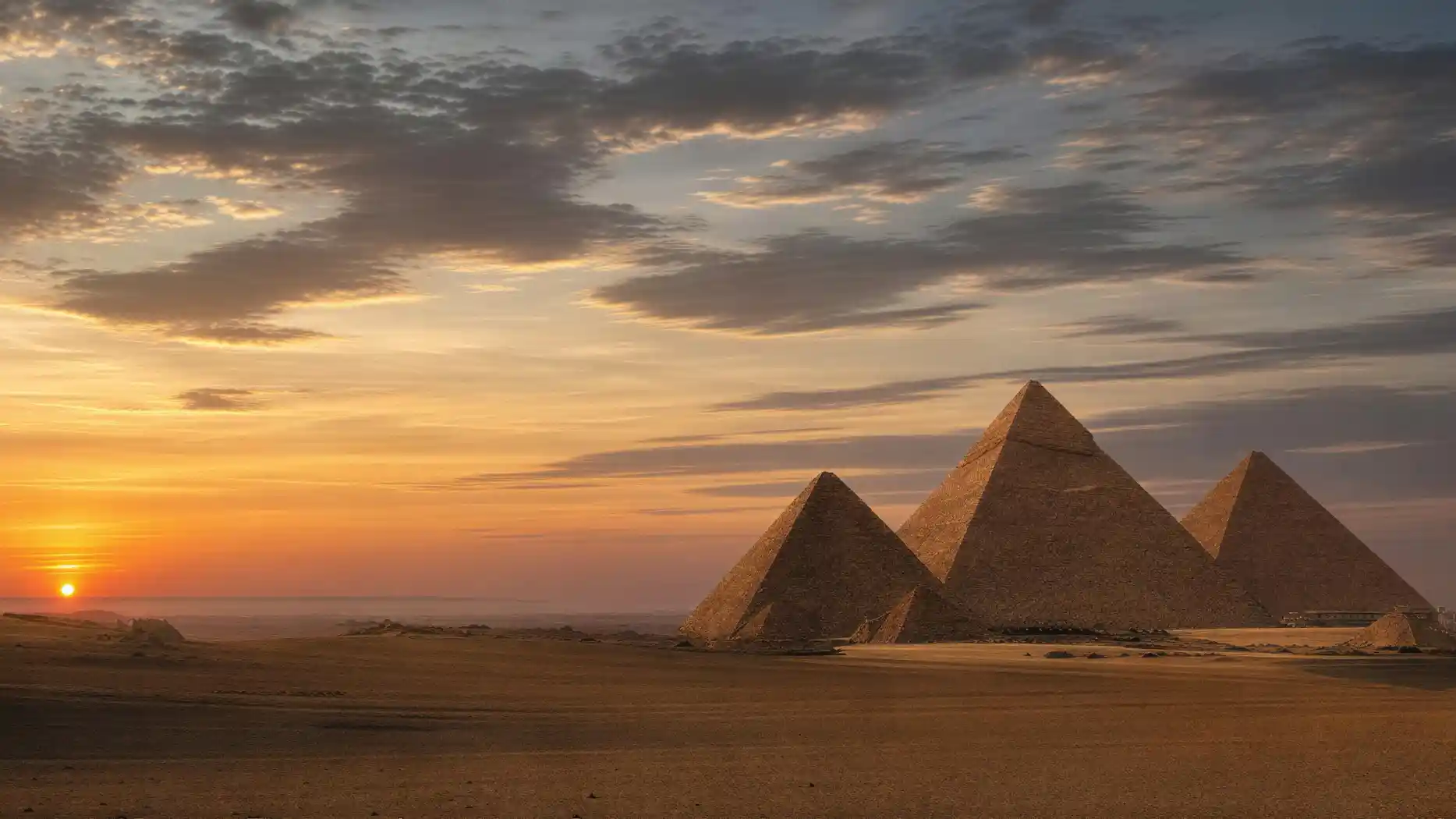
Booking a hotel with a pyramid view sounds simple. You search for the description, find several hotels that advertise it, and pick the most expensive one, because price and good views go together. That assumption leads you in the wrong direction.
A hotel at the Pyramids of Giza is not the same as a hotel with a view of them. The reason is the geography of the plateau. The monuments stand on an edge, and the city only reaches up to it from the east. From there, you see all three pyramids and the Sphinx. From the north, you see the pyramids at an angle, and the Sphinx is completely out of sight because it sits lower and further east in its pit.
The upscale hotels are mostly in the north, near the old entrance. The simple guesthouses are in the east, in the middle of a residential area, directly opposite the Sphinx. The result is a reversal of the usual order: the best view on this plateau costs the least, not the most.
This page therefore sorts by location, not by category, explains what each location actually shows, and lists the points you should check before booking.
Accommodations within walking distance of the plateau. Sort by distance to the site instead of by stars – that decides the view. Three hotels that cover this:
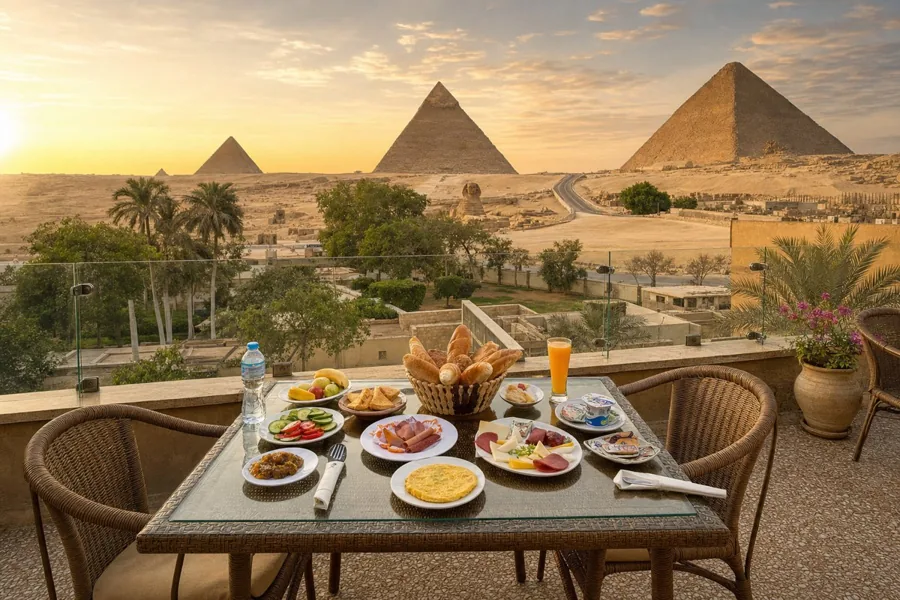 At the Sphinx
Giza Pyramids View Inn
- Good breakfast
- Airport shuttle
- Two restaurants
- 24-hour reception
- Free Wi-Fi
For those who want to see the Sphinx from their breakfast chair
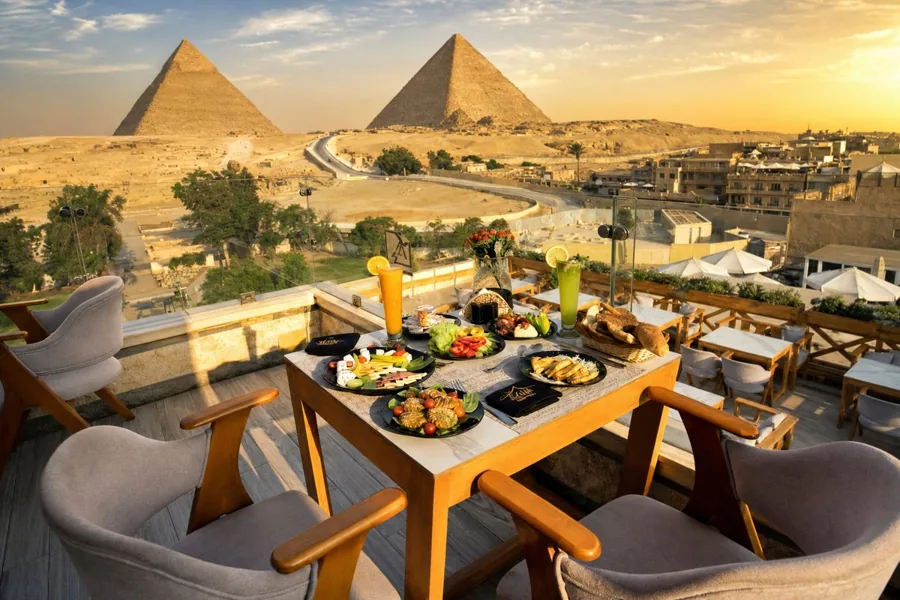 Most reviewed
Great Pyramid Inn
- Fabulous breakfast
- Rooftop terrace restaurant
- Bar
- Airport shuttle
- 24-hour reception
Most who want to stay in the neighborhood
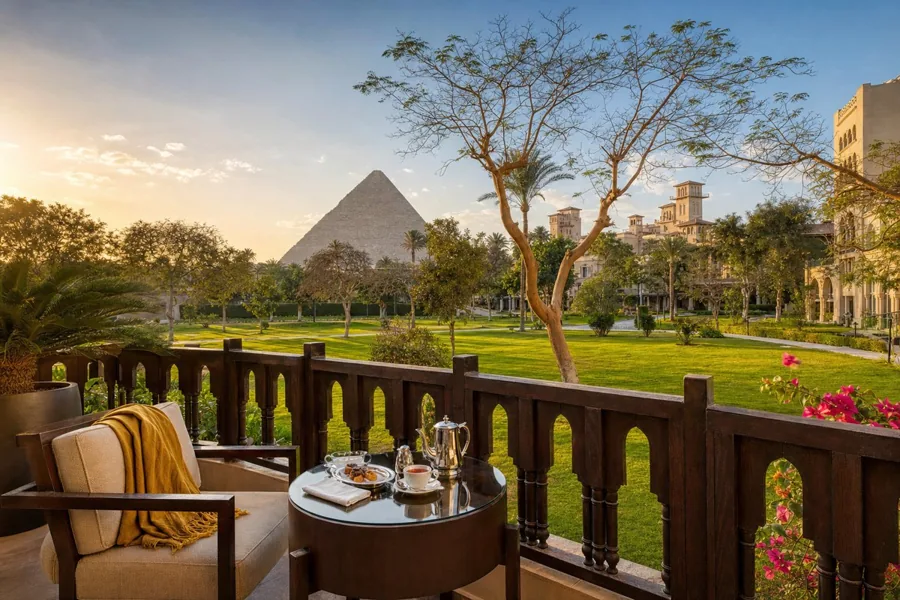 Garden & pool
Marriott Mena House
- Excellent breakfast
- Outdoor pool
- Spa and wellness center
- Three restaurants
- Fitness center
For those who want space, garden, and pool instead of a rooftop terrace
The eastern district and its double life
The eastern district is called Nazlet el-Samman, and it has an unusual double role.
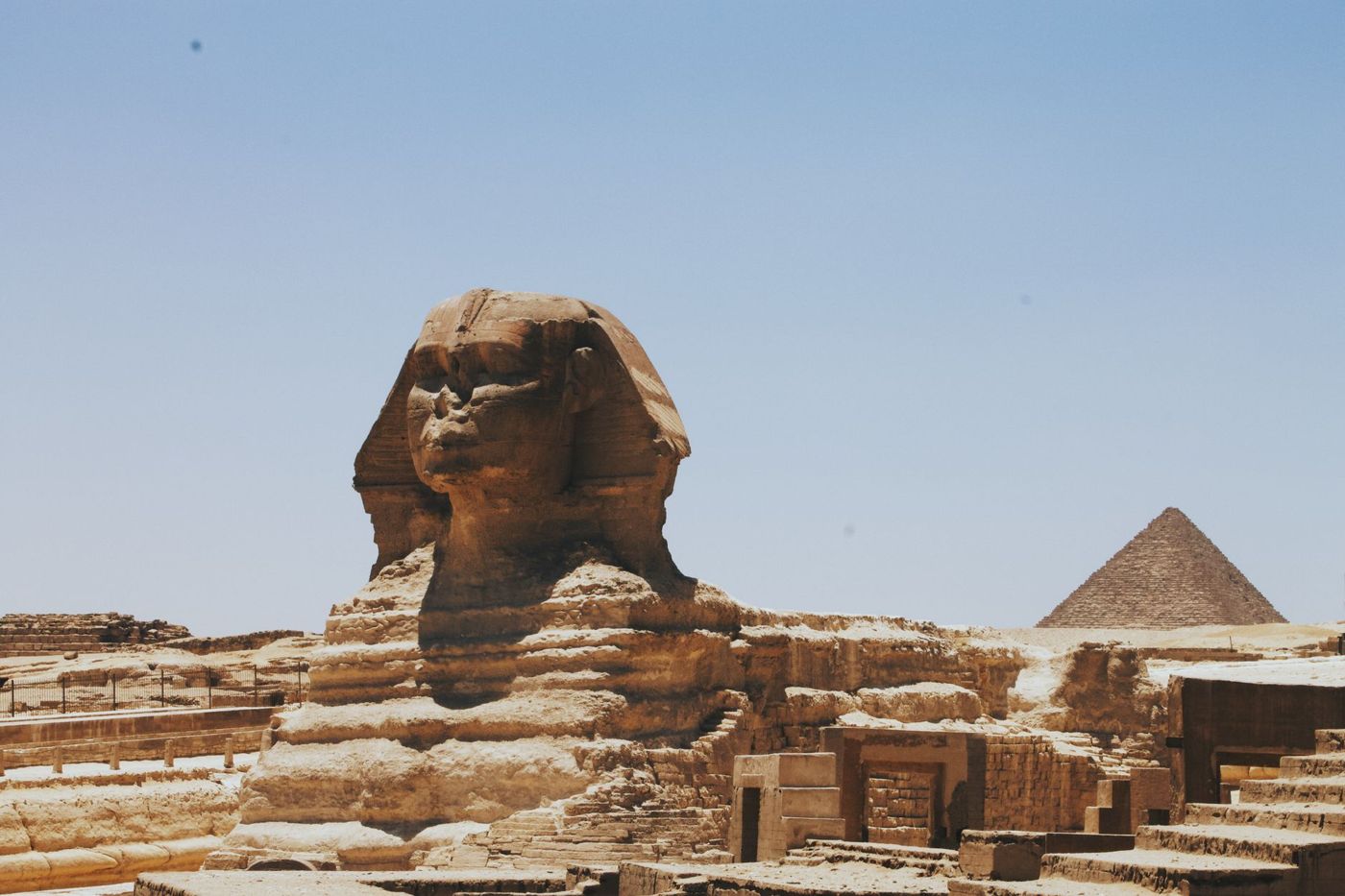
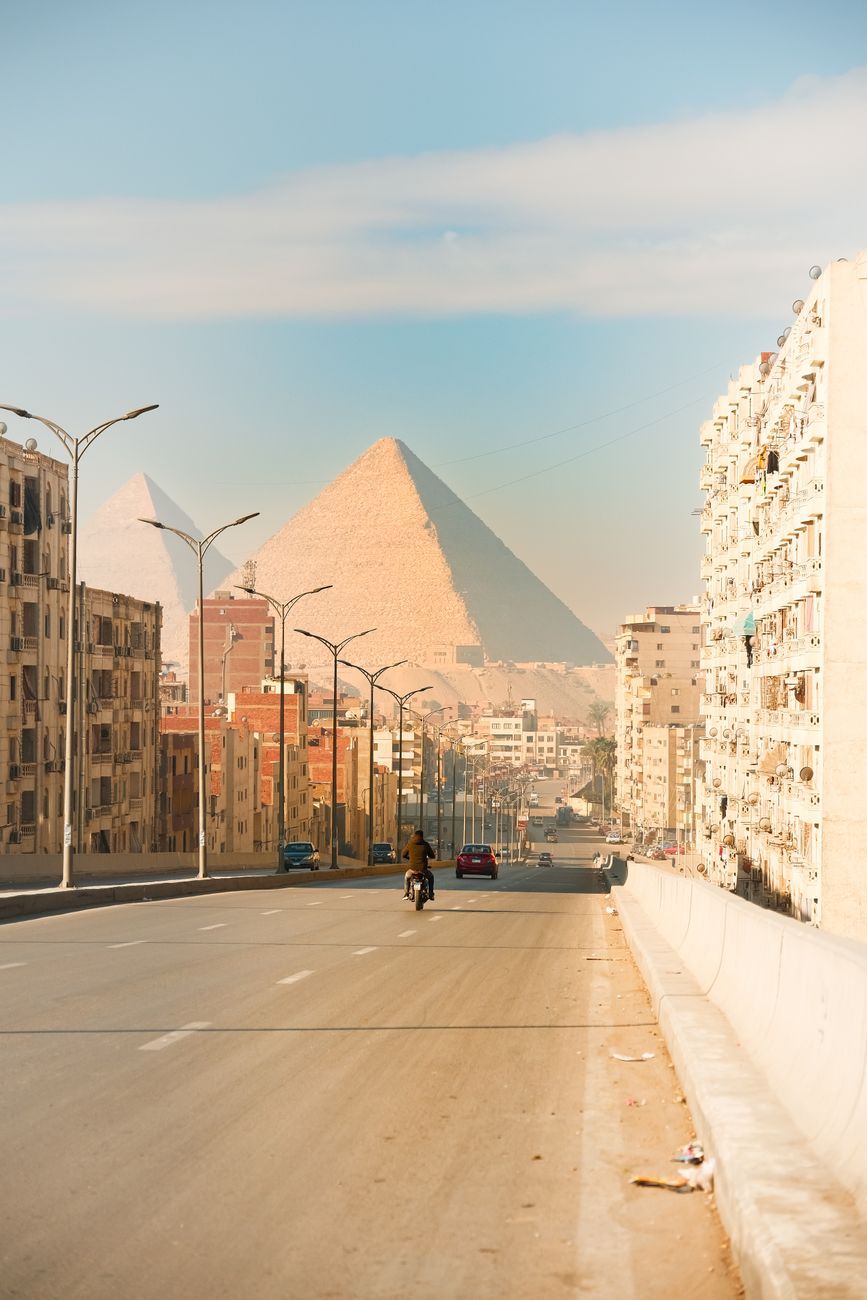
For travelers, it is the address with the best view. The houses there are mostly narrow, multi-story, and have a usable rooftop terrace where breakfast is served. From this level, the Sphinx and the pyramids lie fully in view because the terrain drops to the east and nothing blocks the sight. Several hotels also offer rooftop access to guests whose rooms themselves have no view.
For archaeology, the same place is a problem. Beneath these streets lies the valley temple of Khufu, the lower part of his funerary complex, connected via a causeway to the pyramid. It cannot be excavated because people live above it. How much the settlement has crept toward the protected area over the decades can be traced using satellite data.
Those who stay there sleep above an unexcavated temple and have breakfast looking at the monument it belonged to. That is not a selling point of the hotels, but it is the more interesting description of their location.
In the north stands the most famous hotel
In the north, things are different, and there stands the most famous hotel of all.
It is a former royal hunting lodge from the 19th century, later converted into a hotel, and today it operates as a resort with a garden and pool. The place has history: state guests, film crews, and archaeologists have stayed here, and the driveway leads directly to the former main entrance of the site. Anyone looking for a luxury hotel in Giza will almost inevitably end up here or at one of the newer hotels in the same corner.
The view from there is good, but it is a different one. You see the two large pyramids at an angle, often over palm trees and garden grounds, which makes for very pretty pictures. You do not see the Sphinx, and usually not the third pyramid either. If you arrive expecting the classic postcard motif from your room, you will not find it in the north.
Why this distribution does not change has a simple reason. Around the protected area, building restrictions have been in place for decades, linked to the status as a UNESCO World Heritage site. New buildings with a better view cannot be erected there, so the current distribution is fairly permanent.
Three locations, three very different views
East, in the residential area near the Sphinx
Small guesthouses and pensions in dense development, mostly with a rooftop terrace and breakfast upstairs.
- Good for
- The full view of all three pyramids and the Sphinx, within walking distance of the entrance, and the smallest budget.
- Watch out
- Simple standard, lively neighborhood, noise from the street and the district.
North, near the old entrance
Larger hotels with garden, pool, and restaurant operations, some of them historic.
- Good for
- Comfort, quiet within the hotel grounds, and a short drive to the entrance.
- Watch out
- Only a side view of the pyramids, and no view of the Sphinx from here.
Further out in Giza or in Cairo
The usual city hotel offering, well connected, but without any reference to the plateau.
- Good for
- Value for money, restaurants, and everything else Cairo has to offer.
- Watch out
- A daily drive of one to two hours, and the early morning at the plateau is practically lost.
At the plateau or in the center?
The trade-off that almost every traveler faces remains: directly at the plateau or in the center of Cairo.
What speaks for the plateau is above all the time. Those who stay there are at the gate when it opens in the morning, without having driven through traffic for an hour. That first hour is the most pleasant of the whole day, and it is the only time when the site is truly quiet. Add to that the view in the evening, when the monuments are illuminated.
What speaks against the plateau used to be a lot, but recently not everything. Until November 2025, the argument was simple: hotels in Giza are far from everything except the pyramids. Since then, the large new museum stands about two kilometers from the site on the same side of the Nile. This puts the two most time-consuming items of the trip close together, and each of them fills half a day to a full day. For accommodation at the plateau, that is a new and serious argument.
Everything else remains on the other side. The museum at Tahrir Square, the old town, the bazaar, and the restaurant districts are across the river, and every evening there means a trip there and back. The neighborhood at the plateau is also not designed for pedestrians, and a relaxed evening stroll rarely happens there.
On the subject of noise, an honest assessment, because it often comes as a surprise in reviews. Both locations are loud, just in different ways. In the center, it is the traffic that runs late into the night. At the plateau, it is the neighborhood: dogs, traffic on narrow streets, activity until the evening. In addition, all of Cairo has the call to prayer, broadcast over loudspeakers, which sets the first of the five daily prayers before sunrise. If you are a light sleeper, you should pack earplugs, regardless of which side of the river you choose.
A metro connection to the vicinity of the site is announced, but not yet in operation. Until then, it remains car or taxi for everything that is not within walking distance.
The practical solution for stays of three nights or more is therefore often a change: one or two nights at the plateau for the early morning, the rest in the center for everything else.
Staying directly at the plateau
Pros
- At the gate when it opens, without a drive and without traffic
- View of the illuminated monuments in the evening
- Significantly lower prices than in the center, especially at the guesthouses
- Short distances also for a second or third visit during the same stay
Cons
- Everything else in Cairo is half an hour to an hour away
- Few restaurant options, hardly any possibilities for an evening walk
- Simpler standard at the hotels with the best view
- Noise from the neighborhood, especially in the dense development in the east
Four checks before booking
Before booking, four checks are worth doing, and together they take less than ten minutes.
First, the direction of the view. Check on a map whether the hotel lies east or north of the site. This single piece of information tells you more about the view than any description in the offer text, because phrases like “view of the pyramids” can also cover a narrow gap between two neighboring buildings.
Second, the question of from where. Many hotels have the good view on the roof, not in the room. That is perfectly fine if the rooftop terrace is open to all guests, and annoying if you have paid for a room with a view and then discover that the view is three floors higher.
Third, the distance to the correct gate. Since 2025, the main entrance is in the southwest, while the guesthouses in the east are at the Sphinx Gate, which has no ticket counter. If you stay there, you should buy your ticket in advance via the official portal of the Ministry of Antiquities.
Fourth, the cancellation conditions. They are lenient at many hotels, but not at all, and especially at the small guesthouses they vary. A look at them is sensible because travel plans for Egypt tend to change more often than for other destinations.
The map shows hotels around the site with price and distance. It comes from our partner and is loaded from there.
Frequently asked questions
Which hotel has the best view?
In terms of location: the rooftop terraces in the residential area east of the site. From there, all three pyramids and the Sphinx lie together in view. The larger hotels in the north only have a side view.
Can you walk from the hotel to the entrance?
From the eastern district, yes, in a few minutes. From the hotels in the north, it is a short drive. From the rest of the city, it is not practical.
Is the surcharge for a room with a view worth it?
Only if the view is from the room and not from the roof. Where the rooftop terrace is open to all, the surcharge is dispensable for many.
How early do you have to get up for the location to pay off?
The site opens around eight o'clock. Those who stay within walking distance are at the gate without a drive and have the first hour largely to themselves.
Not the standard, the proximity
What distinguishes these accommodations from others is less their standard than their proximity to something you would normally only visit.
In most cities, you stay near a sight and go there once. Here, you stay next to it and see it constantly: at breakfast, when you come back in the evening, from the stairwell window. Travelers regularly describe this as the real gain, regardless of how the room looked.
If the view is your most important criterion, you should therefore not search by category, but by compass direction, and then by whether the roof is accessible. These are two pieces of information that do not appear in any star rating and that make the difference.
A practical tip for planning your first morning: ask at the time of booking from when breakfast is available on the roof. At some hotels, the service starts later than the site opens, and then you face the choice between the empty plateau and the paid breakfast. Many hotels will prepare something on request or open the roof earlier, but you need to clarify that in advance, not the evening before.
And if you find that restaurants, short distances, and city life are more important to you, then you also have a clear answer. In that case, the center is the better choice, and the view of the monuments remains what it is for most visitors anyway: a matter of one morning.
Short guided tour of the plateau on foot
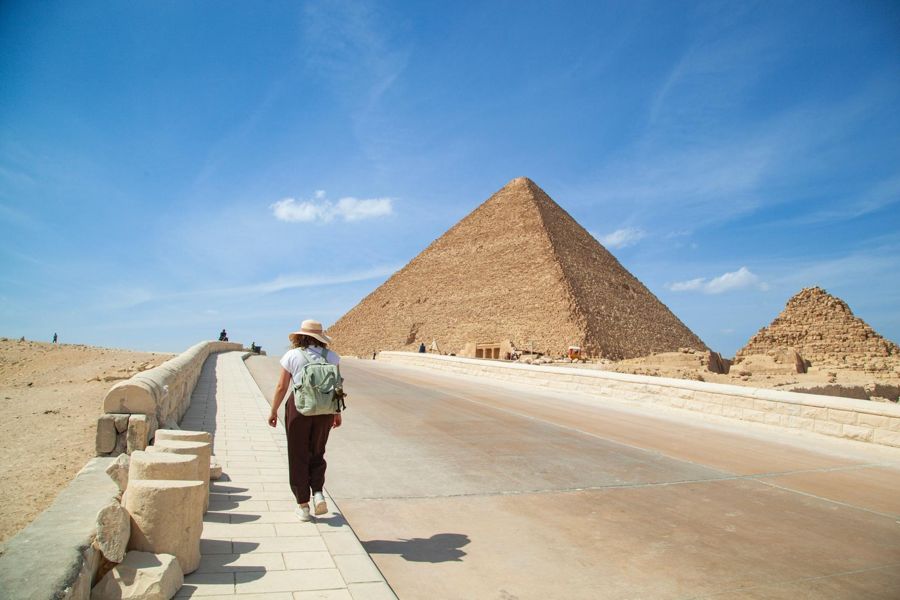
Fits an accommodation within walking distance: three hours in the morning, without pickup and without museum part, after that the day is free again.