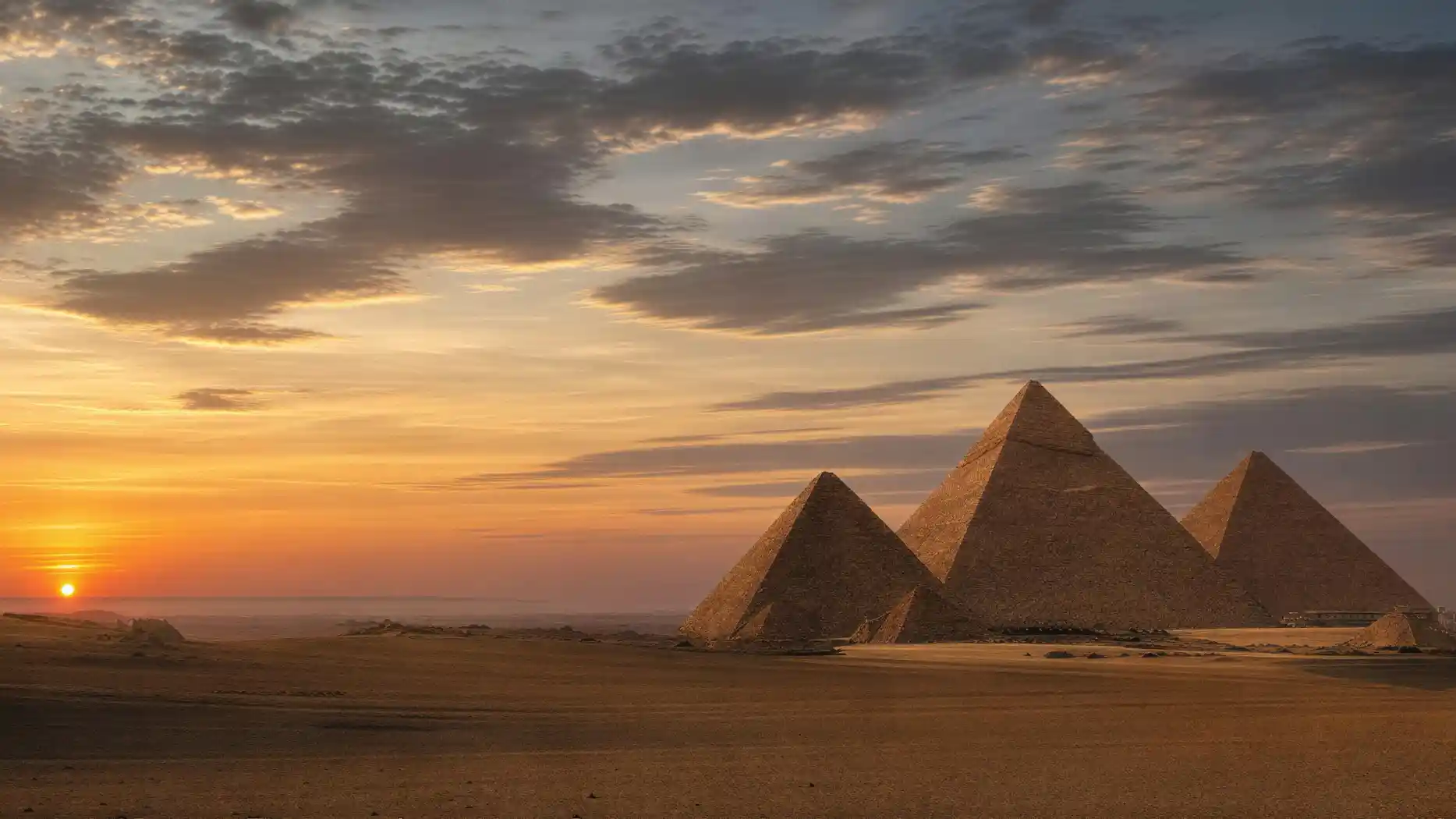
Many travelers only learn at the airport that Giza is not a remote excursion destination but one of Africa's largest cities.
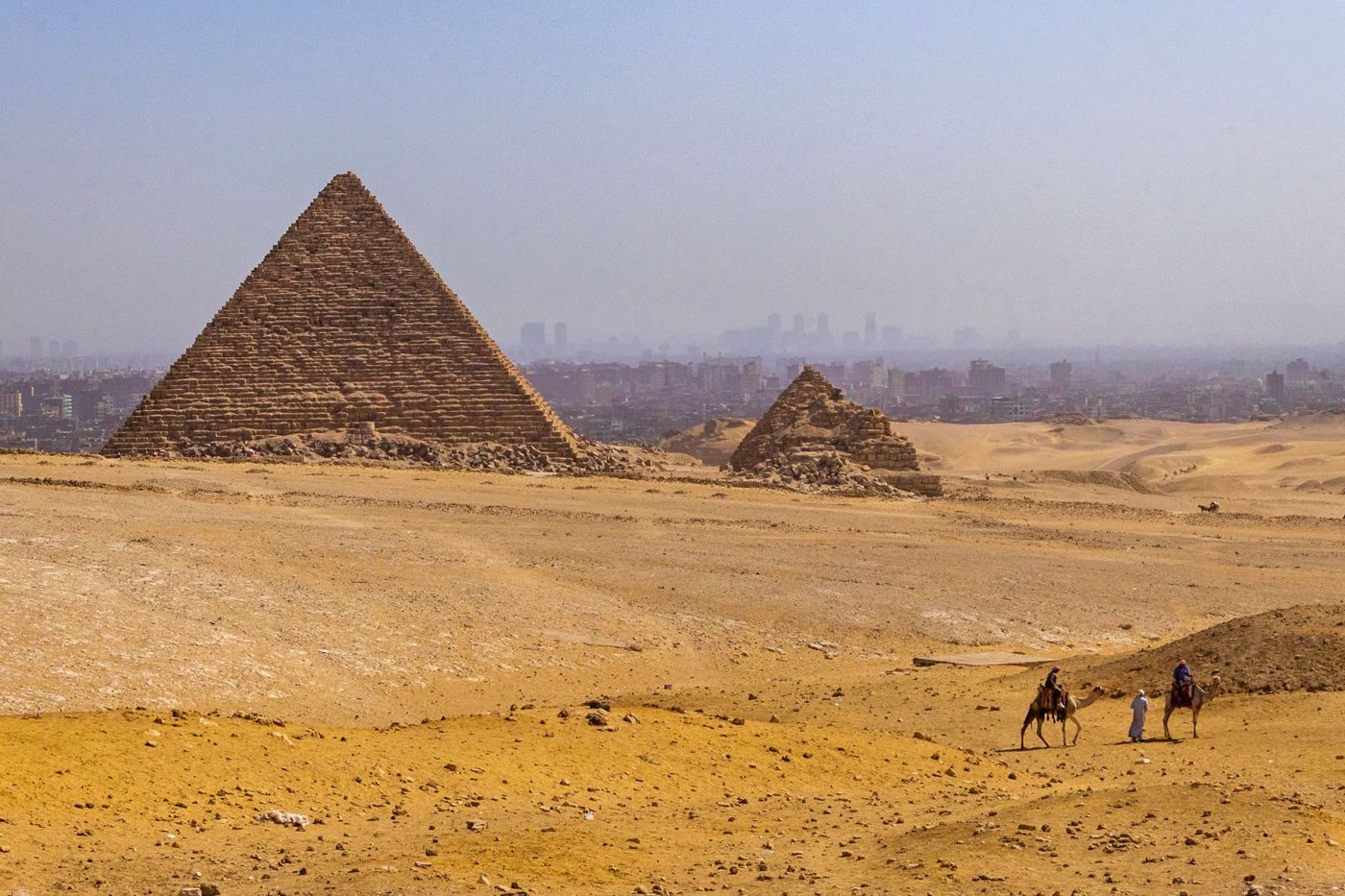
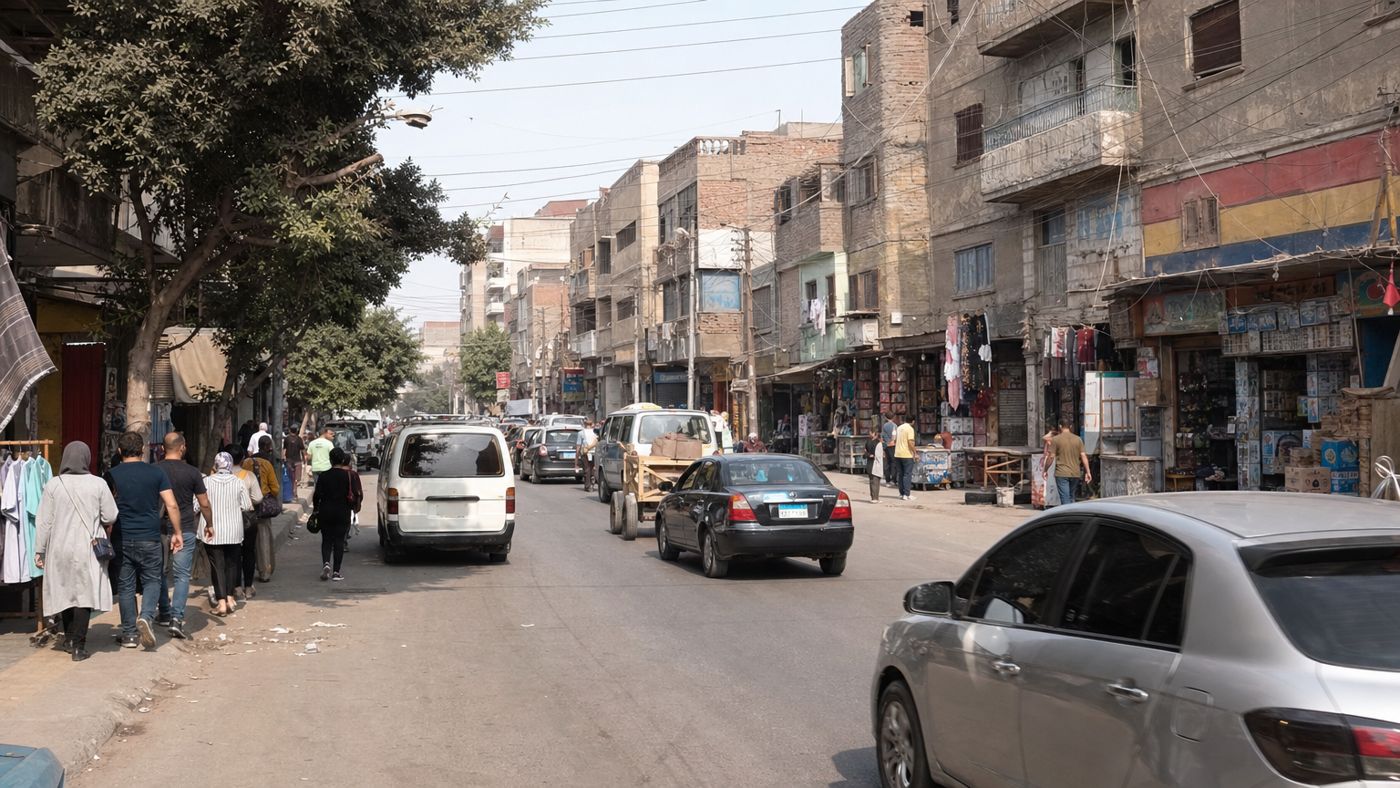
The city of Giza in Egypt lies on the west bank of the Nile, directly opposite Cairo, and is part of a metropolitan area home to several million people. The plateau with the monuments forms the western edge of this urban area. Standing there and looking east, you see high-rises, traffic, and residential blocks, not desert.
The difference in size is greater than most assume. The governorate today has around nine to ten million inhabitants, making it one of the most populous administrative units in the country. For comparison: that would be larger than Berlin, Hamburg, Munich, and Cologne combined.
This is the most common mistake in trip planning. The classic photos are taken with your back to the city, and they are not staged but simply shot in a specific direction. To the west, open desert does begin; to the east, the built-up area extends right up to the fence.
A second point also shifts expectations. The city is older than tourism and does not live off it. It is an administrative seat, a university location, and an industrial site, and the vast majority of people there have nothing to do with the plateau professionally. Driving through Giza means driving through a working city, not a backdrop.
In practical terms: you stay in a metropolis, you stand in traffic in a metropolis, and you visit a World Heritage site that lies on its edge. This page covers the city itself, not the site.
- Location
- West bank of the Nile, opposite Cairo
- Administration
- Own governorate, not part of Cairo Governorate
- Population of the governorate
- Around nine to ten million
- Time zone
- UTC+2, UTC+3 in summer
- Postal code for city center
- 12511, others depending on district
- Distance from plateau to downtown Cairo
- 30 minutes to 1.5 hours depending on traffic
Two Governorates, One Conjoined Urban Area
Giza and Cairo are often thought to be the same, but administratively that is not true.
They are two separate governorates, i.e., two independent administrative units with their own authorities. They border each other, with the Nile forming the boundary for long stretches, and in daily life the urban area merges seamlessly. Crossing one of the bridges means switching governorates without noticing.
The Giza Governorate extends far beyond the city. It stretches south and west into agricultural areas and the desert, and it also includes the pyramid fields of Saqqara and Dahshur. The official description of the governorate accordingly lists an area many times larger than the built-up urban area.
Historically, the separation is also justified. The ancient capital of the region was not on the east bank but further south near Memphis, and the necropolis on the rocky ridge belonged to it. Cairo only emerged thousands of years later on the other side of the Nile. The current administrative boundary thus follows a very old division between fertile land in the east and the desert edge with the city of the dead in the west.
For travelers, the distinction is rarely relevant, with one exception: hotel addresses. A property labeled Giza can be within sight of the plateau or an hour away in another district. The place name alone says nothing about the distance to the site.
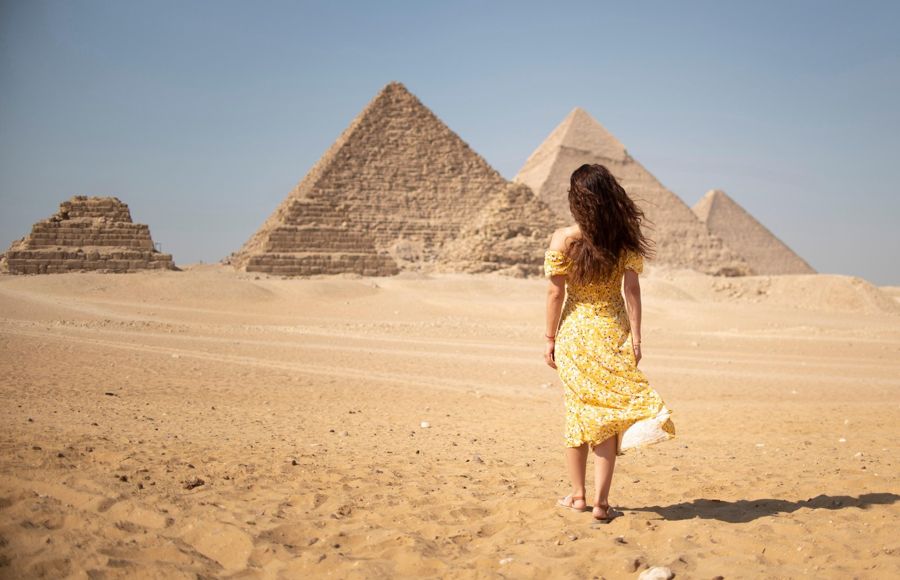
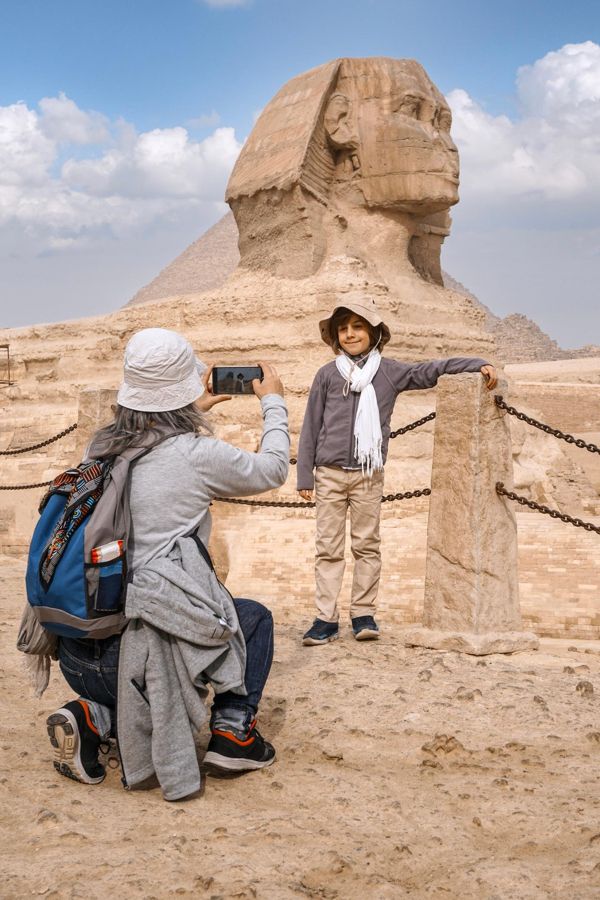
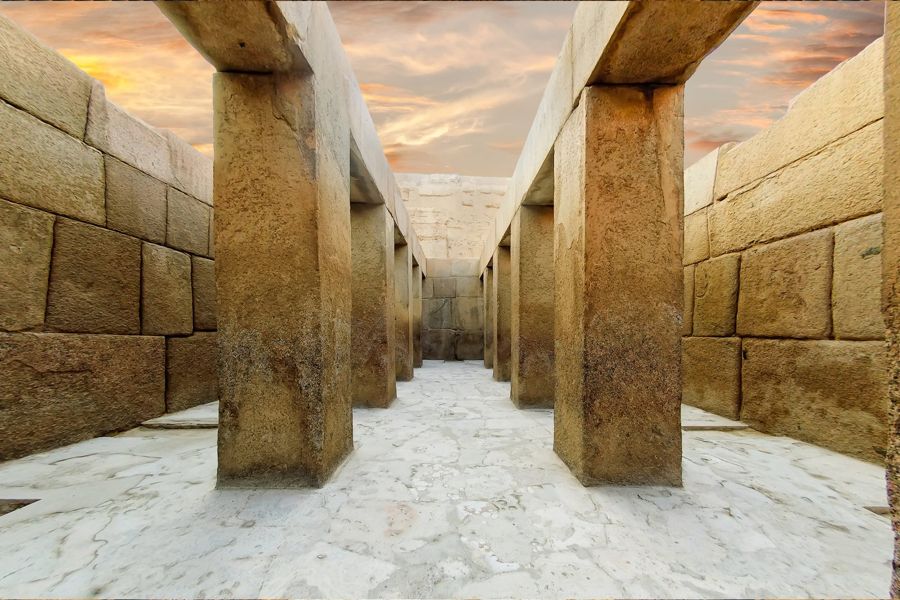
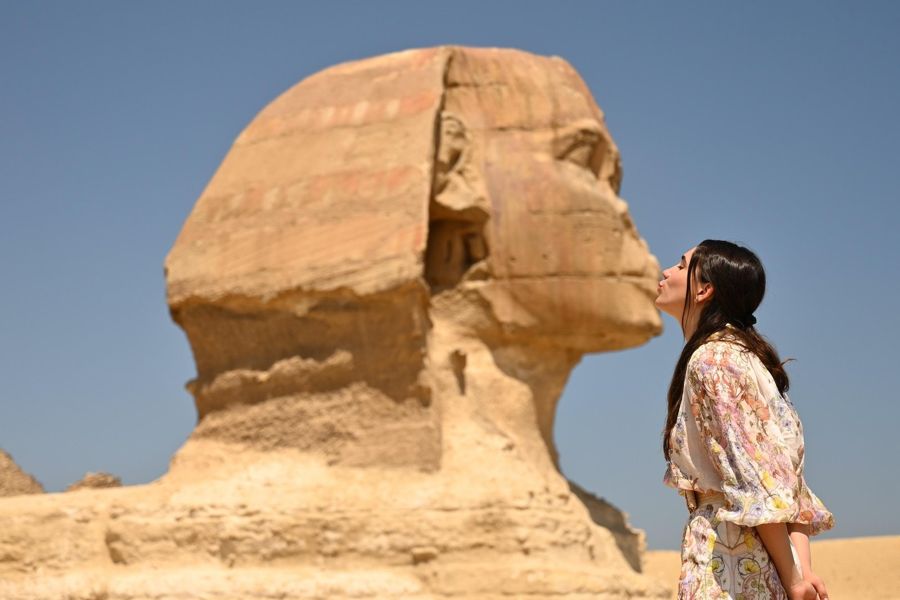
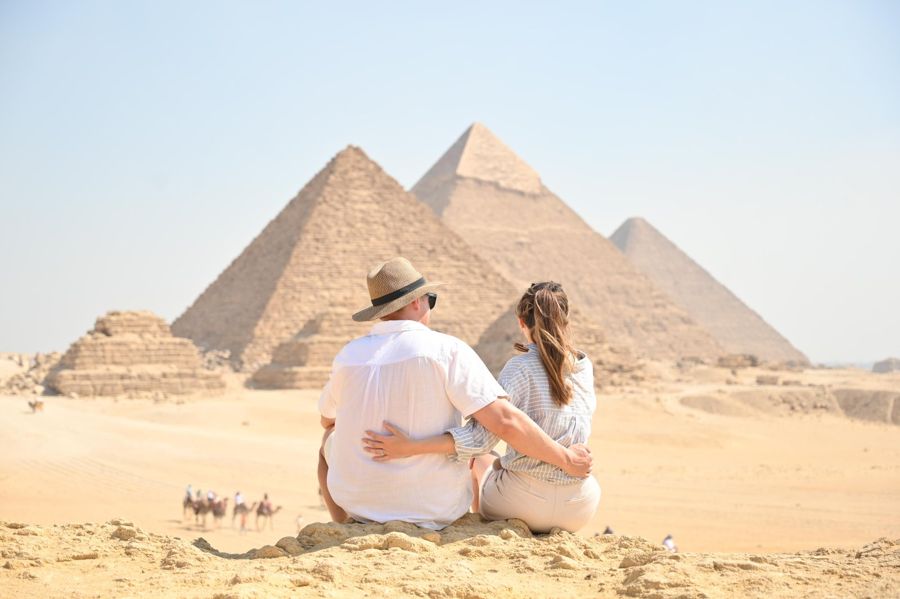
Half-day tour to the Pyramids of Giza and the Sphinx
- Hotel pickup regardless of which district the hotel is in
- No need to navigate traffic yourself or search for the right gate
- Plateau entry, German-speaking guide, and transfer included
- Free cancellation up to 24 hours before start
Four Time Differences a Year
The time in Giza is simpler than the search queries suggest, and the time difference to Central Europe is more complicated.
Egypt is in time zone UTC+2 and has had daylight saving time again since 2023, switching to UTC+3. However, the transition dates differ from Europe: Egypt switches only in late April and back at the end of October, while Germany switches at the end of March.
This results in four different time differences over the course of a year. In winter, when both countries have standard time, Giza is one hour ahead of Germany. In summer, when both have daylight saving time, it is also one hour. In between, there are two transition windows: from late March to late April there is no time difference at all, and for a few days in late October it is two hours.
The reason for the differing dates is mundane. The European dates have been uniformly regulated for decades and fall on the last Sunday in March and October. Egypt, on the other hand, sets its dates annually and aligns them among other things with Ramadan, whose position shifts in the solar year. There is therefore no permanent rule you could memorize.
This is also relevant for flight bookings. Flight times are always given in local time, both for departure and arrival, and the flight duration does not result from the difference in displayed times. If you are planning a connecting flight, you should therefore calculate with UTC and only convert to local time at the end.
This is not an academic detail. If you book a hotel pickup for seven o'clock and calculate with the wrong difference, you will miss it. Therefore, check the time difference for your specific travel date rather than relying on memory.
Practical Location Information at a Glance
- The postal code for Giza city center is 12511. Other districts have their own numbers, so always use the recipient's details for mail.
- The country code for Egypt is 00 20, followed by the area code 2 for Greater Cairo and Giza.
- The currency is the Egyptian pound. Cards are accepted in hotels and at official ticket offices, but small cash is still needed for tips.
- Tap water is not intended for drinking. Bottled water is available everywhere.
- The power supply matches the Central European standard; no adapter is needed for German plugs.
Prayer Times and the Call at Half Past Four
Prayer times in Giza are often searched for, and by two very different groups: Muslim travelers who need them, and others who wonder why loudspeakers are heard at half past four in the morning.
Both answers are connected. There are five daily prayer times that depend on the position of the sun and therefore shift by a few minutes each day. They are announced from the minaret, and in a city of this size, many mosques can be heard simultaneously. The first prayer is before sunrise, which in the summer months means very early.
The call itself is not an alarm signal or an exceptional situation, but a normal part of the daily routine, comparable to church bells in Central Europe, only more frequent and significantly louder. In the summer months, the first prayer falls at a time when many travelers are still asleep; in winter it is later.
For travelers, this has two practical consequences. First: a hotel room in the immediate vicinity of a mosque is loud in the morning, and no window changes that. Second: on Friday midday is the main prayer, and traffic and opening hours shift accordingly.
Reliable times for a specific day are provided by local calendars and apps because they calculate the sun's position for the exact location. There is no general figure for the whole year.
Plateau entry as a QR code on your phone
If you are traveling independently, you should have the ticket in advance. At the eastern gate, which is closest to the city, there is no ticket office.
What Else the City Has to Offer
What else the city has to offer pales in comparison to the plateau, and that should be said honestly.
Giza is not a destination for a city stroll. There is no closed old town, no pedestrian zones in the European sense, and few sights outside the necropolis. What there is includes a zoological garden from the 19th century, several Nile islands with gardens, and the usual facilities of a metropolis.
The fact that the city shows relatively little historic building fabric has a reason: it grew very quickly in the 20th century. Where fields and villages lay until the post-war period, residential blocks now stand, and this growth extended over the decades right up to the foot of the plateau. This very process is why the monuments today stand on the edge of a metropolis and no longer in the desert.
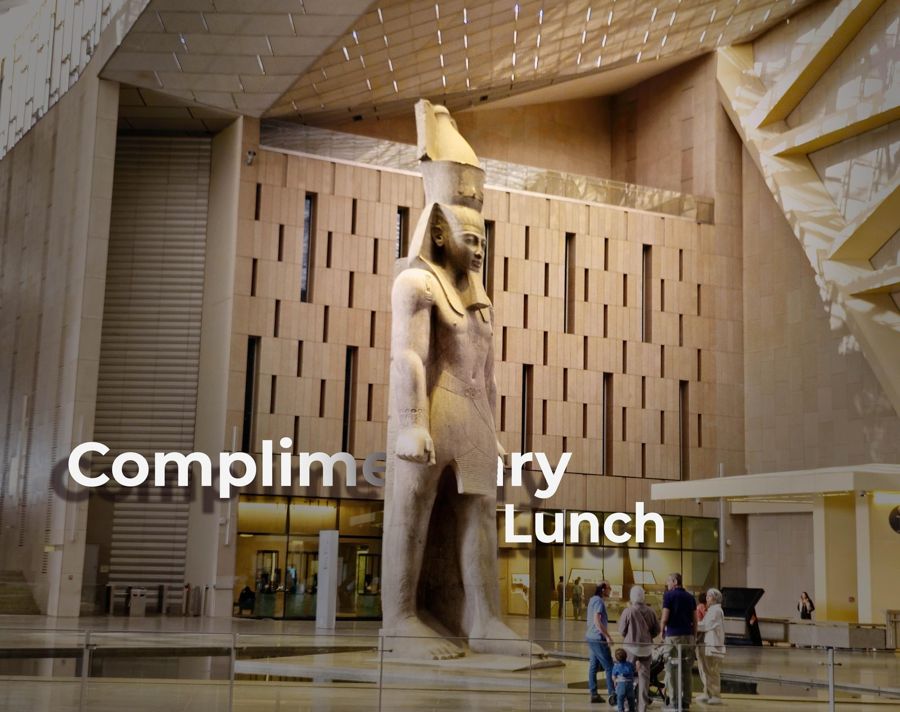
The region's actual attractions are either on the plateau itself or in Cairo on the other side of the Nile: the museum at Tahrir Square, the Grand Egyptian Museum near the plateau, the Citadel, the Coptic quarter, the bazaar. If you stay several days, you will spend them mostly there.
Add to that a peculiarity that surprises. Traffic in this metropolitan area is the determining factor of any daily planning, more than opening hours or distances. The same route can take thirty minutes or an hour and a half, depending on the time of day and day of the week. If you want to combine two destinations in one day, you plan not by kilometers but by time windows.
For choosing accommodation, this yields a simple rule. A place near the plateau shortens the way to the site and lengthens every trip to the city center; a place in Cairo does the opposite. Both are acceptable, depending on what you plan to do most.
Regarding the security situation: The travel and safety advice from the German Foreign Office assesses Cairo and Giza differently from individual border regions of the country. Check it before your trip because it is updated.
Frequently asked questions
Is Giza a city?
Yes, and at the same time the name of its own governorate. The city lies on the west bank of the Nile opposite Cairo; the governorate extends far beyond that.
Does Giza belong to Cairo?
Administratively no, they are two separate governorates. In daily life, both form a contiguous metropolitan area.
What time is it in Giza?
Egypt is at UTC+2, in summer UTC+3. Compared to Germany, it is usually one hour later, in two short transition windows the same time or two hours later.
What is the postal code for Giza?
For the city center, 12511. Other districts have their own numbers, so the recipient's details are decisive for mail.
Is it worth staying in the city itself?
As a base for the plateau, yes. As a destination in its own right, the city offers little; the region's other attractions are in Cairo.
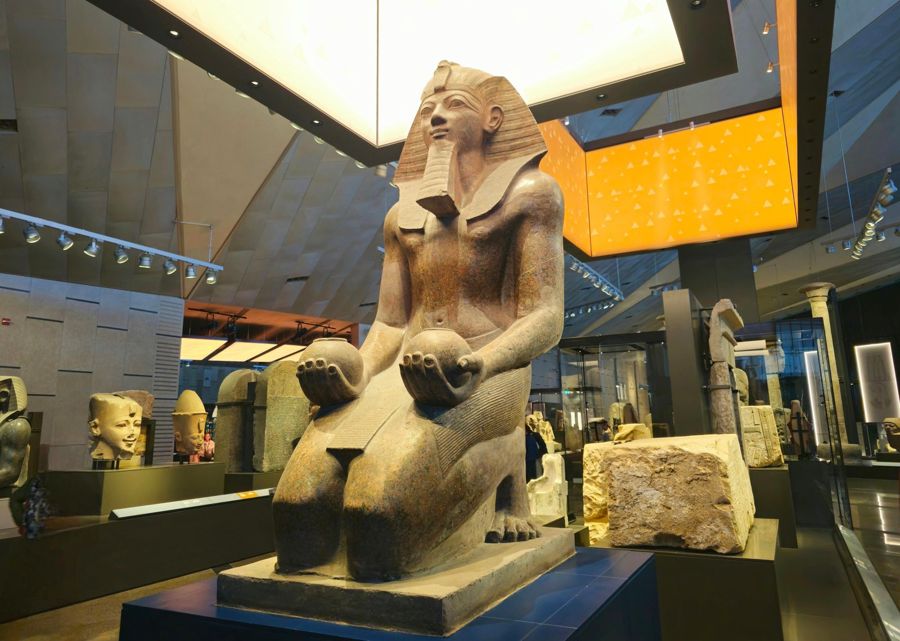
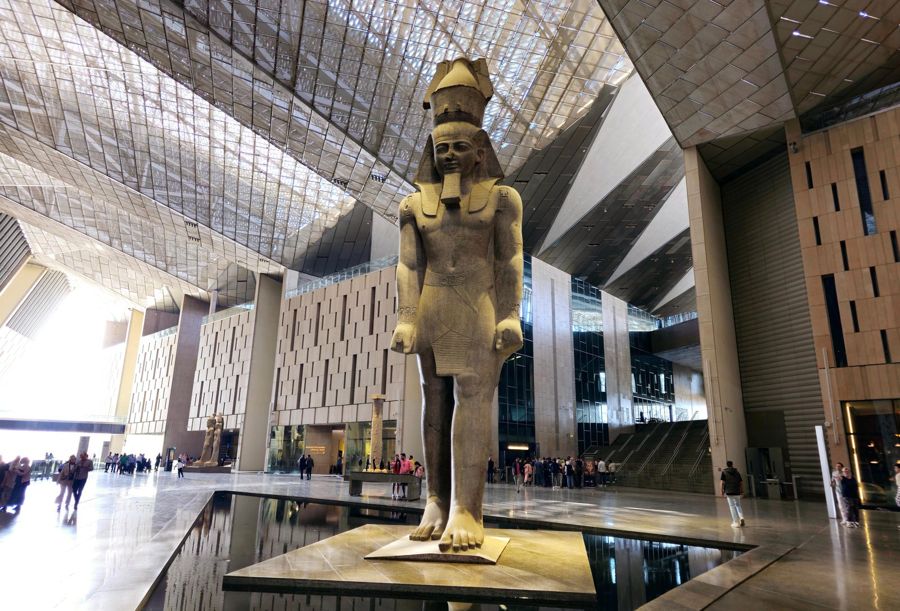
Day tour to the Grand Egyptian Museum and the plateau
- The museum is near the plateau and can be combined with the site in one day
- No need to navigate between two destinations in city traffic yourself
- Entry fees, German-speaking guide, pickup, and lunch included
- Free cancellation up to 24 hours before start