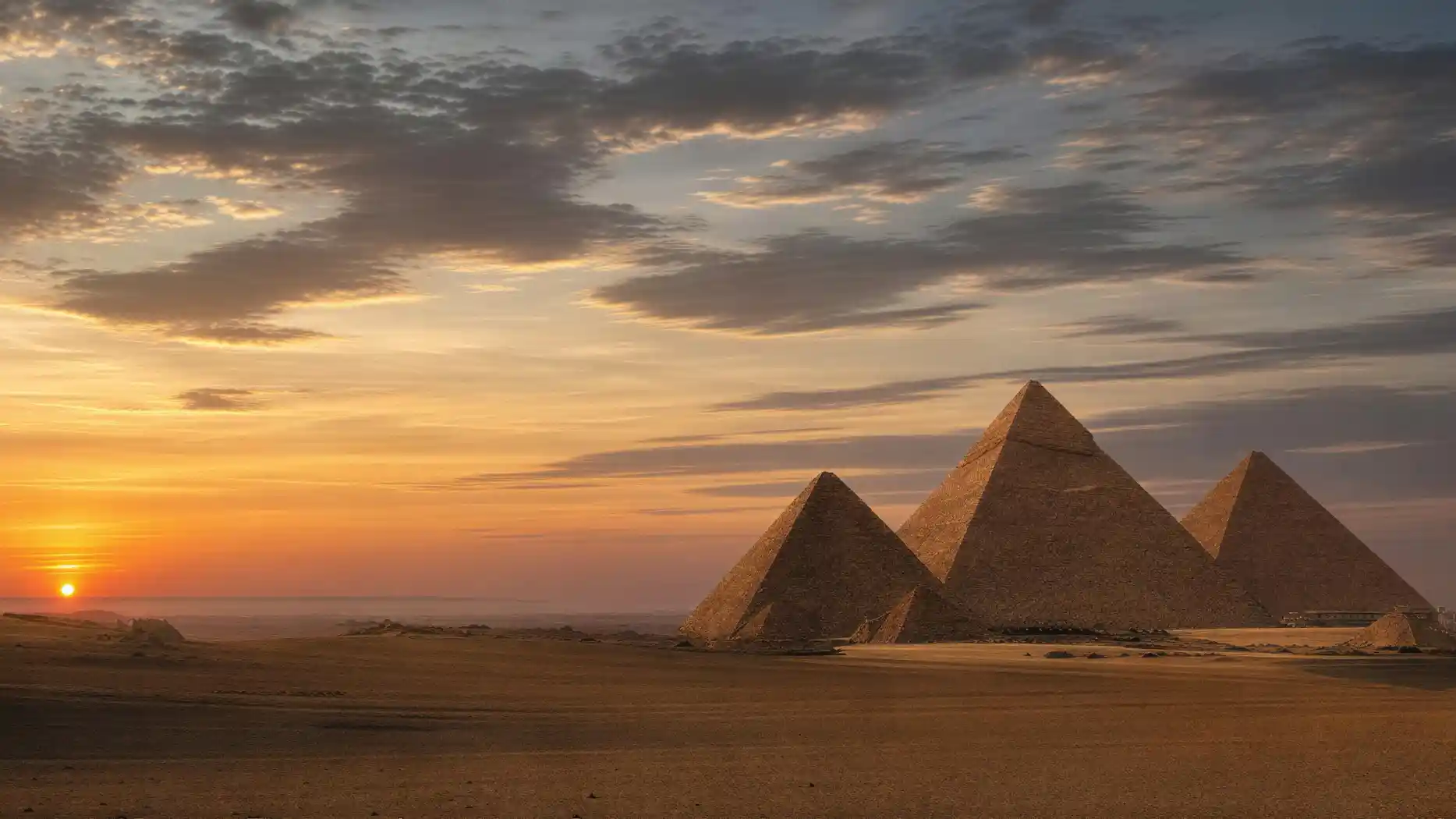
There are two gates to the Giza Plateau, located at opposite ends of the site, and only at one of them can you buy an entrance ticket.
That's the whole story, and yet it still costs people their mornings every day. If you show up at the wrong gate without a ticket, you won't be let in, and the way to the other gate doesn't go through the site but around the outside through Giza traffic.
Which Gate Is Yours?
Three questions. The answer appears immediately and never leaves your device.
Answer all three questions, and your recommendation will appear here.
Main Gate in the Southwest, and It's a Must
Without a ticket, your only option is the main gate on the desert road to Fayyum. There is no ticket sales at the gate by the Sphinx, and neither cash nor credit card will change that.
- Set the visitor center in the southwest as your destination, not Pyramid Street.
- Get your ticket at the ticket office or at one of the machines with a bank card.
- Vehicles stay outside; from here, the electric shuttle takes over.
If your navigation suggests a gate on Pyramid Street, that's the old, closed entrance. Don't go there.
The alternative to driving to the main gate: with the code on your phone, both gates are open, including the closer one in the east. Valid for one day, free cancellation up to 24 hours before.
Gate at the Sphinx, on Foot
You're staying in the district right by the fence and already have your ticket. That makes the eastern gate the clearly better choice: no vehicle, no detour, and the Sphinx is right behind the checkpoint.
- Load the QR code onto your phone before you leave, not just at the gate.
- Walk to the gate next to the statue.
- After the checkpoint, the Sphinx is on your left, and the plateau rises to the west.
You can exit through either gate. Many people leave in the southwest and take a vehicle from there.
Nothing is sold at the eastern gate. The QR code can be purchased until just before and then sits on your phone.
Gate at the Sphinx
If only the Sphinx and the Valley Temple are on your itinerary and you already have your ticket, the eastern gate saves you the drive around half the site. The statue is right behind the checkpoint.
- Direct your driver to the gate at the Sphinx, not to the visitor center.
- Have your ticket ready on your phone; nothing is sold here.
The path from here to the pyramids themselves is an uphill walk. If you also want to go there, the main gate with the shuttle is faster.
Main Gate in the Southwest
With a time slot for an interior, every minute between the gate and the structure counts. From the main gate, the shuttle gets you there significantly faster than the uphill walk from the east.
- Be at the gate early: the slot applies from the structure, not from the entrance.
- Take the shuttle, don't walk.
- The entrance to the Great Pyramid is on the north side.
Main Gate in the Southwest
For photos, the order is crucial, and it clearly favors the main gate: the shuttle's first stop is the viewpoint in the southwest, from which all three structures stand side by side.
- Take the shuttle's first stop and get off there.
- Then work your way downhill instead of uphill.
Main Gate in the Southwest
The museum and the main gate are on the same side of the site. The route there is short and doesn't go through the city.
- From the museum, stay to the west, don't head toward Pyramid Street.
- Vehicles stay in front of the gate.
Main Gate in the Southwest
For a first visit, the main gate is the standard answer, even with a ticket in your pocket: visitor center, restrooms, dining, and the shuttle starts with the overview rather than the detail.
- The destination is the visitor center on the desert road to Fayyum.
- Vehicles stay outside; your driver waits in front of the gate.
The old entrance on Pyramid Street in the northeast is closed as a main gate but still appears in travel guides and map services.
For a first visit, the version without the gate question: hotel pickup, entrance, and German-speaking guide included, half a day instead of a full one.
The tool runs in your browser and sends nothing. It's based on the two gates as of September 2026; opening hours and ticket procedures change, so check the details briefly before your trip.
The question of which gate at the Giza Plateau is right for you depends on three things: where you're coming from, whether you already have a ticket, and what you plan to do that day. The tool below asks exactly these three questions and gives an answer.
Below that, you'll find why the answer turns out that way, so you can understand it and not just follow it.
Why These Three Questions and No Others
The gate choice looks like a matter of taste, but it isn't. It depends on exactly three factors, and everything else is derived from them.
The first is the ticket. It's the only question with a hard consequence: without a ticket, the eastern gate isn't an option because no one sells them there. That's why it's in second place in the tool and overrides everything else in the result.
The second is the starting point, and it determines travel time. The main gate is at the far southwestern edge on the desert road, the other is at the city edge in the east. Between them are a few hundred meters as the crow flies and a whole city crossing by road.
The third is the goal of the day, and it determines the order. From the main gate, the visit begins with the panorama and works its way downhill to the details. From the eastern gate, it starts at the Sphinx and goes uphill.
What the tool deliberately doesn't ask: the time of day, the weather, and the number of people. All three change how pleasant the visit will be, but none changes which gate is the right one.
A fourth factor would be conceivable and is intentionally left out: mobility. The path from the eastern gate to the pyramids themselves is an uphill climb over unpaved ground, while the shuttle from the main gate runs on a paved route. If you have trouble walking, you should therefore take the main gate regardless of everything else. That's noted in the results, but not as a separate question, because it can only shift the answer in one direction and never in the other.
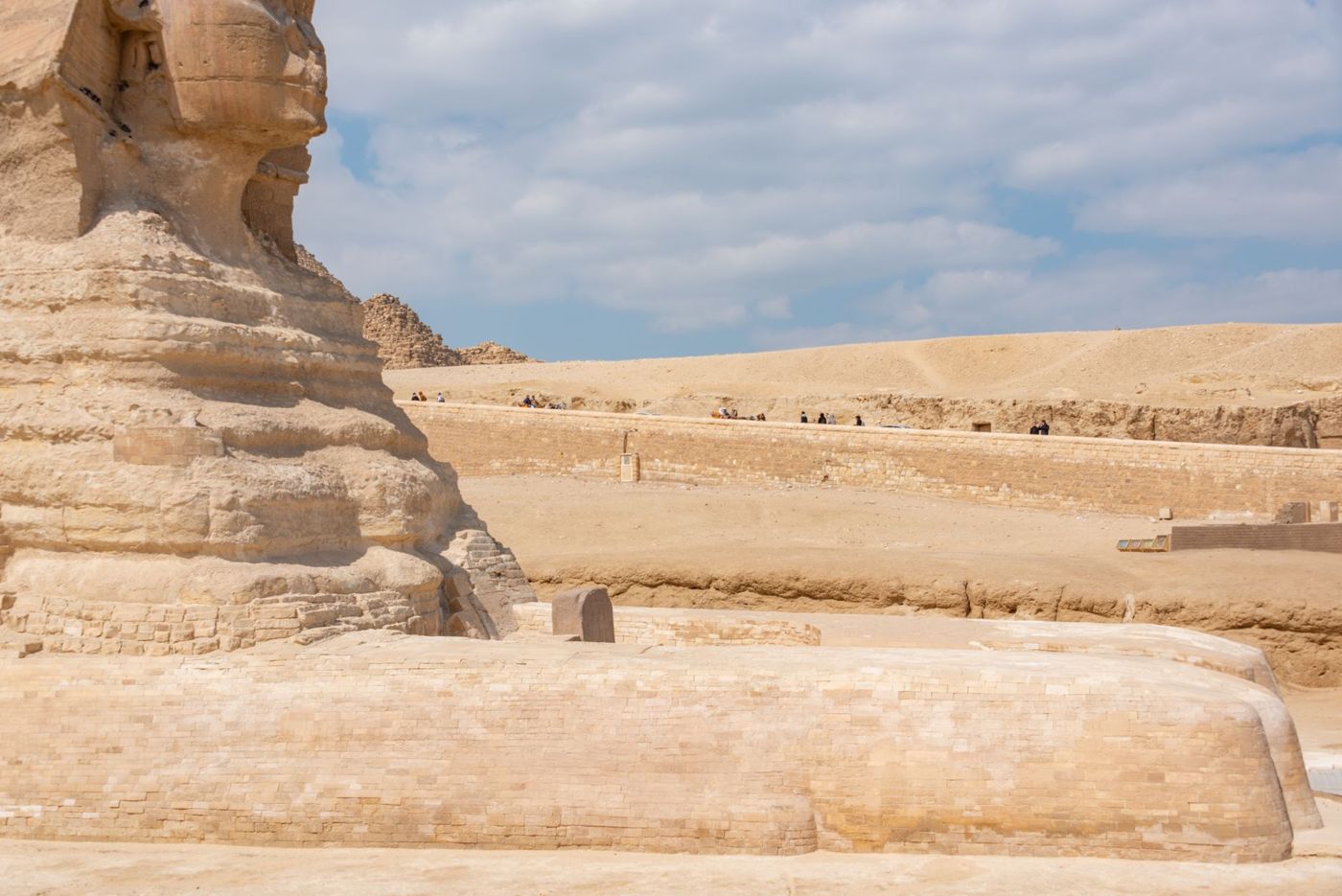
The Gate at the Sphinx Has No Ticket Booth
This single fact causes almost all the lost mornings at this site, so here it is again in detail.
The gate at the Sphinx is in the east, where the city meets the fence. It's the more convenient access: closer to the guesthouses, closer to the restaurants, closer to the axis into the city center. And it sells no entrance tickets. There's no counter, no machine, and no one who could step in.
If you show up without a ticket, you have two options, and both cost you. Either buy the ticket online at that moment, which doesn't always work at the gate with Egyptian mobile service and a foreign card. Or go around to the main gate, which takes twenty minutes or much longer depending on the time of day.
The detour doesn't go through the site. Inside, the way would be short; outside, it leads through dense city traffic around half the site. This discrepancy between the crow's flight and the driving route is exactly the trap.
The solution is unspectacular: if you want to use the eastern gate, buy your ticket in advance. Then it's the more pleasant of the two accesses.
Why it is this way at all can be guessed but not proven. The eastern gate was a side entrance before the renovation, and all the processing moved with the visitor center to the southwest: ticket counters, machines, checkpoints, parking, dining. What remained in the east is a pure access control. Whether that stays permanent, the administration doesn't say; for now, that's the status.
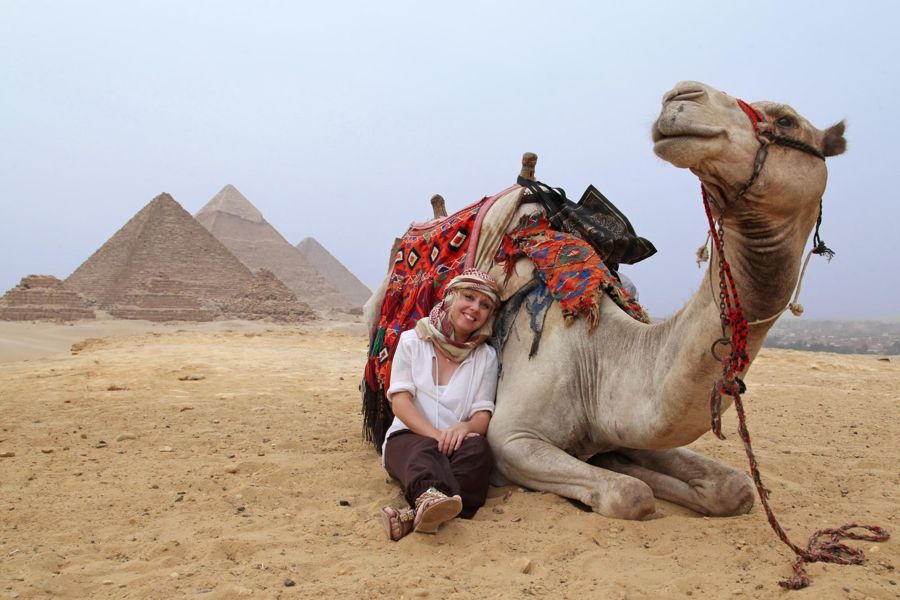
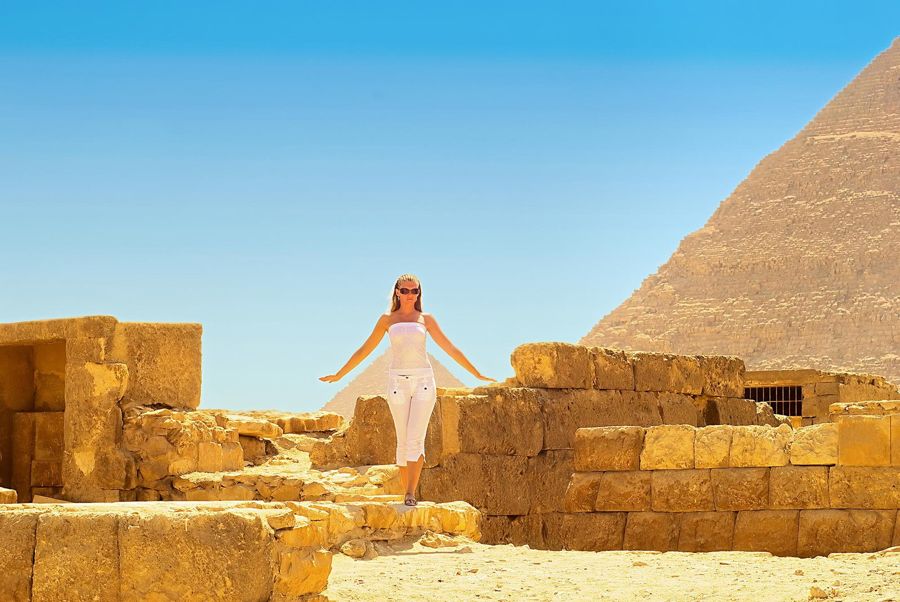
Entrance ticket for the site as a QR code
- Exactly the solution for the eastern gate, where nothing is sold
- The code sits on your phone, no printing and no pickup
- Valid for one day and covers the site; interiors are not included
- Free cancellation up to 24 hours before the chosen day
The Old Entrance Is Still Everywhere, and It's Closed
The second problem isn't a decision but outdated information.
Until 2025, the main entrance to the Pyramids of Giza was the gate on Pyramid Street in the northeast, by the old hotel. Since the renovation, it's closed as a main entrance, and the regular access is in the southwest on the desert road to Fayyum. The trial operation of the renovated site began in spring 2025.
The problem is that the old information has survived. It's in printed travel guides, in videos that keep running, and in map services that never updated the point. Drivers know it too, because it was true for decades.
Practically, that means: check the destination your navigation or driver is heading for. If it's on Pyramid Street, it's wrong. The correct destination is the visitor center in the southwest, and there are now machines for buying tickets with a bank card there.
One detail that adds to the confusion: both gates are entrances and exits. So you don't have to leave where you came in, and many people use exactly that. If you go in at the southwest and come out at the east, you end up in the city instead of on the desert road.
Half-day tour from Cairo with pickup
The version where the gate question never even arises: hotel pickup, the provider knows the right gate, entrance and German-speaking guide included. Half a day instead of a full one, for those who want to spend the rest of the day in Cairo.
What You Need to Tell a Driver
The most common way to end up at the wrong gate despite making the right decision is communication with the driver. Two sentences solve it.
For the main gate: you want to go to the new visitor center on the desert road to Fayyum, in the southwest. Not Pyramid Street. Drivers who have been driving the route for years head for the old entrance out of habit, and many think that's what the guest wants, because guests have been naming it for decades.
For the eastern gate: you want to go to the gate next to the statue, in the residential area on the eastern edge. Add that you already have your ticket, because otherwise a helpful driver will take you to the visitor center, where you can buy one.
Two things you should also clarify in advance, because they'll be expensive later. First, that the driver waits outside: private vehicles are no longer allowed on the site since the renovation, and if you don't discuss that, you'll be left without a ride back after your visit. Second, which gate you want to exit from. Because both gates are entrances and exits, the obvious combination is to go in at the southwest and come out at the east, and a driver waiting in the southwest won't know anything about that.
If you've booked a guided tour, you can skip this whole section. The provider knows the gate, has the tickets, and waits on the right side. That's the unspectacular reason why a tour often causes less hassle for a first visit than the price difference might suggest.
What the Tool Doesn't Answer
Three things are deliberately outside its scope, because they're different questions and have their own pages.
Which ticket you need is the first. The site ticket gets you in and up to all the structures; going inside costs extra for each pyramid, and for the largest, the daily quota is small. A separate tool turns that into your ticket list in four questions; this one assumes the decision has already been made.
When you should arrive is the second. The first hour after opening is cooler and noticeably emptier than the rest of the day, and the gate choice doesn't change that.
How to get there is the third. The ride-hailing app, the taxi, the metro to Giza, and the transfer differ in price and convenience, but all four drop you off at one of the two gates, and which one that should be is answered by the tool above.
A fourth question comes up more often than it should: whether there are any more gates. There aren't. Two gates, both entrances and exits, and a third, closed one from the time before.
Frequently asked questions
Can I buy a ticket at the gate by the Sphinx?
No. There's no counter and no machine there. If you arrive without a ticket, you won't be let in and have to go around to the main gate in the southwest.
Where is the main entrance since the renovation?
In the southwest, on the desert road to Fayyum, at the new visitor center. The old gate on Pyramid Street in the northeast is closed as a main entrance.
How long does it take to get from one gate to the other?
On foot across the site, it's short. By vehicle, it goes around the outside through city traffic, and that takes twenty minutes or much longer depending on the time of day.
Do I have to leave where I came in?
No. Both gates are entrances and exits, and many people use that deliberately: in at the southwest, out at the east.
Does the tool work without JavaScript?
The page remains fully readable. Without the script, all results appear one below the other instead of just the relevant one, and the questions then serve as a guide.
Are my answers saved?
No. The tool runs in your browser, it sends nothing and stores nothing.