
Can you climb the Pyramids of Giza? No. Not with a guide, not for a fee, not early in the morning, and not with a friendly guard.
That is the complete answer, and it is more definitive than many travel forums suggest. There is no permit you can buy as a tourist, and there is no provider who sells it legally. If you come across an offer online that promises a climb, you should treat it for what it is.
What is new about this definitiveness is mainly the legal consequence. Until a few years ago, climbing was prohibited, but there was no explicit penal provision. Those caught were detained, questioned, and let go again, in the worst case with an entry ban. That has changed, namely in 2020.
A misunderstanding is worth clearing up in advance, because it is the most common source of false hope. The ban is not an invention of recent years and not a reaction to individual incidents. Climbing has been prohibited since the 1980s, i.e., for around four decades, and for two reasons at once: people fall, and the stone surface suffers damage. What was added in 2020 was not the ban, but the penalty.
This page explains the legal situation, says what practically happens if you try, and answers the second question that almost always comes up: whether you can at least touch the stones.
The legal situation in four lines
- Basis
- Egyptian Antiquities Protection Law of 1983, amended in 2020
- Prohibited act
- Climbing a monument without permission
- Penalty range
- At least one month in prison and a fine between 10,000 and 100,000 Egyptian pounds, or either one of the two penalties
- Aggravation
- Doubling if indecent acts are added
What happens if you climb
What happens if you climb the pyramids can now be described quite precisely, because there are enough documented cases.
At first, nothing happens. The lowest stone layers are high but not difficult, and in the first seconds nobody notices. Then a guard whistles. The site is guarded, and a person on a pyramid flank is visible from far away, because otherwise there is nothing there. If you keep climbing, you will be expected when you come down.
The climb itself is physically more demanding than the pictures suggest. The layers of the exposed core masonry are of varying heights, many reaching an adult up to the hip or chest, the edges are weathered and crumble. There is no continuous route, no safety equipment, and no way back that is easier than the way up. Descending is the more dangerous part, because you cannot see the next step.
Then begins the part that has changed since 2020. The amendment to the Antiquities Protection Law explicitly makes climbing monuments a criminal offense: at least one month in prison and a fine between 10,000 and 100,000 Egyptian pounds, or optionally only one of the two. If indecent acts are added, the range doubles.
The difference to the time before is considerable. When an eighteen-year-old from Munich climbed the Great Pyramid of Khufu in a few minutes in 2016, filmed at the top, and was arrested on the way down, the matter ended without charges. He deleted the footage, later restored it and put it online, and became internationally known. Exactly this outcome would no longer be expected today, and that is the purpose of the law change: the incentive lay in the attention, and the answer to that was a penal norm.
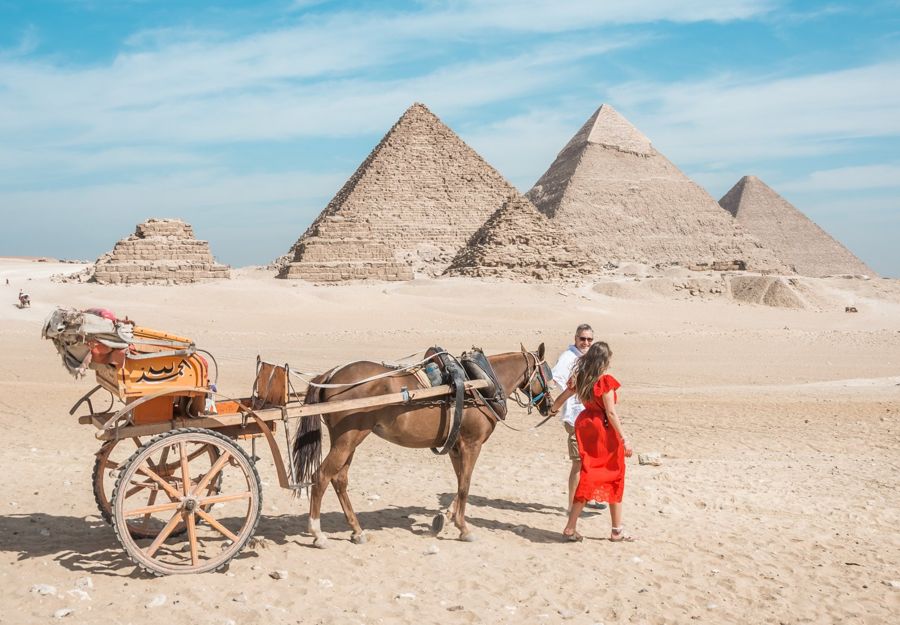

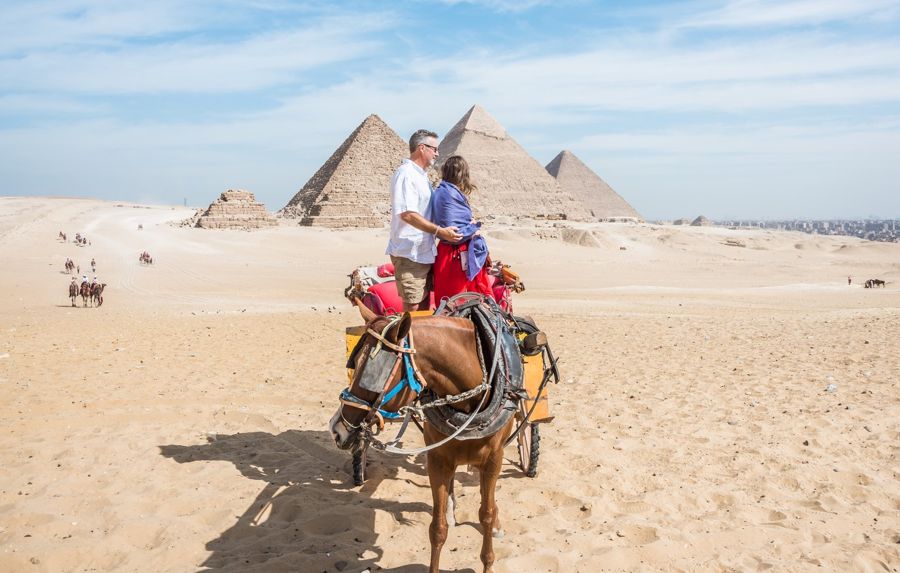

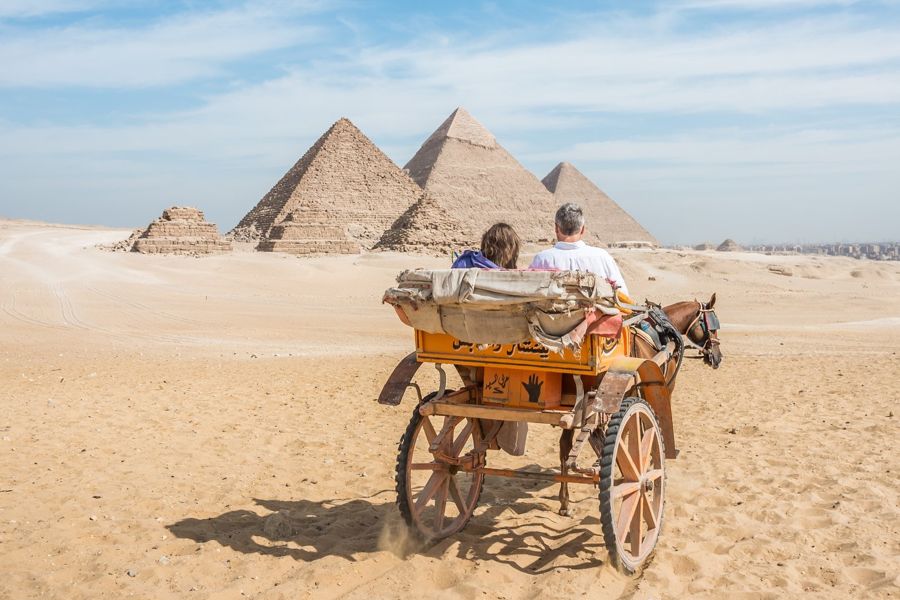
Half-day across the plateau, by camel or horse carriage
- Covers the long distances between the structures that you would otherwise walk in the sun
- Leads to the sightlines for which most people want to go up at all
- Five hours, German-speaking guide, with hotel pickup
- The site entrance fee is not included and is added
- Free cancellation up to 24 hours before start
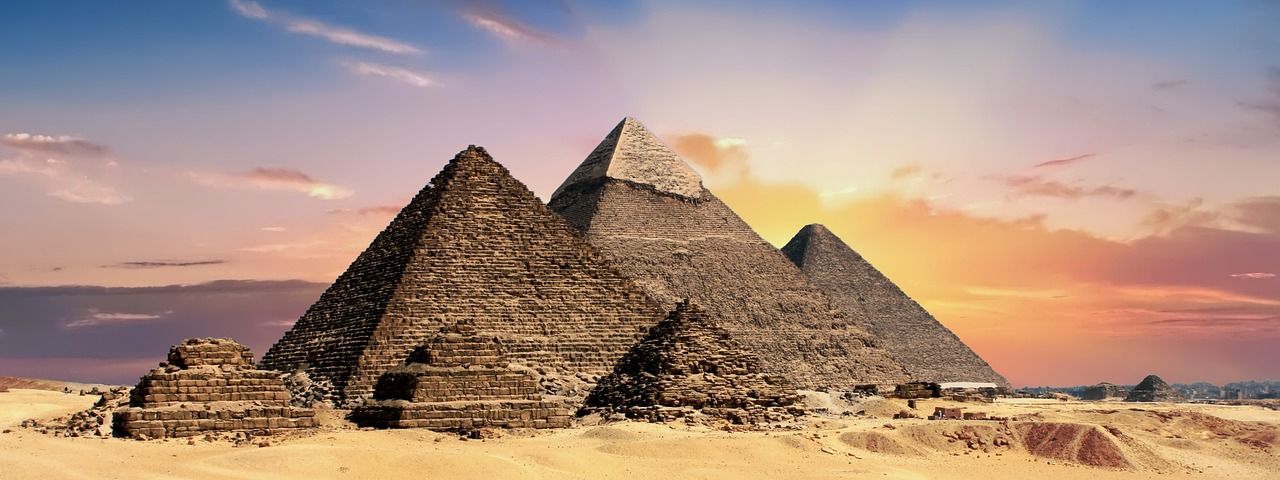
For two centuries, climbing was part of the program
The fact that the question is asked so often has a historical reason: for two centuries, climbing was part of the program.
In the 19th century, it was the highlight of every trip to Egypt for wealthy Europeans. The Reiss-Engelhorn Museums in Mannheim describe from their photo collection how it practically worked: for a tip, local guides pulled and pushed visitors up the roughly meter-high blocks, usually three guides per person, two pulling and one pushing. Climbing the pyramids was such a fixed topos of travel literature that guidebooks included their own instructions on it.
How dangerous it was is shown by another source. The State Library of Victoria has documented the accidents of Australian soldiers who were stationed in the camp at Giza in 1915 and held races to the top, with best times around four minutes. A soldier named Reginald Beard fell in March 1915 after just a few meters when the rock broke beneath him, lay unnoticed for hours, and died just over a year later from the consequences.
The practice did not stop abruptly. Travelers still climbed up into the postwar period, and the picture books of those decades show groups on the top surface. Only when visitor numbers grew to a scale where wear and accidents were no longer isolated cases was the site fenced off and climbing prohibited.
These two images belong together. Climbing was never safe; it was just customary. And it has left traces: worn edges, loosened blocks, foot damage exactly at the spots that are easiest to climb.
Touching: the rule that nobody has published
Can you touch the pyramids? Here the information situation becomes uncomfortably thin, and honestly there is no published rule that could be cited.
What can be said is the lived practice. Visitors stand directly at the structures, put their hand on the stone, and are not bothered for it. The line is not drawn at touching, but at stepping on: as soon as someone puts a foot on the first layer and pulls themselves up, the whistle comes. Some guards intervene even when visitors sit on the lowest blocks.
Practically that means: touching yes, climbing no, and even sitting on the lowest layer is at the discretion of the supervisory staff. Anyone who wants to argue here has the weaker position, because the legal basis is clearly on the other side.
Why there is no clear published rule is itself revealing. The Antiquities Protection Law regulates climbing, damaging, and removing, but not touching, and for everything below that, the site's house rules apply, which are not available as a text. If you find a clear answer to this question online, you are usually reading the experience of an individual and not a regulation.
A second point belongs here because it is less known. Taking stones, even loose splinters from the ground, is not a triviality, but falls under the same monument protection. In the past, it has led to investigations, and there is no reason to assume that a souvenir in a jacket pocket is treated differently than one from the wall.
The rule of thumb for your visit
Hand on the stone is unproblematic, foot on the stone is not. If you want to step on a block for a photo, ask the supervisory staff beforehand and accept a no. Offers from third parties that promise a climb for payment are not an insider tip, but a risk for both sides.
What it's really about: the view
The question remains what it's really about. In most cases, it's not about the climbing itself, but about the view and the picture.
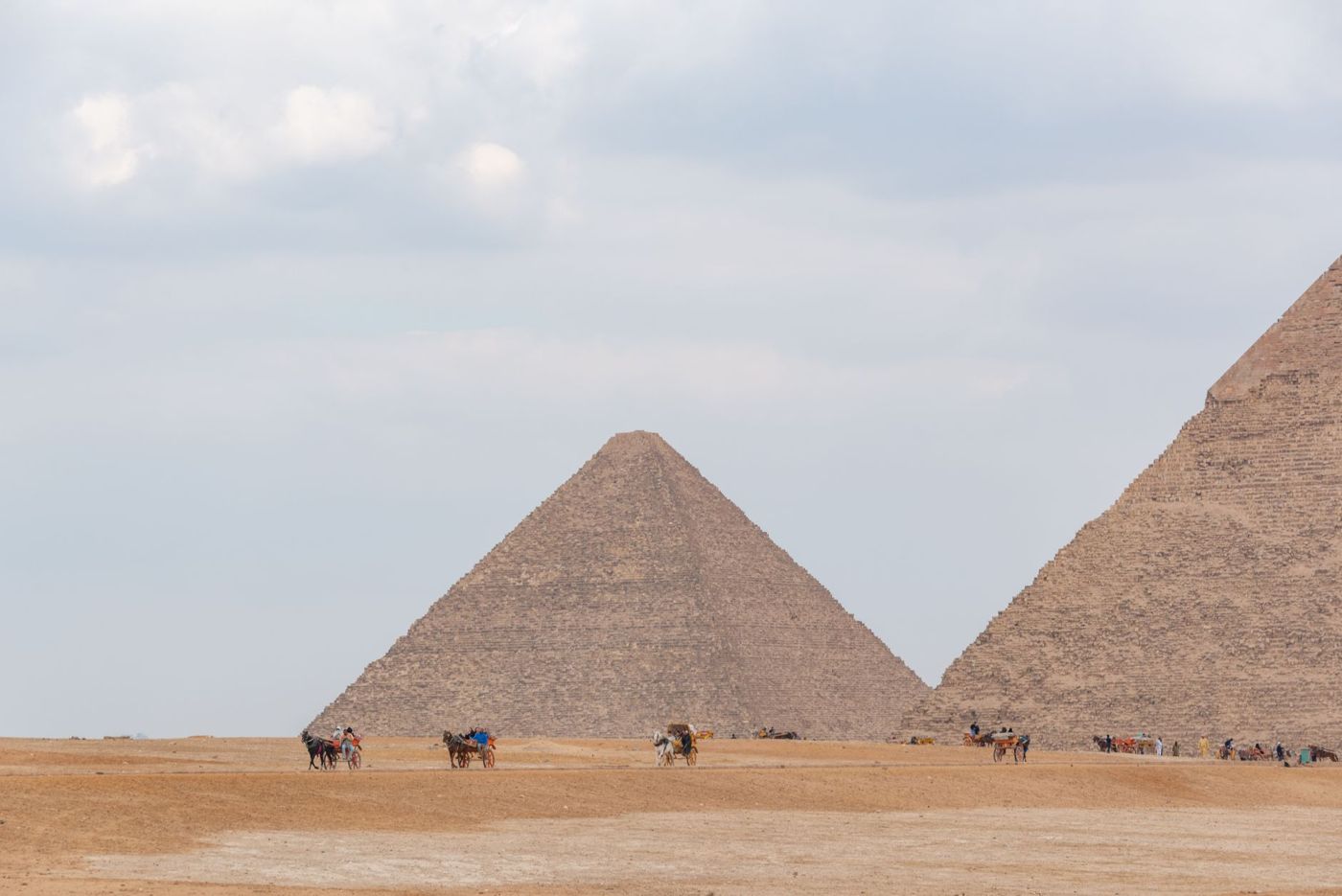
For both, there are legal ways, and two of them are better than what you would see from the top. The viewpoint in the southwest of the site lies at the highest point of the access road and shows all three pyramids staggered one behind the other, a view you would not have from the top of the Great Pyramid of Khufu, because you would be standing on the object itself. The second way leads into the air: sightseeing flights over the site are allowed and provide the bird's-eye view that most people are after.
Added to this is an argument that has nothing to do with regulations. The casing is gone, the exposed core masonry is rough, and the blocks have been rounded over centuries by millions of footsteps. A climbing ban on the pyramids thus protects not only people from falls, but also a surface that cannot be renewed. UNESCO has listed the necropolis as World Heritage since 1979, and the preservation of the building fabric is one of the obligations attached to it.
A final thought concerns the audience. The footage for which people climb only seems special as long as it is rare. By now, there is enough of it, and what remains is an entry ban or criminal proceedings for a picture that already exists.
What finally speaks against the appeal: at the top it is less spectacular than it looks. The peak is missing, the top surface is an uneven stone field about ten meters on a side, and the view goes over haze, city, and desert. The pictures passed around as proof were almost all taken during the ascent.
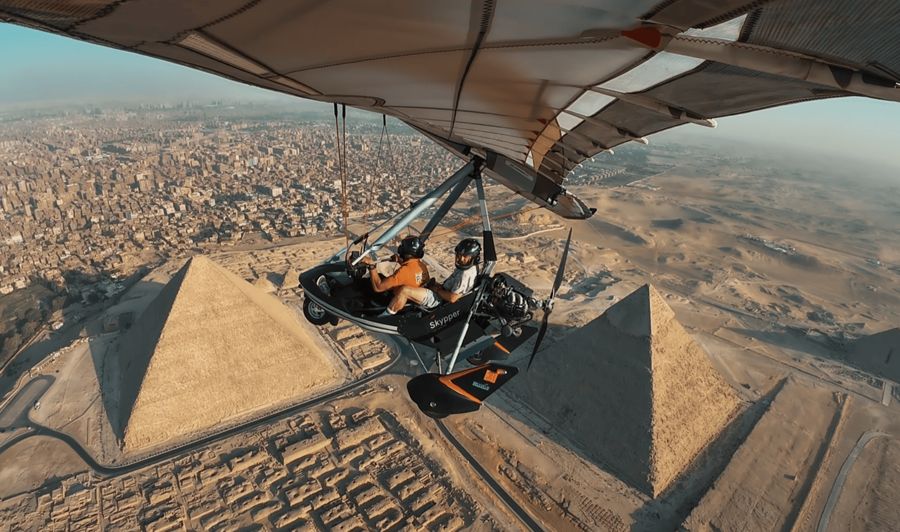
Sightseeing flight in an ultralight aircraft over the plateau
The bird's-eye view without setting foot on the structure: fifteen minutes over the site, booked as a private flight.
Frequently asked questions
Is there an exceptional permit to climb?
Not for tourists. Permits are only issued for surveying, restoration, and research, and they are granted to institutions, not individuals.
What is the penalty really?
The law provides for at least one month in prison and a fine between 10,000 and 100,000 Egyptian pounds, or optionally only one of the two. The actual outcome depends on the individual case.
Can you climb the Pyramid of Khafre or the Pyramid of Menkaure?
No. The ban applies to all monuments, not just the largest pyramid.
But it used to be possible, right?
Until the 1980s, it was customary to climb up with local guides. It was prohibited for reasons of monument protection and safety.
Where do I get the best view?
At the viewpoint in the southwest of the site, because there all three structures are staggered in the picture. From a pyramid top, this view would not be possible.