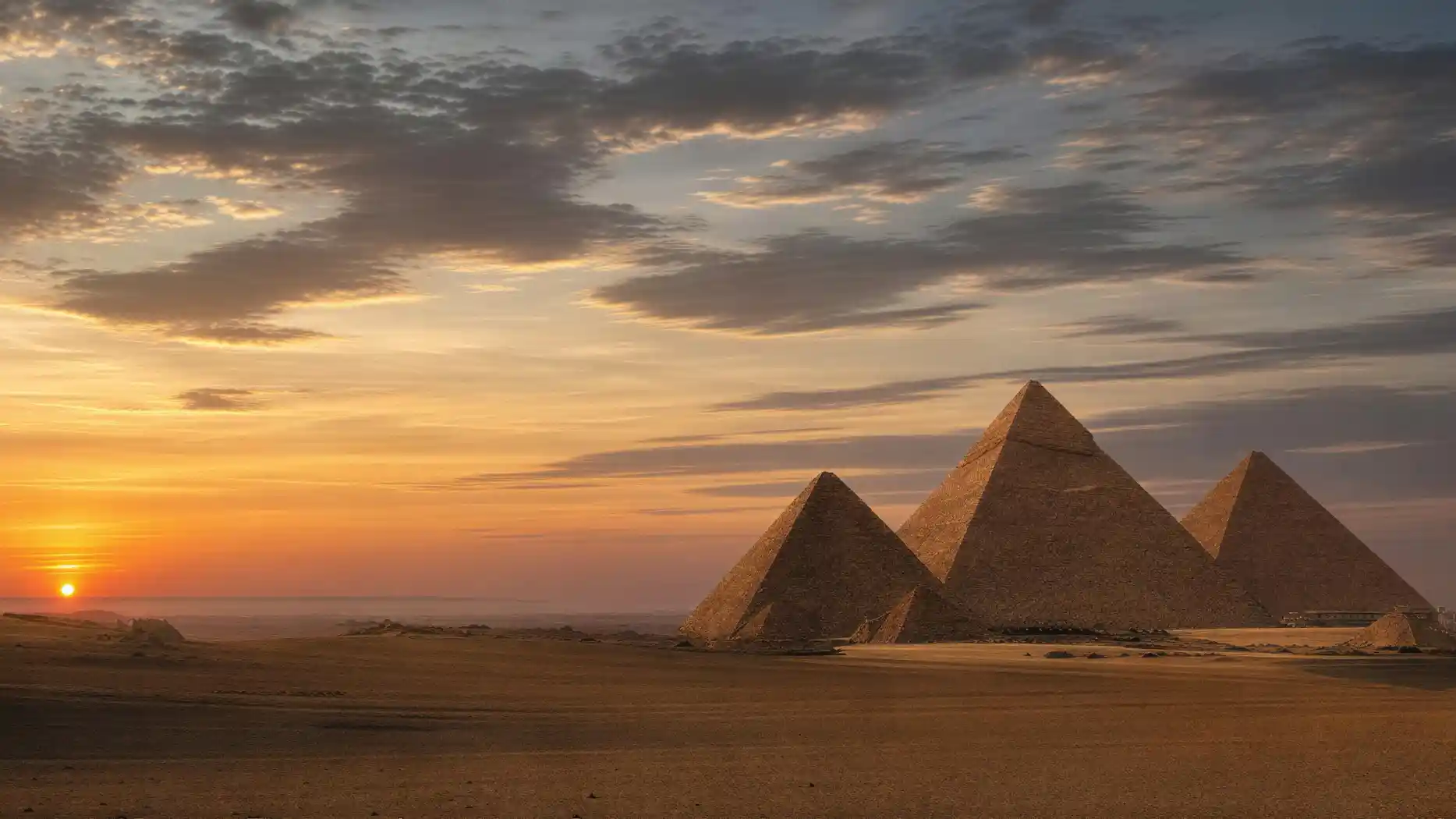
The Pyramids of Giza are royal tombs. That is the shortest accurate answer, and it sounds almost disappointingly sober for structures of this magnitude. Three kings from the same family had them built in the 26th century BC, within about eighty years, each for himself. After that, Egypt never again built on this scale.
They stand on the western edge of present-day Greater Cairo, on a limestone plateau at the edge of the desert. The largest of the three structures, the Great Pyramid of Khufu, originally measured about 147 meters and was thus the tallest structure in the world for almost four thousand years. It is also the only one of the Seven Wonders of the Ancient World that still exists.
To put the structures in context, it helps to look at their neighbors. Giza is not an isolated case but the culmination of a series. Along the desert edge west of the Nile, a whole belt of pyramid fields stretches for about thirty kilometers, from Abu Rawash in the north to Saqqara and Dahshur in the south. In total, there are well over a hundred pyramids in very different states of preservation. The three at Giza are the largest and best preserved, but they are neither the oldest nor the only ones.
If you read only these two paragraphs, you have the essentials. Everything else on this page answers the questions that arise from this: Why so big, who built them, what else is there, and what of it can be seen today.
One note in advance, because it corrects almost all ideas about this place: It is not three structures in the desert. It is a planned city for the dead, with temples, roads, harbors, cemeteries, and its own settlement for the workers. The three pyramids are the highlights within it, not the whole.
- What it is
- A royal necropolis of the 4th Dynasty with three large pyramids
- Where
- Giza, on the western edge of Cairo, west bank of the Nile, Egypt
- When built
- 26th century BC, within about 80 years
- For whom
- The kings Khufu, Khafre, and Menkaure, plus family and officials
- Largest structure
- Great Pyramid of Khufu, originally about 147 meters
- Also on site
- Great Sphinx, valley temples, causeways, queen's pyramids, boat pits, cemeteries
- Status
- UNESCO World Heritage Site since 1979, open year-round
The layout follows the same pattern for all three
The layout follows a pattern that is the same for each of the three complexes, and once you understand it, you can find your way around the site immediately.
At the bottom, on the edge of the former farmland, stood a valley temple, accessible by water. From there, a covered causeway led up the slope, almost a kilometer long in some complexes. It ended at a mortuary temple, which was located directly on the east side of the pyramid. Only behind that did the tomb itself rise.
Around this basic pattern lies the rest. Smaller pyramids for queens, boat pits carved into the rock, and entire streets of mastabas, the flat burial structures of officials, priests, and craftsmen. These cemeteries were not organic but planned and allocated in rows, like building land.
Who was buried there says a lot about the society that built it. In the mastabas east of the Great Pyramid lie members of the royal family, and to the west, high officials, priests, and master craftsmen. The location of a tomb corresponded to the rank of its owner, and proximity to the king was the currency. A construction manager who was assigned a tomb within sight of the pyramid had achieved more than with any title.
If you add it all up, depending on how you count, you get about ten pyramids on the plateau instead of three. In addition, there are quarries, harbor basins, and the remains of the settlement where the builders lived. A description of the complex as an ensemble therefore captures the matter better than any list of the three well-known structures.
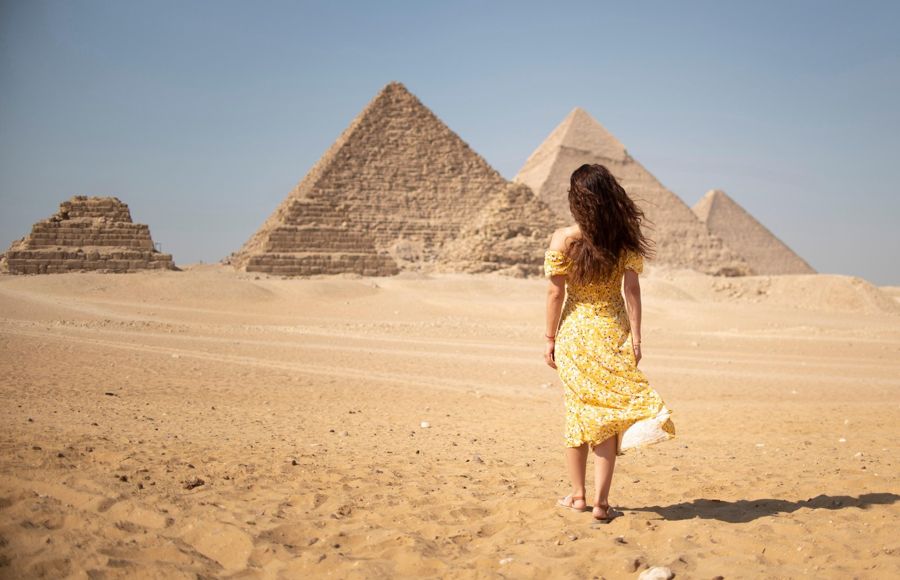
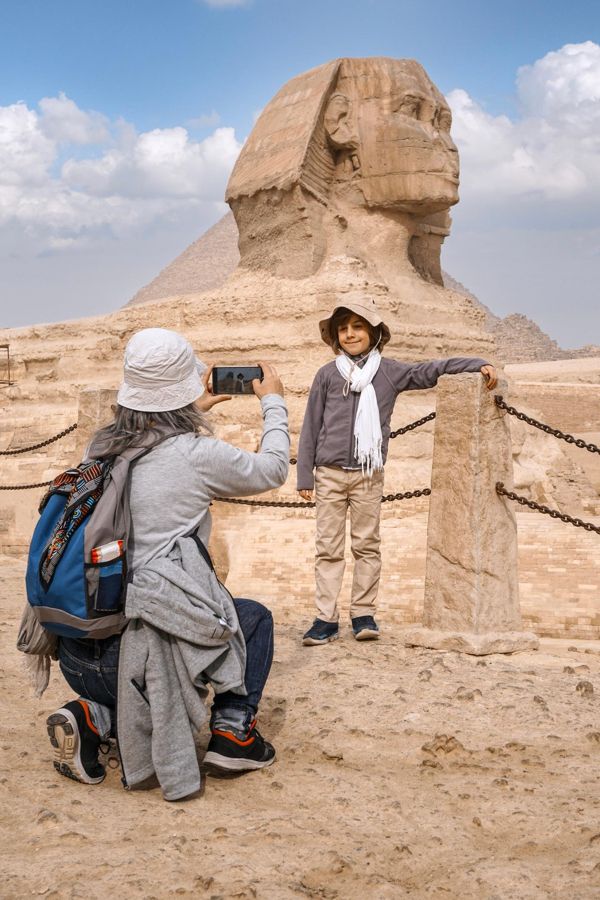
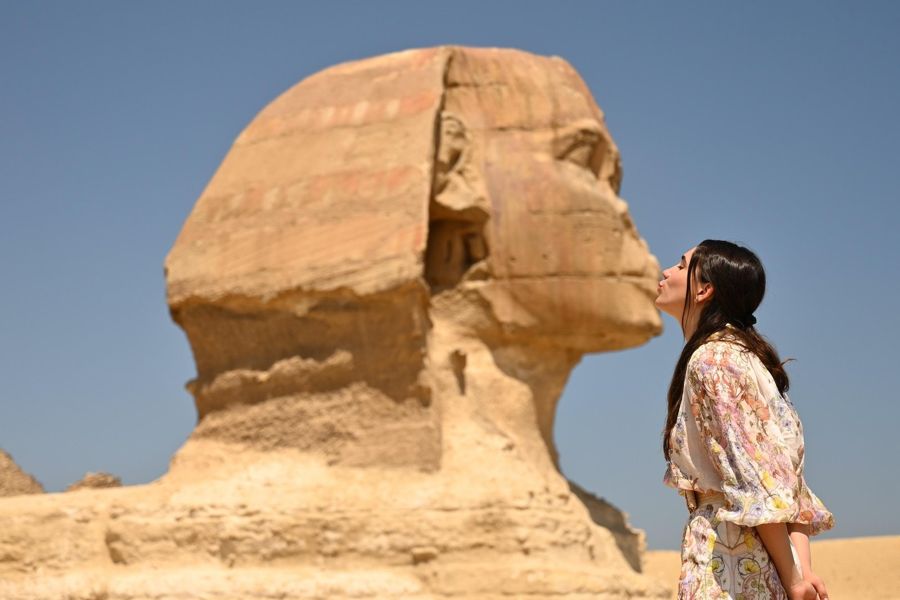
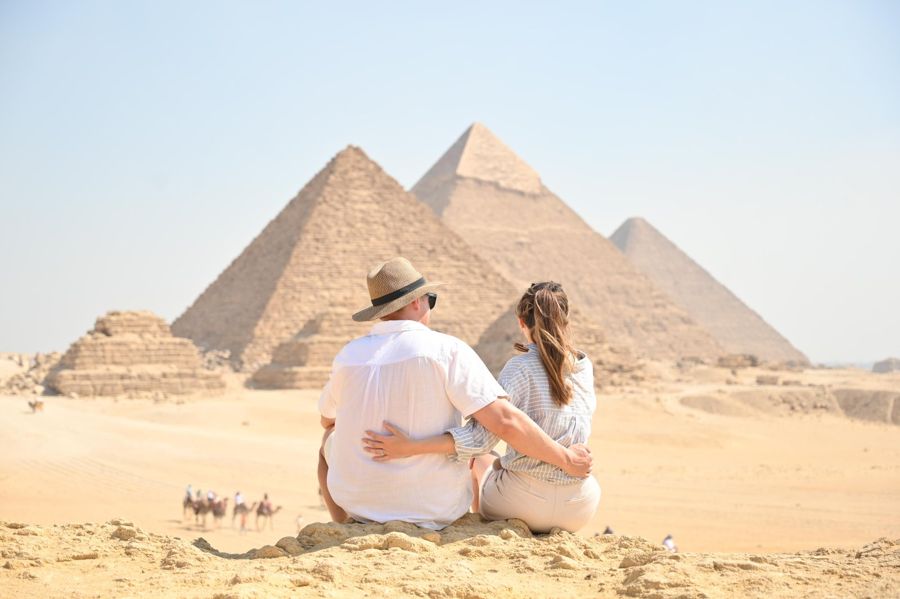
Half-day tour to the Pyramids of Giza and the Sphinx
- The classic option for a first visit, five to six hours
- A licensed guide provides context for what would otherwise just be stone
- Plateau entrance, German-speaking guide, and pickup included
- Free cancellation up to 24 hours in advance
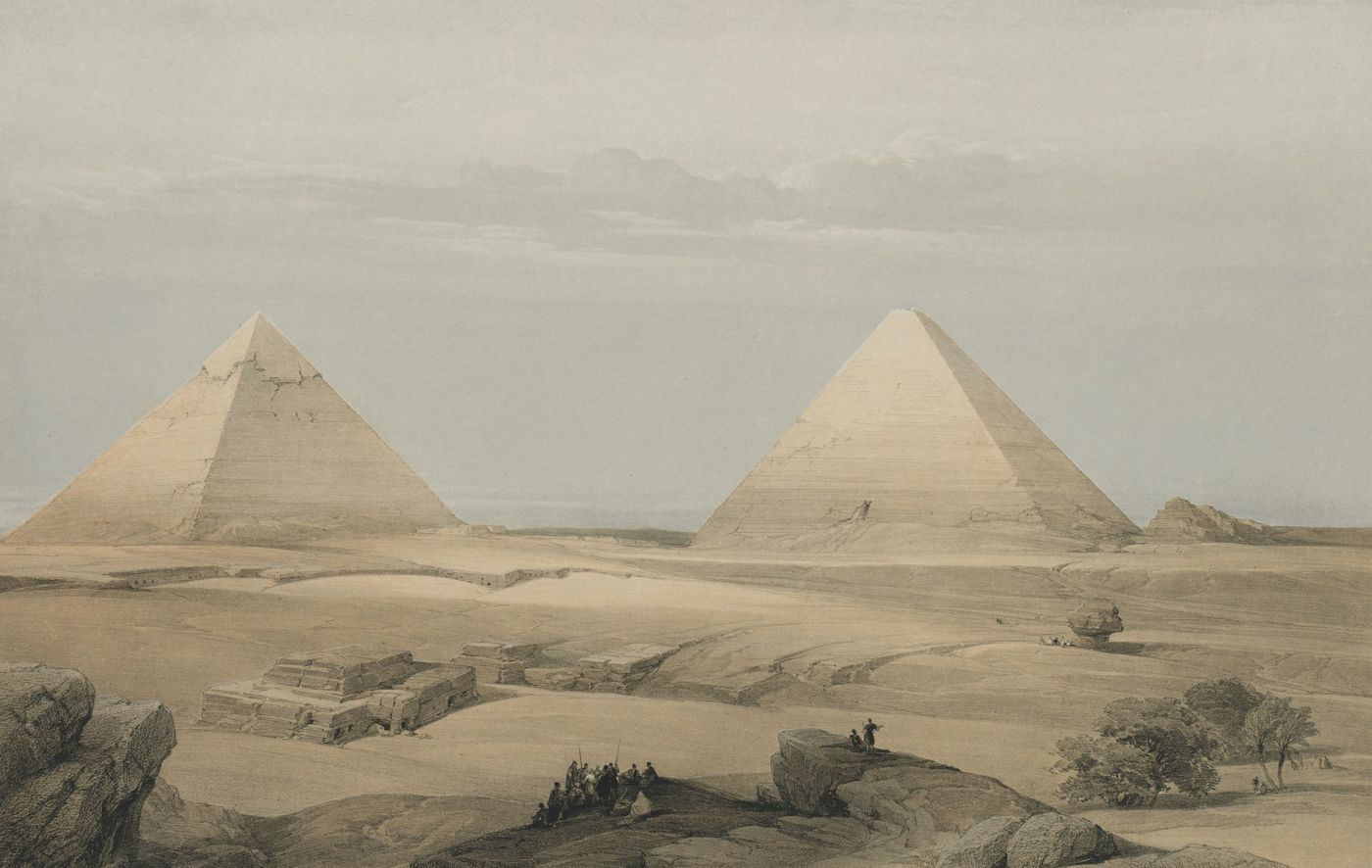
Where the pyramid shape comes from
Why a tomb takes the shape of a pyramid is best answered historically, because this shape is the result of a surprisingly short development.
It started with mastabas, flat rectangular burial structures made of mudbrick. Around 2670 BC, King Djoser had several such structures stacked on top of each other in Saqqara, and from this came the first pyramid ever, the Step Pyramid. It is also the oldest known stone structure in Egypt. The Djoser complex can still be visited today.
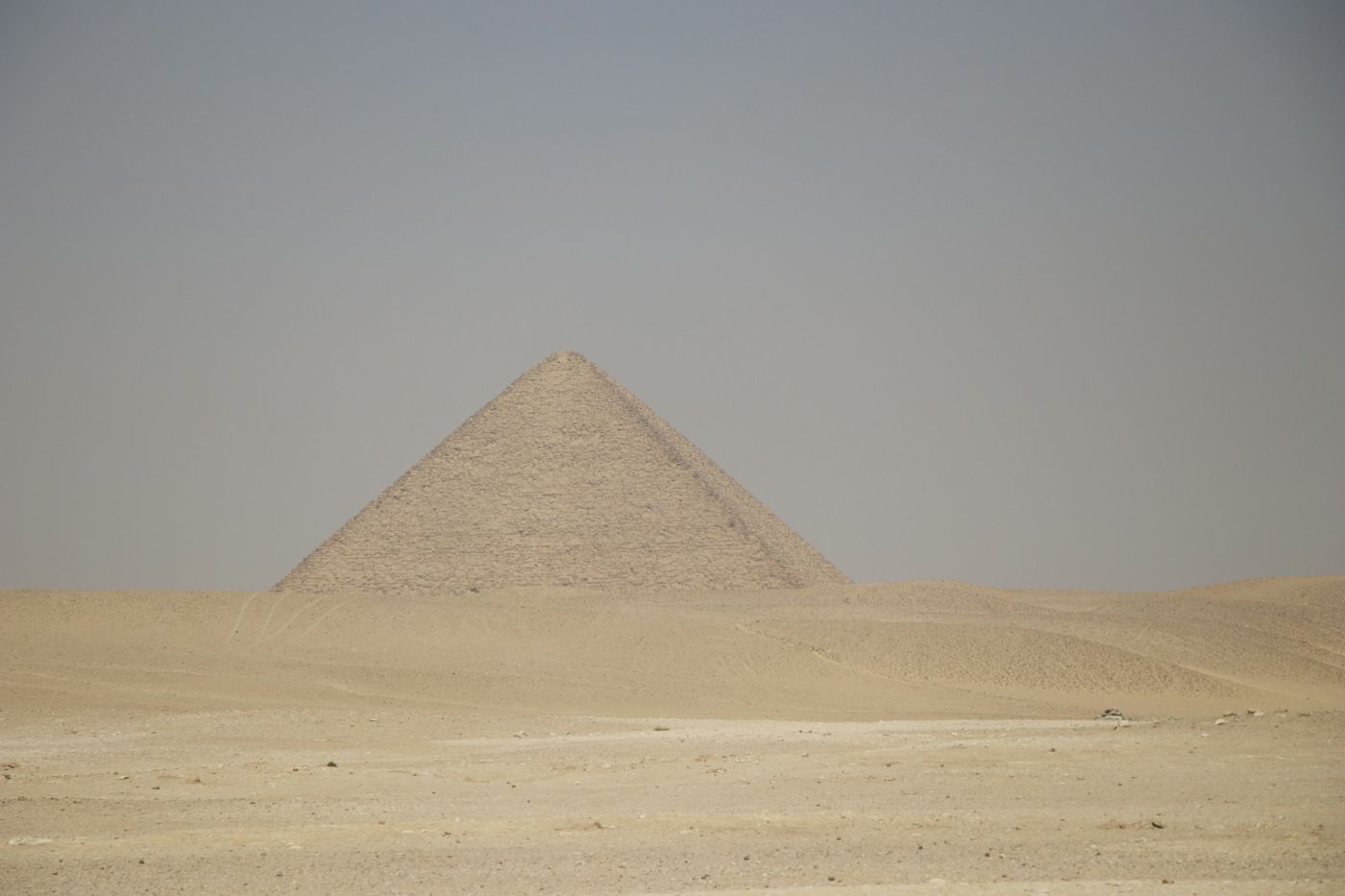
After that, things moved quickly. Under King Sneferu, Khufu's father, the step form evolved into the smooth pyramid, first through modification, then planned from scratch. Two of his structures in Dahshur show the transition so clearly that you can read it: one with a bent profile, one already perfect.
And then came Giza. Between the first pyramid ever and the Great Pyramid of Khufu, there are less than two hundred years. In that period, Egypt went from mudbrick to the largest stone structure of antiquity. This acceleration is the truly astonishing part of the story, and it also explains why nothing comparable followed: the effort was economically unrepeatable.
From the first pyramid to today
- around 2670 BC
The Step Pyramid of Djoser in Saqqara is built, the first stone structure in Egypt.
- around 2600 BC
Under Sneferu, builders in Dahshur develop the smooth pyramid form.
- around 2560 BC
The Great Pyramid of Khufu is completed, followed by the complexes of Khafre and Menkaure.
- around 1400 BC
Thutmose IV has the already sand-covered Sphinx excavated and erects a stele.
- from 1303
After an earthquake, the outer casing is removed and used in Cairo.
- 1798
Napoleon's expedition brings along draftsmen and surveyors; Egyptology begins.
- 1979
The necropolis becomes a UNESCO World Heritage Site.
- 2025
The plateau is redeveloped; the Grand Egyptian Museum opens nearby.
Who built them
Who built the pyramids is the question where the picture has changed the most in the last forty years.
It was not slaves. Southeast of the structures, an entire workers' settlement has been excavated, with sleeping galleries, bakeries on an industrial scale, breweries, granaries, and an administration that recorded deliveries of cattle and grain. In addition, there is a cemetery where the workers were buried in sight of their structure, with healed fractures that had received medical treatment.
The workforce was organized into named crews that rotated and were fed. Their marks are still visible today on blocks inside the Great Pyramid. Since 2013, there has even been a logbook: the records of an inspector named Merer, who noted how his crew brought limestone by boat to Giza.
The number of people involved is often given as one hundred thousand, which goes back to Herodotus and is clearly too high. Archaeologically supported estimates put the number at a few thousand people on site at any one time, with a total in the order of twenty thousand over the entire construction period.
What can be seen today
Today you see less than originally stood there, and more than most visitors realize.
Less, because the smooth outer casing is missing. All three pyramids were once clad in polished white limestone and came to a point at the top. This casing was removed in the Middle Ages and used in Cairo. What you see is the core masonry, which was never meant to be seen. A remnant of the original casing remains at the top of the middle pyramid.
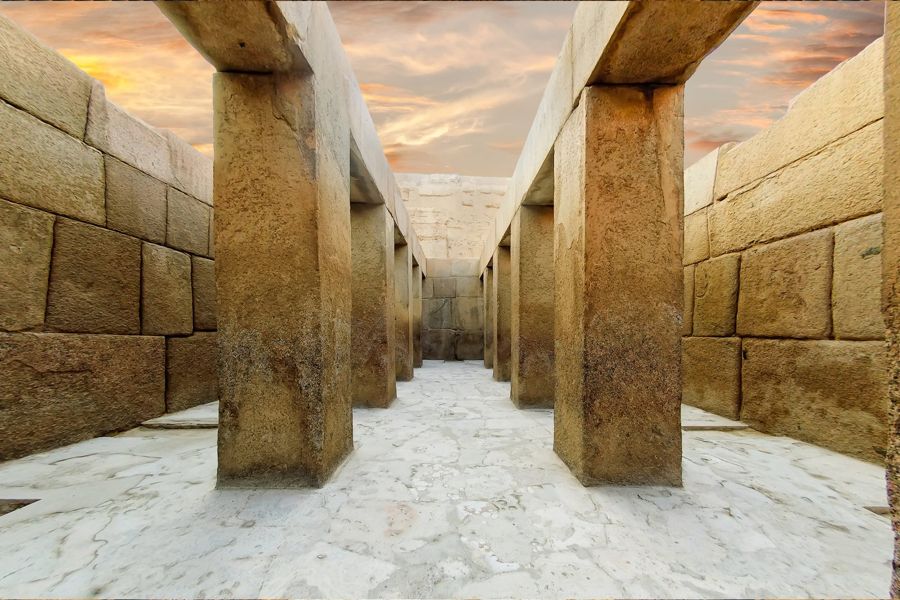
More, because almost everything else is still there. The valley temple of Khafre stands with its granite pillars and is included in the regular entrance fee. The causeways are traceable in the terrain. The boat pits are open. Some mastaba tombs are accessible, and in at least one, the wall paintings are completely preserved.
An example of what is overlooked: In the eastern cemetery lies the rock-cut tomb of a queen from Khufu's family, whose walls show vivid scenes of daily life, from bread baking to brewing. It costs a small extra ticket and is usually almost empty, while queues form a few hundred meters away. If you want color and images, you will find them here, not inside the great pyramids.
Frequently asked questions
Are the pyramids tombs?
Yes. They were built as tombs for three kings of the 4th Dynasty. However, no mummies were ever found in them; the chambers had already been emptied in antiquity.
How many pyramids are there in Giza?
Depending on how you count, about ten. Three large ones, plus queen's pyramids and smaller cult pyramids, some of which are heavily ruined.
Does the Sphinx belong to it?
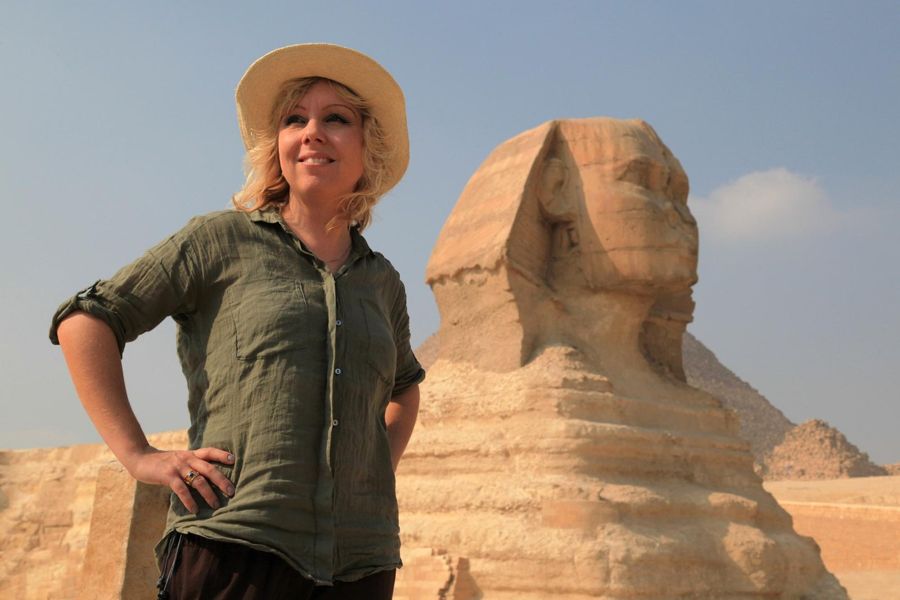
Yes, it lies in the complex of the middle pyramid and is usually attributed to its builder. Unlike the pyramids, it was not built but carved from the rock.
Can you visit the pyramids inside?
Yes, with a separate ticket. Inside, however, there are no wall paintings, only passages and empty stone chambers.
Many readers at this point do not need another section but a compact version, for example for class or a presentation. Therefore, here is a short text about the Pyramids of Giza that can stand on its own.
The Pyramids of Giza are three royal tombs from the 26th century BC, built for Khufu, Khafre, and Menkaure. They lie on the western edge of Cairo on a desert plateau and are part of a larger complex of temples, causeways, subsidiary pyramids, and cemeteries. The largest structure, at about 147 meters, was the tallest in the world for almost four thousand years and is the only surviving one of the Seven Wonders of the Ancient World. It was built by paid Egyptian workers, not slaves. Since 1979, the necropolis has been a UNESCO World Heritage Site.
If you are looking for a more detailed description of the Pyramids of Giza, you will find it in the sections above. If you need solid figures, such as measurements, dates, and their sources, you are better off on the facts page. And if you are looking for further information about the Pyramids of Giza, such as construction methods, interiors, or visit planning, you will find it on the respective pages of this site.
Plateau entrance as a QR code on your phone
For those who want to go on their own and manage their own time: buy your ticket in advance and show the code at the entrance.