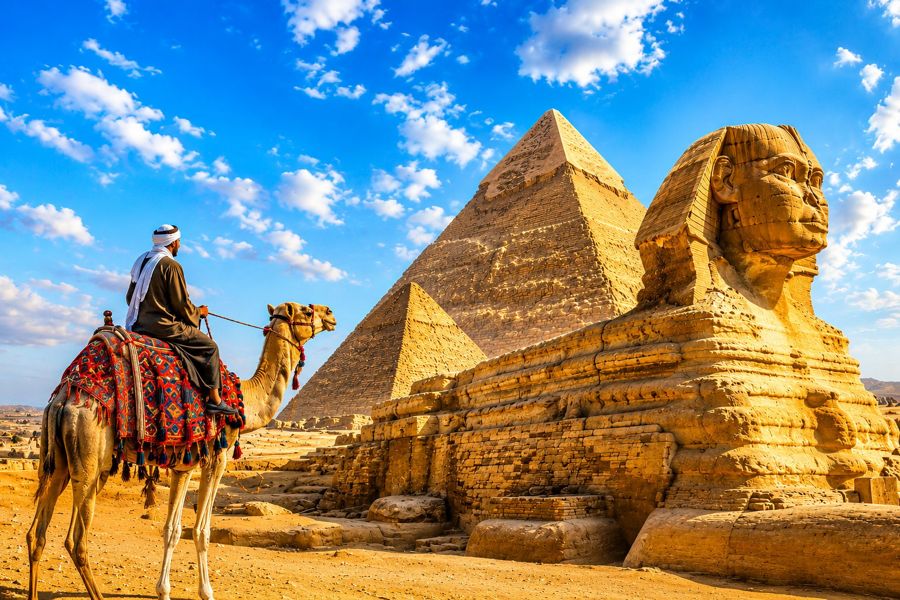
Inside tickets for Khafre and Menkaure are the quietest good news on the Giza Plateau. If you sort out which tickets you need for the day, you'll find your own ticket list; here it's about the two tickets themselves. Both pyramids can be visited inside, both cost a fraction of what the interior of the largest pyramid costs, and both are usually still available when the big one has long been sold out.
That's not a consolation prize. The second pyramid has a less steep entrance, a chamber you can actually stand in, and significantly less oncoming traffic. If you want to visit the interior for the spatial experience and not for the name on the map, you often do better.
Two things apply equally to both: you need a separate ticket in addition to the site entry, and this ticket is checked again at the pyramid itself. And the purchase usually happens at the ticket booth on site, not in advance.
This page is about the tickets, not the chambers. What you see inside, where the ceiling is, and what the sarcophagus looks like is covered in detail on the page about the interior.
The key differences
- Price compared to the largest pyramid
- A fraction, and the two are similar to each other
- Daily quota
- No noticeable limit
- Availability in the afternoon
- Usually available
- Purchase
- At the ticket booth on site
- Physical effort
- Less than with the largest pyramid
Why these tickets are easier to get
Why are these two tickets so much easier to get? There's a simple reason: there's no race for them.
With the big interior, a very small quota meets a very big demand, and that creates the pressure to stand at the ticket booth before it opens. With the second and third pyramids, demand is significantly lower, because most travelers don't even know you can go inside there too. Which of the two is open changes; the only reliable source of information is the ticket booth.
The difference in demand has a second cause, and it's somewhat ironic. Tour programs and day tours almost always book the largest pyramid as an add-on, because it has the famous name. The other two practically don't appear in offers. So if you come with a group, you get the expensive option or none at all, and the cheaper one is left to those who go to the ticket booth themselves.
For your day planning, that changes everything. You can calmly walk around the site in the morning, decide at midday whether you want to see an interior at all, and still buy the ticket then. With the big interior, that sequence would be hopeless.
As for the price, only a relative statement is possible, and for the same reason as with the big ticket: the official figures circulating differ by more than a factor of two. Only one thing is reliable: both are significantly cheaper than the large interior and are in the same range as each other. The official price list carries a date that is older than the last adjustments.
Live close by, be at the ticket booth early. You buy these two tickets at the booth, and the booth is emptiest in the morning; from a lodging within walking distance, it's a stroll instead of a commute through rush hour. Three hotels cover this:
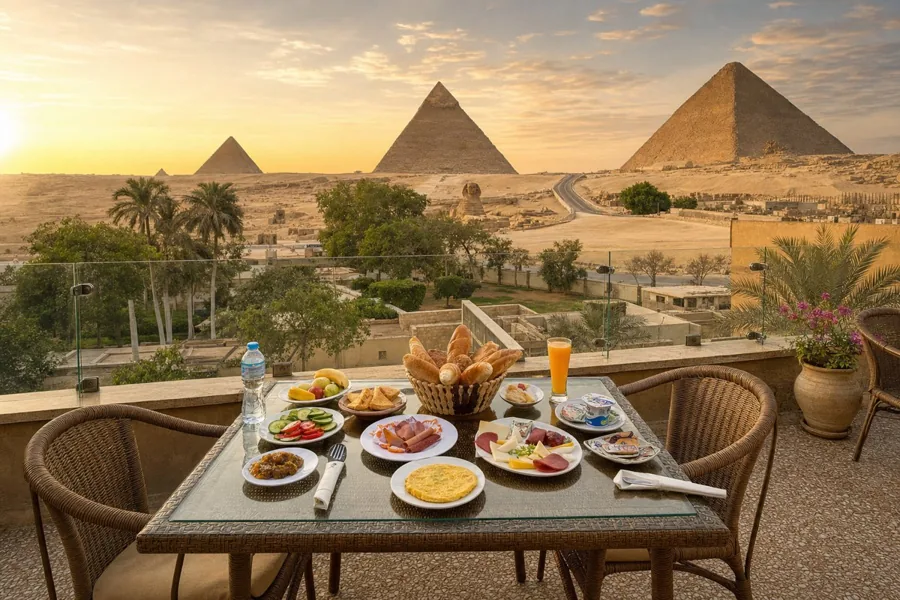 At the Sphinx
Giza Pyramids View Inn
- Good breakfast
- Airport shuttle
- Two restaurants
- 24-hour reception
- Free Wi-Fi
For those who want to see the Sphinx from their breakfast chair
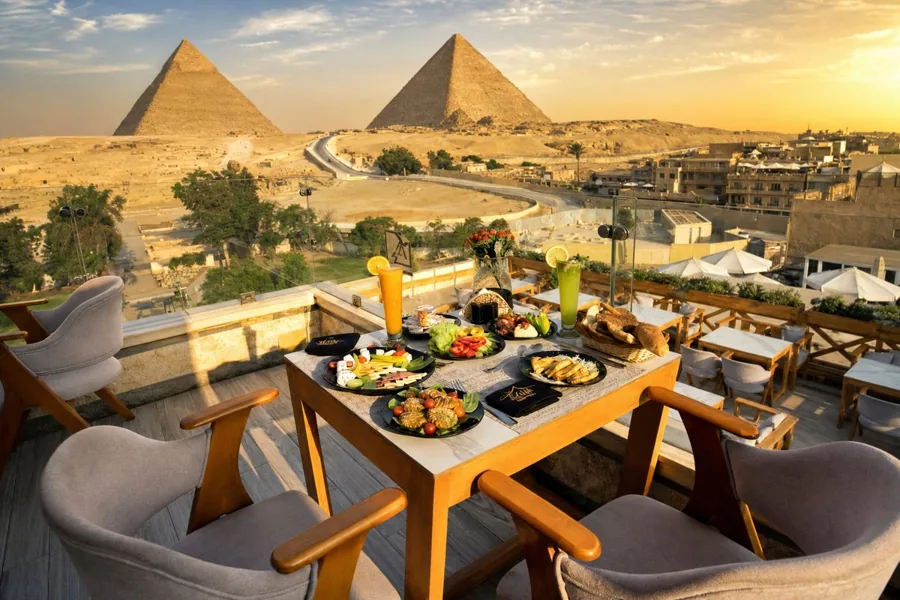 Most reviewed
Great Pyramid Inn
- Fabulous breakfast
- Rooftop terrace restaurant
- Bar
- Airport shuttle
- 24-hour reception
Most who want to stay in the neighborhood
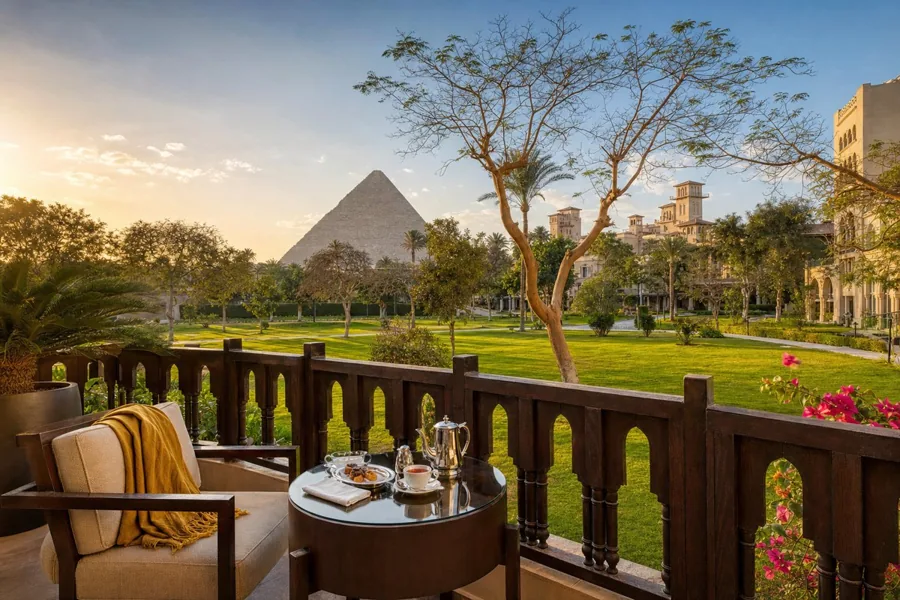 Garden & pool
Marriott Mena House
- Excellent breakfast
- Outdoor pool
- Spa and wellness center
- Three restaurants
- Fitness center
For those who want space, garden, and pool instead of a rooftop terrace
Expect closures
What you should still expect: closures. The interiors of the three pyramids have been closed individually again and again for decades for restoration work. In the 1990s, all three were affected one after the other, because moisture from visitors' breath had caused salt efflorescence and fungal growth. Such work is not announced months in advance, and the official site does list tickets but no calendar of closures or openings.
In practice, that means: don't build your day around a specific interior. If a particular chamber is important to you, keep both smaller ones open as options, and ask at the ticket booth in the morning before you plan the rest of the day.
The way you find out the current status is unfortunately unsatisfactory. There is no page that reliably says which interior is open today. Two ways are reliable: ask at the ticket booth when you enter, and look at the entrance itself, which is simply barred when closed. If you book through a provider, get the confirmation in writing, because a booking for a closed interior is worthless.
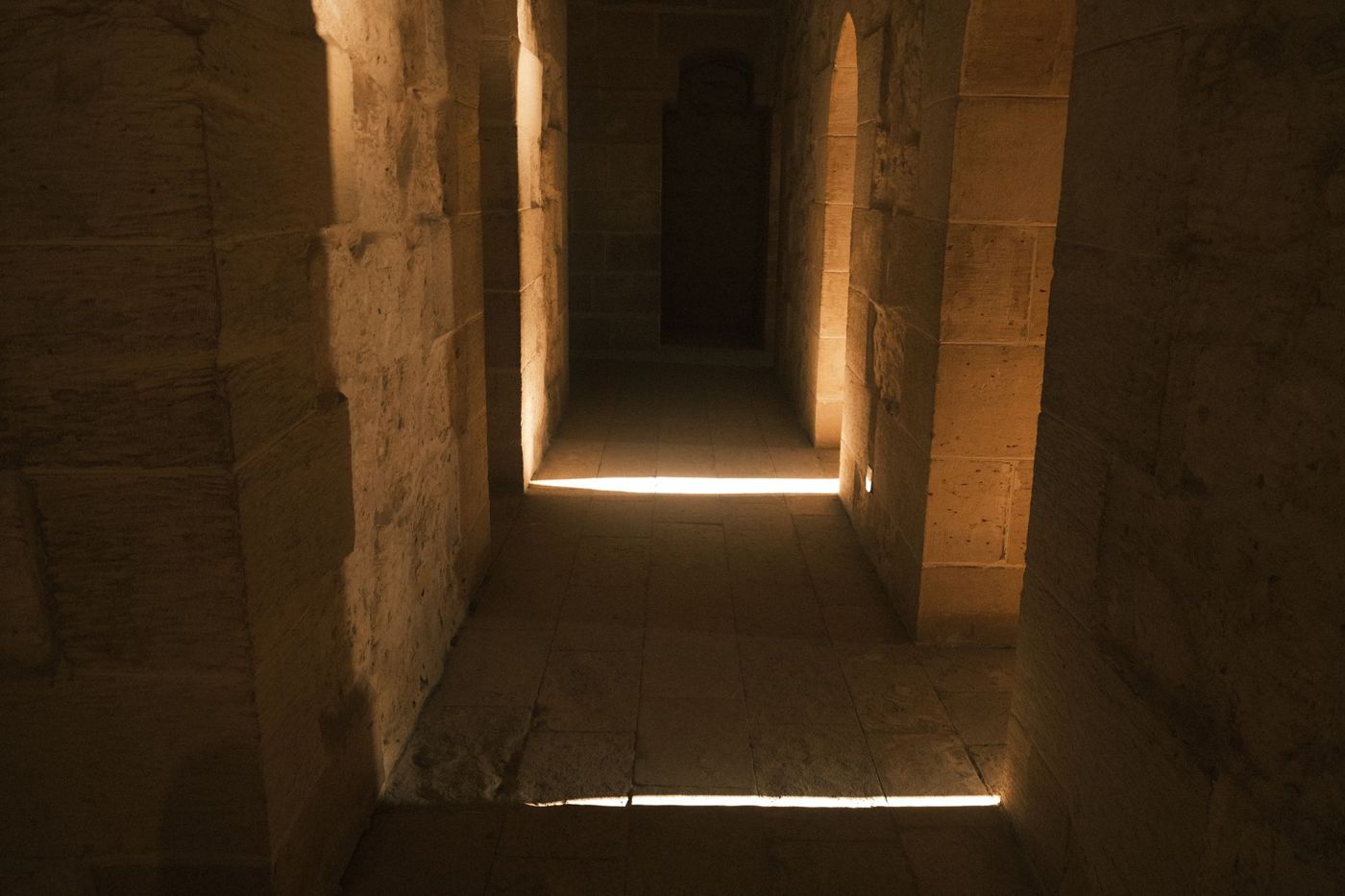
A second limitation concerns the furnishings. In none of the three interiors are there paintings, inscriptions, or grave goods to see. If you expect that, you'll be disappointed in all three cases, regardless of the ticket price. What you get is space, stone, and silence – and that's more readily available in the two smaller pyramids than in the largest, where you stand in oncoming traffic.
Are two interiors worth it in one day?
The question remains: are two interiors worth it in one day? The honest answer: for most people, no.
The reason is not the price but the repetition. The three interiors are similar in what they offer: a narrow passage, a chamber, an empty sarcophagus, no furnishings. If you visit two in a row, the second feels significantly weaker, regardless of which one is more impressive. Add to that the effort: each interior costs time, energy, and sweat, and both together eat up half a morning.
There's also a point that's rarely considered: the order. If you visit the large interior first and then a small one, the second feels like a letdown, even though it's the more pleasant visit on its own. The reverse works better. If you plan both, start with the middle pyramid and save the largest for last, not the other way around.
The combination makes sense in two cases. First, if you're spending two days at the site anyway; then it spreads out. Second, if you're interested in construction techniques, because the three structures differ significantly in the layout of the passages and the ceiling construction, and this comparison is truly only available from the inside.
One last note for families and for anyone unsure whether they can handle it physically. The smaller interiors work well as a test. They're shorter, less steep, and you're out again faster, and if you find that the tightness and heat are unbearable, you've lost little money and even less time. Having that same experience in the largest pyramid is more expensive and takes longer, because the way back leads through the same narrow passage.
For everyone else, a simpler recommendation applies: choose one interior, visit it calmly, and spend the saved time up top. The site itself is the real attraction, and the three chambers are an add-on, not a must-see.
The small interior instead of the big one
Pros
- A fraction of the price, with a very similar core experience
- Usually still available in the afternoon, without the morning rush
- Less steep and less cramped, so doable for less fit visitors
- Significantly less oncoming traffic, giving you more time in the chamber
Cons
- Not the name you'll tell at home, if that matters
- The Grand Gallery of the largest pyramid has no counterpart
- Also no paintings, no inscriptions, no furnishings here
- Closures for restoration are possible at any time
Frequently asked questions
Are all three pyramids accessible from the inside?
Basically yes, each with its own extra ticket. Individual interiors are, however, repeatedly closed for restoration, often at short notice.
What do the two smaller interiors cost?
Significantly less than the big one, and similar to each other. Exact figures circulate in two different ranges and should be asked at the ticket booth.
Do I have to buy these tickets in advance?
Usually not. They are sold at the ticket booth on site and are rarely sold out.
Are two interiors worth it in one day?
For most people, no, because the chambers are very similar. It makes sense mainly with two visit days or if you're interested in construction techniques.
Which of the two is better?
The middle pyramid for the spatial impression and the quiet, the smallest for the unusual carved panels. Both are less strenuous than the largest.
Is there anything to see inside?
Stone, space, and an empty sarcophagus. Paintings, inscriptions, or grave goods are found in none of the three pyramids.