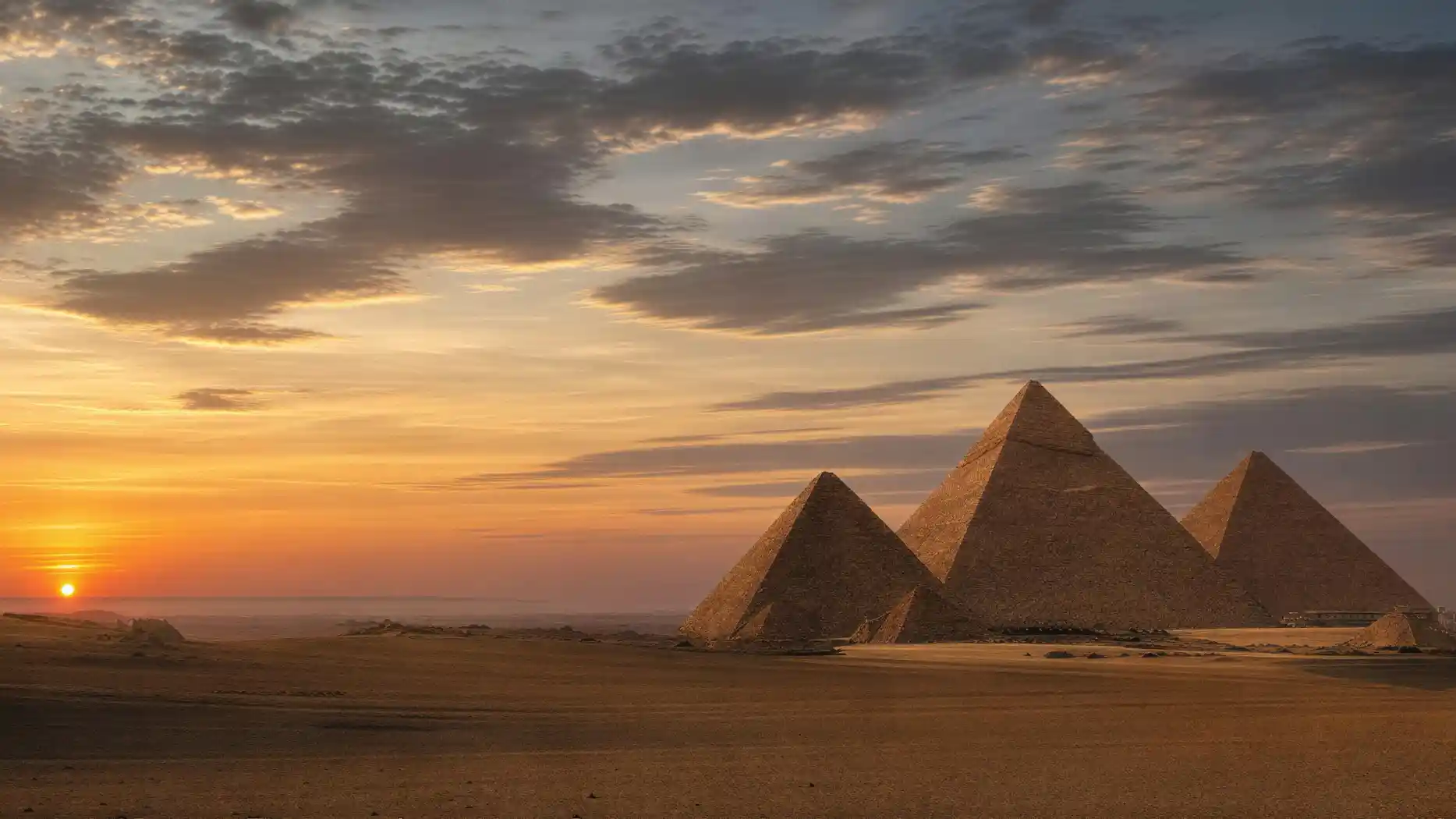
Two factors decide how a visit to the Giza Plateau turns out: how hot it is and how crowded it is. Both depend on month and time of day, but not equally. The time of day matters more than the month—more on that below. The tool calculates both factors for your chosen date and tells you what to expect.
Heat and crowds for your date
Three questions. The two key figures appear immediately and stay on your device.
Answer all three questions, and your two key figures will appear here.
Here are the notes for this:
You use the strongest leverYour time
Before opening, nobody is there. In the first hour, it's individual travelers and a few early small groups. The difference to one hour later is greater than the difference between high and low season.
- Get your ticket in advance, otherwise you'll stand in line at the ticket office instead of at the monument when it opens.
- From the main gate, take the shuttle to the panorama point first, then walk downhill.
The practical way to actually be there at opening if you don't have your own car: fixed pickup time, entrance fee, and German-speaking guide included. Over three thousand reviews.
You arrive with the waveYour time
Between nine and ten, the majority of visitors arrive all at once, because buses from Cairo and the Red Sea are scheduled by travel time, not by uniform distribution.
One hour earlier costs you one hour of sleep and changes the whole morning. It's the cheapest improvement available at this site.
Late start: two consequencesYour time
In the afternoon, the crowds slowly dissolve, but the heat is at its highest and the light is flat to glaring. For photos, the late hour is better than the middle of the day.
- Note the ticket office closing time: it's one hour before the end of visiting hours.
- If you only want the Sphinx, you can still get in easily at the eastern gate late in the day.
High summer: the window is shortYour month
In June, July, and August, the average daily maximum is about 35 degrees, and there's hardly any shade on the plateau. Realistically, only the first two to three hours after opening are usable.
- Limit your program to the plateau and the Sphinx; save the museum for another day.
- Take more water than seems reasonable.
On the other hand, these months are the emptiest and cheapest of the year. If you plan for the heat instead of ignoring it, you'll have the site almost to yourself.

In the hot months, the start time determines the entire visit. A private tour sets it instead of leaving it to a group schedule. German-speaking guide, plateau entrance included.
Khamsin seasonYour month
Between March and May, a hot desert wind can carry sand into the air. Visibility can then collapse within hours, and the pyramids disappear in haze, even though no weather service reports rain.
This isn't on any climate table and can't be predicted. If you're in the area for several days during these months, keep your plateau day flexible.
February is the strongest travel monthYour month
The weather is ideal, and that's exactly why this month is the most booked in the country. The temperature speaks for it, the crowds against it.
In this month, the early hour isn't an advantage—it's a requirement.
Low sun, good lightYour month
From November to January, the full opening hours are usable, and the sun is low enough that the edges of the structures keep their definition all day.
- It can be cool early: bring an extra layer for the first hour.
Ramadan shifts the dayYour date
Ramadan moves forward by about eleven days each year, so you can't derive it from last year's calendar. During this time, museums and sites have their own visiting hours, announced anew each year.
- Check the times shortly before your trip at the official source, not in last year's article.
- Late afternoon is quiet because many people head home before breaking the fast.
A common misconception: that the plateau generally closes earlier during Ramadan. In practice, reports indicate a later closing time than for museums.
Both key figures are planning values for this website, not measurements: the heat column follows the monthly table, the crowds column follows the described daily pattern. There is no published hourly statistic for this site. As of September 2026.
Why the time of day matters more than the month
Most travelers put a lot of effort into choosing the month and none into choosing the hour. That's exactly backwards.
Reduce the annual figure to a single day. About 3.5 million visitors per year average out to about 9,600 per day. But these 9,600 are not evenly distributed over the opening hours; they follow a pattern that has hardly changed for years: before opening, nobody is there; in the first hour, individual travelers arrive; between nine and ten, the majority arrives all at once; in the afternoon, it slowly dissolves.
The reason is travel time. Buses from Cairo and the Red Sea are scheduled by departure and route duration, not by the desire to distribute evenly. So they arrive in clusters.
The same pattern works at the exit, only reversed and weaker: the groups leave in clusters because their program is the same length. If you leave half an hour after the wave, you'll have the path to the gate and the shuttle almost to yourself—and that's the second cheap win of a day here.
This leads to the comparison that matters. Between the emptiest and the fullest month, there's maybe a factor of two. Between the first hour and the hour after, there's a multiple of that. If you have the choice, you gain more with the early time of day than with the month, and if you have no choice about the month, you lose less than you think.
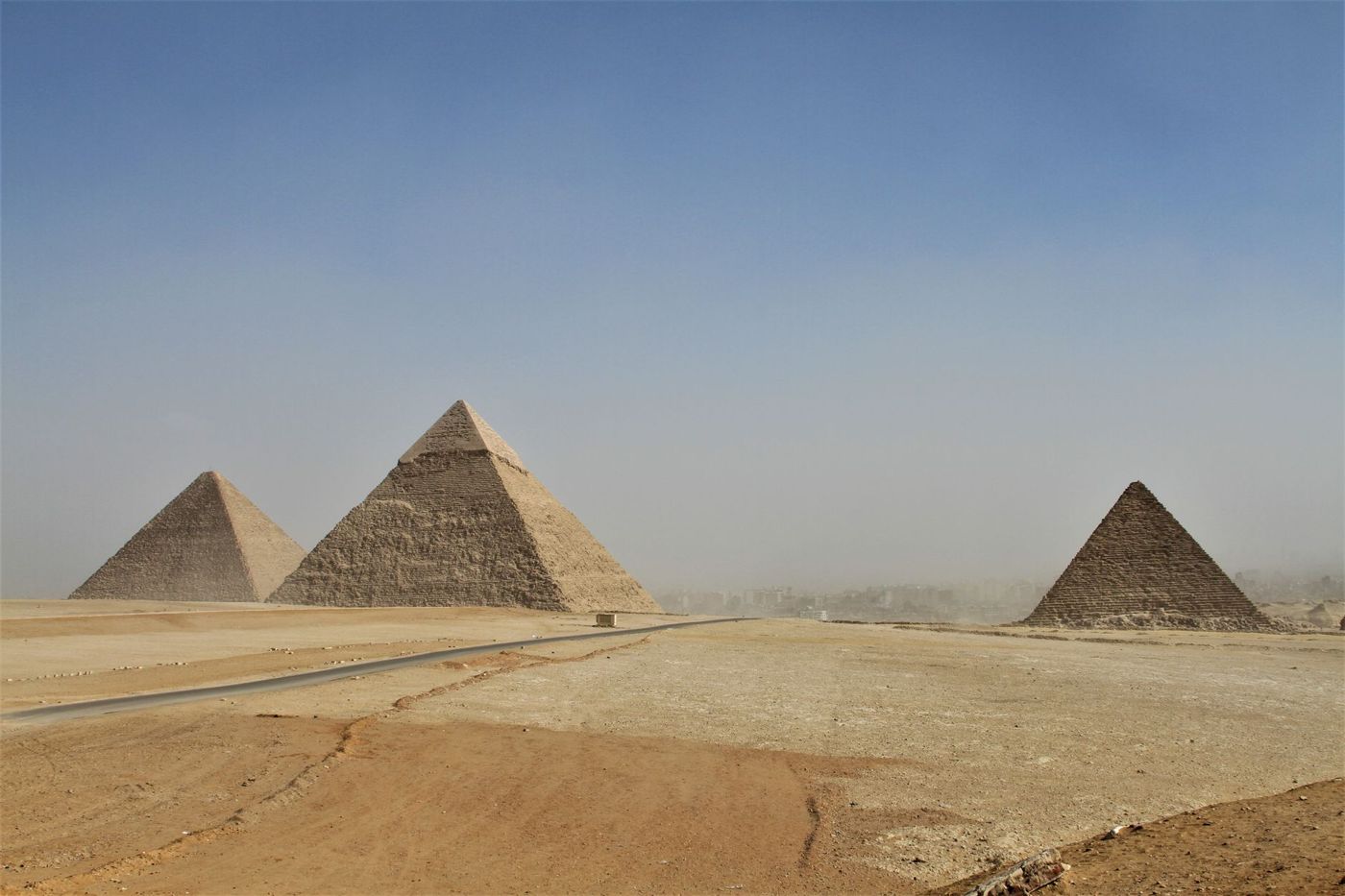
What the heat number means, and what it doesn't
The heat column of the tool is based on two pieces of information that look harmless separately and together determine the day.
The first is the average daily maximum. It ranges from about 19 degrees in January to about 35 in June, July, and August. That's a long-term average, not a forecast: roughly half of all days are above it, and in April outliers over 40 degrees occur before the body is acclimated to the season.
The second is the location. On an open desert plateau without shade, the same number means something different than on a street with building shadows. The stone radiates heat, there are hardly any trees, and the paths between the structures are longer than they look on the map.
From both together comes the usable window, and that's the value the tool calculates. From November to March, it's the full opening hours. In April and October, it extends to early afternoon; in May and September, to noon; and from June to August, realistically the first two to three hours.
The values themselves come from the long-term climate averages for Giza, not from a weather app and not from the memory of travel reports.
What the number can't do: it says nothing about a single day. A November day can be unusually warm, and a June day tolerable. It's a planning value for the question of how much program you should plan, not a weather forecast.
Entrance ticket as QR code
If you want to use the first hour, you shouldn't spend it at the ticket office. With the code on your phone, you'll be at the gate at opening instead of in line—and at the eastern gate, it's the only way in anyway. Valid for one day, free cancellation up to 24 hours before.
Two times the tool doesn't ask about
Both are hard, both are in no brochure, and both regularly ruin an otherwise well-planned day.
The first is the ticket office closing time. It's one hour before the end of visiting hours, as a general rule of the antiquities administration for museums and excavation sites. If you choose the afternoon, you don't have to be at the gate before closing, but an hour before—and that's the most common reason an afternoon visit ends at the gate. Current times are on the official site for the plateau.
The second concerns only the eastern gate: there, no tickets are sold at any time. If you arrive late and end up there, you have neither a ticket office nor the time to drive around to the other gate.
Together, they yield a simple rule for the late visit: ticket in advance, gate clarified in advance, and better to stand at the entrance two hours before closing than one.
For the early visit, the rule is mirrored and just as hard: opening is the opening of the gate, not the start of your visit. Between arrival, security check, and the first structure, there are twenty minutes to half an hour depending on gate and transport. If you really want to use the first hour, you're there before opening, not at it.
The one day when everything is different
There's one day a year when the tool above misleads, and it's in no travel guide.
Sham el-Nessim, the spring festival, falls on the Monday after Coptic Easter. It's a public holiday, celebrated by Muslims and Copts alike, and its origin lies in neither religion but in pharaonic Egypt. It's celebrated outdoors, with picnics, colored eggs, and spring onions.
For a visit, that means: it's the busiest single day of the year at open sites, because the whole country goes outside. No time of day saves that day, not even the first hour.
Whether you avoid it is another question. If you seek peace, postpone your visit. If you want to see what this place looks like for the people who live here, choose exactly that day and know what you're getting into.
During Ramadan, it's not the crowds that count, but the rhythm. During the day, the site is quieter than usual. From late afternoon, traffic thickens to the worst hour of the year, and with the breaking of the fast, the streets empty abruptly. If you know that, you schedule your return trip well before or half an hour after, and you'll get through faster than on an ordinary evening.
The limits of this calculation
Three of them are important enough to name, rather than claiming a precision that doesn't exist.
First, there is no published hourly statistic for this site. What exists is an annual figure from the operating company and a daily pattern that is consistently described. The crowds column translates this pattern into points; it measures nothing.
Second, any major event shifts the picture. A holiday, a cruise arrival, a state visit, or a closure for filming changes a single day more than month and time ever could. The tool doesn't know such dates.
Third, the redevelopment isn't exhausted yet. The operating company names five million visitors per year as a goal, i.e., well over forty percent more than today. On the open site, that would hardly be noticeable, but at the bottlenecks very much so: at the entrance, at the three known spots, and in the interiors, whose capacity doesn't grow along.
Fourth, and this is more honesty than a limit: both scales are point values of this website. The heat column translates the monthly table, the crowds column the described daily pattern. They are as good as their foundations, and their foundations are open so you can contradict them. A number whose origin you can't look up is worth nothing on a page like this.
What these three limits don't change is the ranking. The first hour remains the strongest lever, no matter the month, and none of the three uncertainties reverses that.
Frequently asked questions
When is it emptiest?
In the first hour after opening, in every month. The difference to the hour after is greater than between high and low season.
Which month is best?
November is statistically the friendliest. February has equally good weather and is the most booked travel month of the country, so it's noticeably fuller.
Can you go in high summer?
Yes, with a short program. Realistically, the first two to three hours after opening are usable. In return, June to August are the emptiest and cheapest months.
What is the khamsin?
A hot desert wind between March and May that carries sand into the air. Visibility can collapse within hours, and it can't be predicted.
Does Ramadan change opening hours?
Yes, special visiting hours apply, announced anew each year. Ramadan moves by about eleven days per year, so last year's calendar isn't useful.
Where do the two key figures come from?
The heat number from the official climate averages and the derived usable window; the crowds number from the annual visitor count and the described daily pattern. Both are planning values, not measurements.