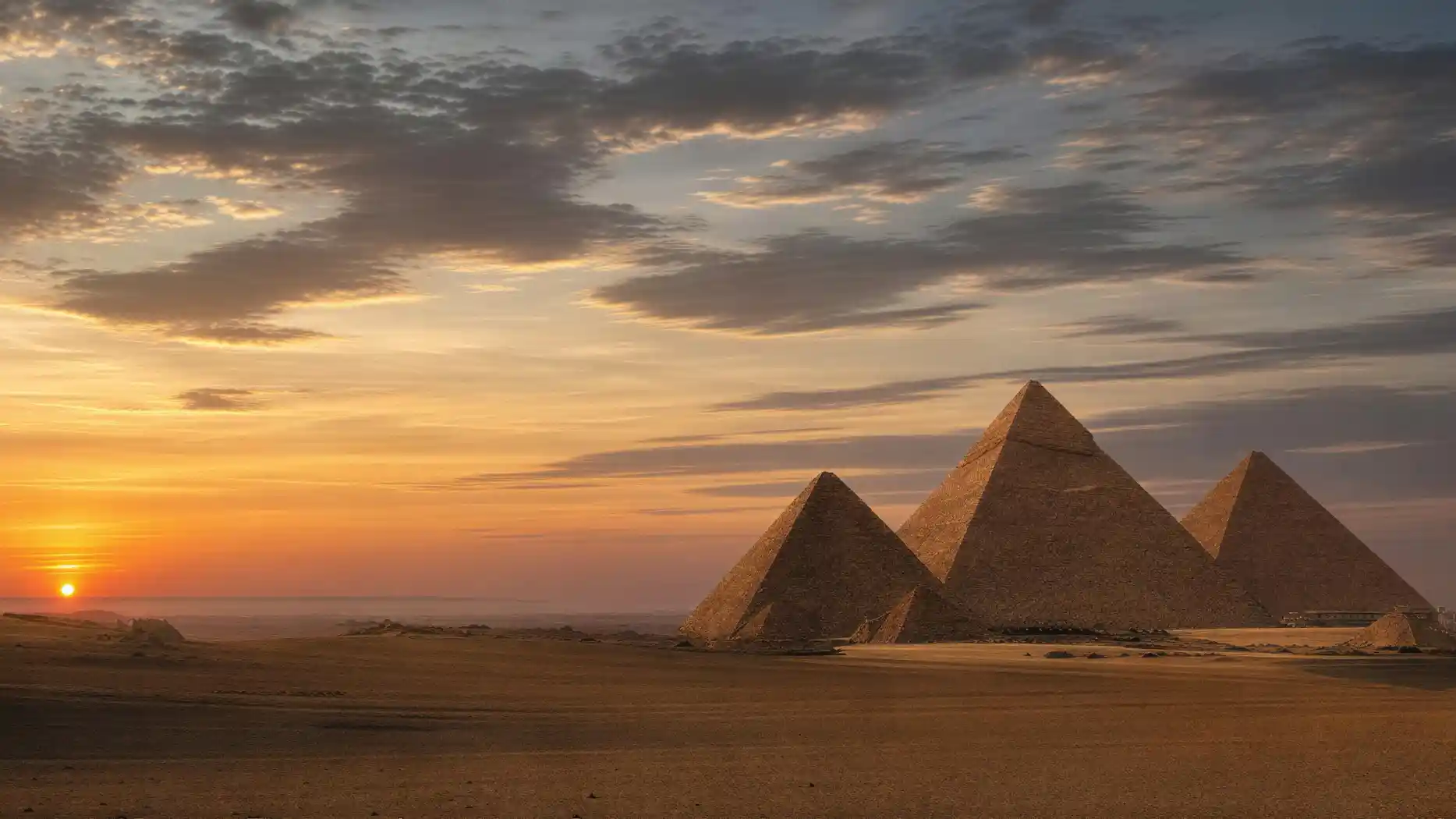
Admission is the smallest item of a day in Giza. That surprises most travelers, and it explains why cost estimates online vary so widely.
Entry to the site starts at 700 EGP. The interior of the largest pyramid, according to circulating figures, costs between half and double that amount; a guide for the day costs several times more, and the ride to the gate appears on no price list.
The calculator below adds up the items that have a number. Below that are the ones that don't, where the amounts come from, and how reliable each is. All figures carry an "from": they are lower bounds, not promises, because Egyptian admission prices are raised irregularly.
Your Daily Total
Five questions. The total appears immediately and never leaves your device.
Answer all five questions, and your total will appear here.
Plus these items:
Site Admissionofficially documented
From 700 EGP for adults without a discount, from 350 EGP with a valid student ID. These two figures are on the Antiquities Authority's page and are the most reliable in the entire calculator.
- Egyptians pay a separate, significantly lower rate.
- Payable at the ticket office and at the machines at the main gate, both also with bank card.
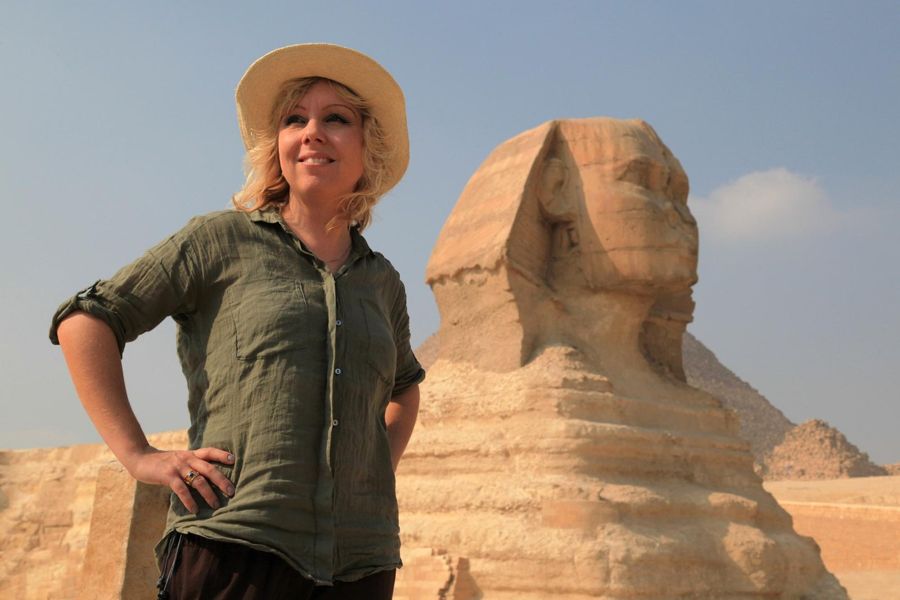
The advance purchase option for the same ticket if you want to arrive at the eastern gate, where there is no ticket office. Price in euros and thus independent of the exchange rate at the counter.
Discount: Bring Your IDYour choice
The reduced rate is from 350 EGP, about half. The official price list knows exactly four categories: adults and students, each for Egyptians and foreigners.
This list does not include a child rate. Circulating claims of free entry for under six are unverified; ask at the ticket office.
The Interior of the Great Pyramid of Khufudisputed
The calculator assumes from 400 EGP, the lowest circulating value. Honestly, three magnitudes circulate side by side: 400 to 800, 1,000, and 1,500 EGP, and none could be officially verified.
- Plan with the upper end to be safe, not the floor value.
- The daily quota is small and regularly gone by morning.
This is the only item in this calculator where the uncertainty is greater than the amount itself.
Khafre or Menkauredisputed
From 130 EGP according to the cheapest source; another cites 280 EGP for Khafre and 200 for Menkaure. In any case, a fraction of the largest pyramid, with a very similar experience.
- If you only want to go inside a pyramid once, you save the most here.
The Museum Costs ExtraYour choice
The calculator assumes from 1,200 EGP. The Grand Egyptian Museum has its own ticket, independent of the plateau, with rates tiered by nationality and booked time slots.
Not included in any pass, and there is no combo ticket with the plateau.
The Official Minimum Rate for Toursofficially documented
From 1,800 EGP for a full day and from 1,100 EGP for a half day, since October 2025. Set by the Ministry of Tourism together with the professional association and the chamber of travel companies.
- Full day means eight hours, half day four consecutive hours.
- The rate applies to the group. For two, a tour is therefore hardly more expensive than alone.
It is a minimum rate, not a price. Sanctions are planned for operators who undercut it.
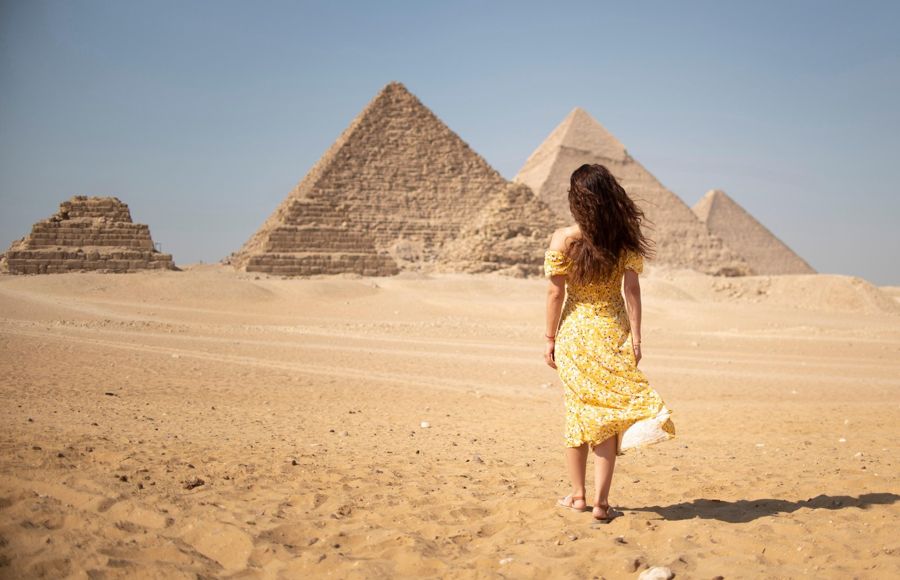
The booked alternative to a guide on site: hotel pickup, admission, and German-speaking tour in one price, and you negotiate nothing.
Without a GuideYour choice
Signage on the site is sparse. If you go without a guide, you should read up beforehand, otherwise the difference between the three structures ends up being a matter of size.
What the Calculator Doesn't KnowNote
Four items have no fixed price and therefore appear in no total: the ride to the gate, the camel ride, tips, and anything you negotiate on site.
- Ride: depends on transport and time of day, not the site.
- Camel and carriage: purely a matter of negotiation, with a very wide range.
- Tips: customary at restrooms and for photo help, bring small bills.
Add these four generously on top. Together they are often larger than the admission.
All amounts are minimum values. Calculations are in Egyptian pounds because official prices are published that way; the euro amount is also shown at a rate of 59 pounds per euro, as of September 2, 2026. The rate moves, so the euro amount is an indication, not a promise. The source of each amount is in the corresponding card.
Why Online Estimates Vary So Widely
Anyone searching for the cost of a day in Giza finds figures that differ by a factor of five. There are three reasons for this, and none is carelessness.
The first is currency. Prices are in Egyptian pounds and are raised regularly, partly because the currency weakens. A euro figure from an article two years old is therefore doubly wrong: the amount in pounds has risen, and the exchange rate has shifted. The calculator shows both, the euro amount large and the pound amount below, plus the rate and date. That way you see immediately how old the conversion is, instead of taking it as fact.
The second is scope. Some estimates mean only admission, others the whole day with driver, tour, lunch, and tips. Between them lies a multiple, and rarely is it stated what is meant.
The third is the source situation for the extra tickets. For the interior of the largest pyramid, three magnitudes circulate side by side, and none could be officially verified. That is why this calculator sets the floor value and states the range alongside, rather than claiming a single figure.
You can verify this in two places. The official page for the site lists the current price list, and the Ministry of Tourism's price list as PDF shows the structure of categories. Both mention the site admission; neither mentions a price for the interiors, and that is exactly the gap where contradictory claims arise.
A fourth reason adds to this, less often mentioned: prices are not raised annually on a fixed date but irregularly. Between two increases, an article can be correct for two years and then wrong overnight. That's why every figure here carries an "from" and a date.
How Reliable Each Figure Is
The calculator does not treat all amounts equally, and it shouldn't.
Two figures are well documented. The site admission of 700 EGP for adults and 350 EGP for students is on the Antiquities Authority's page, the official information portal that doesn't sell tickets itself but maintains the price list. The same list knows four categories, each separate for Egyptians and foreigners, and none is a child rate.
A third is well documented but misleading: the minimum rate for licensed tour guides, since October 2025 at 1,800 EGP for a full day and 1,100 EGP for a half day. It is supported by two independent reports, and it is a minimum rate for the group. If you read it as a per-person price, you miscalculate by the factor of group size.
The interior tickets are the weak point. For the largest pyramid, 400 to 800, 1,000, and 1,500 EGP circulate; for the other two, 130 versus 280 and 130 versus 200 respectively. None of these figures comes from an official source, all from travel portals. The calculator sets the floor value and states in the same card how wide the range is.
And the museum ticket lies in between: it is tiered by nationality and adjusted regularly, which is why a minimum value is given here too, not a claim.
From this follows a rule of thumb for your own budget that the calculator cannot output. Take the total it gives and, for the interiors, calculate with three times the assumed floor value. Then you'll be right even if the highest circulating figure is correct, and you won't stand at the counter with too little cash. For all other items, the stated value suffices.
A word on the purpose of this exercise. These amounts are small compared to a flight to Egypt. They decide nothing. They matter for another reason: if you know that the interior costs a multiple of the admission and can be sold out in the morning, you make the decision beforehand, not in the queue. The calculator aims to make the day planable, not cheap.
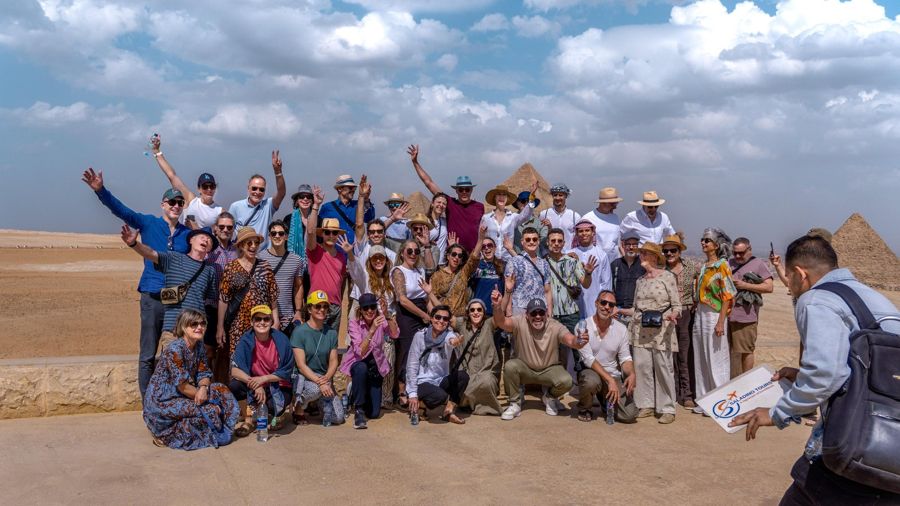
Half day with admission, tour, and pickup
The calculation from the other side: one price in euros instead of five items in pounds. German-speaking tour, plateau admission, and pickup included, four hours. If you don't want to negotiate or convert, you buy planning certainty here.
Where You Can Save the Most, and Where You Can't
Three places decide the total, and they are not the ones most people start with.
The first is the choice of interior. Between the largest pyramid and one of the other two, according to circulating figures, lies a factor of three to ten, with an experience that for most visitors hardly differs: a narrow, ascending passage and an empty chamber. If you want to go inside once and don't insist on the name, you save more here than on everything else combined.
The second is group size for the tour. The official rate applies to the group. For two, a tour thus costs half per person, for four a quarter, and from three people, your own guide is often cheaper than three spots in a booked tour.
The third is the student ID, if you have one. It halves the site admission, and the official list explicitly includes it as a separate category.
Where you can't save: at the museum, which has its own tiered rate, and on tips, which are not a fee but are still expected. And not on admission itself, because it is the smallest item. Saving there saves at the wrong end: the difference between full and reduced site tickets is smaller than a single tip at the end of a poorly negotiated camel ride.
The Items Without a Price Tag
Four expenses appear in no total because they have no set amount. Together they are often larger than the admission.
The ride to the gate is the first. It depends on transport, time of day, and distance, not the site, and it ranges from a fraction of a ticket to a multiple. It belongs on its own page, not in this total.
The camel ride is the second and the most notorious. There is no posted price, the range is enormous, and the amount is negotiated before mounting or not at all. If you negotiate it afterward, you pay a multiple.
Tips are the third. At the restrooms, an attendant sits; when photographing, help is offered whether you want it or not, and both run on small bills. They are not posted fees but tips, and circulating claims about them vary by a multiple.
The fourth is what you spontaneously take on site: drinks, a souvenir, a photo with a camel in the background. There's no figure for that either, and if you pay cash, you keep track better than with a card.
A fifth item only applies to groups and is regularly overlooked: the vehicle. The official page still lists separate tickets for cars, minibuses, and buses, although private vehicles have not been allowed on the site since the renovation. Whether this refers to access up to the gate or whether the page simply hasn't been updated could not be clarified. Expect your driver to wait outside and the waiting time to be included in the fare.
The practical advice from all this is unspectacular: bring more cash in small bills than the calculator above outputs. The ticket office and machines at the main gate take cards; almost nothing beyond that does.
Frequently asked questions
What does admission to the Giza Plateau cost?
From 700 EGP for adults and from 350 EGP with a valid student ID, according to the Antiquities Authority's price list. Egyptians pay a separate, significantly lower rate.
What does the interior of the Great Pyramid of Khufu cost?
That cannot be answered seriously with a single figure. 400 to 800, 1,000, and 1,500 EGP circulate side by side, and no figure comes from an official source. Plan with the upper end.
What does a guide cost?
From 1,800 EGP for a full day and from 1,100 EGP for a half day, since October 2025 as an official minimum rate. It applies to the group, not per person, and is open-ended upward.
Why are two currencies shown?
Because both are needed. The euro amount tells you if it's a lot; the pound amount is what you put down at the counter. Calculations are in pounds because official prices are published that way.
Can I pay by card at the site?
At the ticket office and machines at the main gate, yes. Everything beyond that, from the tomb ticket to tips, runs on cash and small bills.
Is there a child rate?
The official price list doesn't have one. It lists four categories: adults and students, each for Egyptians and foreigners. Claims of free entry for under six are unverified.