
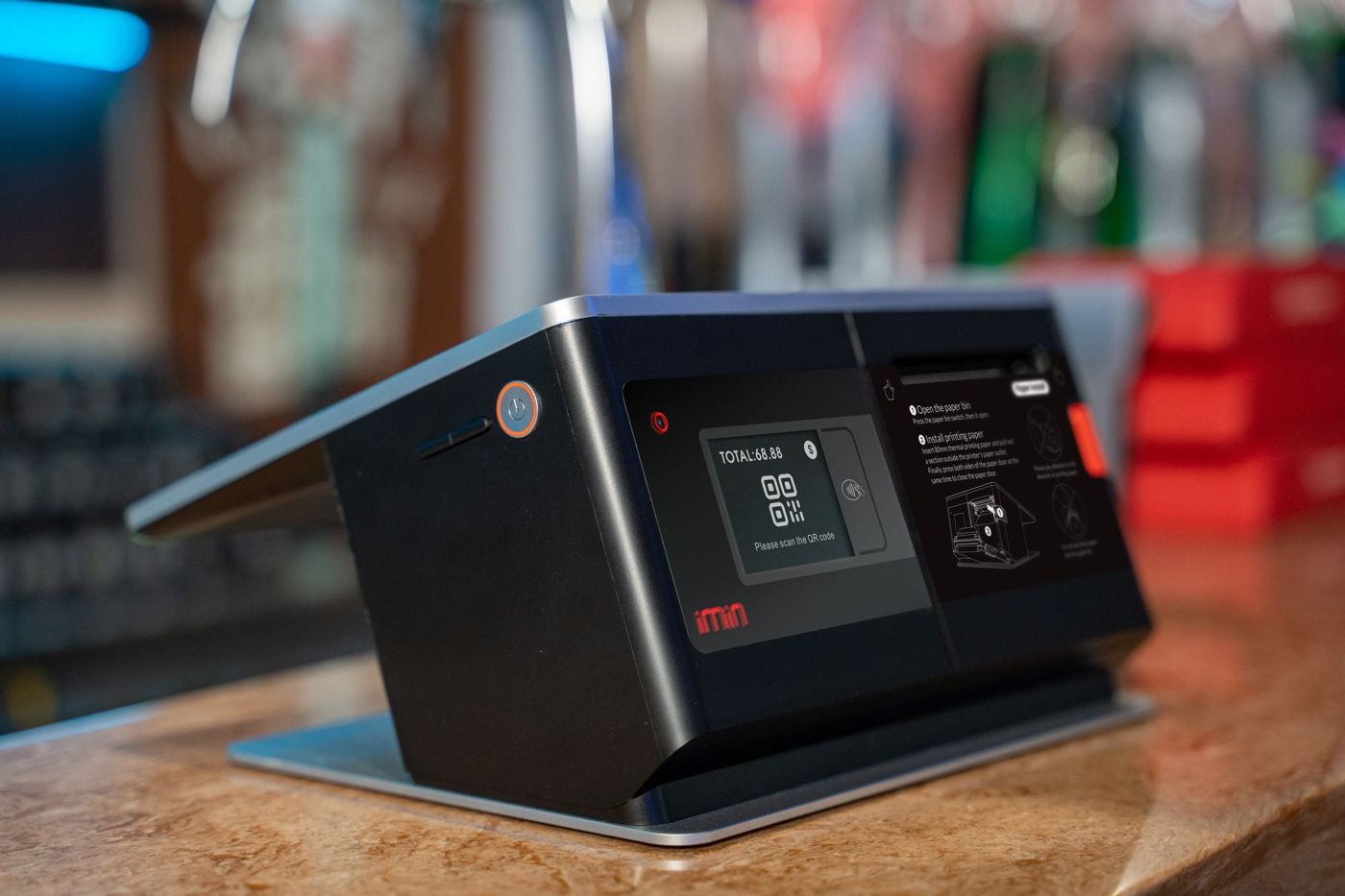
How much cash you need in total is shown by the cost calculator; where you need it is explained here. The question of cash or card at the Giza Plateau has an answer that has reversed in recent years and is still incorrect in many travel guides: At the ticket office, you pay by card, and only by card. Cash is no longer accepted there.
For almost everything else, the opposite applies. Tips, the washroom attendant, a drink, a taxi, a camel guide: these are all cash, and in small denominations. If you only have a card, you can get in, but you'll be without small change all day.
Proper preparation is therefore not an either/or but a split: a working card for the entrance fee and cash for the rest. Sounds trivial, but it regularly goes wrong because most people plan the exact opposite.
This page explains when the card-only rule came into effect, what it covers, which mistake at the gate will cost you, and how much cash in which denominations makes sense. Exchange rate and price level are covered on a separate page.
Since when the card-only rule applies
The change is not specific to this site but part of a nationwide program.
The Ministry of Tourism and Antiquities introduced cashless ticket sales at its sites starting in 2023, and the Giza Plateau was among the first. An overview from June 2023 lists, alongside Giza, the Egyptian Museum, the Citadel, and several temples in Upper Egypt. For foreign visitors, card payments at the counter and purchases via the ministry's online platform are planned. A report on the expansion notes that cash payments have been completely suspended.
The card-only rule was introduced gradually and does not apply uniformly everywhere; some cash remains necessary for tips and sanitary facilities. Nevertheless, it is sensible not to take this for granted on the day of your trip, because enforcement was inconsistent in the early phase, and individual exceptions were reported.
What is remarkable about this change is its speed. Egypt is considered a cash country by many travellers, and in large parts of everyday life that is true. But at state cultural sites it is the opposite, and more consistently than in some European museums. If you arrive with the image of a country where banknotes are handed over everywhere, you will encounter the exact opposite at the ticket counter.
What this means in practice is unmistakable: If you stand at the counter with a wallet full of Egyptian pounds and no working card, you will not get a ticket. That is the one mishap that no friendliness or bargaining will help with, because the cash register simply cannot accept cash.
What you pay with what
Rough orientation for a day's visit. The left column is the rule, the right the exception.
| What for | Card | Cash |
|---|---|---|
| Entry to the site | Mandatory | Not accepted |
| Additional ticket for an interior | At the same counter, also by card | Not accepted |
| Electric shuttle | Not applicable, included in the entry fee | Not applicable |
| Washroom attendant | Not possible | Small notes, essential |
| Drinks and small items | Sometimes possible | Safer |
| Tips, camel or horse guides | Not possible | Cash only |
| Taxi or ride service | Depending on provider | Recommended |
- Card
- Mandatory
- Cash
- Not accepted
- Card
- At the same counter, also by card
- Cash
- Not accepted
- Card
- Not applicable, included in the entry fee
- Cash
- Not applicable
- Card
- Not possible
- Cash
- Small notes, essential
- Card
- Sometimes possible
- Cash
- Safer
- Card
- Not possible
- Cash
- Cash only
- Card
- Depending on provider
- Cash
- Recommended
Interior tickets are sold on site and follow the same card rule as the entry fee.
If your card doesn't work
Which brings us to the mishap that can really cost you the day: a card that doesn't work.
There is no fallback. If the payment is declined, you cannot pay in cash, and there is no counter at the Eastern Gate anyway. A card is declined abroad more often than at home, and usually not because of insufficient funds but because the bank blocks an unusual transaction.
There is a second circumstance that makes the situation worse. The amounts are high by Egyptian standards, and unusually high foreign transactions are exactly the pattern that fraud detection systems react to. A card that worked flawlessly at the hotel for dinner can still be declined at the counter.
Three simple precautions help against this. First: Notify your bank before your trip or activate international payments in the app. Second: Carry two cards from different providers and keep them separate. Third: Check that your card is enabled for payments without additional confirmation, because confirmation via a bank phone call rarely works reliably abroad.
A special case concerns travellers who come with a group. There, the organiser handles the ticket purchase, and the card issue does not arise for you. However, if you plan to buy an interior ticket on site, you'll be back at the counter yourself and need the same working card as everyone else. So don't rely on the group covering it.
And a fourth option that bypasses all of this: Buy your entry ticket online in advance. Then the payment is done before you stand at the gate, and a declined card attempt happens in the hotel, not in the queue.
How much cash, and in which denominations?
That leaves the other half: How much cash do you actually need, and in what form?
The answer depends less on the total amount than on the denominations. You need many small notes, not few large ones. A single large note won't help at a washroom, for a tip, or at a drink stall, because they rarely have change and the situation becomes unpleasant for both sides.
As a rough guide for a day at the site, a modest amount split into many small notes is enough: some for the washroom, some for drinks, some for tips, and a reserve for the return trip. Specific amounts are deliberately not given here because exchange rates fluctuate and local prices change faster than this text.
So you should exchange or withdraw in a way that gives you small notes, and that is best done at the airport, at a bank, or at an ATM in the city, not on site. Also bear in mind that ATMs can be empty, especially on weekends and holidays.
Also, don't keep all your cash in one place. A small part in your pocket for ongoing small expenses, the rest kept separately: this saves you from pulling out your entire travel cash at every washroom and limits the damage if something gets lost.
A note on currency: Payments are made in Egyptian pounds. Euros or dollars are accepted in some places, but at a rate you cannot negotiate, and you get change in pounds. If you pay in foreign currency, you usually end up paying more.
And finally, an observation that belongs to the topic: The card-only rule at the counter has a side effect that is rarely mentioned. It removes an opportunity for irregularities in ticket sales because every sale is recorded electronically. That is one of the reasons such systems are introduced.
Before you leave for the site
- Two cards from different providers, stored separately
- International payments activated with your bank
- Plenty of small notes, not one large one
- If bought online: receipt saved offline and phone charged
- Some cash kept separately from the rest, in case of loss
Pay for entry in advance instead of at the counter
If you handle the payment before your trip, you completely avoid the card issue at the gate; entry is included, access to the interiors is expressly not.
Frequently asked questions
Can I pay for entry in cash?
No. Since the switch to cashless ticket sales, payment at the counter is by card only. This also applies to additional tickets for the interiors.
Which cards are accepted?
Common credit and debit cards. Take two different ones with you, because there is no fallback at the gate.
What do I still need cash for then?
For tips, the washroom attendant, small items, taxis, and everything that doesn't go through a cash register. In small notes.
What happens if my card is declined?
Then you won't get a ticket. That's why you should activate international payments in advance, bring a second card, or buy online.
Can I pay in euros?
Yes, at some places, but at an unfavourable rate and with change in pounds. Expect to pay extra.
Where can I get small notes?
At the airport, at a bank, or at an ATM in the city. There is no relying on it at the site itself.