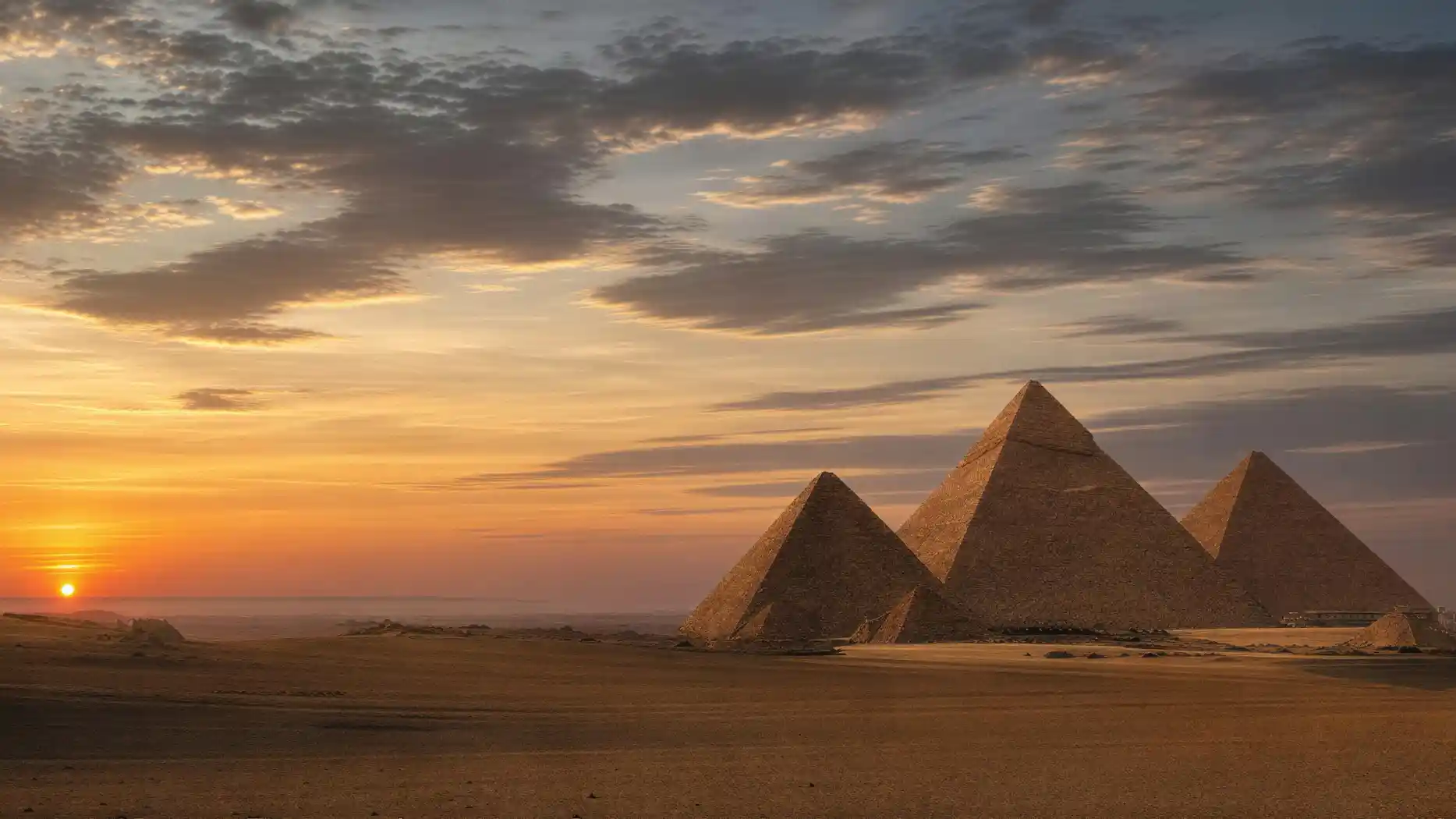
Where did the treasure of the Pyramids of Giza go? It's the question children ask first and adults consider settled. But it's not settled—just uncomfortable to answer.
The honest answer is: we don't know what stood in the largest pyramid, because it was empty before anyone recorded having looked inside. The first surviving account of the interior dates from the ninth century AD, roughly three and a half thousand years after construction. What happened in those three and a half thousand years is undocumented.
That's an important difference from the phrasing you usually read. It's often said the pyramids were looted in antiquity. That is by far the most plausible explanation, and it's supported by abundant comparative material from other necropolises. But there is no direct evidence for the three structures at Giza—no find, document, or inscription that records the event.
This page therefore takes a different approach from the usual accounts. It begins with what can actually be proven, then moves to what follows from the evidence, and finally addresses the two ideas that most distort the picture: Egypt's most famous tomb and the hope for an undiscovered chamber.
The Evidence Speaks Louder Than the Word Empty
First, the evidence, because it speaks louder than the word empty suggests.
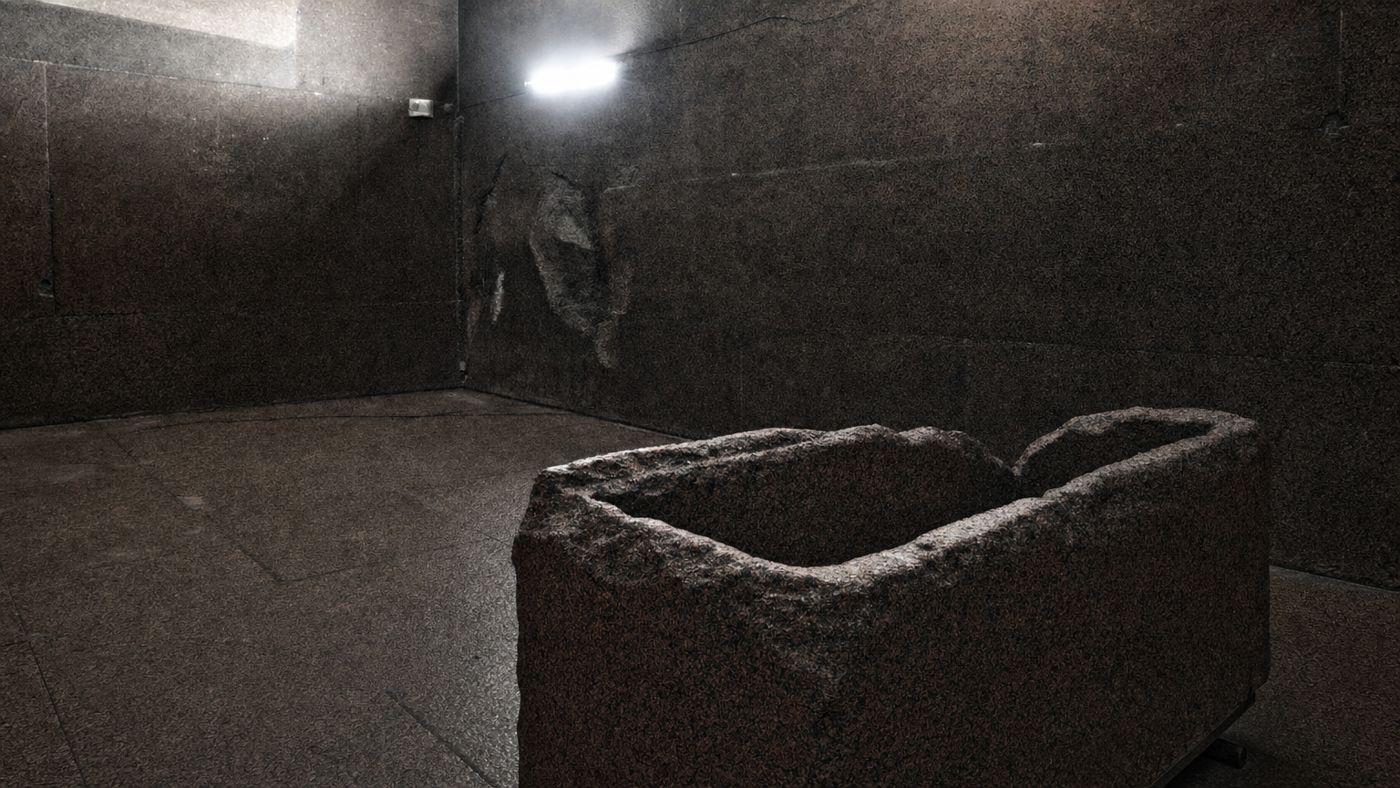
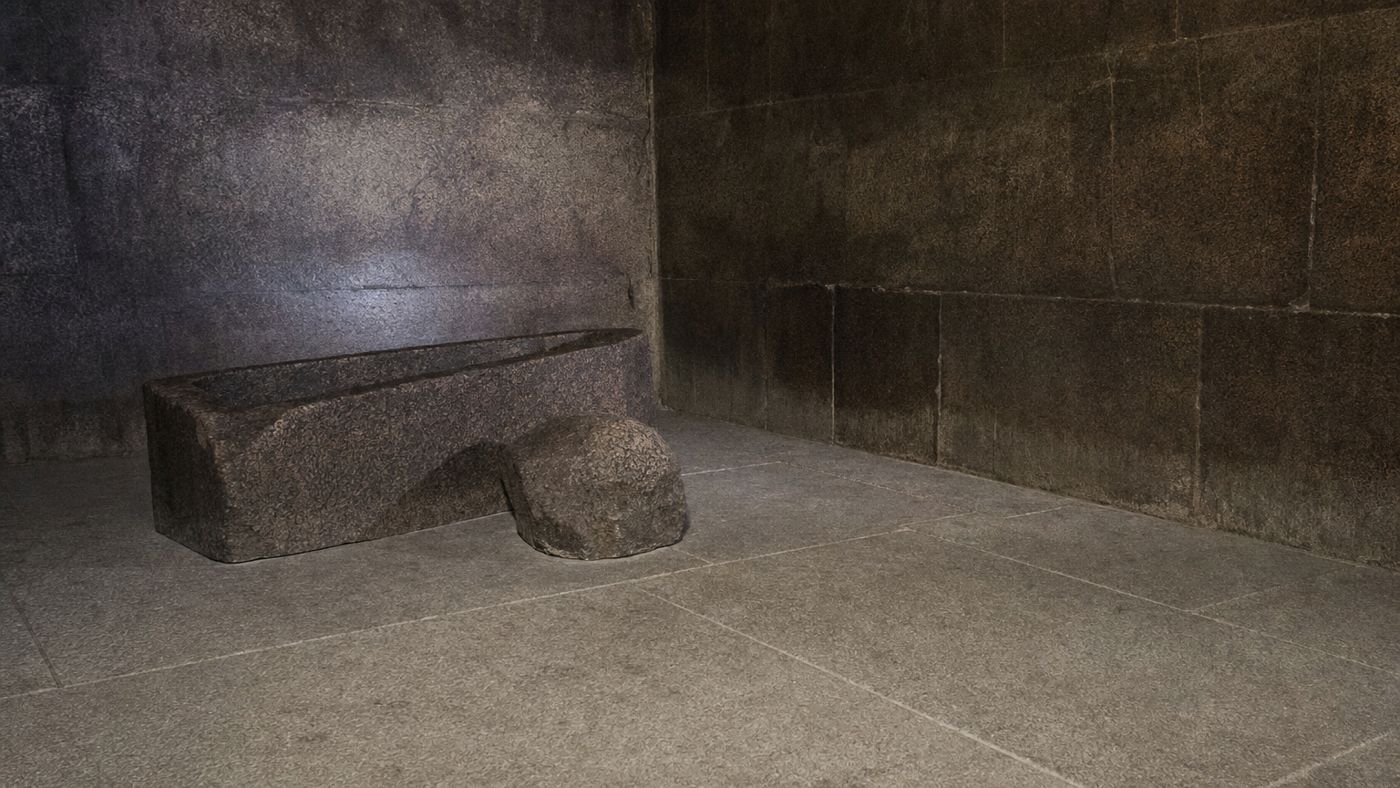
In the upper chamber of the largest pyramid stands a sarcophagus of red granite. It has no lid, is damaged at one corner, and is wider than the ascending passage through which it would have had to be carried. This necessarily means it was in place before the chamber and everything above it were finished. The construction was built around it.
Equally telling is the sealing. After the burial, the ascending passage was blocked with several multi-ton granite plugs, pushed in from above and stuck fast. No one seals an empty space this way. The effort proves there was something to protect, and it also shows how seriously the builders took the threat.
The third point is the route later intruders took. They didn't come through the passage but cut sideways through the softer limestone to bypass the granite plugs. Visitors still use this bypass tunnel today. Anyone who knows it already holds the answer to the treasure question: someone went to considerable effort to gain access here, and they didn't do it out of curiosity.
A fourth point adds to this and is rarely mentioned: the sarcophagus itself is unfinished. Tool marks are visible on its surface, the polish isn't complete everywhere, and the lid isn't just missing—according to the evidence, it was never properly attached. What follows from this is debated. Some read it as time pressure at the end of a long construction period; others consider it the normal state of a piece that stood in semi-darkness and was never meant to be seen. For our question, it's still revealing: even the center of this complex wasn't flawless throughout.
What's missing is everything else. No grave goods, no furniture, no vessels, no remains of a burial. And because nothing is there, it's impossible to say when it disappeared.



Guided Day with Interior as an Add-On
- The empty space is the real finding of this page; it can only be seen from inside
- Entry to the site is included; the interior visit is planned as an add-on
- German-speaking guide available, which helps with a question full of half-truths
- According to the provider, free cancellation up to 24 hours before
What Is Certain
- Present in the Chamber
- a granite sarcophagus without a lid
- Grave Goods Found
- none
- Condition at First Report
- already empty, in the 9th century AD
- Sealing of the Passages
- several multi-ton granite plugs
- Time of Looting
- unknown, not documented for Giza
- Documented Theft from the Structure
- the casing stones, from the Middle Ages onward
Tomb Robbery Has Its Own Administrative File
That tomb robbery in Egypt was not an isolated case but a persistent problem with its own administrative file can be very well documented—just not for Giza.
From around 1110 BC, a collection of documents survives that records investigations into tomb robbers. The most famous piece, named after a former owner and now under number 10221 in a London collection, records the inquiry of a commission that, in the sixteenth regnal year of a king of the twentieth dynasty, inspected the royal tombs west of Thebes. The commission found most royal tombs intact, but one older one broken open, and noted that private tombs had been looted on a large scale.
What's interesting is not just the finding but the process. There was a report, a commission, a site inspection, interrogations, and a written account. There was also a political dimension: the mayor of one half of the city had made the accusations, the mayor of the other half was responsible for the cemetery, and there has long been suspicion that the latter was himself involved. These documents were made accessible in a scholarly edition by T. E. Peet from 1930 and have been analyzed ever since.
Two caveats are essential here. First, this takes place in Thebes, a good five hundred kilometers upstream. Second, it's about fourteen hundred years after the construction of the largest pyramid. The documents thus don't prove what happened at Giza, but that tomb robbery in Egypt was organized, widespread, and legally prosecuted. For the question of why the chambers at Giza are empty, this is the best available analogy, not proof.
The Image Comes from a Different Millennium
That leaves the idea that most shapes the picture, and it comes from a completely different millennium.
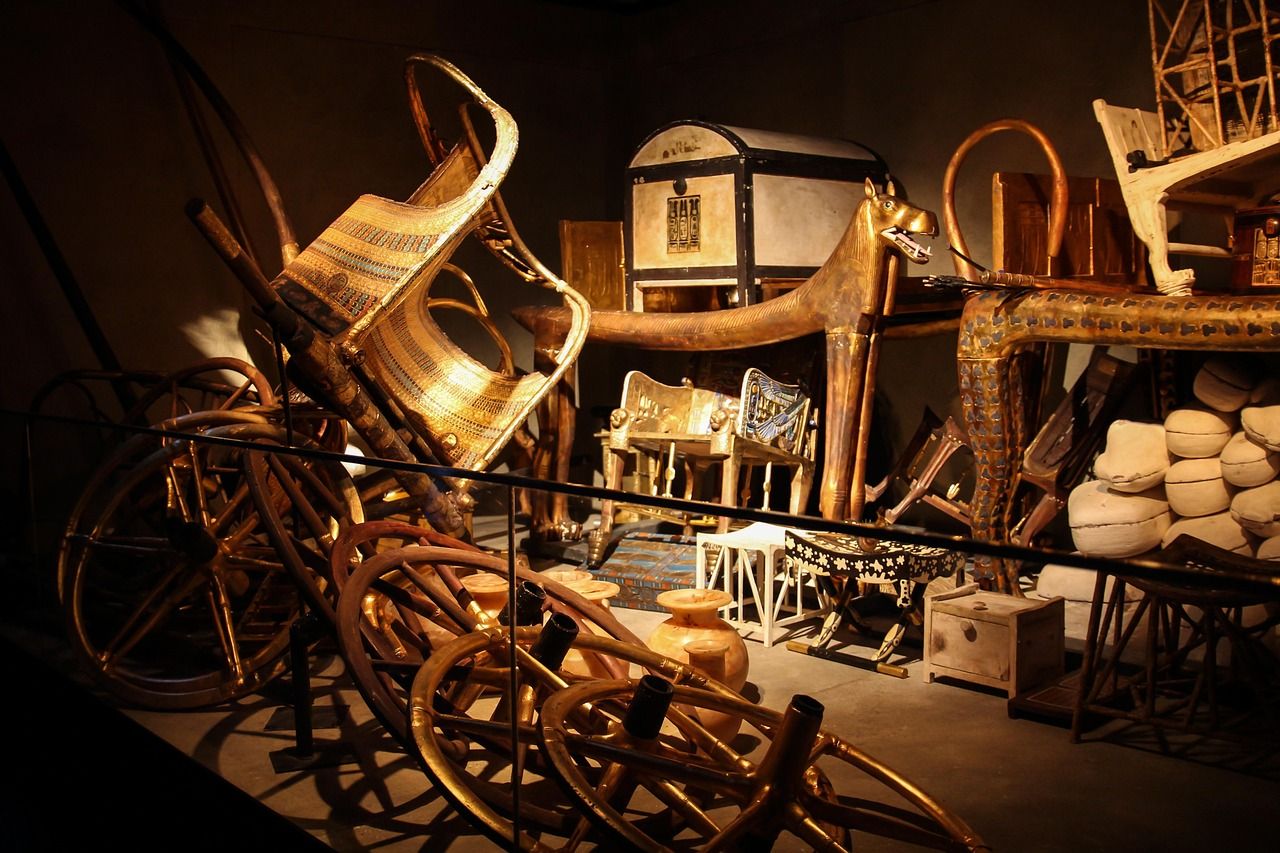
When people think of an Egyptian tomb treasure, they think of the burial goods of a king of the eighteenth dynasty, found almost complete in 1922. This idea distorts expectations for Giza in both directions at once, and that's the interesting part.
It distorts downward because that king died young, reigned briefly, and was insignificant compared to the great rulers of his time. His tomb is small and was apparently not planned as a royal tomb. If even such a burial was so richly equipped, one can imagine what stood in the complex of a king who ran the largest construction project of his time for two decades.
It also distorts upward because between the two burials lie roughly twelve hundred years. Burial goods changed considerably in that time, in scope, material, and composition. Inferring one from the other is about as reliable as inferring the furnishings of a Carolingian royal tomb from the inventory of an eighteenth-century princely court.
What we actually have for the Old Kingdom is more modest and more revealing. From a sealed shaft in the eastern cemetery comes the complete burial equipment of a queen: gilded furniture, a carrying chair, a bed, jewelry, plus a sealed sarcophagus that turned out to be empty when opened. That's the best impression of what a royal burial of this period looked like, and it shows above all one thing: it wasn't about mountains of gold, but about household goods in precious execution.
Two Additions That Surface as Hope
Finally, two additions that regularly surface as hope.
The first concerns the voids detected in the masonry since 2017 using muon measurements. They are real and scientifically confirmed, and they are explicitly not treasure chambers. Whether they are structural voids, remnants of the construction process, or previously unknown rooms is open. No one has entered them, and no find has been made there. Anyone hoping that something still lies beneath the masonry is hoping for a possibility, not a finding. This is covered in detail on the page about new discoveries.
A side thought belongs here because it orders expectations. The official overview of the site lists the necropolis as an ensemble of pyramids, temples, and cemeteries. Significant finds come almost exclusively from the second part of that list—from shafts, mastabas, and workshop areas—not from the three great structures. Asking about the treasure thus asks about the one place on the site where reliably nothing was found, while around it, things certainly were found.
The second concerns the theft that actually succeeded and is rarely called theft. The smooth outer casing of the structures, made of fine limestone, has almost completely disappeared because it was quarried away over centuries and used in the growing city. In terms of mass and value, that was by far the largest outflow of material in the history of this place, and it is well documented. The treasure everyone asks about is uncertain; the treasure demonstrably carried off now stands in walls.
And one final framing that concerns the whole site. The necropolis has been on the UNESCO World Heritage List since 1979. What is still found today no longer leaves the country but goes to the country's museums. The complete burial equipment of that queen from the cemetery is exactly there to be seen, and that is the most useful answer to the initial question: the treasure of the fourth dynasty is not in the pyramid, but part of it lies two kilometers away in a display case.
The Museum Visit Where the Surviving Finds Are
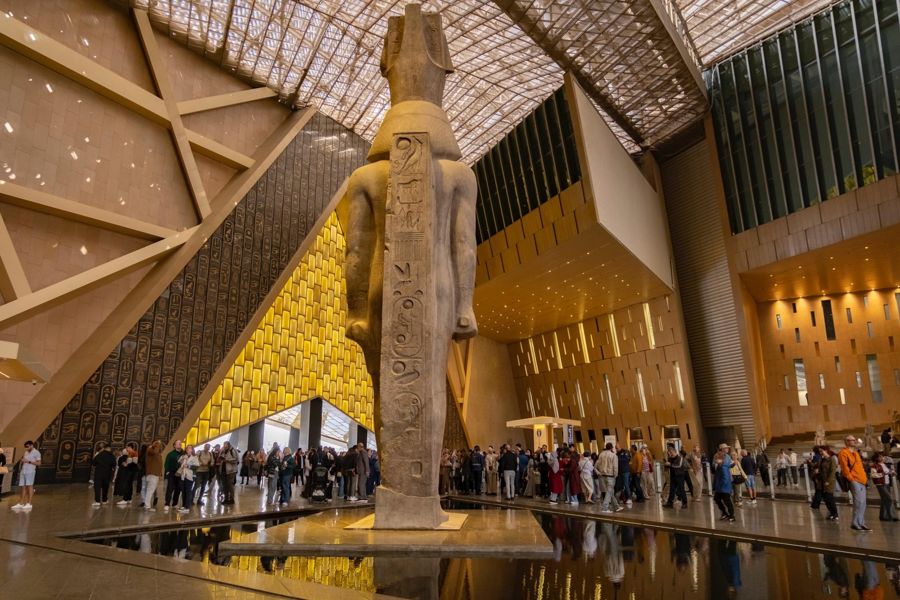
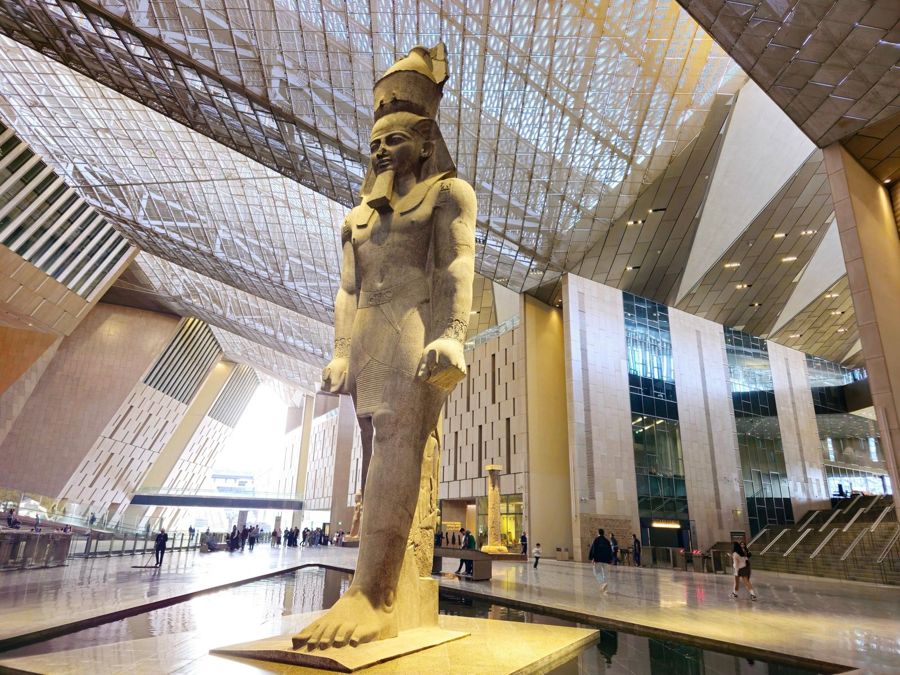
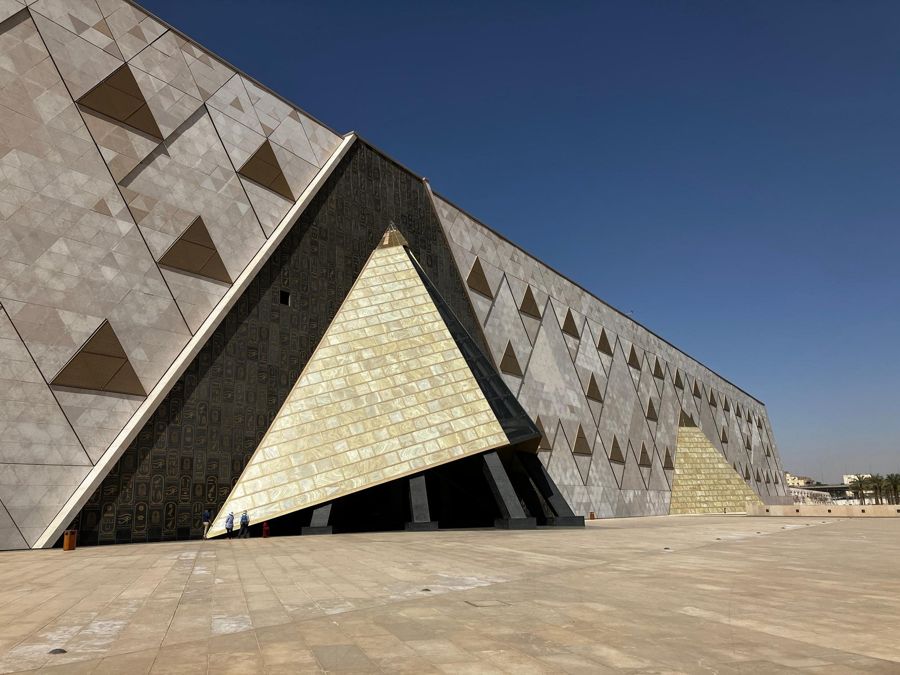
The chambers are empty; the finds from the surrounding tombs and shafts are not. A visit focused on the museum shows what actually survives from an Old Kingdom burial; entry to the plateau is planned as an add-on there.
Frequently asked questions
Was a treasure ever found in the Pyramids of Giza?
No. The chambers were already empty when the first surviving account of the interior was written.
When were they looted?
That is unknown. There is no evidence for Giza itself, only the finding and comparative material from other necropolises.
How do we know anything was in there at all?
From the sealing. The passages were blocked with multi-ton granite plugs, which would be pointless for an empty space.
Is there evidence of tomb robbery in Egypt?
Yes, extensive. Investigation records survive from around 1110 BC, though from Thebes, not Giza.
Is there anything in the discovered voids?
Unknown. They are confirmed, but no one has entered them, and no find has been made there.
Where can I see what survives?
In the museum next door. Among other things, the complete burial equipment of a queen from the cemetery is there.