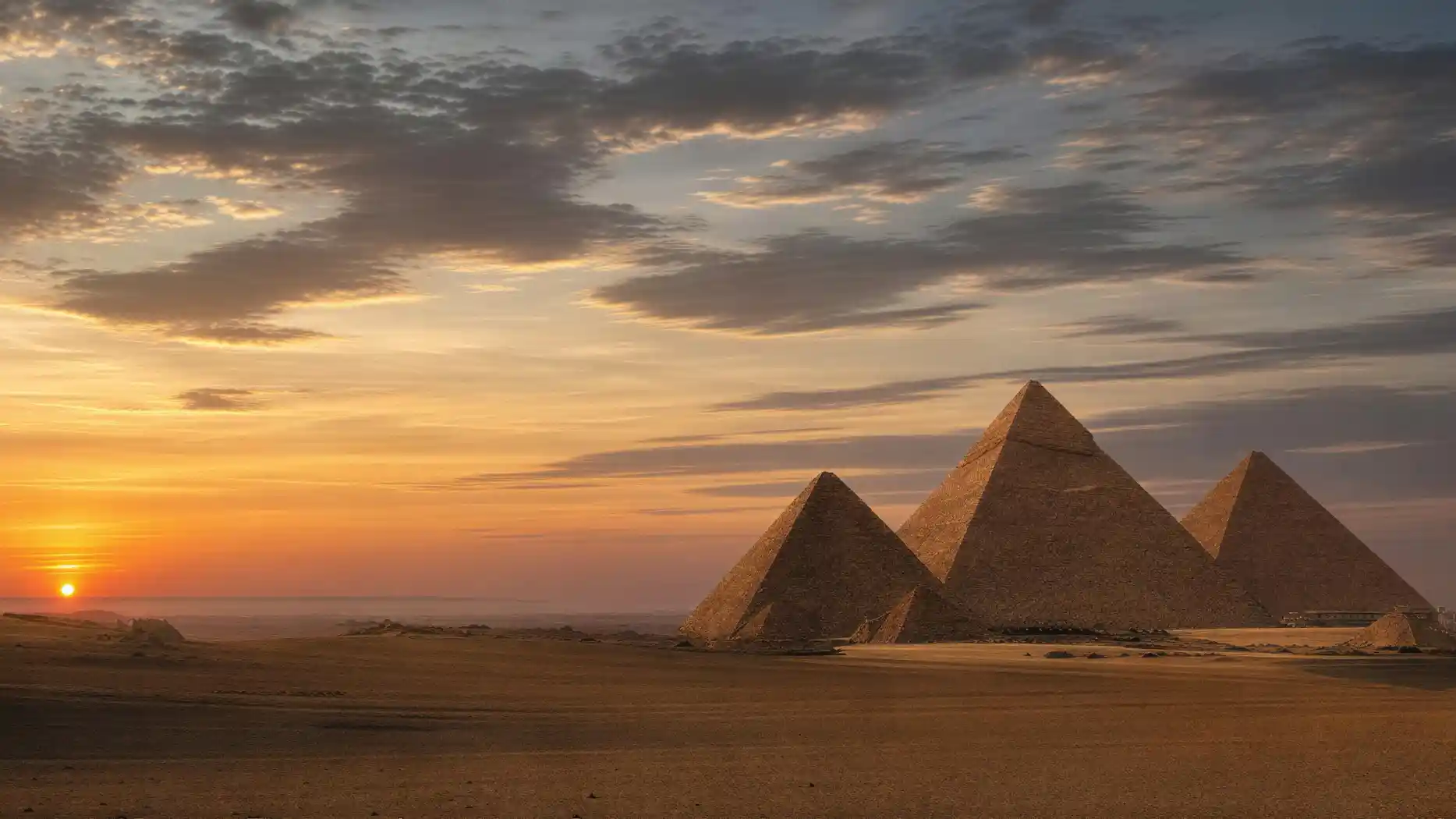
Yes, and since 1979. That answers the most common question, and the more interesting one begins: What exactly is on the list?
Because 'Pyramids of Giza UNESCO World Heritage' is a simplification. What is inscribed is not a single complex, nor the plateau itself, but a site that stretches for about thirty kilometers along the western edge of the Nile Valley and includes several pyramid fields as well as the ruins of an ancient capital. The area with the three famous structures is part of it, not the whole.
The year also says something. The convention on which the list is based was adopted in 1972, and the first sites were added in 1978. This one belongs to the second round ever, at a time when the list had only a few dozen entries and the selection was correspondingly uncontroversial. Today, over a thousand sites are on it, and inscription has become a lengthy process involving pre-nomination, expert reviews, and voting.
This distinction is not a quibble. It explains why the World Heritage Committee regularly deals with a railway line, a footpath, or a road that is not even on the plateau. And it explains why protective measures at one location can lead to conditions at a completely different one.
The second half of this page addresses a question that is rarely asked and is actually the decisive one: What does the title actually achieve? The answer can be shown with a real case that ran for over eight years and whose traces are still visible on the site today.
- Name of the site
- Memphis and its Necropolis – the Pyramid Fields from Giza to Dahshur
- Inscribed
- 1979, in one of the first rounds of the World Heritage List
- Criteria
- (i), (iii) and (vi) of the World Heritage Convention
- Extent
- about 30 kilometers along the western desert edge
- Buffer zone
- not formally established to this day
- Red List
- never listed as World Heritage in Danger
In whose company they are inscribed
If you wonder whether the pyramids belong to the World Cultural Heritage, you should know in whose company they stand.
The inscription itself lists them under a name in which Giza is only the northern boundary marker. The site extends from the plateau in the north southwards over Zawyet el-Arjan, Abu Ghurab and Abusir to Saqqara and Dahshur, plus Mit Rahina, where the remains of the ancient capital Memphis lie. In this chain, Giza is not at the beginning of the development but in its middle: The oldest large complex is in Saqqara, and the immediate predecessors of the Giza pyramids are further south in Dahshur.
That is the real purpose of this layout. A single building could have been inscribed under criterion (i), as a masterpiece. Instead, a landscape was inscribed in which one can read how this building form developed, where it reached its peak, and how it continued afterwards. The connection is the protected object, not the individual achievement.
In practice, this means something concrete for travelers: Those who only see the plateau have seen a small section of the World Heritage site. The southern fields are between twenty and forty kilometers from the plateau, noticeably quieter, and in parts better preserved. They carry the same title.
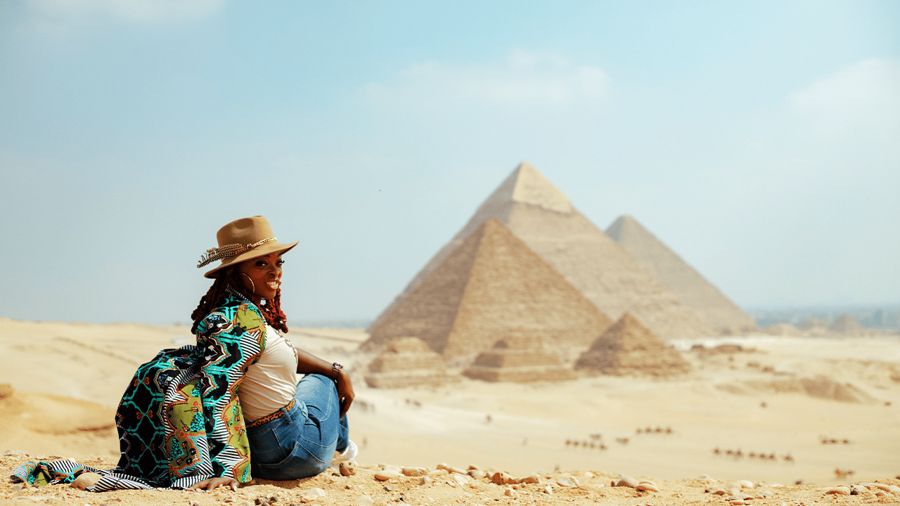
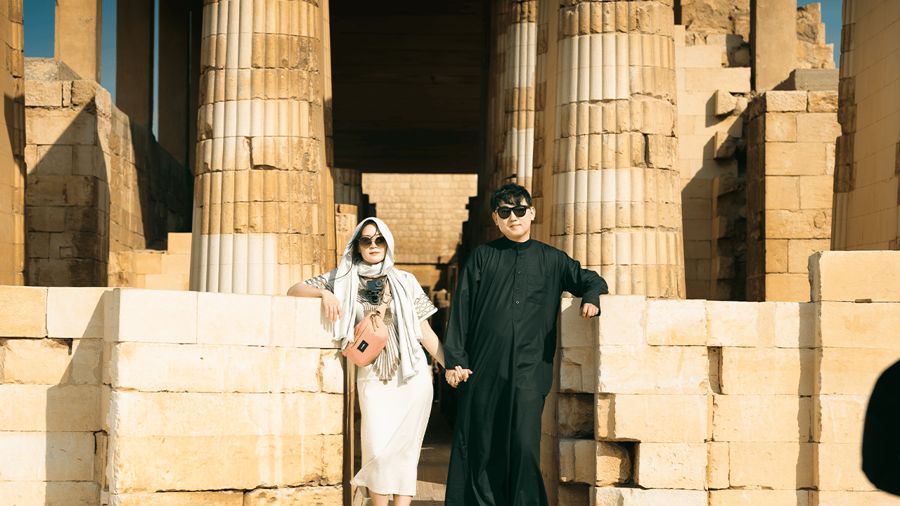
The World Heritage site in one day: Giza, Memphis, Saqqara and Dahshur
- Follows exactly the chain that bears the title, instead of just its most famous link
- Eight hours with a German-speaking guide, pickup, plateau entrance and lunch included according to the provider
- Access to the interiors of the pyramids is explicitly not included
- Free cancellation up to 24 hours before according to the provider, offer marked as accessible
The World Heritage site from north to south
- GizaThe three famous pyramids and the Sphinx. The most visited, but not the oldest part.
- Zawyet el-ArjanTwo unfinished complexes, no regular visitor operation.
- Abu Ghurab and AbusirSun temple and a pyramid field of the 5th dynasty.
- SaqqaraThe oldest large stone pyramid, built about a century before Giza.
- Mit RahinaRemains of Memphis, the associated capital in the valley.
- DahshurThe immediate predecessors, where the geometric form was developed.
The order on the map is not the order in time. Each ruler built near his residence, which is why the oldest complexes lie in the middle of the chain.
The three criteria of inscription
The question of the justification remains. Why the pyramids of Giza are World Heritage can be read from the three criteria under which the inscription was made.
Criterion (i) requires a masterpiece of human creative genius. Criterion (iii) requires a unique or at least exceptional testimony to a cultural tradition or a civilization. Criterion (vi) requires a direct association with events, living traditions, ideas, or beliefs of outstanding significance. For inscription, a single fulfilled criterion is sufficient; here three were applied.
Behind all three stands a concept that names the actual protected good: outstanding universal value. This means a significance that extends beyond the borders of a state, which is why its preservation is not solely that state's business. From this idea follow the reporting obligations, the expert reviews, and the right of the committees to comment on projects that lie on national soil. Those who regard the status as a mere honorary title overlook exactly this part.
More revealing than the enumeration is what is not included. There are criteria for natural heritage, for geological processes, for threatened habitats. None of these play a role for this site. Only the cultural testimony is protected, and that includes the ability to read it: That is why the site also includes areas that look unspectacular to visitors, such as unfinished complexes and settlement remains.
A fine point about the numbering belongs here because it causes confusion in older sources. Until the end of 2004, the convention had two separate series: six criteria for cultural heritage and four for natural heritage. Since 2005, there is a single series of ten criteria, in which the former cultural criteria have kept positions one to six. For this site, nothing changes as a result, but for comparison with older texts it does.
A second point is often confused. The World Heritage title has nothing to do with the World Wonders, neither with the ancient list nor with the public vote of 2007. The World Heritage List is an instrument of international law with procedures, reporting obligations, and committees. The World Wonders are a list, in one case handed down from antiquity, in the other resulting from a vote.
What the status is worth in an emergency
What the status is worth in an emergency is shown by a process that dragged on for eight years.
In the mid-1990s, Egypt planned to route a connection to the Cairo ring road across the site. According to the state of conservation reports of the World Heritage committees, a group of experts traveled there in April 1995, and the Egyptian authorities subsequently decided on a new route north of the site. In 1998, the relocation was formally agreed between the organization and the government. In early 2001, the reports noted that it had not yet been implemented. A tunnel project under the plateau was only finally stopped in 2003.
So far the success story. However, it has a second half, and that is more unpleasant. A section of the original route had already been built, about five kilometers across the plateau. Construction was halted, but the swath remained. In the following years, the same reports noted that the abandoned route was used for waste dumping, burning garbage, and large-scale sand extraction.
From this, one can learn both. The status did actually prevent a major infrastructure project, and that is more than many give it credit for. But it took a long time, it only takes effect once a project becomes internationally known, and it does not clean up what has already been done.
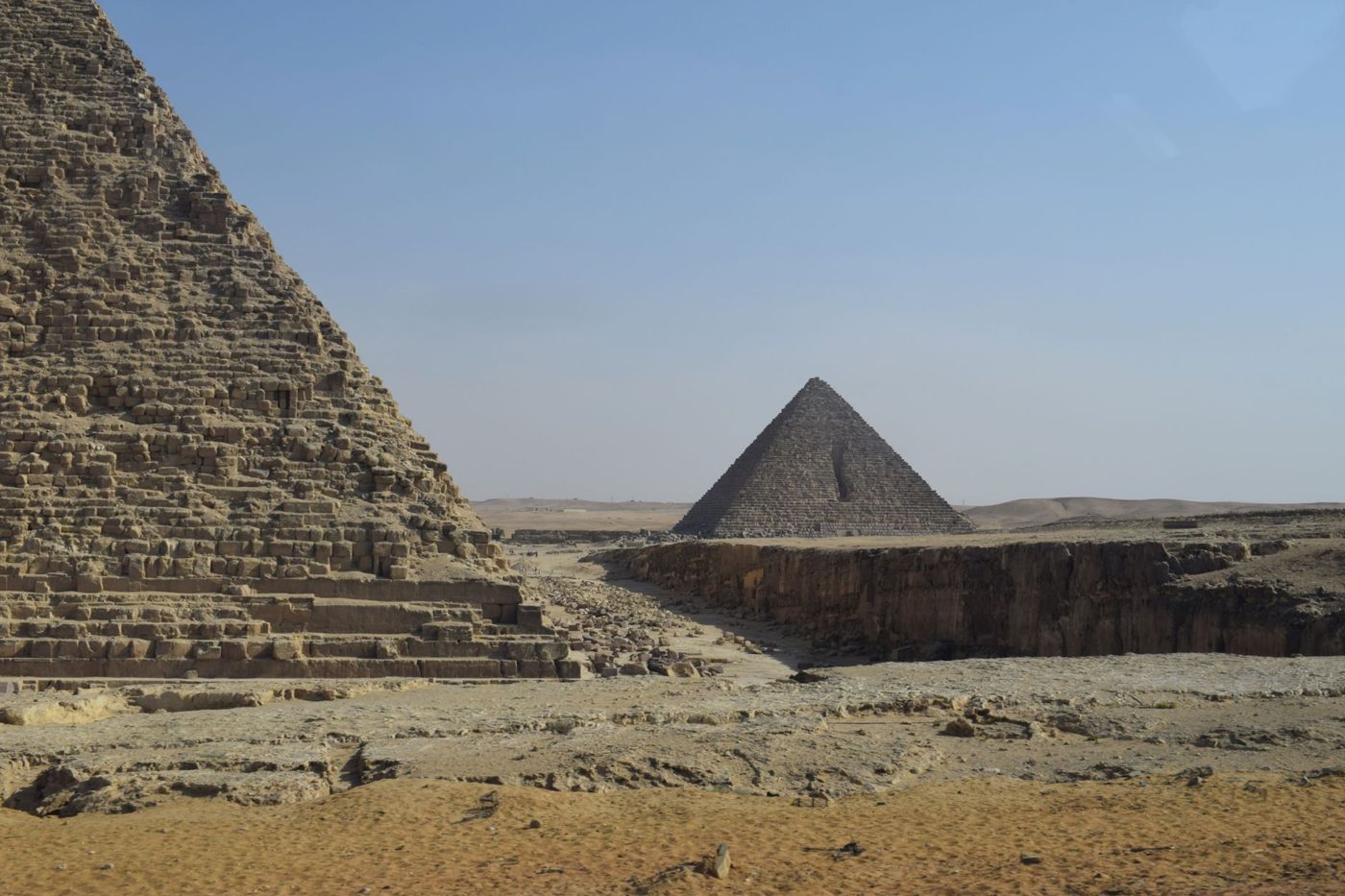
The downside: no buffer zone
The downside remains, and it is as remarkable as the title itself.
The site still has no formally established buffer zone. A buffer zone is the strip around a World Heritage site in which construction projects are subject to additional conditions. For a site that has been inscribed since 1979 and on the edge of which a metropolis has grown, this absence is the most striking gap in the protection system. The establishment is to be made up in the first year of the new management plan; it has been demanded for years.
How this operation runs is little known. The State Party regularly reports on the condition, the committees evaluate these reports, and on specific occasions a mission is sent on site, which submits its own expert opinion. At the plateau, there have been several such missions, most recently in connection with the ring road, the redesign of visitor operations, and the question of boundaries. The result is recommendations, not decisions.
Otherwise, the committees are continuously working on projects in the vicinity. A planned footpath between the Grand Museum and the site was assessed as an unacceptable intervention in the cultural landscape. A high-speed rail line running through the region is being examined, and construction is suspended until the review is completed. These are not prohibitions but statements that the State Party can follow or not.
And there is the sharpest instrument, which has never been applied here: the List of World Heritage in Danger. A site is placed on it when its outstanding value is concretely threatened, and in the extreme case, deletion can follow. The pyramid fields have never been on it. Whether one reads that as an all-clear or as restraint on the part of the committees is a question of perspective; the reports themselves have become clear over the years without taking this step.

Private car with knowledgeable driver in Cairo and Giza
The World Heritage inscription covers the pyramid fields from Giza to Dahshur, and anyone who wants to see this landscape as a whole needs a vehicle: Saqqara is about twenty kilometers south, Dahshur about thirty, and neither place is accessible by public transport. Private vehicle with knowledgeable driver, free cancellation.
Frequently asked questions
Since when are the pyramids World Heritage?
Since 1979, in one of the first rounds of the World Heritage List. What was inscribed was not the plateau alone, but the entire chain of pyramid fields including the remains of the ancient capital.
What is the official name of the site?
Memphis and its Necropolis – the Pyramid Fields from Giza to Dahshur. Giza is one component among several.
According to which criteria was it inscribed?
According to criteria (i), (iii) and (vi): masterpiece of human creative genius, exceptional testimony to a civilization, and association with traditions of outstanding significance.
Does the status prevent construction projects?
Not directly. It creates reporting obligations and procedures. In the 1990s, it led to a planned road across the site being relocated, though only after years and after a section had already been built.
Is the site endangered?
It has never been on the List of World Heritage in Danger. The most obvious gap is the still missing buffer zone at the edge of the site.
Is World Heritage the same as World Wonder?
No. The World Heritage status is based on an international convention with procedures and committees. The World Wonders are lists, one ancient and one from a 2007 vote.