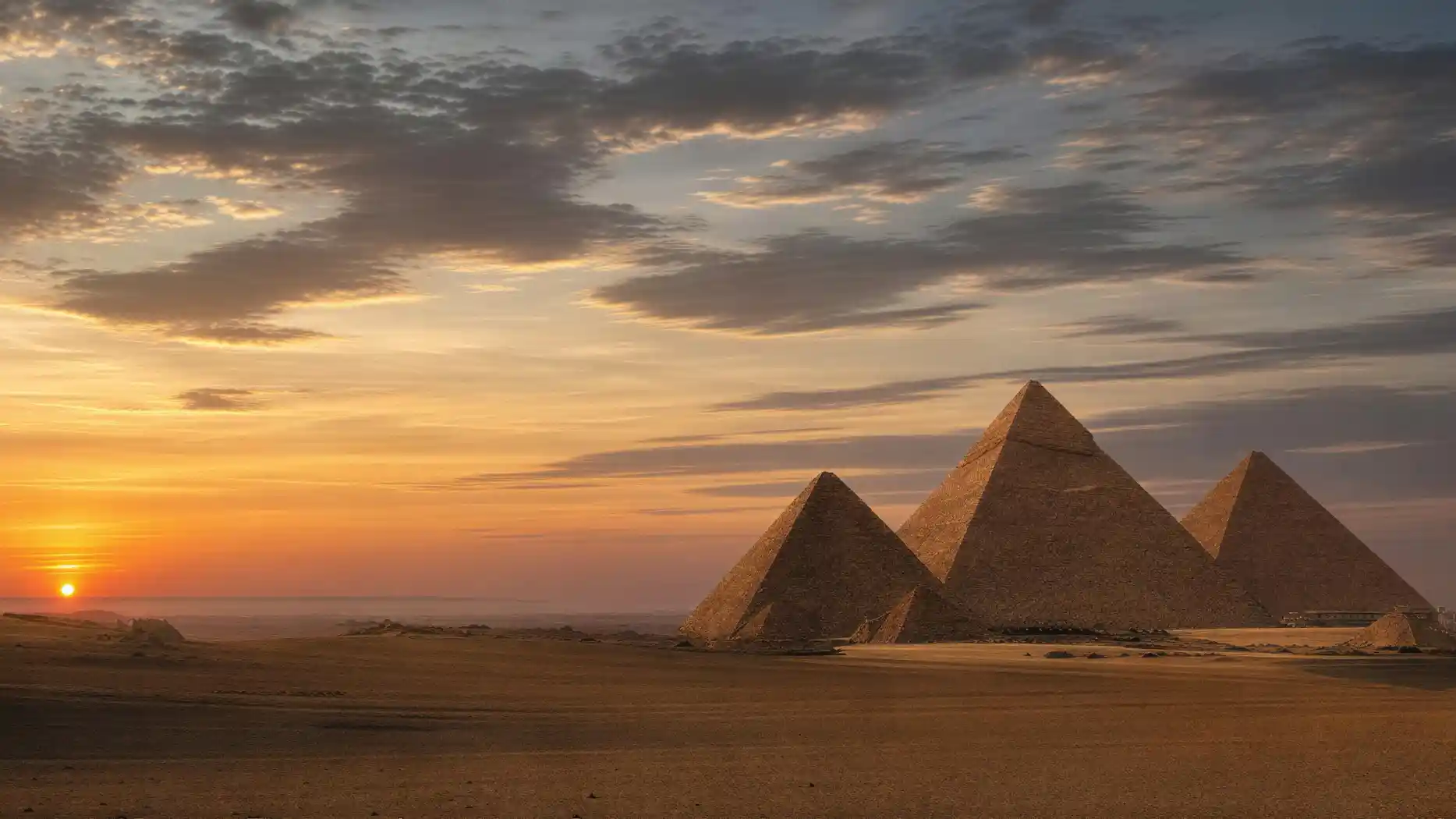
The Dream Stela is the only inscribed object that nearly every visitor to the plateau sees without knowing what they are looking at. It stands upright between the Sphinx's front paws, is just under four meters tall, and weighs several tons.
It was erected by Thutmose IV, a king of the Eighteenth Dynasty, whose reign is dated by scholars to 1401–1391 BC. Between the construction of the Sphinx and this moment lie about eleven hundred years. For Thutmose, the monument was already an ancient relic, as distant in time as the Roman Empire is for us.
What the stela says is a story, not a construction record. It tells of an afternoon, a dream, and a deal between a young man and a god. It is also a political document whose purpose can be identified with reasonable certainty.
This page covers four things: the story on the stone, the purpose behind it, the block itself and its surprising origin, and finally the damaged line that has appeared in every discussion of the Sphinx for two hundred years.
The Story on the Stela
The story on the stela can be summarized in a few sentences, and it is better than any summary suggests.
The young Thutmose, not yet king, is alone on the plateau. It is noon and hot, and he lies down in the shadow of the Sphinx to sleep. At the moment the sun is at its zenith, the god appears to him in a dream. He calls himself Hor-em-akhet, Horus in the Horizon, linked to the three manifestations of the sun god at morning, day, and night. The god complains that the desert sand has covered him and makes an offer: if the young man frees him from the sand, he will become king of Upper and Lower Egypt.
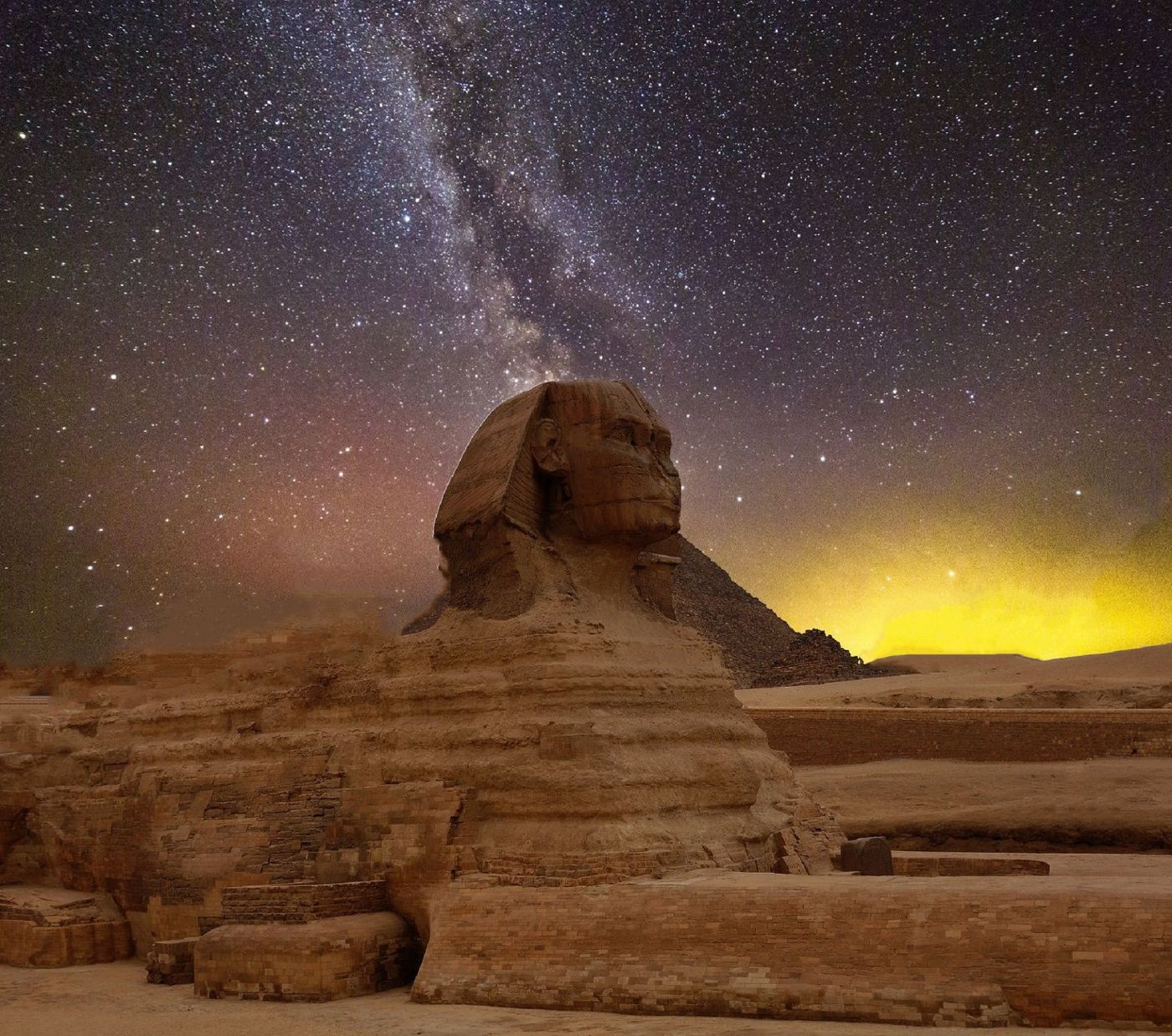
Remarkable is the condition of the monument that the narrative presupposes. The Sphinx was largely buried in sand at that time. According to expert opinion, the head was probably visible, and perhaps the outline of the body could be discerned, but not the paws. The god asking for help thus rose as a head from a sandy expanse.
Equally remarkable is what was happening around it. The plateau in the New Kingdom was not a quiet place of devotion but a recreational area for the court. According to the account of Egyptologist Kasia Szpakowska, kings came here for hunting, chariot driving, and archery; there were rest stops with shade for horses, and a predecessor had built a temple nearby. The dream thus occurred not in a wilderness but on a site that today might be described as a local recreation area with attractions.
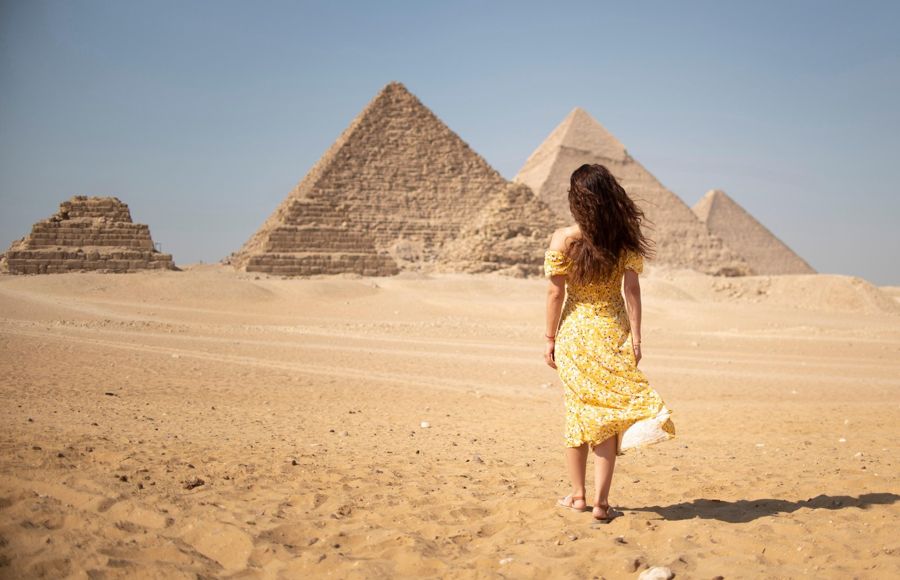
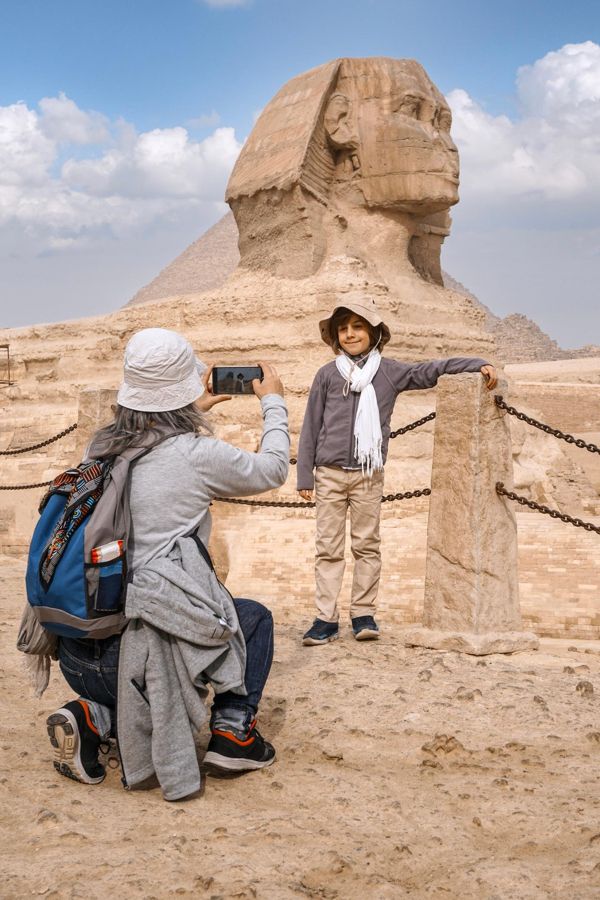
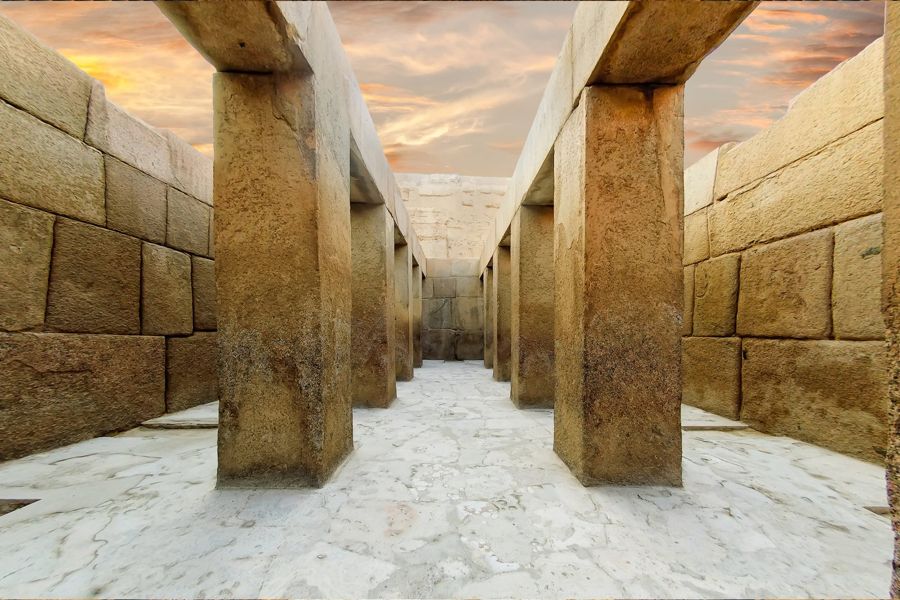
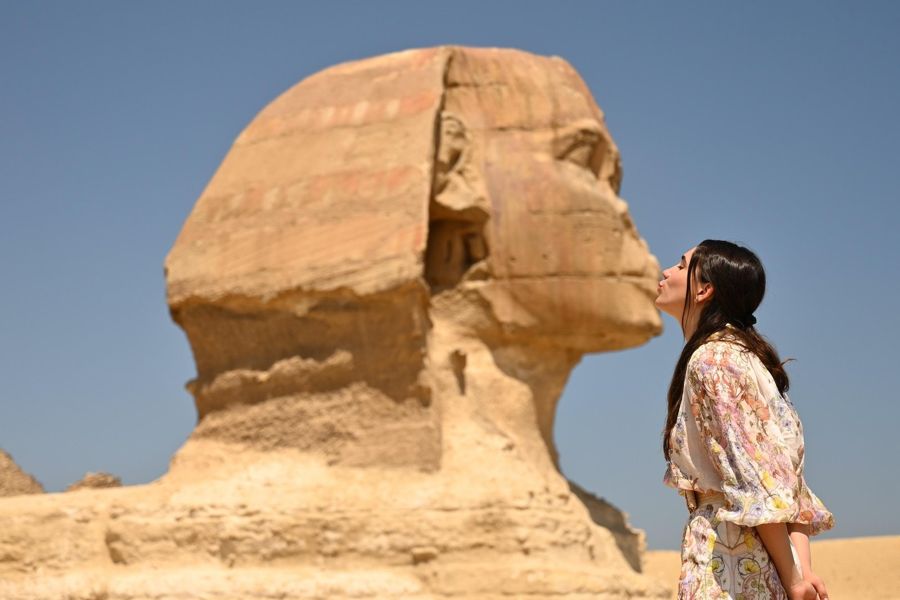
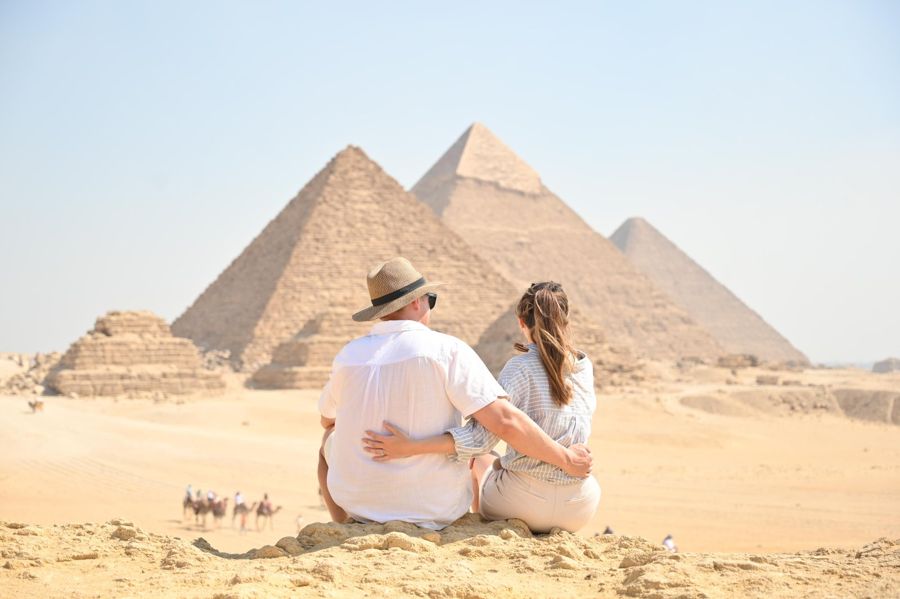
Half-day tour with stop at the Sphinx
- The stela stands between the paws and is regularly mistaken for part of the monument without any indication
- Entry to the site and pickup from your accommodation are included
- German-speaking guide available; the interior visit of the pyramids is explicitly not part of the program
- Free cancellation up to 24 hours before, according to the provider
First, it should be emphasized that he was indeed the rightful ruler. We do not know much about how he came to the throne. Possibly he had to justify his claim by the fact that the god spoke directly to him, in a dream, and promised him the kingship.Egyptologist Kasia Szpakowska on the purpose of the stela, in conversation with NOVA, the science desk of US public television (translated from English)
Why the Stela Was Erected
The purpose is already hinted at, and it is the real reason for the erection.
A king who can invoke a divine command does not need to justify a succession. That is exactly what the text does. It does not say: I am king because my father was. It says: The god chose me and promised me the kingship, and I have fulfilled my part of the deal. Whether Thutmose needed this is open, because little is known about his path to the throne.
Added to this is a second purpose, which sounds less like propaganda and weighs more heavily in Egyptian thought. The maintenance of sacred buildings was one of the core duties of a king. Whoever restored a decaying monument not only fulfilled a pious duty but also upheld the order of the world, for which there is a specific word in Egyptian. The stela thus documents both at once: a claim and a fulfilled official duty.
It is remarkable how modern the process seems. A monument falls into disrepair, an official has it restored, and the measure is documented and made publicly visible. Today, that is done with an information board and an entry in a list; the official overview of the site accordingly describes the necropolis as an ensemble with a long history of use and care. Back then, it was done with a granite block between the paws.
And it is thus the oldest surviving testimony to something that still shapes this site today: a ruler finds an old structure, has it cleared, and records it in writing. This process repeats itself several times in the history of the plateau, with changing participants and changing languages.
The Stone Itself Is Reused
More interesting than the text, for many experts, is the stone itself, and here lies the most surprising detail of this page.
The stela is not a specially quarried block but a reused architectural element. According to the common interpretation, it is a lintel from the mortuary temple of Khafre, i.e., from the complex to which the Sphinx belongs. As evidence, depressions on the back are cited that match the pivot sockets of a door threshold in that temple. If true, Thutmose used a piece from the very structure he had restored for his inscription.
This is less disrespectful than it sounds, and it is common in Egyptian practice. Stones were reused over centuries, and a block from the precinct itself was an obvious choice for a monument at this spot. It remains remarkable nonetheless: the most famous text about the Sphinx stands on a piece of the associated temple.
Of the text itself, only about half is legible today. A large, irregular crack runs through the slab, beginning around the twelfth line; the lines below are only partially preserved. The stela was excavated in 1817 by Giovanni Battista Caviglia, who cleared the Sphinx down to its base. What happened afterward is a well-known story in monument conservation: a text that lay in sand for millennia weathered significantly faster after exposure.
- Erected by
- Thutmose IV, reign approximately 1401–1391 BC
- Time gap to the construction of the Sphinx
- about eleven hundred years
- Material and size
- Granite, just under four meters high, several tons heavy
- Origin of the block
- according to common interpretation, a lintel from the mortuary temple of Khafre
- Condition of the text
- about half preserved, crack from the twelfth line
- Location
- unchanged between the front paws
The Line Disputed for Two Hundred Years
That leaves the line that has been disputed for two hundred years, and it explains why this stela appears in every discussion of the Sphinx.
In the damaged area, a sequence of syllables was thought to be recognizable that could be read as the beginning of the name Khafre. If that were certain, one would have a New Kingdom testimony explicitly linking the Sphinx to that king, and thus an argument for the usual attribution.
This is not reliable, for several reasons. The context is damaged, so it remains unclear what the name refers to: the Sphinx, a neighboring building, or something else entirely. Early nineteenth-century copies show more at this spot than the current stone, so parts of the discussion are based on copies, not the original. And even if the name stood there, it would have been written eleven hundred years after the construction, so it would itself be a tradition, not a document.
The attribution of the Sphinx to Khafre therefore rests mainly on other evidence: on its location within his complex, on the causeway, on the quarry depression whose blocks are built into his valley temple. The stela is a secondary argument that is often presented as the primary one.
For the evaluation of the stela itself, this changes nothing. It remains one of the most important sources on the Sphinx, but for a different question than the one for which it is usually cited. What it proves is not the construction date but the reception history: that the Sphinx was venerated as a deity eleven hundred years after its creation, that it was buried in sand, and that a king found it worthwhile to change that and record it in writing. As testimony to the reception of a monument, it can hardly be overestimated. As a document about its origin, it is of little use. The entire necropolis is now listed as an ensemble on the UNESCO World Heritage List, and the stela is among the objects explicitly protected there.
On site, little of all this is visible, by the way. The stela stands in the pit between the paws, and you view it from a few dozen meters away from the elevated terrace. What is visible is the upright block, not the text. If you want to know what is on it, you have to have read it beforehand, and that is exactly what this page is for.
The ticket that gets you to the terrace
The stela is in the open area and costs nothing extra; only the regular entrance fee is needed. The code on your phone saves you the queue at the ticket office, which matters especially at the eastern gate because they don't sell tickets there.
Frequently asked questions
What is on the Dream Stela?
A young prince sleeps in the shadow of the Sphinx; the god appears to him in a dream and promises him the kingship if he removes the sand.
Who erected it?
Thutmose IV, a king of the Eighteenth Dynasty, about eleven hundred years after the construction of the Sphinx.
What is the slab made of?
Granite. According to common interpretation, it is a reused lintel from the mortuary temple of Khafre.
Does the stela prove who built the Sphinx?
No. The crucial passage is damaged, the context unclear, and the text was written eleven hundred years after the construction.
Can you read the text on site?
No. You see the upright block from a few dozen meters away from the terrace, not the inscription.
Is it still in the same place?
Yes, unchanged between the Sphinx's front paws.