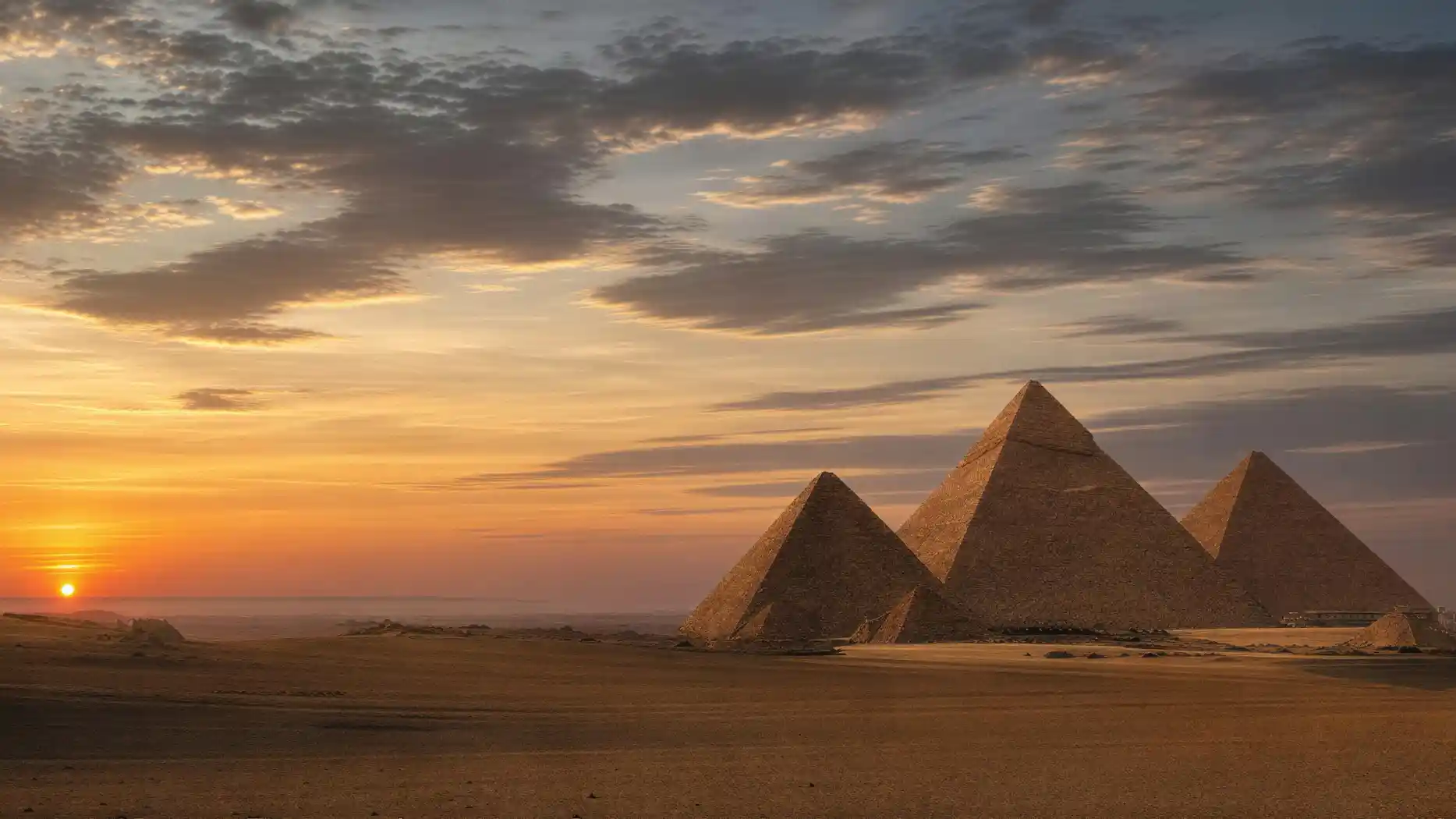
How big is the largest pyramid of Giza? The short answer: 146.6 meters high, 230.3 meters per side, and about 5.3 hectares of base area.
The longer answer is more interesting because it explains why different sources give slightly different figures and which of these are actually measured. A significant portion of the common figures are not measured but calculated.
What can be measured is what is there: the current height, the base sides, and the angles at the corners. Everything that is missing must be calculated: the original height, because the top is gone; the volume, because it depends on the original height; and the mass, because it depends on the volume and an assumed density.
This chain is the reason for the discrepancies. A small uncertainty in the reconstructed height propagates into the volume and from there into the mass. In the end, you get a figure in millions of tons based on an assumption about a missing capstone.
Another reason for differing figures is the reference point. Some sources give the height from the current ground level, others from the original base plate, which is partly buried under sand. For the base side, some measure the edge of the casing stones, others the edge of the core masonry visible today, and the difference is over a meter. When comparing two figures, you must first check what they refer to.
This page gives the figures for all three structures and explains how each is derived.
- Original height, largest pyramid
- 146.6 m, calculated
- Height today
- approx. 138.8 m, measured
- Base side
- approx. 230.3 m, measured
- Base area
- approx. 5.3 hectares, equivalent to about seven football pitches
- Inclination
- 51 degrees 50 minutes, derived from base side and height
- Volume
- approx. 2.6 million m³, calculated
- Mass
- just under 6 million tons, estimated
Better Surveyed Than Most New Buildings
The dimensions of the Great Pyramid of Khufu are better known than those of most modern structures, thanks to over a hundred years of surveying history.
The first survey by modern standards dates back to the early 1880s. It gave a base side of 230.3475 meters, with a stated margin of error of three centimeters. Later surveys in the 20th century confirmed and refined this; today, the base side is given as about 230.33 meters, with an uncertainty of around one centimeter.
It is worth realizing what this means. Over a length of 230 meters, the four sides deviate from each other by a few centimeters. That is an accuracy of less than one ten-thousandth of a percent, achieved with measuring tapes, plumb bobs, and sightlines.
This precision is also why the structures are still being measured today. A mathematical study of the design calculates what simple ratios might underlie the dimensions, and such work is only possible because the baseline data are so accurate.
The contrast with height is remarkable. The base side can be measured because it is there. The original height cannot be measured because the top courses are missing; it is calculated back from the base side and the angle. Thus, the most famous number of this structure is the least direct, while the most unremarkable, the base side, is the most reliable.
The same applies to the two neighboring structures, albeit with slightly larger tolerances. There, too, deviations are in the range of centimeters, not meters.
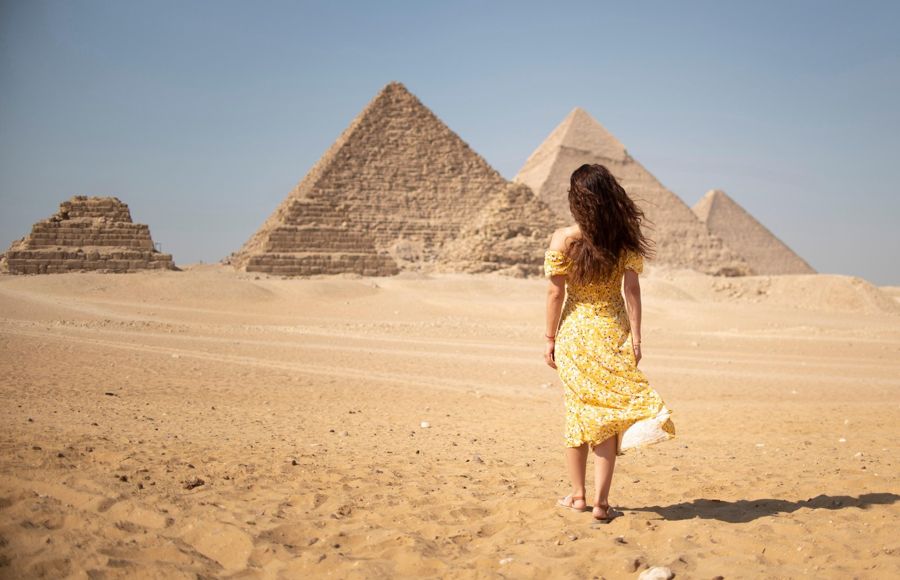
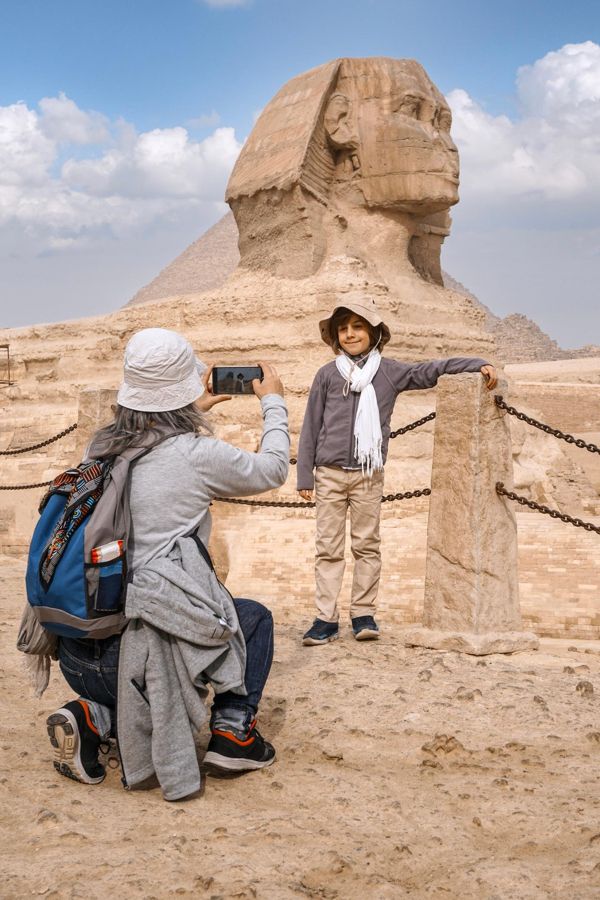
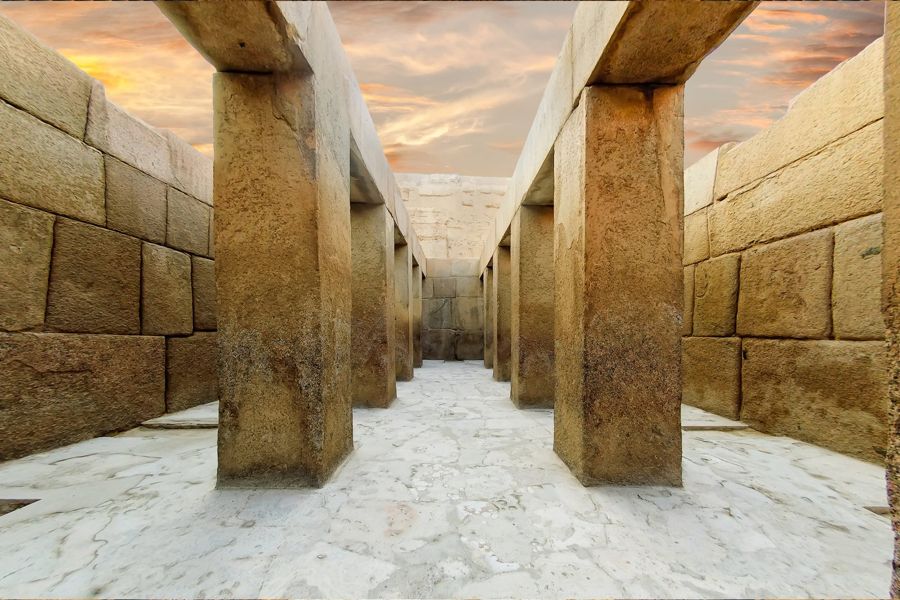
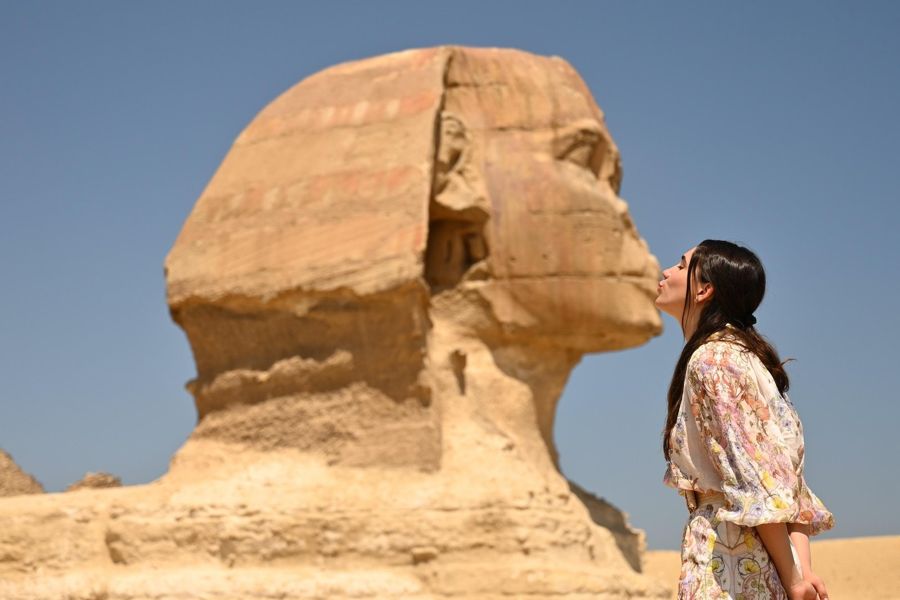

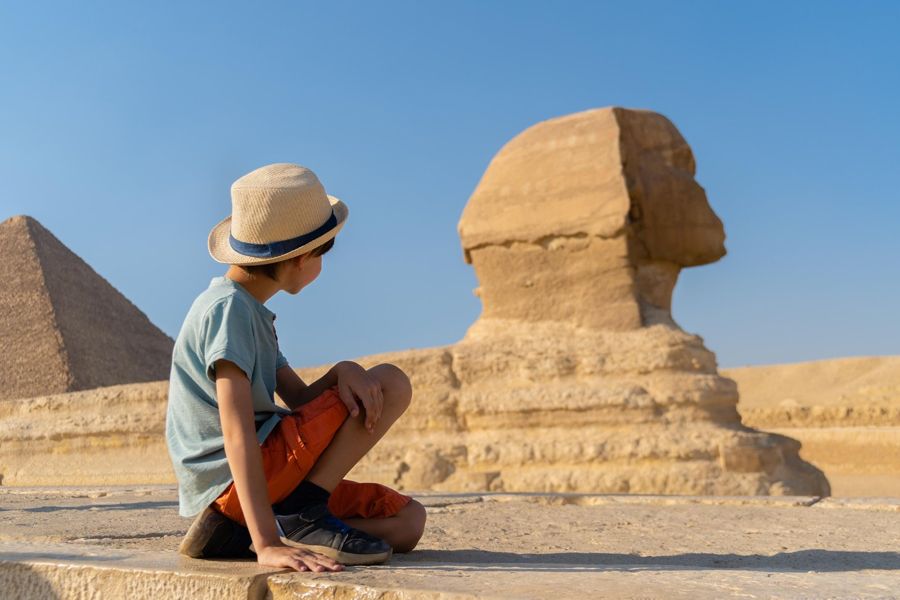
Half-day tour to the Pyramids of Giza and the Sphinx
- The scale only becomes apparent when walking around, not from a distance
- A licensed guide knows the spots where the proportions are right
- Plateau entrance, German-speaking guide, and hotel pickup are included
- Free cancellation up to 24 hours before start
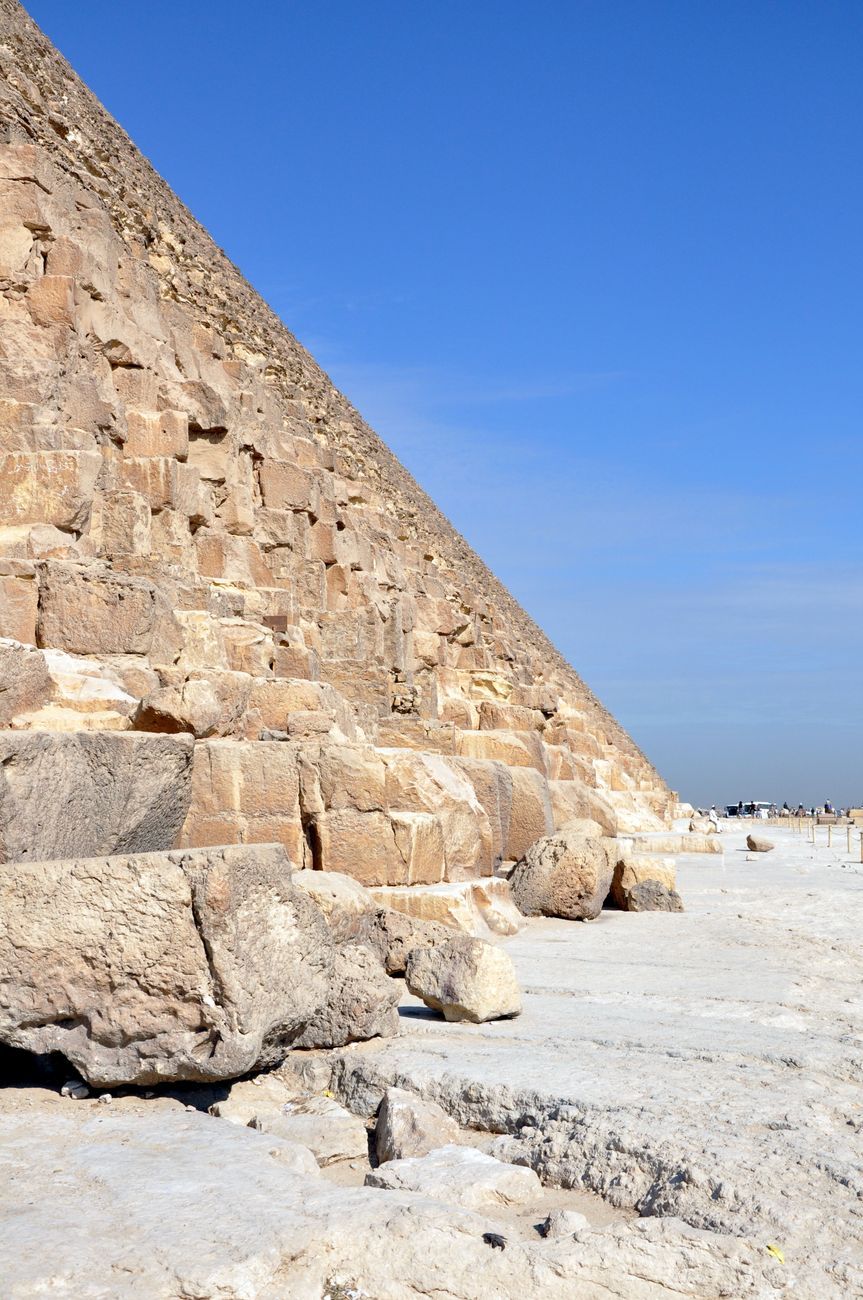
How Wide Are the Pyramids?
How wide are the pyramids of Giza when you mean the extent at ground level rather than the height?
The base side of the largest measures about 230 meters, the middle one about 215, and the smallest about 102 by 105 meters. The latter is the only one that is not exactly square, which is not surprising for an unfinished structure.
The base area of the pyramids of Giza is obtained by squaring the base side. For the largest, that is about 53,000 square meters, or just over five hectares, or about seven football pitches. For the middle one, about 46,000, and for the smallest, about 10,700 square meters.
For comparison: a football pitch measures about 7,000 square meters. So, the base area of the largest pyramid could fit just over seven of them, the middle one just over six, and the smallest one and a half. This conversion is not entirely accurate because a football pitch is rectangular and a pyramid base is square, but it works as a sense of scale.
This number is the most tangible of all because you can experience it on foot. Walking around the largest pyramid measures just over 900 meters and takes about 20 minutes with photo stops. If you walk around two structures, you are out for an hour, and on a site without shade, that is a serious distance.
The official description of the structure also gives the common dimensions in rounded form, which fits the evidence: only the base side can meaningfully be given to the nearest centimeter.
Height in Relation
meters above ground
Height is the least meaningful figure. Church towers are taller but contain a fraction of the material. Volume is what matters.
Volume and Weight Are Estimates
The volume of the Great Pyramid of Khufu in cubic meters is usually given as about 2.6 million, and this figure deserves an explanation.
It is calculated from the base area and height using the formula for a pyramid: one-third times base area times height. With 53,000 square meters and 146.6 meters, that gives just over 2.58 million cubic meters. For the middle pyramid, the value is about 2.2 million, and for the smallest, about 0.24 million.
Two caveats apply. First, the calculation is based on the reconstructed original height, not the current one. Second, the structure is not a solid block of stone: at the very bottom, there is a natural rock core that was never removed and whose extent is unknown. The actual volume of stone is therefore lower than calculated, and by how much is an open question.
When it comes to the weight of the pyramids of Giza, a third uncertainty arises. The mass is estimated from the volume using the density of the rock, and limestone varies considerably in this respect. The common figure of just under six million tons for the largest structure is therefore an order of magnitude, not a measurement. Nothing has ever been weighed.
The same caution applies to the common figure of 2.3 million blocks. That, too, is calculated, namely the estimated volume divided by an assumed average block volume. Since the blocks vary considerably in size and the rock core reduces the total volume, the actual number could be significantly lower. No one has ever counted them.
Anyone passing on one of these figures should therefore round it. A figure like 5,955,000 tons suggests a precision that does not exist.
Plateau entrance as a QR code on your phone
For walking around the structures and the paths between them, the basic ticket is sufficient. Only the interiors cost extra.
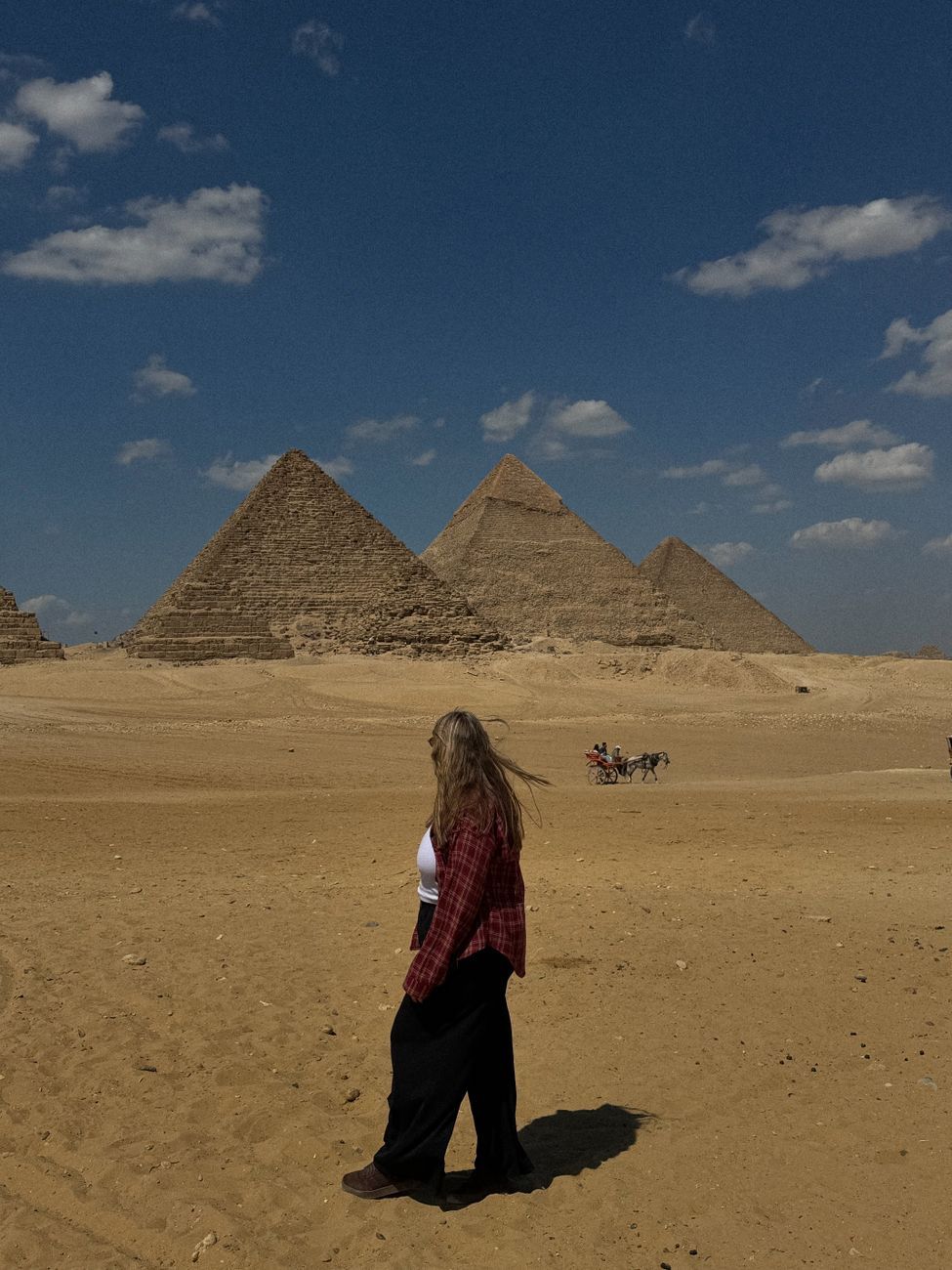
Why Dimensions Fail to Convey Size
Finally, the point where dimensions fail in everyday life: they do not convey size.
One hundred and forty-six meters is a number that everyone can read but no one can feel. Comparing it to a church tower helps only to a limited extent, because a tower is slender and a pyramid is massive. What makes the difference is not the height but the area on which that height stands.
On site, a different approach works. Stand at a corner and look along the edge. It disappears after 230 meters, and that distance holds the real information. Then look up from the same corner: the courses get smaller towards the top, and the highest ones are barely distinguishable with the naked eye.
The distances on the site are also part of the size question. Between the largest and the smallest pyramid, it is just over 700 meters as the crow flies, and the path leads over unpaved ground. If you want to walk around all three structures and between them, you will cover several kilometers. That is why there is a shuttle service on the site, and it also explains why photos regularly make the distances seem shorter than they are.
The second useful approach is your own body. The lowest stone courses reach an adult about hip height, sometimes higher. There are about 200 such courses stacked on top of each other. You can do this calculation in your head, and it works better than any meter reading.
One final note for anyone passing on figures: always state what they refer to. The figure 146.6 meters without the addition "originally" is misleading because the structure has not been that tall for centuries. The same applies to volume and mass, which, without any indication of their derivation, look like measured values. These additions cost three words and prevent half of the misunderstandings in circulation.
The entire area has been protected as a World Heritage Site since 1979, listed as a continuous landscape from Giza to Dahshur.
Convert the dimensions to your own scale
The base area is measured, the volume is calculated. Results for volume are therefore approximations.
Frequently asked questions
How big is the Great Pyramid of Khufu?
Originally 146.6 meters high with a base side of about 230.3 meters, today about 138.8 meters. The base area is about 5.3 hectares.
Which figures are measured?
The current height, the base sides, and the angles. The original height, volume, and mass are calculated or estimated from these.
Why do sources give different figures?
Because they use different baseline values and rounding. For the base side, the differences are in the centimeter range; for mass, they can be hundreds of thousands of tons.
How long does it take to walk around?
The largest pyramid has a circumference of just over 900 meters. With photo stops, that is about 20 minutes, without shade.
How heavy are the individual blocks?
On average, about two and a half tons. Individual pieces weigh significantly more; the granite beams above the burial chamber weigh several dozen tons.
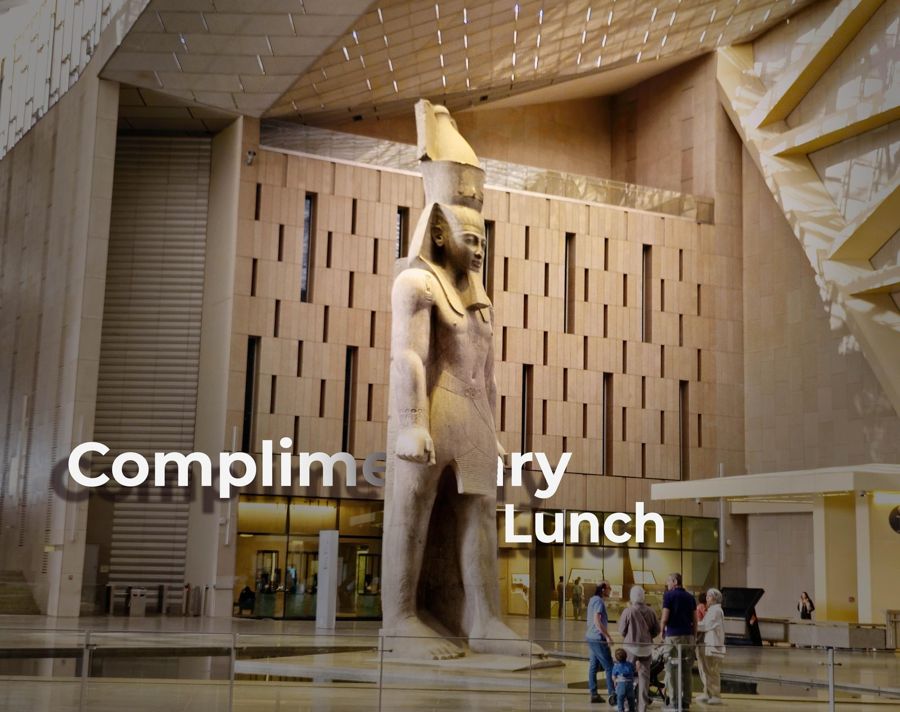

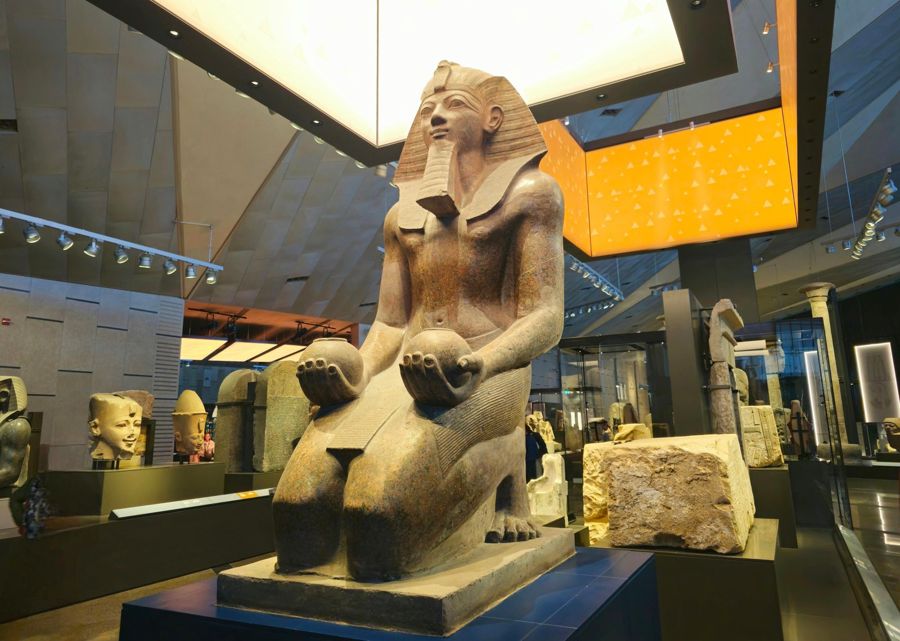
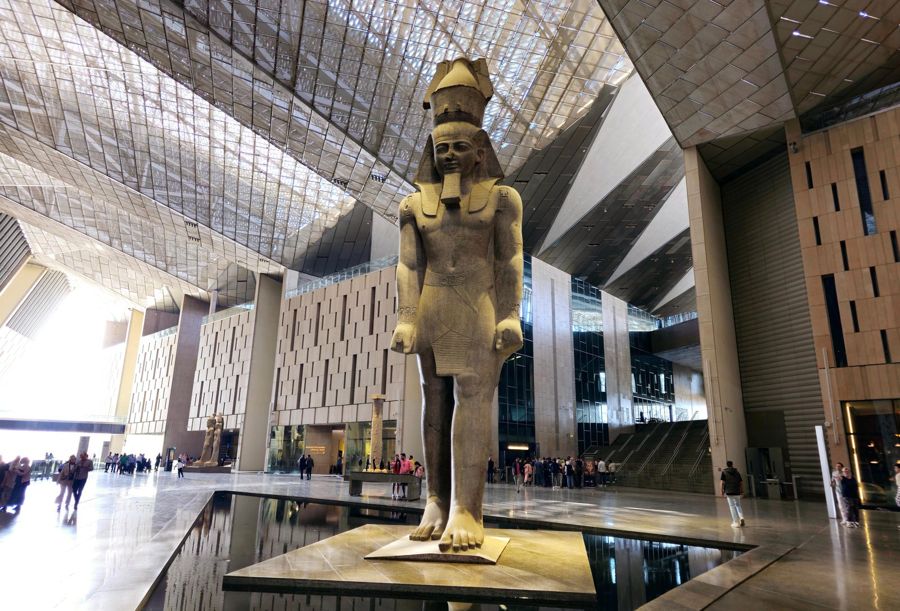
Day trip to the Grand Egyptian Museum and the plateau
- In the museum, models and artifacts make the scales comprehensible
- Plateau and museum in one day, without having to organize two transfers yourself
- Entrance fees, German-speaking guide, pickup, and lunch are included
- Free cancellation up to 24 hours before start