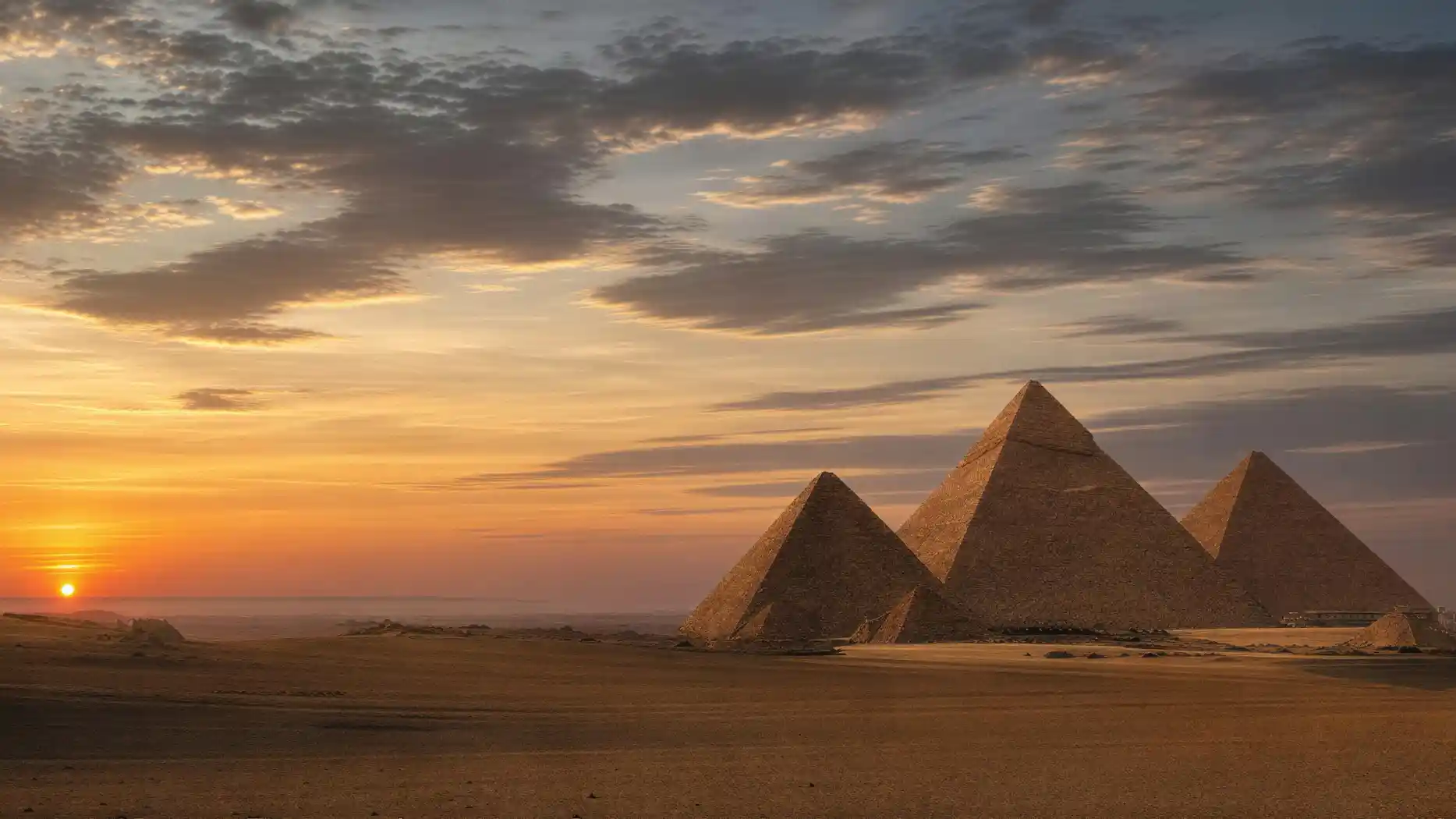
There are three answers to this question, depending on which names are meant.
The common German designations are Cheops Pyramid, Chephren Pyramid, and Mykerinos Pyramid. These names are Greek. They come from the rendering of Egyptian royal names by ancient authors and entered European languages via Latin.
The Egyptian names of the same kings sound different. If you search for Khufu, Khafre, and Menkaure, you are looking for the same three people, just in the form commonly used in academic literature. Cheops corresponds to Khufu, Chephren to Khafre, and Mykerinos to Menkaure.
And then there is a third level that is almost always missing: The structures themselves had their own names. They were not named after their builders but had a designation that contained a statement. These names have been handed down, and they are the most interesting answer to the question.
Three structures, three levels of naming
The northeastern, largest
German: Cheops Pyramid, Egyptian: Pyramid of Khufu.
- Good for
- Its own name was Achet-Chufu, roughly translated as 'Horizon of Khufu'.
- Watch out
- In Egyptian thought, the horizon is the place where the sun changes between worlds. The name thus describes a function, not ownership.
The middle one
German: Chephren Pyramid, Egyptian: Pyramid of Khafre.
- Good for
- Its own name was Wer-Chafre, translated as 'Khafre is great'.
- Watch out
- A statement about the king, not about the structure. Such names were programmatic, not descriptive.
The southwestern, smallest
German: Mykerinos Pyramid, Egyptian: Pyramid of Menkaure.
- Good for
- Its own name was Netjer-er-Menkaure, translated as 'Menkaure is divine'.
- Watch out
- The most modest structure bears the most far-reaching name. There was apparently no connection between size and claim.
Each pyramid had its own name
These proper names are not a curiosity but the rule. Every Egyptian royal pyramid had one, and the names follow recognizable patterns: they name the king and make a claim about him, or they describe the place as a transition.
They are not handed down through inscriptions on the structures themselves, because there are none. They appear in administrative texts, in titles of priests and officials, and in tomb inscriptions from the surrounding area. Whoever was responsible for the cult at a particular complex carried that in their title, and the name of the structure appears there.
The official description of the site uses the common forms, while the proper names of the structures are mainly found in academic literature. They are too unwieldy for a sign on site, but they are revealing for understanding the complex.
Notable is what does not appear in any of these names: the word pyramid. That too is Greek and was only later applied to this building form.
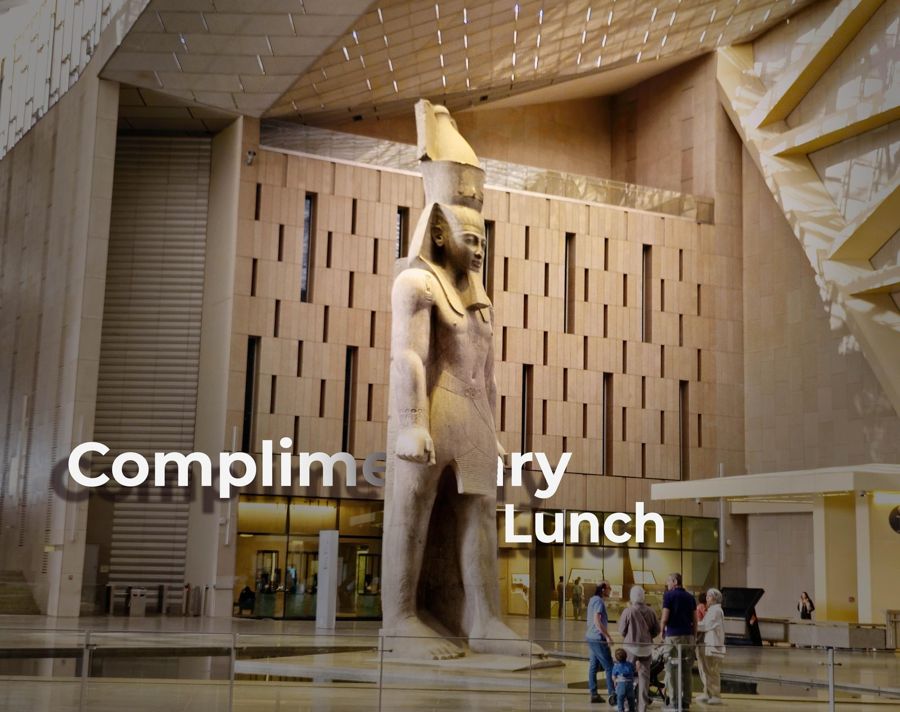
Day tour to the Grand Egyptian Museum and the plateau
The inscriptions from which the names come are in the museum. On the plateau itself, there are none on the structures.
Why the Greek forms prevailed
Why the Greek forms prevailed is quickly explained: Europe got to know these structures through Greek and Roman authors, not through Egyptian sources.
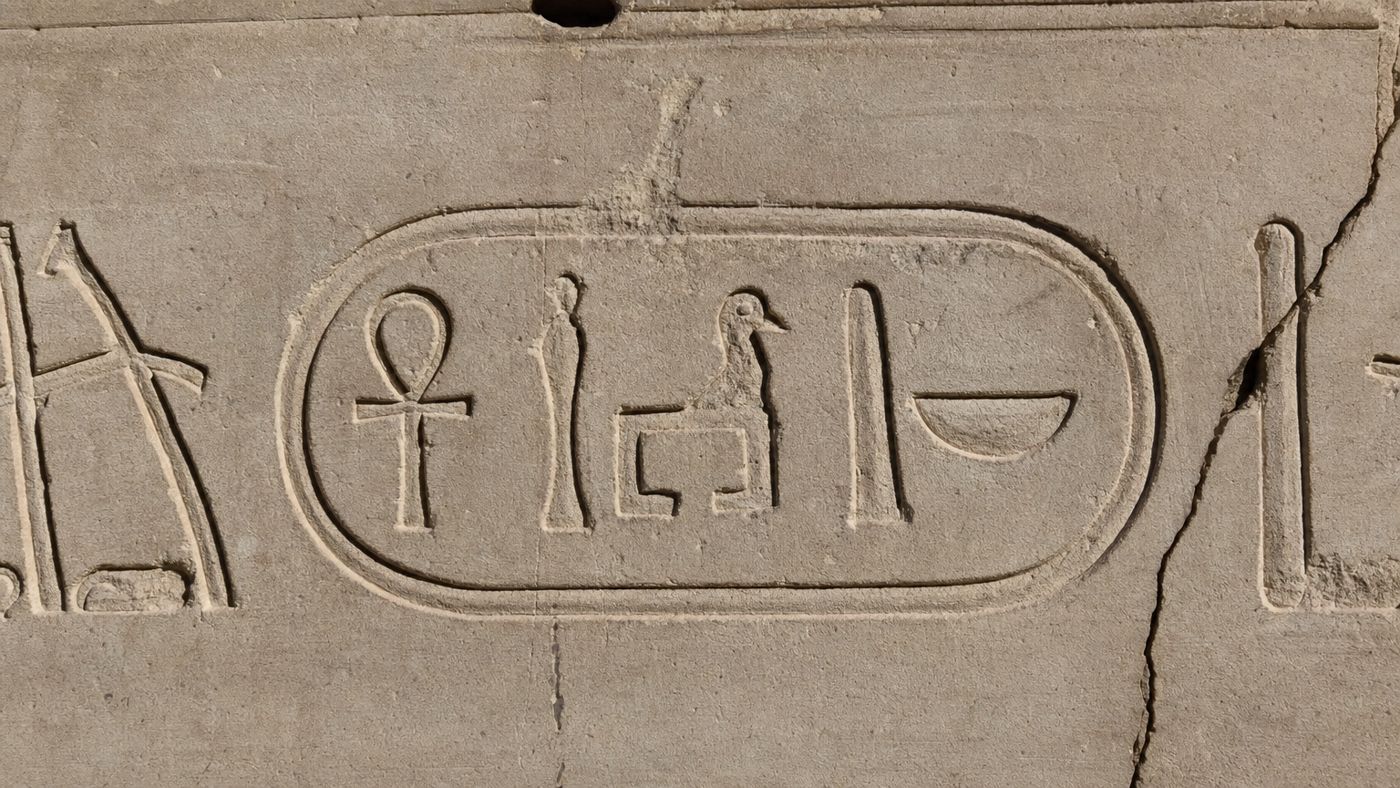
When hieroglyphs were deciphered in the 19th century and the Egyptian name forms became readable again, the Greek ones had long been in all the books. They therefore remained in common usage, while the academic world increasingly switched to the Egyptian forms. Both forms are still correct today.
In practice, this means: In travel guides and on signs, you will find Cheops, in excavation reports Khufu. The transliterations also vary because Egyptian did not write vowels; Chafre, Chefren, and Khafra refer to the same person. The digital excavation archive of the plateau accordingly lists the structures under their Egyptian designations and numbers.
The same pattern applies to the Sphinx in an intensified form. Its common name is Greek and comes from a completely different mythological cycle. The Egyptians of the New Kingdom called the figure Hor-em-achet, roughly translated as 'Horus in the horizon'. What it was called at the time of its construction is not recorded. Here too, the well-known designation is thus a foreign designation, given long after its creation.
If you compare two sources and come across different names, you are almost never dealing with different people, but with different conventions.
Frequently asked questions
What are the three pyramids of Giza called?
In German: Cheops, Chephren, and Mykerinos Pyramid. In academic literature, after the Egyptian royal names: Khufu, Khafre, and Menkaure.
Did the structures have their own names?
Yes. Achet-Chufu, 'Horizon of Khufu'. Wer-Chafre, 'Khafre is great'. Netjer-er-Menkaure, 'Menkaure is divine'.
Where do the Greek names come from?
From the rendering of Egyptian royal names by ancient authors. They came into European languages via Latin.
Why are there different spellings?
Because Egyptian did not write vowels. Chafre, Chefren, and Khafra are transliterations of the same consonant sequence.
How do we know the names of the structures?
From administrative texts and from the titles of priests and officials who were responsible for the cult at a particular complex.