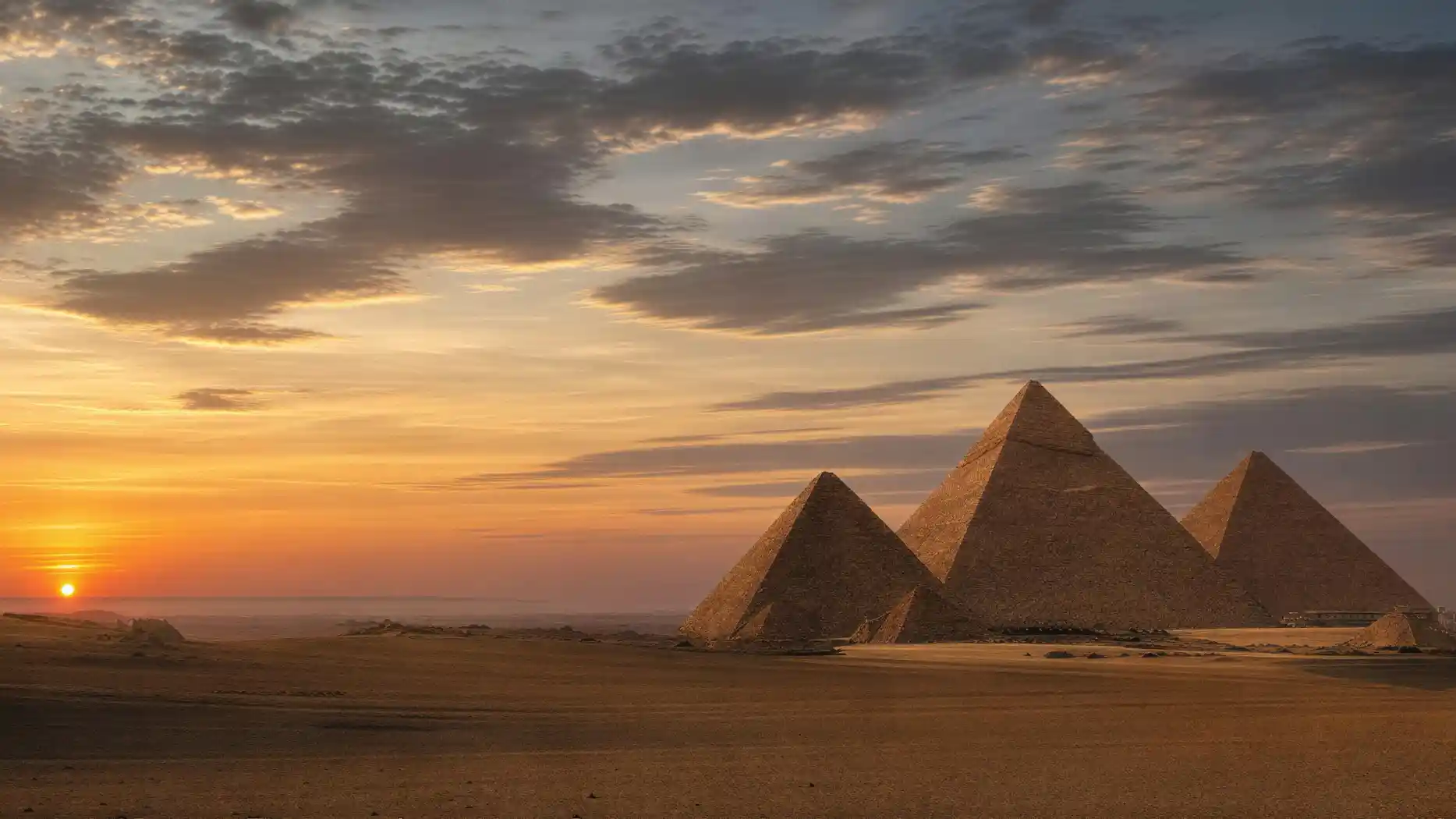
The pronunciation of Giza is simpler than the spelling suggests, and almost everyone makes the same mistake.
The name is pronounced with a long i and a soft s: roughly GEE-zeh, with the stress on the first syllable. The z in the German spelling is not a German z. It does not stand for the sound ts as in Zange, but for a voiced s as in Rose. If you say Gitseh, you will be understood, but you will give yourself away immediately.
The g at the beginning is hard, as in gehen, not soft as in the English gin. This too is not arbitrary; there is a solid linguistic reason, which is given further below.
And one more thing that many people only notice on second glance: The word appears on many tables in Germany. A brand of rolling papers has borne this name since 1920, and its logo shows the Sphinx with a pyramid behind it. For a large part of the German-speaking audience, Giza is therefore first a paper booklet and only then a place.
Guided day with German-speaking accompaniment
Hearing the names pronounced correctly once is the fastest way to remember them; a tour also provides the Arabic forms that are not on any map.
Four spellings of the same place
Which form is common where, and how each sounds.
| Spelling | Common where | Pronounced roughly |
|---|---|---|
| Gizeh | the current standard German form | GEE-zeh, soft s |
| Giseh | older German literature, 19th and early 20th century | identical, just written more unambiguously |
| Giza | English and international | GEE-zah, also with soft s |
| al-Dschiza, el-Giza | transliterations from Arabic | el-GEE-zah, with hard g in Egyptian usage |
- Common where
- the current standard German form
- Pronounced roughly
- GEE-zeh, soft s
- Common where
- older German literature, 19th and early 20th century
- Pronounced roughly
- identical, just written more unambiguously
- Common where
- English and international
- Pronounced roughly
- GEE-zah, also with soft s
- Common where
- transliterations from Arabic
- Pronounced roughly
- el-GEE-zah, with hard g in Egyptian usage
All four mean the same place. In German prose, Gizeh is the usual choice; in academic literature, Giseh is also encountered.
Why the g is pronounced hard
The reason the g is hard leads to a peculiarity of Egyptian Arabic, and it is the most interesting part of this page.
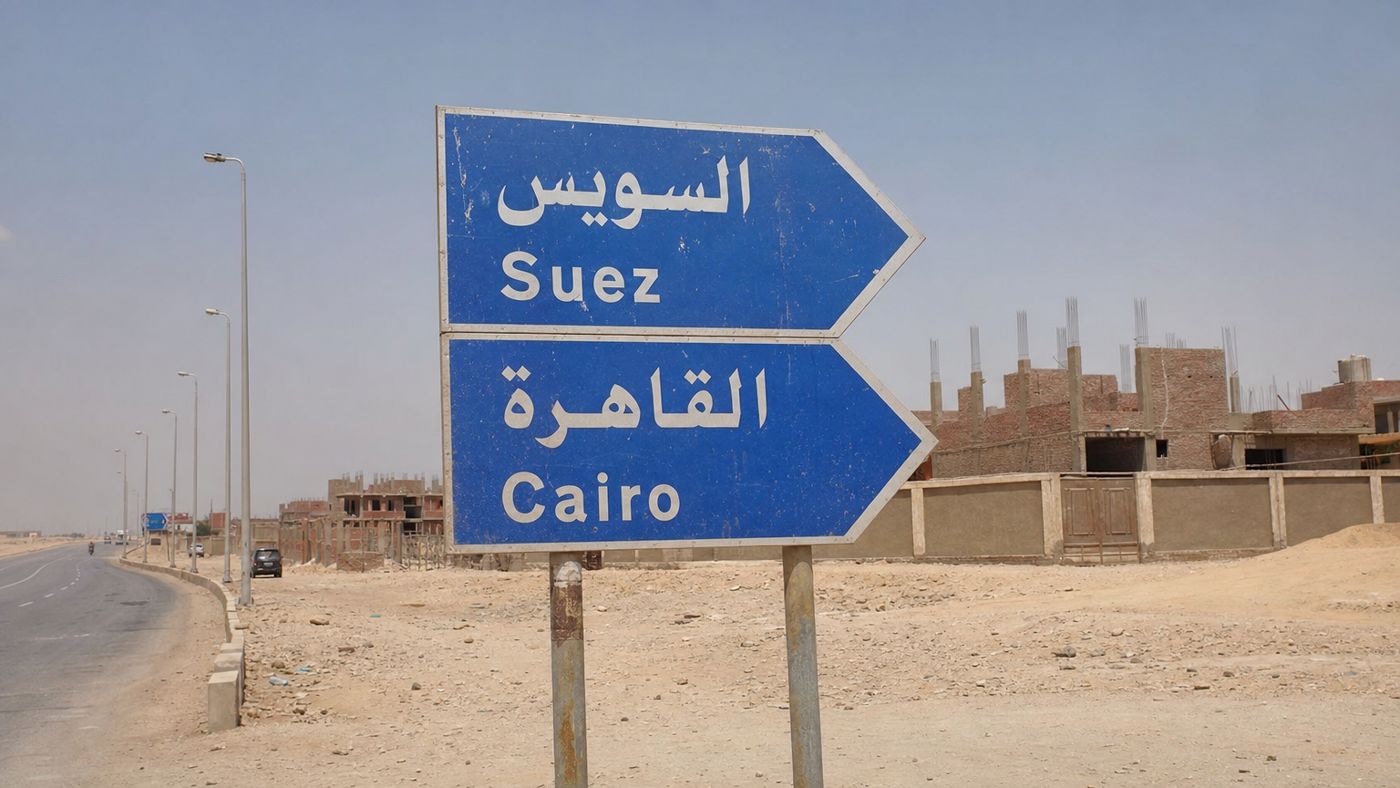
The Arabic letter dschim is pronounced in Standard Arabic and in most dialects as a soft dsch, roughly like the g in journal. In Egypt, however, and especially in the region around the capital, the same letter sounds like a hard g. That is why the place is called el-Giza there and not el-Dschiza, and that is why the form with the hard g has prevailed in European languages: it comes from the mouths of the people on the ground.
From a historical linguistic perspective, this is not a special path, quite the opposite. Much suggests that the hard g is the older pronunciation and the soft variant is a later development. The Egyptian form would then not have lost anything, but retained something.
How to spell it in German
Regarding the spelling in German, there are two questions that regularly arise.
The first concerns the place name itself. The usual form, recorded in dictionaries, is Gizeh; the dictionary form also lists Giseh and Gise as variants. All are readable, but if you want to choose one, take Gizeh.
The second is the spelling of the Great Pyramid of Giza, and here the rule is different from English. Because the adjective is part of the proper name, it is capitalized: die Große Pyramide, der Große Sphinx. If the adjective is used descriptively, it remains lowercase, as in the sentence that this is the largest pyramid in the complex. Compounds with the place name get a hyphen: Gizeh-Plateau, Gizeh-Pyramiden.
For the individual structures, the German names of the kings are common, i.e., Cheops-Pyramide, Chephren-Pyramide, and Mykerinos-Pyramide. These are the Greek name forms; the Egyptian ones are Chufu, Chaefre, and Menkaure, which appear mainly in academic literature.
Two places, three hundred fifty kilometers apart
There remains a confusion that is surprisingly often searched for. Gizeh or Gaza is not a question of spelling, but a question of two different places.
Gizeh lies in Egypt, directly on the southwestern edge of the capital's metropolitan area, and is the city at the foot of the plateau. Gaza lies about three hundred fifty kilometers further northeast, beyond the Sinai Peninsula, and does not belong to Egypt. The names also have nothing to do with each other: they derive from different Arabic roots and sound distinctly different in Arabic than in European transliterations.
The similarity thus only arises in our spelling, and it persists stubbornly because both names are short and begin with G. If you are talking about the pyramids, you mean Gizeh.
Frequently asked questions
How do you pronounce Gizeh?
Approximately GEE-zeh, with a long i, hard g, and soft s. The z does not stand for the ts sound.
Is it Gizeh or Giza?
Both mean the same place. Gizeh is the German form, Giza the English and international one.
Why is the g pronounced hard?
Because the Arabic letter dschim sounds like a hard g in Egyptian usage, unlike in Standard Arabic and in most other dialects.
Do you write Große Pyramide with a capital letter?
Yes, if it is meant as a proper name. Used descriptively, the adjective remains lowercase.
Is Gizeh the same as Gaza?
No. Two different places, about three hundred fifty kilometers apart, in different areas and with different origins of the names.