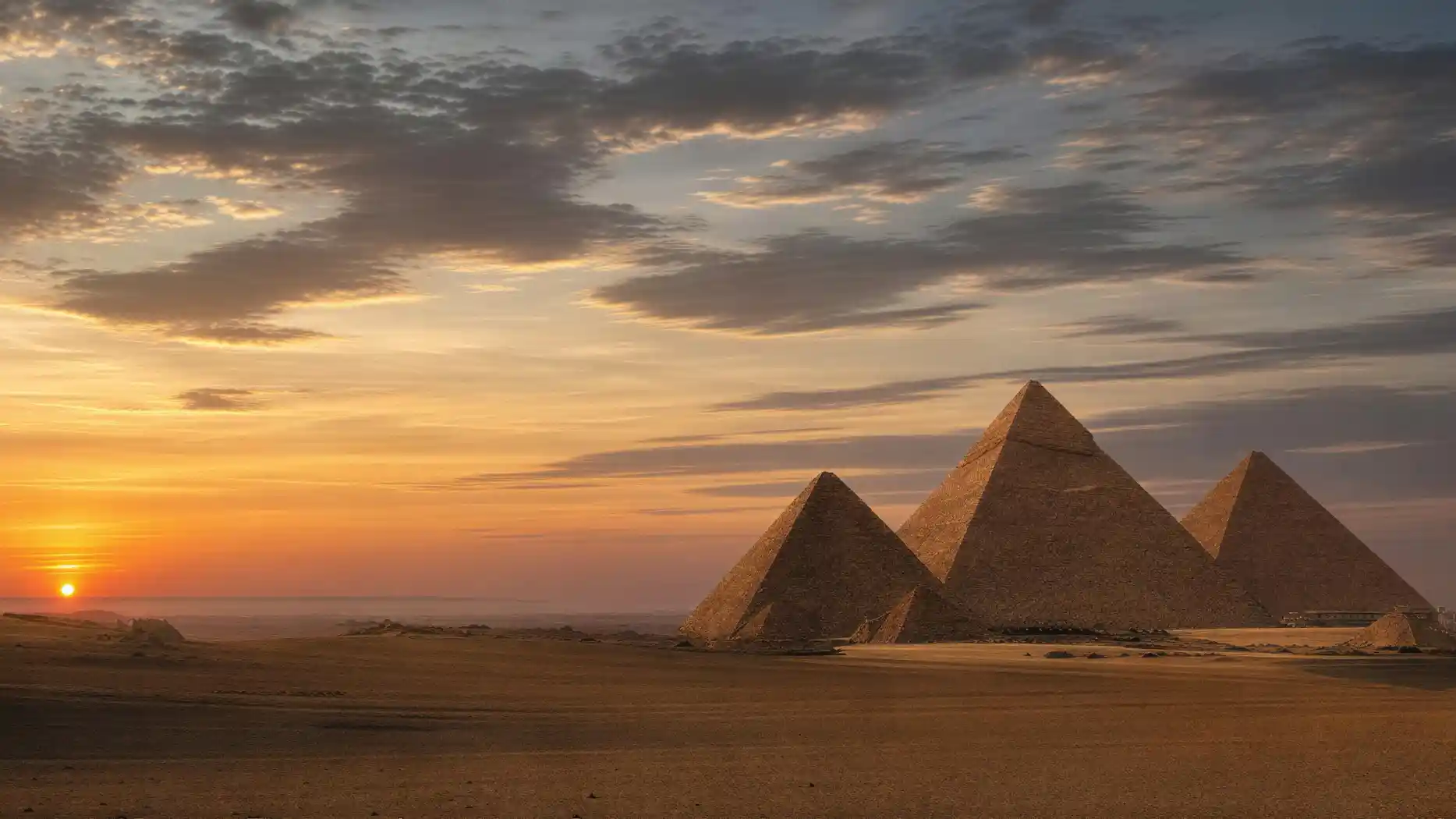
In the summer of 2026, a story went around the world: beneath the Giza plateau lay a second sphinx, roughly the size of the famous one, undiscovered until now, revealed by satellite radar.
The story came from two Italian researchers, radar specialist Filippo Biondi and his co-author Corrado Malanga. It was presented in June 2026 at a public presentation, not in a peer-reviewed journal. This is already the third announcement from this working group about the same site.
Six weeks later, something happened that changed the situation. On August 10, 2026, the journal that had published the underlying method in 2022 retracted that work. The editors cited serious methodological flaws and statistical errors that undermine the conclusions. The authors dispute this decision.
Thus, the claim now stands not only without its own publication but also without the foundational work it relied on for its method.
A note on fairness is appropriate here. The following is not about accusing anyone. Both authors are recognized experts in radar analysis, and the question of whether something unknown lies beneath a site inhabited for millennia is entirely legitimate. The only thing to assess is whether the evidence presented holds up. This can be examined without speculating about intentions.
This page puts this into context without prematurely dismissing the question. Because whether something still lies beneath the sands of Giza is a serious question. Whether this method can answer it is another.
How the Situation Developed
- October 2022
A journal publishes a paper by the two authors describing a radar method for investigating the Great Pyramid of Khufu.
- March 2025
At a press conference, extensive structures are claimed beneath the middle pyramid, including shafts several hundred meters deep. No publication accompanies this.
- 2025
Experts and the Egyptian antiquities administration publicly contradict the claims. Independent reviews find no sound basis.
- June 2026
Presentation of radar images said to show a second, buried sphinx. Again as a presentation, not a publication.
- August 10, 2026
The journal retracts the 2022 paper. Reason: serious methodological flaws and statistical errors. The authors dispute this.
The order is important: the retraction does not concern the sphinx claim itself, but the method used to generate it.
What Satellite Radar Can Actually Do
To put this in context, you need to know what the method used actually does.
Satellite radar scans the Earth's surface with microwaves. From the satellite's movement and the travel time of the reflected signals, an image is created. The method is established and routinely used, for example, to measure ground movements in the millimeter range, map floods, or monitor subsidence over mines. In these applications, it is excellent.
The crucial point is the penetration depth. Microwaves penetrate a few meters into dry sand, less into moist soil, and practically not at all into solid rock. The idea that a satellite could image structures several hundred meters deep contradicts the physics of the method, regardless of how the data is subsequently processed.
The working group relies on a special analysis that is supposed to extract additional information from tiny vibrations of the ground. Exactly this analysis was the subject of the 2022 paper, which has since been retracted. The retraction followed a review initiated by the editors after a reader's tip.
For comparison, it is worth looking at the method that worked at the same site. For the cavities in the Great Pyramid of Khufu, muons from cosmic radiation were counted, with detectors that stood in the structure for months, operated by several institutes with different equipment. Only when three independent measurement series showed the same thing was it published. This effort is why the results hold up.
This does not mean that every result from the group must be wrong. It means that the methodological basis currently cannot be considered verified.
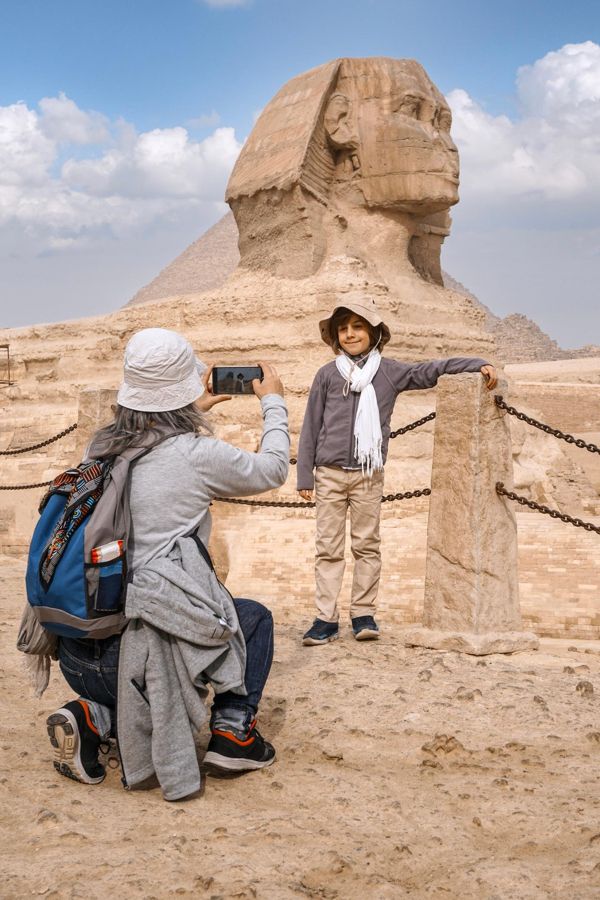
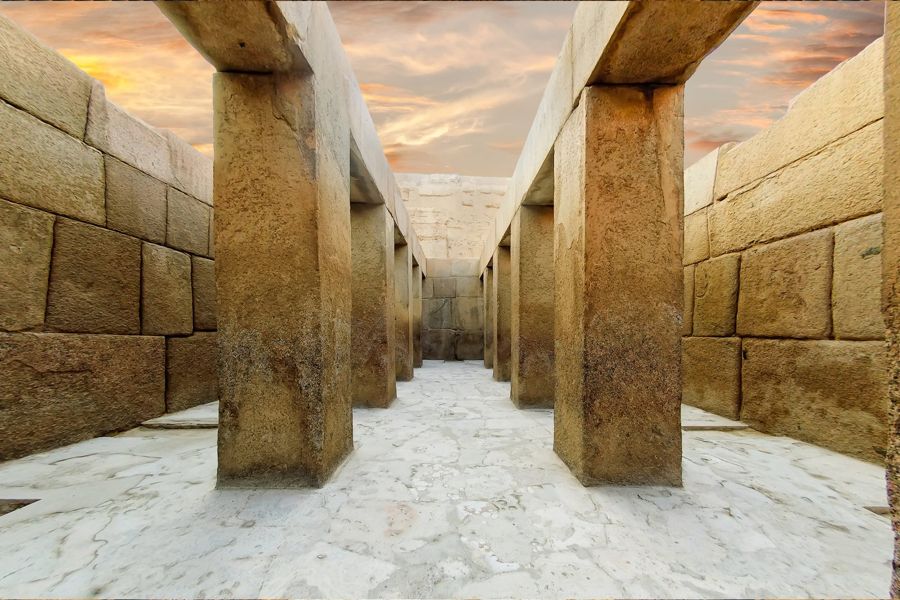
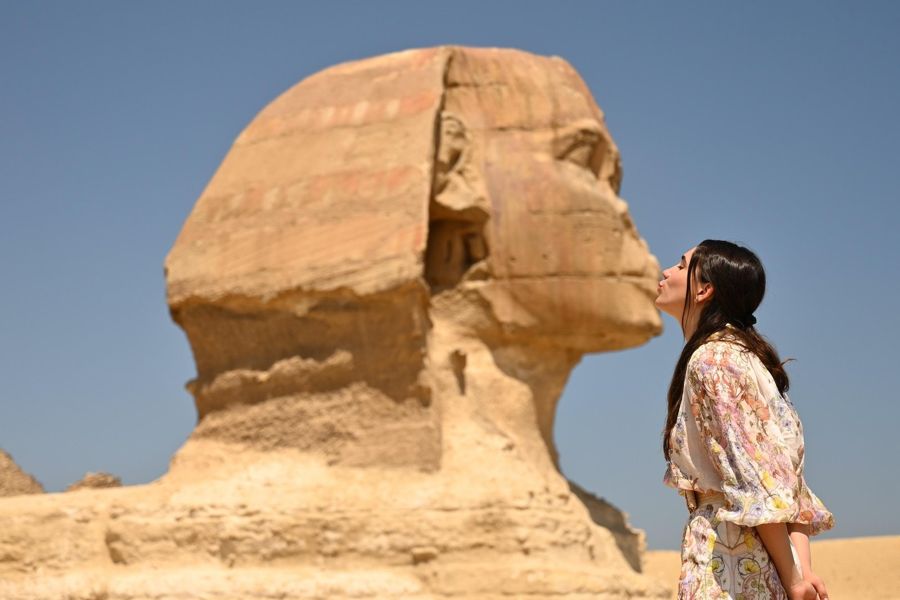

Half-Day Tour to the Pyramids of Giza and the Sphinx
- The Sphinx, its enclosure, and the temple in front are all on the walking route
- A licensed guide explains which areas of the site have actually been excavated
- Plateau entry, German-speaking guide, and hotel pickup are included
- Free cancellation up to 24 hours before start
The Contradiction from the Expert Community
The contradiction from the expert community came quickly and from several directions, and it concerns not the question of whether something could be there, but the analysis.
A frequently cited objection is that in the generated images, structures are selected and others overlooked, without any comprehensible criterion. Those who search for shapes in noisy data will find shapes; the decisive factor is whether it can be determined in advance what counts as a find and what counts as noise. This determination is missing.
The second objection comes from the responsible authority in Egypt. The former antiquities minister publicly stated that the data were neither scientifically recognized nor validly collected, and that there is no basis for structures beneath the middle pyramid. Independent reviews of the 2025 claims came to the same conclusion.
The third point is formal. For none of the three announcements is there a peer-reviewed publication. Presentations were made at press conferences, in interviews, and on their own websites. This is not proof that the results are wrong, but it prevents exactly the scrutiny that would make them credible.
Also noteworthy is the impact history. The retracted paper had been very frequently accessed before its retraction and was cited in countless articles as evidence. A retraction no longer reaches this readership. Posts, videos, and articles that rely on the paper remain online and continue to carry the claim without mentioning the changed status. This is not a criticism of the authors, but a characteristic of the system.
To be fair: The authors consider the retraction unjustified and have disputed it. Such a dispute is not unusual in retractions and does not change the status of the publication.
Would a Second Sphinx Even Be Plausible?
Now the more interesting question, which gets lost in the excitement: Would a second sphinx in Giza even be plausible?
There is a serious argument in favor, and it has nothing to do with radar. Sphinxes frequently appear in pairs in Egypt, as guardian figures on the left and right of an entrance, and entire avenues of them flank temple paths. A single figure is rather the exception. If you consider the building form, you may ask for a counterpart.
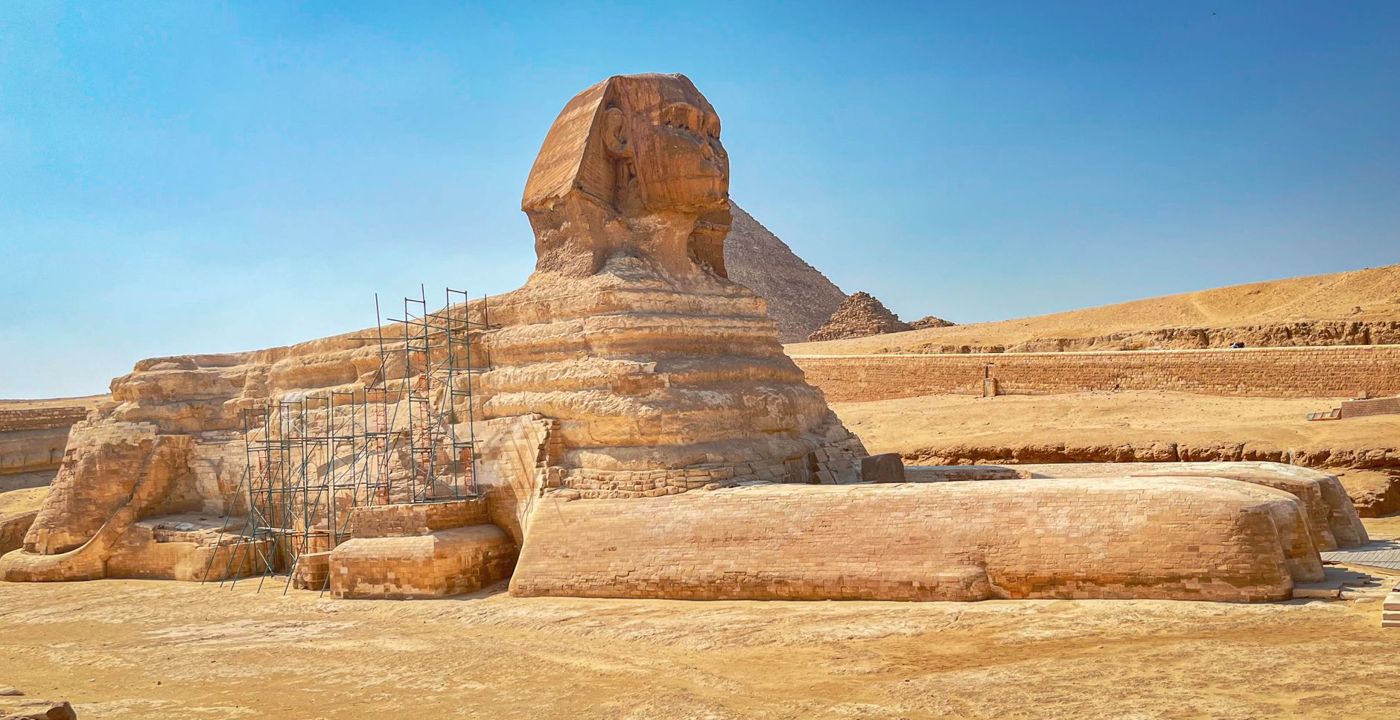
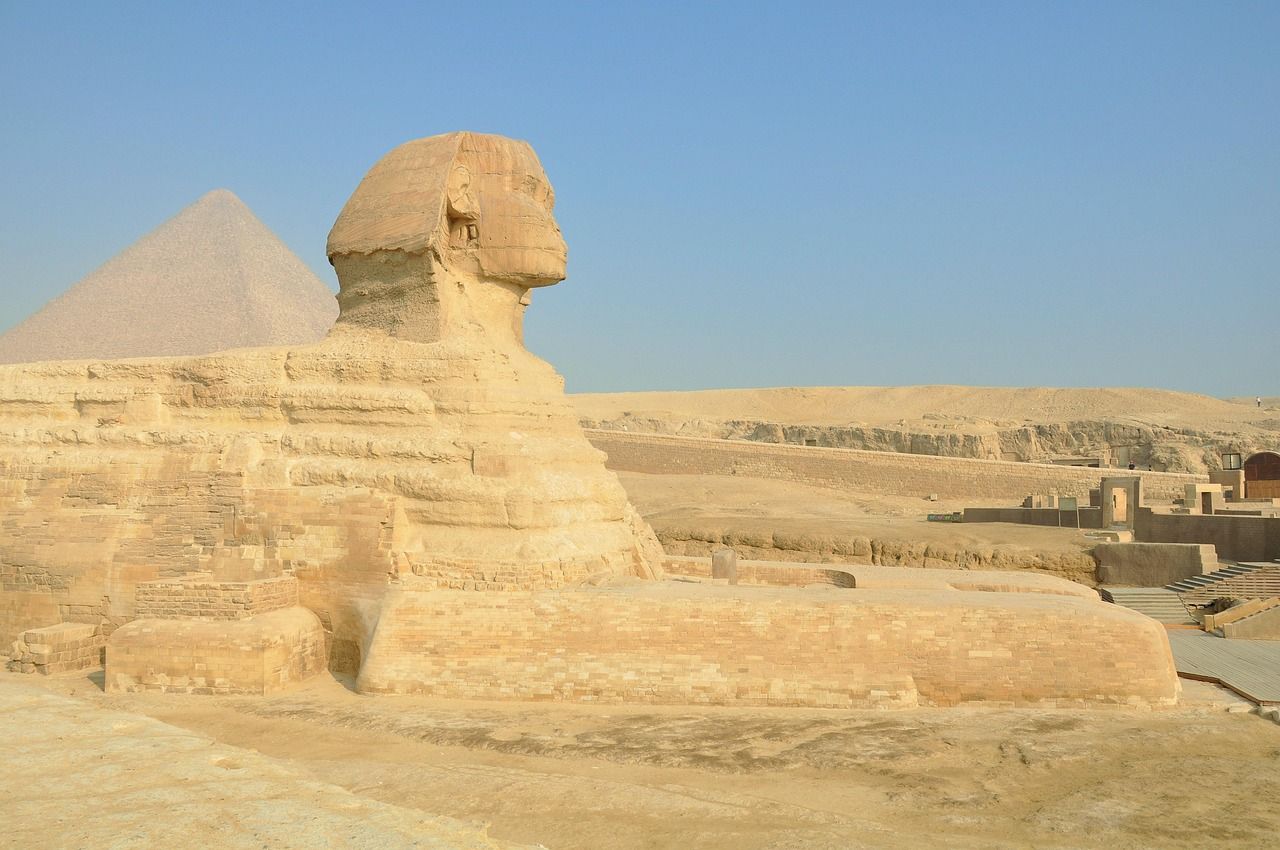
Against a counterpart at this location speaks the geology. The known figure was carved from a rock outcrop that stood exactly at this spot, and the banks from which it is made are documented at its location. A second specimen would have required a second suitable outcrop. The enclosure around it has been cleared and surveyed without anything comparable appearing.
Added to this is a finding argument. The site has been an excavation area for over a hundred years, with probes, drillings, and geophysical measurements in many places. A figure seventy meters long is not a small find that would be overlooked.
Another point speaks against the specific interpretation. The presented images show a shape similar to the known sphinx, in size and outline. Exactly this is a warning sign in image analysis. Those who search for a known shape will find it in noisy data with high probability, because the human eye fills in patterns. What would be credible are features that no one expected, not those that resemble the template.
Nothing is ruled out by this. Large parts of the site are not excavated, and in recent years, unknown cavities have indeed been detected using recognized methods. But only in the Great Pyramid of Khufu, with muons, over months, and published.
How to Assess Such Reports Yourself
- Is there a peer-reviewed publication, or only a presentation and interviews?
- Is the measurement method named, including penetration depth and margin of error?
- Are participating institutes named, or only individuals?
- Has the responsible antiquities authority of the country commented?
- Does the claimed depth match the physics of the stated method?
- Is it reported what was not found, or only what was found?
For Your Visit, This Changes Nothing
For a visit, this changes nothing, and that is exactly the practical information.
There is nothing at the site to see related to this claim. No excavation site, no barrier, no sign. If you go because of the report, you will find the known sphinx in its enclosure and the same surroundings as before.
Instead, what is worth seeing is how real investigation looks there. In several places, excavation cuts are open, with profiles and markings. The difference between an image from a computational operation and an exposed wall is immediately evident on site.
And it is worth keeping the scale in mind. The known, published finds of recent years are a cavity thirty meters long above a gallery and a passage nine meters long behind a facade. Both took years, both were independently verified multiple times, and both are less spectacular than any headline.
One last thing for context: Such reports not only harm accuracy, they also cost attention. While a suspected second sphinx was being discussed, excavations at the workers' settlement were underway at the same site, a passage behind the north facade of the Great Pyramid was inspected with a camera for the first time, and a boat was transferred in pieces to the museum. All three processes are documented, verified, and more important for understanding the site than any radar report. They are much less known.
Those interested in what actually lies beneath the site are better served by excavation reports than by press conferences. They are more boring and last longer.
Frequently asked questions
Is there a second sphinx?
There is no evidence for this. The claim is based on radar analyses that have not been peer-reviewed, and the underlying methodological work was retracted in August 2026.
Can satellite radar see underground?
Only a few meters, and only in dry soil. For depths of hundreds of meters, the method is physically unsuitable.
Why was the 2022 paper retracted?
The editors cite serious methodological flaws and statistical errors after a review. The authors dispute this decision.
Would a counterpart be conceivable in principle?
As a building form, yes, because sphinxes often appear in pairs. At the specific location, however, there is no second suitable rock outcrop and no excavation evidence.
What has actually been found recently?
In the Great Pyramid of Khufu, two cavities, detected with muon measurements and ground-penetrating radar and published in journals. Nothing comparable at the sphinx itself.
Plateau entry as a QR code on your phone
The Sphinx, its enclosure, and the open excavation areas around are within the regular ticket area. There is no find site related to the radar report.