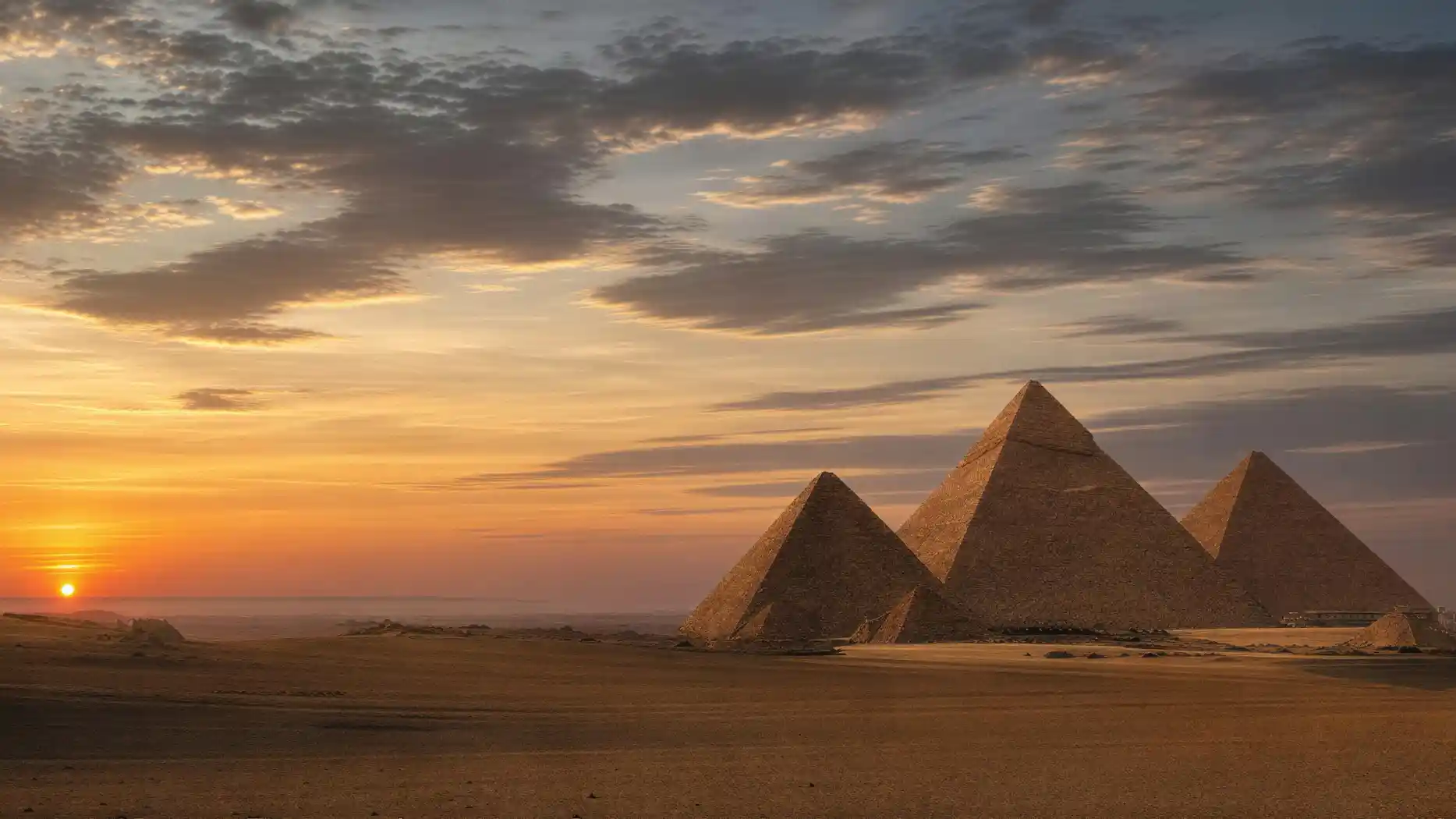
Historic photographs of Giza are remarkable for two reasons, and the first is a matter of timing.
The daguerreotype process was publicly introduced in August 1839. Already in October of the same year, a French group traveled to Egypt, and in November the first documented photograph of the country was taken there. Between the invention of photography and its application at this site, the gap was not decades but weeks.
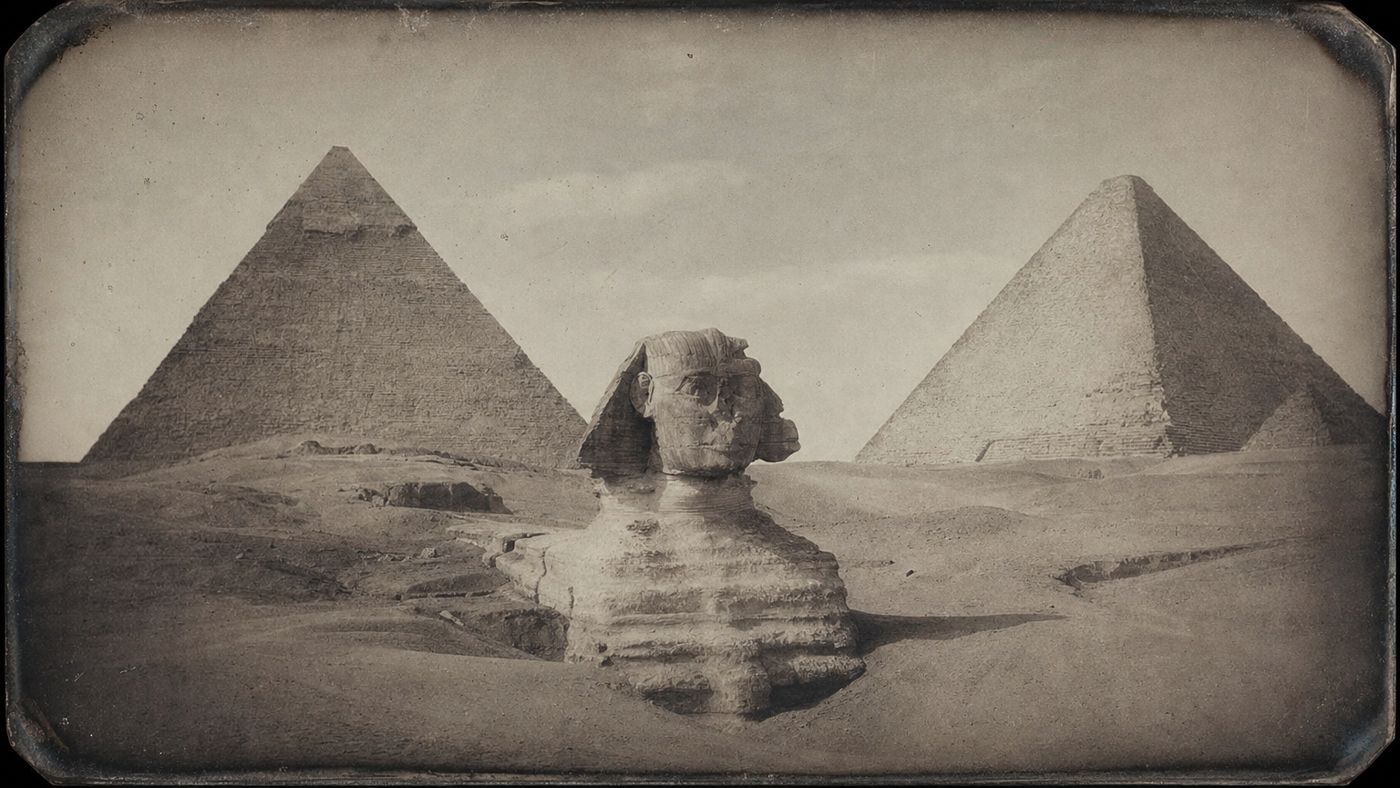
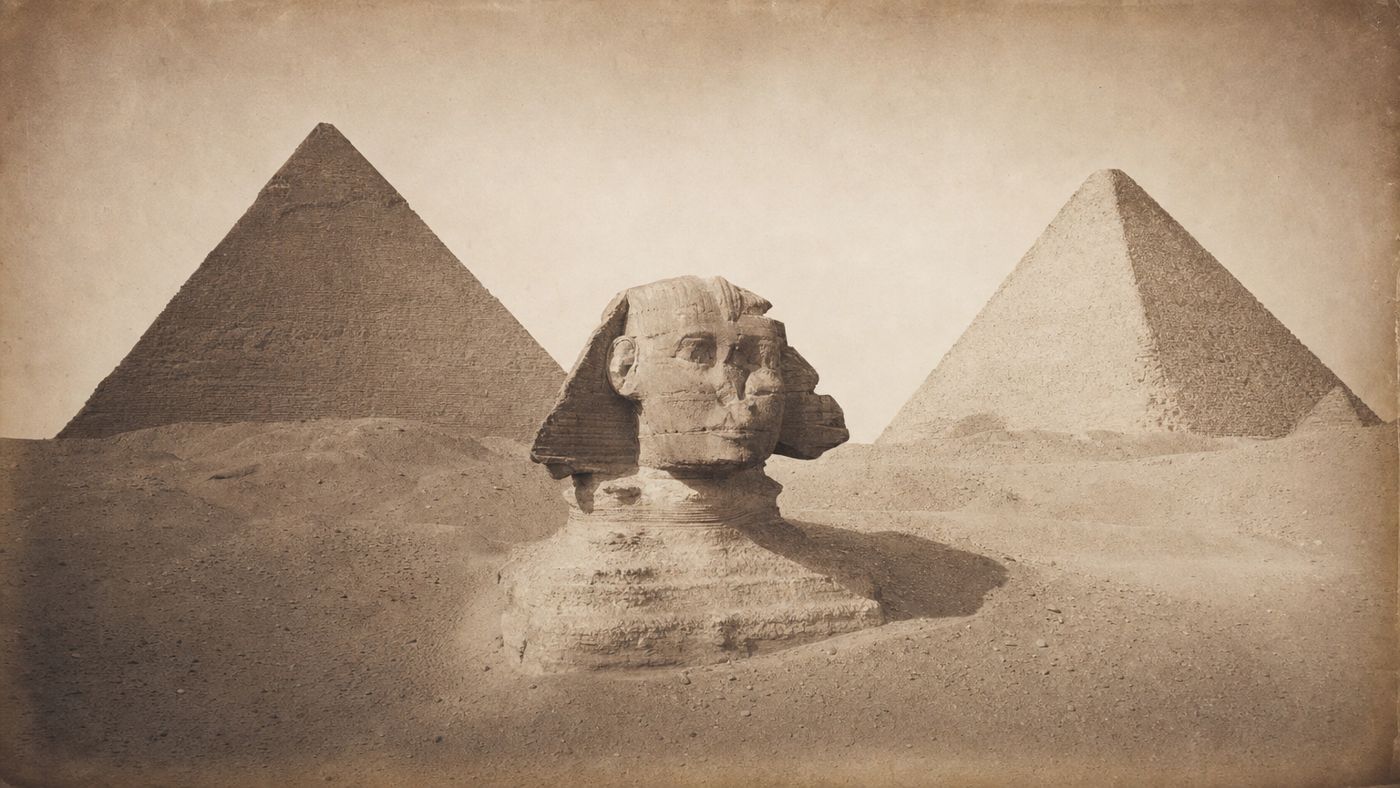
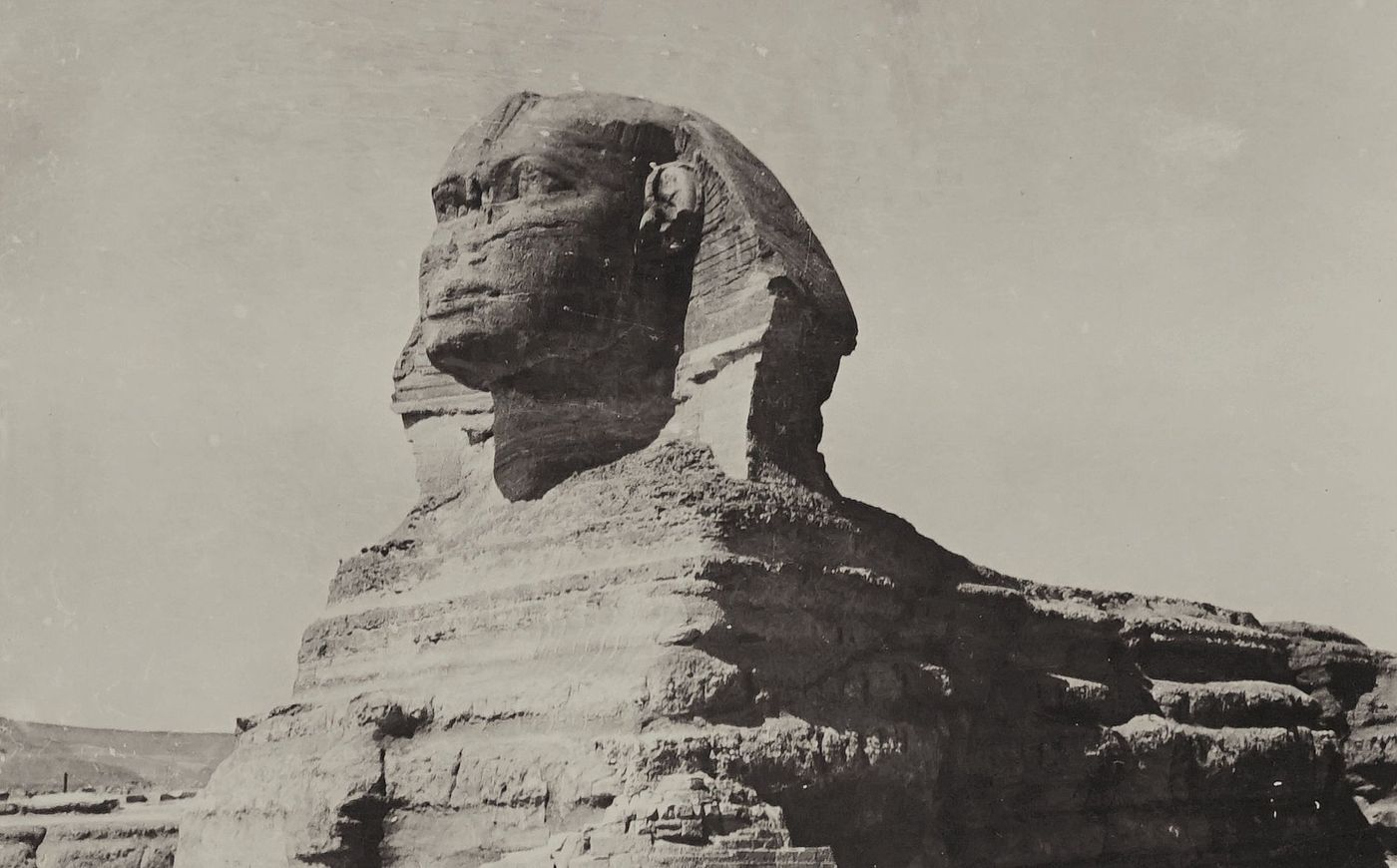
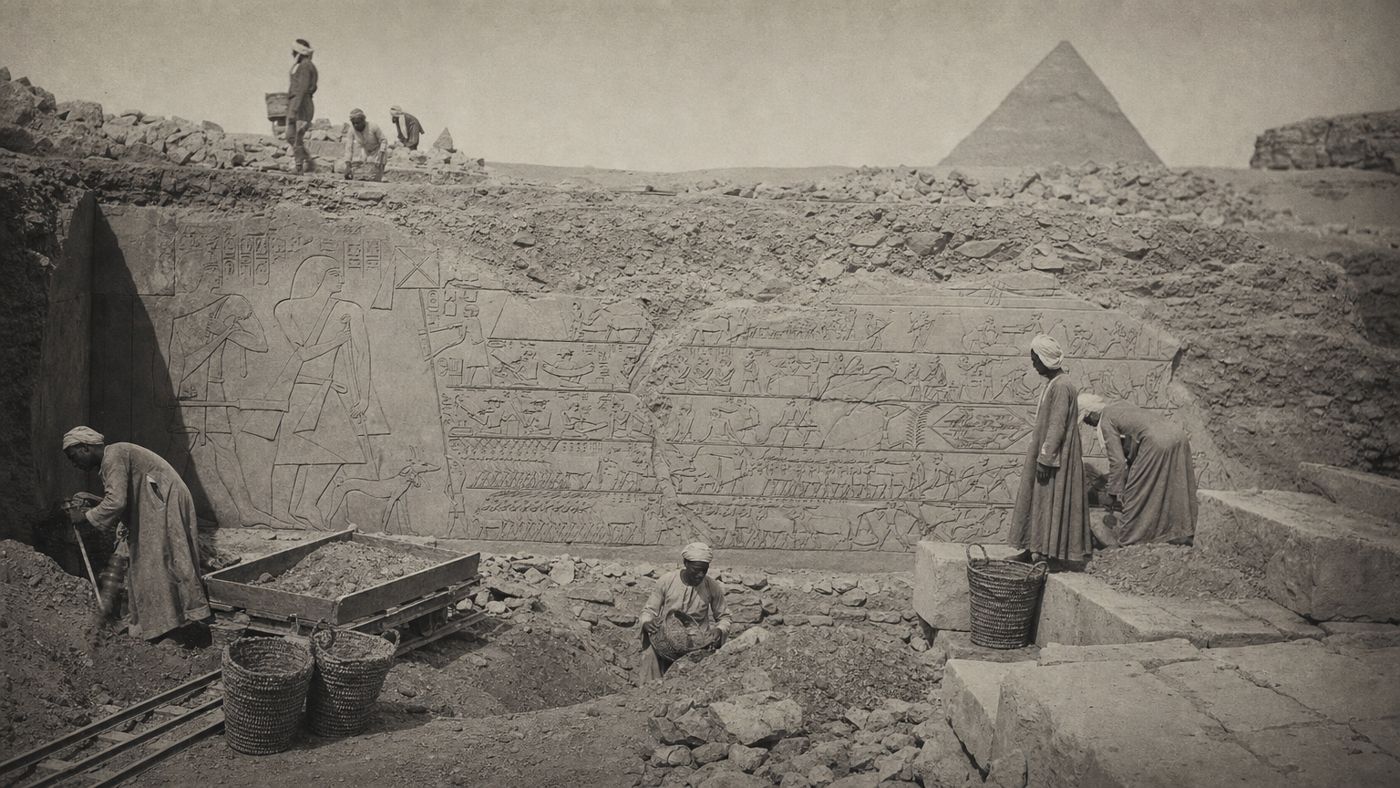
The second reason is the content. These images show a state that no one can see anymore: the Sphinx buried up to its shoulders in sand, the plateau without a city at its edge, the monuments without paths, fences, or barriers. They are thus not nostalgia but a source.
Four Photographs and What They Show
Why These Images Look So Different
The sequence of processes explains why these images look so different. A daguerreotype is a unique image on a silvered plate: no negative, no print, each photograph exists exactly once. Around 1850, paper processes became established, allowing prints in series. From the mid-1850s, glass negatives were added, and with them the sharpness we know from the famous views.
The processes also explain why so few people are visible in these images. Exposure times were long, and anyone who moved disappeared. In addition, there was the effort: paper and glass processes had to be coated, exposed, and developed on site, which is why photographers carried a mobile darkroom, often in tents or boats. What looks like an empty place is partly a technical effect and partly the result of a single photograph representing half a day's work.
This leads to a circumstance that seems paradoxical today. The first published images from Egypt were not photographs. Because daguerreotypes could not be printed, they were hand-drawn for publication and issued as engravings. So what the public in Europe saw were drawings of photographs, made by people who had never seen the monuments.
The entrance fee for your own comparison
The appeal of these images only emerges in comparison with the current state: the same sightline, different sand level, different surroundings. For that, all you need is the regular site entrance ticket.
Where the Photographs Are Freely Available
You can view these photographs for free in the collections that hold them. The Metropolitan Museum, for example, has a view of the Sphinx and the Great Pyramid from 1857 by Francis Frith, an albumen print from a glass negative, public domain and in high resolution. From the same collection come numerous salt prints from a French journey to Egypt in 1850.
The second major collection is of a different type: excavation photography. The Giza Archive at Harvard University holds tens of thousands of photographs from the campaigns of the early twentieth century, along with diary pages and plans. These images show not views but work, and they are more valuable for research than any postcard view.
A note on usage: Public domain does not automatically mean freely usable in every context, because collections can set their own conditions for their digitized copies. Details are on the page about free images.
Frequently asked questions
When was the first photograph taken in Egypt?
In November 1839, a few months after the public introduction of the daguerreotype in August of the same year.
Why was the Sphinx buried at that time?
Because without regular clearing, it becomes covered in sand. In the photographs of the 19th century, the body is usually only partially visible.
Why are the first published images engravings?
Because daguerreotypes could not be printed. For publication, they were drawn and issued as engravings.
Where can I view such photographs?
In the online collections of museums and in the Giza Archive at Harvard University, usually free and in high resolution.
May I use the images?
Often yes, because the originals are public domain. For the digitized copies, separate conditions may apply.