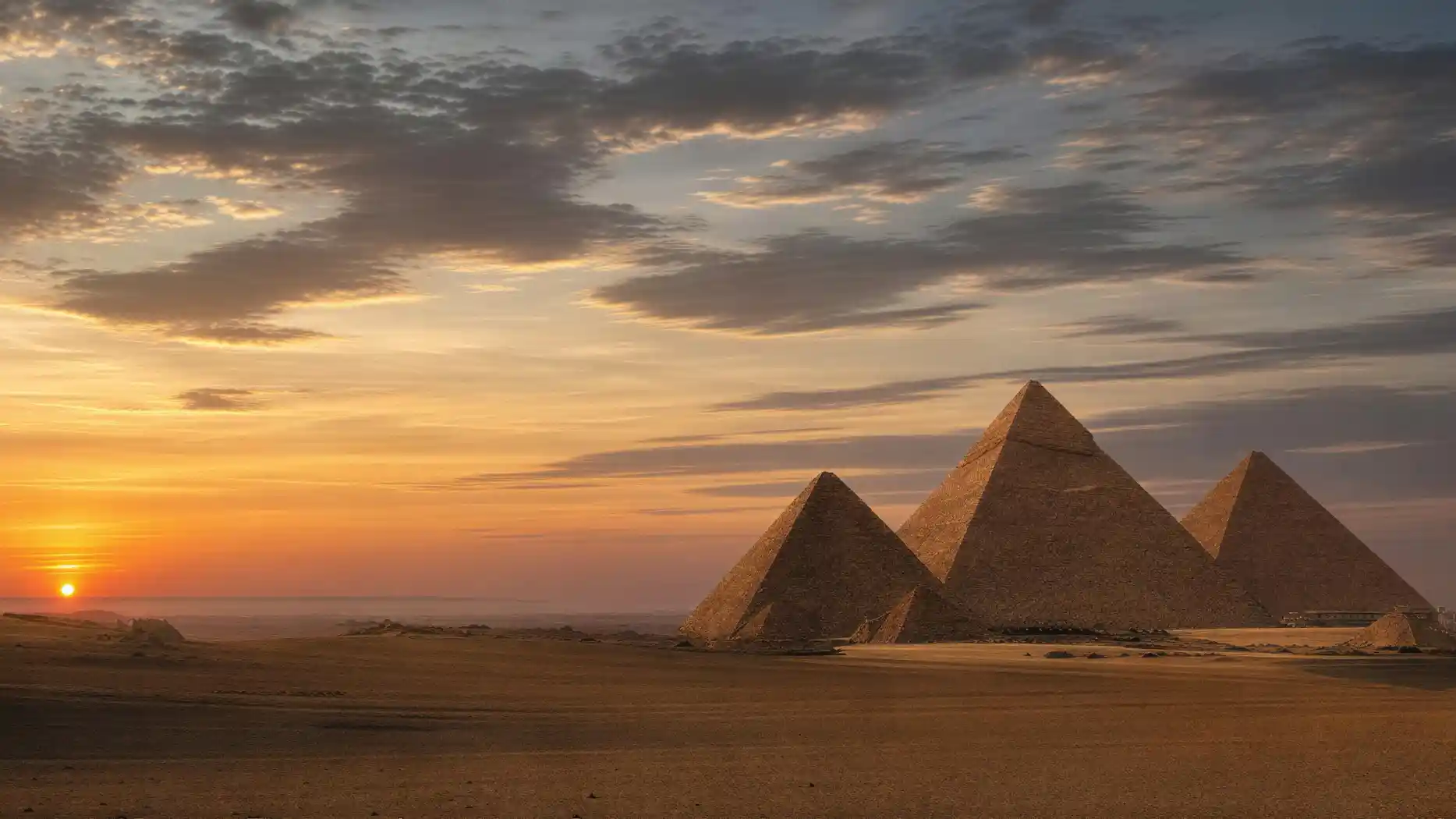
Ancient graffiti in Giza is a topic that turns a common assumption on its head: this place has not been a tourist destination only since modern times, but for at least three thousand years.
This becomes clear from a number you have to keep in mind. The pyramids were built around 2560 BC. By the time the first visitors we would recognize as such arrived—people who were not part of the cult and did not work there—the monuments were already about a thousand years old. Between the construction and the first recorded tourism, more time passed than between Charlemagne and us.
These visitors left traces. Some wrote their names on a wall, some set up a stela, some wrote a book. And for researchers, it is precisely the casual traces that are valuable, because they show how the site was perceived at different times.
Why this is more than a curiosity becomes clear when you think about the site's long history. The monuments have stood for roughly four and a half thousand years. Only during the first five hundred of those years were they a functioning cult site. For the vast majority of their existence, they have been what they are today: an ancient monument that people come to see. Tourism is not a late secondary use of this place—it is its longest-lasting function.
This page goes through the layers, from the oldest to the most recent. It carefully distinguishes between what is documented for Giza specifically and what is generally true for Egyptian monuments, because the two are often conflated.
The Layers of Visitors
- around 2560 BC
Construction. The only marks from this period are those of the construction crews, not of visitors.
- from about 1500 BC
New Kingdom. The site is a thousand years old and partly buried in sand. Egyptians come as visitors and worshippers; the Sphinx is excavated and given its own cult.
- 5th century BC
The oldest surviving account by a foreign visitor is written, with figures that later turn out to be unreliable.
- 4th century BC to 2nd century AD
Greek and Roman travelers move through Egypt and leave inscriptions on many monuments.
- around 1200
An Arabic inscription inside the second pyramid documents a visit, about six hundred years before the first European.
- 1818
A European explorer leaves his name and the date in black paint in the same chamber, believing he is the first.
- today
The same act is now vandalism against a World Heritage Site and is prosecuted.
When Egyptians Themselves Became Visitors
The first layer of visitors is the most surprising, because it comes from Egypt itself.
In the New Kingdom, about a thousand years after the pyramids were built, the plateau was no longer a construction site. The monuments were partly buried in sand, the cult of the Fourth Dynasty kings had long ceased, and the Sphinx stuck out only with its head. For the people of that time, the pyramids were as ancient and as mysterious as a Roman ruin is for us.
It was in this situation that a new veneration developed. The Sphinx was excavated, given a cult as a deity, and became the destination of visits that can fairly be called both pilgrimage and excursion. The best-known evidence is the Dream Stela, placed between the paws of the Sphinx, on which a king records his own visit.
This phase is documented not only by monuments, but also by how the site was used. Between the older structures, new small shrines were built, and the official overview of the site describes the necropolis not as a finished construction of the Old Kingdom, but as a place with a long history of use. What we see today is therefore never just the Fourth Dynasty—it is a palimpsest.
For our topic, two things are noteworthy. First, the idea of leaving an inscription on an ancient building was not considered disrespectful here; it was the usual way of documenting a visit. Second, even then the interpretation of the pyramids was uncertain. The people of the New Kingdom no longer knew exactly who had built them and attributed them to different rulers. The site was already a subject of speculation in antiquity.

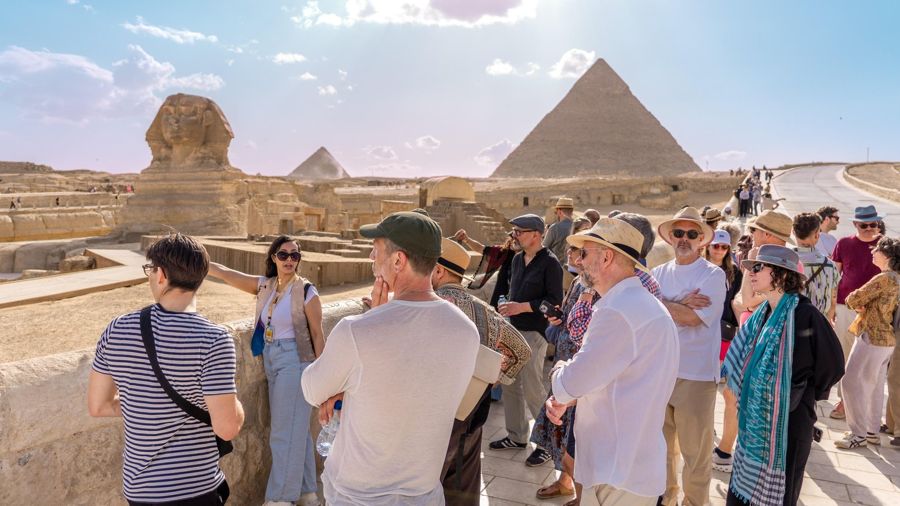
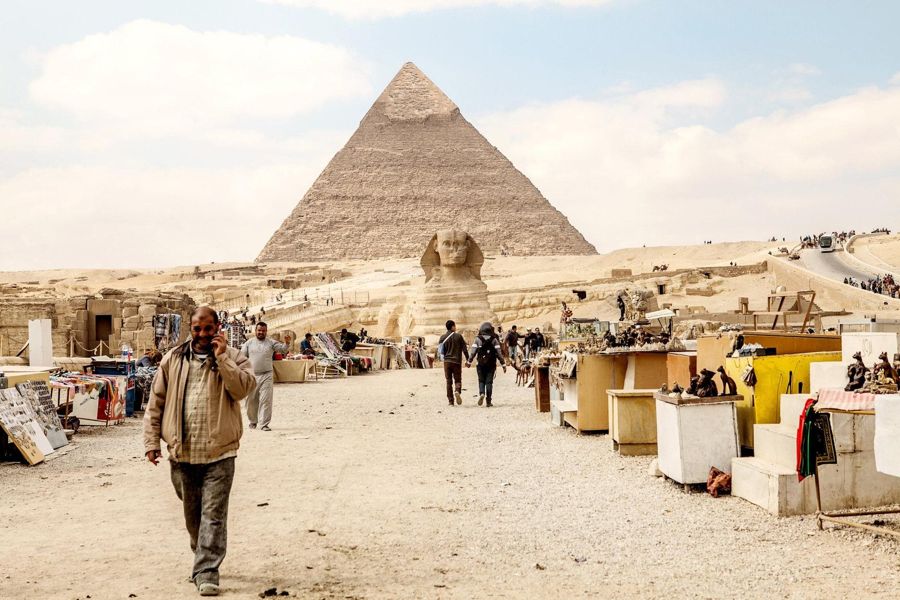
Half-day tour with interior as an add-on
- The oldest visitor inscriptions at the site are inside a building, not on its exterior.
- Entry to the site and pickup from your accommodation are included.
- The interior visit is available as an optional add-on, so you can decide consciously.
- A German-speaking guide is available; according to the provider, cancellation is free up to 24 hours before.
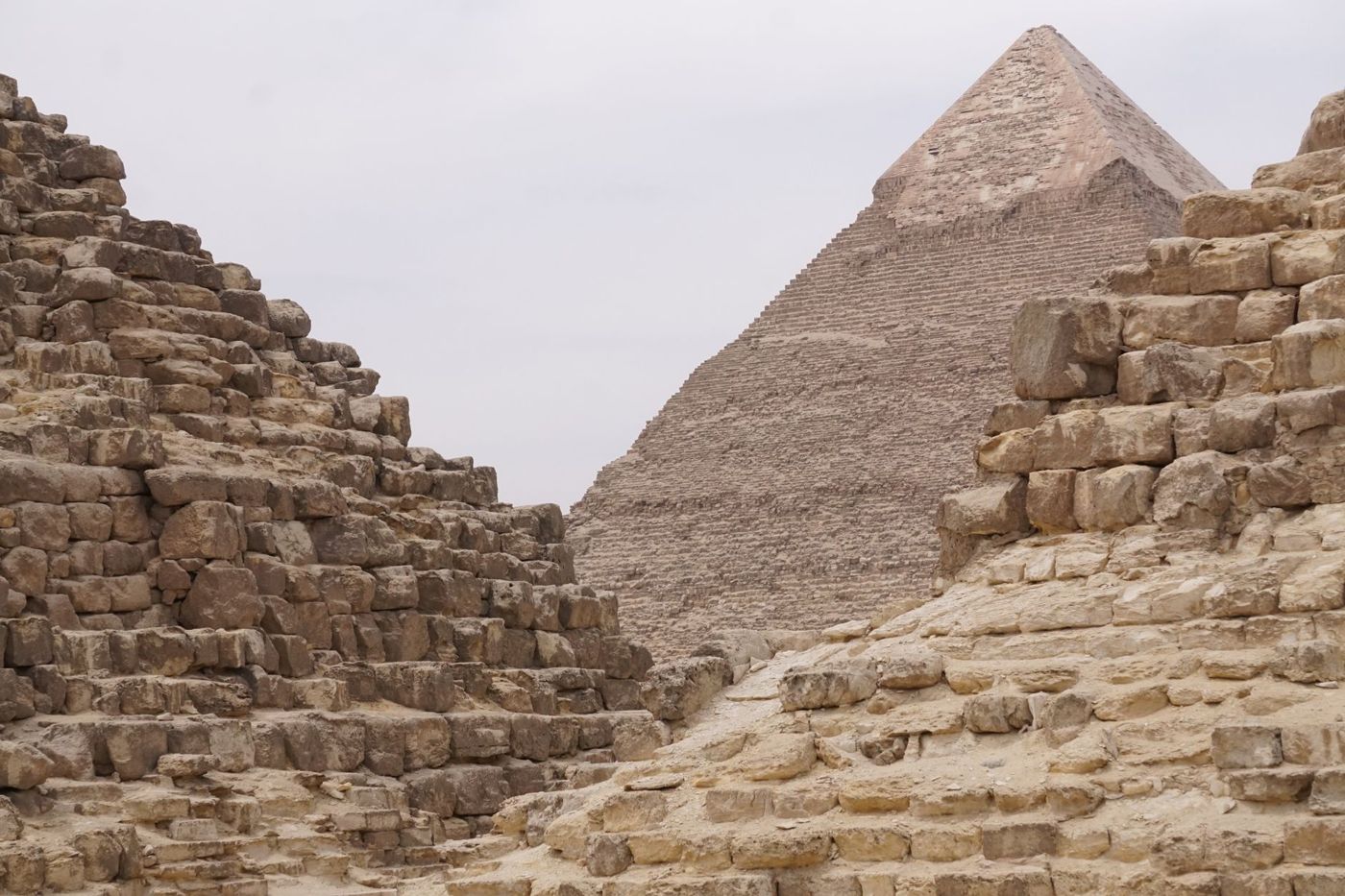
Greeks and Romans as Travelers
The second layer is the Greek and Roman one, and here tourism in the modern sense begins.
The oldest surviving account by a foreign visitor comes from the fifth century BC, by a Greek author who traveled through Egypt and described in detail what he was told about the pyramids. His text remains the most cited ancient source on this site, and it is also a lesson: the figures he gives—for example, the number of workers and the duration of construction—are now considered unreliable, because he did not report from his own observation but repeated what local guides told him. The first recorded travel report on Giza is thus based on information from tour guides, and part of it was already embellished at the time.
From the same period and the following centuries, numerous inscriptions by travelers survive on Egyptian monuments: names, origins, professions, often no more than a note that someone was there and marveled. For researchers, these testimonies are valuable because they show who was traveling and what was considered worth seeing. They also prove something that is not visible in an inscription itself: that an infrastructure existed. Anyone who traveled from the Mediterranean to the Nile and left his name at a monument needed ships, accommodations, route descriptions, and people to show him the way and tell him stories. Tourism at this site is therefore not only old—it was organized early on.
At this point, however, precision is necessary. That such inscriptions exist in large numbers in Egypt is well documented. However, a citable reference for a documented collection of Greek or Latin visitor inscriptions on the monuments of Giza itself could not be found in this research. We therefore present this as a general picture of the period, not as a statement about this specific site. For those who want to know more, the Giza Archives at Harvard University offer by far the largest digital collection of excavation records for this site, including diaries and photographs.
The Arabic Inscription in the Second Pyramid
The third layer is the most interesting because it corrects a common narrative.
In the burial chamber of the second pyramid, there is Arabic script that documents a visit around the year 1200. When an Italian explorer entered the same chamber in 1818 and left his name and the date in black paint, he believed he was the first modern person at this site. He was about six hundred years too late, and the proof stood a few meters from his own signature.
That he thought he was the first is more understandable than it sounds. He came with an education that allowed him to read the languages and scripts of Europe, and the Arabic inscription was for him a sign without meaning. The chamber was empty, the sarcophagus without a lid, and everything suggested that no one had been here for a long time. This is exactly how errors arise in the history of science: not from dishonesty, but from overlooking evidence one cannot read.
This juxtaposition is more than an anecdote. It shows that the European narrative of the rediscovery of Egypt is a question of perspective. Nothing was discovered that was not already known; what changed was who wrote about it and in which language.
It is also remarkable how differently the two inscriptions are read today. The medieval one is considered a source. The one from 1818 is also considered a source, but at the same time it is perceived as damage, because it was applied with paint and because its author knew he was writing on a monument. The line between testimony and damage thus does not run along age, but along intention and method.
A third case belongs here because it draws the line even more sharply. From the opening of the largest pyramid in the nineteenth century comes an inscription in one of the chambers above the burial chamber, whose authenticity has been disputed for decades. The debate is treated in detail on another page of this offer and does not belong here. But it shows what is at stake: as soon as an inscription serves as evidence for something, the question of who applied it and when becomes central. For a visitor inscription, this is irrelevant; for a construction inscription, it decides the attribution of an entire building.
Today, the matter is clear. The necropolis has been on the UNESCO World Heritage List since 1979, and interventions in the substance are prohibited. Anyone who writes their name on a block today does not produce a source for future research, but damage that must be removed and is prosecuted. That the same act is a document in one era and a crime in another is one of the more uncomfortable insights of this topic.
Construction Inscription or Visitor Inscription
The two are regularly confused, even though they come from different millennia and document different things.
| Feature | Marks of the construction crews | Visitor inscriptions |
|---|---|---|
| Time | during construction, around 2560 BC | from the New Kingdom, i.e., about a thousand years later |
| Location | in hidden places, e.g., in chambers above the burial chamber | on accessible surfaces, where visitors came |
| Purpose | work organization: crew names, quantities, dates | to record presence: name, origin, occasionally a comment |
| Evidentiary value | construction process, organization, dating of the building | reception: who came, when, and what was considered worth seeing |
| Where treated | on the page about the burials and the construction crews | on this page |
- Marks of the construction crews
- during construction, around 2560 BC
- Visitor inscriptions
- from the New Kingdom, i.e., about a thousand years later
- Marks of the construction crews
- in hidden places, e.g., in chambers above the burial chamber
- Visitor inscriptions
- on accessible surfaces, where visitors came
- Marks of the construction crews
- work organization: crew names, quantities, dates
- Visitor inscriptions
- to record presence: name, origin, occasionally a comment
- Marks of the construction crews
- construction process, organization, dating of the building
- Visitor inscriptions
- reception: who came, when, and what was considered worth seeing
- Marks of the construction crews
- on the page about the burials and the construction crews
- Visitor inscriptions
- on this page
The marks of the construction crews are the reason why the attribution of the largest pyramid is considered certain. They are not visitor traces and are mentioned here only for distinction.
Frequently asked questions
Since when have visitors come to Giza?
At least since the New Kingdom, i.e., about a thousand years after construction. At that time, the Sphinx was excavated and venerated.
Who wrote the oldest surviving travel report?
A Greek author of the fifth century BC. His figures are considered unreliable because he quoted local guides.
Are there Greek graffiti on the pyramids?
On Egyptian monuments in general, yes, in large numbers. For Giza itself, no citable evidence could be found.
Was Belzoni the first in the Khafre Pyramid?
No. An Arabic inscription in the same chamber documents a visit about six hundred years earlier.
Are construction inscriptions the same as graffiti?
No. The marks of the construction crews date from the construction period, are in hidden places, and served work organization.
Is it allowed to leave something today?
No. The site is a World Heritage Site, interventions are prohibited and prosecuted.