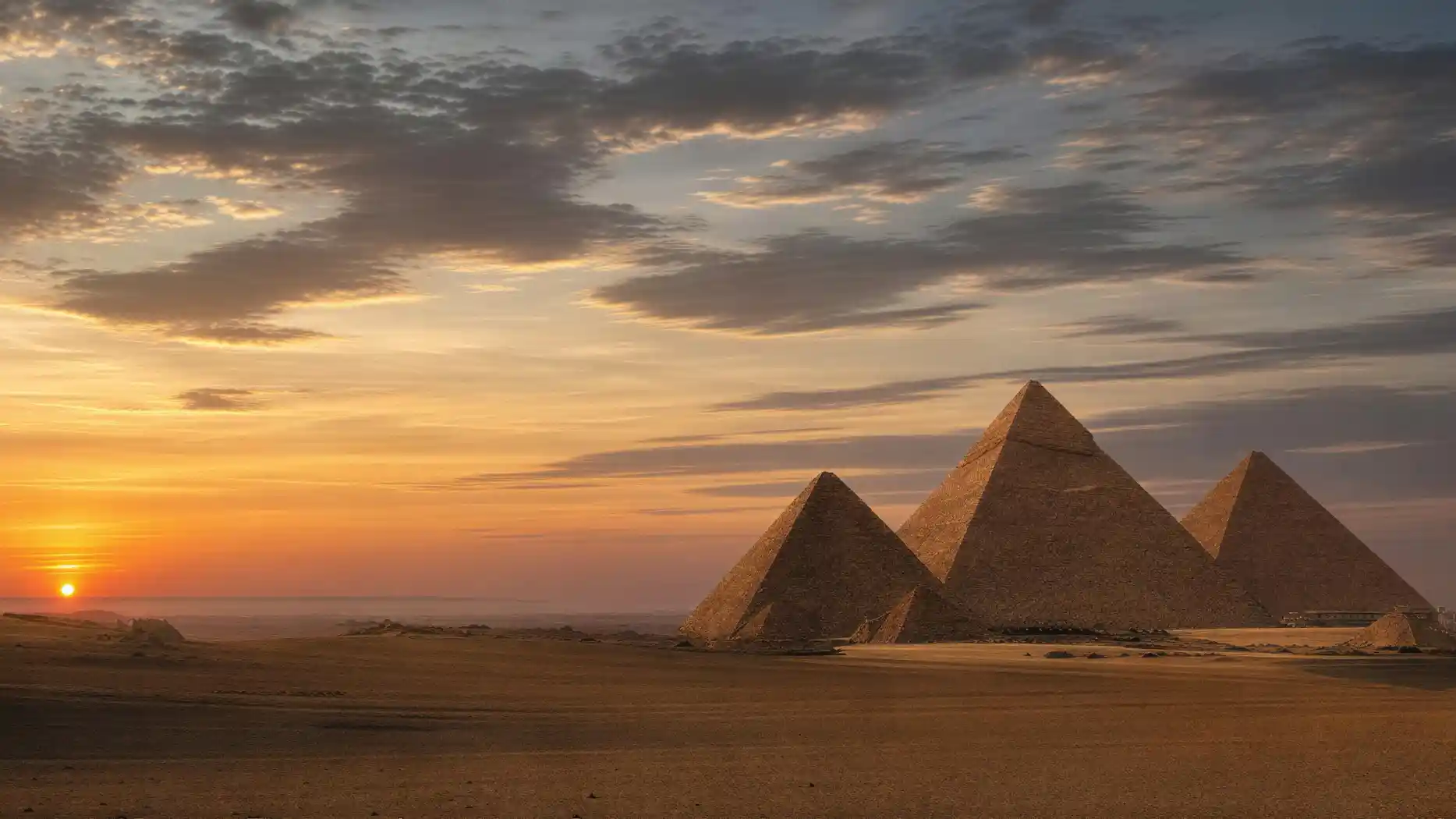
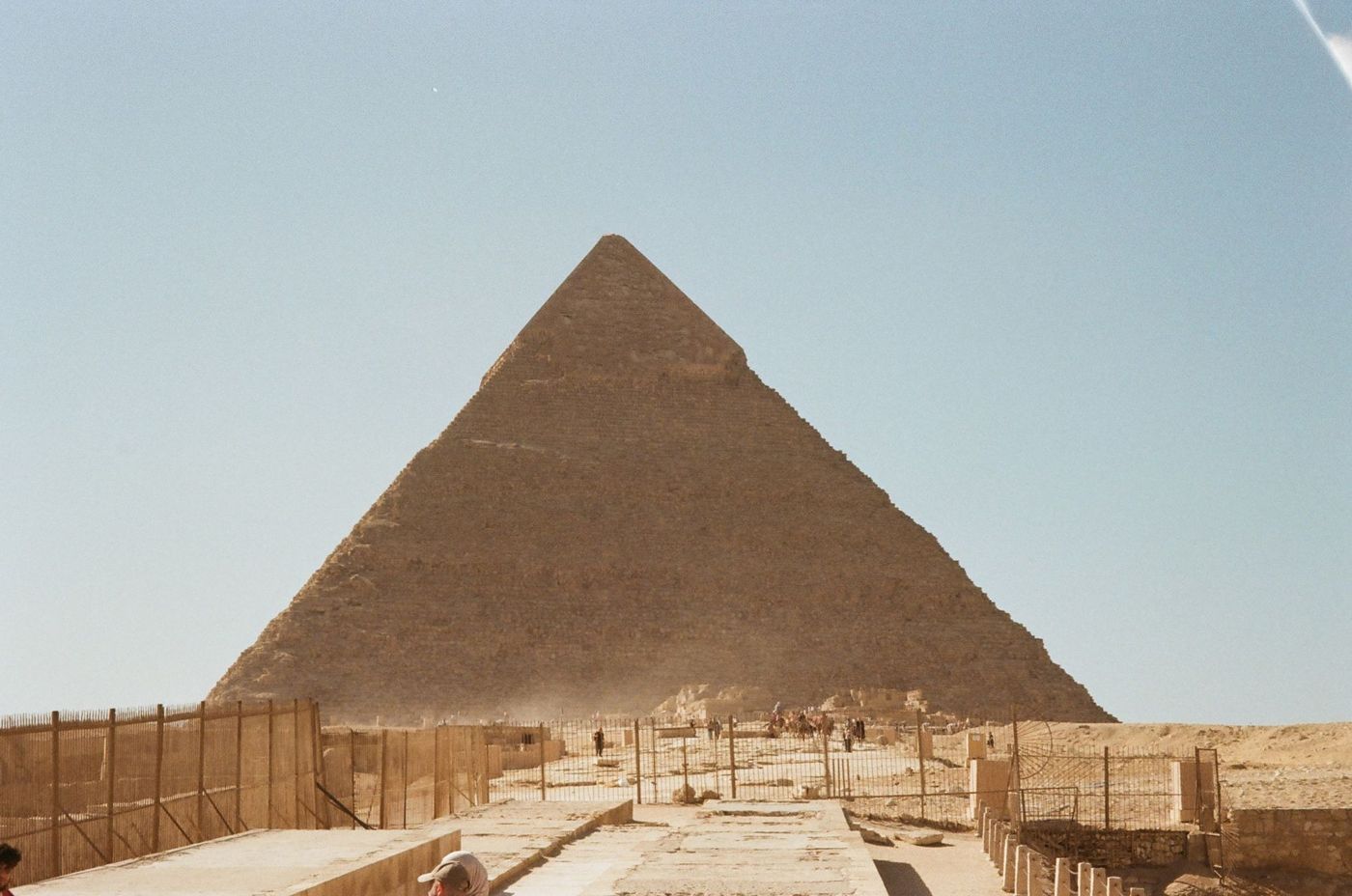
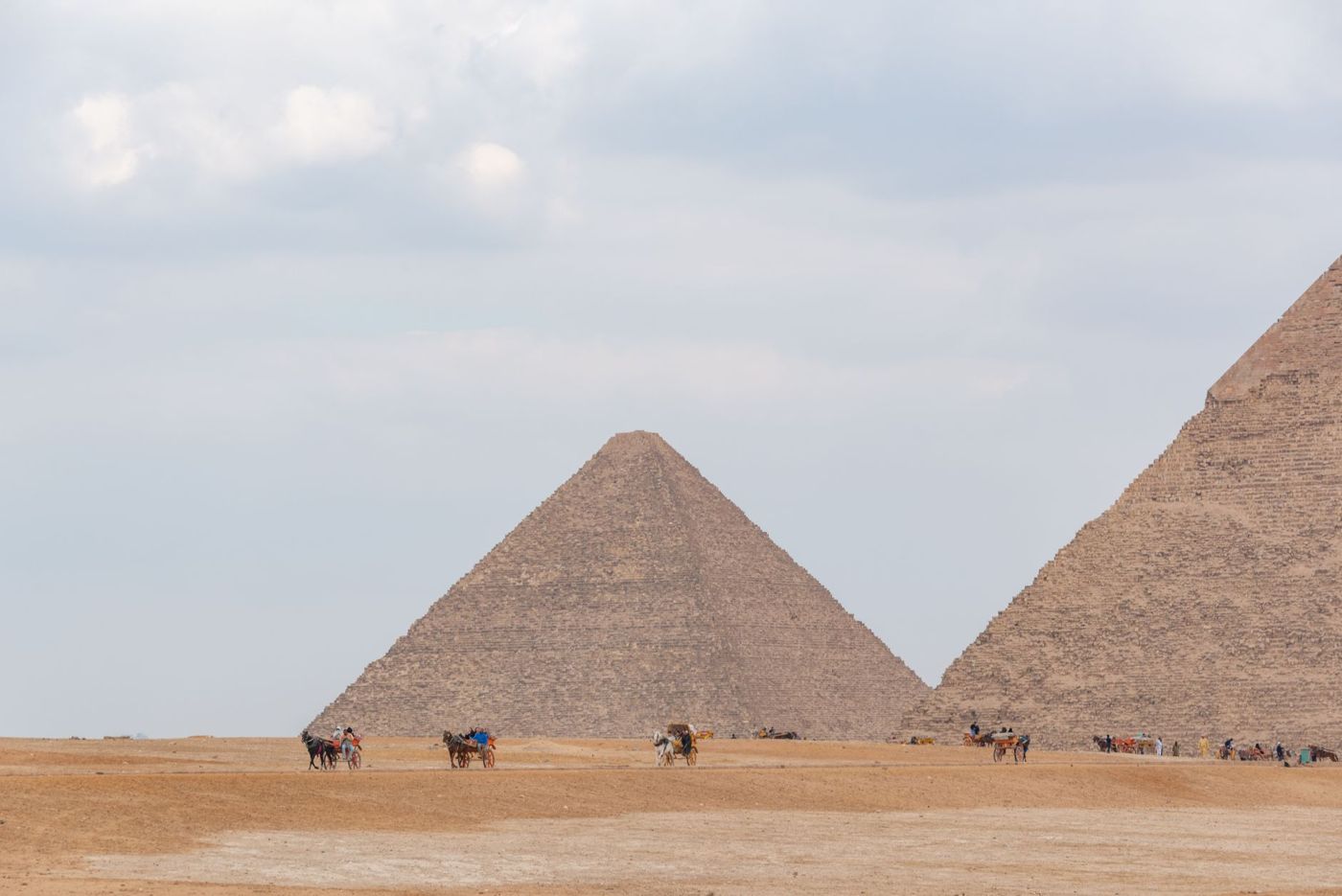
The pyramids of Giza today look like giant staircases of roughly hewn stone. That was never the intention.
What you see is the core masonry. It was a fill, a load-bearing interior that was never meant to be visible, and it is correspondingly rough: irregular block heights, wide joints, rubble and mortar in between. Above it lay a second layer, and that was something entirely different.
This outer skin consisted of fine, almost white limestone from Tura on the other side of the Nile. It was polished smooth, ran without a step from the base to the apex, and closed at the top in a point. A structure with such a surface reflects light like a polished surface. From a distance, in the morning sun, it must have been almost unbearable.
Today, almost all of this layer is missing. At the Great Pyramid of Khufu, this has resulted in a loss of over eight meters in height, and the entire smooth surface on the flanks is gone. What remains is the raw structure.
This page explains exactly how this casing was worked, what caused it to disappear, where it went, and where you can still touch remnants of it today.
Before we get to the loss, it is worth looking at the quality of what was lost, because that is the real reason this topic is more than a footnote.
The blocks of the outer skin were not thin slabs but massive ashlars, some weighing several tons, with a sloped outer face at the desired angle and right-angled joint faces. They were not glued onto the pyramid but set in place and supported themselves.
The precision of these joints is where even sober experts marvel. On the surviving blocks of the northeast side, the average joint opening is about half a millimeter, across areas of several square meters. Yet there is mortar between the stones, which makes the whole thing even harder to explain: setting two blocks so close together is one thing, doing it with a layer of mortar in between is quite another.
Examinations of individual surviving blocks also show how careful the workmanship was. A case study of a single casing stone in a journal of ancient construction technology explores these questions in detail.
Important for understanding the construction site: this precision applied only to the skin. It was the show face, and that is where the work was done accordingly. The core masonry next to it is rough, and that was not an oversight but a division of labor.
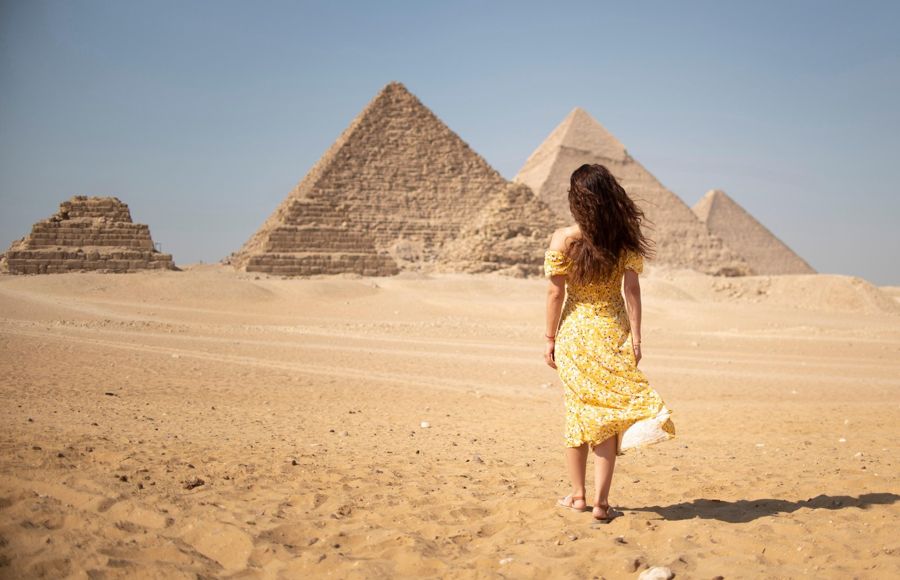
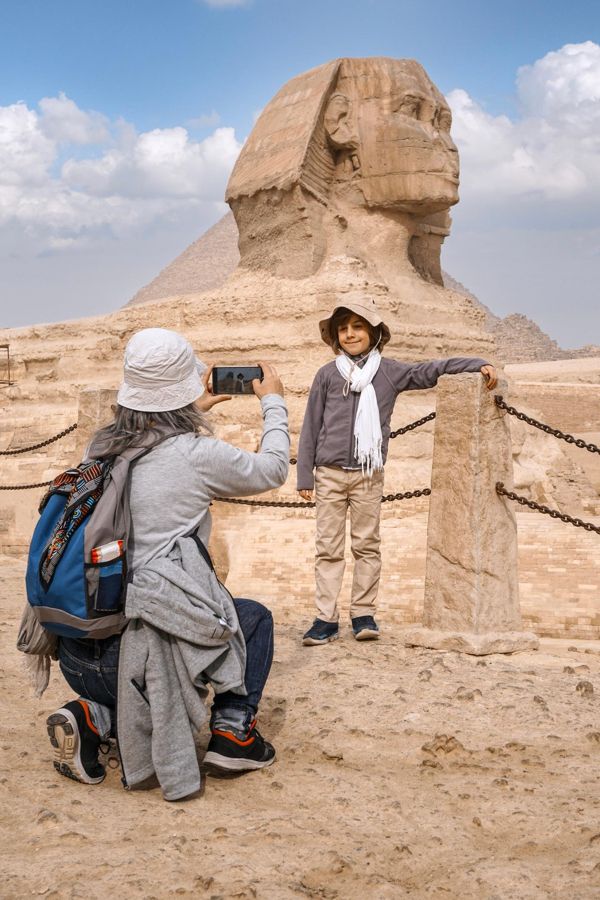
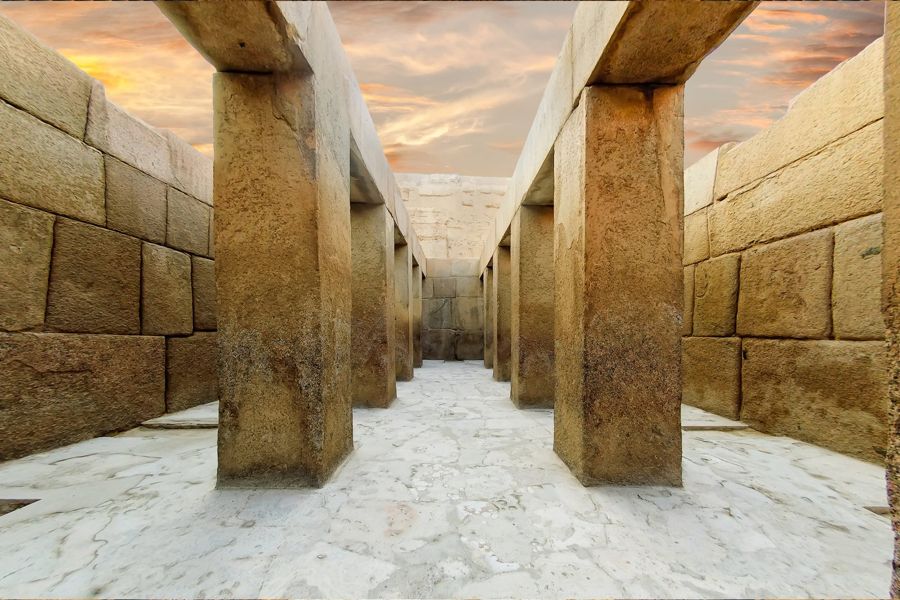
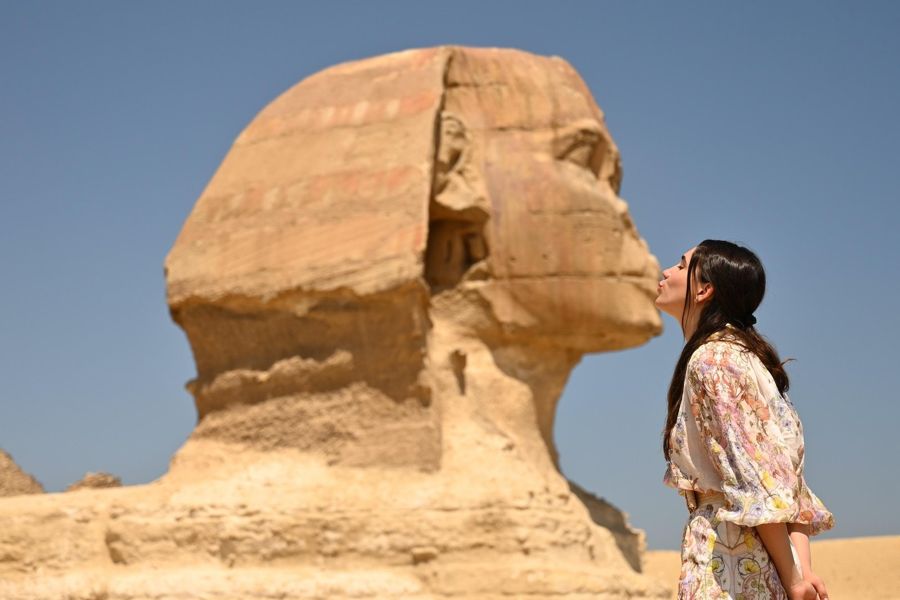
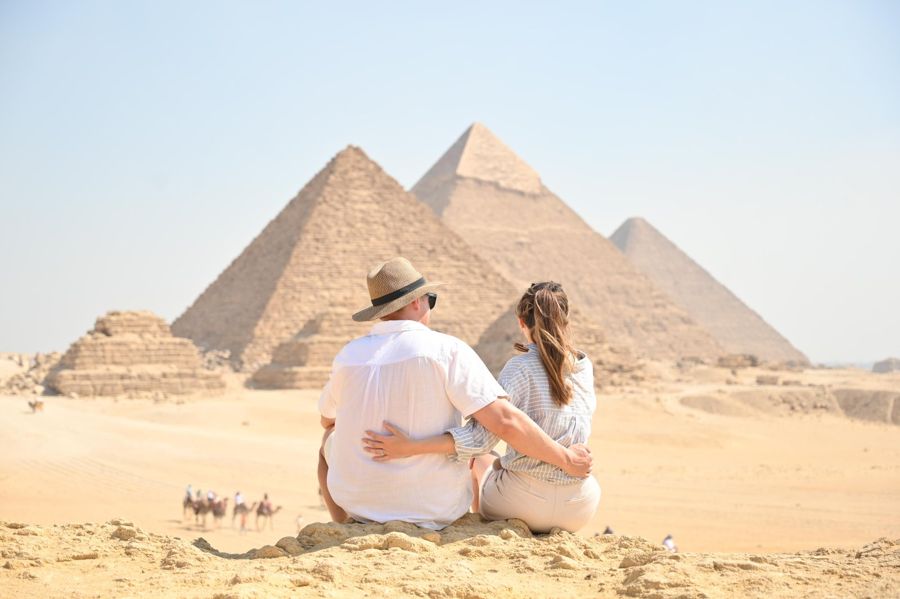
Half-Day Tour to the Pyramids of Giza and the Sphinx
- The surviving casing remnants lie off the usual photo stops
- A licensed guide shows where original skin stands and where repairs have been made
- Plateau entry, German-speaking guide, and pickup are included
- Free cancellation up to 24 hours in advance
Bringing such stones into precise contact would already be careful work; doing so with mortar in the joints seems almost impossible.Flinders Petrie on the joints of the casing stones, after his survey of the plateau in the 1880s
Petrie compared the precision of the casing to the work of an optician of his time, but executed over an area of several hectares.
An Earthquake and a Decision
This layer did not disappear through weathering but through two events, the first being a natural disaster and the second a decision.
On August 8, 1303, a severe earthquake shook the region. The pyramids did not collapse—they are too massive for that—but the casing detached from the flanks on a large scale and fell down. Thus, at the gates of a growing city, there suddenly lay a mountain of ready-cut, high-quality ashlars that belonged to no one and for which no one had to operate a quarry.
What happened next was not impulsive looting. It was an orderly, decades-long extraction of material. In the mid-14th century, Sultan al-Hasan had stones transported from the plateau and used them in his building projects in Cairo, including mosque constructions and fortifications. The distance was short, the material was first-class, and the alternative would have been to quarry the same limestone with considerable effort.
A second wave followed in the 19th century, when material was again taken from the plateau for the great mosque in the Citadel of Cairo.
Thus, for centuries, the structures of Giza were something that is hard to comprehend today: the most convenient quarry in the region.
The Journey of the Casing
- around 2560 BC
The outer skin of Tura limestone is set and smoothed from top to bottom.
- Antiquity to the Middle Ages
The casing remains largely intact. Ancient travelers describe smooth, gleaming flanks.
- August 8, 1303
A severe earthquake dislodges large parts of the casing from the flanks.
- from the mid-14th century
The fallen material is systematically brought to Cairo and used in mosques and fortifications.
- 19th century
Further material extraction for a major mosque construction in the Citadel.
- 1880s
Flinders Petrie surveys the remaining blocks and documents their precision.
- since 1979
The complex is a World Heritage site, material extraction is excluded, and the remaining remnants are protected.
Why the Steps and the Color Are the Way They Are
This backstory explains two things that visitors regularly wonder about.
First, the steps. Because the core masonry consists of layers of varying heights and the smooth skin is missing, the structure today looks like a gigantic, irregular staircase. That is exactly why people climbed up for centuries and why climbing is now forbidden. On the original pyramid, an ascent would have been simply impossible: a closed, smooth surface with an incline of over fifty degrees offers no foothold.
Second, the color. The structures today appear sand-colored to gray because you see the core rock, which is local, yellowish limestone. Originally, the outer surface was significantly lighter. Combined with a gilded or light-colored apex, that created an object that was visible from a great distance and literally threw light.
What is remarkable is what this says about the passage of time. The casing survived about three and a half thousand years. It was lost in a few centuries, not through decay but because it was useful. Heritage protection that excludes material extraction is a very recent idea; today the complex is a World Heritage site and is correspondingly protected.
Where Casing Is Still Preserved
The casing has not completely disappeared, and for visitors this is the most practically useful information on this page.
The most striking remnant sits at the top of the Pyramid of Khafre. There, the uppermost part of the original skin has survived because it was too high to be conveniently removed. From below, it looks like a bright, smooth cap on an otherwise rough structure, and it is the only place where the original appearance of all three pyramids can still be read.
The more interesting remnant lies on the ground. On the north side of the Great Pyramid of Khufu, near the entrance area, original casing blocks of the lowest course still stand in place. They are inconspicuous because they are low, and most visitors overlook them. Standing in front of them, you see the sloped, smooth outer surface and the fine joints immediately next to the rough core masonry above. The difference between the show face and the fill can be grasped at a glance at this one spot.
At the Pyramid of Menkaure, the situation is different again. Its lower courses were clad in granite rather than limestone, and many of these blocks are only roughly dressed. The smoothing was apparently carried out from bottom to top and was interrupted mid-work at the death of the builder. There you see the counterpart: not a removed skin, but one that was never finished.
How the structure as a whole looked with this casing can be deduced quite accurately from these remnants. From the slope angle of the surviving outer surfaces, the height of the lowest course, and the base side, the original shape emerges, and from the surface treatment, the effect. Descriptions of the original state of construction rely precisely on these few surviving spots, not on speculation.
Individual detached blocks have made their way into European museums over the centuries and can be examined up close there.
The Reversal of the Usual Narrative
What remains is a reversal of the usual narrative, and it is worth considering.
Normally, it is said that the pyramids are impressive because they have endured for so long. With the casing, the opposite is true: it is the part that did not endure, and precisely for that reason it says the most about the builders. Covering an area of several hectares with half-millimeter-accurate joints is a different kind of achievement than stacking millions of blocks.
Those who stand before it today therefore see not the finished structure but its substructure. That is roughly like judging a building without its facade and praising the bricks.
Practically, this means for a visit: seek out the three spots where the difference is visible. The blocks at the north base of the Great Pyramid of Khufu, the cap on the Pyramid of Khafre, and the unfinished granite mantle at the base of the Pyramid of Menkaure. Together, they provide a complete explanation of how these structures looked and why they no longer do.
And the next time you stand before a medieval building in the old town of Cairo, there is a good chance that part of it once sat on a pyramid.
Frequently asked questions
Were the pyramids clad in marble?
No. It was fine, almost white limestone from Tura on the other side of the Nile. Marble does not occur in this phase of construction in Egypt.
When was the casing removed?
Essentially from the 14th century onward, after an earthquake in 1303 had loosened large parts of it from the flanks. A second wave followed in the 19th century.
Can you still see original casing today?
Yes, in three places: at the north base of the Great Pyramid of Khufu, at the top of the Pyramid of Khafre, and as an unfinished granite mantle at the base of the Pyramid of Menkaure.
Could you climb the pyramids in their original state?
No. A closed, smooth surface with an incline of over fifty degrees offers no foothold. The steps that are climbed today are the exposed core masonry.
Plateau entry as a QR code on your phone
The surviving blocks at the north base are in the freely accessible area. A basic ticket suffices; you do not need an interior ticket for that.