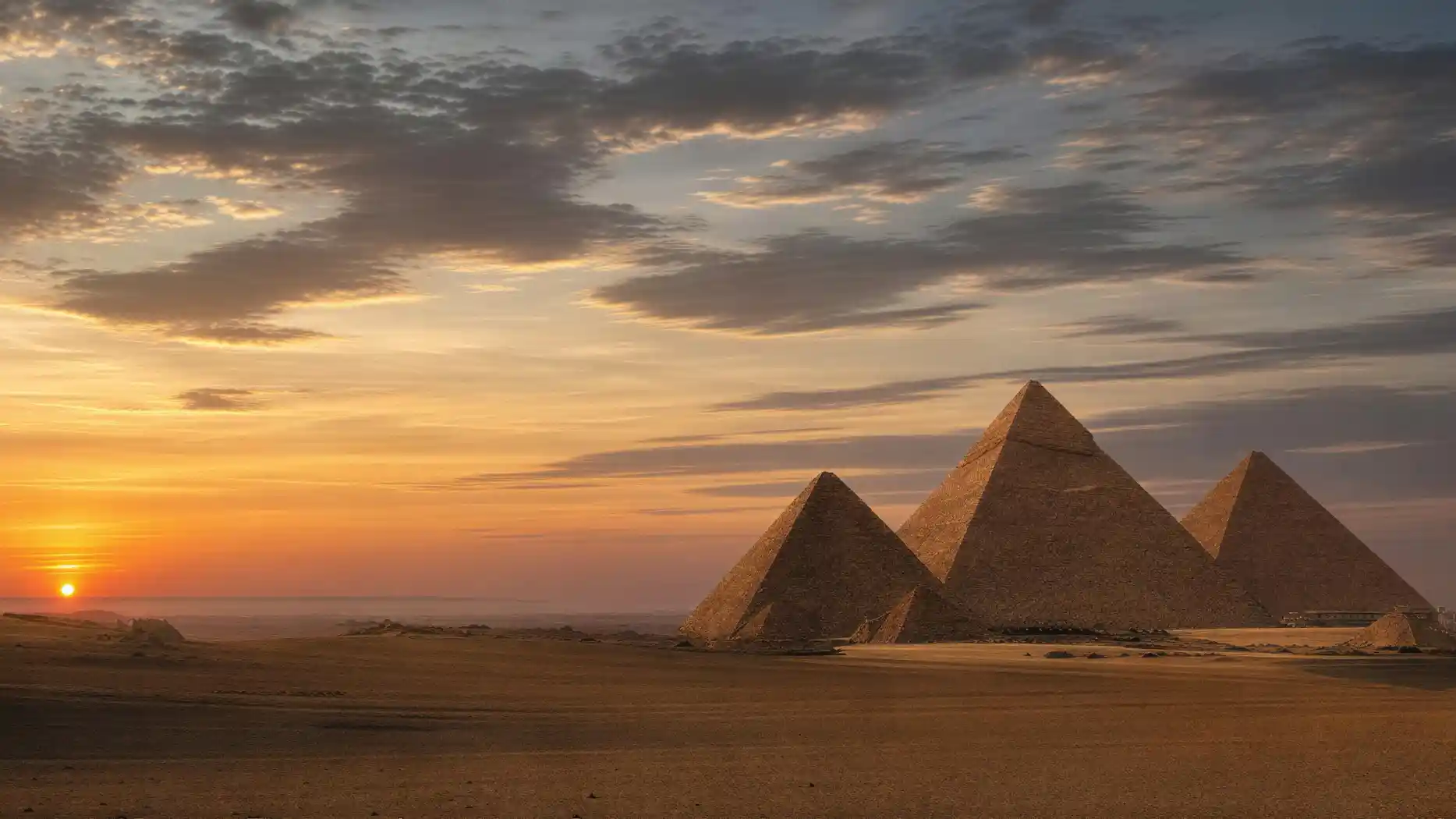
Saqqara, Dahshur and Abusir are usually treated as day-trip destinations, as an add-on for a second day. That misses the point of what they are about.
Those who look for the pyramid of Saqqara are usually looking for the oldest of them all, and in doing so they hit exactly the beginning of this series. These sites lie south of Giza on the same desert edge, and together they form a sequence. It begins with a stepped tower, then an attempt that went wrong, then a successful second attempt, then Giza, then something considerably smaller. The whole process takes about a hundred and fifty years, and the structure that most people think of as the symbol of Egypt stands in the middle of it.
That is the real reason to go there, and it is stronger than any argument about crowds or entrance fees. Those who only see Giza see a result without a backstory. Those who know the sequence see something different at the plateau: not a miracle, but the point at which a construction task was first fully mastered.
This page goes through the series in order, with practical information at the appropriate point, and at the end it says which of the sites is really worth it and which is not.
One thing in advance about getting there, because it determines the planning: there is no public transport. All three sites are off the beaten track, connected by the desert road south of Giza, and without a vehicle you won't get there and especially not back. That is why these places are almost exclusively sold as a day trip, and not because of a lack of demand.

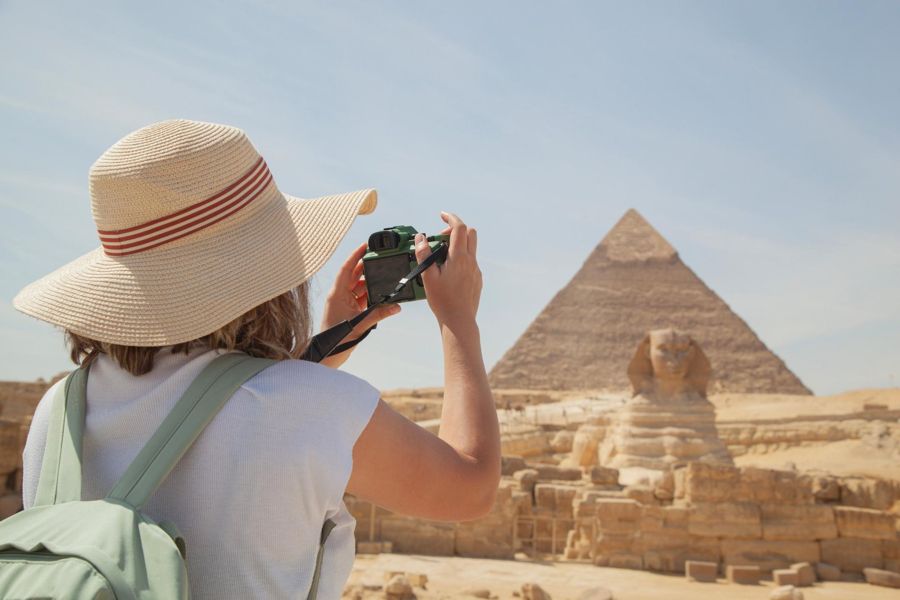
Day trip to Giza, Saqqara and Dahshur
- Includes exactly the combination this page argues for, i.e. Dahshur instead of another city stop
- Entrance to the Giza plateau is included, as is pickup from your accommodation
- Around seven hours, German-speaking guide available
- Clarify before booking which Saqqara tickets are included, especially the Serapeum
The development series in five steps
- Saqqara, around 2650 BC
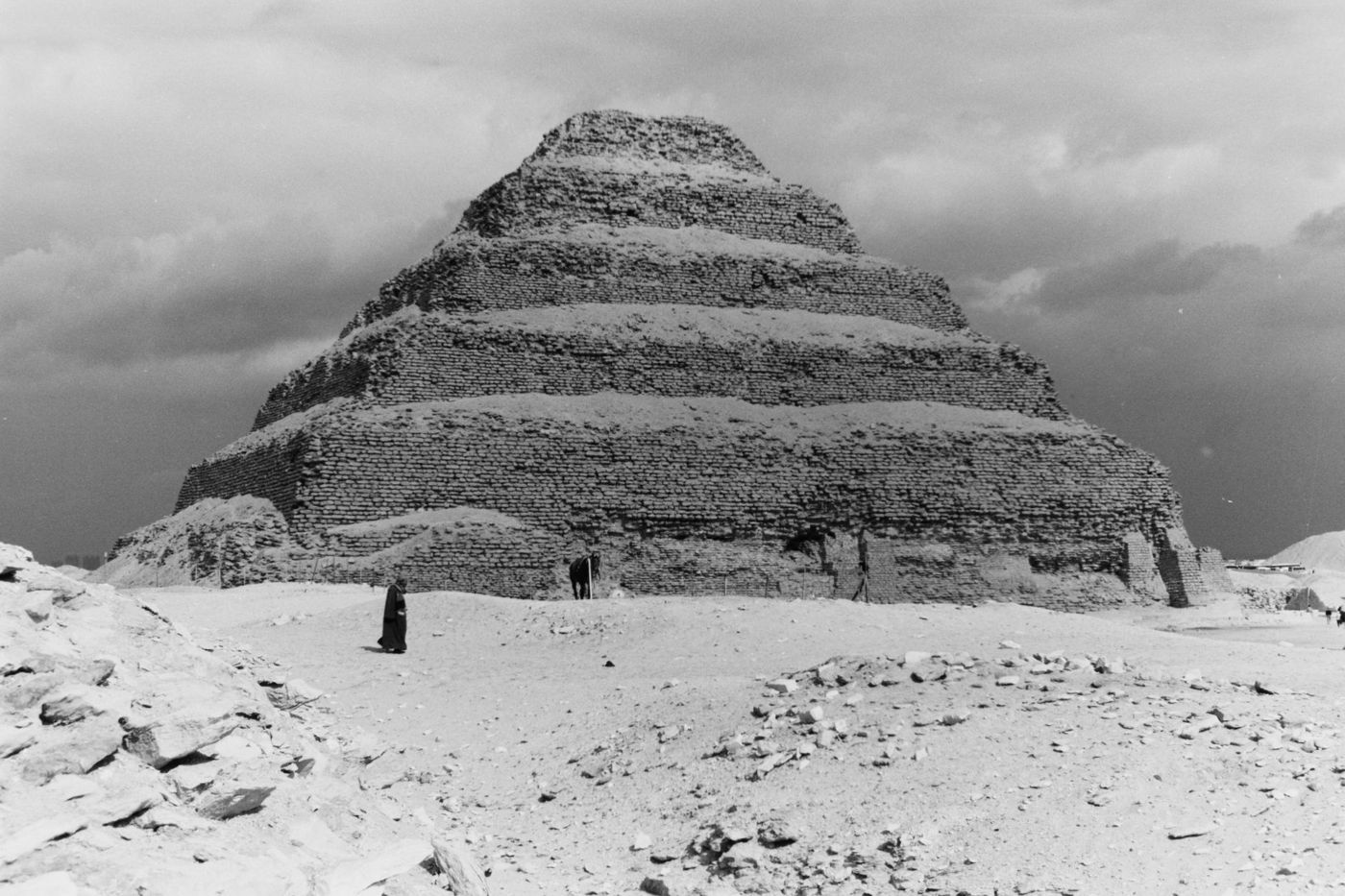
The Step Pyramid of Djoser. Six stacked levels, the oldest monumental stone structure in the world. Not yet a pyramid in the modern sense, but a stepped tower.
- Meidum, afterwards
The first attempt to fill in the steps to create a smooth surface. What stands there today is a tower in a pile of rubble.
- Dahshur, first attempt
The Bent Pyramid. The angle of inclination was changed during construction, which is why it rises more flatly at the top than at the bottom.
- Dahshur, second attempt
The Red Pyramid. The first successful pyramid with completely smooth surfaces, built by the same builder.
- Giza, around 2560 BC
The Great Pyramid of Khufu, built by the son of the same builder. The climax of the series, not its beginning.
- Abusir, 5th Dynasty
Considerably smaller pyramids, but elaborate temple complexes. The ambition shifted from mass to furnishings.
Saqqara: the beginning, and the ticket question
The beginning is in Saqqara, and it is older than most people think.
The Step Pyramid of Djoser was built around ninety years before the Great Pyramid of Khufu. It consists of six stacked levels and is essentially a stacked mastaba, i.e. the further development of a flat tomb form that already existed. Those who have seen it understand the structures at Giza differently because they know the intermediate stage.
Practically speaking, Saqqara is the most demanding of the three places, and that's because of the tickets. The official overview lists not one ticket but a whole series: for the site, for the Djoser Pyramid, for individual tombs, for the Serapeum, plus a comprehensive combination ticket that costs many times the simple site ticket. When a tour programme mentions the entrance fee for Saqqara, it almost never includes everything.
The Serapeum is the area most often missing. It consists of underground galleries with the sarcophagi of the Apis bulls, and it is the most impressive part of the complex. Ask for it explicitly before booking, rather than taking it for granted.
And a time note that determines the day: Saqqara closes at 4 p.m. according to official information, an hour earlier than Dahshur. If you want to do both in one day, go to Saqqara first.
Dahshur: failure and success side by side
Dahshur is the place where the development becomes visible, because failure and success stand side by side there.
The antiquities authority describes the process with remarkable openness. According to their description of the site, Sneferu, the first king of the Fourth Dynasty, chose the rocky plateau of Dahshur for his first pyramid in order to compete with the Step Pyramid of Djoser in Saqqara, but failed to complete it. This first attempt resulted in a bent shape, and at some distance he then built a complete pyramid, the Red Pyramid.
So there, just a few hundred metres apart, is the lesson: a structure whose angle had to be changed during construction, and next to it the first pyramid in history with completely smooth surfaces. The builder of these two was the father of the builder of Giza. According to common volume estimates, he piled up more stone mass in total than his son, just spread over several attempts.
For visitors, Dahshur is interesting for a second reason: both large pyramids are accessible, the entrance fee is far below that of Giza, and there are hardly any people there. If you skip the interior at Giza because of crowds, quotas or price, you get the same experience here under more pleasant conditions. The site is open daily until 5 p.m.
Next to the two well-known ones, there are also other pyramids from the Middle Kingdom, including the Black Pyramid, whose tip is now in a museum. They are in poor condition and also explain why little remains of some structures.
Meidum and Abusir
A fourth place belongs here for the sake of completeness, even if hardly anyone visits it: Meidum, much further south. There stands today a three-stepped tower surrounded by a mountain of rubble. Whether the casing came off during construction or only much later is disputed. For the series, the place is still important because it shows that the step from the stepped form to the smooth surface was not a matter of course. As a day trip, it is only worthwhile for travellers specifically following this construction history; the journey is long and there is little there besides the structure itself.
Then there is Abusir, and here the information is different from the other two.
Abusir is the site of the Fifth Dynasty, i.e. the period after Giza. The pyramids there are considerably smaller and in worse condition because they were built with less effort. The place is still interesting because what was saved in mass went into the furnishings: into the temple complexes, into reliefs, into an administration from which papyrus archives have survived. The series thus does not end with a break, but with a shift.
In practice, however, there is a limitation that you should know before planning. Abusir does not appear in the antiquities authority's list of excavation sites; attempts to access it under various spellings came to nothing. The site is therefore not part of the usual visitor operations, and descriptions by individual providers offering a visit cannot be verified against any official information. If you want to go, clarify access in advance rather than standing in front of a locked site.
Scientifically, however, the place is extremely well documented. The Czech Institute of Egyptology at Charles University in Prague has been excavating there for decades and publishes regularly. Anyone interested in what came after Giza will find more there than in any travel guide.
The three sites compared
Ordered by what matters for the decision: access, effort and yield.
| Site | Opening hours | Accessible | Crowds | Why go |
|---|---|---|---|---|
| Saqqara | daily until 4 p.m. | Djoser Pyramid, tombs and Serapeum, each with its own ticket | noticeable, but far below Giza | The beginning of the series and the oldest stone structure in the world |
| Dahshur | daily until 5 p.m. | Bent Pyramid and Red Pyramid, both accessible | low | Failure and success side by side, interiors without crowds |
| Abusir | not officially stated | to be clarified in advance | hardly any visitors | What came after Giza, if access is possible |
- Opening hours
- daily until 4 p.m.
- Accessible
- Djoser Pyramid, tombs and Serapeum, each with its own ticket
- Crowds
- noticeable, but far below Giza
- Why go
- The beginning of the series and the oldest stone structure in the world
- Opening hours
- daily until 5 p.m.
- Accessible
- Bent Pyramid and Red Pyramid, both accessible
- Crowds
- low
- Why go
- Failure and success side by side, interiors without crowds
- Opening hours
- not officially stated
- Accessible
- to be clarified in advance
- Crowds
- hardly any visitors
- Why go
- What came after Giza, if access is possible
Opening hours according to the official pages of the antiquities authority, as of August 2026. For Abusir, the authority does not maintain a page.
The development of the pyramid form to read up on
This page covers a construction history of around a century and a half in a few paragraphs. Those who understand the sequence in advance will see more on site, and for that, comprehensive accounts of the building history of the Old Kingdom are the obvious preparation.
Frequently asked questions
Which site is most worth it?
Saqqara for understanding, Dahshur for the experience. If you can only do one, choose Saqqara.
Can you go inside the pyramids there?
In Dahshur, yes, both large ones, and without crowds. In Saqqara, there are separate tickets for the pyramid, tombs and Serapeum.
Which is older, Saqqara or Giza?
Saqqara. The Step Pyramid was built around ninety years before the largest pyramid at Giza.
Can I visit Abusir?
The antiquities authority does not list the site in its list of excavation sites. Clarify access in advance.
Can everything be done in one day?
Giza, Saqqara and Dahshur are a full day. Go to Saqqara first because it closes earlier.
Why is there only a tower in Meidum?
Because that's where the first attempt to fill in the steps to create a smooth surface failed. The casing lies as rubble all around.