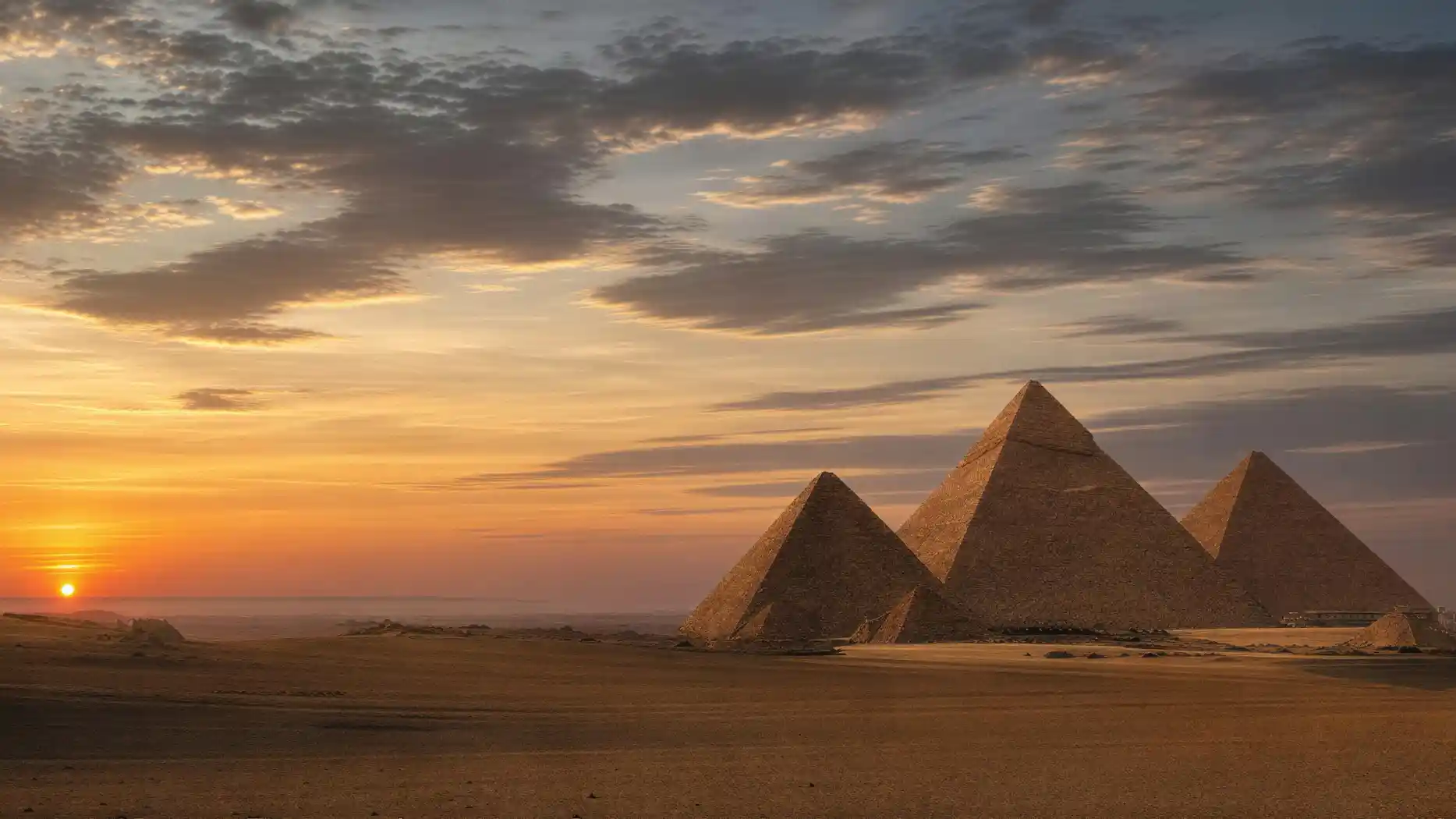
In March 2025, a story went around the world that had everything a story needs: a famous backdrop, new technology, impressive numbers, and the hint that established science had missed something.
The claim was that an extensive complex lay beneath the Giza plateau: several similar structures at the base of the middle pyramid, connected by pathways, along with vertical shafts reaching several hundred meters deep. It was presented at a press conference, not in a peer-reviewed journal.
Within days, the story was everywhere. It spread across news sites, social networks, and video channels, growing bigger with each share. Structures became halls, and halls became a city.
The scientific community objected just as quickly, from several angles. Egypt's antiquities administration also weighed in. In August 2026, there was a follow-up that puts the matter into perspective.
First, a distinction that sets this page apart from a reckoning. The goal is not to accuse anyone. The researchers involved have worked with radar data for years, and the question of whether something unknown lies beneath a site used for millennia is entirely legitimate. The only question is whether the evidence presented holds up. That can be checked without speculating about motives.
This page describes the case step by step: what was claimed, with what, why it doesn't hold up, and what that teaches about how to handle such stories.
The timeline
- October 2022
A journal publishes a paper by the same group on the radar method used, applied to the largest pyramid.
- March 2025
Press conference claiming extensive structures beneath the middle pyramid, with shafts hundreds of meters deep.
- A few days later
Objections from the scientific community. Critics point to lack of peer review, the selection of structures in noisy data, and the claimed depth.
- March 2025
Egypt's antiquities administration publicly states there is no scientific basis and that no mission is currently working there.
- June 2026
The same group presents radar images of an alleged second, buried Sphinx. Again, no publication.
- 10 August 2026
The journal retracts the 2022 paper. Reason: serious methodological flaws and statistical errors. The authors disagree.
Important for context: What was retracted was not the 2025 claim, but the paper describing the method used for it.
What exactly was claimed
It's worth examining what exactly was claimed, because the numbers themselves are telling.
Five similar structures near the base of the middle pyramid were mentioned, connected by pathways, along with eight vertical shafts said to reach a depth of 648 meters. In the retelling, this quickly became an underground city beneath the pyramids of Giza, even though that word did not appear in the original presentation.
Hold that depth in mind for a moment. 648 meters is more than twice the height of Cologne Cathedral, going down. The plateau itself sits about sixty meters above sea level. A structure at that depth would lie far below sea level and deep below the water table.
The precision is also striking. A number like 648 suggests measurement, while serious claims in such cases use ranges and error margins. This exact precision without error margins is the first warning sign that independent checks of the claim have noted.
Equally revealing is what was not claimed. There was no mention of measurement uncertainty, no description of how structures were distinguished from noise, and no naming of an institute that had independently verified the analysis. For a finding of this magnitude, those would be the first three things a journal would demand.
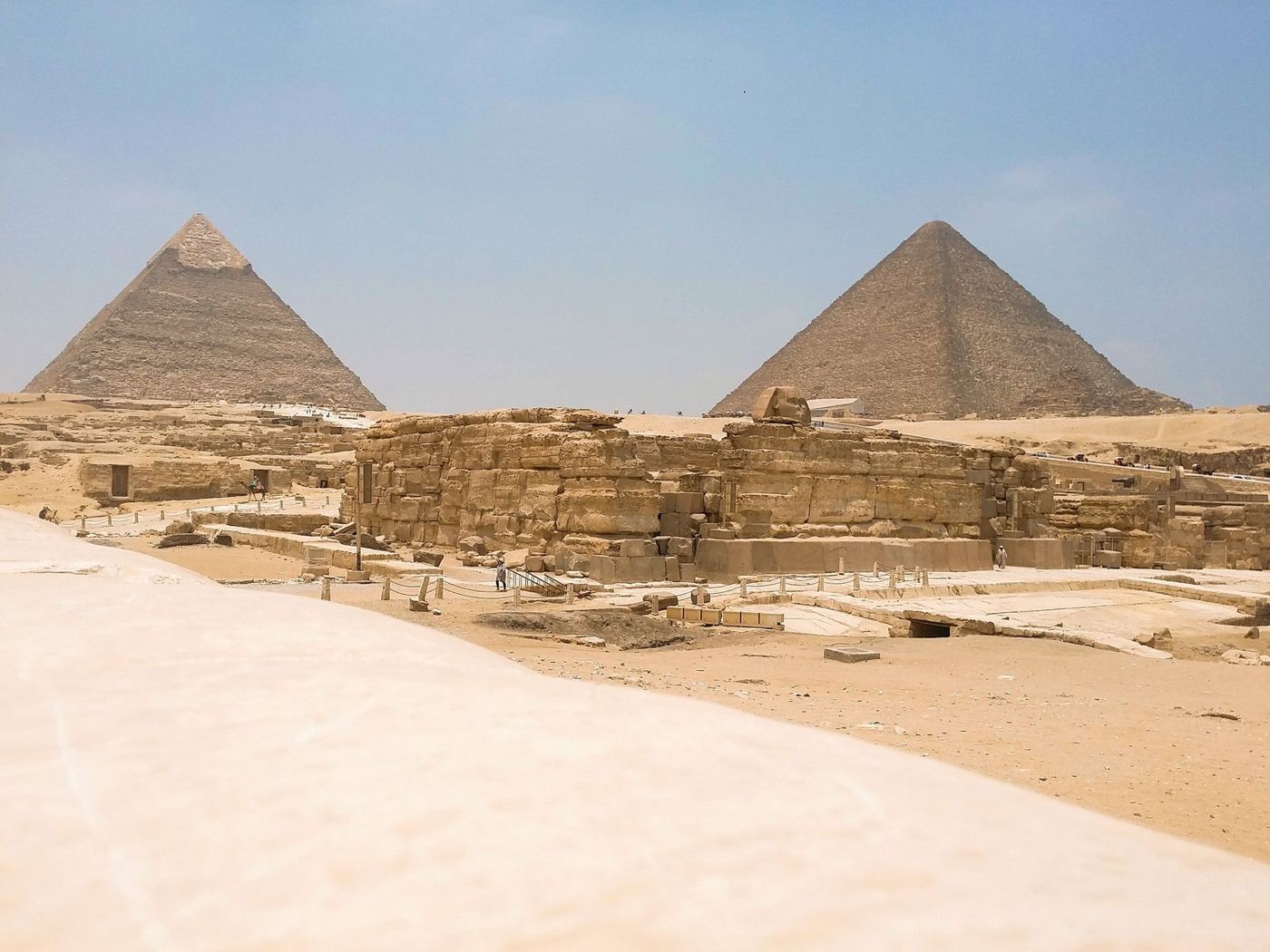
And finally: it was never about the largest pyramid, but its neighbor. A significant portion of later reporting got that mixed up.
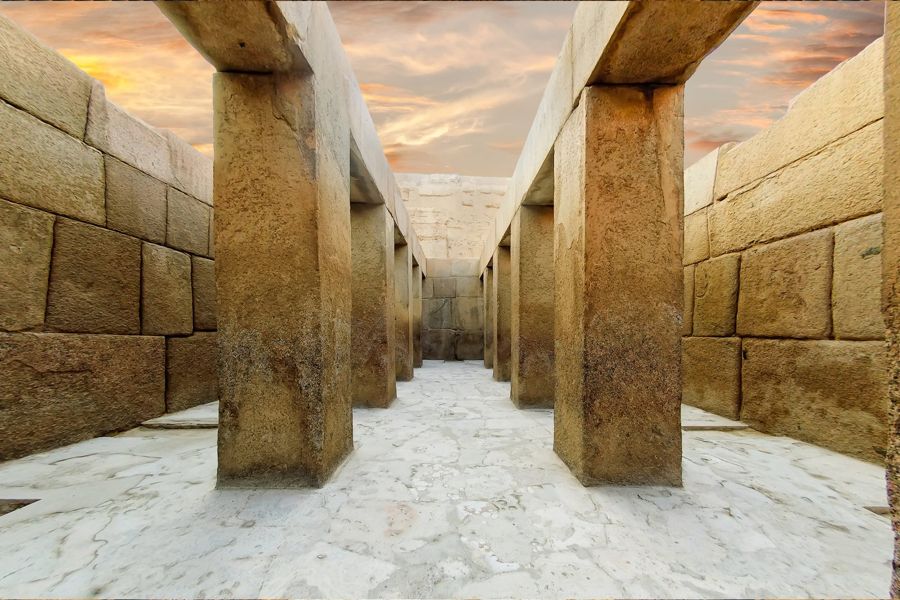
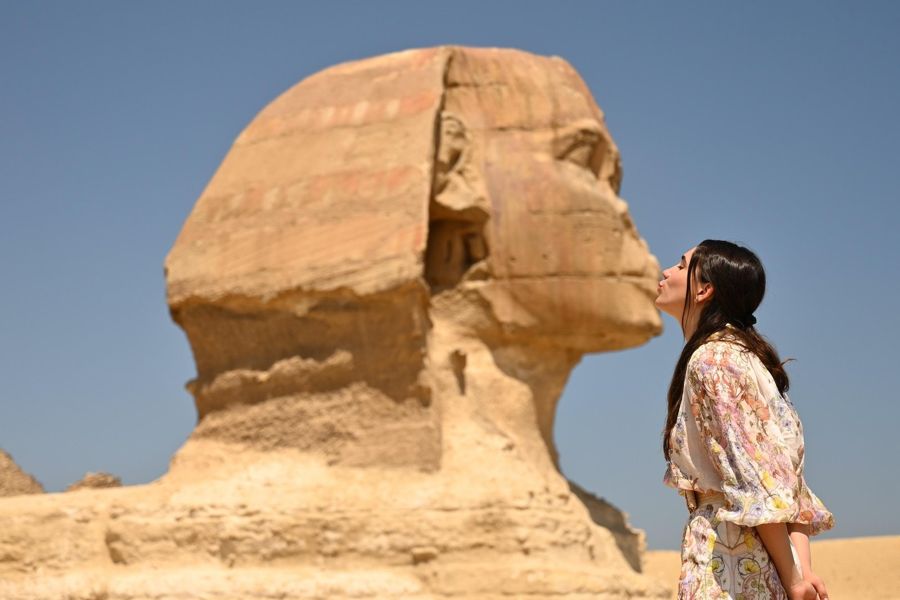
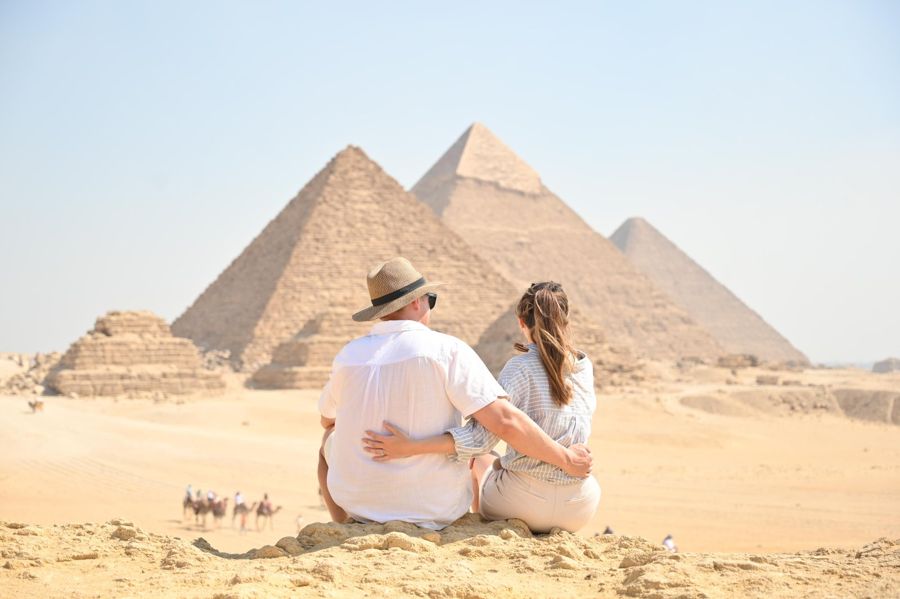
Half-day tour to the Pyramids of Giza and the Sphinx
- On site, you can clearly see which areas have actually been excavated
- A licensed guide separates findings from claims on location
- Includes plateau entry, a German-speaking guide, and hotel pickup
- Free cancellation up to 24 hours before start
- Claimed depth of the shafts
- 648 m
- Penetration depth of satellite radar in dry soil
- a few metres
- Penetration depth in solid rock
- practically zero
- Peer-reviewed publication on the claim
- none
- Status of the underlying methods paper
- retracted on 10 August 2026
- Position of the antiquities administration
- public contradiction, no mission on site
The objection is a question of physics
The key objection is not a dispute over interpretations but a question of physics, and it can be understood without specialized knowledge.
Satellite radar works with microwaves sent from the satellite and reflected off the Earth's surface. How deep these waves penetrate depends on the material: a few metres in very dry sand, less in moist soil, and practically nothing in solid limestone. This is not a matter of computing power or analysis, but a material property.
Likewise, lidar scans under the pyramids of Giza do not exist for the same reason, even though the term frequently appeared in the stories. Lidar probes surfaces with laser pulses and uses them to create a very accurate terrain model. It does not see through the ground, not even a centimetre.
The research group relies on a special analysis that supposedly extracts additional information from tiny vibrations. Exactly this analysis was in the 2022 paper, and exactly this paper was retracted in August 2026. The editors cite serious methodological flaws and statistical errors after a review. The authors consider the decision unjustified and have objected.
A second, independent objection concerns water. The water table at the plateau is well above the claimed depth; the lowest chamber of the known Osiris Shaft already stands in water at about thirty metres. A walkable structure several hundred metres deep would have been flooded for millennia. Whoever claims it tacitly also claims an explanation for how it stayed dry.
So the matter is not decided morally, but factually: there is currently no verified methodological basis on which the claim could rest.
How the story spread
How the story spread is the most instructive part of the case, and it has little to do with Egypt.
It started with a press conference, a format designed to attract attention and not to invite scrutiny. From there, news sites picked up the claims, usually with the caveat that the results were not peer-reviewed. This caveat rarely survived the next sharing. On social networks and video channels, the numbers remained and the reservation disappeared.
Then there is the imagery. From the start, there were colourful renderings of the alleged complex, generated from the analysis. Such images look like photographs of an existing object, but they are computational results, i.e. depictions of an interpretation. This difference is completely lost in the retelling: what looks like an image is read as evidence.
This was amplified by a quirk of the subject. At the same site, there are real, peer-reviewed discoveries: in 2017 a large void in the largest pyramid, in 2025 the confirmation of a corridor behind the north face. Anyone who has heard about them finds the next story plausible. The proven finds make the unproven ones credible.
There is also a mechanism that always kicks in with corrections. The story reached a millions-strong audience, the criticism reached a fraction, and the retraction of the methods paper a year and a half later reached almost nobody. Posts relying on the retracted paper remain online and continue to carry the claim.
One detail is noteworthy. The now-retracted 2022 paper had been accessed very often before its retraction and was cited as evidence in countless posts. A retraction no longer reaches that readership because they have no reason to look again. So the evidence continues to circulate even though it formally no longer exists.
This is not a reproach to individual participants. It is the normal functioning of a system in which attention flows faster than verification.
How to assess such a story in five minutes
- Look for the publication
Is there a peer-reviewed paper with a title, journal, and date? A press conference is not one.
- Check the method
Is the method named, along with penetration depth and error margins? Does the claimed depth fit?
- Count the institutes
Are institutions behind it, or only individuals? Several independent measurement series are the gold standard.
- Listen to the responsible authority
Has the country's antiquities administration spoken? They hear about excavations first.
- Ask about the negative result
Does the report also mention what was not found? If someone reports only hits, they probably selected rather than searched.
Are there real finds under the site?
Finally, the question that almost gets lost in all this: Are there any new finds under the pyramids of Giza, and if so, what are they?
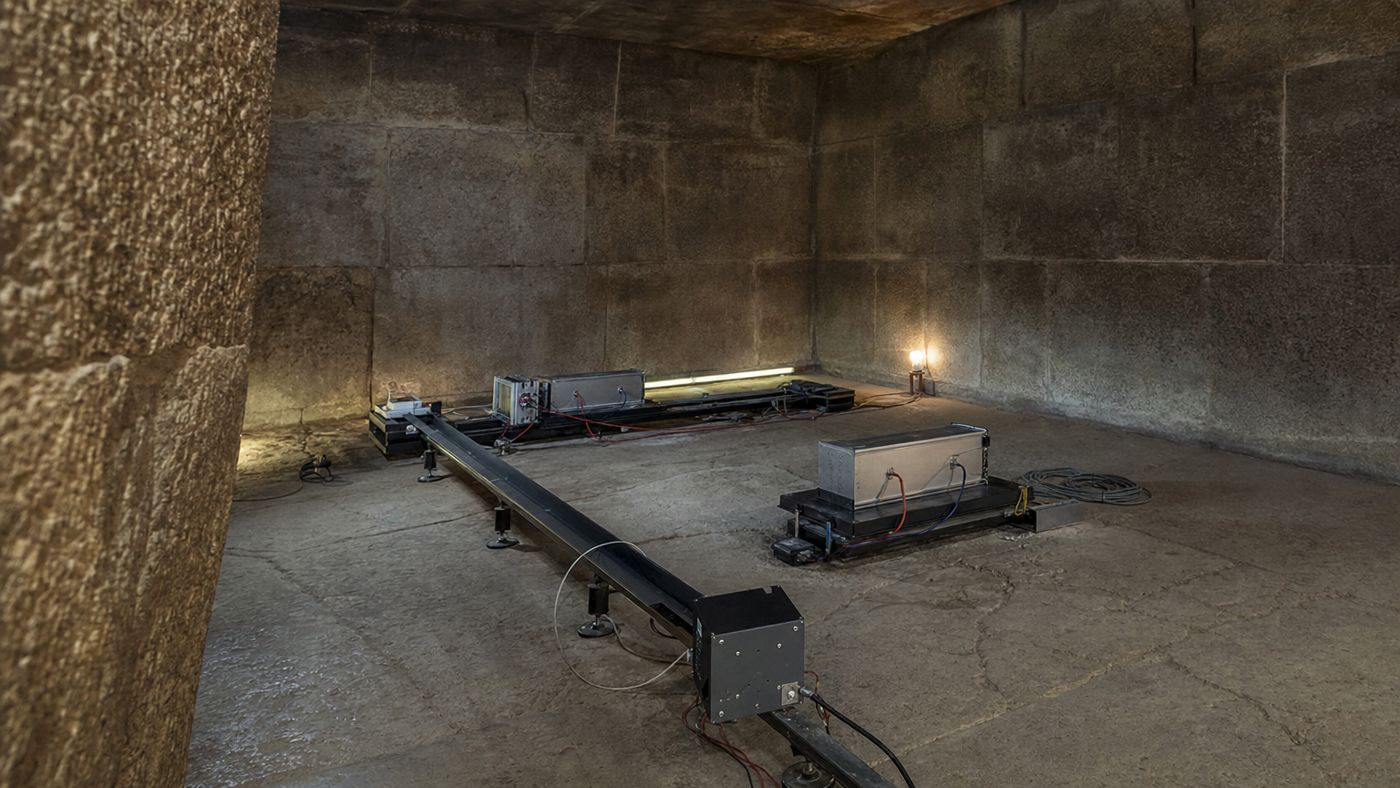
Yes, there are, and they look different. In the largest pyramid, a void of at least thirty metres in length was confirmed in 2017, using muons from cosmic radiation, measured over months by several institutes with different equipment. In 2025 came the confirmation of a corridor behind the north face, backed by three independent methods and for the first time inspected with a six-millimetre-thin endoscope.
Both findings took years, were independently verified multiple times, and were published in peer-reviewed journals. Both are less spectacular than any headline: an empty corridor with a rough floor, a void with no known contents.
Beneath the site itself lie real structures, including a three-storey shaft with a sarcophagus in water. There is a separate page on this portal about that.
It's worth keeping the scale in mind. The corridor confirmed in 2025 is nine metres long and lies behind a facade that everyone has been able to see for four and a half thousand years. That it took years to detect says nothing about the sluggishness of research, but something about the difficulty of the task. Whoever finds something at such a well-studied structure finds something small, and finds it slowly.
The honest bottom line is: something new is indeed being found at this site, continuously. Just in tens of metres rather than hundreds, with error margins instead of round numbers, and without press conferences.
Frequently asked questions
Was an underground city found?
No. For the 2025 claim, there is no peer-reviewed publication, the antiquities administration contradicted it, and the underlying methods paper was retracted in August 2026.
Was the claim about the Great Pyramid of Khufu?
No, the middle pyramid. A large part of the reporting got that mixed up.
Can satellite radar see that deep?
No. Microwaves penetrate a few metres in dry soil, and practically not at all in solid rock. 648 metres is not achievable with this method.
Does the retraction mean the authors cheated?
No. The editors cite methodological flaws and statistical errors. The authors disagree with the decision. A retraction says nothing about intentions.
So is there nothing new at all?
There is. Two voids in the Great Pyramid of Khufu have been confirmed and published in recent years, one of which has since been seen with a camera.
Plateau entry as a QR code on your phone
There is nothing to see on site regarding the radar claim. The open excavation areas and shafts are within the regular ticket area.