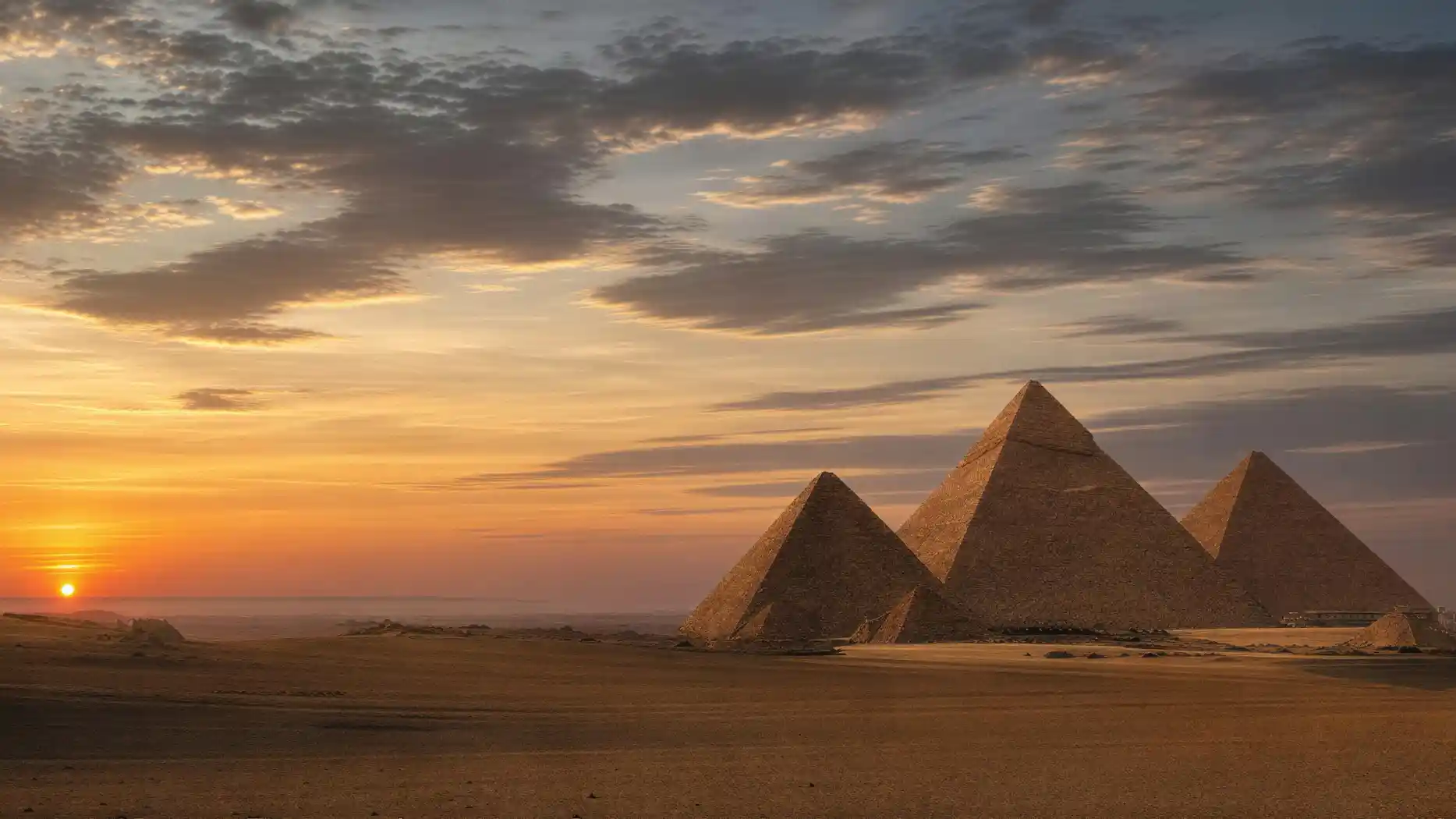
The first thing you should know about quad riding at the Pyramids of Giza: no one rides between the pyramids.
The pictures that advertise these tours suggest otherwise. They show a vehicle in the sand, with the three structures behind, and you get the impression that you're driving across the site. That's not true and can't be true. The site is a designated archaeological site, and motorized vehicles are not allowed inside the fence since visitor operations were reorganized. Tour buses also have to stay outside, and visitors move on foot and by electric shuttle.
So riding happens outside, in the open desert west and south of the site. From there, the pyramids are clearly visible, sometimes even better than from inside, because you have the necessary distance. You just aren't close to them.
The second point is just as mundane and just as rarely mentioned: the terrain where you ride is not empty. The desert west and south of the plateau is not fully archaeologically explored, and the routes therefore run where the operators are allowed to drive, not where it would be most scenic. If you expect to freely roam the dunes, you're actually following a fixed route.
This distinction determines whether such a tour is right for you. If you want to experience the structures up close, you're booking the wrong thing. If you want a ride through sand dunes with a very famous backdrop, you're booking the right thing.
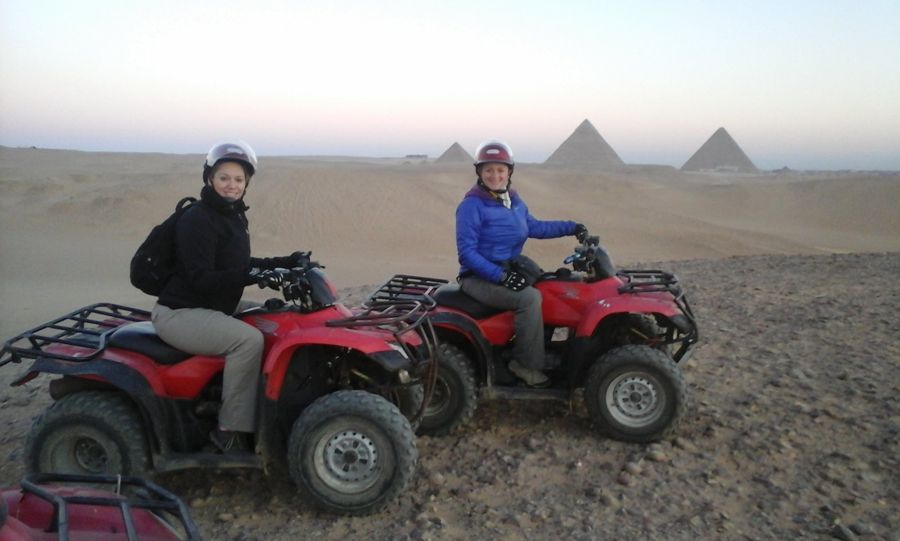
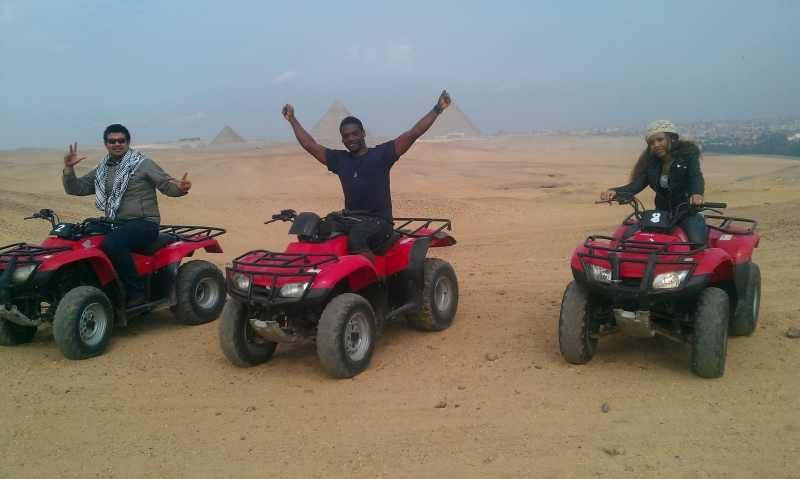
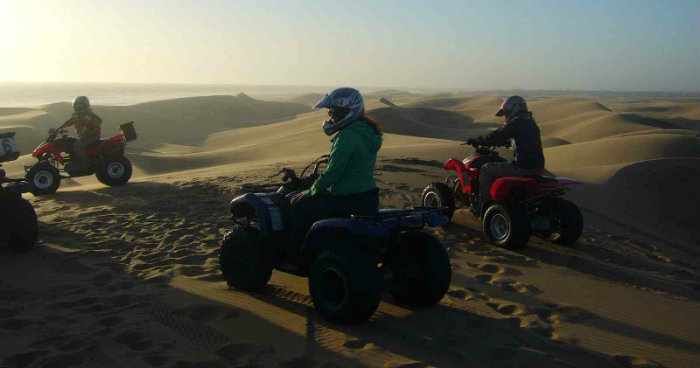
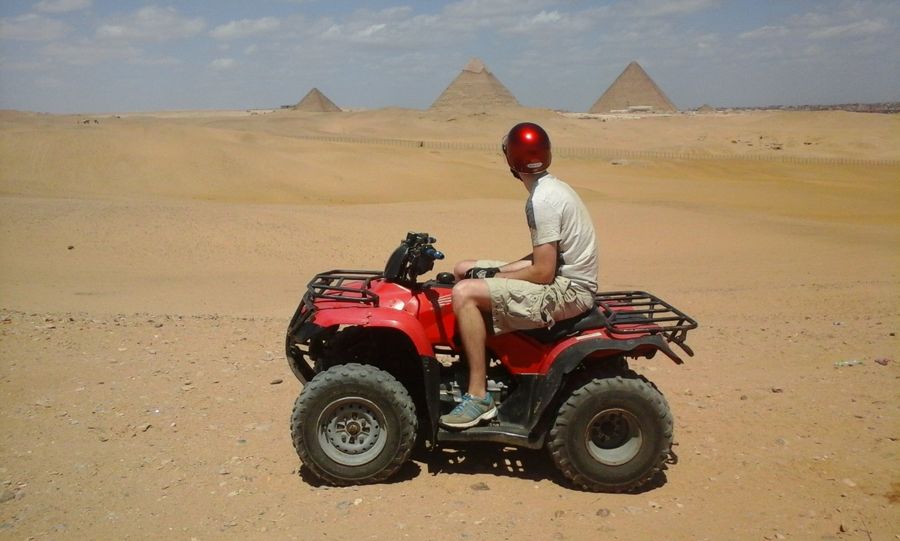
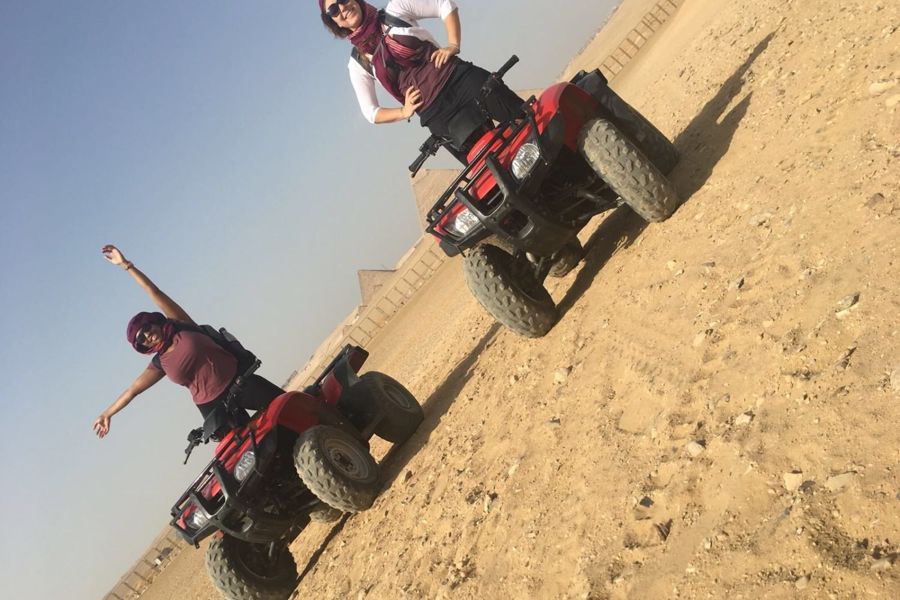
Quad safari in the desert terrain near Giza
- One to two hours, i.e., the short option as a supplement to a plateau visit
- German-speaking guide and hotel pickup are included
- The plateau entrance fee is not part of the tour but can be added
- Free cancellation up to 24 hours before start
Where you actually ride
- Fenced excavation siteMotorized vehicles are not allowed here.
- Open desert west and southThe quad routes run here, outside the fence.
- City edge in the eastDevelopment up to the fence, no riding possible.
- Sightline to the three pyramidsThe reason the routes lie in the west and southwest.
The map is schematic. The exact routes are set by the operators and may change.
What a quad tour actually looks like
A quad tour in the desert near Giza typically lasts one to three hours, and a large part of that is not riding time.
The process is similar for all providers. Pickup at your accommodation, short drive to the desert edge, briefing at the vehicle, helmet and goggles issued, then the actual loop. Along the way, there's at least one stop at a viewpoint where all three pyramids line up in your shot. This stop is why most people booked the tour, and it takes longer than you think.
Clothing is the second underestimated point. Long pants and closed-toe shoes aren't a comfort suggestion but the difference between a scrape and a burn on a hot exhaust pipe. A scarf over mouth and nose is essential, because the wind carries the dust of the rider in front straight into your face, and sunscreen works worse on a moving quad than you'd think, because you hardly feel the sun due to the wind.
The vehicles are automatic quads without manual shifting. If you can ride a bicycle, you can handle it; in Egypt, no one requires a driver's license because you're not riding on public roads. The usual minimum age for your own vehicle is around sixteen, with younger passengers sitting behind an adult. It's not legally regulated but left to the operator, so it should be clarified before booking.
How much of it is actually riding surprises many. For a ninety-minute tour, experience shows that twenty to thirty minutes go to pickup and return, ten to briefing and equipment, and another fifteen to twenty to the viewpoint stop. That leaves maybe forty minutes in the saddle. That's not a criticism of the providers but the normal structure of such offers, and it explains why the short options suffice for most.
As for the best time, there's only one sensible answer, and it's the same as for the plateau: early morning or late afternoon. At noon, the open desert without shade and with a motor under you is no place to spend two hours voluntarily.
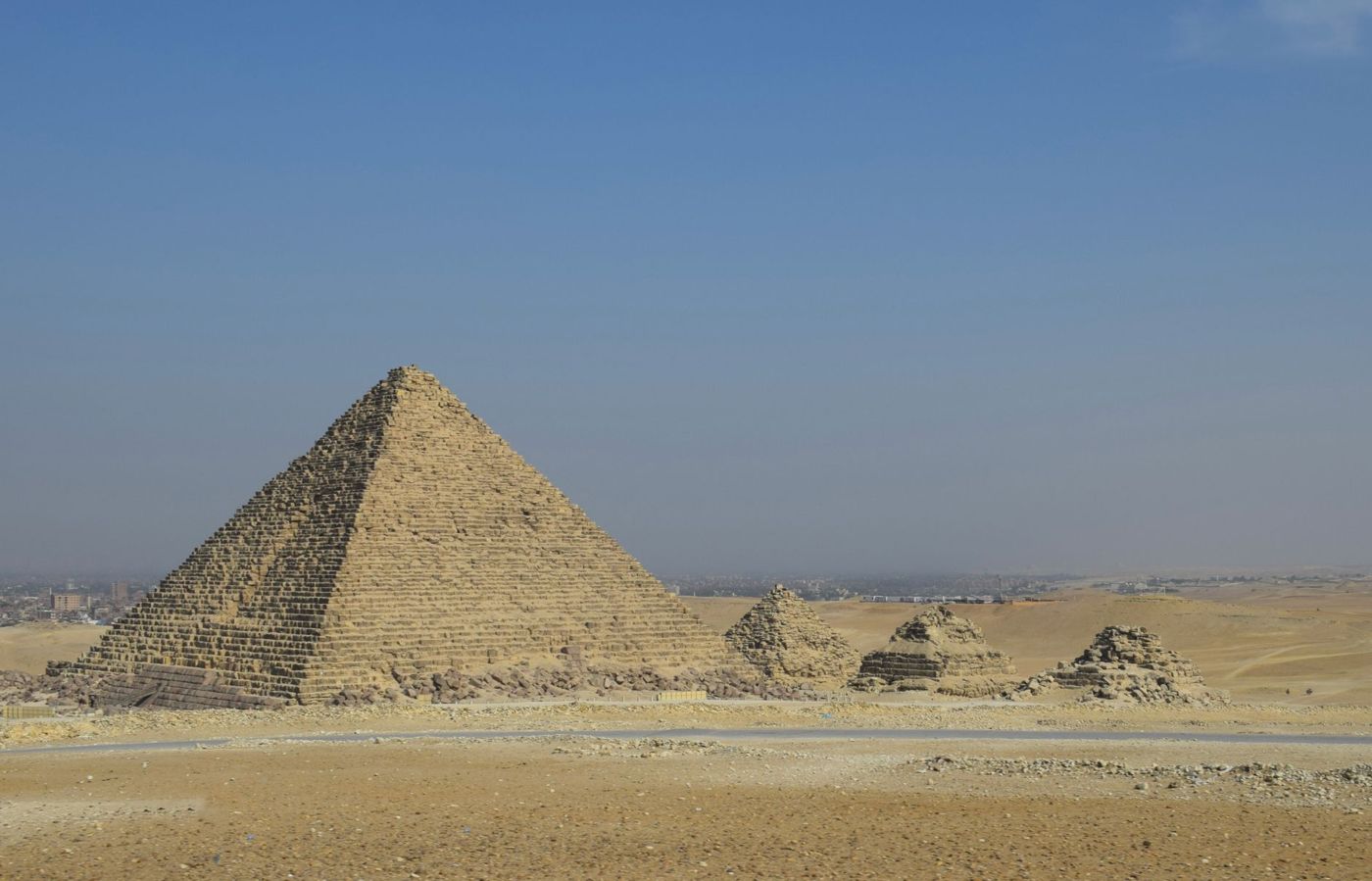
What the promotional pictures leave out
Now to the part the promotional pictures leave out. In Egypt, quads are among the activities for which the Federal Foreign Office explicitly warns, and not because of the guests' driving style.
The warning concerns the condition of the equipment. It's not in a travel blog but in the official travel and safety advisories for Egypt, and it mentions quads in the same breath as two other activities that regularly make headlines.
Due to the poor technical condition of vehicles, equipment, and gear such as hot-air balloons, diving gear, and quads, accidents occur relatively often.Federal Foreign Office, Travel and Safety Advisories Egypt
How to do it anyway
This doesn't lead to a recommendation to skip it but to a recommendation on how to do it.
First: book through an operator, don't negotiate at the fence. The same advisories explicitly require licensed local guides and officially recognized operators for desert excursions. An offer made by someone in the parking lot meets neither, and in case of damage, there's no one to hold responsible.
Second: inspect the vehicle before you get on. Brakes, tires, steering, and whether a helmet in your size is available. If no helmet is offered, that's not a detail but a reason to cancel. Quads have a high center of gravity and tip over sideways; that's the typical accident, and it happens at low speed just as at high speed.
Third: check your insurance before you travel. Many international health insurance plans treat motorized off-road rides as increased risk and exclude them or require an add-on. The official advisories recommend coverage that includes rescue and repatriation anyway. That's not a theoretical question if you fall in the sand five kilometers from the nearest paved road.
A word about driving style, because that's the part you control. Typical falls don't happen at top speed on a straight but when turning in soft sand, when starting up a dune in the wrong gear, and when trying to ride one-handed for a photo. If you stay behind the lead vehicle, follow the track of the rider in front, and stop to take photos, you've largely eliminated the risks.
And fourth, less dramatic but more common: sand. It gets everywhere, into cameras, lenses, watches, and ears. If you bring a camera, keep it closed and don't change lenses outdoors.
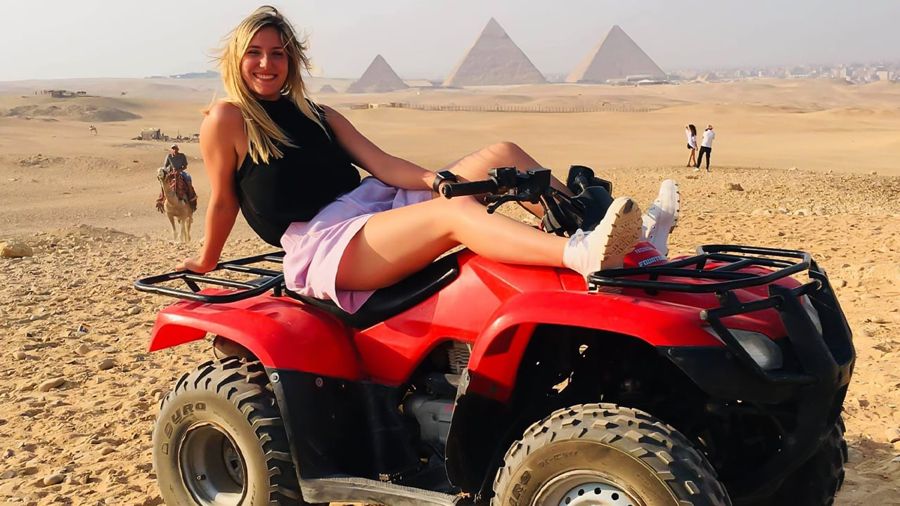
Private quad ride to the dunes with a pyramid view
Three hours as a privately booked ride, with German-speaking support and pickup. As one of the few offers of this kind, it's explicitly marked as accessible without barriers.
Is it worth it?
Pros
- The only way to see all three pyramids from a distance, staggered and without the fence in the shot
- Short, inexpensive compared to guided day tours, and bookable with little preparation
- Also works for travelers who've already seen enough of the plateau itself
- The sunset over the desert is worth seeing regardless of the structures
Cons
- No contact with the structures, no archaeological information, no entrance included
- Equipment condition is the documented weak point, and you only see it on site
- Noise, dust, and exhaust are part of it, also for other guests at the viewpoint
- Insurance coverage isn't automatic and must be clarified beforehand
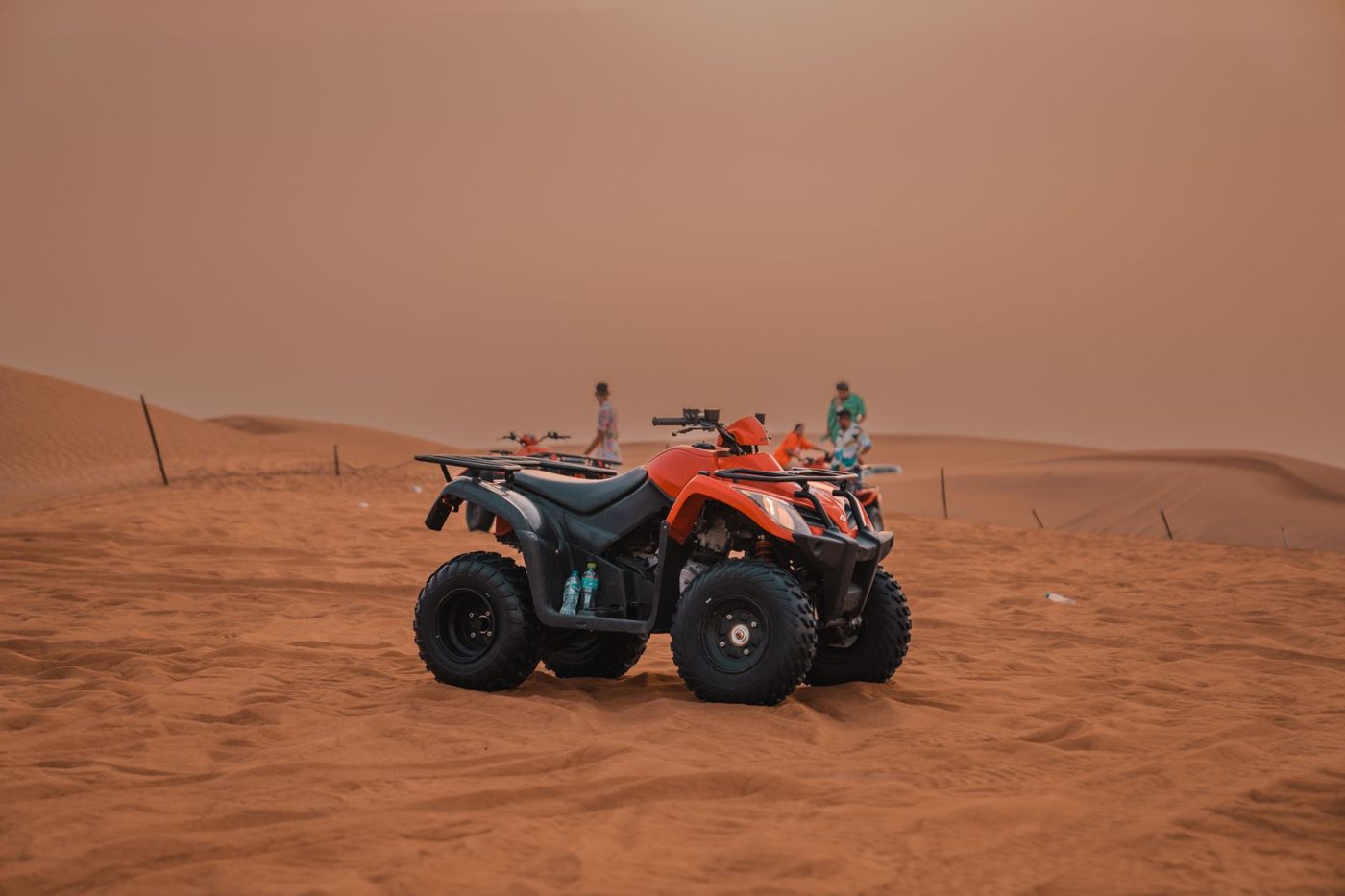
Both on one day?
The question remains whether you should do both on one day. Quad tours around the plateau can be combined with a visit, and there are offers that do exactly that.
Logistics speak in favor. One trip instead of two, one driver, one morning. If you only have one day in Giza, you get both without splitting the day twice.
Finances also speak in favor. Two separately booked offers cost more together than a combined one, especially because of the double pickup. How big the difference is depends on the provider and can only be compared in a specific case.
Fatigue speaks against it. The plateau on foot costs more energy than expected, and if you then sit on a vehicle for two hours in the sun, you'll get little out of the second part. Conversely, it works better: first the short ride early in the morning, then the site while your legs are still fresh.
There's a third way that's rarely mentioned and is best for many: the ride on a different day than the plateau visit, instead at sunset. The offers are short enough to fit into an otherwise busy day, and the late-afternoon light is why the pictures from the desert look better than those from the morning.
For families, another consideration comes in. A child riding behind an adult usually has enough after twenty minutes, and the short offers are the more sensible choice here than the three-hour ones. That's true even if the price difference is small.
If you book the combination, watch for one detail. With pure quad offers, the plateau entrance fee is usually not included but can be added. With combined offers, it's usually included, but not always. That's where the two product types differ, and it's not in the title but in the list of inclusions.
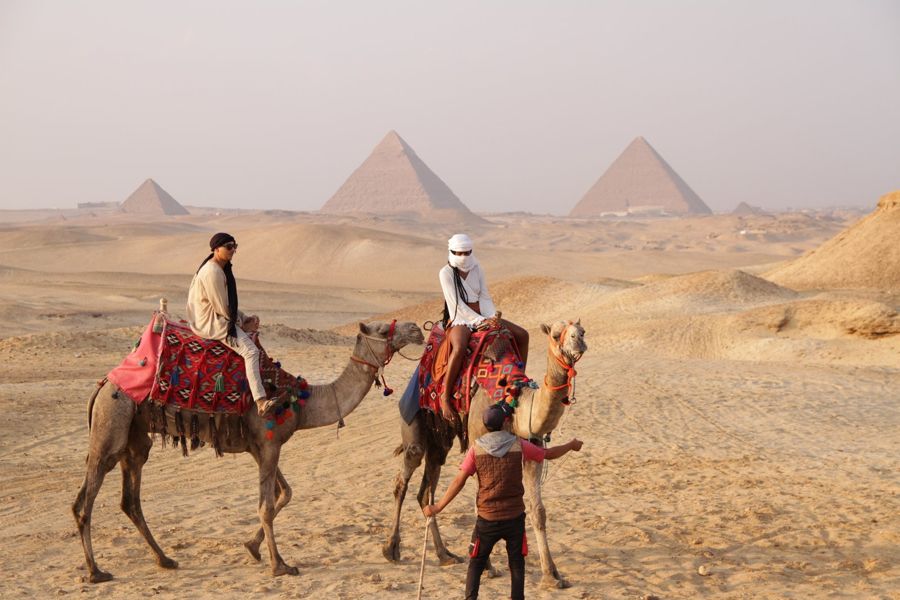
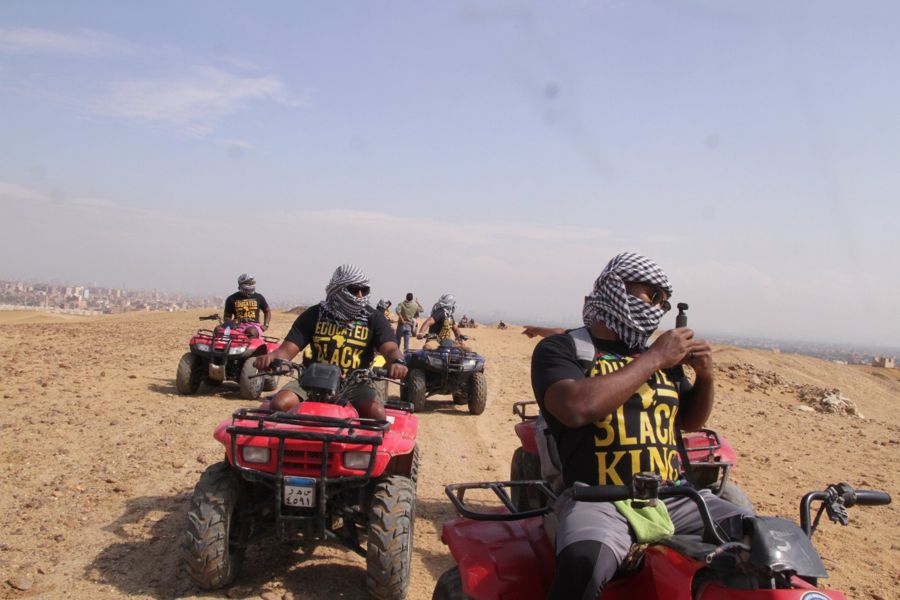
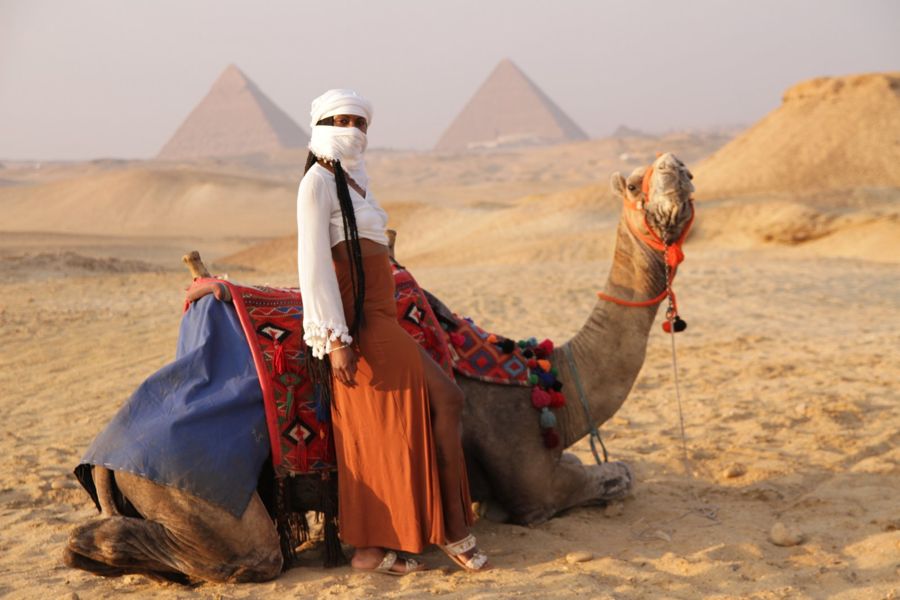
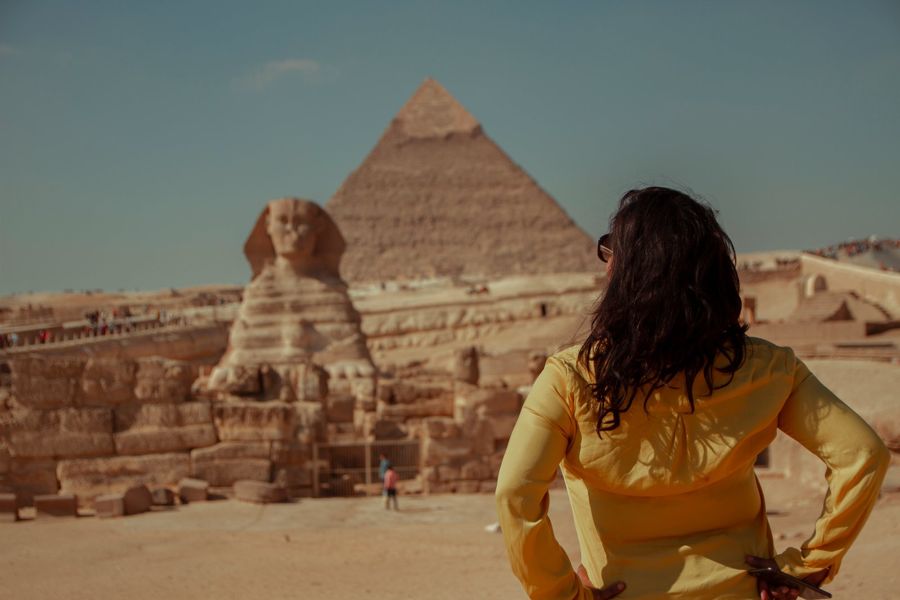
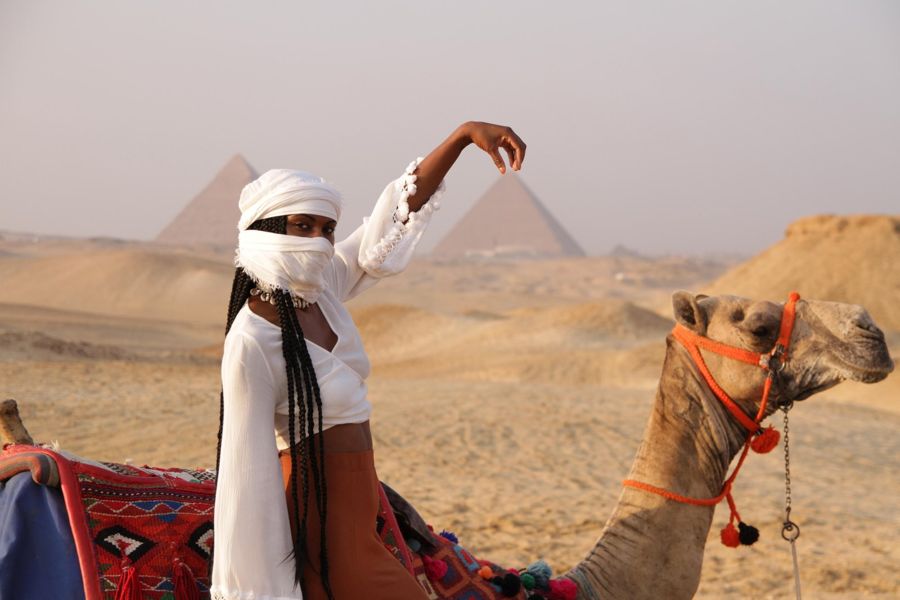
Plateau visit and quad safari on one day
- Combines a guided tour of the site with a ride in the desert, with only one pickup
- The plateau entrance fee is included here, unlike with pure quad offers
- Five hours, German-speaking guide, with priority entry
- Free cancellation up to 24 hours before start; lunch is not included
Frequently asked questions
Do you really ride between the pyramids?
No. Motorized vehicles are not allowed inside the fence. Riding happens in the open desert outside, with a view of the structures.
Do you need a driver's license?
Not in Egypt, because you don't ride on public roads. The vehicles are automatic quads without manual shifting.
From what age can you ride yourself?
Around sixteen is typical for your own vehicle; younger passengers sit behind an adult. The operator regulates this bindingly.
Is plateau entrance included?
With pure quad offers, usually not, only as an add-on. With combined offers, often yes. Check the inclusions before booking.
Will my travel insurance pay for a quad accident?
Not automatic. Many policies treat motorized off-road rides as increased risk. Clarify this with your insurer before your trip.