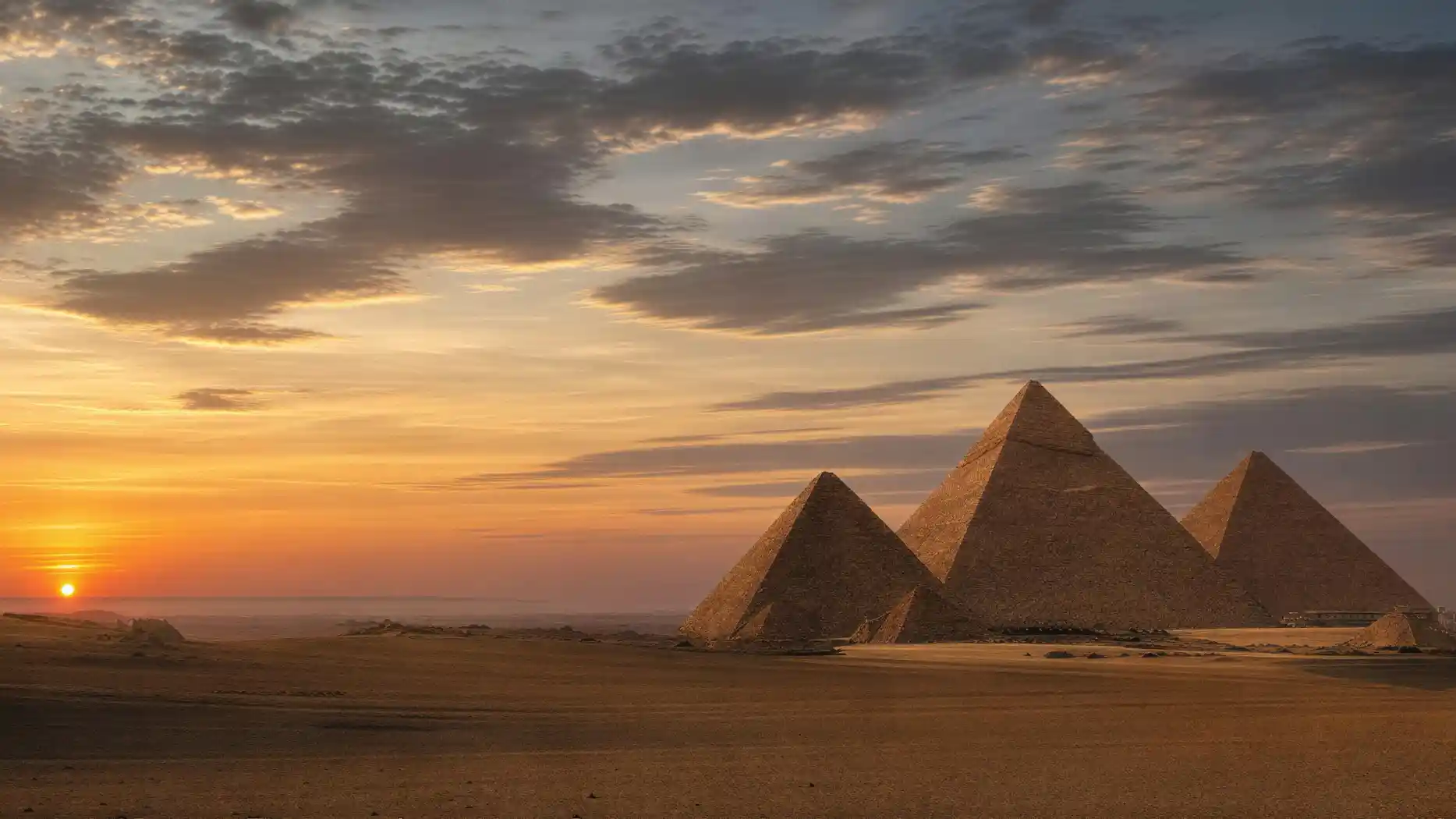
The answer to the question of who is buried in the pyramids of Giza is shorter than most expect: no one today.
In none of the three great structures has a king ever been found. No mummy, no wrappings, no grave goods, no canopic jars. In the burial chamber of the largest pyramid stood a sarcophagus without a lid, and it was empty. The middle one was similar. In the smallest, something was found, but it dates from entirely different eras, and more on that shortly.
It is important to distinguish between intention and evidence. The complexes were built as tombs, as the entire construction plan proves: sarcophagi, sealing stones, mortuary temples, cult operations. Who was to be buried is also known. Whether the burials actually took place and when the chambers were cleared is another question, and it remains open.
This gap between plan and find is the actual subject of this page. It also explains why the search for a mummy in these structures comes up empty and why the more exciting burials of the site lie elsewhere.
First, a clarification about the term. A mummy is a preserved corpse, and the preservation technique we know from museums was still in development at the time the pyramids were built. The elaborate embalming with wrappings, amulets, and masks that shape the image dates from much later periods. Even if a body had been found in one of these chambers, it would not have looked like what most people expect.
Because there are plenty of burials in Giza, several thousand in fact. Just not where everyone looks.
Intended and actually found
- Great Pyramid, intended
- King Khufu
- Great Pyramid, found
- empty sarcophagus without lid
- Pyramid of Khafre, intended
- King Khafre
- Pyramid of Khafre, found
- empty sarcophagus, opened in 1818
- Pyramid of Menkaure, intended
- King Menkaure
- Pyramid of Menkaure, found
- coffin and bones, both from later periods
- Royal mummies of the 4th Dynasty in total
- none preserved
Who Was Buried in the Great Pyramid
Who was buried in the Great Pyramid, if one asks about intention? The builder himself, King Khufu.
This is well documented, not by an inscription in the structure, but by markings of the work crews in the relieving chambers above the burial chamber that contain his name. These rooms were never meant to be entered, which is why the markings are considered particularly reliable. The official description of the structure follows this attribution.
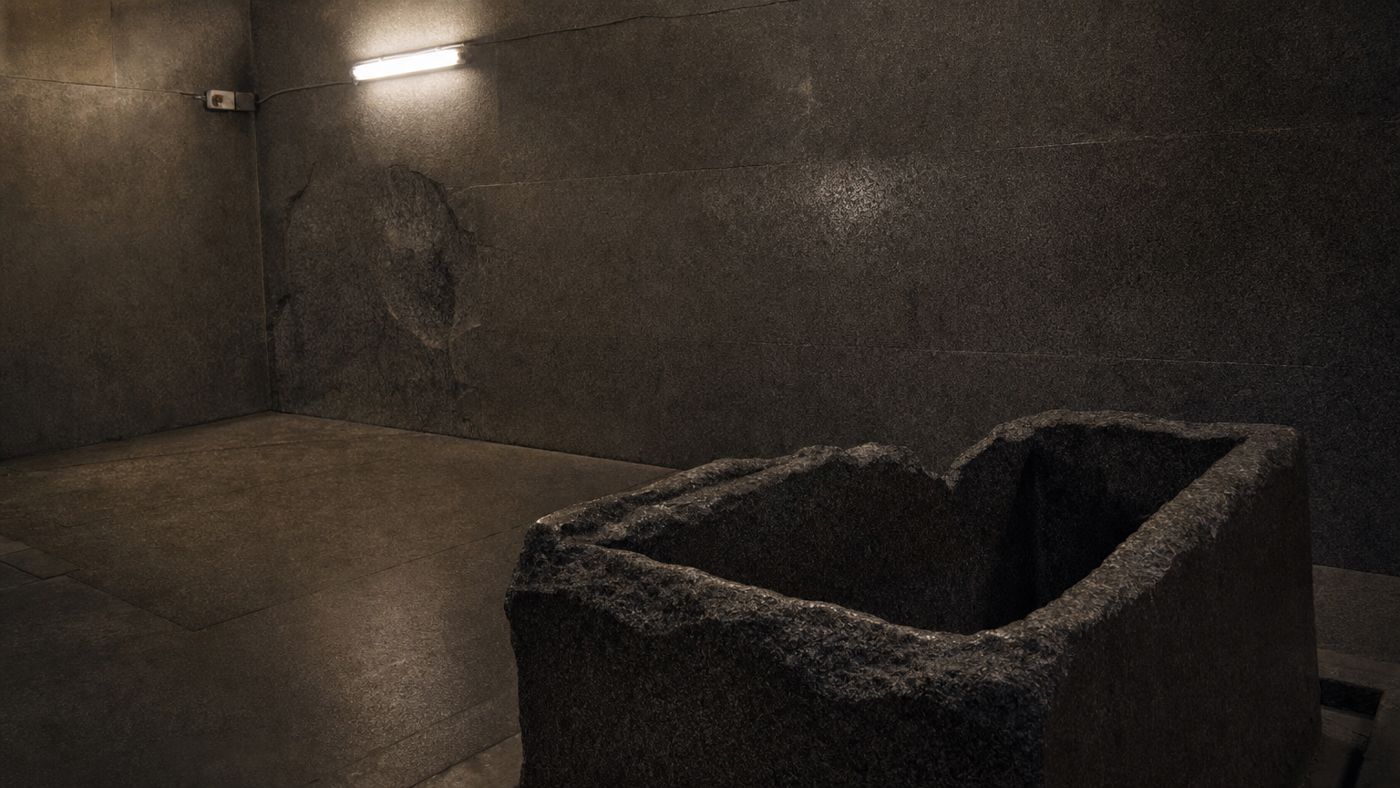
So there was a tomb in the Great Pyramid, with a granite sarcophagus so wide that it had to be installed before the ceiling was closed. After the burial, the ascending passage was sealed with multi-ton granite blocks.
What happened afterward, no one knows. When in the 9th century a tunnel was driven into the north face and the passage system was reached, the chamber was already empty. Between the burial and this time lie three and a half thousand years, and in that span the administration collapsed several times, necropolises were left unguarded, and royal tombs were systematically looted. For other sites this is abundantly documented, for this one specifically not.
One detail speaks for looting in antiquity. The sarcophagus shows damage to edges and a corner, as occurs when it is forced open, and a lid is completely missing. Whoever opens a sarcophagus properly lifts the lid and sets it aside; whoever breaks it open smashes it. No fragment of the lid has ever been identified.
It is also conceivable that there was never a burial here, for instance because the king was buried elsewhere. Evidence for that is also lacking. The sealing stones argue against it, for no one seals an empty passage.
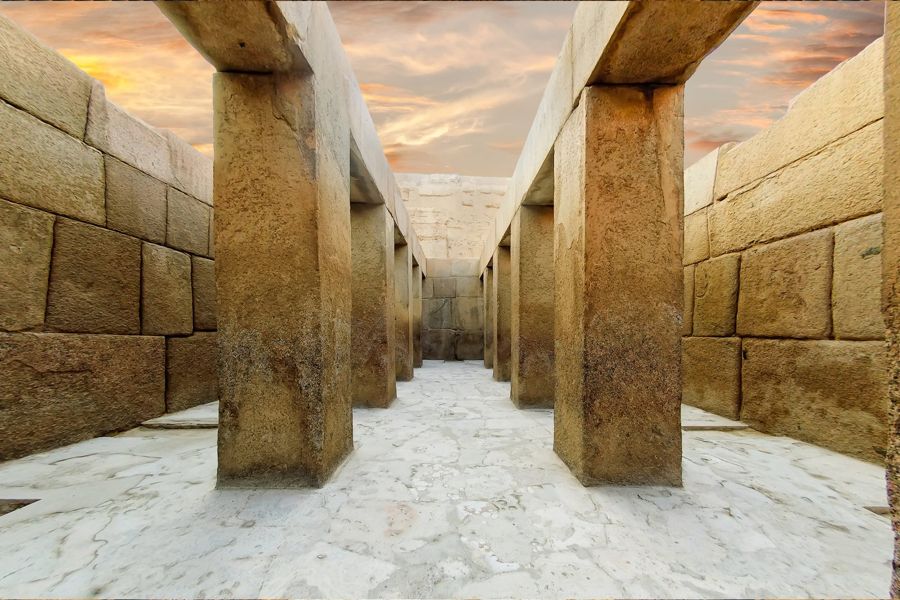
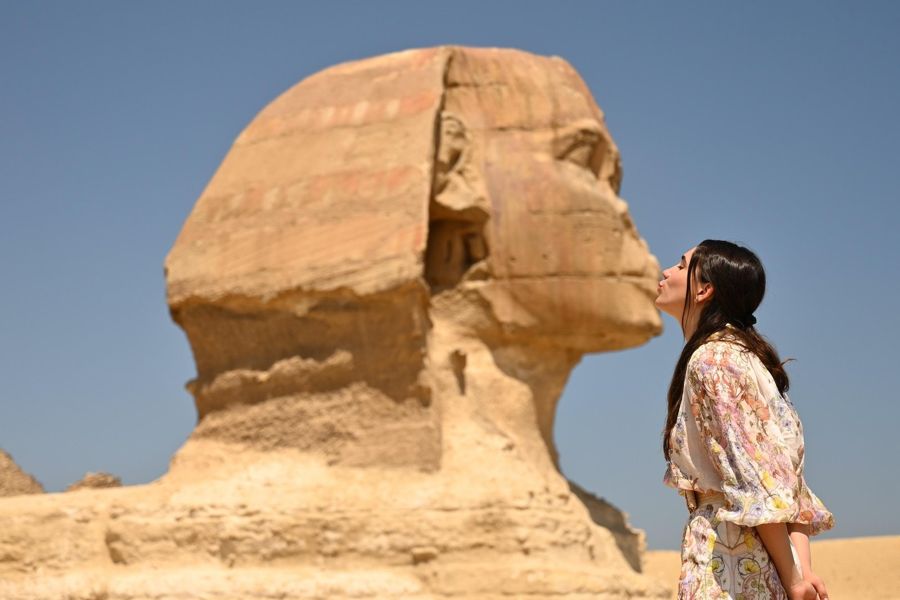
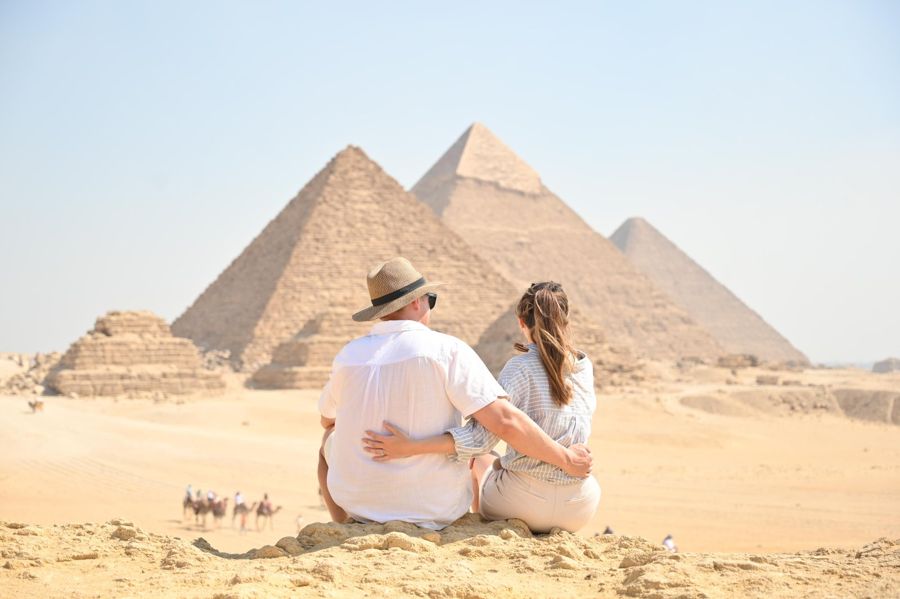
Half-day tour to the Pyramids of Giza and the Sphinx
- The mastaba fields with the actual burials lie along the circular route
- A licensed guide explains what was found in the chambers and what was not
- Plateau entry, German-speaking guide, and hotel pickup are included
- Free cancellation up to 24 hours before start
The Find in the Smallest Pyramid
In the smallest of the three pyramids, something was indeed found, and this find is a lesson in how carefully one must read such reports.
In 1837, a British officer used explosives to gain access to the interior. In the burial chamber stood a basalt sarcophagus; he also found a wooden coffin with the king's name and human bones. At first glance, it looked like the burial everyone had been searching for.
It was neither. The wooden coffin was later dated and comes from a time about one and a half millennia after the pyramid was built, so it belongs to a later renewal of the burial. The bones are even younger: according to current knowledge, they date from Christian times, an era when the pyramid was already over two and a half thousand years old. It is a later interment in a long-empty room.
The lid of the wooden coffin now lies in the British Museum. The basalt sarcophagus was lost on the way to England when the ship sank.
This finding is also a good example of the usefulness of scientific dating. To the naked eye, everything fit together: a coffin with the right name, bones inside, in the right chamber. Only measurement separated three different time levels that lay in the same room. Without it, books would still say today that the king had been found.
Thus, ironically, the only pyramid with a find has yielded not a single object from the time of its builder. What was found documents not the burial but the later use of the room.
The Shaft of 1925
The strangest find on the site concerns not a pyramid but a shaft, and it remains unexplained to this day.
In 1925, an excavation team east of the largest pyramid came upon a vertical shaft carefully filled with stones. At the bottom lay an untouched chamber. Inside stood gilded furniture of high quality: a bed, a carrying chair, a canopy, along with jewelry and vessels. Also found was a container with embalmed entrails.
The equipment is attributed to the mother of the builder of the largest pyramid. It is the richest undisturbed find the plateau has ever yielded, and the documentation of this excavation is among the most careful of its time; it is fully available in the digital archive of Harvard University.
And then the problem: The sarcophagus in this chamber was closed, sealed, untouched. And empty.
The find also had a practical side rarely mentioned. The gilded furniture was in a state upon opening the chamber that precluded normal recovery: The wood had decayed, only the gold overlay had survived, lying as a thin foil in the position where the piece had collapsed. The recovery took years and consisted of reconstructing the original form from the position of the foils. The pieces displayed today are accordingly reconstructions with original overlay.
A chamber that no one had opened, with a coffin in which no one lay, but with entrails of the same person next door. That makes no sense if one assumes a normal burial, and precisely for that reason the case has been debated for a hundred years.
The empty sealed sarcophagus: four explanations
Reburial after a robbery
The original burial was looted elsewhere, the body was lost, and the equipment was reburied without it.
Pros
Explains why entrails are present but the body is not. Fits the careful filling of the shaft.
Cons
Assumes that those involved considered a burial without a body sufficient. That is not documented.
Symbolic secondary burial
The complex was from the outset a secondary tomb without a body, as is documented several times for kings.
Pros
Such complexes exist, and the cult pyramids of the site belong to the same category.
Cons
Does not explain why real entrails were buried. A purely symbolic tomb does not need them.
Unfinished burial
The process was interrupted before the body was brought in, and the chamber was nevertheless sealed.
Pros
Would directly explain the finding.
Cons
An interruption without recognizable reason, for a person of this rank, is hard to make plausible.
The attribution is wrong
The complex did not belong to the person whose name is on the objects.
Pros
Names on grave goods document the donor, not necessarily the buried person.
Cons
The entrails and the quality of the equipment fit a burial of the highest rank.
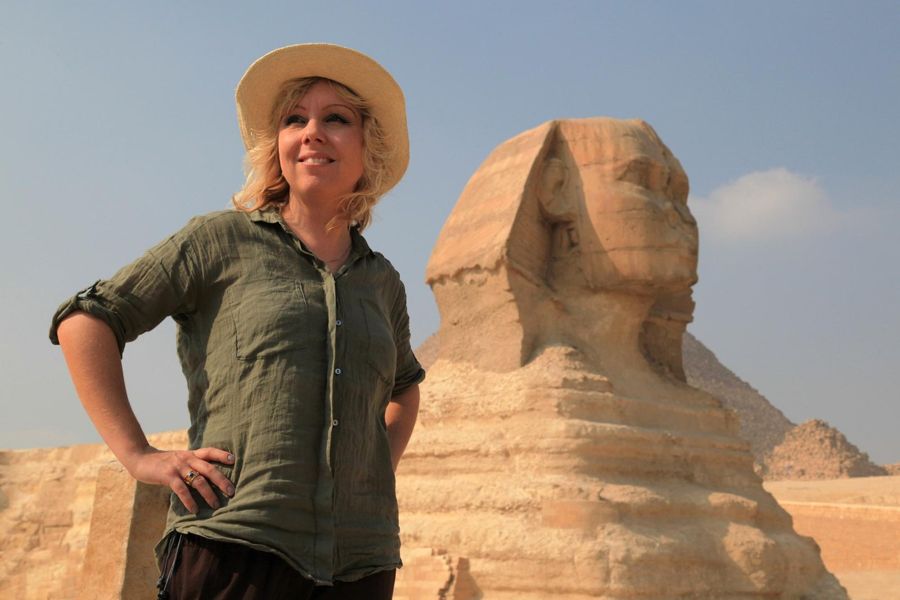
Plateau entry as QR code on your phone
The mastaba fields with their shafts lie in the regular ticket area. For the interiors of the pyramids, a separate ticket is added on site.
Burials in Abundance, Just Not There
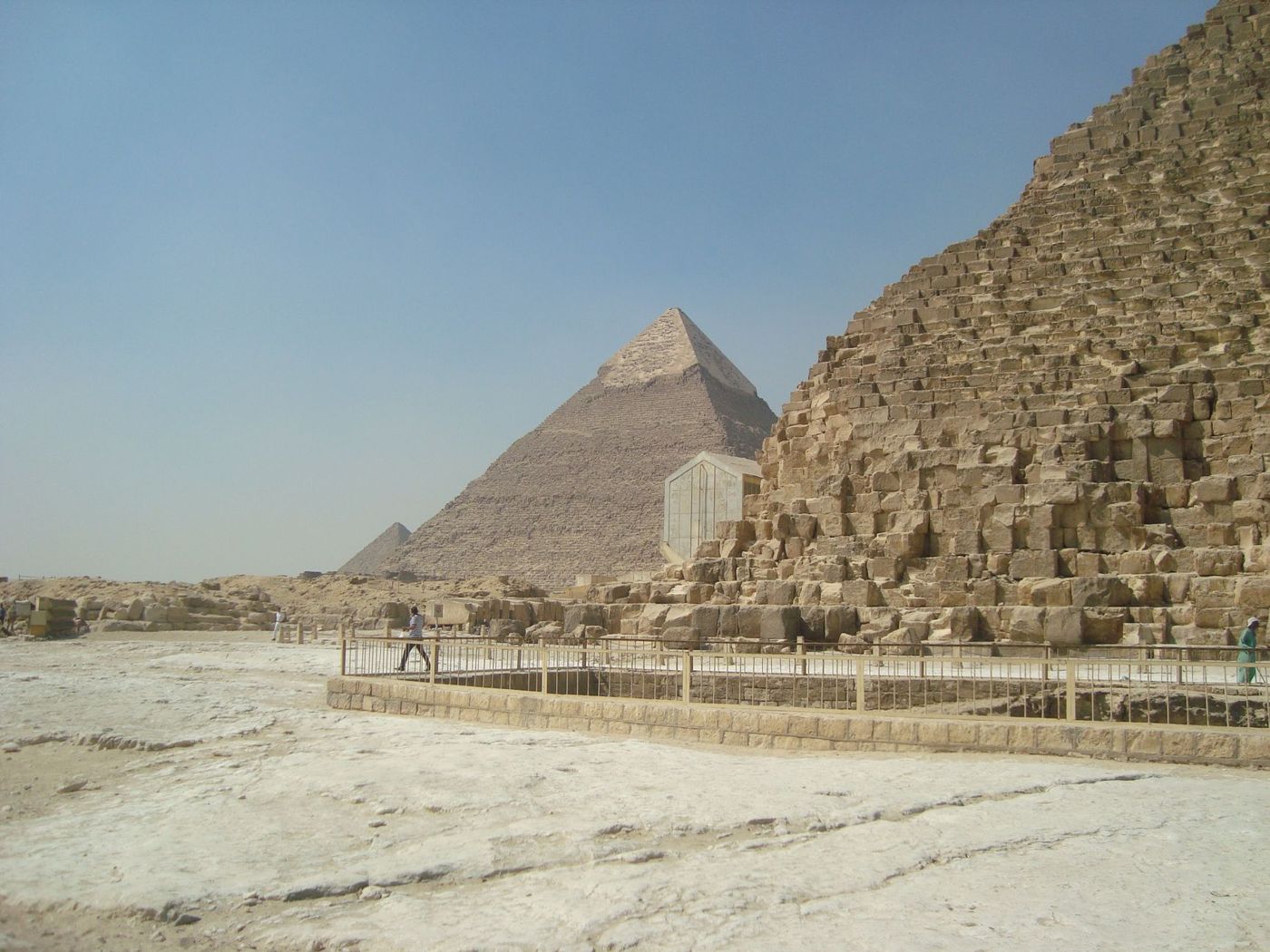
And now the actual information: Burials are abundant in Giza, just not in the pyramids.
Around the three structures lies an extensive necropolis of rectangular tomb buildings in straight rows, each with a shaft and a chamber below. Over six thousand such complexes are known, and their number grows with every excavation campaign. Buried there were members of the royal family, high officials, priests, and craftsmen of rank.
These complexes are the reason the site is so scientifically productive. Many were also looted, but by no means all, and from them come statues, reliefs, inscriptions, titles, and human remains. What is known about Old Kingdom society comes largely from here, not from the pyramids.
Part of these complexes is also decorated, and exactly as many visitors mistakenly expect in the pyramids: with colored reliefs, everyday scenes, inscriptions, and names. Old Kingdom officials' tombs were adorned; royal burial chambers were not. So if you want to see images, you must leave the great structures and go into the flat stone boxes beside them.
Add to that the necropolis of the builders on the southeastern edge, where the people who worked on the construction were buried. Skeletons were also found there, and they provide information about diet, strain, and medical care.
Tombs in the pyramids of Giza are thus the exception in the inventory, not the rule. If you seek burials, you will find them in the fields around, and they are freely accessible. If you want to see a mummy, go to the museum: Royal mummies are preserved, but from later periods, not from the time of the pyramid builders.
Frequently asked questions
Were mummies found in the pyramids of Giza?
Not from the time of construction. In the smallest pyramid, human remains were found, but they date from Christian times and belong to a much later burial.
Are the pyramids of Giza tombs?
Yes. Sarcophagi, sealing stones, mortuary temples, and the classification in a long series of royal tombs prove that, even though the chambers are empty today.
Where are the mummies of the pyramid-building kings?
Not preserved. No royal mummy from the 4th Dynasty has survived. The known royal mummies date from the New Kingdom, over a thousand years later.
When were the chambers cleared?
Unknown. When the rooms were first documented in modern times, they were already empty. Between burial and documentation lie three and a half thousand years.
Can you see burials on site?
The grave fields around are freely accessible. Individual complexes are open; which ones changes with the restoration status.
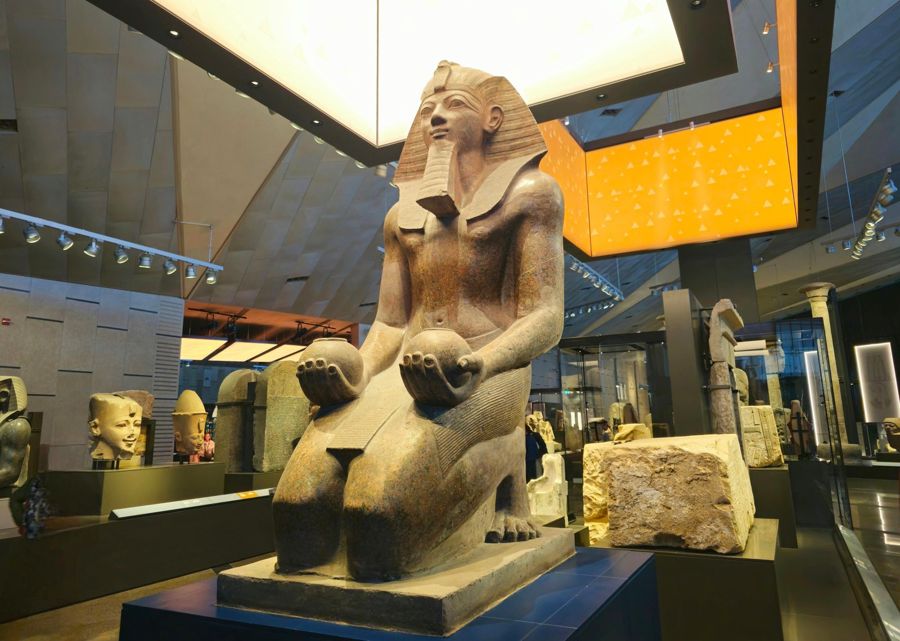
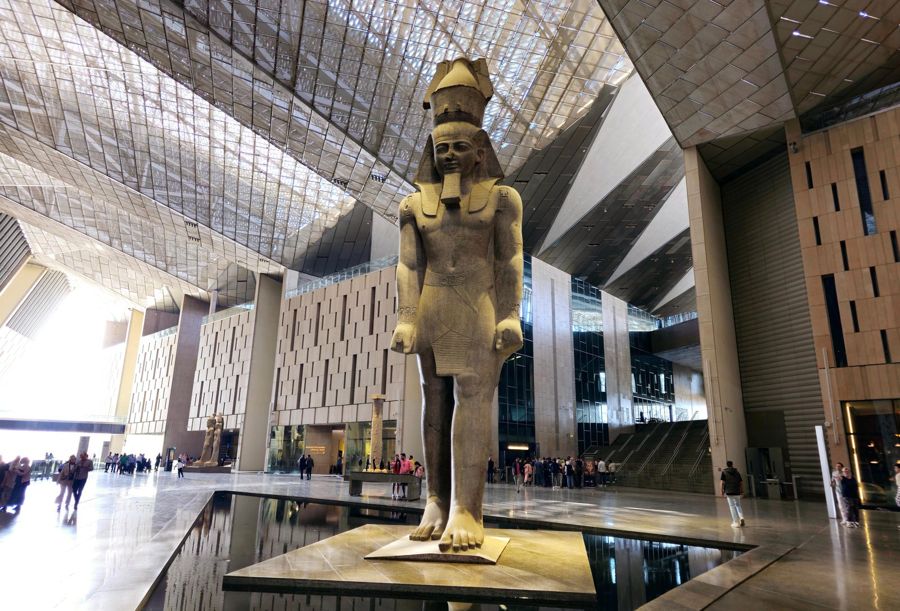
Day tour to the Grand Egyptian Museum and the plateau
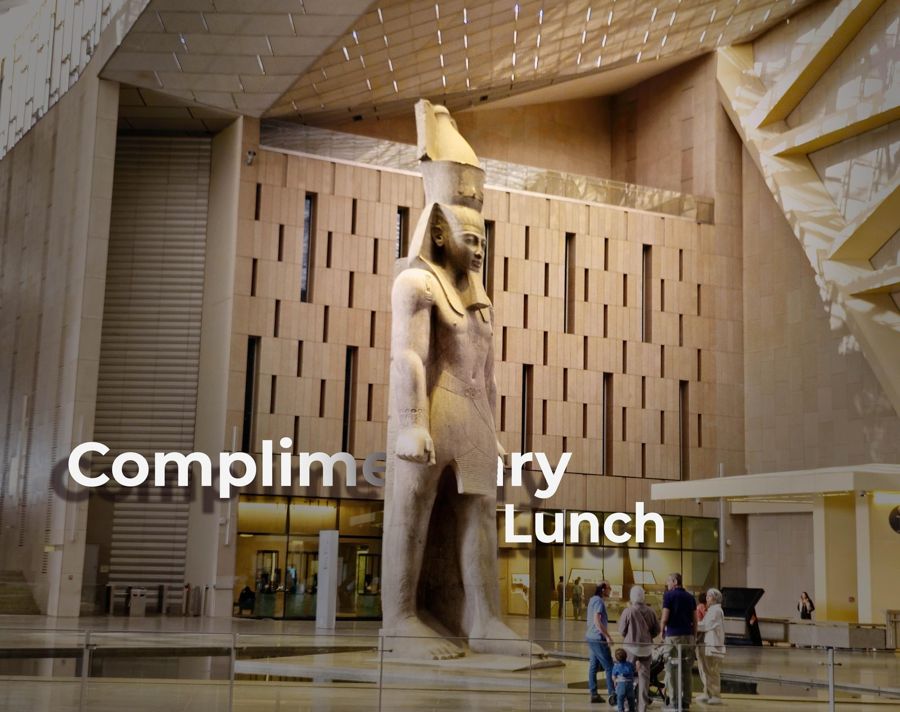
- The preserved royal mummies and grave equipment are in the museum, not on the plateau
- Plateau and museum in one day, without organizing two trips yourself
- Entry fees, German-speaking guide, pickup, and lunch are included
- Free cancellation up to 24 hours before start