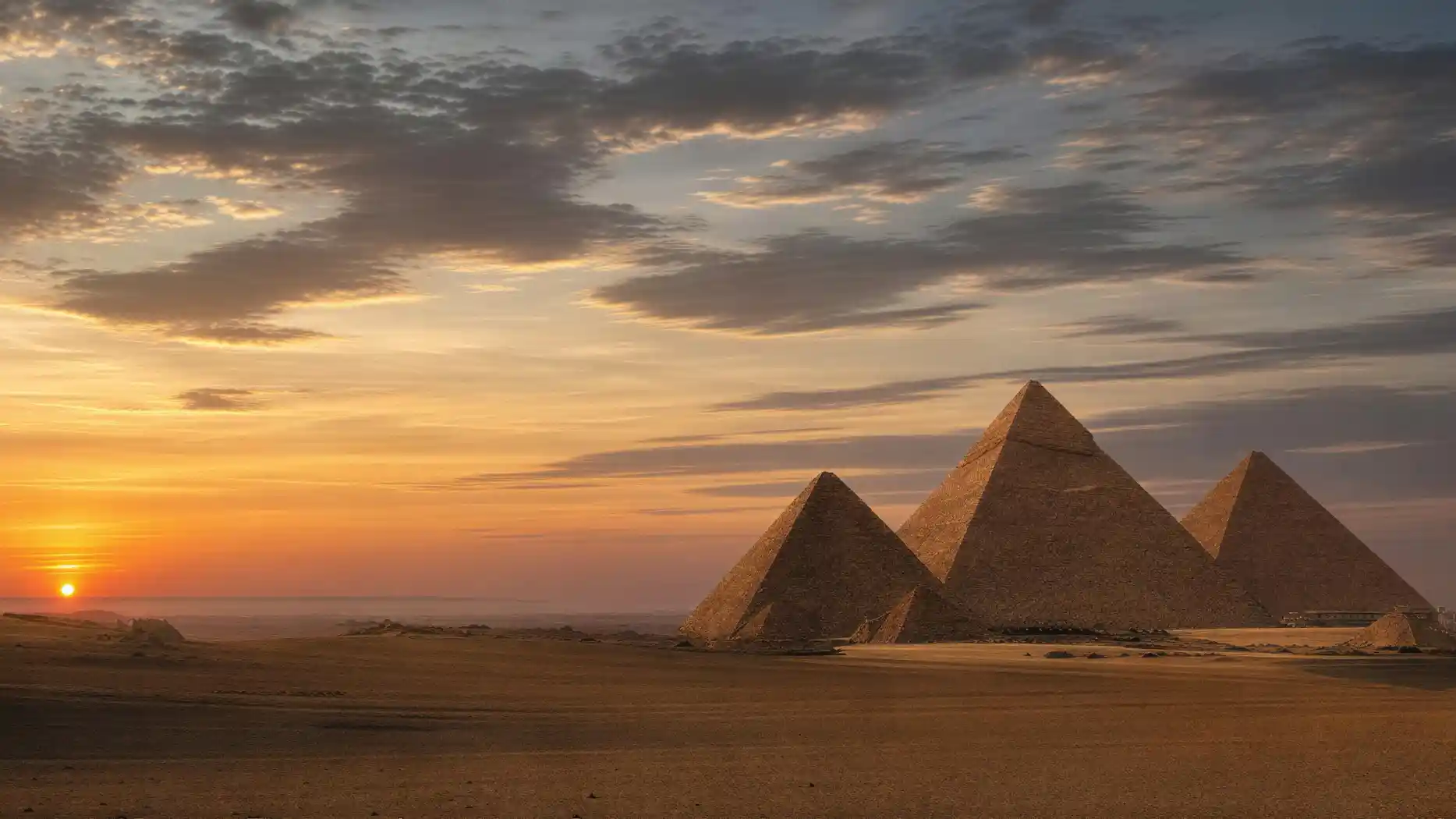
The Valley Temple of Khafre stands right next to the Sphinx, is included in the regular site ticket, and is overlooked by the majority of visitors. From the outside it looks like a wall, and that is exactly the reason.
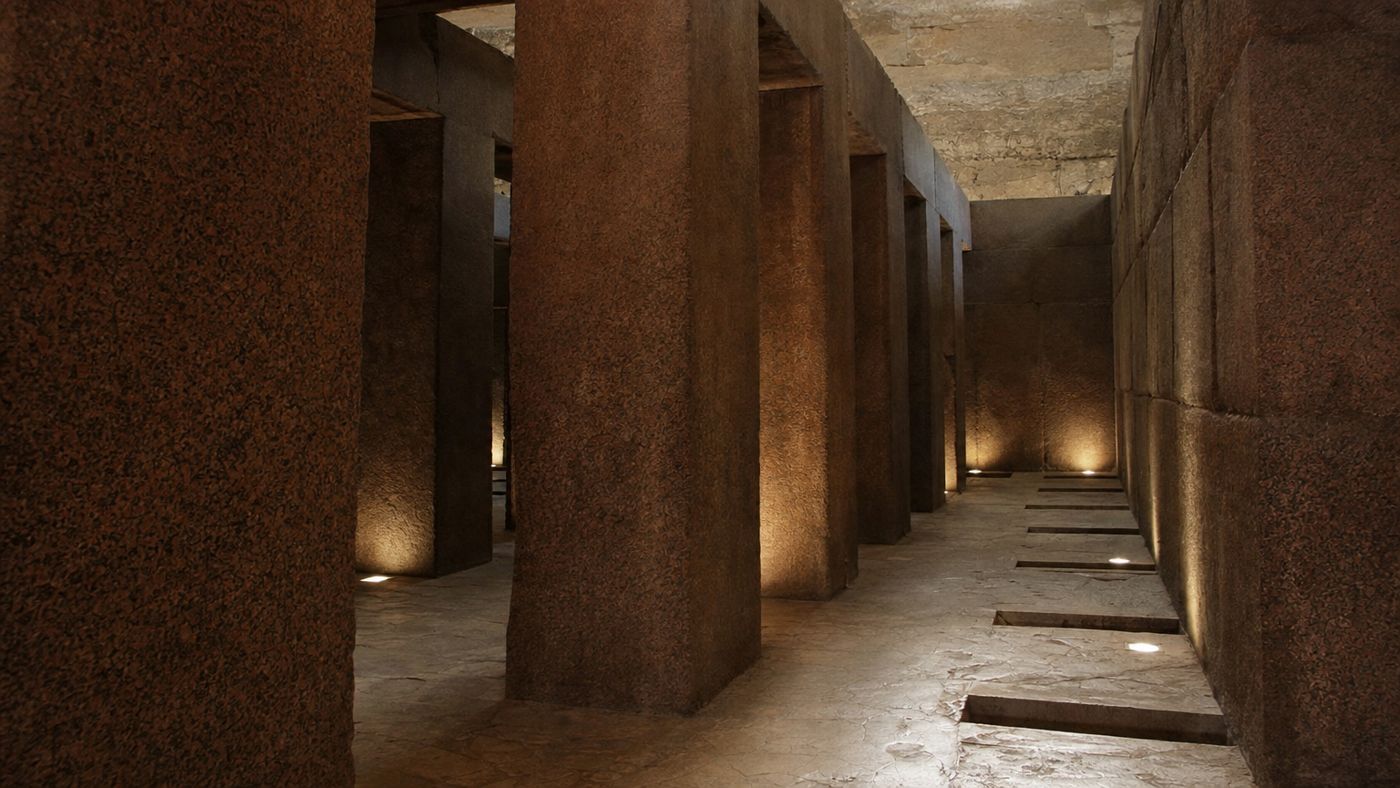
Those who go inside find themselves in a room unlike anything else on the plateau: man-high polished granite pillars, an alabaster floor, smooth walls without a single image, and shade. All of this costs nothing extra and takes ten minutes.
The antiquities administration lists the temple as one of the best-preserved structures of the Old Kingdom. Nothing on the site indicates this. There is no sign explaining what it is, and for most tour groups it is just a passage to the Sphinx, not a destination.
This page explains what you will see there, why the structure looks so different from everything else, which statues once stood there, and what to make of the claims that surround this building like no other on the plateau.
What a valley temple was for
First, the function, because it explains the structure.
An Old Kingdom pyramid complex consists not only of the pyramid. It begins down at the fertile land with a valley temple, leads via a rising covered causeway up to the mortuary temple at the foot of the pyramid, and ends there. The valley temple was thus the entrance to the whole complex, the place where the procession arrived. It lay by the water, and the boundary between river and desert ran directly in front of it at that time.
According to the official description, it is built of massive limestone blocks clad with granite, with alabaster floors and a spacious hall with monolithic granite pillars. The granite comes from Aswan, a thousand kilometres upstream, and the alabaster from Middle Egypt. What stands here is a structure made of imported material.
All of this is unusually well preserved, and there is an unspectacular reason for that: the building lay under sand for millennia. What is buried is not used as a quarry, and that is exactly what sealed the fate of the pyramid casings. The official overview of the site therefore lists the temple today in a condition one would not expect from a four-and-a-half-thousand-year-old building.
And then something you would expect is missing: decoration. No reliefs, no inscriptions, no painted walls. The effect comes solely from material, sharp edges, and geometry. To modern eyes it looks almost contemporary, which is one of the reasons so many speculations attach to this building.
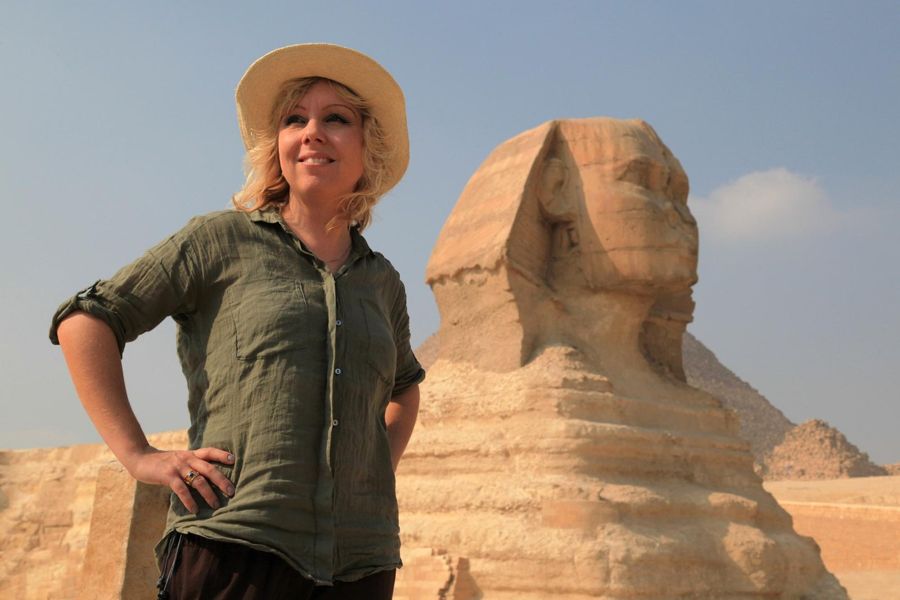
The same official source notes, by the way, that the Sphinx belongs to the Khafre complex, as a colossal statue next to his valley temple. Whoever sees both side by side sees not two sights but two parts of the same building programme.
The site admission, which already includes the temple
- You do not need an extra ticket for the Valley Temple; the open-air site covers it
- The code is on your phone, which saves you the queue at the ticket office in the morning
- Valid for one day and one entry; the interiors of the pyramids are not included
- Free cancellation up to 24 hours before the chosen day
Three claims about this building
- False
The temple is much older than the pyramids and comes from an unknown culture.
Structurally and through the finds, the building belongs to the Khafre complex. Statues of this king were found in it, some with his name, and it is connected via the causeway to his pyramid.
- False
The blocks are so large that they could not have been moved with the means of that time.
They are large, and that is exactly the achievement. The same construction site moved the granite blocks of the King's Chamber over a thousand kilometres downstream and lifted them to a height of over fifty metres. The Valley Temple is not a special case but an example.
- Partially
This is the Sphinx Temple.
It is constantly confused, because right next to it there is indeed a second building called the Sphinx Temple. Both are adjacent and similar in material, but they do not serve the same purpose.
The statues that stood in the niches
What is missing today are the statues, and their story explains the niches in the walls.
In the hall, symmetrically arranged niches were carved out, in which statues of the king stood. They were found in 1860 by the French excavator Auguste Mariette, some in a shaft in the temple itself, where they had been thrown in later times. The most famous piece is a seated figure of the king, behind whose head a falcon spreads its wings, so that god and king merge in one block. The administration calls it one of the masterpieces of Egyptian art.
Where these statues stand today is currently confusing, and that has to do with the new museum. The official description names the Egyptian Museum. The find catalogue of the Giza Archive of Harvard University, on the other hand, already lists inventory numbers of the Grand Egyptian Museum for most pieces from this temple, while the famous seated figure is still listed under a Cairo number. Where the statues stand today should be checked before a museum visit: with the opening of the Grand Egyptian Museum, many objects have changed location. If you are travelling because of a particular statue, you should clarify that beforehand rather than on site.
One detail of this find history is worth mentioning because it says something about how such complexes were treated. The statues were no longer in their places but thrown together in a shaft. At some point after the end of the cult, someone cleared the hall and deposited the images there instead of destroying or carrying them off. Whether that was piety, a sense of order, or simply the desire to use the space differently, no one knows. They have survived precisely because of that.
For the visit to the temple itself, this changes little. The niches are empty, and you cannot tell what stood in them. But whoever knows that a row of royal statues once stood here in the half-darkness between granite pillars sees the same room differently.
Three things for your visit
Practically, the visit is the easiest item on the whole site if you keep three things in mind.
First, the location. The temple lies at the eastern end of the site, right next to the Sphinx and thus near the eastern gate. If you take the usual circuit and end at the Sphinx, you will pass it automatically. If you want to plan it in, you should know that it lies on the way to the exit, not in the middle.
Second, the timing. It is the only larger interior space on the open-air site, and it is shaded and noticeably cooler than the open area. Thus it is the best place for a break on a hot day, without having to sacrifice any programme. So schedule it deliberately for midday rather than early morning.
Third, expectations. There is nothing to read here and nothing colourful to see. Whoever goes in expecting a museum will be back outside in two minutes. Whoever engages with the space, the edges, the light between the pillars, and the silence, will stay longer. This is not a place for quick photos but the quietest spot on this site.
And one last note on the confusion: right next to it stands the second building called the Sphinx Temple. It is less well preserved and usually not accessible. If someone tells you that you are standing in the Sphinx Temple while you are standing between intact granite pillars, you are in the Valley Temple.
How Sphinx, Valley Temple, and causeway are connected
- Great SphinxFaces east. The reference point everyone finds.
- Sphinx TempleDirectly in front of the Sphinx, less well preserved, usually not accessible.
- Valley Temple of KhafreSouth of it. The building with the granite pillars, included in the admission.
- CausewayLeads from the Valley Temple up to the Pyramid of Khafre. Today partly visible.
- Eastern GateA few steps away. If you exit here, you cannot return with the same ticket.
The proximity of the two temples is the reason for the most common confusion on the plateau.
Privately guided, so that the stop actually takes place
In group programmes, the Valley Temple is the first thing to be dropped because it is not on the list of well-known sights. On a privately driven half-day tour, the stop can be arranged in advance, and admission to the site is included.
Frequently asked questions
Does the Valley Temple cost extra?
No. It belongs to the open-air site and is included in the regular admission.
Where exactly is it located?
At the eastern end of the site, right next to the Sphinx and near the eastern gate.
How long do you need there?
Ten to twenty minutes. It is the only shaded interior space on the open-air site.
Is this the Sphinx Temple?
No. That one is right next to it, is less well preserved, and is usually not accessible.
Where are the statues from the temple?
In Cairo, some already in the new museum. The assignment is currently in flux and should be checked beforehand.
Is the building older than the pyramids?
No. Structurally and through the finds, it belongs to the Khafre complex.