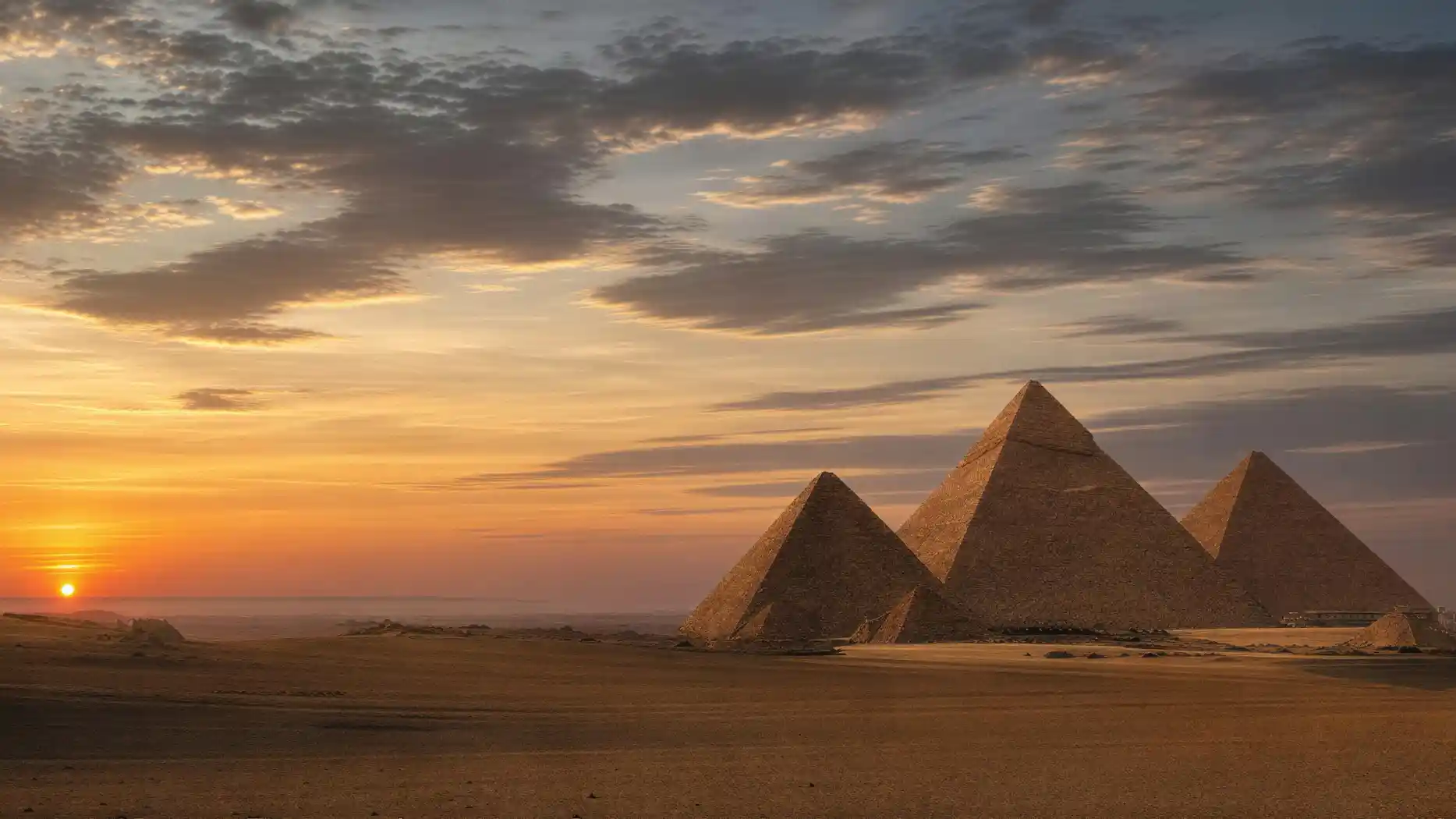
The most common search for this room combines three words: chamber, pyramid, mummy. The answer is short and disappoints most people.
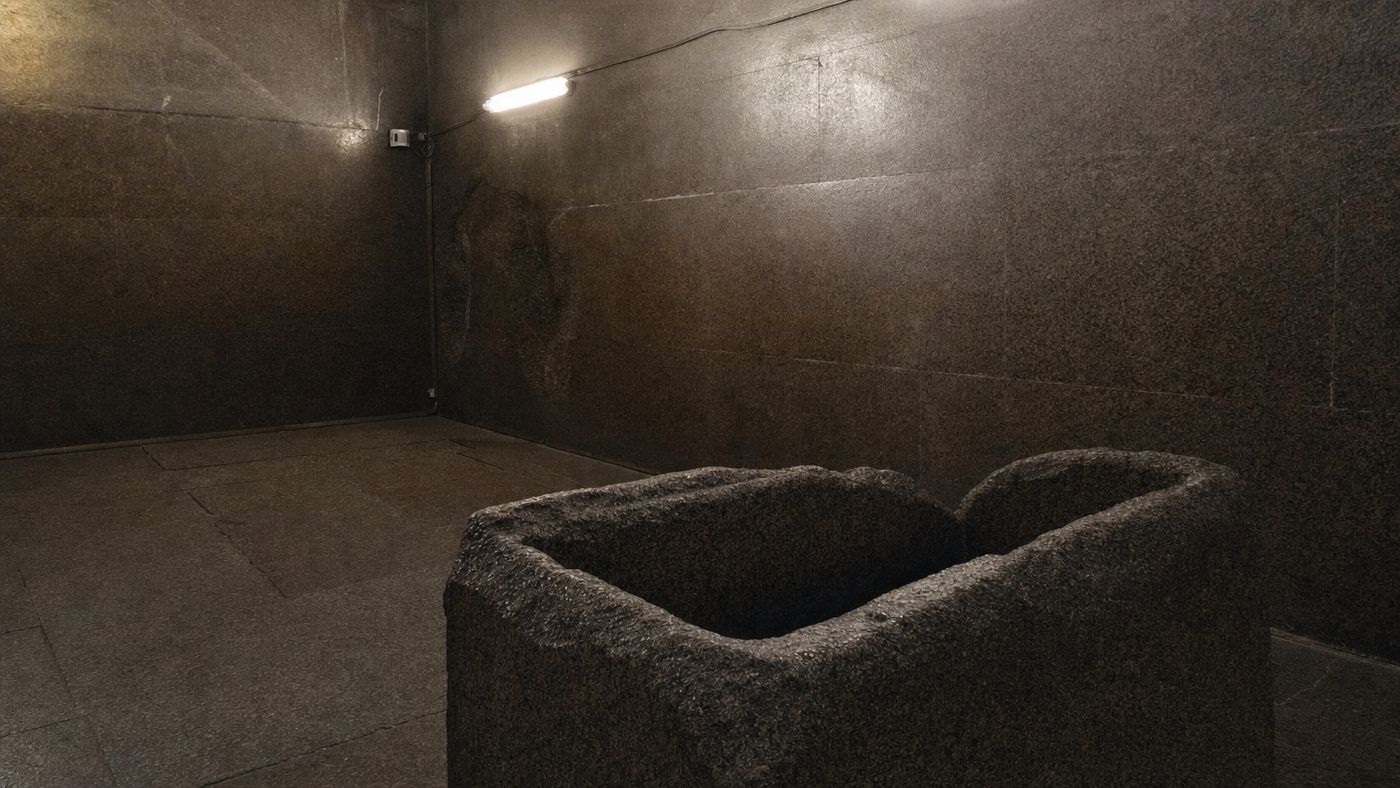
None was ever found. When the room was first entered in modern times, it contained a stone sarcophagus without a lid, and it was empty. No body, no wrappings, no grave goods, no canopic jars, no furniture, no inscription. The most elaborate room in the largest stone structure on Earth was a bare granite box with an empty container inside.
What matters is what follows from this and what does not. It does not follow that no one was ever buried here. The passages had been sealed with multi-ton granite blocks after the burial, which only makes sense if there was something to protect. It also does not follow that the pyramid was not a tomb. It only follows that the room was already empty when the first reports were written.
When it was cleared out is unknown. The obvious assumption is tomb robbery in antiquity, probably as early as the Old Kingdom or in the turbulent period that followed, when the central administration collapsed and the necropolises were left unguarded. There is ample evidence for this from other complexes, but not specifically for this one.
A second point helps against false expectations. The name of the room is a modern invention. Arabic designations from the Middle Ages distinguished the rooms by the shape of their ceilings, and from these, the European usage developed the terms King's and Queen's Chamber. This has nothing to do with Egyptian designations, and the lower chamber was certainly not intended for a queen. Anyone who takes these names as findings is already reading an interpretation into them.
This page describes what is actually in the room, what its construction reveals about the process, and why a visit there is different from what most expect.
A Rectangle of Aswan Granite
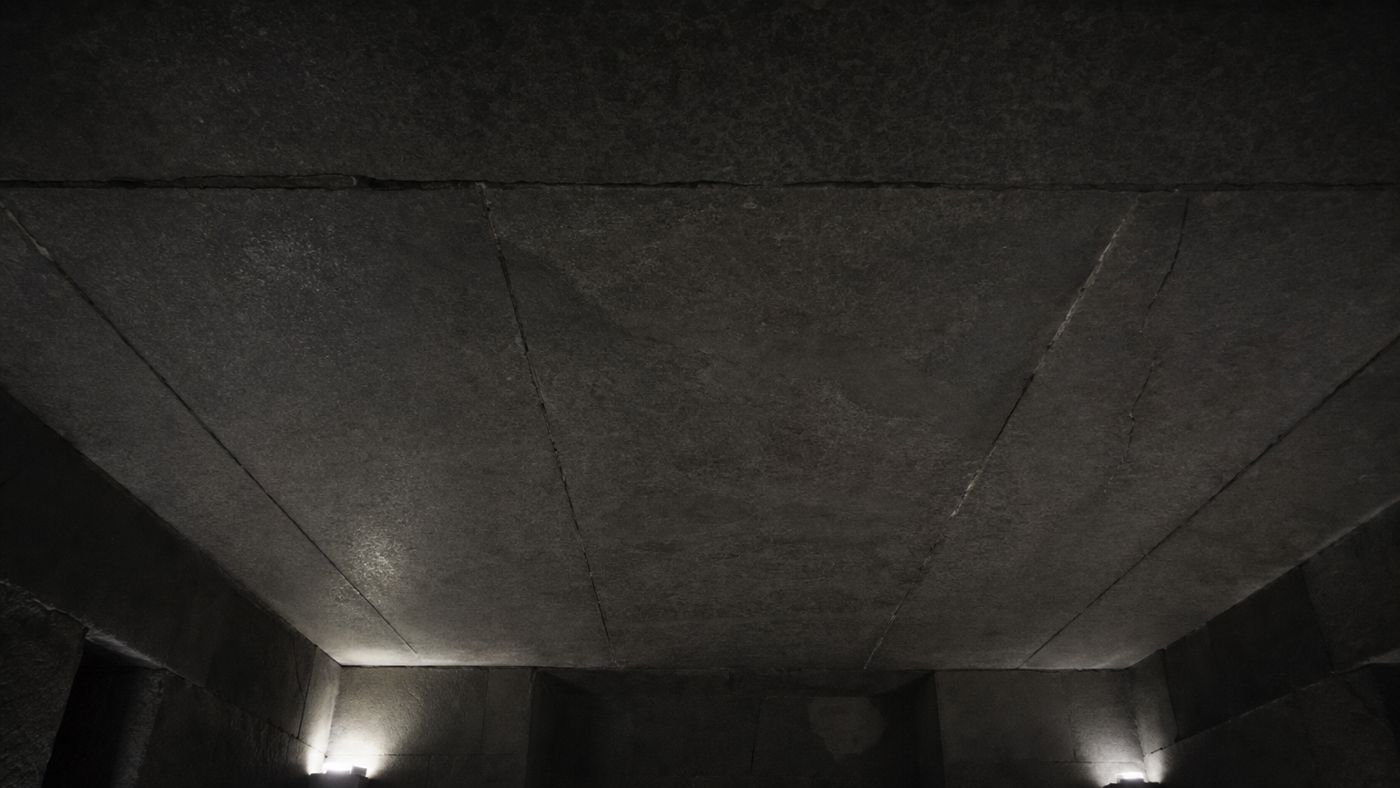
The room itself is a rectangle of remarkable clarity. The King's Chamber of the Great Pyramid of Khufu measures about 10.5 meters in length, 5.2 meters in width, and just under 5.8 meters in height. The ratio of length to width is exactly two to one.
It is completely lined with red granite from Aswan, quarried over eight hundred kilometers upstream. The walls consist of five layers of smoothly worked blocks, the ceiling of nine horizontal beams, the heaviest of which weigh several dozen tons. For the interior of the King's Chamber, the most elaborate material available to the land was used, precisely at the point where the greatest load lies above.
The workmanship is remarkable. The granite blocks are worked flat and meet in joints that are barely visible in places, and this with a material that cannot be cut with copper tools. The work was done with stone against stone and sand as an abrasive, over weeks per surface. The effort per square meter here is many times higher than on the entire outer skin of the structure.
What immediately strikes you when you stand inside: there is nothing to see. No reliefs, no paintings, no hieroglyphs. This is not a loss but the state of construction. The decoration of royal burial chambers with texts only began centuries later. Anyone expecting the colorful walls of the Valley of the Kings stands here before polished stone.
The documentation of the room goes back a long way. Photographs, measurements, and excavation reports spanning more than a hundred years are available in the digital archive of Harvard University, including photographs from a time when conditions inside were different from today.



Guided day tour with option for interior visit
- The burial chamber is the endpoint of the route through the structure
- The interior visit of the Great Pyramid of Khufu is available as an add-on
- Plateau entry, German-speaking guide, pickup, and lunch are included
- Free cancellation up to 24 hours before start
The Room in Numbers
- Length
- about 10.5 m
- Width
- about 5.2 m, exactly half the length
- Height
- just under 5.8 m
- Material
- red granite from Aswan, about 800 km away
- Ceiling
- nine horizontal granite beams
- Above
- five relieving chambers
- Contents when opened
- a sarcophagus without a lid, empty
The Sarcophagus Does Not Fit Through the Passage
The sarcophagus is the most revealing object in the entire complex, not because of its decoration but because of its dimensions.
It consists of a single block of granite, is unadorned, has no lid, and shows damage on the edge. Its decisive feature: it is wider than the ascending passage through which one reaches the room. It therefore cannot have been carried in after the structure was completed.
From this it necessarily follows that it was in place before the ceiling was closed. The construction sequence was thus: the room was built up to the height of the walls, the sarcophagus was placed inside, and only then were the nine ceiling beams laid on top. A container for a dead person was installed years before the person died.
This says a lot about the planning. It also says something about how certain they were that this room would be the final one, because after the ceiling was closed there was no possibility of replacing it. In two earlier chambers of the same pyramid, a different decision had been made and the construction was relocated.
The damage also tells a story. A corner is broken off, and the edges are chipped in several places. This does not fit an object that was carefully opened but one that was broken into. Whether this happened in antiquity or later, when travelers knocked off souvenirs, can no longer be distinguished, as both are documented.
A lid has never been found. Whether there ever was one is unclear, as there are devices on the upper edge that suggest a closure. If so, it too has disappeared.
The Relieving Chambers Above the Ceiling
Above the ceiling sits a construction that one only understands when thinking about the load above it.
More than fifty meters of masonry stand on the chamber. A horizontal ceiling does not bear such a load without further ado, because flat beams are subjected to bending and stone breaks under tension. The solution consists of five superimposed cavities, each with its own granite beams, and at the very top two blocks set obliquely against each other, which divert the load sideways like a roof.
These relieving chambers are not accessible and were never intended to be entered. Precisely for this reason, the red markings of the work gangs are found there, from which the name of the builder emerges. They are work notes in a place where no one was ever supposed to see them.
The effort involved was considerable. For the beams of the five relieving chambers, granite from Aswan was brought in once again, for rooms that no one would enter or see. It is thus pure statics, without any representational intent. In a structure that otherwise aimed above all at effect, this is the most sober place of all.
That the construction was necessary is shown by cracks in the ceiling beams. They are old, probably dating from during or shortly after the construction period, and have been observed for a long time. The chamber still bears the load.
Immediately above, above the Grand Gallery, lies the large void detected in 2017. What it is, no one knows. The sober interpretation sees in it also a constructional measure of the same kind.
Four Statements About the Burial Chamber
- False
A mummy was found in the chamber.
The room was empty at the first documented opening. A body was never found.
- False
The sarcophagus was brought in later.
It is wider than the access passage. It was in place before the ceiling was closed.
- False
The chamber was originally painted.
Royal burial chambers of the Old Kingdom were unadorned. Wall texts only came centuries later.
- Partially
The two shafts served for ventilation.
They lead outside and provide air exchange, but the common interpretation sees their purpose in the religious sphere. The corresponding shafts of the lower chamber end in the masonry.
What It's Like to Stand There
The question remains what it is like to stand there. The way to the King's Chamber is short but not comfortable.
After the robbers' tunnel on the north side, an ascending passage of about one meter in height follows, in which adults walk bent over. Then the Grand Gallery opens up, where you can stand upright again. At the upper end, you again go bent over through a low chamber with granite blocks, and then you stand in the room. For the entire way there and back, you should allow about half an hour.
Inside it is warm and stuffy, it smells of stone and people, and the room is rarely empty. The lighting is functional. Photography is restricted depending on current regulations. What remains is not a visual but a physical experience: the awareness that above this ceiling there are fifty meters of stone and above that another eighty.
For some people, the route is not suitable, and you should know this beforehand. The ascending passage forces a bent posture for about forty meters, there is no alternative route, and in oncoming traffic there is no turning back halfway. It is not recommended for those with claustrophobia, back problems, knee issues, or circulatory weakness. Nothing on this route is barrier-free, and there is no staff that could intervene along the way.
Expectations therefore determine satisfaction. Those who want to see pictures will be disappointed. Those who want to experience the room as a room get something that no photo conveys.
Access is subject to restrictions because the entire site has been protected as a World Heritage Site since 1979. The number of tickets is limited daily, and the administration temporarily closes interior spaces for maintenance.
Frequently asked questions
Was a mummy found in the Great Pyramid of Khufu?
No. The sarcophagus was empty when the room was first documented, and neither grave goods nor remains of a burial were found.
Why is the sarcophagus without a lid?
A lid has never been found. Devices on the upper edge suggest that there was one.
How big is the chamber?
About 10.5 by 5.2 meters with a height of just under 5.8 meters, completely lined with red granite.
Can you enter the chamber?
Yes, with a separate ticket in a daily limited number. The route is narrow and ascending and takes about half an hour round trip.
What are the small openings in the walls?
Two narrow shafts that lead outside. Their purpose is disputed; the common interpretation is religious rather than technical.
Plateau entry as QR code on your phone
Important: The basic ticket covers the site, not the interior of the Great Pyramid of Khufu. An additional ticket is required for that.