
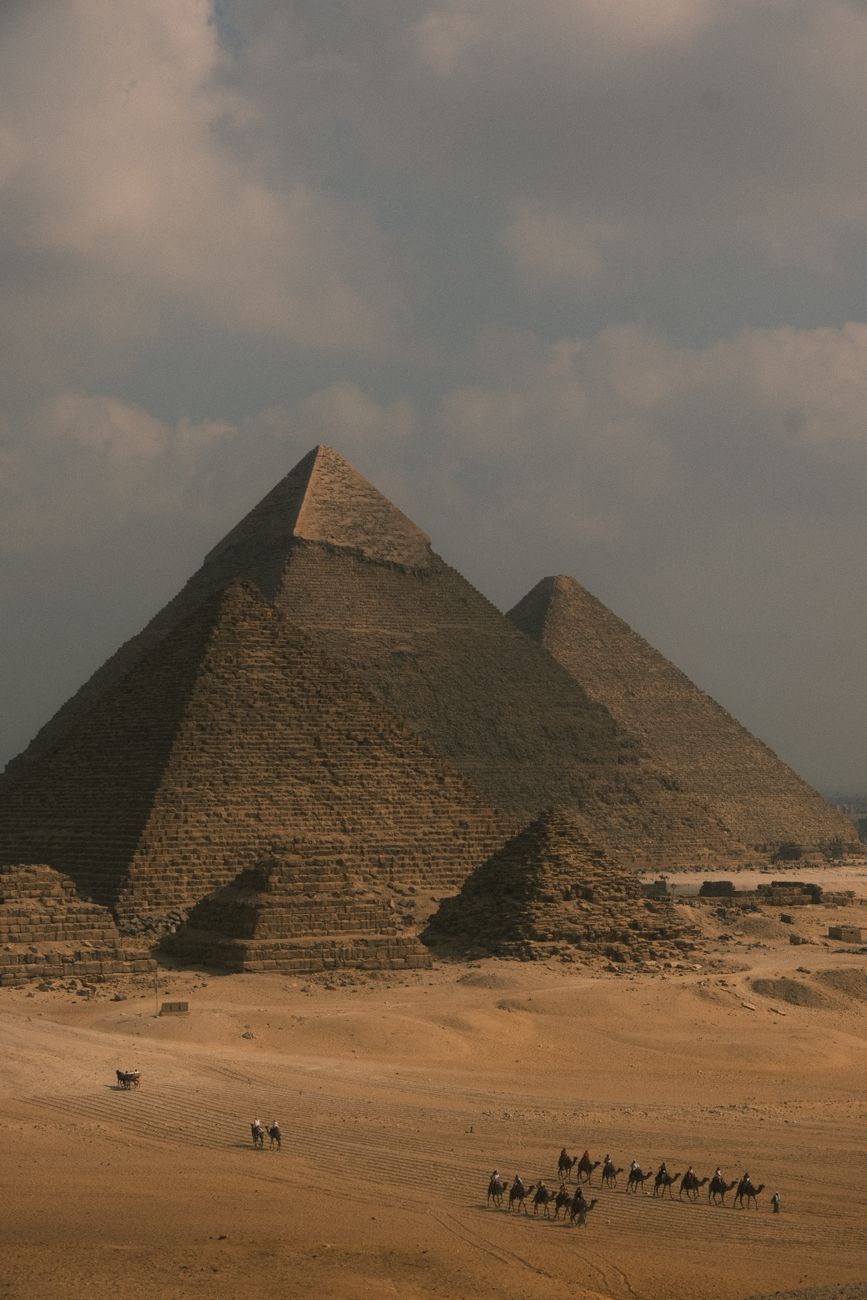
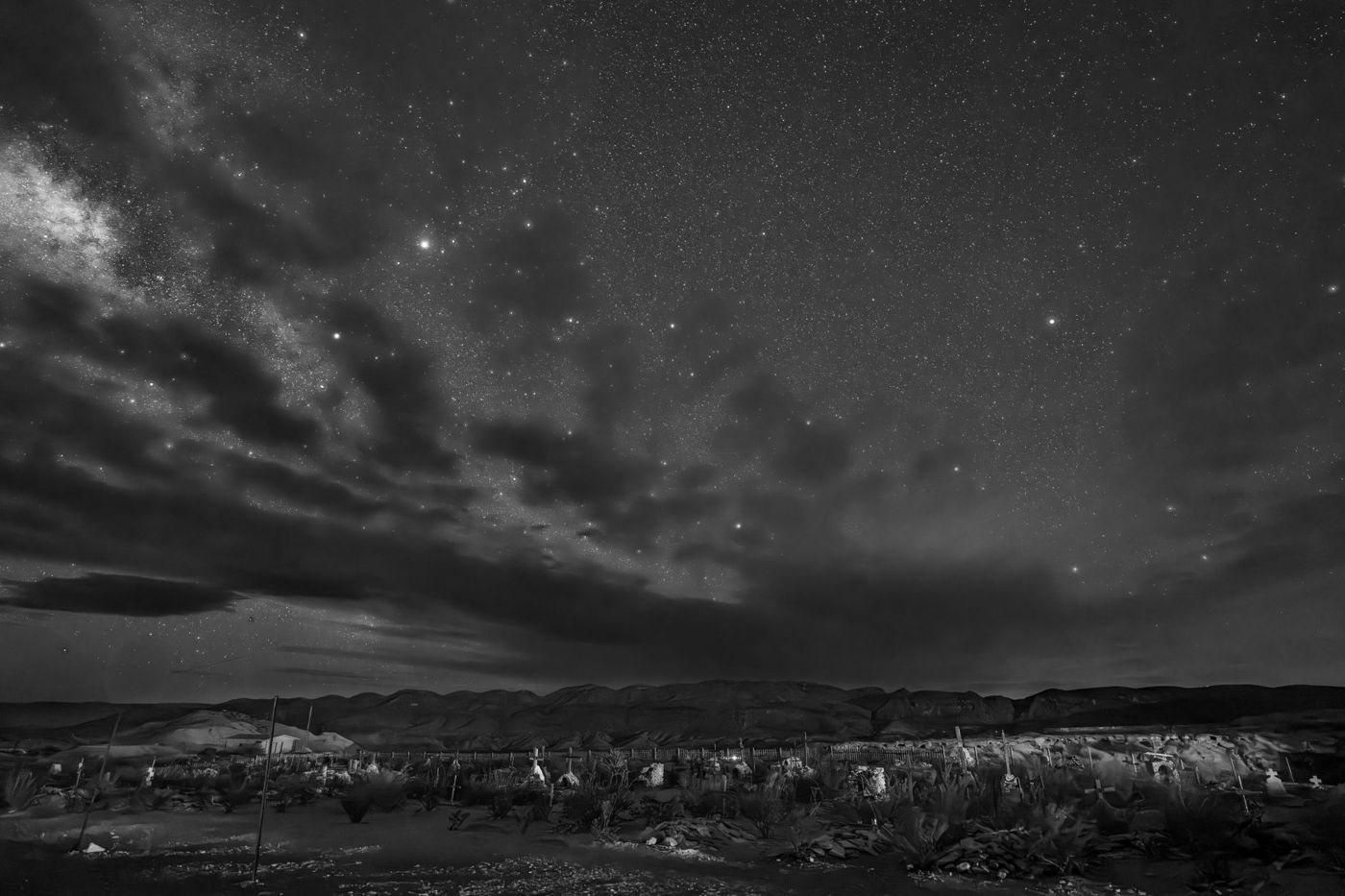
The claim is catchy, and that's part of its success. It states that the three great pyramids of Giza are not placed as they are by chance, but rather replicate the three belt stars of the constellation Orion on the ground.
At first glance, this looks convincing. Orion's Belt consists of three bright stars in an almost straight line, with the third one slightly out of line. On the plateau, three pyramids stand in an almost straight line, with the third, the Pyramid of Menkaure, also slightly offset. In addition, the smallest pyramid seems to correspond to the faintest star.
The second part of the theory goes further. The Nile is said to correspond to the Milky Way, other ancient Egyptian sites to represent other celestial regions, and the arrangement is said to depict not the sky of the time of construction, but that of around 10,500 BC. This leads to the popular conclusion that the complex is much older than Egyptology assumes, or at least that it draws on much older knowledge.
This page examines the claim step by step. It checks what can be measured, where the numbers don't add up, and finally separates two things that are almost always mixed up in the debate: the specific Orion theory and the general question of whether the Egyptians took measurements from the sky. The answer to the second question is clearly yes.
Where the Theory Comes From
The idea has a clear origin and a date. It was formulated in 1989 in a scholarly article by Robert Bauval, a Belgian civil engineer, and became known to a wide audience in 1994 through the book 'The Orion Mystery', co-authored with Adrian Gilbert, as well as through a BBC documentary in the same year.
The Orion Correlation Theory was thus a media event from the start, not a gradually developed academic debate. The book became a bestseller, the program reached millions of viewers, and the idea that the pyramids are a star map has been a firm part of popular culture ever since.
It is important to note that Bauval did not present the idea as a conspiracy theory, but as an astronomical observation with a religious-historical basis. He pointed out that the Egyptians did indeed know and revere Orion, as Sah, a figure closely associated with Osiris. This is correct and documented in texts.
The debate, therefore, is not about whether Orion was important to the Egyptians. It is about whether the three structures are meant to represent the belt stars, and this can be debated objectively because both arrangements can be measured.





Short guided tour of the plateau on foot
- From the panoramic viewpoint, the actual arrangement of the three structures lies open before you
- Three hours, with a guide who explains the terrain
- Plateau entry and priority entry are included
- Free cancellation up to 24 hours in advance
Three Parts of the Theory, Considered Separately
The pyramids depict Orion's Belt
The arrangement and offset of the three structures correspond to the three belt stars.
Pros
The rough arrangement is indeed similar, and Orion was religiously significant to the Egyptians as Sah.
Cons
The measured angles differ significantly, and the correlation only works if one of the two representations is mirrored.
The Nile corresponds to the Milky Way
The entire landscape was designed as a reflection of the sky.
Pros
The idea of a correspondence between heaven and earth is not foreign to Egyptian religion.
Cons
The correlation is arbitrarily expandable. With enough places and enough stars, a match can always be found.
The complex depicts the sky of 10,500 BC
Only at this time did the constellation match exactly.
Pros
Precession does indeed shift star positions measurably over millennia.
Cons
There is no evidence of construction, settlement, or writing in Egypt from this period. The date follows from the theory, not from any find.
The Angle Doesn't Add Up
The most testable part is the angle, and this is where things get specific.
Two astronomers have independently recalculated the claim using planetarium software: Ed Krupp of Griffith Observatory and Anthony Fairall. Both came to a similar conclusion: the angle of Orion's belt stars relative to true north in the relevant era is about 47 to 50 degrees. The line of the three pyramids, on the other hand, forms an angle of about 38 degrees to true north.
This is not a rounding error. A deviation of about ten degrees is extremely large for a structure whose sides deviate from true north by less than a tenth of a degree. The builders demonstrably worked with great precision. If they had wanted to depict a star constellation, it is hard to believe they would have made such a large error.
Quantitative re-examinations of the theory also conclude that the match is significantly weaker than the well-known graphics suggest. A quantitative astronomical analysis of the Orion Correlation Theory examines exactly this question and does not find the claimed precision.
The Map Was Mirrored
The second objection is more fundamental and concerns the representation itself.
The line of the three pyramids is slightly kinked, and the kink points north. The line of the three belt stars is also slightly kinked, but its kink points south. Thus, the two arrangements do not match in their natural orientation. To make the similarity visible, one of the two representations must be flipped.
Krupp pointed out that this is exactly what happened in the original book, without the mirroring being indicated. Bauval and Gilbert have disputed this, and several experts, including astronomer Archie Roy, have publicly rejected several of Krupp's objections. The accusation of deliberate deception is therefore not proven and should not be made.
What remains is the core issue: the match is not direct but requires an intermediate step. And a model that requires a mirroring must explain why. No such explanation exists.
There is also a third point, which is less discussed but weighs heavily. The zodiac constellations, on which parts of the broader interpretation rely, originate from Mesopotamia and are only attested in Egypt in the Greco-Roman period, more than two thousand years after the pyramids were built.
The Proven Astronomy Concerns Something Else
And now for the part that almost always gets lost in the debate: the alignment of the pyramids of Giza with the stars is not speculation, but a fact. It just concerns something different than what the Orion theory claims.
First, the north-south alignment. The sides of the Great Pyramid of Khufu deviate by less than a tenth of a degree from true north. There was no magnetic compass, so the sky was the only reference. Common explanations involve observing stars, such as the midpoint between the rising and setting of a star. Studies on the orientation of the Giza pyramids also show that the deviations of the great pyramids slowly shift in one direction over the decades, which is consistent with a star-based method.
Second, the shafts. Narrow channels lead obliquely outward from the King's Chamber and the chamber below, with angles pointing to star positions of the time of construction. Whether they were intended as paths for the soul, for ventilation, or both, is an open question. That their angles are intentional is hardly disputed.
Third, religion. Orion, as Sah, was associated with Osiris, and the ascent of the dead king to the imperishable stars is documented in the Pyramid Texts, albeit only for later structures of the same era.
In summary, there is plenty of astronomy in this complex. It is in the orientation and in religion, but not demonstrably in the ground plan.
Claim and Finding Side by Side
The left column summarizes the theory, the right column the state of the evidence.
| Claim | Finding |
|---|---|
| The three pyramids depict Orion's Belt | Rough similarity exists, but angles deviate by about ten degrees |
| The match is exact | Only after mirroring one of the two representations |
| The arrangement dates to 10,500 BC | No archaeological evidence for this era in Egypt |
| The Nile corresponds to the Milky Way | Not testable because it can be expanded arbitrarily |
| The Egyptians aligned structures with stars | Proven, deviation from true north less than 0.1 degrees |
| Orion was religiously significant | Proven, associated with Osiris as Sah |
- Finding
- Rough similarity exists, but angles deviate by about ten degrees
- Finding
- Only after mirroring one of the two representations
- Finding
- No archaeological evidence for this era in Egypt
- Finding
- Not testable because it can be expanded arbitrarily
- Finding
- Proven, deviation from true north less than 0.1 degrees
- Finding
- Proven, associated with Osiris as Sah
The last two rows are undisputed. They are exactly what popular accounts use as evidence for the first four.
Why the Theory Persists
Why does the theory persist so stubbornly? There are at least three reasons, and none of them is stupidity.
The first is visual impact. Two patterns of dots side by side, one in the sky, one on the ground, are immediately convincing without any expertise. An angle of 38 degrees versus 47 degrees does not convince anyone immediately, even though it says everything. The theory is visually stronger than its refutation.
The second is pattern recognition. Humans reliably find patterns, even where there are none, and three points in a slightly kinked line are a very common pattern. With enough stars and enough structures, any number of such correspondences can be found. The test is not whether a match can be found, but whether it is more precise than chance would suggest.
The third is a justified intuition. The complex is indeed astronomically planned, and anyone who knows that will find another astronomical relationship plausible. This intuition is not wrong; it is just applied in the wrong place.
It is remarkable that the proven astronomy is more impressive than the claimed one. Aligning a structure to true north with an accuracy of one-tenth of a degree, without a compass, is a real achievement. Suspecting a star map on the ground is just a nice idea.
Frequently asked questions
Is it true that the pyramids depict Orion's Belt?
There is a rough similarity, but the angles deviate by about ten degrees, and the correlation only works after mirroring. The theory is not considered proven.
Are the pyramids really 12,000 years old?
No. The dating to the eleventh millennium follows from the theory itself, not from any finds. There is no evidence of construction or settlement in Egypt from that time.
Did the Egyptians really build according to the stars?
Yes, that is well documented. The north-south alignment of the pyramids is accurate to less than one-tenth of a degree and was achieved without a compass, probably through star observation.
Was Orion important to the Egyptians?
Yes. It appears as Sah and is closely associated with Osiris. This is undisputed and is often used as evidence for the broader theory, even though it does not support it.
Measurable or Merely Illustratable
In the end, there is a distinction that can be applied to many claims about this site.
There are statements that are measurable and statements that are only illustratable. The angle between the line of the pyramids and true north is measurable. The similarity between a pattern of points in the sky and one on the ground is illustratable. Both can appear side by side in the same graphic and then seem equivalent, even though they are not.
Anyone who sees the complex, protected as a World Heritage Site since 1979, and wants to know what was actually planned there, will find enough remarkable things in the ancient building records: an alignment to a tenth of a degree, leveling in the centimeter range, a slope ratio that was passed down in school exercises.
The Orion theory adds nothing to this. It even distracts from something that is more impressive because it is verifiable.
And if you want to see for yourself on site: from the panoramic viewpoint in the southwest, all three structures lie in a line in front of you. The offset of the smallest pyramid is clearly visible from there, and you immediately understand why someone came up with the idea.

Plateau entry as a QR code on your phone
If you want to judge the arrangement for yourself, all you need is the basic entry fee and a way to the panoramic viewpoint, which the shuttle stops at.