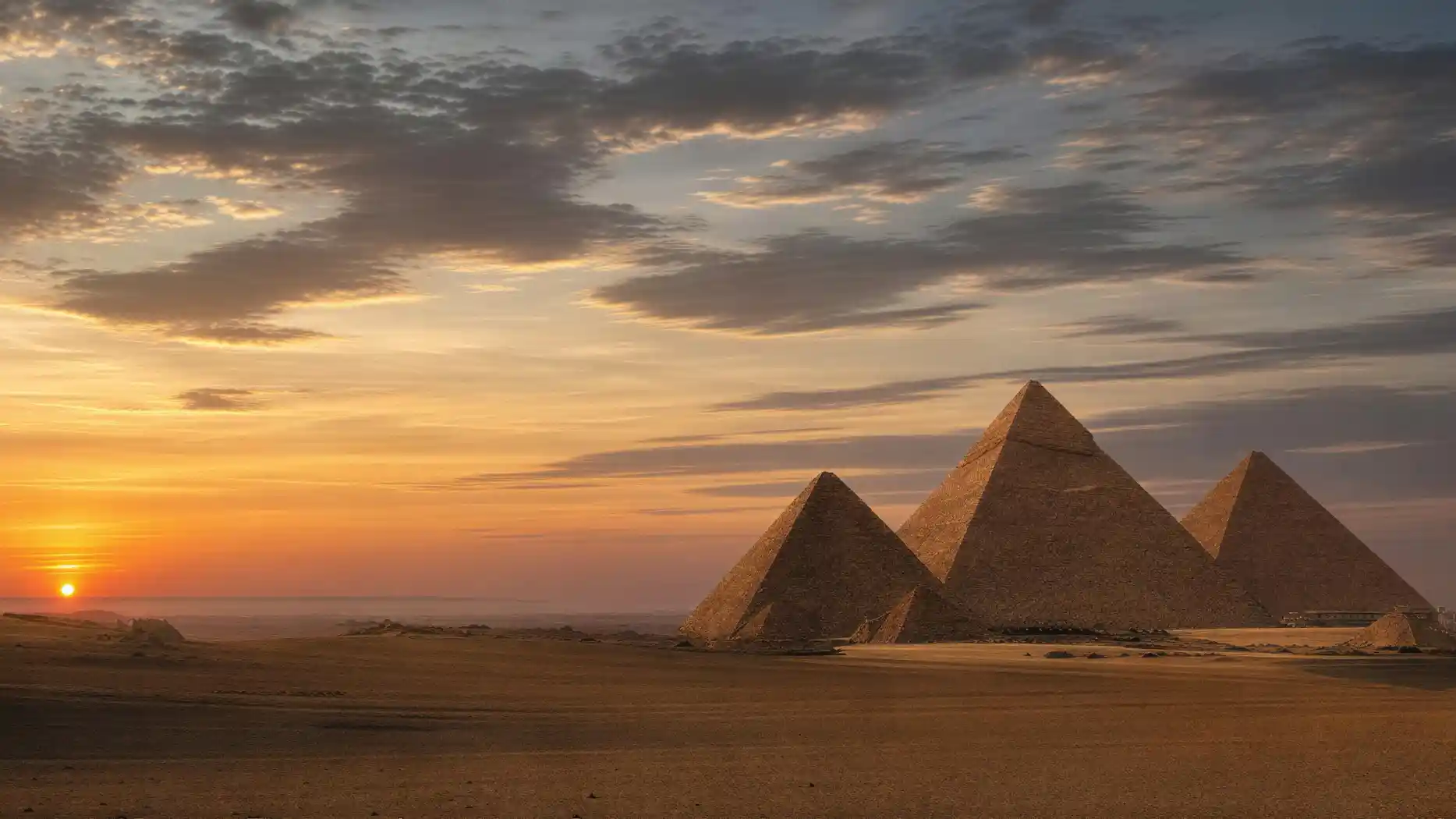
First, an honest number, because it determines all your planning: the plateau itself does not fill a whole day.
The usual circuit with the three great pyramids, the panorama point, and the Sphinx takes three to four hours if you take your time. If you add a pyramid interior, allow a good three-quarters of an hour extra, including queuing. That means you'll be done by early afternoon.
A full day comes about in two ways. Either you use the time gained for what almost everyone skips – the cemeteries, the valley temple, the boat pits, and a painted rock tomb. Or you add the big museum nearby in the afternoon, which has been open a few minutes' drive away since late 2025.
This page describes the first option in detail and the second at the end, because the first is the one for which there are hardly any useful guides. It follows a specific order, and this order has reasons to do with the shuttle, the light, and a quirk of the terrain that many visitors notice too late.
The Route in Eight Stops
- Main entrance in the southwest, at opening time
Ticket already on your phone. Head straight for the shuttle, not to the nearest structure.
- Panorama point
First stop. The overview first, because the site reveals itself in one image from there, and because it's emptiest here early on.
- Pyramid of Menkaure and its queen's pyramids
The smallest of the three, but with the unfinished granite casing at the base and three subsidiary pyramids beside it.
- Pyramid of Khafre
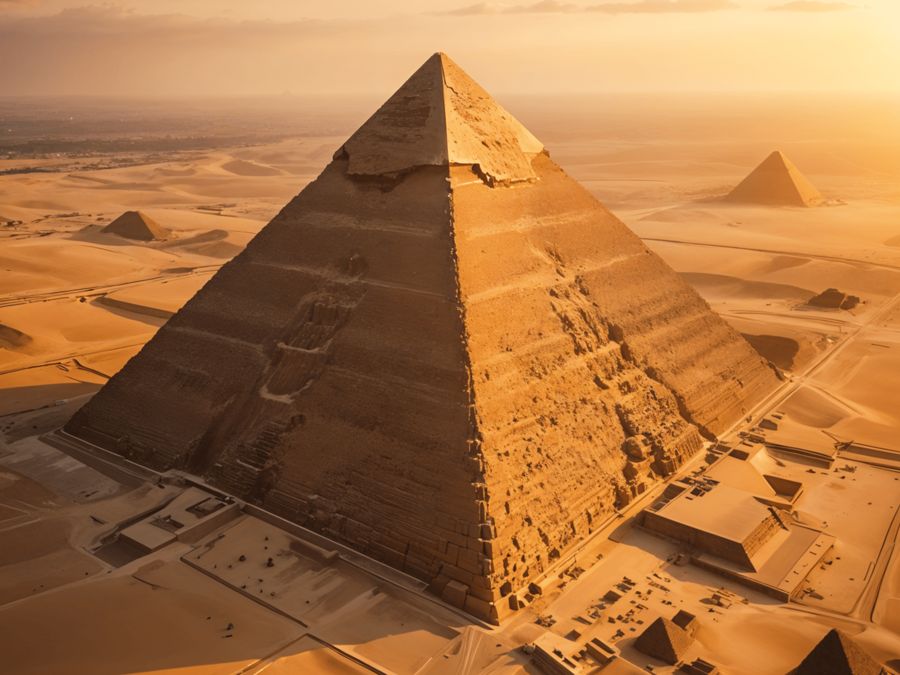
Stop between the two great structures. From here, the remaining casing at the top is best seen.
- Great Pyramid of Khufu and the north side
The surviving casing blocks at the north foot, the entrance, the boat pits on the south and east sides.
- Eastern cemetery
Mastabas in planned rows, plus a painted rock tomb with its own small ticket. The quietest part of the site.
- Valley temple of Khafre
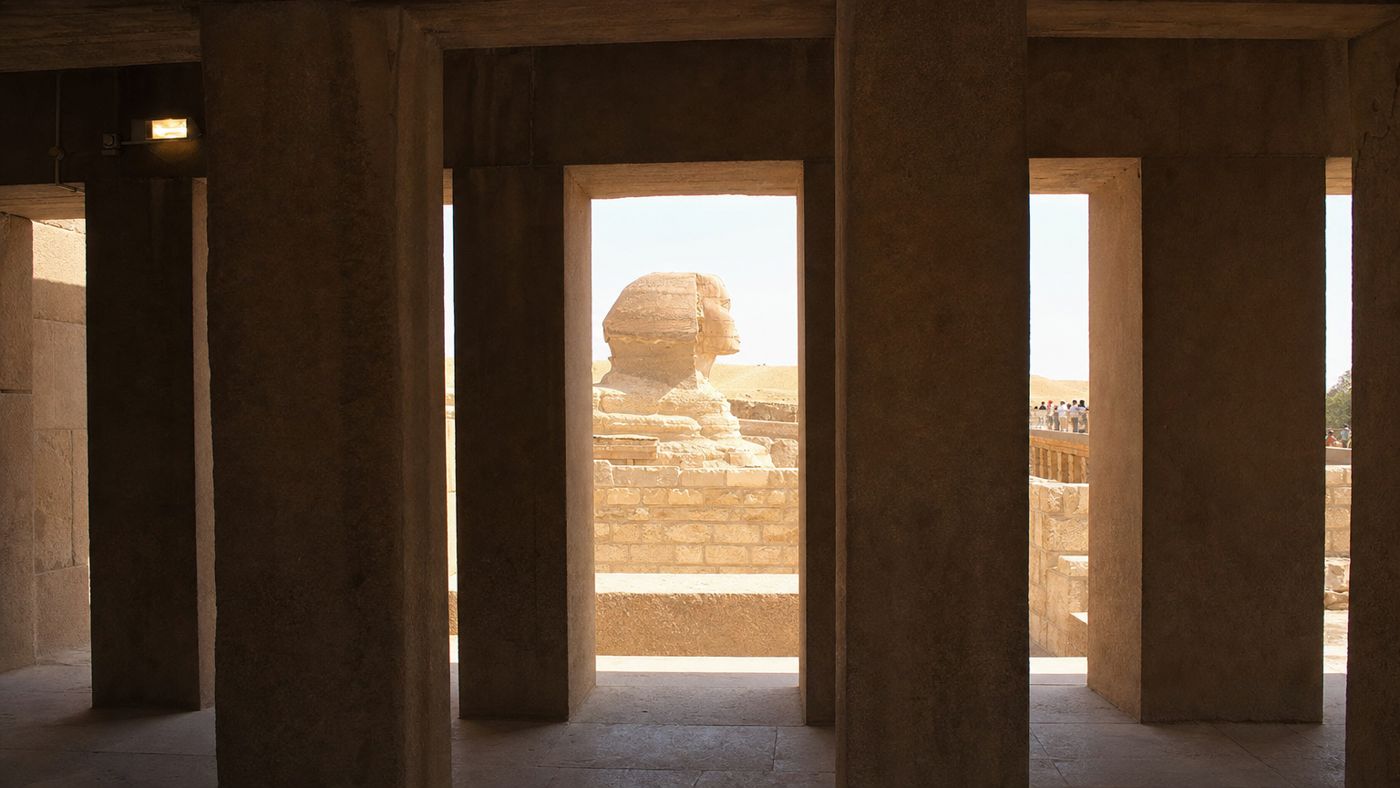
Granite pillars, cool and shady, included in the entry fee. Missed by the majority.
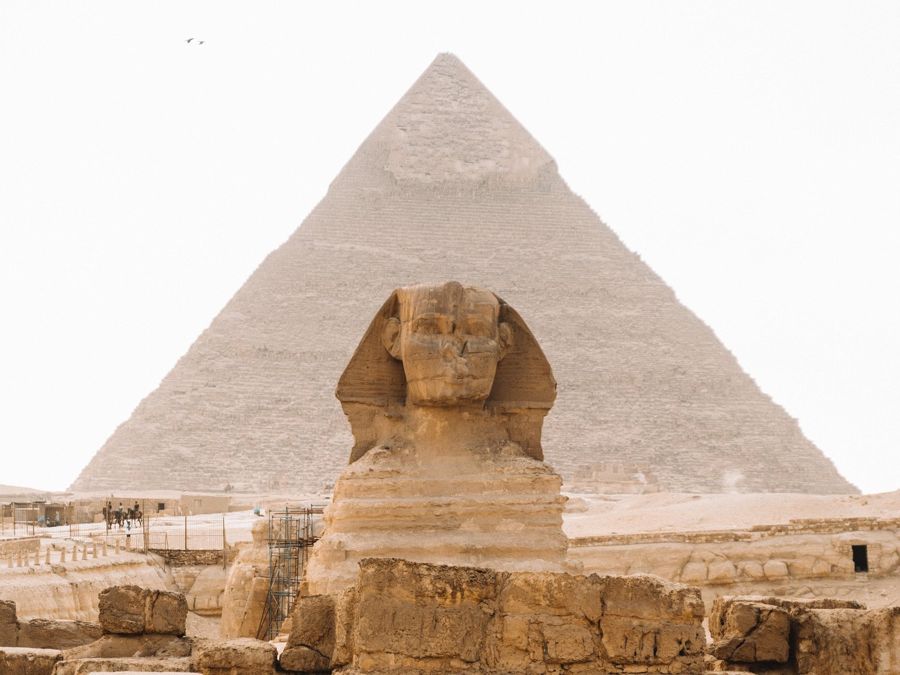
- Sphinx and viewing terrace, last
Located right at the eastern exit. That's why it's at the end of the circuit, not in the middle.
The Order Solves Two Problems
The order is the real content of this page, because it solves two problems that otherwise get in each other's way.
The first is a trap that isn't signposted on the site. The stop at the Sphinx is right next to the eastern exit, and if you get off there and go the wrong way, you've left the site. Since the basic ticket is valid for one entry only, you can't get back in with the same code. That's exactly why the Sphinx belongs at the end: when you're done there, the exit is the next step anyway.
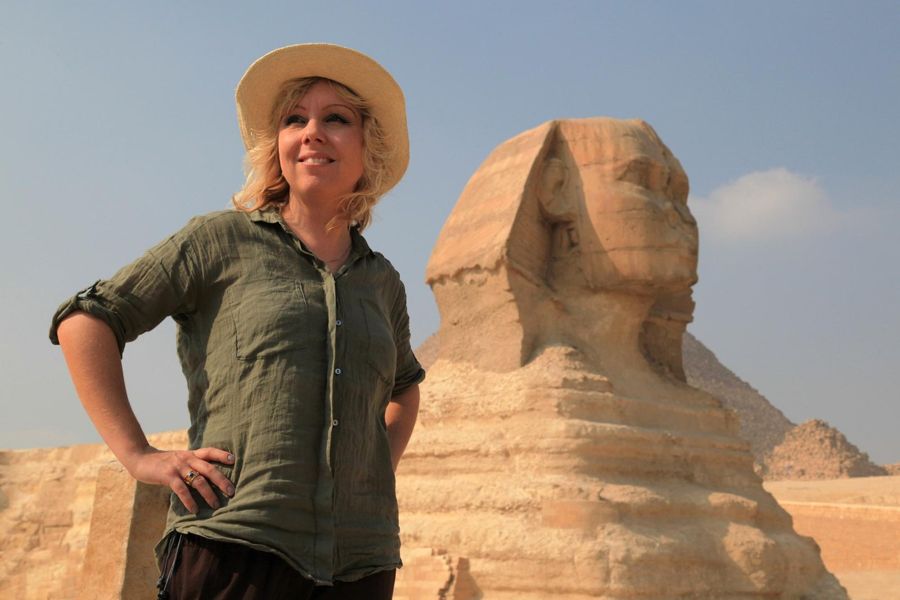
The second problem is the light. The Sphinx faces east. In the morning, the sun is behind you and lights the face frontally; in the afternoon, it lies in shadow. So if you want to photograph the Sphinx, you have an interest in being there early, and that contradicts the route.
You can resolve this with an intermediate step. On the first circuit, get off at the Sphinx, go to the terrace, take your shots, and get back on the shuttle without using the exit. Then continue the circuit and come back at the end. That costs twenty minutes and solves both.
If you're not photographing, skip the intermediate step and stick to the order above.
Tour over the Giza Plateau with selectable duration, three to eight hours
- The length can be adapted to what you actually want to see
- A guide finds the valley temple, cemetery, and boat pits without searching
- Plateau entry and pickup are included
- Free cancellation up to 24 hours before
The Day by the Hour
Planned for a winter day with early opening. In summer, move everything forward by an hour.
| Time | Stop | Why now |
|---|---|---|
| at opening | Entrance, shuttle, panorama point | Empty, cool, flat light, no crowds at the stops |
| first hour | Menkaure and subsidiary pyramids | The bus groups aren't there yet |
| second hour | Khafre, interior if desired | Shorter queue than at the Great Pyramid of Khufu |
| third hour | Khufu's north side, boat pits | Sun is still favorable for the casing blocks |
| around noon | Cemetery and painted rock tomb | The only shaded part of the program |
| early afternoon | Valley temple and Sphinx, then exit | Groups are leaving, it gets emptier again |
| from about 3 pm | Museum or return trip | Second quiet time window, good afternoon light |
- Stop
- Entrance, shuttle, panorama point
- Why now
- Empty, cool, flat light, no crowds at the stops
- Stop
- Menkaure and subsidiary pyramids
- Why now
- The bus groups aren't there yet
- Stop
- Khafre, interior if desired
- Why now
- Shorter queue than at the Great Pyramid of Khufu
- Stop
- Khufu's north side, boat pits
- Why now
- Sun is still favorable for the casing blocks
- Stop
- Cemetery and painted rock tomb
- Why now
- The only shaded part of the program
- Stop
- Valley temple and Sphinx, then exit
- Why now
- Groups are leaving, it gets emptier again
- Stop
- Museum or return trip
- Why now
- Second quiet time window, good afternoon light
The site opens around 8 am. Closing time varies seasonally; ask when you enter.
The Stops Everyone Skips
The stops that make the difference between half a day and a full day are all announced unspectacularly and are therefore passed by.
The valley temple of Khafre lies right next to the Sphinx and is included in the regular entry. From the outside it looks like a wall; inside it's a corridor between man-high, polished granite pillars, cool and shady. It's one of the best-preserved structures of the Old Kingdom on the entire plateau, and most visitors walk past it because nothing points to it.
The eastern cemetery is the second point. There, mastabas lie in planned rows, assigned to relatives and officials, and in at least one rock tomb the wall paintings are fully preserved: baking bread, brewing beer, driving cattle, smelting metal, in vivid colors. It costs a small extra ticket, bought at the entrance, and it's often almost empty.
Which tombs are open on a given day changes. That's related to the protection status as a UNESCO World Heritage site, because painted walls react sensitively to the humidity of many breaths. Ask when buying your ticket; this information isn't reliably on any website.
The third point is the boat pits around the Great Pyramid of Khufu. They've been empty since the solar boat was moved to the new museum, but the pits themselves are impressively precise cut into the rock and explain why the waterway was so important for this site.
The Decision About a Pyramid Interior
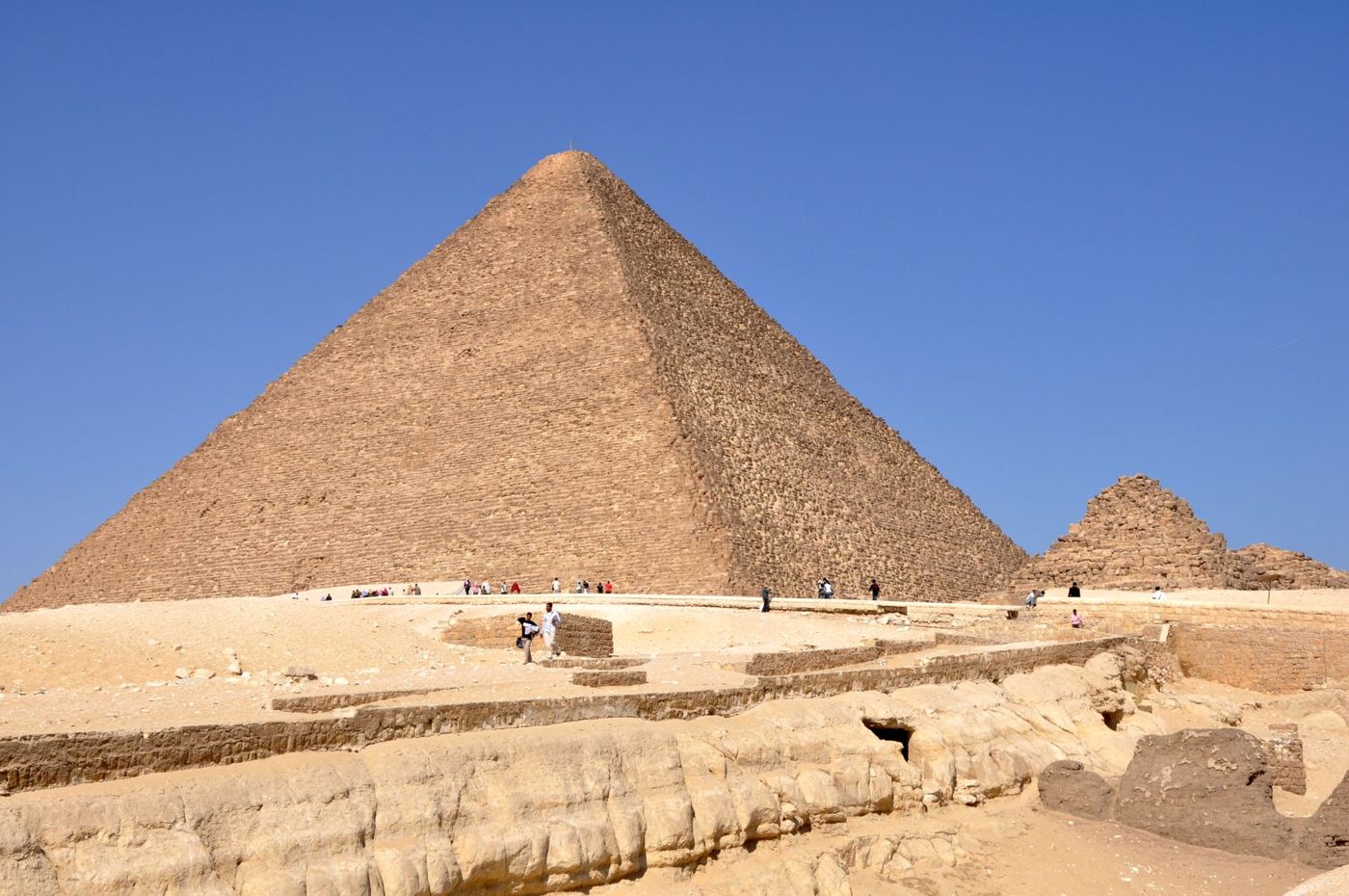
The decision about a pyramid interior deserves its own paragraph because it changes your schedule more than anything else.
An interior visit realistically takes forty to sixty minutes: queuing, climbing up, being up there, coming back down. The ticket is sold separately, for the Great Pyramid of Khufu it's daily quota and tied to time slots. If you want to go in, plan the rest of the day around this slot, not the other way around.
Content-wise, the decision is easier than the price difference suggests. All three interiors offer the same basic pattern: narrow passages, empty stone chambers, no wall paintings. Only the Grand Gallery in the Great Pyramid of Khufu is unique. If you only want to have been inside once, you're well served with the Pyramid of Khafre, pay a fraction, and queue shorter.
For a full day, there's also a physical consideration. The climb is bent over, hot, and stuffy, and afterward your concentration for tombs and temples is measurably lower. If you want both, do the interior early and the finer things afterward, not the other way around.
And a warning about the exit, because it belongs here: the ticket is valid for one entry. A lunch outside the site ends your visit. Take water and something to eat with you instead of counting on a break outside.
What a Full Day Needs
- Two large bottles of water per person, bought before the entrance
- Head covering and high sun protection, because there's practically no shade up there
- Sturdy, closed shoes for sand, gravel, and wooden planks
- Small bills for toilets, tips, and the ticket at the cemetery
- Something to eat, because the ticket is only valid for one entry
- A light long layer for the interior and for cool winter mornings
- Charged phone, because your entry ticket is on it
Large backpacks attract attention at the checkpoint and are cumbersome on the planks inside. A daypack is enough.
Plateau entry as a QR code on your phone
For the self-guided route, the basic ticket suffices. The shuttle between all stops is included.
Two Options for the Afternoon
That leaves the afternoon, and there are two sensible options for it.
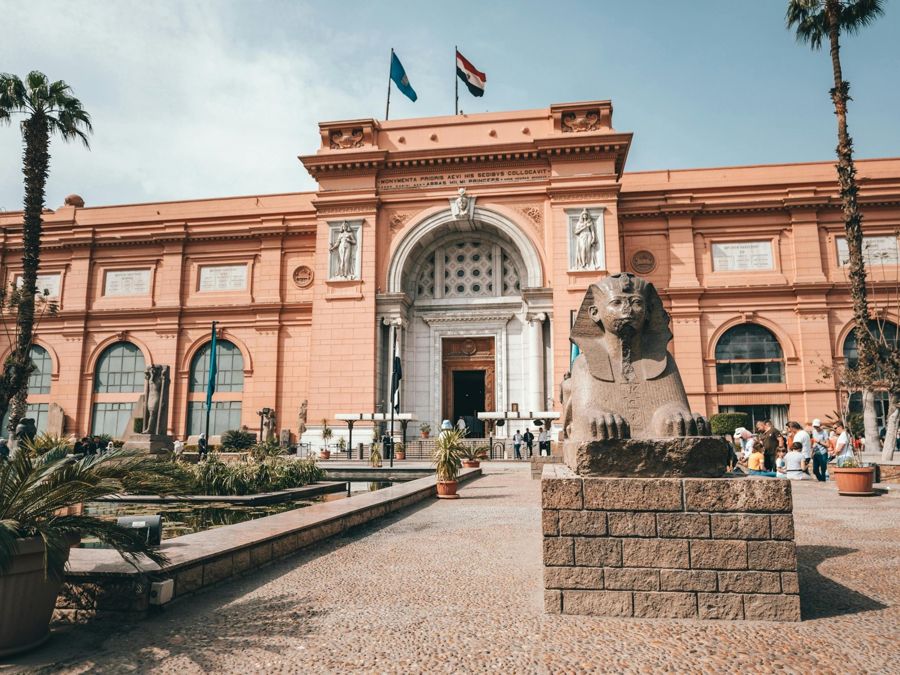
The first is the big museum a few minutes' drive to the northeast, which has been open since November 2025. There you'll find the finds that used to be scattered across Cairo, including the solar boat of Khufu, whose second example is being assembled in front of the public. The move of these collections has changed the geography of a visit: what used to mean a drive across the city now lies next door. The museum has its own ticket, bought via the official portal or on site.
The second option is to stay on the plateau and spend the time there instead of splitting it between two places. From about 3 pm, the groups leave, the temperature drops, the light becomes warmer, and spots that were occupied in the morning are free again. If you're photographing, you get the second-best time of day in the afternoon with significantly less competition.
What's not worth it is trying to also go to Saqqara or Dahshur in one day. It's possible time-wise, but it ends with having seen three places fleetingly instead of one thoroughly. These sites deserve their own day, and they lie on the same axis, so that's easy to plan.
Frequently asked questions
Isn't half a day enough?
For the three great pyramids, the panorama point, and the Sphinx, yes. A full day is worth it if you want to add the valley temple, cemeteries, and a painted tomb.
Why is the Sphinx at the end of the route?
Because its stop is right at the exit and the ticket is only valid for one entry. If you get off there early, be careful not to accidentally walk out.
Can you go out for lunch and come back?
No. The basic ticket is valid for one entry. Take food with you.
Is the museum worth it on the same day?
Yes, if you finish the plateau in the morning. It's a few minutes away and is a more pleasant environment in the afternoon than the shadeless site.
The Order Makes the Difference
The difference between a good and a mediocre day on this site rarely lies in how much someone has seen.
It lies in the order. If you're at the panorama point at opening, you have the overview before the first buses arrive, and everything else is easier to understand afterward. If you put the shady parts at midday and the open areas in the morning, you'll get through physically better. And if you know that the exit is next to the Sphinx, you won't lose half a day to a wrong step.
The opposite model is constantly seen on site: arrival around 10, straight to the largest pyramid, an hour in the sun there, then to the Sphinx, then exhausted out. This version takes hardly less time and shows a fraction.
If you want to remember one single rule from this page: first go to the farthest point and work your way back to the exit. That applies to this site as clearly as to few others, because here the entrance and exit are at opposite ends and because the shuttle prescribes this direction anyway.
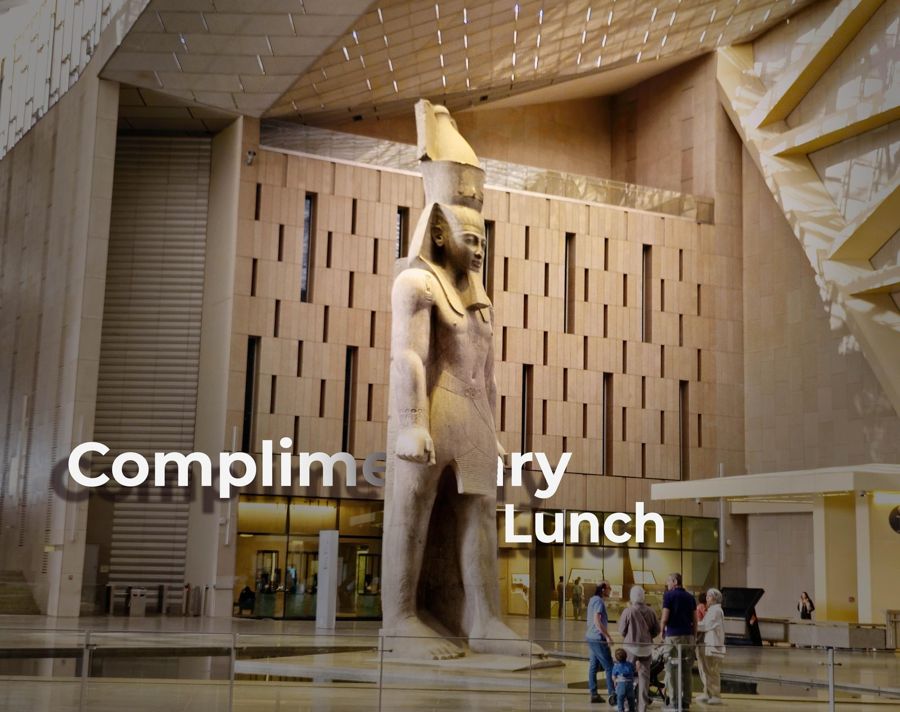
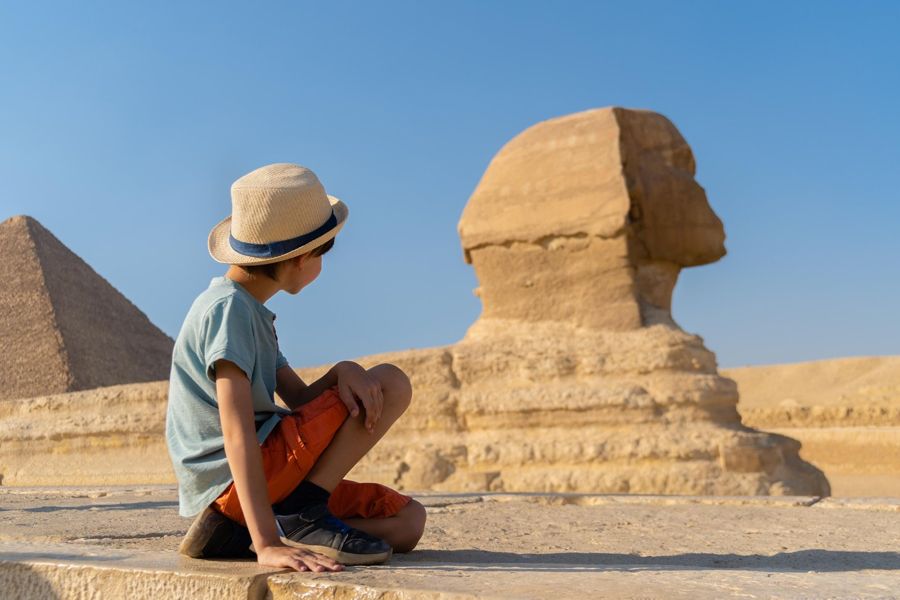
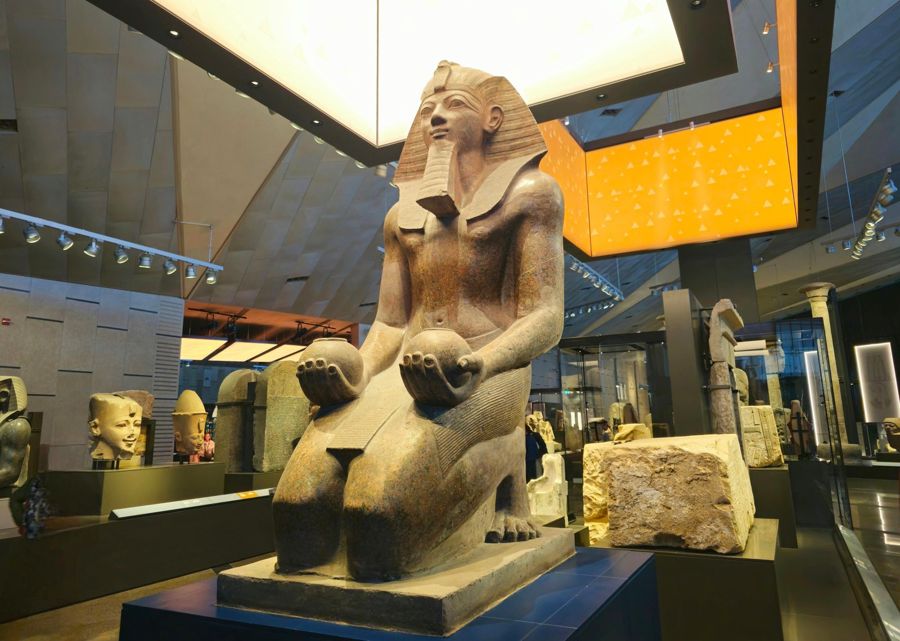
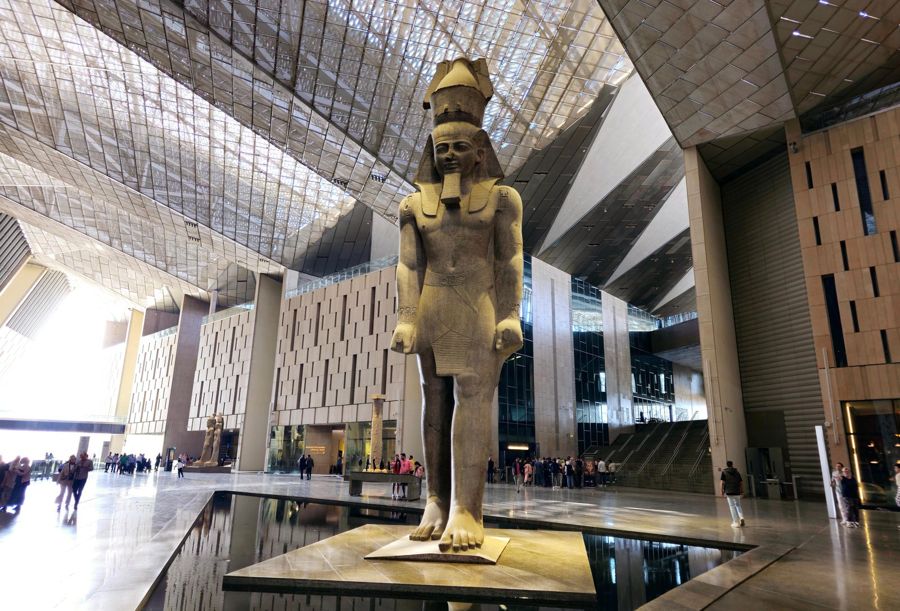
Full-day tour to the Grand Egyptian Museum, the pyramids, and the Sphinx
- Plateau in the morning and museum in the afternoon, without organizing two trips yourself
- Both entries in one process, plus lunch
- Seven to eight hours with a German-speaking guide and pickup
- Free cancellation up to 24 hours before