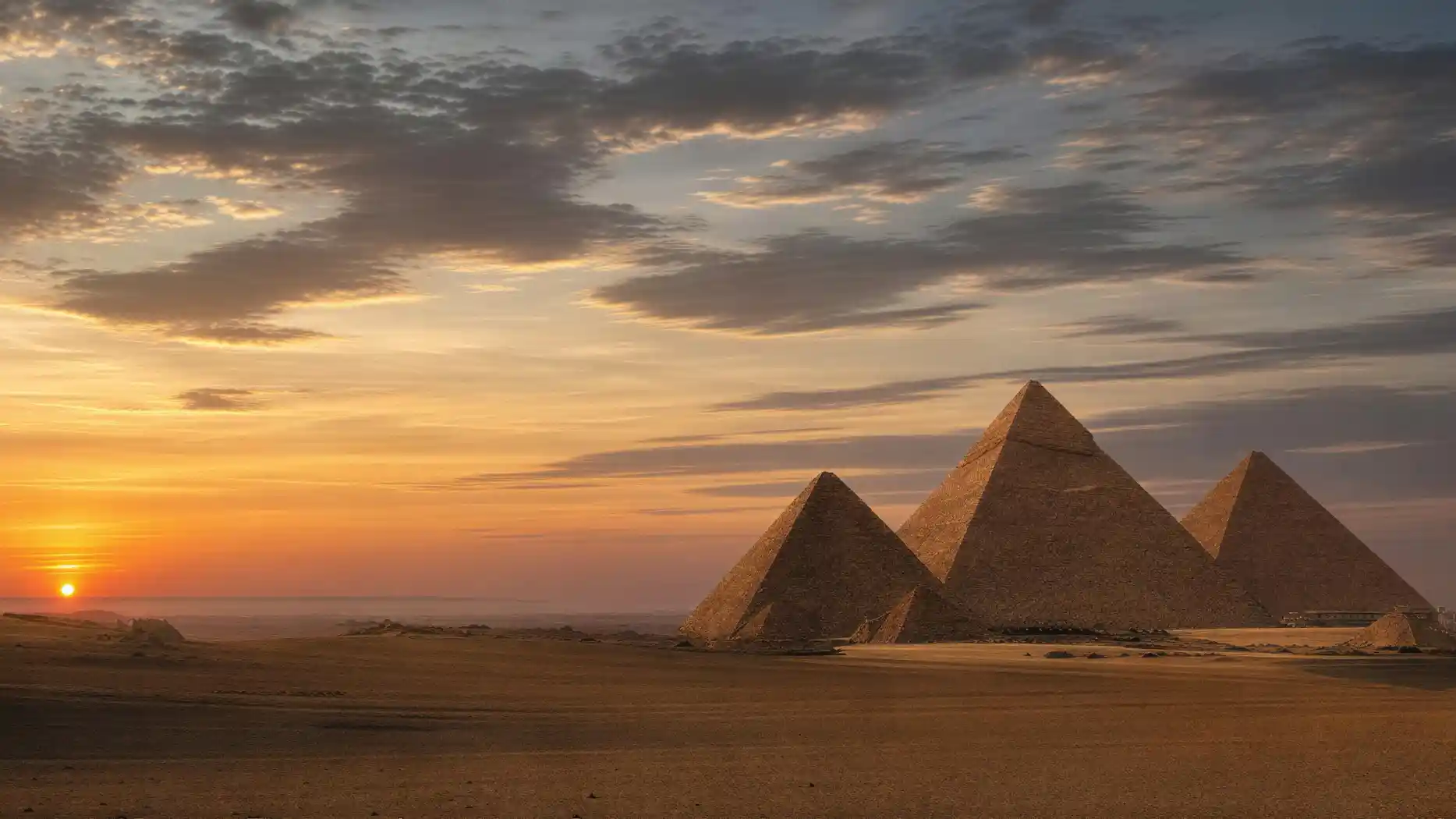
Most accounts treat this topic as if it ended with completion. In fact, construction accounts for less than two percent of the history of this site.
It took eighty years to build the three great complexes. After that, they stood for four and a half thousand years, and during that time a great deal happened: the cult continued for generations, then ceased. The chambers were emptied. The sand came. Later, the site became sacred again, then a quarry, then a tourist attraction, then a subject of research, then a World Heritage site.
The history of the Great Pyramid of Khufu is therefore not the history of its construction, but of a very long period of reuse. Almost everything visible today at the monument is not due to its builders, but to what happened afterwards: the missing casing, the breach tunnel, the barriers, the cleared areas.
This page provides an overview of the whole arc. For individual sections, there are dedicated pages, which are referenced at the appropriate points.
And it begins before construction, because the site was already in use earlier.
A note on the sources beforehand. For the construction period itself, there are hardly any contemporary texts; what we know comes mostly from the archaeological record. For the centuries that followed, the situation is reversed: there are inscriptions, travel accounts, administrative records, and chronicles from every era. The history of this site is therefore better documented the further it moves away from the construction period.
- Before 2600 BC
- The rock ridge was already used for burials
- Around 2560 to 2480 BC
- The three great complexes were built, in this order
- Until about 2200 BC
- The funerary cult was maintained, financed from assigned estates
- From about 2200 BC
- Collapse of central authority, looting of the complexes
- Around 1400 BC
- The site was revived as a sacred place, cult at the Sphinx
- From the 12th century
- Systematic stone quarrying for buildings in Cairo
- From 1798
- Systematic surveying and research
- Since 1979
- World Heritage, since 2025 comprehensively redesigned visitor access
Eighty Years, and Then It Stopped
The construction of the Pyramids of Giza was neither the beginning nor a fresh start. The rock ridge had already been used for burials before, and the building form itself had a development history of about a century behind it.
Before Giza, there was a step pyramid at Saqqara, followed by several attempts with true pyramids at Dahshur, including one with a bend in the side because the original angle was too steep. The three complexes at Giza are therefore not the start of a development, but its mature form, executed on the largest possible scale.
Within about eighty years, three complete complexes were built here with temples, causeways, subsidiary pyramids, and boat pits, along with a planned necropolis for the court and a settlement for the builders. This is one of the largest coherent building programs in human history, spread over three successive reigns.
Remarkable is the planning effort behind it. The location of the first structure lies as far north as the load-bearing rock allowed, leaving space for the two subsequent complexes. The burial fields for the court were also laid out as a grid from the start, not squeezed between the structures later. This suggests that what was planned here was not a single building, but a whole site.
Then it stopped abruptly. The successors built smaller and elsewhere, and over the following centuries the building form lost its significance as a royal tomb. Why is not fully clarified; discussions include changed religious ideas and the simple fact that such an effort could not be repeated a second time.
The excavation documentation for the entire site makes this sequence comprehensible, as it records the complexes, tombs, and settlement in their context.
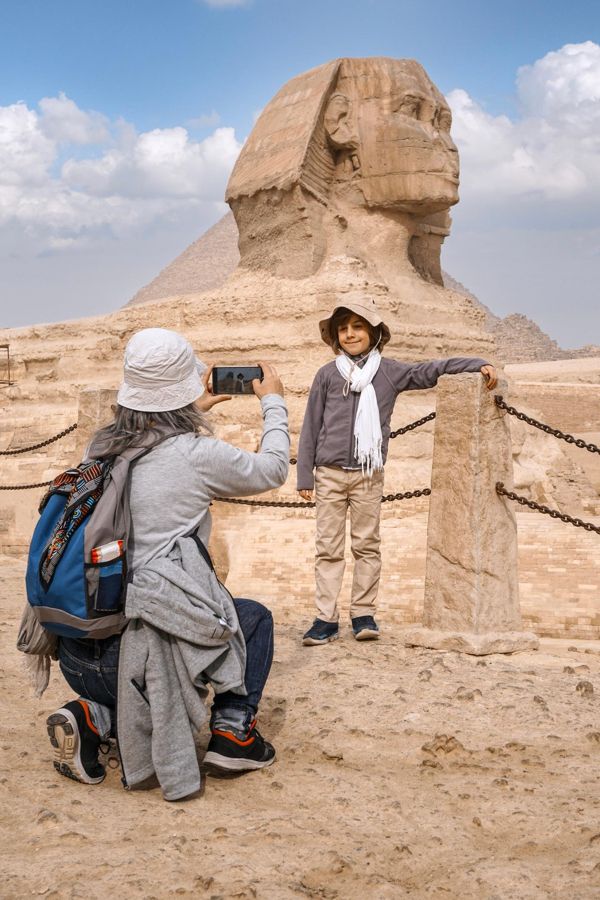
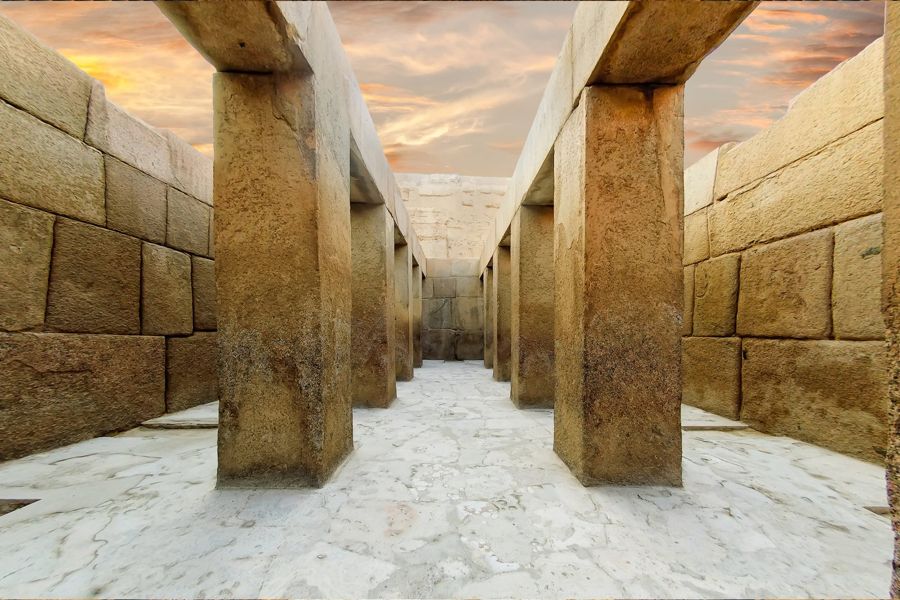
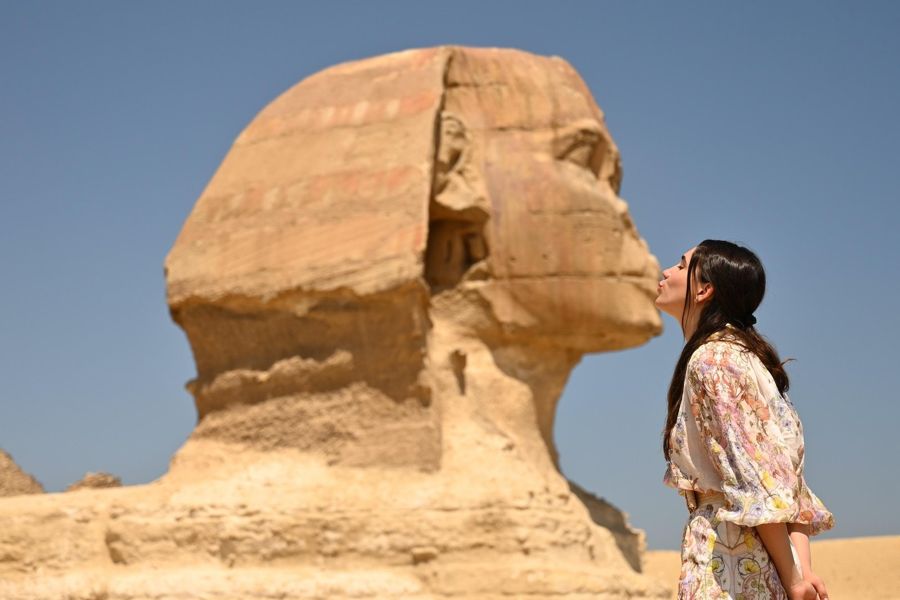
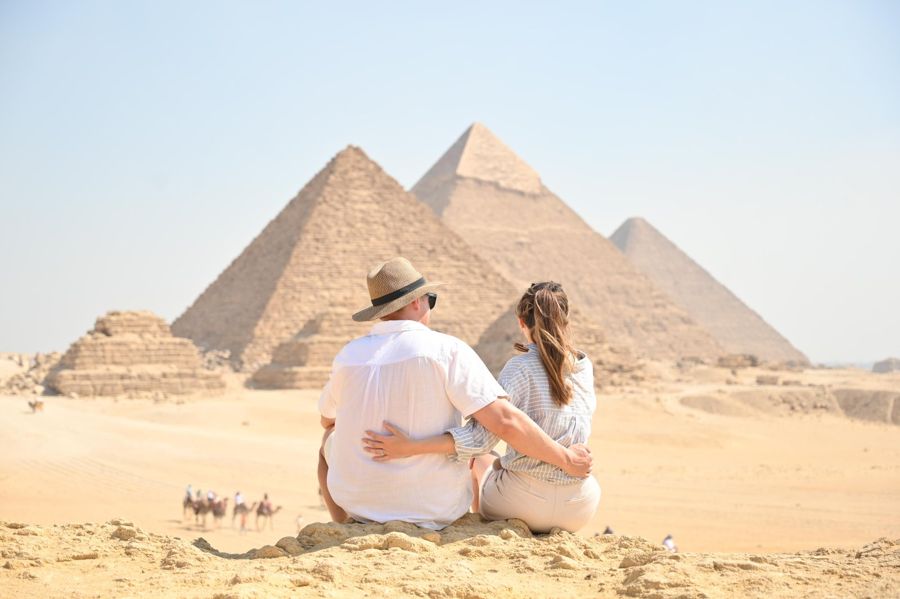
Half-day tour to the Pyramids of Giza and the Sphinx
- The traces of each era lie side by side on the same circular route
- A licensed guide explains what dates from which period
- Plateau entrance, German-speaking guide, and hotel pickup are included
- Free cancellation up to 24 hours before start
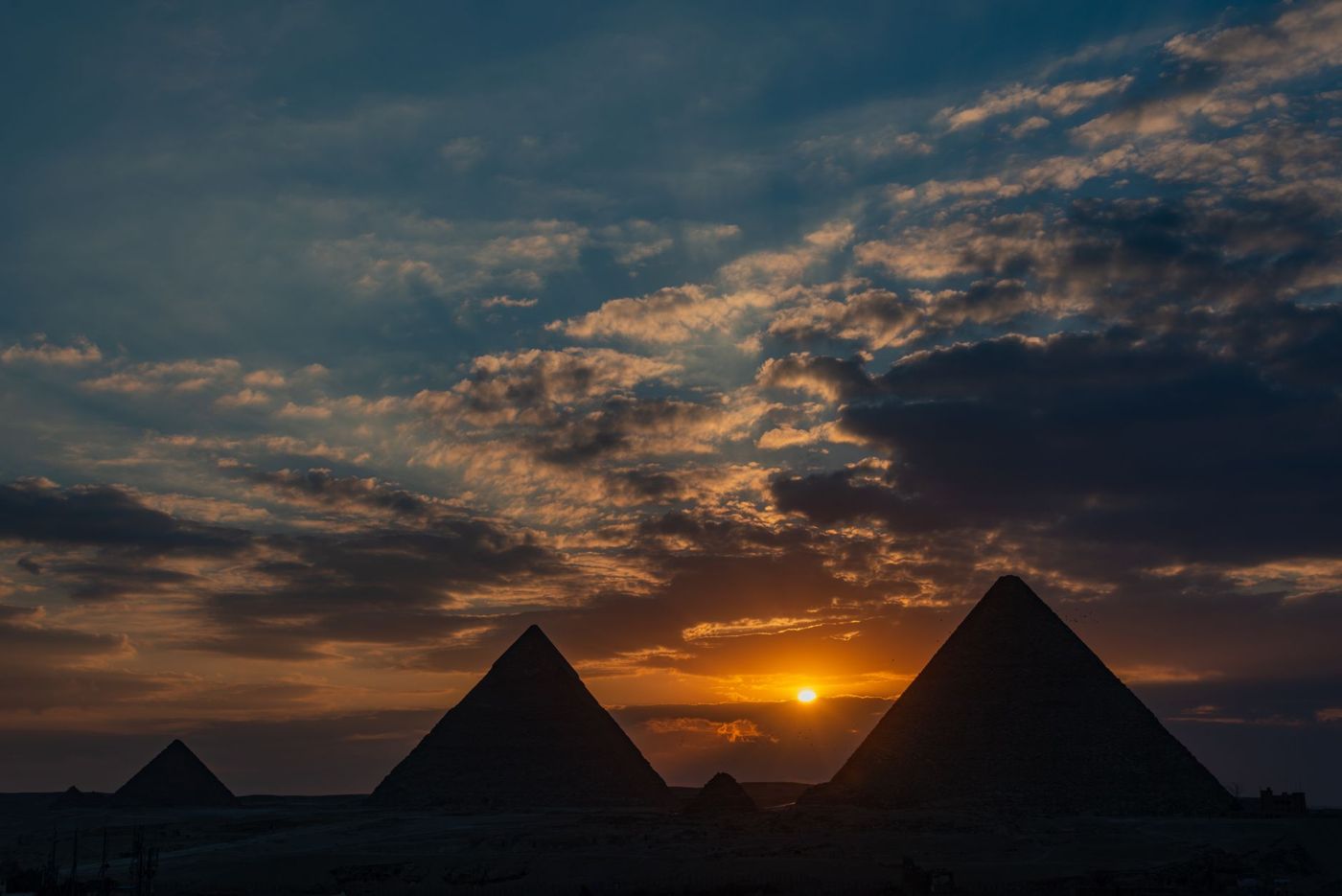
How a Monument Changes Its Meaning
What came next is the actually interesting part, because it shows how a monument changes its meaning.
At first, operations continued. The mortuary temples had a priesthood, supplies, and their own income from estates, and this cult was maintained over generations. With the collapse of central authority at the end of the Old Kingdom, it ended. The complexes stood unguarded, and during this time the chambers were likely emptied.
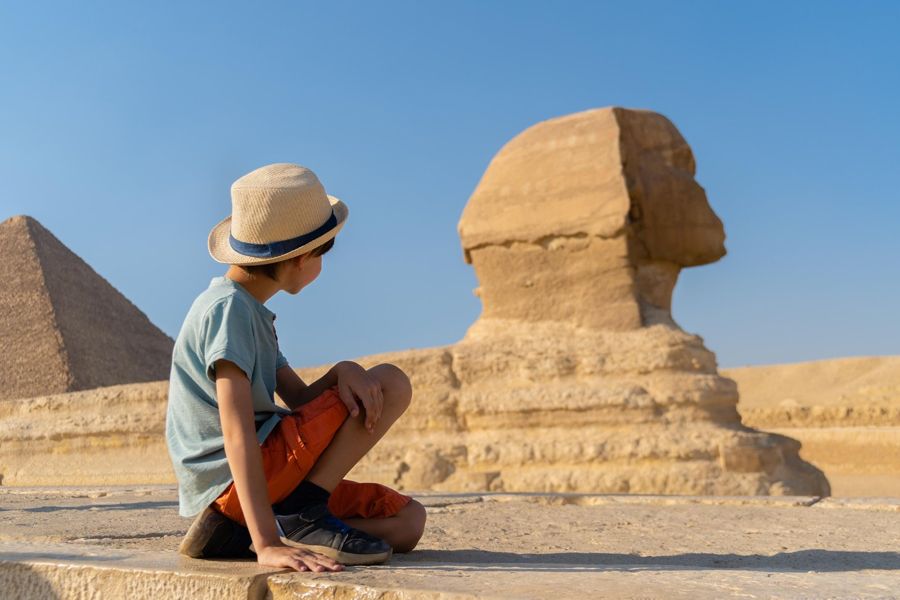
Then came the sand, and with it the forgetting of details. About a thousand years later, in the New Kingdom, the site was already antiquity for the Egyptians themselves. The story of the Great Sphinx of Giza takes a turn here: the figure was now worshipped as a deity, a king had the sand removed and a stele erected between the paws, and at one of the small subsidiary pyramids a temple was built for a goddess worshipped as the Lady of the Pyramids.
A remarkable figure belongs to the same era. A son of Ramesses II, as high priest, devoted himself to the restoration of Old Kingdom structures and had the names of the original builders re-inscribed. His restoration texts are mainly attested at sites in Saqqara. He is considered by many to be the first person to systematically care for a foreign past.
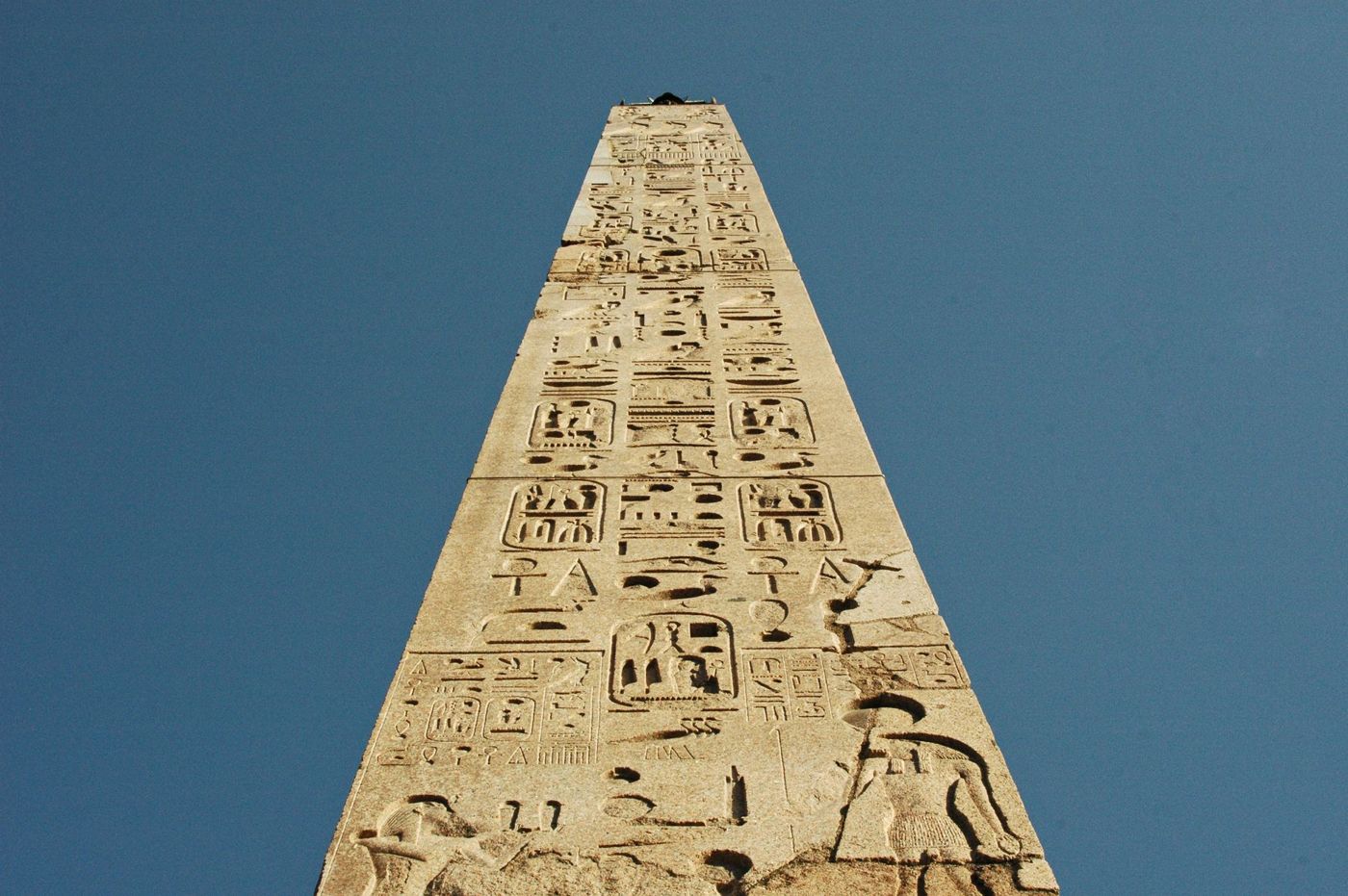
The first visitor inscriptions also date from this period. Egyptians of the New Kingdom came to the site, looked at the thousand-year-old structures, and left notes on the walls of the tomb chapels, some with names and dates. They are the oldest surviving evidence of people traveling there out of interest in a monument. Cultural tourism at this site is thus about three and a half thousand years old.
The site was therefore no longer a functioning burial ground, but a pilgrimage destination and an object of reverence, and this for people who themselves already lived in a world we consider ancient.
What Happened to the Site in Each Era
The same area, very different uses. Almost every era has left traces that are still visible today.
| Era | What happened | What is visible today |
|---|---|---|
| 4th Dynasty | Construction of the three complexes, including necropolis and settlement | The structures themselves, burial fields, quarry |
| Late Old Kingdom | Cult activities at the mortuary temples | Foundation walls, basalt floor |
| First Intermediate Period | Collapse, looting of the chambers | Empty sarcophagi, broken seals |
| New Kingdom | Revival as a sacred place, Sphinx uncovered | Stele between the paws, temple remains |
| Late Period | New burials in old shafts | Finds from the Osiris shaft |
| Greco-Roman | Tourism, descriptions, graffiti | Ancient inscriptions at several locations |
| From the 12th century | Stone quarrying for buildings in Cairo | Missing casing, demolition notch |
| From 1798 | Surveying, excavation, uncovering | Cleared areas, barriers, paths |
- What happened
- Construction of the three complexes, including necropolis and settlement
- What is visible today
- The structures themselves, burial fields, quarry
- What happened
- Cult activities at the mortuary temples
- What is visible today
- Foundation walls, basalt floor
- What happened
- Collapse, looting of the chambers
- What is visible today
- Empty sarcophagi, broken seals
- What happened
- Revival as a sacred place, Sphinx uncovered
- What is visible today
- Stele between the paws, temple remains
- What happened
- New burials in old shafts
- What is visible today
- Finds from the Osiris shaft
- What happened
- Tourism, descriptions, graffiti
- What is visible today
- Ancient inscriptions at several locations
- What happened
- Stone quarrying for buildings in Cairo
- What is visible today
- Missing casing, demolition notch
- What happened
- Surveying, excavation, uncovering
- What is visible today
- Cleared areas, barriers, paths
The traces lie on top of each other. What at first glance looks like decay is often the handwriting of a specific era.
From Tourism to Quarry
With the Greeks began something that continues to this day: tourism.
Travelers from the Mediterranean region came, had stories told, and wrote them down. Herodotus described the structures and the construction time in the fifth century BC, based on information from Egyptian priests, and thus provided the figure of twenty years that is still cited today. Roman visitors left inscriptions. At that time, the structures were already two and a half thousand years old.
From the Middle Ages onward, the use turned practical. Cairo grew, and the pyramids were the most convenient quarry in the region. The smooth casing disappeared over centuries into mosques, city walls, and palaces, and because one sensibly starts at the bottom, a remnant survived precisely at the top of the middle pyramid. A ruler tried in 1196 to dismantle an entire structure, gave up after eight months, and left a notch.
The Pyramids of Giza in art history appear during this period mainly as a misunderstanding. European depictions of the Middle Ages show them as granaries from the biblical story of Joseph, pointed, slender, and with openings for pouring in. Those who had not seen them painted them as the story demanded.
The depictions became more accurate only when travelers went there themselves and drew, instead of working from memory. The transition is clearly readable in the images: first the structures are shown too pointed and too slender, then the proportions are correct, then measurements and ground plans are added. Anyone wanting to date a view can use this development as a guide.
Only from the 18th century onward were views created based on direct observation. From there, a direct line leads to the surveys and excavations that underpin today's knowledge.
Plateau entrance as a QR code on your phone
Burial fields, quarry, temple remains, and the demolition notch are all within the regular ticket area.
The Most Recent Phase: Preservation Instead of Use
The most recent era has changed the site more than anything since the stone quarrying, only in the opposite direction.
In the 20th century, clearing, documentation, and securing took place: the Sphinx was completely freed from the sand, the burial fields were uncovered and numbered, paths and barriers were created. Since 1979, the entire area, together with the pyramid fields up to Dahshur, has been protected as a World Heritage site, making any major intervention subject to approval.
Since 2025, a comprehensive reorganization of visitor operations has been underway. The main entrance was moved to the desert road in the southwest, private vehicles and tour buses are no longer allowed on the site, and electric buses run between the main points. The official overview of the site lists the current regulations and ticket structure.
In parallel, the research focus has shifted. Today, excavations are mainly at the workers' settlement and in the burial fields, and the spectacular findings of recent years were made without a spade, through measurement techniques that see through stone.
How long this phase will last is open. The previous ones each lasted centuries, and in each, what was happening at the time was considered normal. The stone quarrying of the Middle Ages was not vandalism, but sensible material management. The blasting of the 19th century was research according to the standards of the time. What seems right today will also be historically classified one day.
Thus, the site stands in a new phase of its history, and it is the first in which the goal is not use, but preservation.
Frequently asked questions
How long did the construction take in total?
For the three great complexes together, about eighty years, spread over three successive reigns. For the largest alone, about twenty years is assumed.
Was there already construction on the site before the pyramids?
Burials took place there before. The building form itself had a development of about a hundred years at other sites.
When were the chambers looted?
Probably after the collapse of central authority at the end of the Old Kingdom. This is not documented for these complexes, but abundantly for others.
Why is the casing missing?
It was removed over centuries as building material for Cairo, starting in the Middle Ages. What remained was what was too high for convenient removal.
What has changed most recently?
Since 2025, a new visitor regulation applies with a relocated main entrance, a driving ban on the site, and electric buses between the main points.
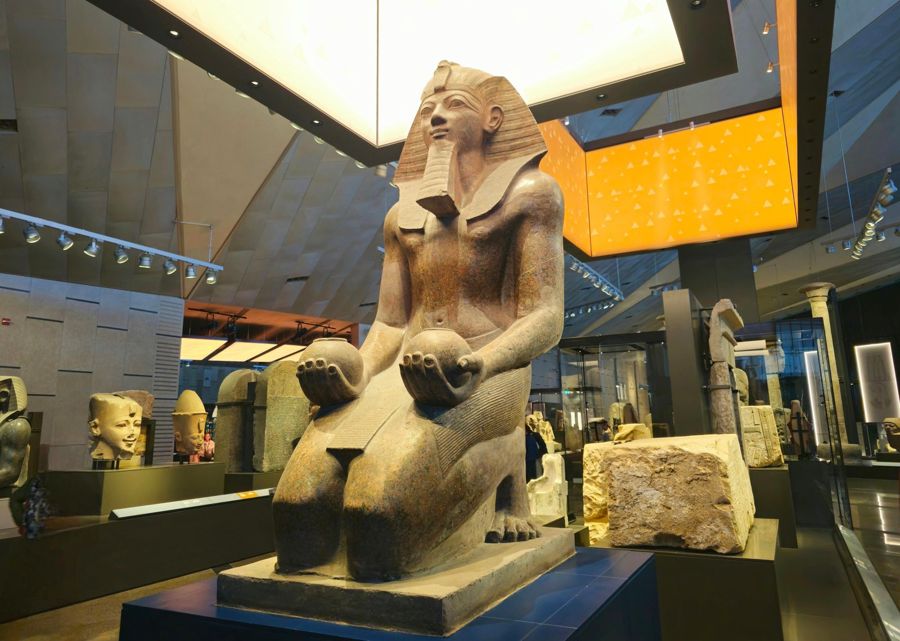
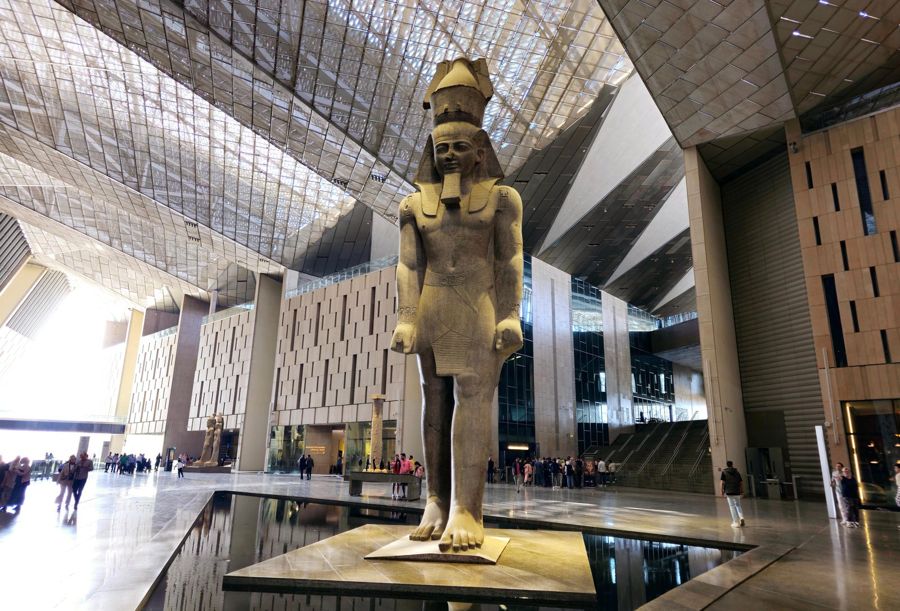
Day tour to the Grand Egyptian Museum and the Plateau
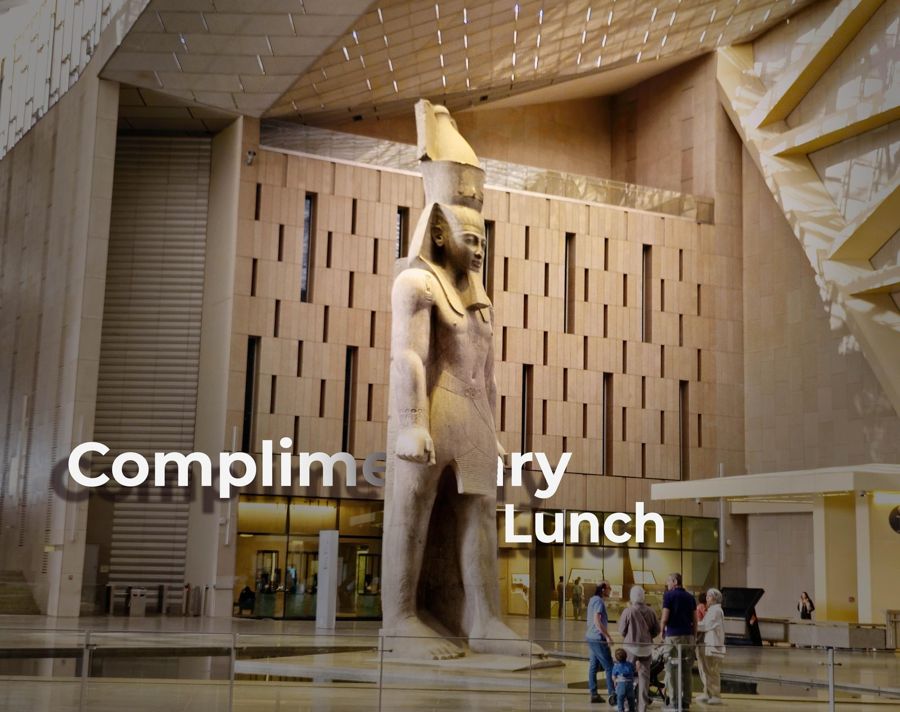
- The museum houses what was recovered from the individual eras of the site
- Plateau and museum in one day, without organizing two trips yourself
- Entrances, German-speaking guide, pickup, and lunch are included
- Free cancellation up to 24 hours before start