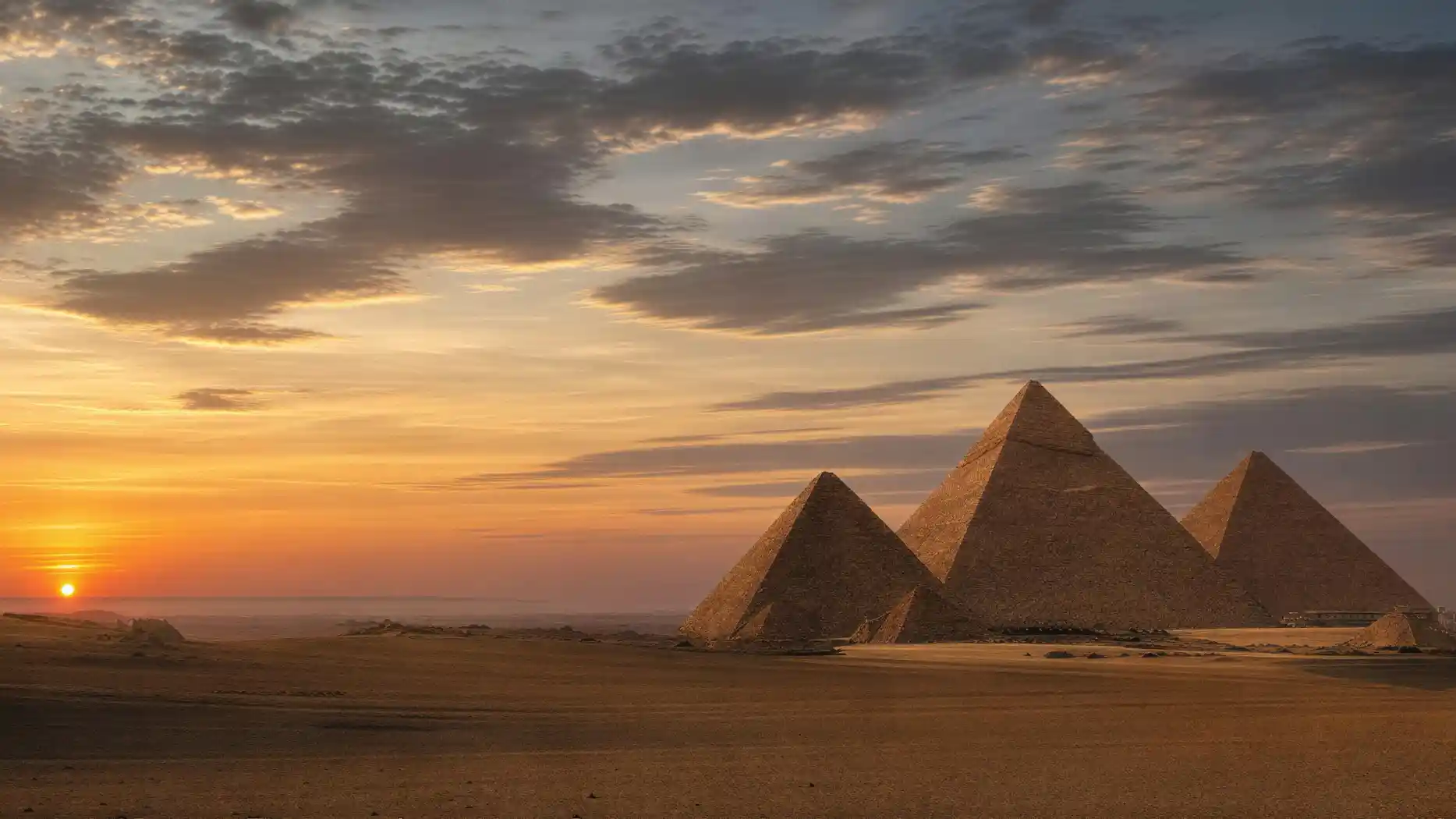
The three pyramids of Giza are what everyone knows, and the number three is also what most people answer. It's too low.
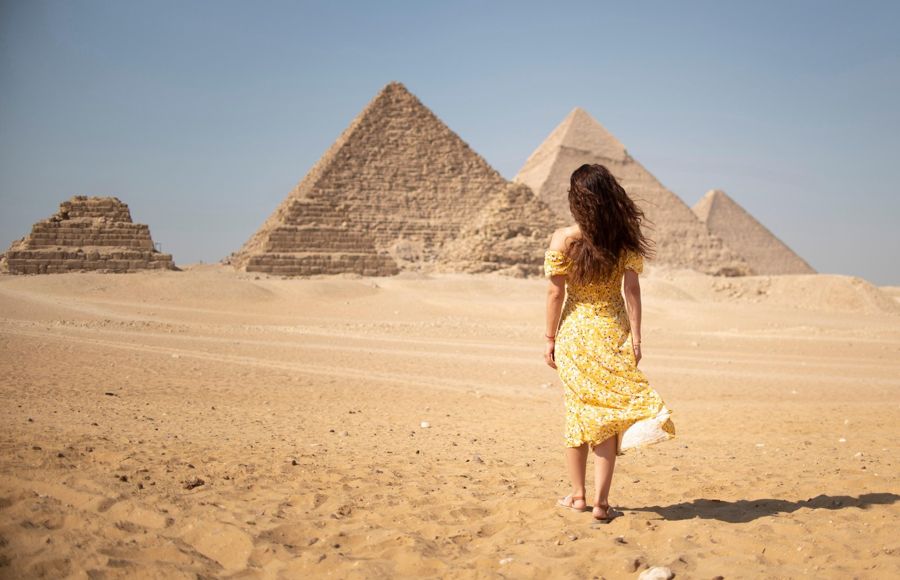
At least ten pyramids stand on the site. Three large ones, that's true, but there are also seven smaller ones: three on the east side of the largest structure, one tiny one at its southeast corner, and three on the south side of the smallest. All seven are genuine pyramids with square bases and sloping sides, just considerably lower.
The reason they're missing from the count is simple: they don't stand out next to their neighbors. A structure twenty or thirty meters high looks like a pedestal next to one of a hundred and forty, and in photos they disappear in the foreground.
Strictly speaking, the answer depends on what you count. If you only count the royal complexes, there are three. If you count all pyramid-shaped structures, there are ten. If you count structures of which only foundations remain, it gets confusing.
A distinction helps here. Not counted here are the mastabas, the flat rectangular tomb structures that cover the site by the thousands. They are tombs, but not pyramids, and if you count them, you get numbers in the four-digit range. Also not counted are boat pits, temples, and the cult buildings of the subsidiary complexes.
This page gives the numbers for the plateau, for Egypt, and for the world, and it says in each case what was counted.
The numbers
- Large royal pyramids in Giza
- 3
- Smaller pyramids in Giza
- 7, of which 6 subsidiary pyramids and 1 cult pyramid
- Pyramids on the plateau in total
- at least 10
- Pyramids in Egypt
- depending on the count, 118 to 138
- Pyramids in Sudan
- according to common counts, 200 to 255
- Tomb structures of other forms in Giza
- over 6,000
Three large and four small
The three large pyramids of Giza belong to three kings who ruled in immediate succession. They stand in a row from northeast to southwest, and their size decreases in that direction.
Each had a complete complex with temples and a causeway. Two of the three also received smaller pyramids: on the east side of the largest stand three, on the south side of the smallest also three. The middle complex has none, and why is unknown.
In addition, there is a seventh small structure that only reappeared in 1993 when a modern road was removed. It is a cult pyramid at the southeast corner of the largest complex, an auxiliary building never intended for a burial. Foundations and a capstone are preserved.
The official overview of the site accordingly lists only the three royal complexes as separate ticket areas. The other structures lie in the general area and can be freely walked around.
Remarkable is the size difference. The subsidiary pyramids on the east side each reach roughly a fifth of the height of their large neighbor. That sounds like little, but it still corresponds to a multi-story building. Standing freely in the landscape, each one would be a sight; here they seem like annexes because next to them stands the largest stone structure on Earth.
So if you want to count, you should first decide whether it's about royal tombs or structures of a certain shape. Both are legitimate, and both yield a different number.
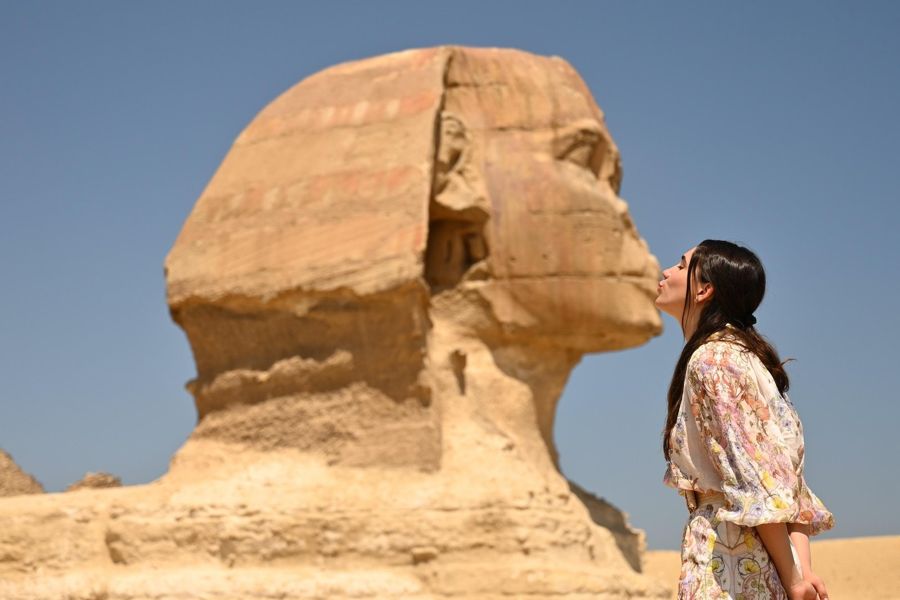
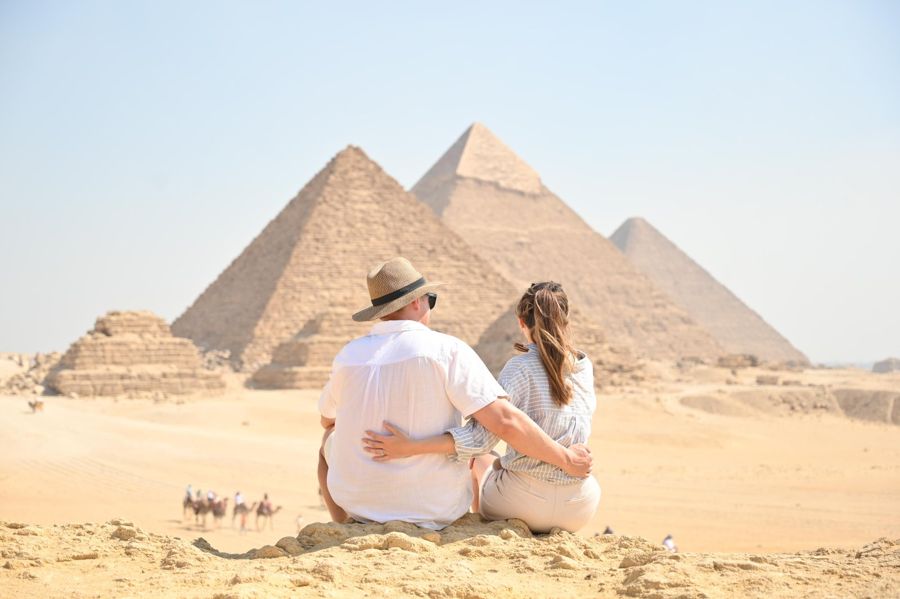
Half-day tour to the Pyramids of Giza and the Sphinx
- The seven smaller pyramids lie along the circular path and are overlooked by most
- A licensed guide explains which subsidiary structure belongs to which complex
- Plateau entry, German-speaking guide, and hotel pickup are included
- Free cancellation up to 24 hours before start
All ten at a glance
- Three large royal pyramidsOn the diagonal from northeast to southwest
- Three subsidiary pyramids on the east sideBelonging to the largest complex
- Cult pyramid at the southeast cornerConsiderably smaller, rediscovered in 1993
- Three subsidiary pyramids on the south sideBelonging to the smallest complex, two of them unfinished
- Middle complexWithout subsidiary pyramids of this kind
The mastaba fields are only hinted at. They contain over 6,000 tomb structures, but no pyramids.
For all of Egypt, it's a question of definition
For Egypt as a whole, the matter becomes confusing, and the reason is not a gap in knowledge but a question of definition.
The figures circulating range between 118 and 138. The difference arises not because someone overlooked twenty structures, but because different counting methods are used. Three groups are particularly disputed: pyramids made of mudbrick that survive only as mounds, small subsidiary pyramids of queens, and structures of which only a foundation or a burial chamber remains.
In addition, the number is not fixed. Complexes continue to be found, partly through regular excavations, partly through anomalies in satellite images that are then checked on the ground. A number that is correct today may be too low in five years.
So anyone who wants to give a reliable answer should say: about one hundred twenty to one hundred forty, with an upward trend and depending on the counting method. The digital excavation archive for the plateau shows, for a single site, how much documentation work lies behind each of these numbers.
An example of the definition question is provided by the plateau itself. Two of the seven smaller structures were never completed and remained step pyramids of a few layers of masonry. Is a step pyramid that was planned as a true pyramid a pyramid? Those who count by the plan say yes. Those who count by the current state say no. Both answers are defensible, and it is precisely such cases that make the Egyptian total fuzzy.
For Giza itself, the situation is clearer because the site has been systematically studied for over a hundred years. No more pyramids are being added here.
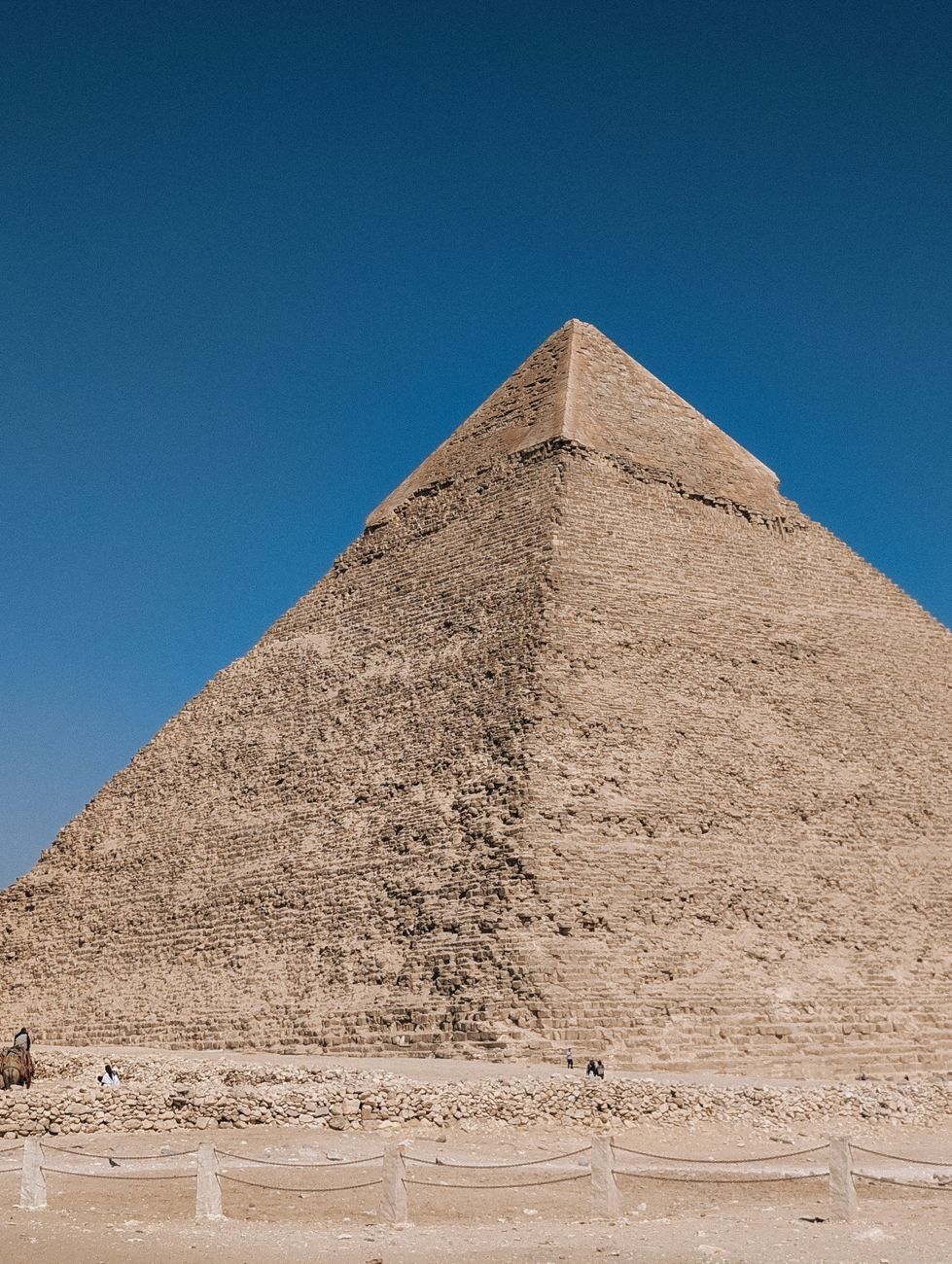
Most pyramids are in Sudan
And now the answer almost no one expects: the country with the most pyramids is not Egypt.
In today's Sudan, south of the Egyptian border, stand, according to common counts, between two hundred and two hundred fifty pyramids, about twice as many as in Egypt. They are spread over several sites, with about a hundred at one site alone.
They were built by the Kingdom of Kush, from the third century BC, more than two thousand years after the structures in Giza. They are not superficial imitations but an independent further development of the same burial idea in a culture that had long been in close exchange with Egypt.
They look different, though. The structures are considerably smaller, with base sides of a few meters up to about thirty, and they are significantly steeper: the sides rise at about seventy degrees, compared to just over fifty in Giza. From a distance, they look like a collection of pointed stone tents.
The use also differed. The structures in Kush served as royal and queen's tombs for centuries, and because they were smaller, many more could be built. Where Egypt erected three massive complexes in a few generations, there, over about a thousand years, a whole field of modest structures arose. It's the same idea on a completely different scale.
They are hardly known, and that has little to do with their significance. The sites are remote, and travel to this region has been barely possible for years.
Plateau entry as a QR code on your phone
All ten pyramids of the plateau lie in the regular ticket area and can be freely walked around. Only the interiors of the three large ones cost extra.
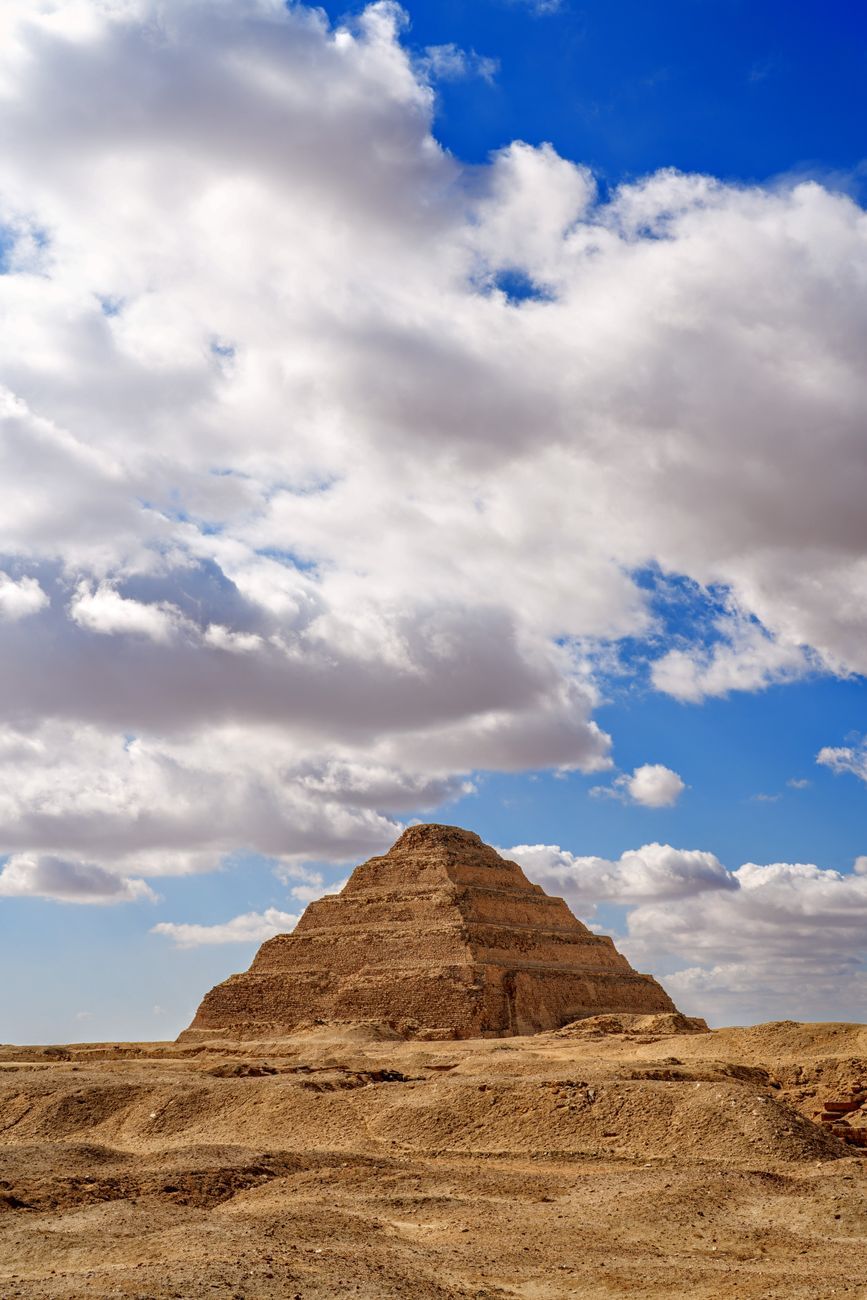
Why the number three has stuck
The question remains why the number three has stuck so firmly, and there is a good answer to that.
It comes from the image, not the findings. The classic view of the plateau, taken from the southwest, shows three structures staggered one behind the other, and the smaller ones either disappear behind the large ones or are lost in the foreground. This single image shapes the perception, and it is over a hundred years old.
Then there's the narrative. Three structures, three kings, three generations: that's a structure that's easy to remember. Ten pyramids with different functions and partly unclear attribution are harder to tell and don't fit into any caption.
A third cause is practical. Travel itineraries are built on time, and three structures plus the Sphinx fill a morning. The subsidiary pyramids lie along the path but offer no interior, no signage, and no viewpoint, and are therefore regularly skipped on guided tours. If you want to see them, you have to stop yourself.
For a visit, it's still worth taking in the smaller ones. They're on the way anyway, they cost nothing extra, and on the unfinished ones you can see what a pyramid looked like before cladding. If you want to know what lies beneath the skin of the large structures, you'll find the answer on the small ones.
The most rewarding is a detour of a few minutes. From the east side of the Great Pyramid to the three subsidiary structures is barely a hundred meters, and from there the path continues anyway to the Sphinx. If you walk this stretch instead of taking the electric bus shortcut, you'll have seen the three small structures without making a single detour.
They are all equally protected: the 1979 World Heritage listing covers the entire landscape from Giza to Dahshur, not individual structures.
Frequently asked questions
How many pyramids stand on the plateau?
At least ten: three large royal pyramids, six smaller subsidiary pyramids, and one cult pyramid. In addition, there are over 6,000 tomb structures of other forms.
Why do people always speak of three?
Because only the three royal complexes are large enough to shape the image. The others disappear in photos next to them.
How many pyramids are there in Egypt?
Depending on the counting method, 118 to 138. The difference arises from disputed cases such as mudbrick structures and complexes of which only foundations survive.
Which country has the most pyramids?
Sudan, with 200 to 255 according to common counts. They are smaller and significantly steeper than the Egyptian ones and over two thousand years younger.
Are new ones being added?
In Egypt, yes, through excavations and through anomalies in satellite images. In Giza itself, the inventory has long been fully recorded.
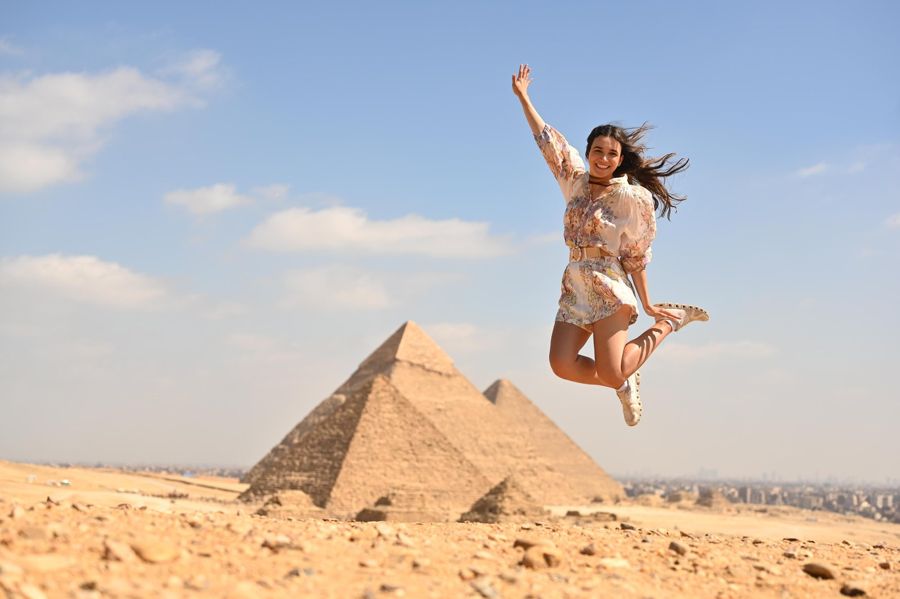
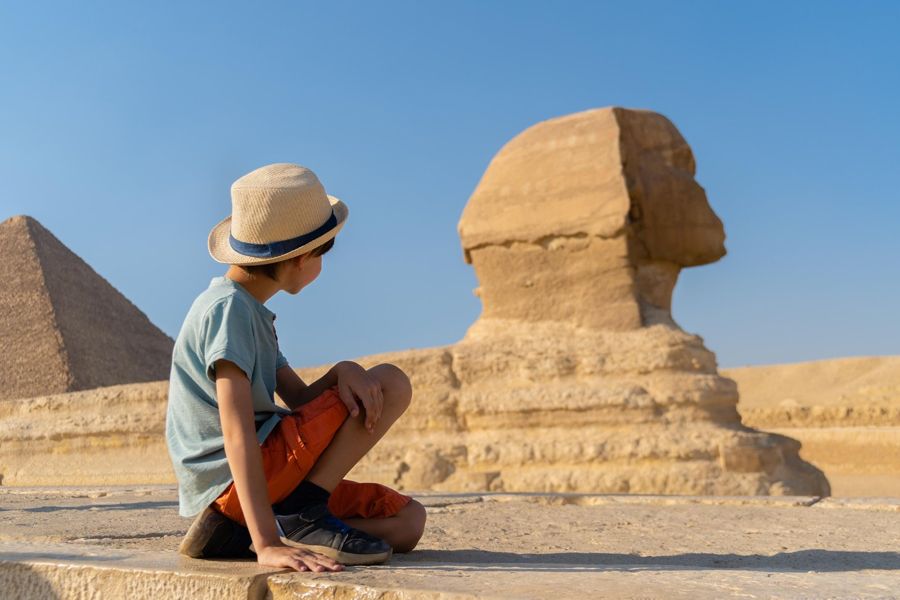
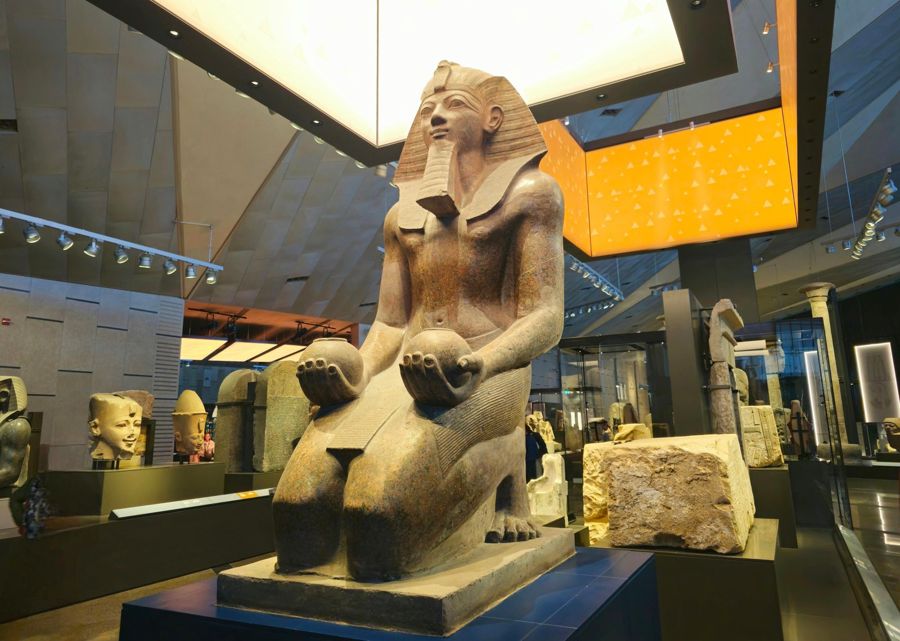
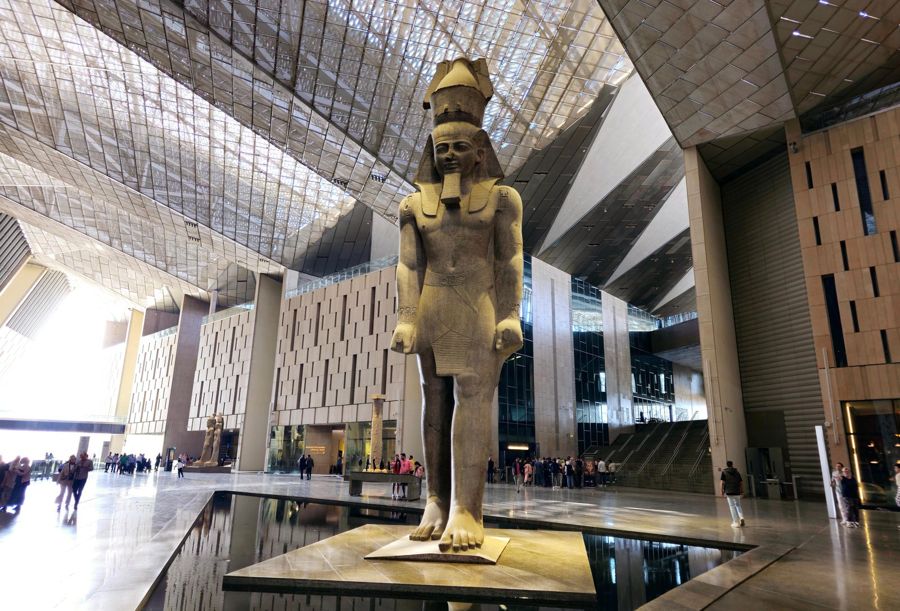
Day tour to the Grand Egyptian Museum and the plateau
- In the museum, the development of the building form from the step pyramid to Giza is traceable
- Plateau and museum in one day, without organizing two trips yourself
- Entry fees, German-speaking guide, pickup, and lunch are included
- Free cancellation up to 24 hours before start