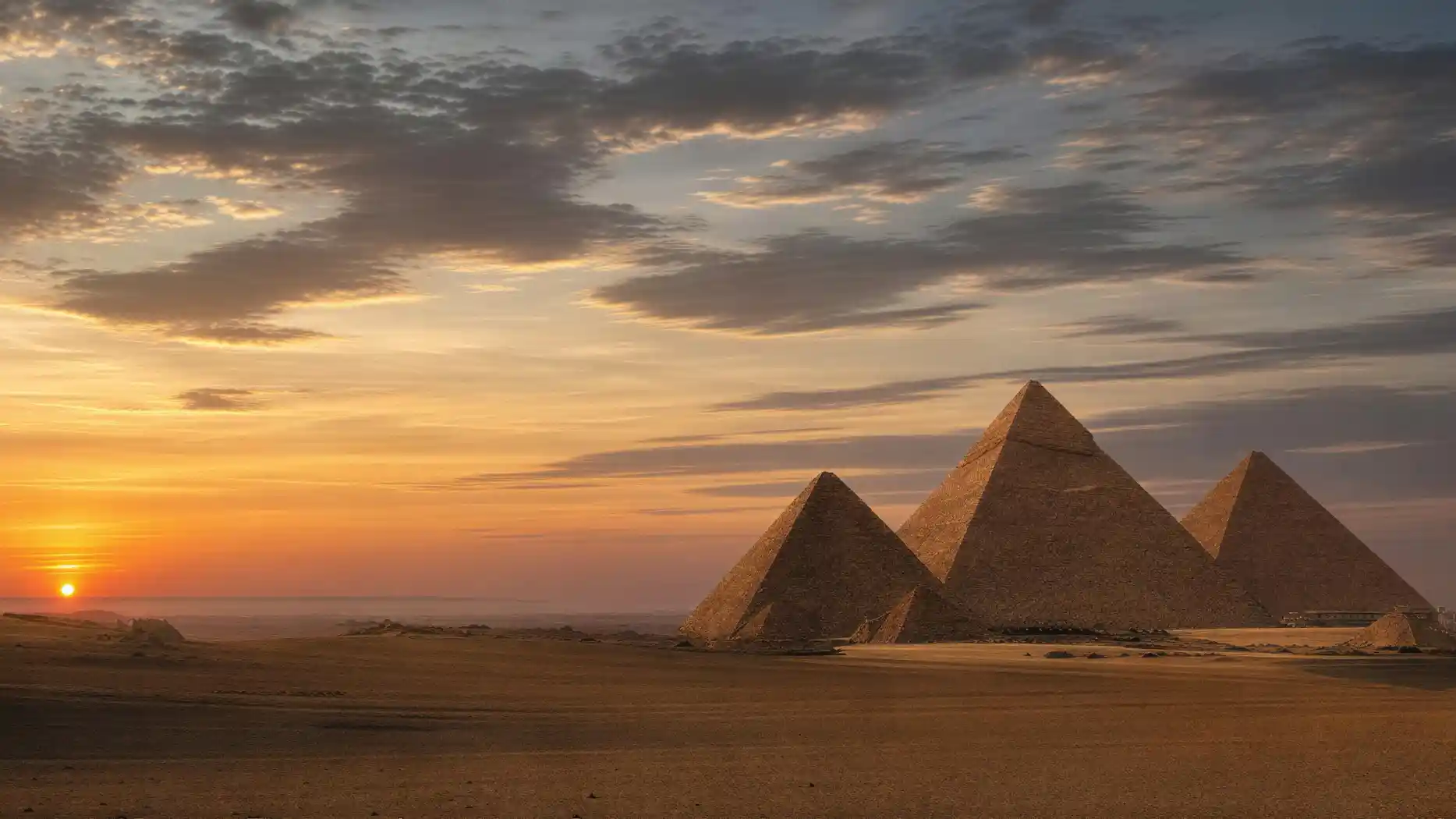
Two questions are asked remarkably often about this place, and they look similar. One is who actually owns the site. The other is where the official website of the Pyramids of Giza can be found.
In fact, both have the same answer, and that's why they are on one page here. If you know which authority manages the site, you also know which website is official. And if you know that, you can recognize the imitations, of which there are unusually many for this place.
Here's the short version: The site belongs to the Egyptian state and cannot belong to anyone else. The excavation area is managed by the Antiquities Service. The visitor operations around it, including the entrance, vehicles, catering, and shops, have been run by a private company since 2018, which has a fifteen-year contract for this. Nevertheless, the entrance fee remains entirely with the state.
Who legally owns the site
Who owns the Pyramids of Giza in the legal sense, then? In Egypt, the answer is unusually clear because the country settled this question in principle decades ago.
The Antiquities Law of 1983 declares all antiquities in Egypt to be public property. Private ownership is excluded, except for a few cases that already existed before the law came into force. The state can reclaim items, regardless of how long someone has held them. For an immovable monument like a pyramid, this simply means: It is not for sale and has never been for sale.
For visitors, this principle has a tangible consequence. Because the monument is public property, there is no private access that can be bought outside the official ticketing system. If someone offers you special entry, they are either selling a regular ticket at a markup or nothing at all. Authorized exceptions do exist, for example, for filming, photo productions, and research, but they are granted by the administration, in writing, and not traded on the street.
All this is separate from the land outside the fence. There, ordinary property relations apply, with private homes, shops, and guesthouses. It is precisely at this boundary that the dispute over the renovation of the adjacent neighborhood, which has been in court for years, is played out. The monument belongs to the state, the houses in front of it belong to people, and the two are regularly confused.
The World Heritage status does not change this. The inscription on the World Heritage List, which has existed for the area from Giza to Dahshur since 1979, transfers neither ownership nor jurisdiction. It merely obliges the state to protect the property and gives an international body the right to assess conservation and make recommendations. Anyone who reads that UNESCO owns or manages the pyramids is reading something false. The inscription of the area includes much more than Giza, namely the entire necropolis from Giza to Dahshur, and for that reason alone, external management would not be practical.
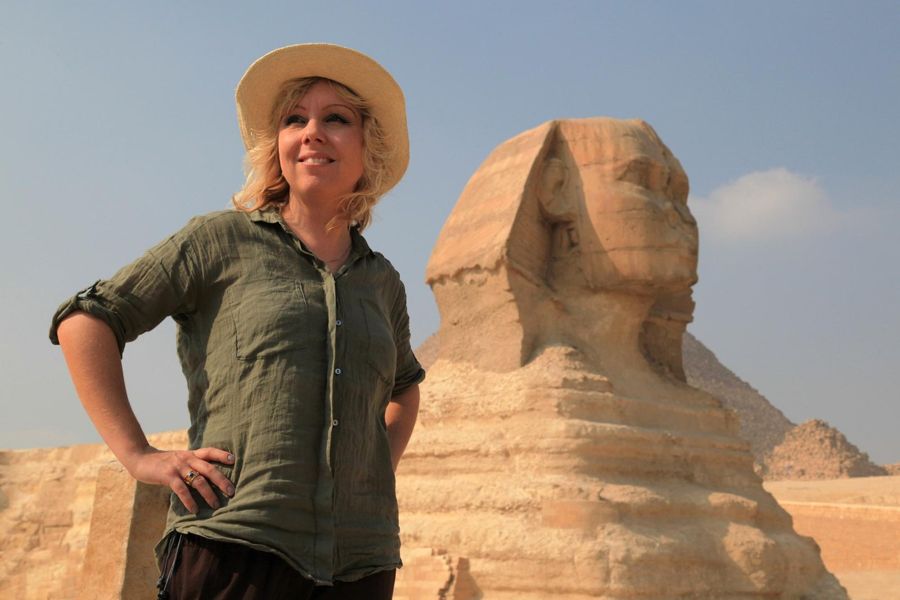
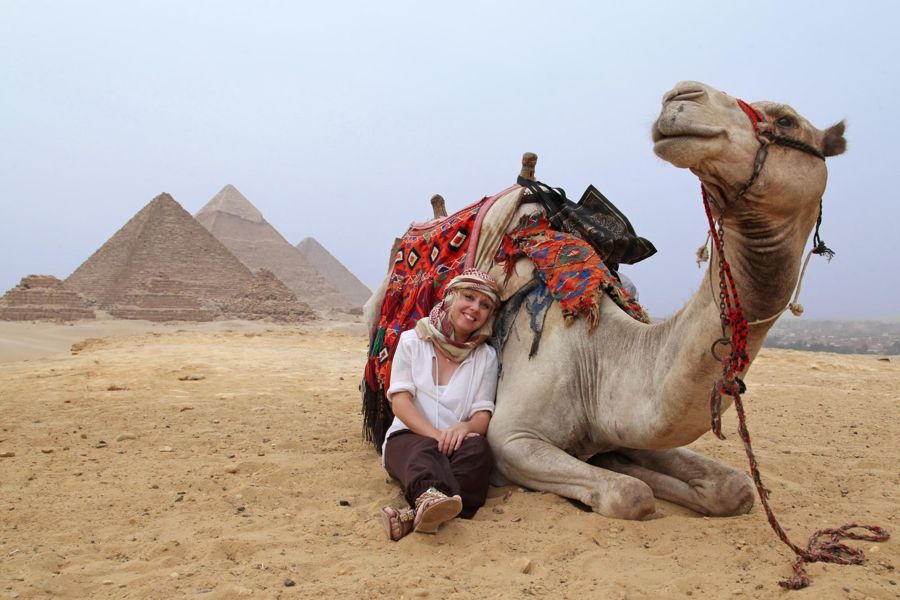
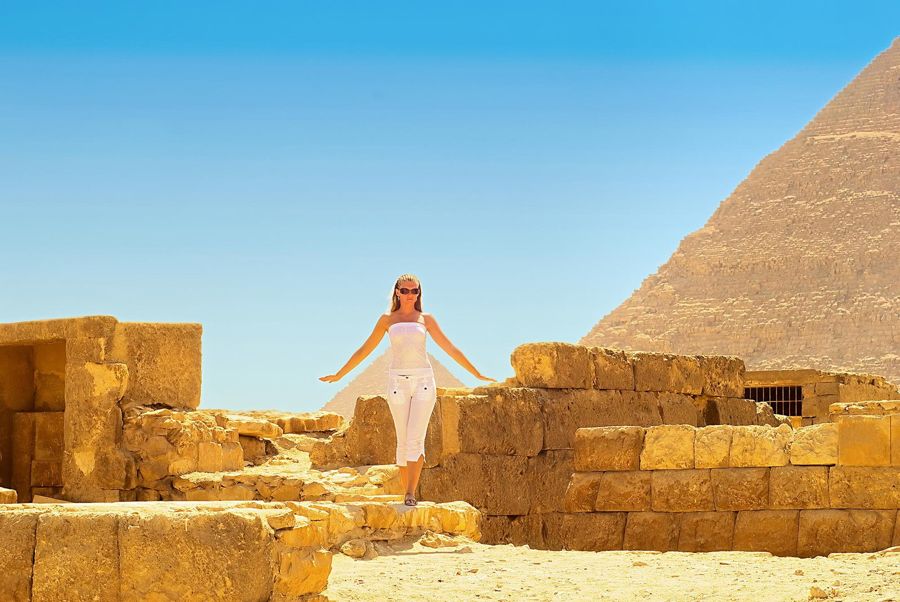
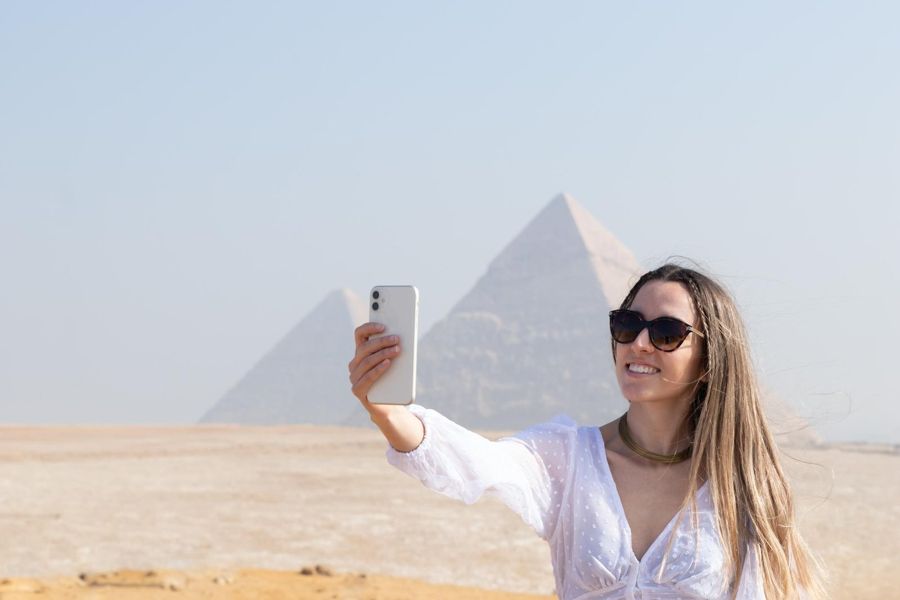
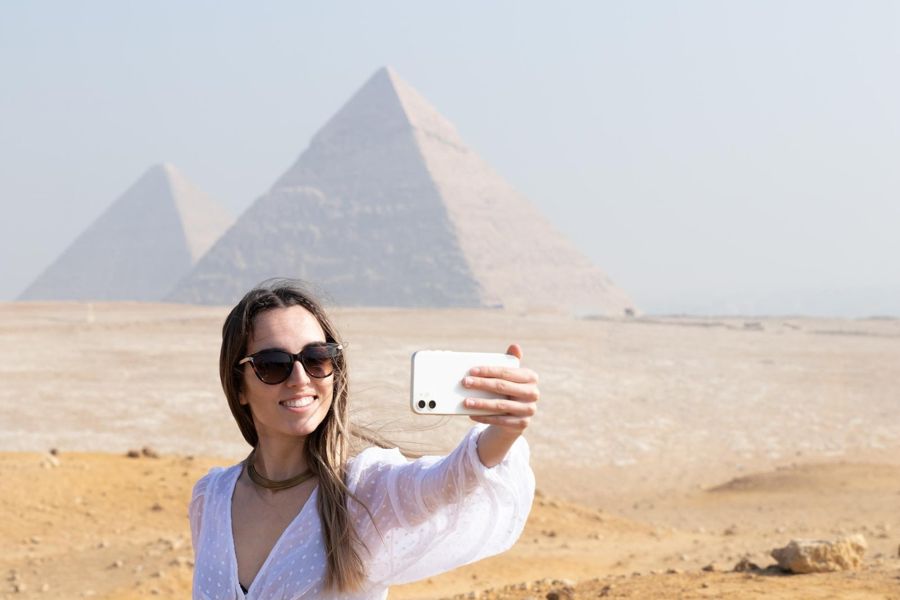
Entrance ticket via a reseller, as QR code
- The honest comparison: The official platform is the direct way; a reseller is the more convenient one
- On the other hand, a German-language interface, familiar payment methods, and a contact person for problems
- Free cancellation up to 24 hours before the selected day, which the official booking does not offer
- Covers the area like the official ticket; interiors are also not included here
All antiquities are considered public property, and their possession is prohibited, except for those antiquities whose ownership was already established at the time this law came into force.In spirit, according to Egyptian Antiquities Law No. 117 of 1983, as amended in 2010
Who runs the operations
Now the second level, which is newer and more noticeable for visitors: Who runs the operations?
The excavation area itself is the responsibility of the Antiquities Authority, the Supreme Council of Antiquities. It decides on the monuments, excavations, access to the interiors, and what happens to the site as an archaeological site.
Everything connected to it, such as the entrance, vehicles, paths, catering, and shops, has been outsourced. A subsidiary of the Orascom Group has had a fifteen-year contract since 2018 and, according to its own figures, is investing billions of Egyptian pounds in a visitor center, electric buses, gates, and service buildings.
As for where your money goes, the division is clearly regulated: Revenue from entrance tickets remains entirely with the state, plus half of the project profit. The company earns money from what you spend beyond that, such as catering, shops, renting the site for events, and special offers. If you only pay the entrance fee and nothing else, you are financing exclusively the public side.
This arrangement is not uncontroversial. The fact that a private company operates a World Heritage site has drawn criticism from the start, and the World Heritage Committee's conservation reports regularly address construction projects around the site. On the other hand, the renovation has tackled exactly those points that visitors had complained about for decades: vehicles in the middle of the site, an overloaded entrance, missing paths, and no orderly sales. Anyone who wants to describe the current situation must mention both.
Who decides what
The dividing line runs between the monument and the operations around it. It also explains whom to contact for which concern.
| Area | Responsible | How you notice it |
|---|---|---|
| Monuments, excavations, interiors | Antiquities Authority | Time slots, barriers, photo rules |
| Entrance fees and ticket types | Antiquities Authority | Official price list, separate rates for Egyptians and foreigners |
| Gates, control, visitor center | Private operator | New buildings, machines, signage |
| Electric buses on site | Private operator | Included in the entrance fee, no separate ticket |
| Catering and shops | Private operator | Restaurants and retail areas on site |
| World Heritage status and conservation reports | International body, without ownership | Recommendations to the state, not directives |
- Responsible
- Antiquities Authority
- How you notice it
- Time slots, barriers, photo rules
- Responsible
- Antiquities Authority
- How you notice it
- Official price list, separate rates for Egyptians and foreigners
- Responsible
- Private operator
- How you notice it
- New buildings, machines, signage
- Responsible
- Private operator
- How you notice it
- Included in the entrance fee, no separate ticket
- Responsible
- Private operator
- How you notice it
- Restaurants and retail areas on site
- Responsible
- International body, without ownership
- How you notice it
- Recommendations to the state, not directives
Complaints about operations go to the operator; complaints about monuments and tickets go to the Antiquities Authority. In practice, the complaint office on site accepts both.
Which address is the official one
Now to the address question, which is practically the more important one because money is at stake.
There are two official presences, and they serve different purposes. The Antiquities Authority's information portal is at the government address egymonuments.gov.eg. There you will find opening hours, the price list, and details on which ticket covers which area. It does not sell anything. In addition, the same ministry runs a booking platform of the same name, through which tickets for over a hundred sites across the country can be purchased in advance; it is accessible via the ministry's website.
What the official platform offers can be gleaned from the ministry's description: tickets for over a hundred sites across the country, a tariff separated by nationality, payment by credit card, and electronic confirmation by email. Whether that suffices for you depends on your own requirements in terms of language, payment methods, and cancellation terms. If you do not get anywhere there, you can fall back on a middleman, and that is entirely permissible as long as it remains clear that they are one.
A website about the Pyramids of Giza that is neither one nor the other can still be serious. Travel providers, middlemen, and publishers all have their own presences, and many are useful. It only becomes problematic when such a site gives the impression that it is the official one.
The fact that there are so many imitation pages about this particular place has a banal reason: It is one of the most searched destinations in the world, and the entrance fee is high enough that deception pays off.
The rule that protects you is simple and costs nothing: Do not go to the booking via the search engine, but via the government address and from there. Advertisements are placed on search terms related to official tickets, so the top hits are regularly not the official site.
Three features of an official page
First, the domain: The government information page is on an Egyptian government address. Second, the price: The official list names separate rates for foreigners and Egyptians, and anyone who demands significantly more is a reseller, which is permissible but something else. Third, the scope: The official platform sells tickets for over a hundred sites across the country, not just for Giza.
Frequently asked questions
Can someone buy a pyramid?
No. Antiquities in Egypt are public property, and immovable monuments are not for sale. Offers claiming otherwise are nonsense.
Do the pyramids belong to UNESCO?
No. The World Heritage List transfers neither ownership nor jurisdiction. It obliges the state to protect and allows external recommendations.
Who gets my entrance fee?
The state, fully. The private operator earns from catering, shops, rentals, and additional offers, as well as half of the project profit.
How do I recognize the official booking page?
It belongs to the ministry, sells tickets for over a hundred sites in the country, and lists the official rates. Access it via the government information page, not via a search result.
Is a reseller untrustworthy?
Not fundamentally. They charge a surcharge for a brokerage service. It only becomes untrustworthy when someone pretends to be the official site.