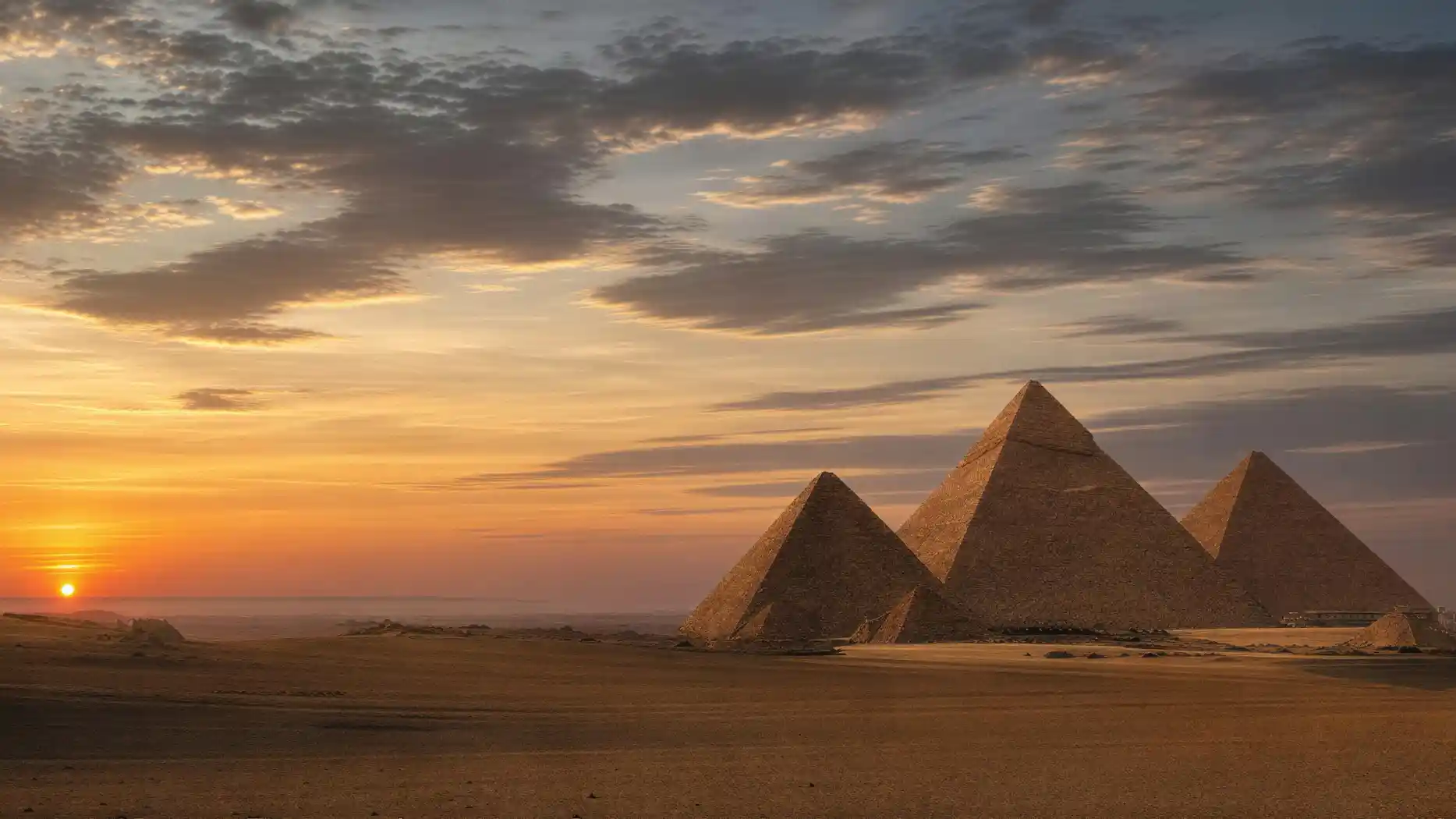
If you think a pyramid is a single building, you're seeing about a fifth of what once stood there.
In the Old Kingdom, a royal pyramid was not a monument but the topmost part of a complex of several structures that were interrelated and followed a fixed sequence. This sequence began at the water and ended at the peak. It was not an architectural whim but the physical expression of a ritual: the dead king was brought across the river, received in a temple at the shore, led up via a covered causeway, treated in a second temple, and finally buried in the pyramid.
Every pyramid complex in Egypt from this era follows the same scheme. It was developed a generation before Giza, reached its grandest execution here, and remained the standard for centuries. Once you know the scheme, you can read any pyramid complex in the country without explanation.
It wasn't developed here. The first royal pyramid was built a dynasty earlier at Saqqara, still as a step pyramid and with a spacious, walled courtyard instead of an axis to the river. Only under the father of the builder of the largest pyramid, who had several monumental structures erected, did the whole thing coalesce into the straight line from valley to peak. What stands at Giza is therefore not the beginning of a development but its mature form, executed on the largest possible scale.
At the Giza site, this scheme stands three times side by side, built by three successive kings. It is preserved three times with varying degrees of completeness, and that is exactly what reveals how it worked: what is missing in one complex still stands in its neighbor.
This page describes the building plan, its three implementations, and the question of why the structures are distributed across the site as they are.
The Five Parts, in Order of Use
- Valley Temple
At the harbor, at the edge of the fertile land. Landing point and reception building. The rituals began here.
- Causeway
A covered, partly decorated corridor, several hundred meters long, leading from the valley up to the plateau.
- Mortuary Temple
Immediately on the east side of the pyramid. Site of the ongoing cult, with offering place, magazines, and courtyards.
- Pyramid
The tomb itself, with the passage system and the chamber. Sealed after the burial.
- Cult Pyramid
A small secondary structure on the south side, whose purpose remains unresolved to this day.
Depending on the complex, there are also queen's pyramids, boat pits, and an enclosure wall.
The Layout Follows the Geography
The layout is not symbolic but practical. It follows the geography.
The Nile lay to the east and supplied everything: people, materials, food, and in the case of a burial, the deceased himself. The desert lay to the west, and that's where the graves belonged, because that's where the sun set. A complex that leads from water to desert thus traces the path from life to death, and it does so along the axis that was already dictated by the landscape.
The valley temple was more than just a landing stage. It lay at a harbor basin that was specially constructed and served as a transshipment point for all construction traffic. After completion, it became the reception building for the procession and remained part of the ongoing cult operations.
The mortuary temple at the top was the place where the complex continued to function over generations. Offerings were made there, the priesthood was based there, and supplies were stored there. A pyramid complex was therefore not a closed construction site but a permanently staffed institution with its own personnel and its own income from assigned estates.
This operation was financed from assigned lands. The king endowed his complex with estates whose yields were permanently tied to the cult, and these assignments are attested in inscriptions. Often, a dedicated settlement nearby housed the priests and staff. A pyramid complex was thus also an economic unit that was bequeathed to the successor as an ongoing obligation. That such endowments were later repurposed or confiscated is also documented.
The entire chain is part of the 1979 World Heritage listing, which protects not individual structures but the pyramid fields as a whole. That's not a formality: if you only protect the pyramid, you protect a fifth.
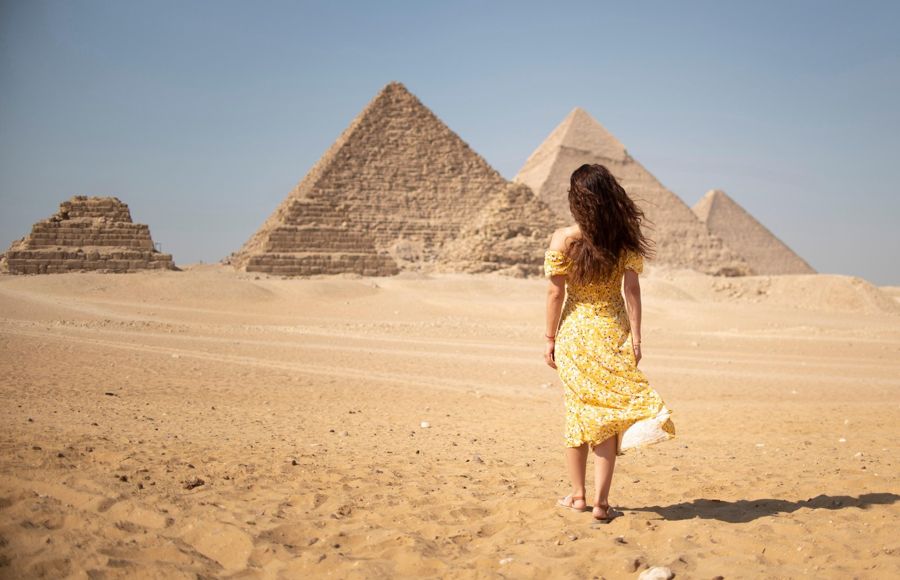
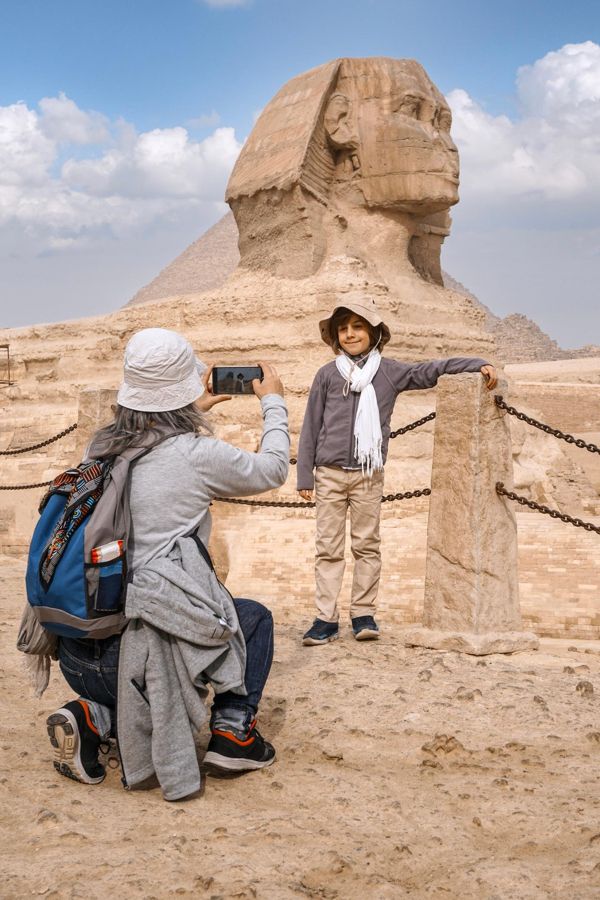
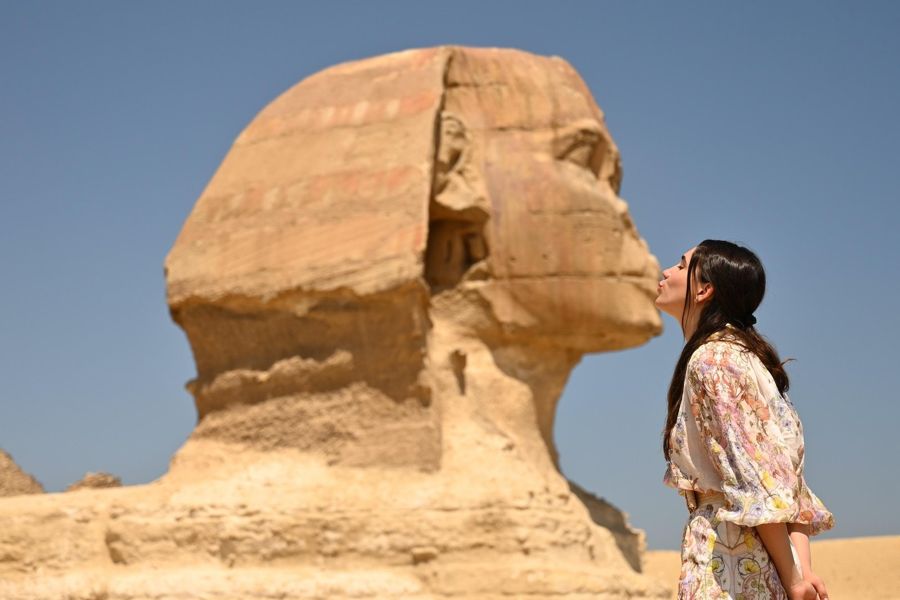
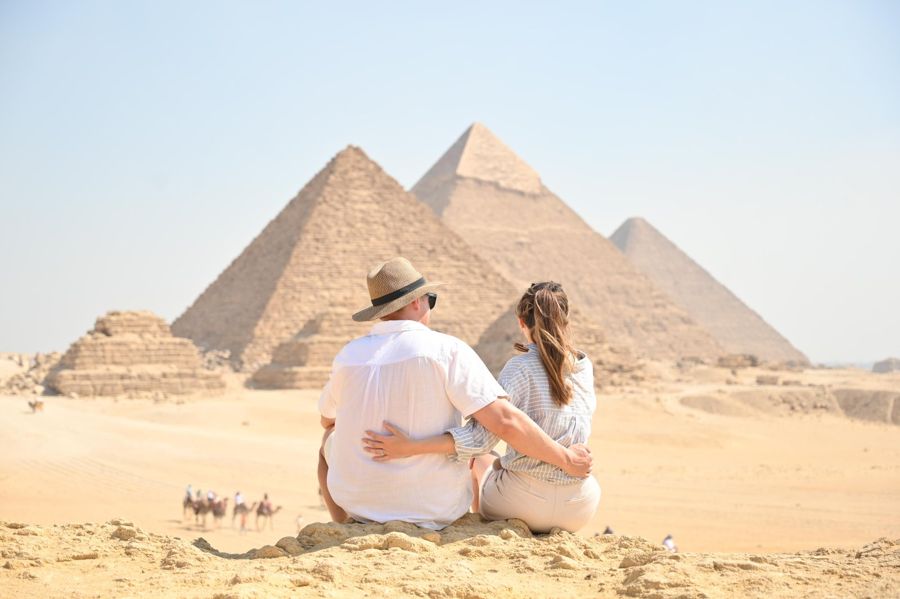
Half-Day Tour to the Pyramids of Giza and the Sphinx
- The preserved valley temple and the causeway lie on the usual circuit and are often overlooked
- A licensed guide explains which structure belongs to which of the three complexes
- Plateau entry, German-speaking guide, and hotel pickup are included
- Free cancellation up to 24 hours before start
Three Times the Same Plan, Three Different Fates
Three times the same plan, three different fates. That's the real appeal of the site.
In the largest complex to the northeast, it's precisely the beginning that is lost. Of the mortuary temple, only foundation walls and remnants of the basalt floor remain; of the causeway, only fragments; and the valley temple lies buried under modern buildings at the foot of the slope. Visitors to this complex see the pyramid and have to imagine the rest.
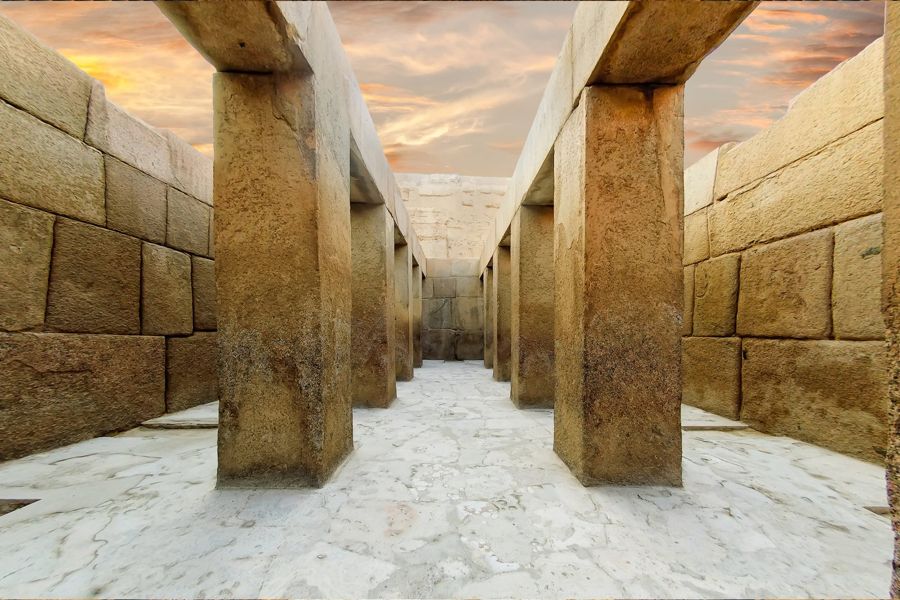
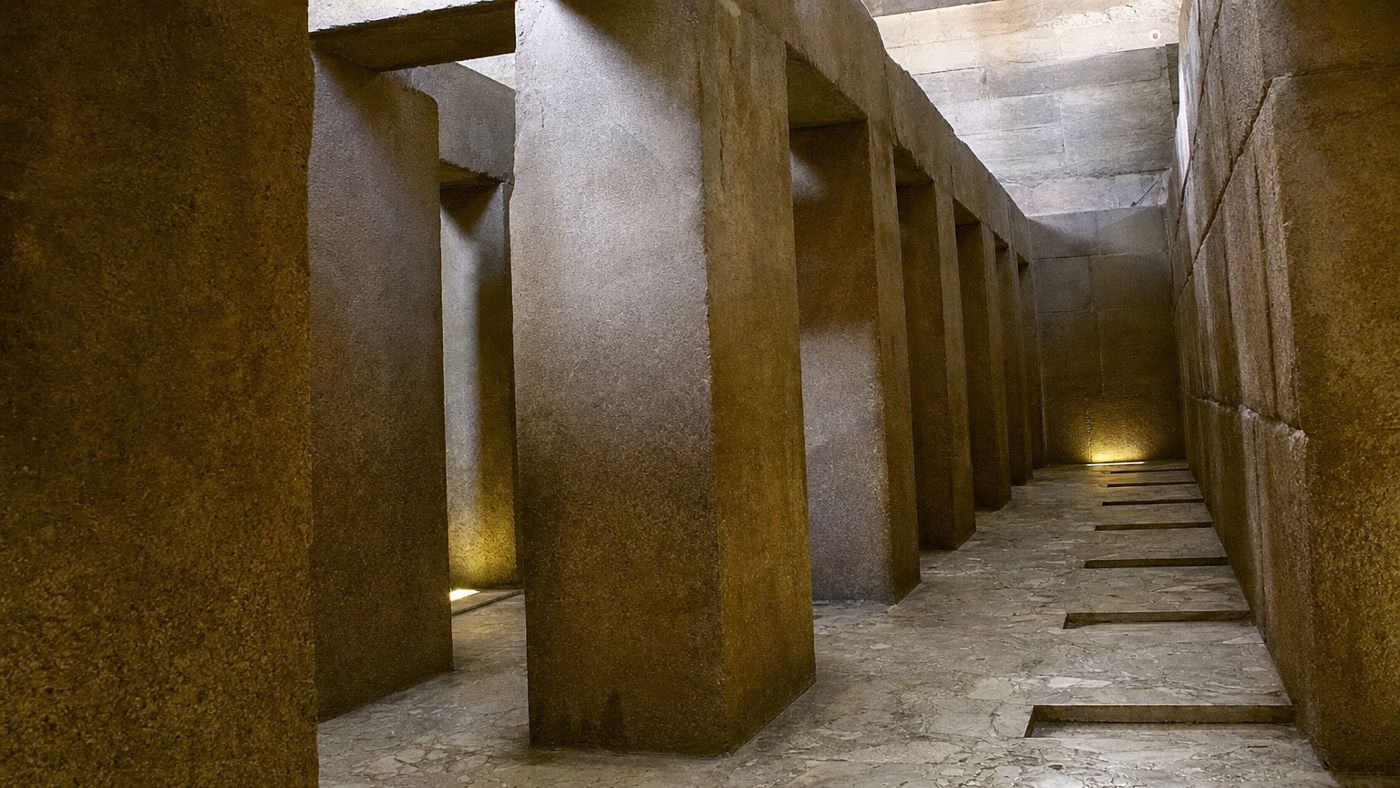
With the middle complex, it's the opposite, and that makes it more valuable for understanding than its larger neighbor. Its valley temple stands, and in remarkable condition: a building of limestone cores, faced with granite from Aswan, with square pillars and an alabaster floor. From there, the causeway leads up in a recognizable line. If you want to walk the chain, you do it here.
The smallest complex to the southwest remained unfinished. The mortuary temple was completed in mudbrick after the builder's death instead of in stone, and the granite casing of the pyramid itself was left largely unworked. It thus shows the construction state that the other two had long since passed.
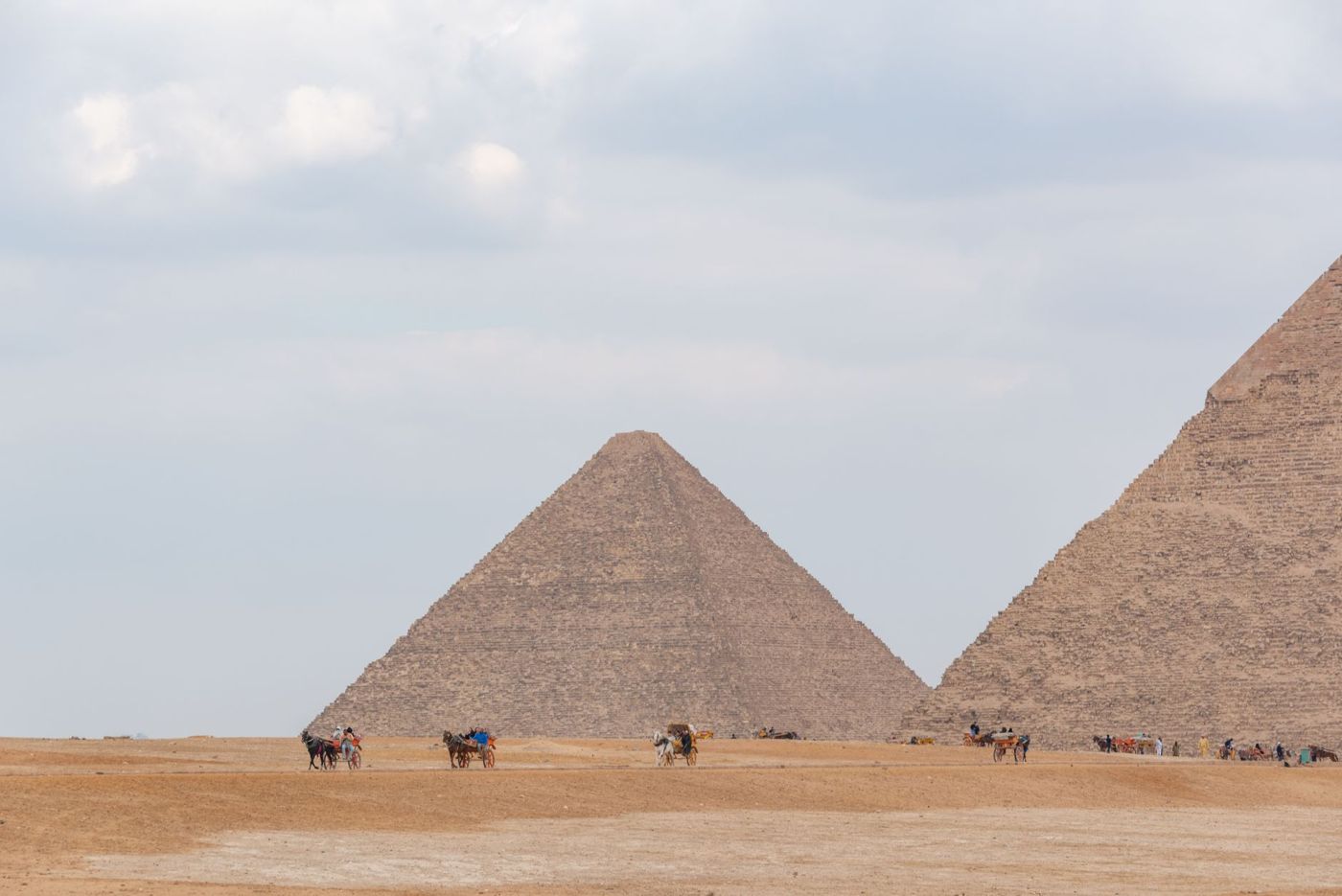
A detail about the middle complex regularly causes confusion. In many photos, it appears taller than its larger neighbor, although it isn't. The reason lies in the terrain: it stands on higher bedrock, and it has retained its peak along with a closed cap of the original casing. When comparing the structures, you must therefore take the base into account, not just the silhouette.
How exactly the alignment of these structures was achieved has been measured several times. The studies on the orientations show deviations from true north in the range of arcminutes, for all three complexes, with a slight drift from the oldest to the youngest.
The Three Complexes in Comparison
The same plan, executed three times. Something different is preserved in each.
| Component | Northeastern Complex | Middle Complex | Southwestern Complex |
|---|---|---|---|
| Pyramid | 138.8 m, peak missing | slightly lower, cap preserved | significantly smaller |
| Mortuary Temple | Foundation walls, basalt floor | extensive, foundation walls | completed in mudbrick |
| Causeway | only remnants | course clearly recognizable | partially preserved |
| Valley Temple | under modern buildings | standing, accessible | foundation walls |
| Cult Pyramid | foundation on the south side | foundation proven | proven |
| Subsidiary Pyramids | three on the east side | none | three on the south side |
| Boat Pits | seven | five | none proven |
- Northeastern Complex
- 138.8 m, peak missing
- Middle Complex
- slightly lower, cap preserved
- Southwestern Complex
- significantly smaller
- Northeastern Complex
- Foundation walls, basalt floor
- Middle Complex
- extensive, foundation walls
- Southwestern Complex
- completed in mudbrick
- Northeastern Complex
- only remnants
- Middle Complex
- course clearly recognizable
- Southwestern Complex
- partially preserved
- Northeastern Complex
- under modern buildings
- Middle Complex
- standing, accessible
- Southwestern Complex
- foundation walls
- Northeastern Complex
- foundation on the south side
- Middle Complex
- foundation proven
- Southwestern Complex
- proven
- Northeastern Complex
- three on the east side
- Middle Complex
- none
- Southwestern Complex
- three on the south side
- Northeastern Complex
- seven
- Middle Complex
- five
- Southwestern Complex
- none proven
The middle complex is the only one where all five components of the chain can be traced on the ground.
Why the Three Stand as They Do
That leaves the question of why the three structures stand as they do. The arrangement of the Giza pyramids looks randomly staggered in photos, but it follows a recognizable line.
The finding has been known since the 19th century and can be measured: the southeast corners of the three structures lie approximately on a straight line. The line connecting the southeast corners of the largest and smallest structures runs about 637 meters, and the corresponding corner of the middle one lies about twelve meters off. That's less than two percent deviation.
Interpretation is disputed. A common explanation extends the line to the northeast and hits the then-center of the sun cult in the Nile Delta. This interpretation of a sightline has been advocated by several experts but remains an interpretation, not proof.
There is a more sober explanation that does without symbolism and is therefore rarely told. If you place a pyramid next to an existing one, you must neither block its causeway nor its view from the valley, and you also need solid bedrock. A stagger to the southwest fulfills both conditions. That the largest structure stands at the northernmost point of the solid ridge also suggests that further buildings were planned from the start.
Distinct from these two explanations is the popular theory that sees a representation of Orion's Belt in the stagger. It works with the same three points but draws a completely different conclusion and has its own page on this portal because it requires its own examination. For the question of the building plan, it is irrelevant: the chain of five parts is fully explained by function and terrain.
The two explanations are not mutually exclusive. A line that arises from the terrain and at the same time points to a significant place would not be a contradiction in this culture but an argument for the location.
What You Can Walk in a Morning
How much of this can you actually walk in a morning? More than most people take in.
The most rewarding section is the chain of the middle complex. Start at the bottom at the valley temple next to the Sphinx, walk through the pillared hall, exit to the west, and follow the causeway uphill. At the top, you stand on the east side of the middle pyramid, where the mortuary temple was. In twenty minutes, you have walked the complete sequence for which the complex was built.
At the largest structure, it's worth looking at the ground. To the east lie the black basalt slabs of the mortuary temple, unprotected and unmarked. Next to them, the boat pits are recognizable as elongated depressions. Both are crossed daily by thousands of people who take them for the ground.
At the smallest complex to the southwest, the unfinished granite at the base is the point. It shows in a single view how casing was made: rough at the bottom, a smoothed surface next to it, and between them the edge where work stopped.
And if you take away only one thing: turn around once on the causeway. From there, you see the complex as it was intended, namely from bottom to top.
Frequently asked questions
What parts does a pyramid complex consist of?
Of a valley temple at the water, a causeway, a mortuary temple on the east side, the pyramid itself, and a small cult pyramid on the south side. Depending on the complex, there are also subsidiary pyramids and boat pits.
Which of the three complexes is best preserved?
The middle one. Only there can all five components be traced on the ground, including a standing valley temple.
Why are the pyramids staggered diagonally?
The southeast corners lie almost on a straight line. This is explained by a sightline to the sun sanctuary in the Delta and by the practical constraints of building ground and causeways.
Are there more facts about the Giza pyramid complex?
Figures and brief details on heights, masses, and dates can be found on the pages for the individual structures and on the facts page.
What was the purpose of the small pyramid on the south side?
That is not clarified. Discussed are a tomb for the entrails, a symbolic second tomb, and a place for ritual acts. None of these interpretations is proven.
Plateau entry as a QR code on your phone
Valley temple, causeway, and the basalt slabs of the mortuary temple all lie within the regular ticket area, without an extra ticket.