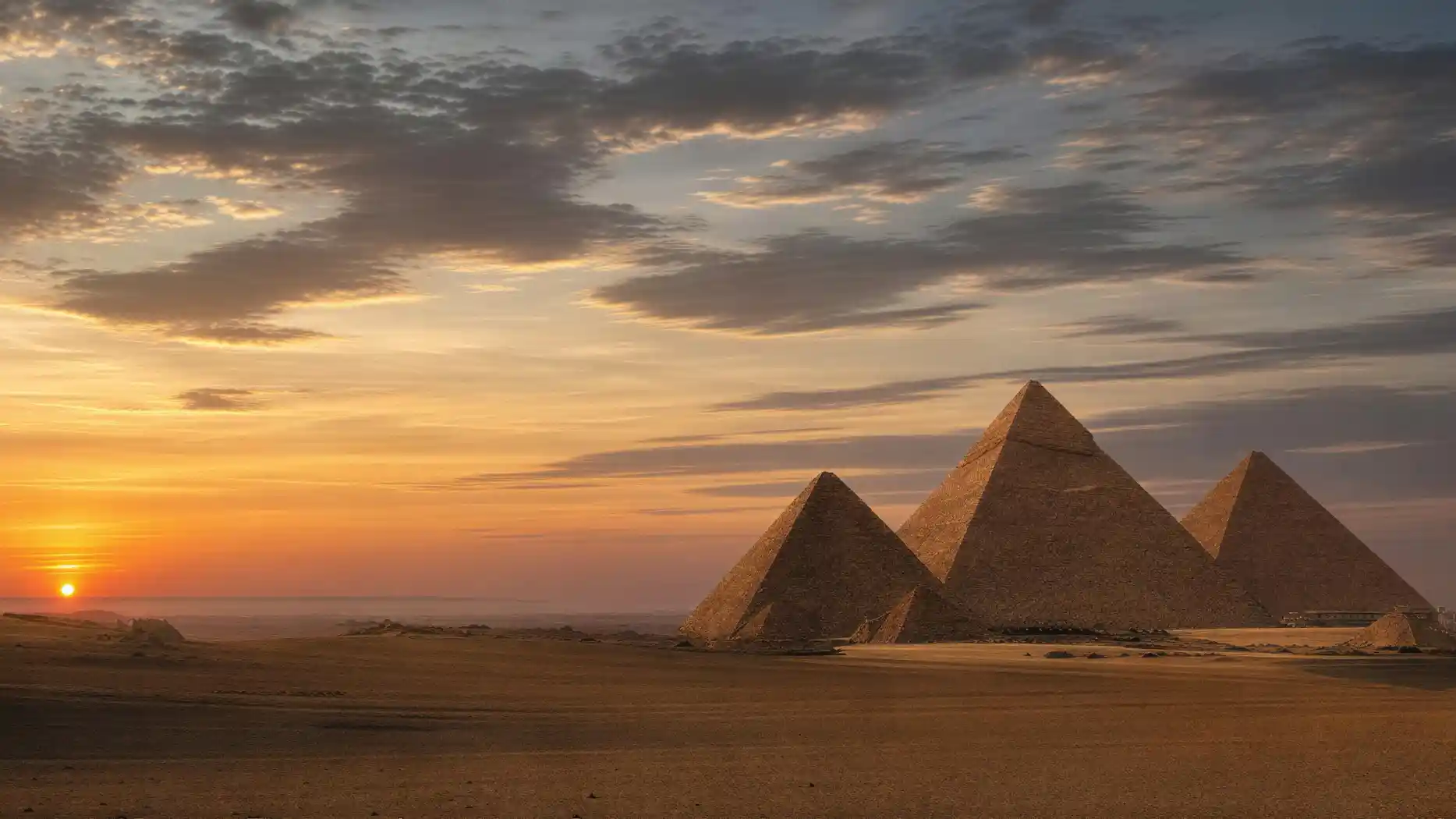
Few topics have such a skewed relationship between supply and quality as this one. If you search for films about this structure, you'll get careful archaeology and free invention in the same results list, often with similarly professional-looking thumbnails and similarly dramatic music.
That's because the pyramids are a grateful subject for both types of production. The documented history is spectacular enough for a good documentary. And the open questions of detail, especially those about the ramps, offer a gap into which any claim can be inserted without the average viewer being able to check it.
If you search for National Geographic on the Pyramids of Giza, you'll usually end up well, because editorial standards apply there. If you search more generally, you'll often end up with productions that give themselves the same veneer without deserving it.
This page therefore does two things. It names productions that are worth watching, with a note on what each is good for. And it describes how to recognize dubious films before you've invested ninety minutes.
What's Worth Watching by Question
Not every production answers the same question. It helps to know in advance what you're looking for.
| If you want to know | Then look for | Why |
|---|---|---|
| How it was built | Productions with practical building experiments | Scale models show limits that graphics conceal |
| Who built it | Films about the workers' settlement | Excavations there have disproved the slave image |
| What's inside | Contributions on muon tomography | Void research is the most current strand |
| What daily life looked like | Productions about the Merer papyri | A duty log from the construction site, known since 2013 |
| How the site works today | Current reports from 2025 onwards | Anything older shows the situation before the renovation |
- Then look for
- Productions with practical building experiments
- Why
- Scale models show limits that graphics conceal
- Then look for
- Films about the workers' settlement
- Why
- Excavations there have disproved the slave image
- Then look for
- Contributions on muon tomography
- Why
- Void research is the most current strand
- Then look for
- Productions about the Merer papyri
- Why
- A duty log from the construction site, known since 2013
- Then look for
- Current reports from 2025 onwards
- Why
- Anything older shows the situation before the renovation
Productions that try to answer all five questions in one episode usually answer none of them.
What German-language Broadcasters Offer
For German-speaking viewers, the situation is better than many assume, because public broadcasters regularly cover the topic.
ZDF has produced several series that venture to different depths of detail. One of them covers the age of the great pyramids and the builders of Giza and focuses on the organization of the construction site. Another episode of the same series deals specifically with the rock chamber of the Great Pyramid of Khufu, i.e., the unfinished lowest room that practically never appears in tours.
Under the Terra X brand, which ZDF has used since 2008 and whose episodes also air on Arte, there are also contributions on muon tomography, i.e., the method used to detect voids inside. That's the strand where something has really moved in recent years.
Arte itself has had several productions on the Great Pyramid of Khufu in its program. Much of it is available in the broadcasters' media libraries and can be accessed without a subscription, sometimes for a limited time.
Practically, you'll find them fastest by searching the broadcaster's media library for the structure rather than the program title, because the same episode often runs under several series names. Also note that many contributions are only available for a limited time and disappear after expiry, sometimes after a few months. If you find something suitable and don't have time, you should bookmark it rather than trust that it will still be there in six months.
The practical advantage of these productions lies not only in the language. Public science editorial teams work with expert advice, and you notice that mainly in what they don't claim.
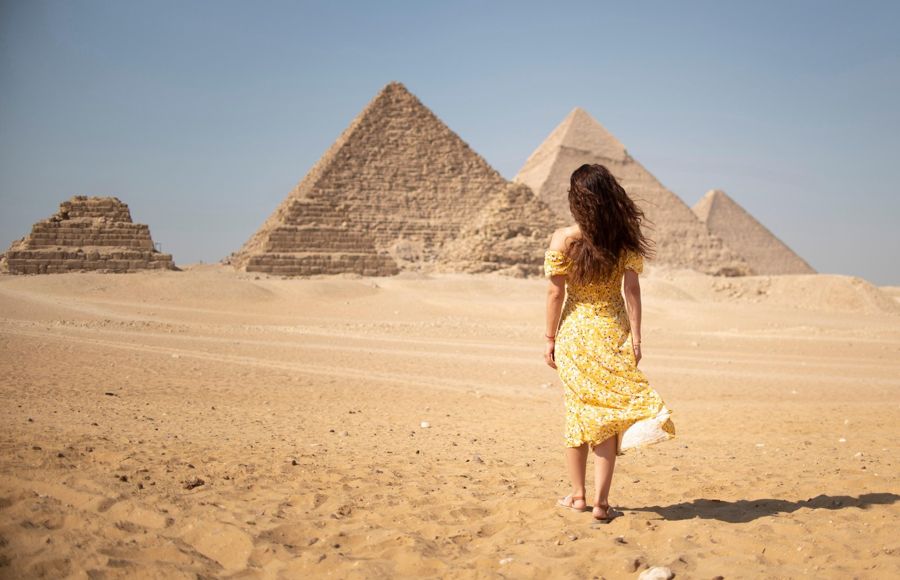
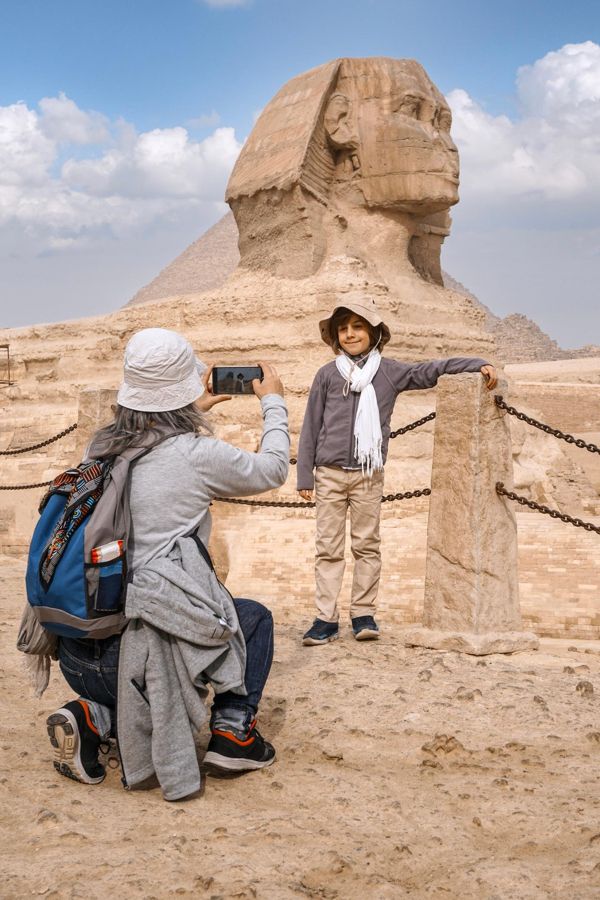
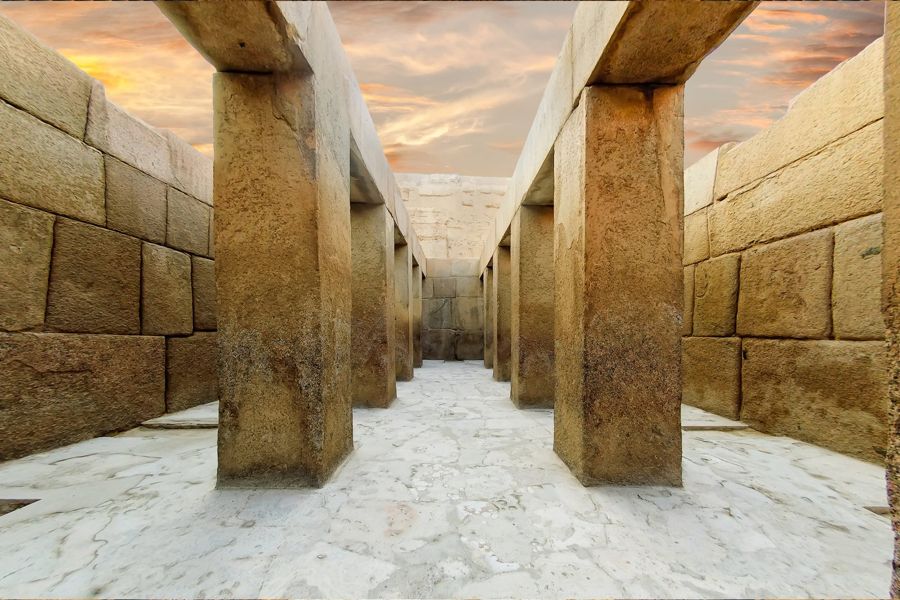
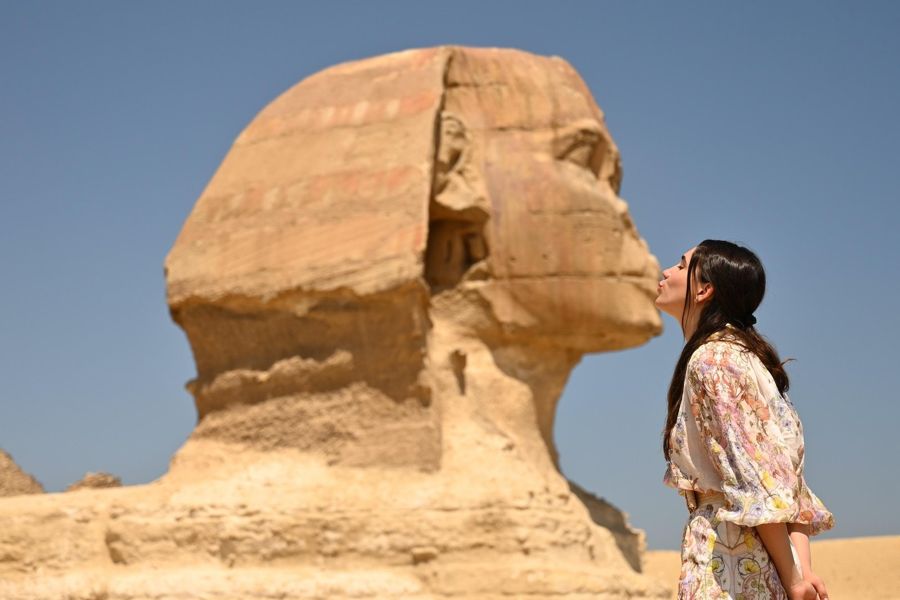
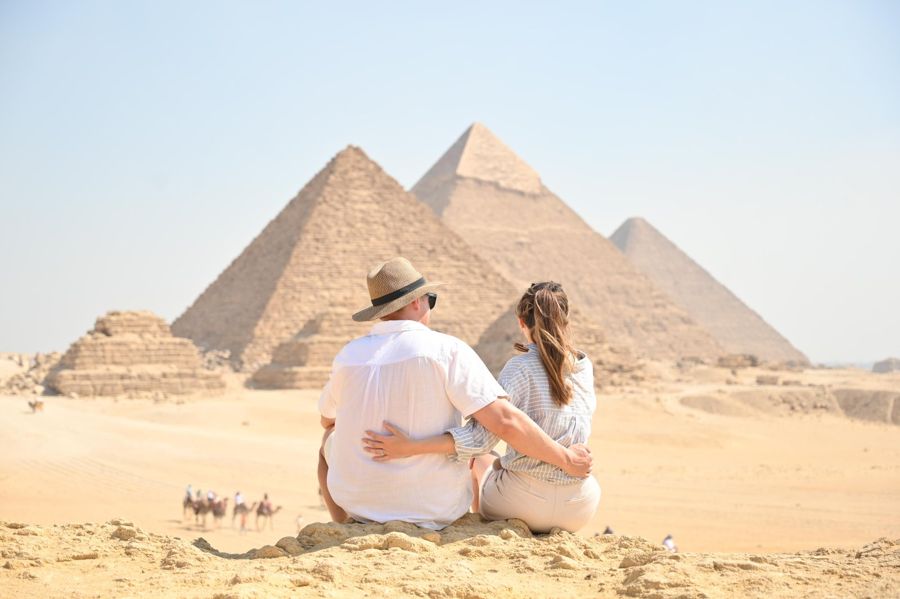
Half-day tour to the Pyramids of Giza and the Sphinx
- If the films have made you curious: the same place, without editing and without music
- A licensed guide provides context that documentaries often only hint at
- Plateau entry, German-speaking guide, and pickup are included
- Free cancellation up to 24 hours in advance
The Films with Practical Building Experiments
Among English-language productions, one genre is particularly useful: those with practical building experiments.
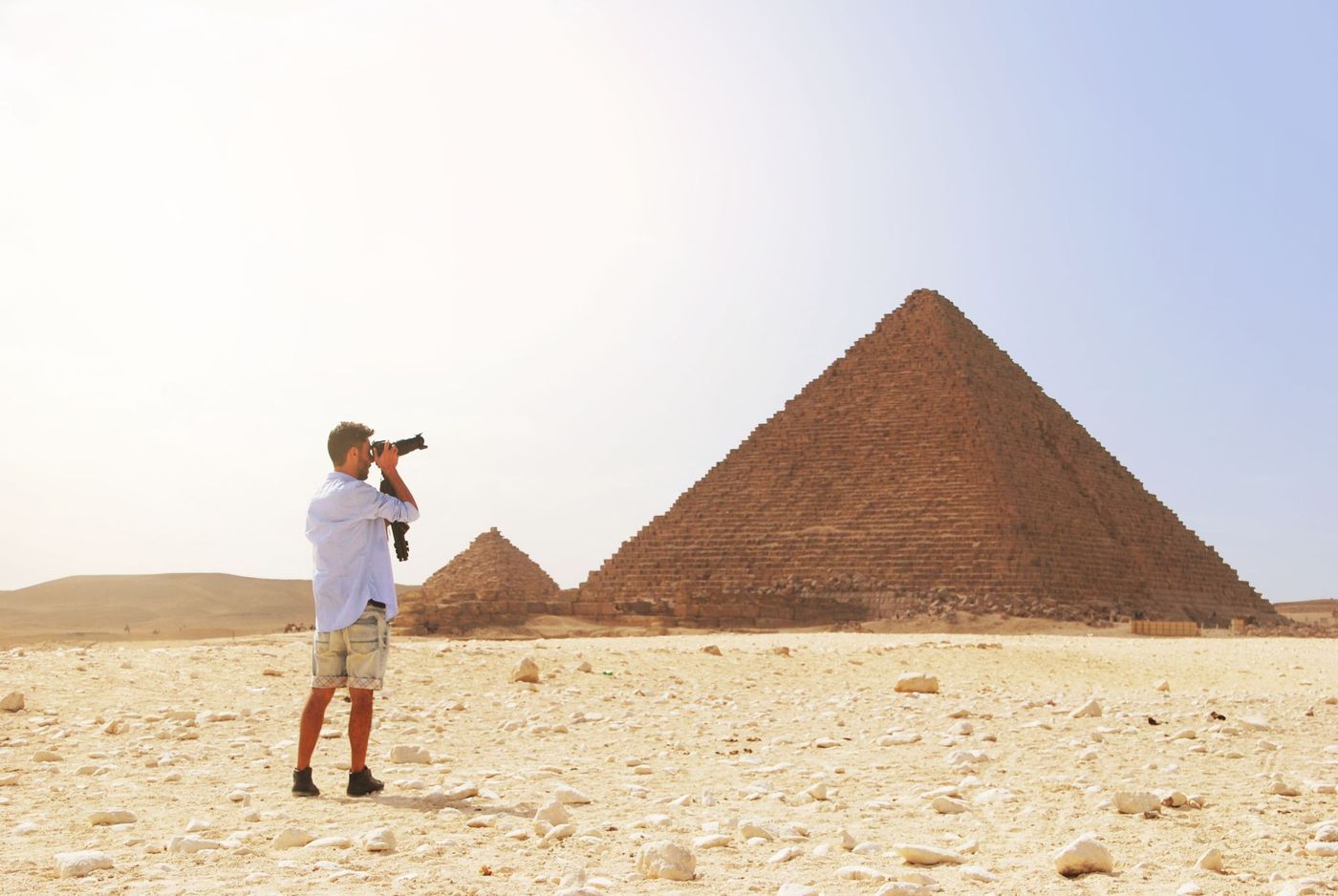
The American science series NOVA has used this format multiple times. In one production, Egyptologist Mark Lehner and stonemason Roger Hopkins worked in the shadow of the Great Pyramid to actually build using contemporary methods. Such experiments are valuable for a reason that graphics never achieve: they show how long something takes and where it fails.
A newer production from the same series, Decoding the Great Pyramid, relies on the papyri from Wadi al-Jarf, i.e., the duty log of Inspector Merer. This is the first film that reconstructs logistics from a contemporary source rather than from speculation.
What such films have in common: they show how you arrive at a finding, not just what the finding is. That's the difference between a documentary and a claim show, and it's recognizable even if you know little about the topic.
Incidentally, this format also explains why the ramp question remains open. Once you've seen how much material a usable ramp requires, you understand the problem better than after any explanation.
How to Recognize a Dubious Production
- The film poses a question and never answers it, but strings together insinuations
- Experts appear but only comment on side issues, while the narrator presents the main thesis
- Figures are given without margin of error and without source, often with many decimal places
- Egyptology is portrayed as a closed front that is hiding something
- Correspondences with natural constants or constellations are shown, but never tested against chance
- Central images are reconstructions without this being stated
- The film ends with an announced revelation that is to come in a follow-up production
A single point is not yet a disqualifier. Three of them in the same program are.
On YouTube, the Channel Matters, Not the Title
On video platforms, the problem intensifies because the thumbnail competition decides visibility.
If you search for the Pyramids of Giza on YouTube, you get a mix of complete TV documentaries uploaded by the broadcasters themselves, recordings of dubious origin, and a large number of self-produced contributions that are re-edited from existing material. The latter are easily recognizable by one feature: they show lots of drone footage, even though drone flights over the site require a permit and are practically unattainable for private individuals.
A second identifying feature is the runtime. Complete TV documentaries typically run between forty and ninety minutes and usually carry the broadcaster or series in the title. Contributions of two to three hours without recognizable production credits are almost always compilations where several programs have been strung together, occasionally with swapped contexts.
The useful rule of thumb is to pay attention to the channel rather than the title. Broadcasters, museums, universities, and research institutes provide material that has been checked. For everything else, it's worth checking whether a source is mentioned at all.
Also useful is a comparison with the state of research. If a contribution presents a discovery inside the Great Pyramid of Khufu, you can check in a few minutes whether a publication exists on it. The corridor behind the north facade, for example, was documented in a peer-reviewed journal with measurement data. Where such a publication is missing, it's an announcement, not a finding.
Which Feature Films Were Actually Shot There
For feature films, the more interesting question is not which ones are set in Egypt, but which ones were actually shot there. The answer is shorter than you'd think.
Three examples are documented. In a James Bond film from 1977, filming took place on the site, including during the evening sound and light show, which is thereby incidentally documented on film. The 1978 Agatha Christie adaptation also contains footage shot on location. And for a 2009 action film, the team received permission to shoot directly at the structures, which no production had been granted in over thirty years; the filming was personally accompanied by the then head of the antiquities administration.
Remarkable is the opposite case. The 2022 remake of the same Christie material was not shot in Egypt, but largely in England, with digitally enhanced sets. Morocco, which regularly stands in for other desert countries in film productions, had also been considered.
So if you're looking for films about the Pyramids of Giza and expect to see the real place, you should pay attention to the production year. Permits for filming on the site are elaborate, expensive, and rare, and many well-known shots are either old, taken from the air with special permission, or built on a computer afterwards.
Frequently asked questions
Are there good documentaries in German?
Yes, especially from ZDF and Arte, partly under the Terra X brand. Much of it is available in the broadcasters' media libraries, sometimes for a limited time.
How can I quickly recognize a dubious production?
By the fact that experts only speak about side issues while the narrator presents the main thesis, and by the fact that announced revelations never materialize.
Are the well-known film shots real?
Partially. Filming on the site itself has been rare because permits are elaborate. Many sets are rebuilt or digitally enhanced.
What is the most current research strand for documentaries?
Void research with muon tomography and the evaluation of the Merer papyri. Both have emerged since the 2010s and are not included in older films.
Why the Nonsense Persists
There's a reason why so much nonsense persists precisely on this topic, and it's not flattering for the serious side.
A good documentary about this structure must say at several points that something is not conclusively clarified. That's honest, but dramatically weak. A bad production, on the other hand, can claim whatever it wants and gets a narrative arc for free. In direct comparison, the honest version seems more reserved, and reservation sells worse.
Historically, this is by no means a new problem. The first comprehensive depiction of these structures for a European audience emerged from Napoleon's Egyptian campaign, when draftsmen and surveyors systematically recorded the country. The resulting plate work was precise and at the same time seemed like sensational reporting because what was depicted was unimaginable for readers. Even then, careful observation and effect ran side by side, just without music.
If you stick with the documented versions anyway, you get the better story. A duty log kept by an official four and a half thousand years ago, containing delivery dates for limestone blocks, is more remarkable than any invented chamber. A method that looks through a hundred meters of stone with cosmic radiation, likewise.
The rule of thumb for selection can be said in one sentence: Choose the production that shows you how someone arrived at an answer. Films that only show the answer are at best entertainment, and at worst the opposite of a documentary.
Plateau entry as a QR code on your phone
The place itself needs no music and no editing. Buy the basic entry in advance, plan your own time, and look for yourself.