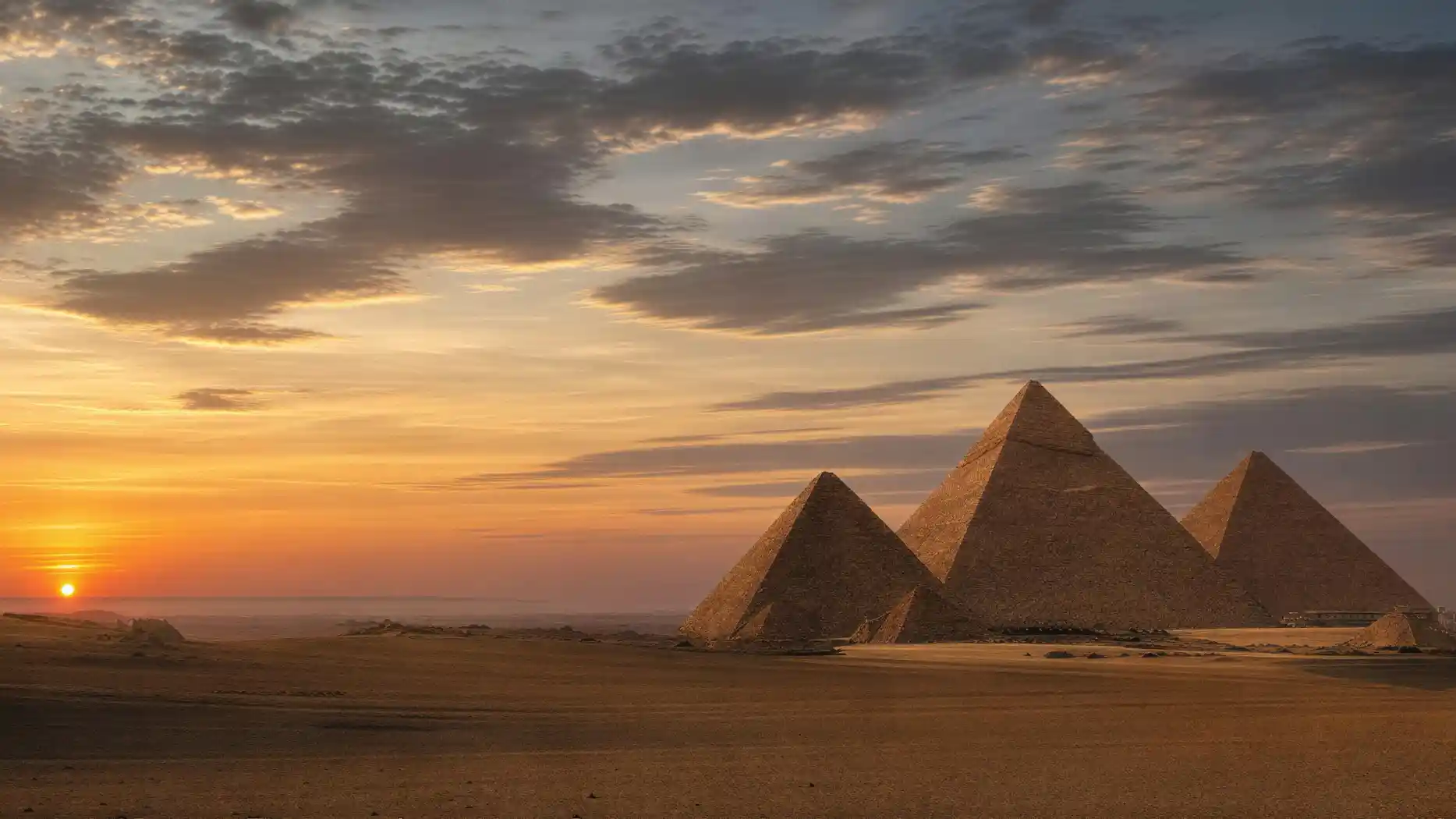
The boat pits of Giza are the part of the complex that most often raises the question of why you should look at an empty trench. The answer lies in the shape.
A boat pit is not a hole but a negative. A cavity was cut into the bedrock, its outline tracing the lines of a ship: narrow at the ends, wider in the middle, with a floor that follows the hull. This is not a pit that a boat happened to fit into, but a pit made for a specific boat.
And it is executed just as carefully as everything else here. The edges are straight, the walls smooth, and the cover consisted of heavy limestone slabs that fit precisely. One was so tight that its contents survived for four and a half millennia.
What lay in the pits now stands in the museum and has its own page there. This one deals with what remains at the monument: the pits themselves, their arrangement, and the question of what is visible at this spot since the demolition of the former boat museum.
The Arrangement Reveals the Plan
The arrangement is the most interesting part because it reveals something about the plan of the complex.
The pits are not in one place but distributed around the pyramid, and they differ in shape and findings. On the east side, there are several pits whose outline clearly mimics a ship; they were found empty. On the south side, there are two more, and these were rectangular, deeper, and sealed. In them lay the dismantled ships.
The fact that some are empty and others filled is where interpretations diverge. Whether the eastern pits ever contained anything and were later cleared out, whether they sufficed as symbols without ever holding a ship, or whether they were intended for boats that were never built cannot be determined from the evidence. The shape alone was apparently important enough to cut into the rock.
The total number of pits around the complex is usually given as seven. This number could not be reliably verified in this research, so it stands here for what it is: the common figure. What is certain is the division into empty ship-shaped pits in the east and two sealed ones on the south side.
What the ships were intended for is a separate question and also undecided. The most common interpretation links them to the journey of the sun god across the sky, which is why the name solar barque has become established. Other explanations are more sober: a vehicle for the funeral journey across the river, a means of transport for the journey to the cult sites, or simply equipment befitting a king. This cannot be distinguished from the evidence, and the official overview of the site does not commit either.
Further pits belong to the complexes of the other two pyramids. This too is part of the picture: it is not a peculiarity of the largest structure but a fixed component of a royal complex of this period.
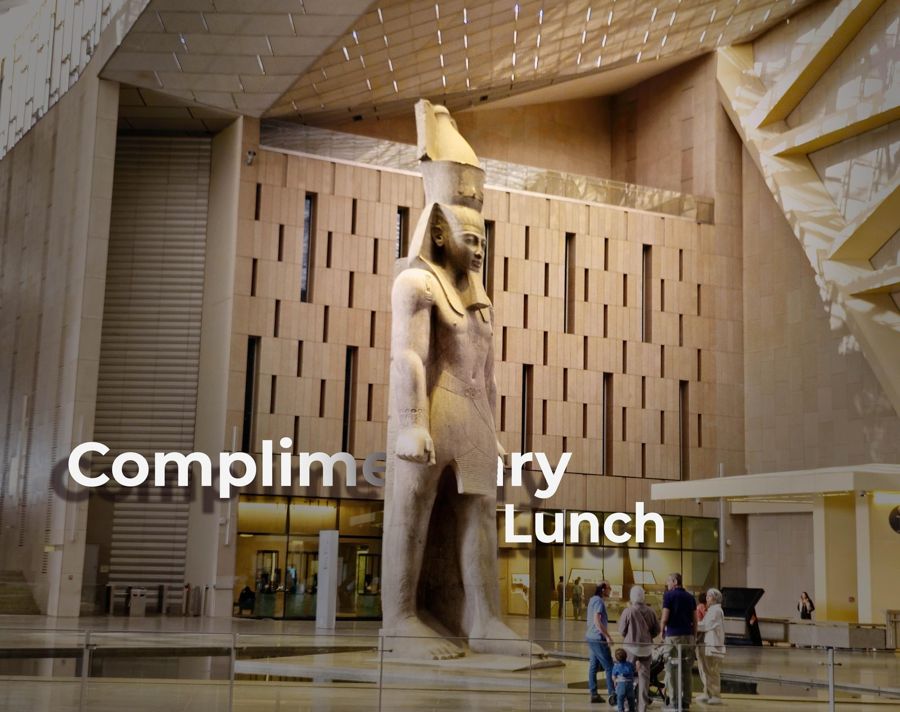

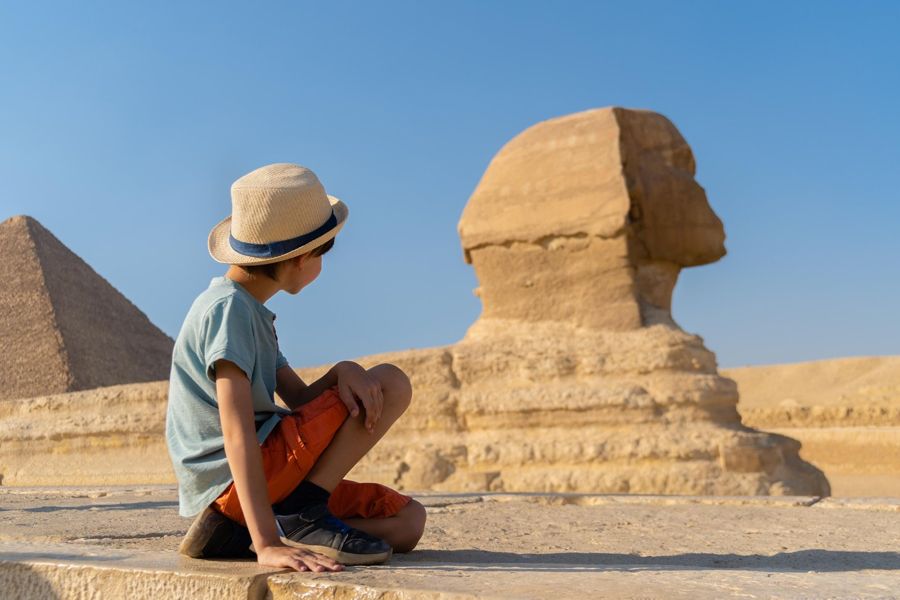
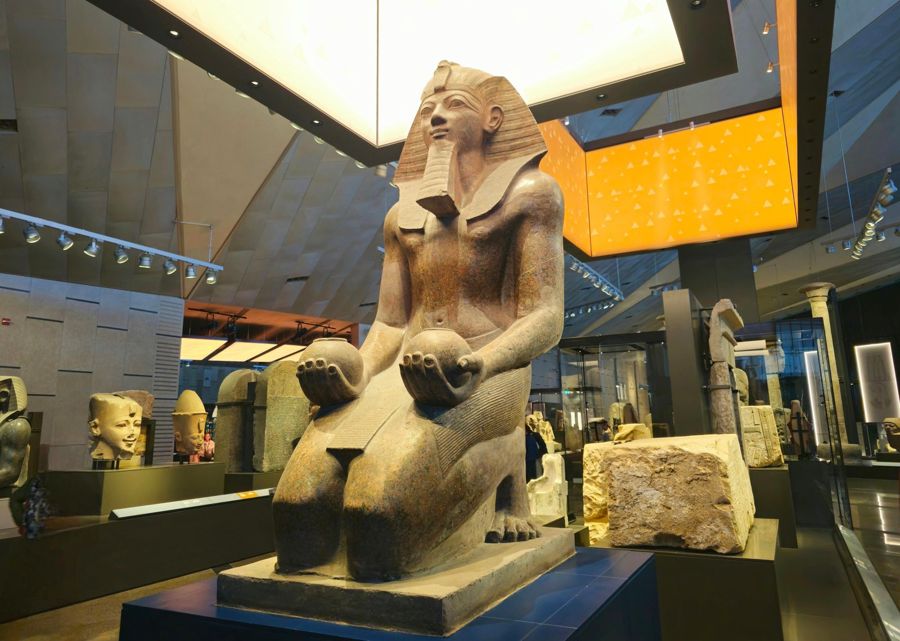
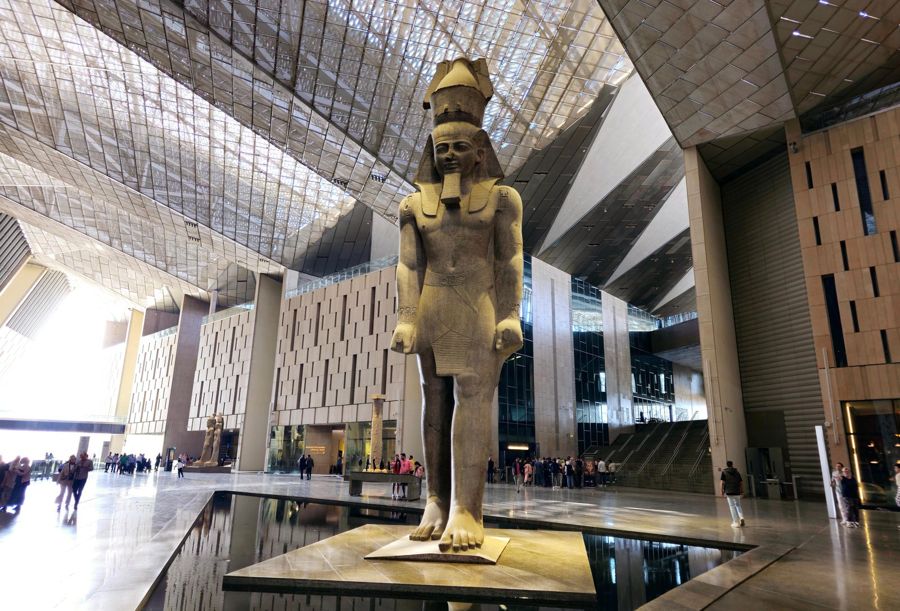
Pit and Ship in One Day
- Connects exactly the two places that belong together factually: the pits at the monument and the ships in the museum
- Entry to the site, lunch, and pickup from your accommodation are included
- Seven to eight hours, German-speaking guide possible
- Free cancellation up to 24 hours in advance, according to the provider
The Pits at a Glance
- Location
- on the east and south sides of the Great Pyramid of Khufu
- Shape of the eastern pits
- modeled on the outline of a ship
- Findings there
- empty
- The two southern pits
- rectangular, sealed, with the dismantled ships
- Included in the site entry
- yes, they lie in the open area
- The former boat museum
- demolished after the move in 2021
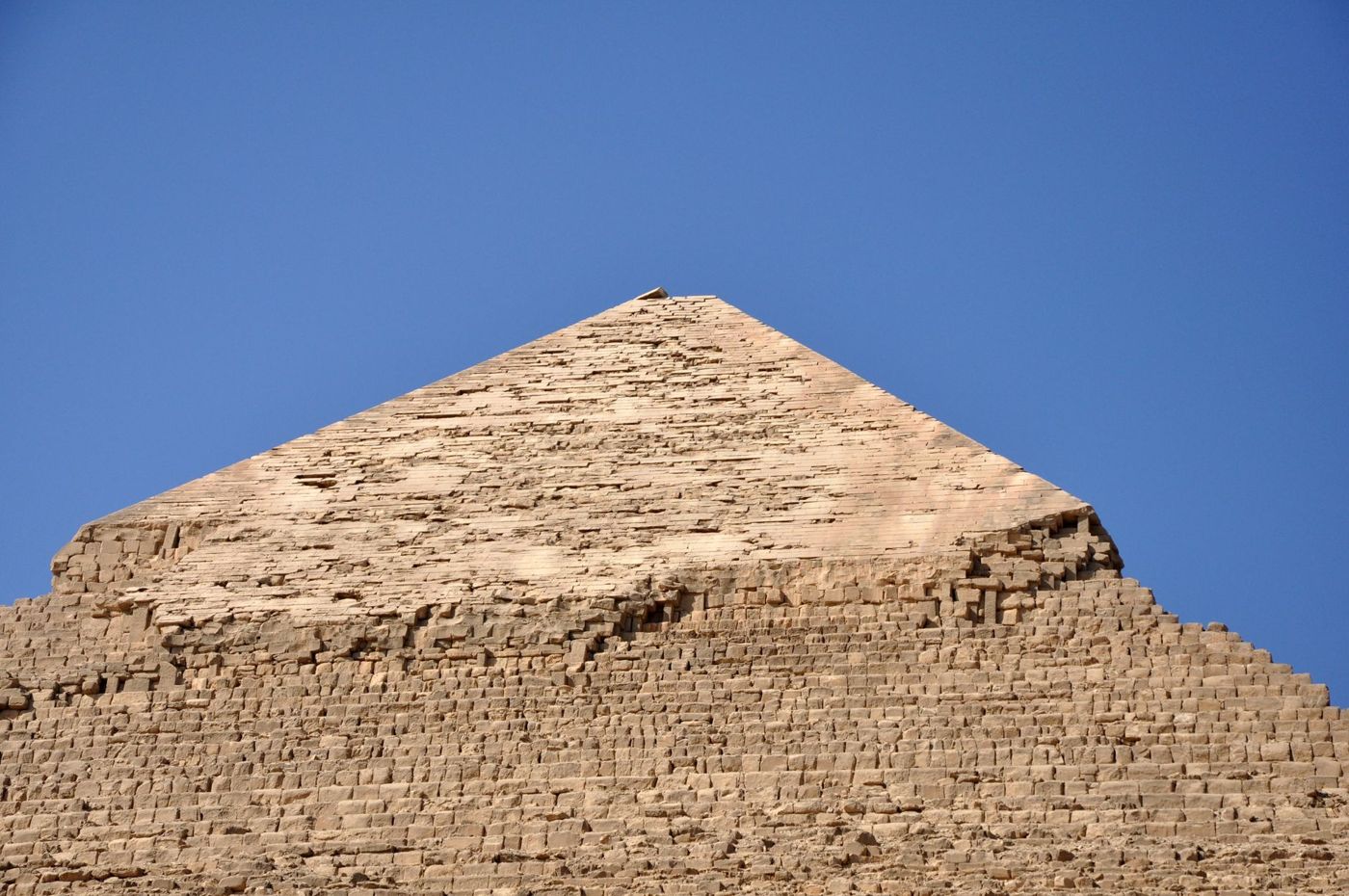
The Discovery of 1954 and the Move in 2021
The story everyone knows takes place on the south side, and it found its end in 2021.
In 1954, the Egyptian archaeologist Kamal el-Mallakh came across a row of heavy limestone slabs there and beneath them a pit that had been unopened since the burial, containing the timbers of a dismantled ship. A dedicated museum was later built over the find site and stood there until the 2020s.
The move of the barque in August 2021 is a small piece of engineering history in itself. According to Smithsonian reporting, the ship was moved in a shock-absorbing metal container on a remote-controlled transport vehicle from Belgium. The journey took ten hours, from a Friday night to Saturday morning, over a distance of about two kilometers.
The second pit on the same side was not opened until decades later. Its contents were in poorer condition because the cover was not tight, and the recovery was undertaken by an Egyptian-Japanese mission. According to the Japanese development agency, nearly 1,700 timbers from thirteen layers were recovered. This ship too is now in the museum, where it is being assembled in public.
Thus both southern pits are empty, and the entire ensemble is at another location. What remains at the monument is the rock from which it was taken.
What You Will Find at This Spot Today
The question remains of what you will find at this spot today, and here this page must be more honest than it would like.
Not only the boat museum was demolished. After the move of both barques, the administration also removed the covering under which the Japanese excavation team had worked on the second pit for years. So two structures disappeared, not one, which explains why the south side today looks much more open than reports of the museum's demolition suggest. Where a flat functional building interrupted the pyramid flank for decades, the flank is free again.
What came to light in the process is the real gain. The demolition exposed the southern rock surface, which had never been mapped in detail: according to the surveying project working there, around 5,960 square meters of additional area, which has since been recorded with a measuring station. The pits have not been backfilled. They lie open, and the fact that a work on the mason's marks in the southern pits and their three-dimensional recording was published in 2025 presupposes access to the rock itself. The area today is above all one thing: active surveying ground.
The only thing that remains open is how this is prepared for visitors, whether cordoned off, accessible, or signposted. An explanatory board is nowhere documented. Whether the area is prepared or signposted for visitors is not documented so far. The site has been under renovation since 2025, and signage and path routing change at short intervals; a second-hand description would probably be wrong in six months.
Where the story is now told is, in any case, no longer here. In the Grand Egyptian Museum, cover stones from the boat pits are laid out so that visitors walk beneath them and see the mason's graffiti on the undersides, including the name of Djedefre. And the second barque has been assembled there in public since December 2025 from around 1,650 individual parts, a task estimated at about four years. Those who have seen the empty pits will thus find, two kilometers away, not only the result but the ongoing work on it.
Reliably visible, on the other hand, are the pits on the east side. They lie in the open area along the circular path, are included in the regular entry, and require no permit, no extra ticket, and no opening hours. Anyone looking at the north side of the pyramid with its preserved casing blocks will pass them anyway.
And a tip on the order, which connects this page with the museum: see the pit first and then the ship, not the other way around. An empty rock in the ground is hard to read if you do not know what lay in it. Forty meters of cedar wood, on the other hand, are easier to understand if you have first seen the hole they came from.
What to Look For on Site
The eastern pits lie between the pyramid and the cemetery and are not signposted. Look for elongated depressions in the bedrock whose ends taper narrower than the middle. Once you have recognized the outline, you will see it several times afterward. On the south side, the area is free since the museum's demolition; there stood until 2021 a building that covered half the flank in older photos.
The Entry That Includes the Pits
For the pits, you need nothing more than the regular site entry; they lie in the open area along the circular path. The code on your phone saves the queue at the ticket office, and there is no extra ticket for this.
Frequently asked questions
Can you see the boat pits?
The ones on the east side, yes; they lie in the open area along the circular path and are included in the entry.
Is there still a boat in one?
No. Both ships are in the Grand Egyptian Museum, the first since 2021.
Is the boat museum still at the pyramid?
No. It was demolished after the move so that the south side lies open again.
Why were some pits empty?
That is open. Whether they were cleared out, meant symbolically, or never filled cannot be determined.
How many pits are there?
The common figure is seven around the complex. The number could not be verified; what is certain is the distribution between the east and south sides.
Do you need an extra ticket?
No. Unlike for interiors and individual burial chambers, nothing extra is charged here.