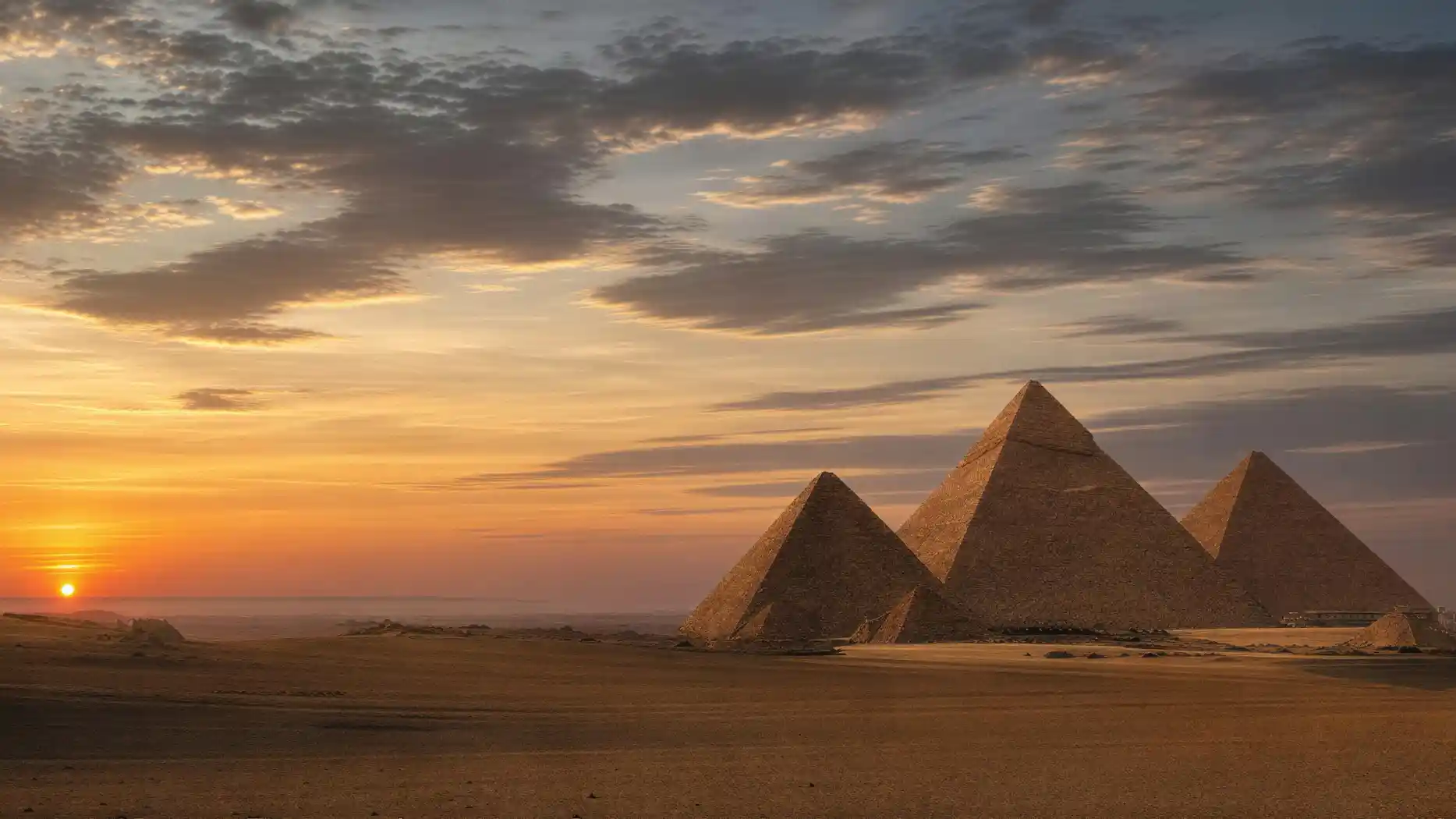
Is there a golf course at the pyramids? Yes, and it is older than almost everything else on the plateau today, except of course the structures themselves.
It has been played since 1899. The course belongs to the Mena House hotel, which began as a royal hunting lodge and opened to guests in the 1880s, and it lies across the road, right at the foot of the site. From the fairways, the great monuments are not on the horizon but above it.
This is not a marketing image but simply geography. The course lies outside the archaeological fence, in the zone that once belonged to the hotel village, and thus closer to the pyramids than any other sports facility in the world is to a wonder of the world.
A word of context first, because the matter easily tips into the curious. This is not a tourist attraction invented for the monument, but a facility from the early days of Egyptian tourism. When it was created, the hotel was the endpoint of a carriage ride from Cairo, and guests stayed for weeks rather than hours. The course was designed for that length of stay, not for a day trip.
What this page clarifies: what the course actually is, who can play there, what the renovation announced in May 2026 means, and whether the detour is worth it for someone who actually came for the necropolis.
A Course in Four Stages
- 1880s
The royal hunting lodge at the foot of the plateau becomes a hotel for travelers.
- 1899
Golf begins. The course is thus one of the oldest in Egypt.
- until 1917
Played without grass, directly on the desert floor. For eighteen years.
- 1917
Under Roy Wilson, the course is greened and converted to a grass course.
- May 2026
Talaat Moustafa Group and Legacy Hotels commission Robert Trent Jones II to completely redesign the course.
Nine Holes, Each with Two Greens
The layout surprises most people, because travel reports sometimes mention nine and sometimes eighteen holes. Both are true, and the reason is a peculiarity of the course.
Nine holes are laid out, but each has two greens. Those who play the round twice play to the other green on the second loop, getting a noticeably different hole with different length and angle of approach. Thus nine holes become eighteen playing holes without the course needing twice the space.
The dimensions are correspondingly modest. Twice around gives a distance of about 5,300 yards, well below what a championship course measures, and the terrain is flat. About 34 bunkers are distributed across the course.
The compactness has a simple reason: space was never plentiful. Between the hotel grounds, the road, and the boundary of the archaeological zone lies only a limited strip, and that strip determines the shape of the holes to this day. The solution of two greens per hole arose precisely from this.
So if you expect a sportingly demanding course, you are in the wrong place. The appeal lies elsewhere, and it is hard to beat: you tee off, and behind the flag stands a 4,500-year-old structure. There is no other course in the world where this is the case at such a distance.
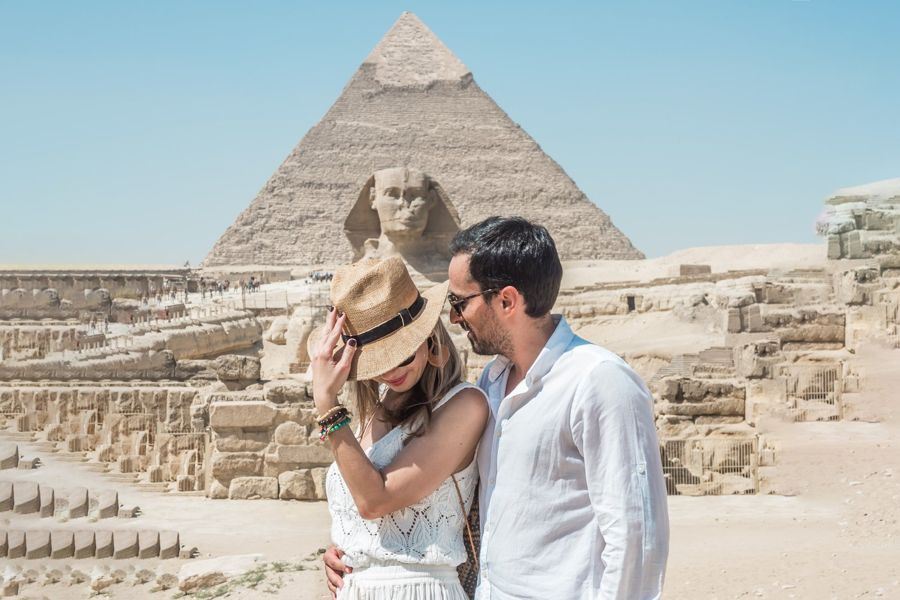
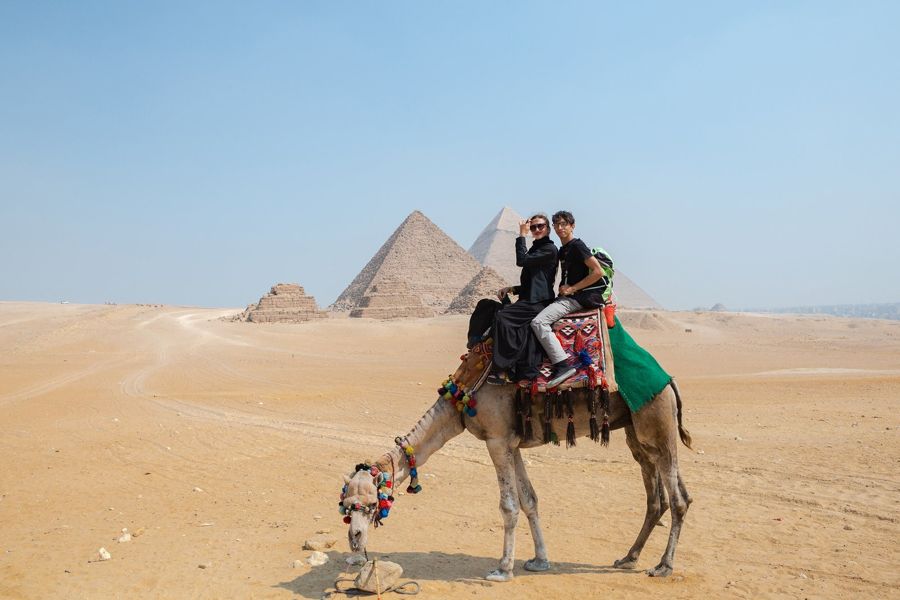
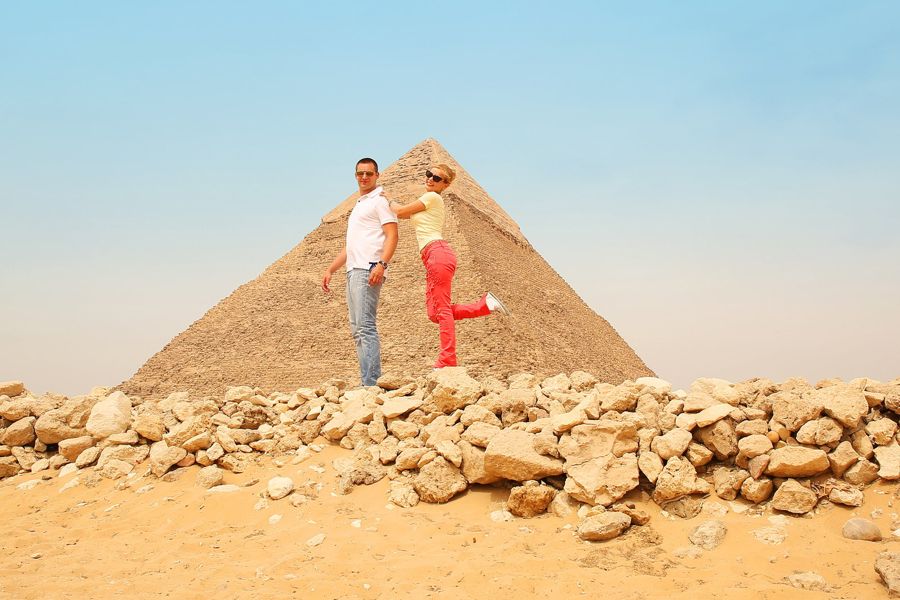
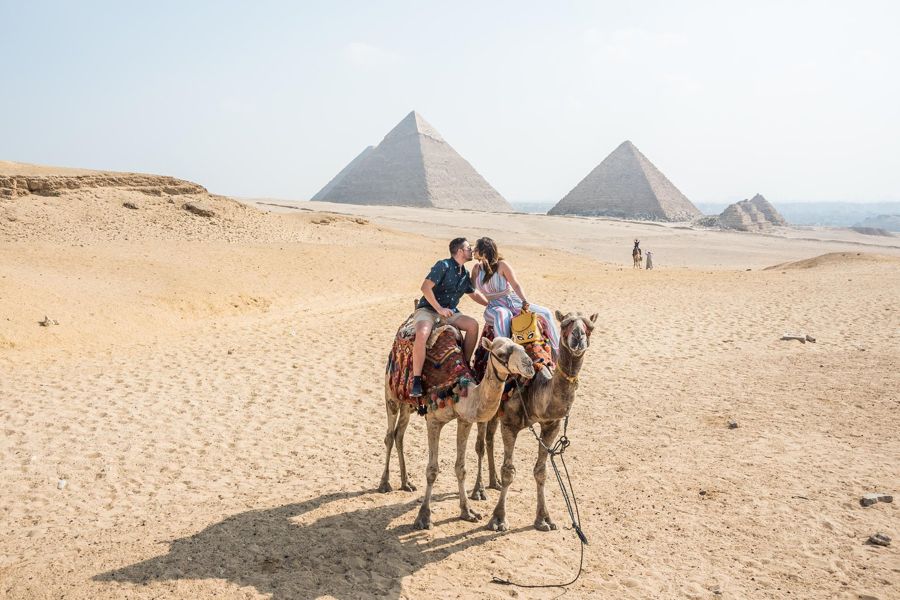
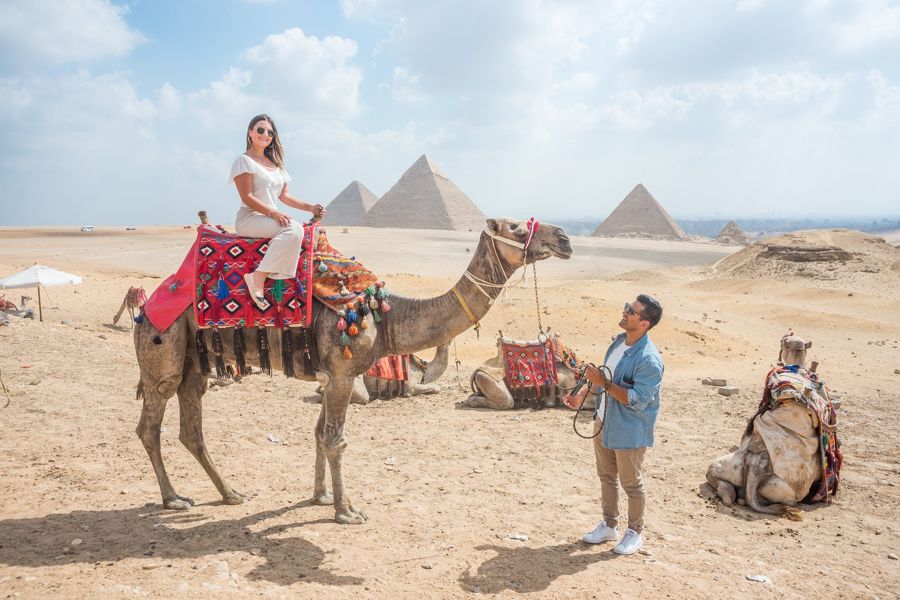
Private Half-Day Tour to the Plateau and the Sphinx
- Those who come for the course should not miss the site itself
- Four hours, guided in German, with pickup and preferred entry
- Plateau entry included, pyramid interior not
- Free cancellation up to 24 hours before start
Outside Guests May Also Play
Guests not staying at the hotel may generally also play. The course is a hotel facility, but not a closed society, and tee times are arranged through the hotel.
This is unusual enough to be worth mentioning. Many hotel courses in such locations are exclusively for guests; here, the operation was open from the start because the number of hotel guests would never have sufficed for a dedicated operation.
In practice, this means: ask in advance, don't just show up. For equipment, tee times, and whether the course is even playable that day, there is no booking platform to clarify in advance. The green fee is low compared to European courses in similar locations, but you should confirm it with the hotel itself.
Clubs can be rented on site, which lightens your luggage. But don't rely on it: a small hotel course doesn't keep a large stock, and if you are left-handed or need special shaft lengths, better ask in advance.
As for the season, there is only one sensible answer, and it is the same as for the plateau. Between October and April, conditions are pleasant; in high summer, a round on shadowless terrain at temperatures around 35°C is no pleasure. If you travel in summer, play early or not at all.
What you should bring differs little from a visit to the site itself: headgear, sunscreen, and more water than you think. The course is flat and the round short, but there is almost no shade here either, and the sand reflects.
You should know two customs. First, a caddie is customary and recommended, not only for the clubs but because he knows the aiming points and the worthwhile photo spots. Second, a simple dress code applies with a polo shirt; shorts are fine.
The Course Will Be Completely Rebuilt
And now the caveat that affects every plan. In May 2026, it was announced that the course would be completely redesigned.
The California office of Robert Trent Jones II was commissioned, receiving the contract from Talaat Moustafa Group and Legacy Hotels. In the office's announcement, the course is described as one of the most significant sites in golf worldwide, with over 125 years of history. Announced are a complete redesign with sightlines to the monuments, a facility for families and beginners, lighting along the terrain contours for evening play, new irrigation, and new grasses.
What is not in the announcements is the timeline. Neither a start of construction nor a completion date nor the question of whether and how long the course will remain closed during the work has been published. For the redesign announced as of May 2026, no timeline has been published; whether and how long the course will close for it is open.
For the course itself, the renovation is probably good news. A flat nine-hole course with irrigation problems in a desert climate is hard to keep in shape, and the announced lighting would solve the site's real problem: between May and September, playing during the day is hardly possible, but in the evening it is.
For you, a simple consequence follows: don't build a trip around a round on this course. Ask the hotel before booking your flight, and treat the round as a welcome bonus, not a program item. A course whose renovation is announced and whose timeline is unknown is not a reliable factor.
The Order That Works
First ask the hotel if you can play, then arrange a tee time, then plan everything else. Those staying near the plateau have the shortest way and will learn the course's condition at the reception anyway. A written confirmation of the tee time saves discussions in the morning.
Accommodations at the foot of the plateau. The course belongs to a hotel, and tee times go through its reception. Three houses that cover this:
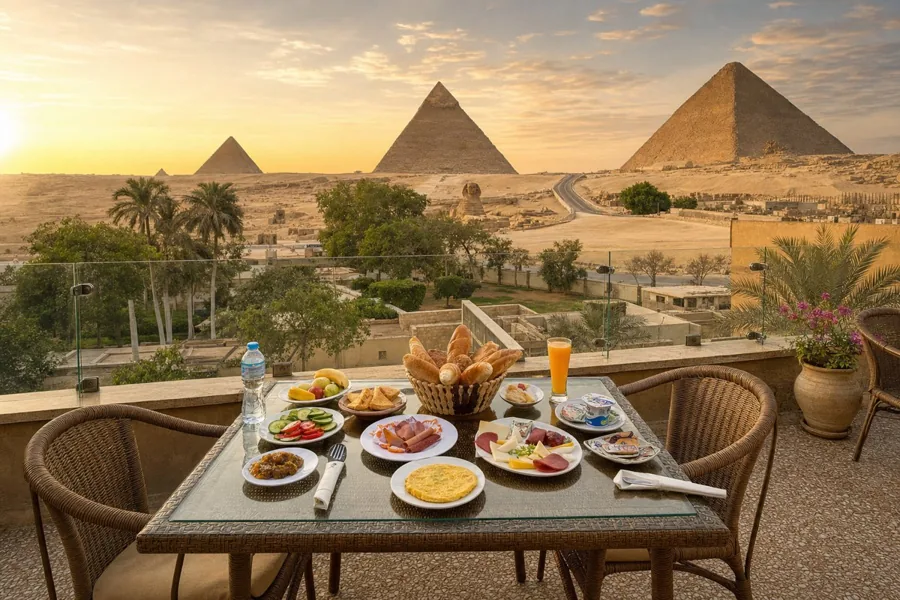 At the Sphinx
Giza Pyramids View Inn
- Good breakfast
- Airport shuttle
- Two restaurants
- 24-hour reception
- Free Wi-Fi
For those who want to see the Sphinx from their breakfast chair
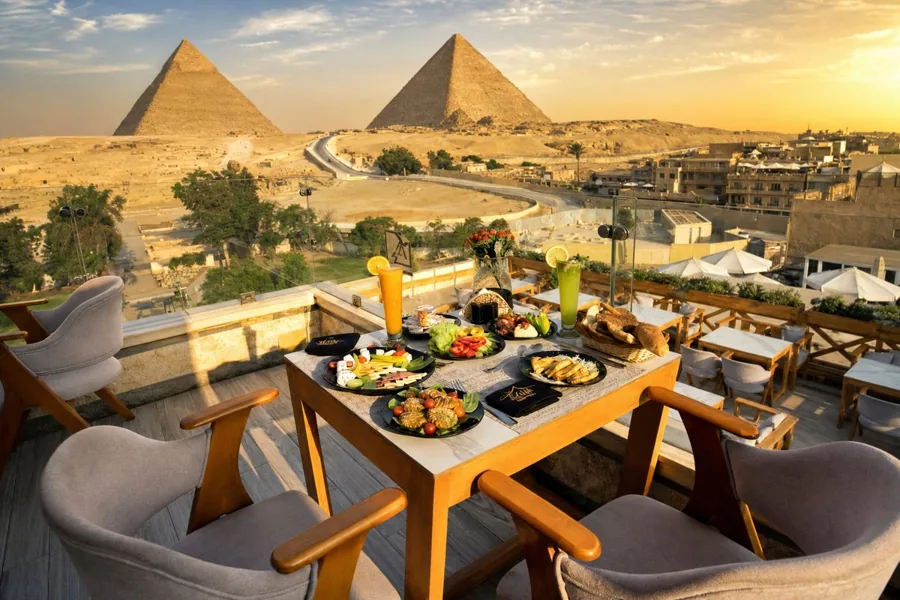 Most reviewed
Great Pyramid Inn
- Fabulous breakfast
- Rooftop terrace restaurant
- Bar
- Airport shuttle
- 24-hour reception
Most who want to stay in the neighborhood
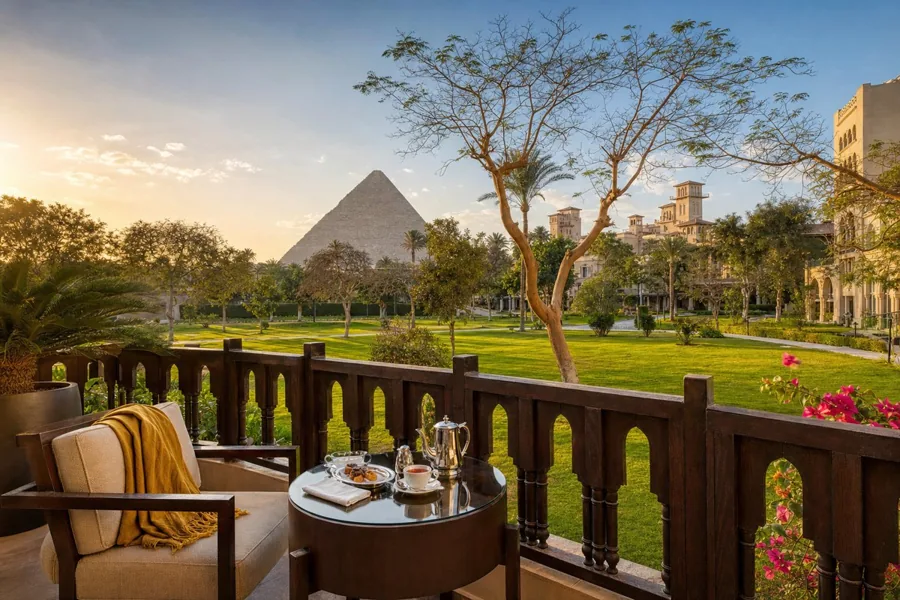 Garden & pool
Marriott Mena House
- Excellent breakfast
- Outdoor pool
- Spa and wellness center
- Three restaurants
- Fitness center
For those who want space, garden, and pool instead of a rooftop terrace
The More Serious Second Course
There remains the question of the alternative, because there is a second golf course near the pyramids, and it is the more serious one sportingly.
It lies in the satellite city of 6th of October west of Giza and belongs to a hotel complex. It was designed by Karl Litten and reworked in 2010 by Irish architect David Jones; the championship course measures about 7,205 yards and can be played from five tees. That is a different order of magnitude than the nine holes at the plateau.
The price for that is the backdrop. The distance figures vary considerably depending on the source, and from the course the monuments are not the dominant motif. Those who travel to Egypt for golf play there better. Those who travel for the pyramids and want a round on the side are right at the Mena House.
For the comparison, a third consideration is worthwhile, which has little to do with golf. The drive to 6th of October costs a good half hour each way through the traffic of the metropolitan area, and it leads away from the plateau. If you have only a few days, you spend half a day on it that you would otherwise spend at the site or in the museum.
The honest assessment is therefore: The course at the plateau is a sight that you can play, not a golf destination. Treat it exactly that way, and it is worth its money.
One last note on location. The course lies outside the designated archaeological zone, and the rules of the site do not apply there. Conversely, this also means: a green fee is not an entry ticket. For the plateau itself, you need a separate ticket.
Frequently asked questions
How many holes does the course have?
Nine, but each with two greens. If you go around twice, you play eighteen different holes totaling about 5,300 yards.
Can you play without a hotel room?
Generally yes. Tee times are arranged through the hotel, so you should ask in advance rather than just showing up.
When is the best time?
October to April. In high summer, a round on shadowless terrain at temperatures around 35°C is hardly recommended.
Is the course closed due to the renovation?
No timeline has been published. Since neither the start nor the duration is known, an inquiry with the hotel before your trip is essential.
Does the green fee replace the entry to the plateau?
No. The course lies outside the archaeological zone. For the site itself, a separate ticket is required.