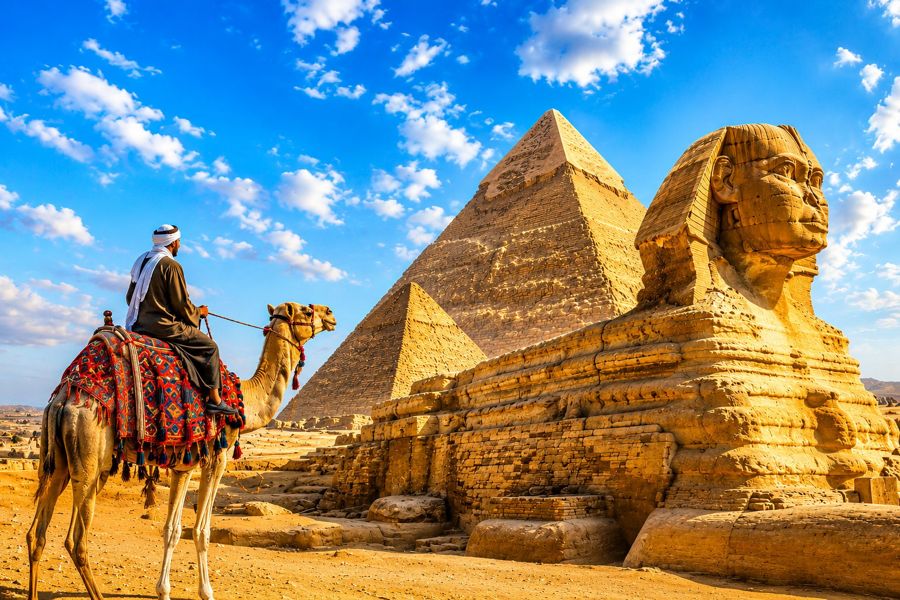
Staying in Giza or Cairo is almost always framed as an either/or: pyramid view versus city life. This simplification is convenient but misleading, because it overlooks that between the two extremes lie two additional locations where most travelers would be better off.
Strictly speaking, you are not choosing between two places but between four, and you decide based on two questions that are rarely asked. The first is: How many nights are you staying? The second: What do you do in the evenings?
That is the real asymmetry of this choice. In favor of proximity to the plateau speaks exactly one hour—the first after opening. In favor of the city speaks every evening you spend there. If you stay one night, you weigh that one hour heavily. If you stay a week, you weigh six evenings heavily.
And a third factor has shifted since late 2025, without most recommendations catching up. More on that below.
Sort hotels by location rather than view. The map shows the difference between the plateau edge, Giza city, Zamalek, and the center more clearly than any description. Three hotels that cover that:
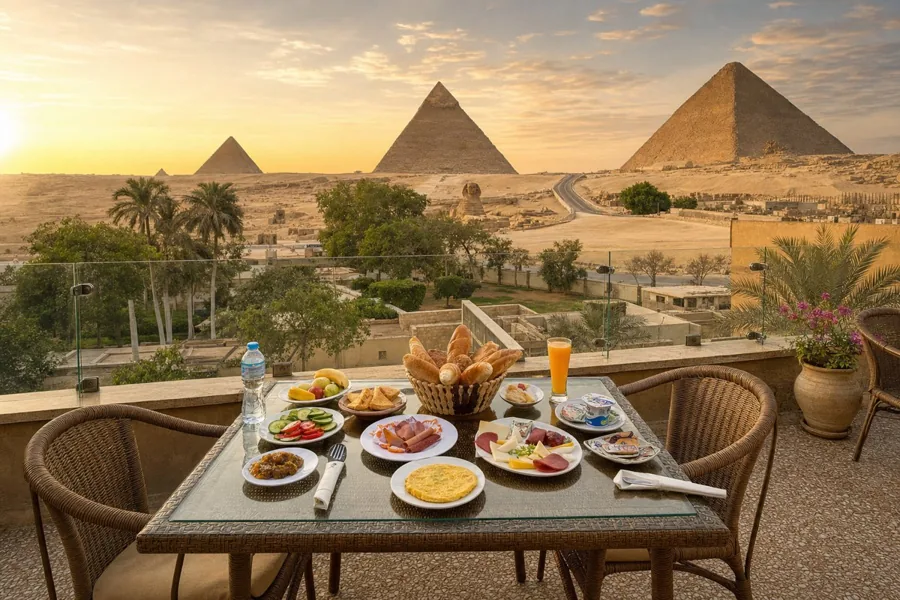 At the Sphinx
Giza Pyramids View Inn
- Good breakfast
- Airport shuttle
- Two restaurants
- 24-hour reception
- Free Wi-Fi
For those who want to see the Sphinx from their breakfast chair
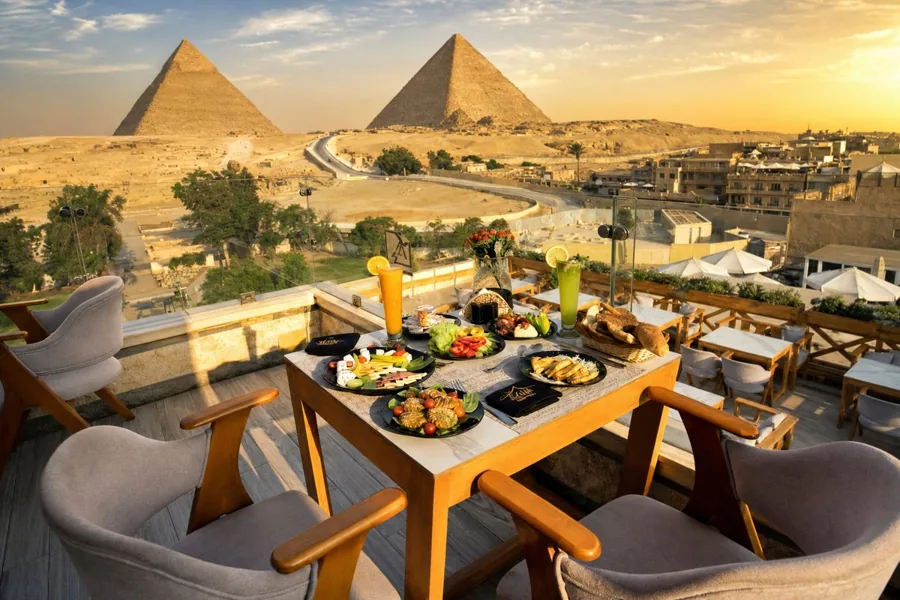 Most reviewed
Great Pyramid Inn
- Fabulous breakfast
- Rooftop terrace restaurant
- Bar
- Airport shuttle
- 24-hour reception
Most who want to stay in the neighborhood
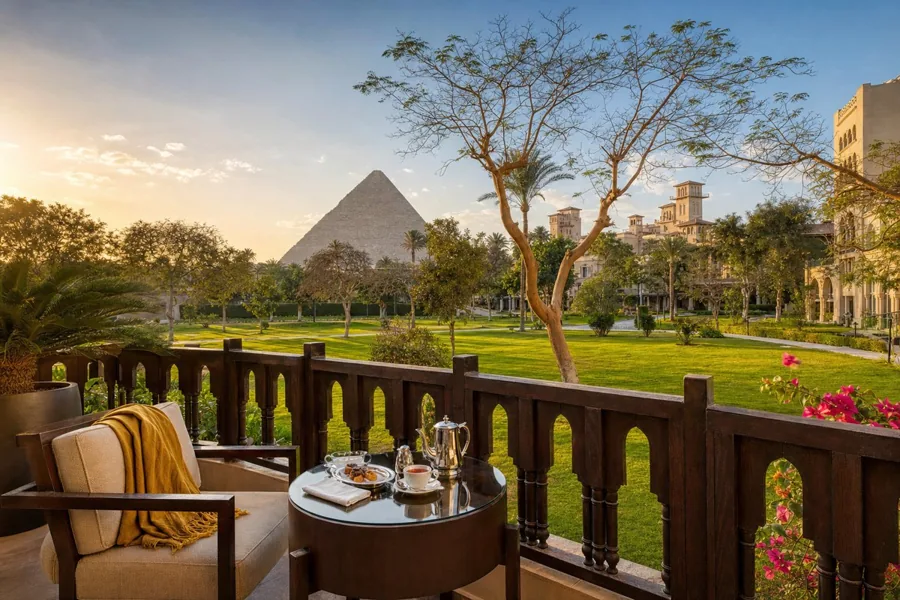 Garden & pool
Marriott Mena House
- Excellent breakfast
- Outdoor pool
- Spa and wellness center
- Three restaurants
- Fitness center
For those who want space, garden, and pool instead of a rooftop terrace
Four locations, not two
Directly at the plateau
Hotels on the edge of the site, many with a view, some within walking distance of the main entrance.
- Good for
- Short stays, early visits, travelers with a single goal.
- Watch out
- In the evening you are tied there. The neighborhood is not designed for strollers.
Giza City and Dokki, west of the Nile
The residential areas between the plateau and the river, with normal city life and short trips in both directions.
- Good for
- Stays of three nights or more when both matter.
- Watch out
- No pyramid view, yet hotels still like to advertise it.
Zamalek, the Nile island
Quieter than the center, easy to walk, many restaurants, midway between the two banks.
- Good for
- Those who want to walk in the evening and drive to the plateau in the morning.
- Watch out
- It's farther to the site than from Giza, and rush hour lies in between.
Center and Tahrir
Old town, bazaar, museums, the densest offering of everything except pyramid views.
- Good for
- Longer stays with a full city program.
- Watch out
- The ride to the plateau is the longest of all and the most unpleasant in the morning.
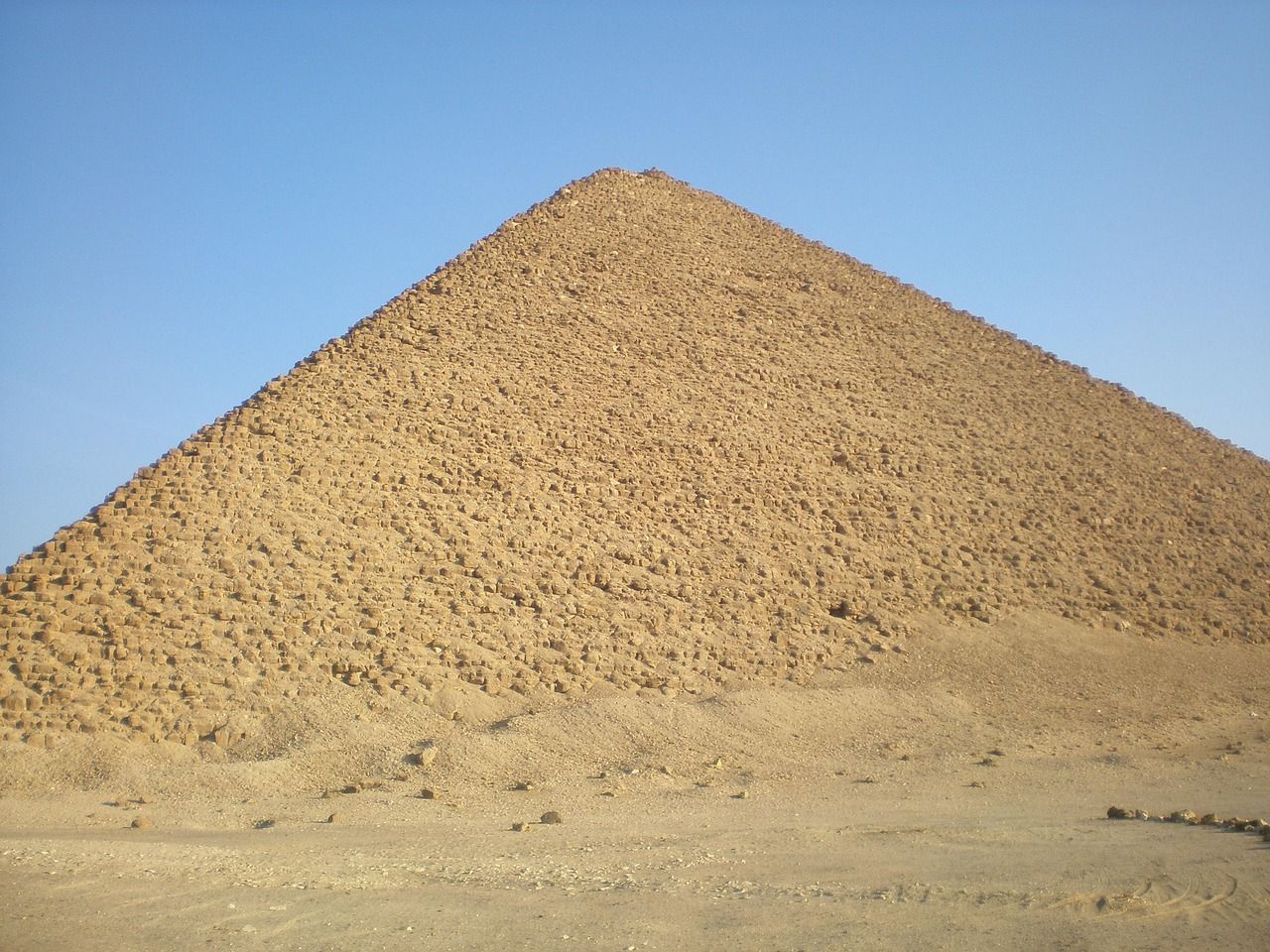
What speaks for proximity to the plateau
The arguments for proximity to the plateau are strong, but they are few, and it's worth naming them precisely.
The first is the timing. If you live within walking distance, you are at the gate at opening time without having sat in traffic for an hour. The first hour is the only truly quiet one of the day, and from a hotel in the center you can only reach it with a very early departure. If you want it, you buy it with the location.
The second is the evening at the house. The structures are illuminated, and from a rooftop terrace within walking distance, it looks different than in photos. That's not a program item, but it's the reason many travelers wouldn't miss this location in hindsight.
The third is the midday return. Because there is no storage on the site and the day gets hot, a nearby room is practically a locker with a shower. If you can return at midday and go out again in the evening, you split the day sensibly.
However, one reservation applies to all three points, and it regularly costs travelers exactly the advantage they paid for. Distance information in accommodation descriptions often refers to the fence, not to an entrance. The site is about two kilometers long, it has two widely separated gates, and the eastern one does not sell tickets. Five minutes to the pyramids can therefore mean five minutes to a section of the fence where you can't go further. Before booking, check on the map which gate is actually within walking distance, and calculate the route there, not the straight line.
Against this stands a single but weighty objection: everything else in this city is elsewhere. The bazaar, the old town, the Nile promenade, and the restaurant districts are rides, not walks, and each of them falls into evening traffic. If you book seven nights at the plateau, you spend a significant part of your trip in the car.
What has shifted since autumn 2025
Now the shift that many recommendations do not yet reflect, because they are older than autumn 2025.
The statement that everything except the pyramids lies on the other side of the Nile is no longer true. The Grand Egyptian Museum has been on the Giza side since November 2025, about two kilometers from the plateau, and according to its own information it is open daily, with evening hours on Wednesdays and Saturdays. Thus the two biggest attractions in the country lie on the same side and within driving distance of each other. If you stay at the plateau, you have a full program on your doorstep on two evenings a week, and that was not the case before 2025.
The second factor that almost no one considers is the airport. The big airport lies in the northeast, on the side of the metropolis facing away from the plateau; the smaller one in the west lies on the same side as the plateau and the museum. If you arrive late or depart early, the location of your accommodation relative to the correct airport is worth more than any view from the window. This calculation sometimes differs for arrival and departure, which argues for a split stay. A Cairo package tour partially takes the decision off your hands, because the hotel and transfer are already combined.
And a word about noise, because it regularly appears as a surprise in reviews: Both sides are loud, just differently. In the center it's the traffic late into the night, at the plateau it's the neighborhood. On top of that, everywhere there is the call to prayer, whose first one is before sunrise. Earplugs belong in your luggage regardless of the decision.
Six questions that decide the choice
- How many nights? Up to two nights, almost everything speaks for proximity to the plateau
- What do you do in the evening? If you want to go out, don't stay at the site
- Are you traveling with children or with limited mobility? Then the short route counts double
- Which airport, and at what time? The western one is on the plateau side
- Is the museum on the plan? Then a second big point lies on the Giza side
- Do you take photos? Then the early morning hour is the most expensive asset of the whole trip
Metro and split stay
Two things remain that are often asked: the metro and the split stay. Both depend on a question that comes before the location choice and therefore belongs here: How many nights does the trip have at all? With two nights, the location decides half the stay; with ten, it hardly matters.
Regarding the metro, the information that a connection is in the works has been circulating for years. That's true, and it has become more concrete, but it won't help you for a while longer. The first phase of the fourth line is scheduled to go into operation in the first half of 2028, according to the announced schedule, with nineteen kilometers and seventeen stations, and it passes by the Grand Egyptian Museum, Remaya Square, and Haram Street. Until then, the rule is: if you don't live within walking distance, you drive by car, and that is the decisive constraint in the location choice.
The split stay is therefore often the best solution for trips of three nights or more, and it is simpler than it sounds. Book one or two nights within walking distance of the plateau and the rest in the city. Put the change on a day when you are on the move anyway, and use the fact that both hotels accept luggage before the room is ready and after you have checked out. That way you get the early hour at the site and the evenings in the city, without paying the full price in travel time for both.
If you still have to decide on a single address, you will find the answer in the second question on the list above. It is more reliable than any external recommendation, because only you know what your evenings should look like.
Private airport transfer to Cairo and to hotels in Giza
This offer drives both sides of the equation, the center and the plateau edge, and thus makes the point comparable that matters on this page: The ride from the airport costs roughly the same in both directions, but the trip to the plateau the next morning does not. Private vehicle, fixed price at booking, free cancellation.
Frequently asked questions
Is a hotel directly at the plateau worth it?
For short stays, yes, because you get the quiet first hour without any travel. For long stays, rarely.
How long does the ride from the center take?
Outside rush hours a good half hour, in rush hour significantly longer. The details are on the page about getting there.
Is there a metro to the pyramids?
Not yet. The first phase of line four is announced for the first half of 2028.
Does the new museum change the decision?
Yes, to a certain extent. It is on the Giza side and is open until evening on two days a week.
Is it quieter at the plateau than in the city?
No, just noisy in a different way. Earplugs are a good idea on both sides of the river.
What about two locations in one trip?
From three nights onward, often the best solution: one or two nights at the site, the rest in the city.