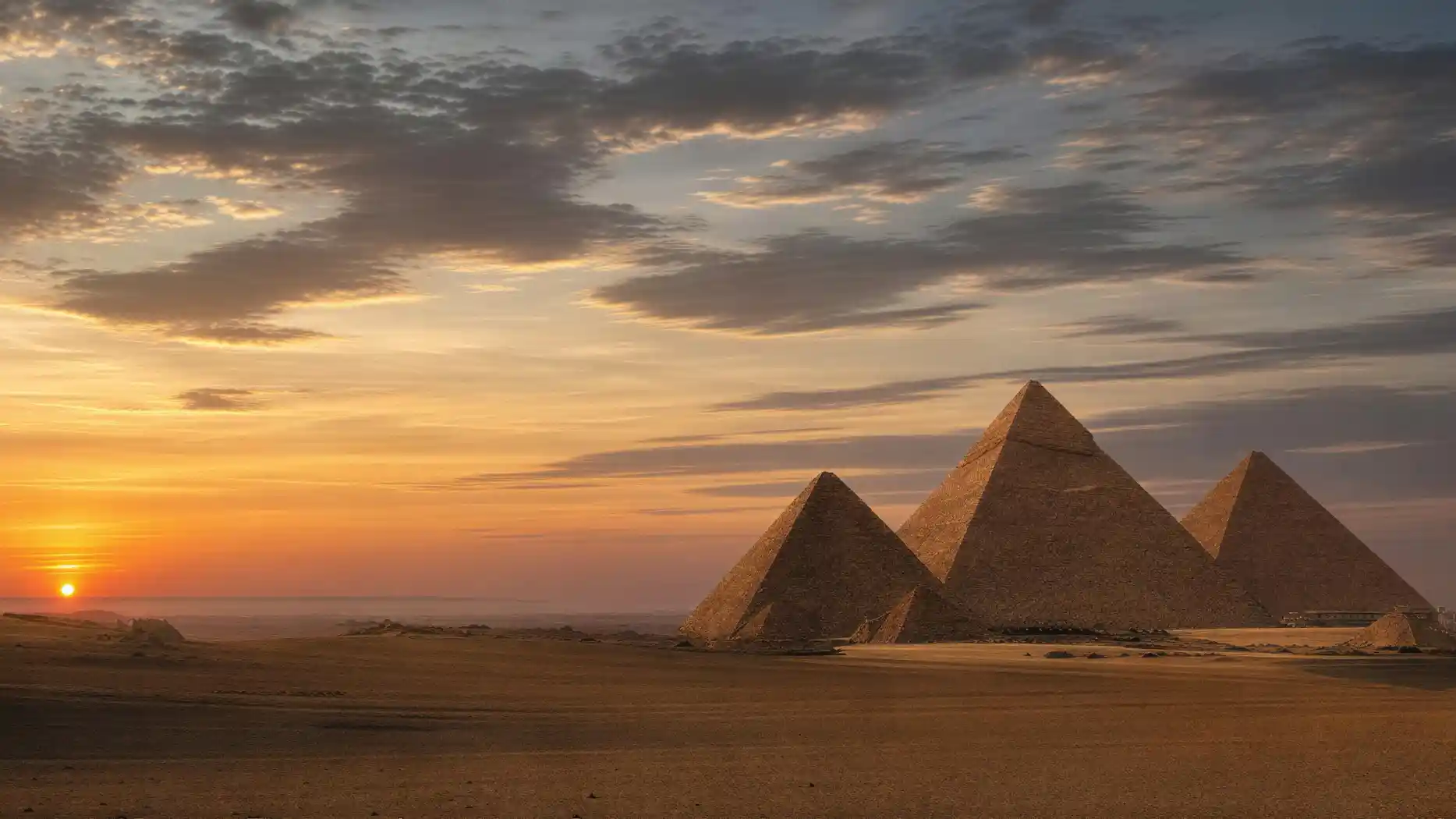
Those searching for pyramids of Giza for kids are usually not kids themselves.
It's parents who couldn't answer a question at the dinner table. It's grandparents who want to give a book as a gift. And it's teachers preparing a double period. That's why this page is aimed at you, not the child, and it tries something different from the usual lists: not to dumb down facts for kids, but to sort out what actually resonates at what age.
The difference is bigger than it sounds. Explaining pyramids to a five-year-old is completely different from explaining them to a twelve-year-old. A five-year-old wants to know if someone lives there. A twelve-year-old wants to know how you move a two-ton block without a crane. Both are good questions, and they need different answers.
There's also a point that adults regularly skip when explaining. Children have no concept of four and a half thousand years, and the number alone won't create one. What helps is counting in grandparents. From one generation to the next is about thirty years, so four and a half thousand years is about one hundred and fifty generations. A child can name their parents, grandparents, and maybe great-grandparents, that's three. Then another one hundred and forty-seven times that far back. This calculation can be written down on a piece of paper and it sticks, while a year number doesn't.
One warning in advance, because it prevents the most common disappointment: children almost never find what adults find impressive about this topic impressive. The height in meters means little to them. The fact that real people were buried there and that no one knows exactly how the stones got up there means a lot to them.
What Works at What Age
Ages 5 to 7
The pyramid as a huge stone house, built for a king who died.
- Good for
- Size comparisons with familiar things, pictures, and don't be afraid to say the word tomb.
- Watch out
- Mummies and embalming often overwhelm at this age. If the question comes up, answer briefly and factually, don't embellish.
Ages 8 to 10
The construction site. Who did it, how long did it take, what with, and who paid the workers.
- Good for
- Tools, ramps, work crews, bread and beer as payment, and working with large numbers.
- Watch out
- The phrase "they were slaves" is still in many older books and is not true.
Ages 11 to 13
The open questions. What do we know for sure, what is inferred, and what is pure speculation.
- Good for
- Source criticism using a concrete example, cavities and measurement methods, and dating.
- Watch out
- At this age, they start coming into contact with videos that bring up aliens. Better to talk about it beforehand than after.
The Story in Four Sentences
The story of the pyramids for kids can be told in four sentences, and it holds up to follow-up questions.
About four and a half thousand years ago, kings called pharaohs ruled Egypt. They believed that a king would live on after death if his body and possessions were preserved. So they built themselves a stone tomb during their lifetime, as large and durable as possible. Three of these tombs stand on the edge of the modern city of Giza, and the largest of them was the tallest structure in the world for almost four thousand years.
That's the whole story. Everything else is details, and details come only when asked for.
What you should leave out at this age is embalming. Not because it's taboo, but because it takes over all the attention: as soon as organs and canopic jars come up, there's no more talk of construction planning and stone transport. If you're preparing this topic for school, you can deliberately set it aside for later.
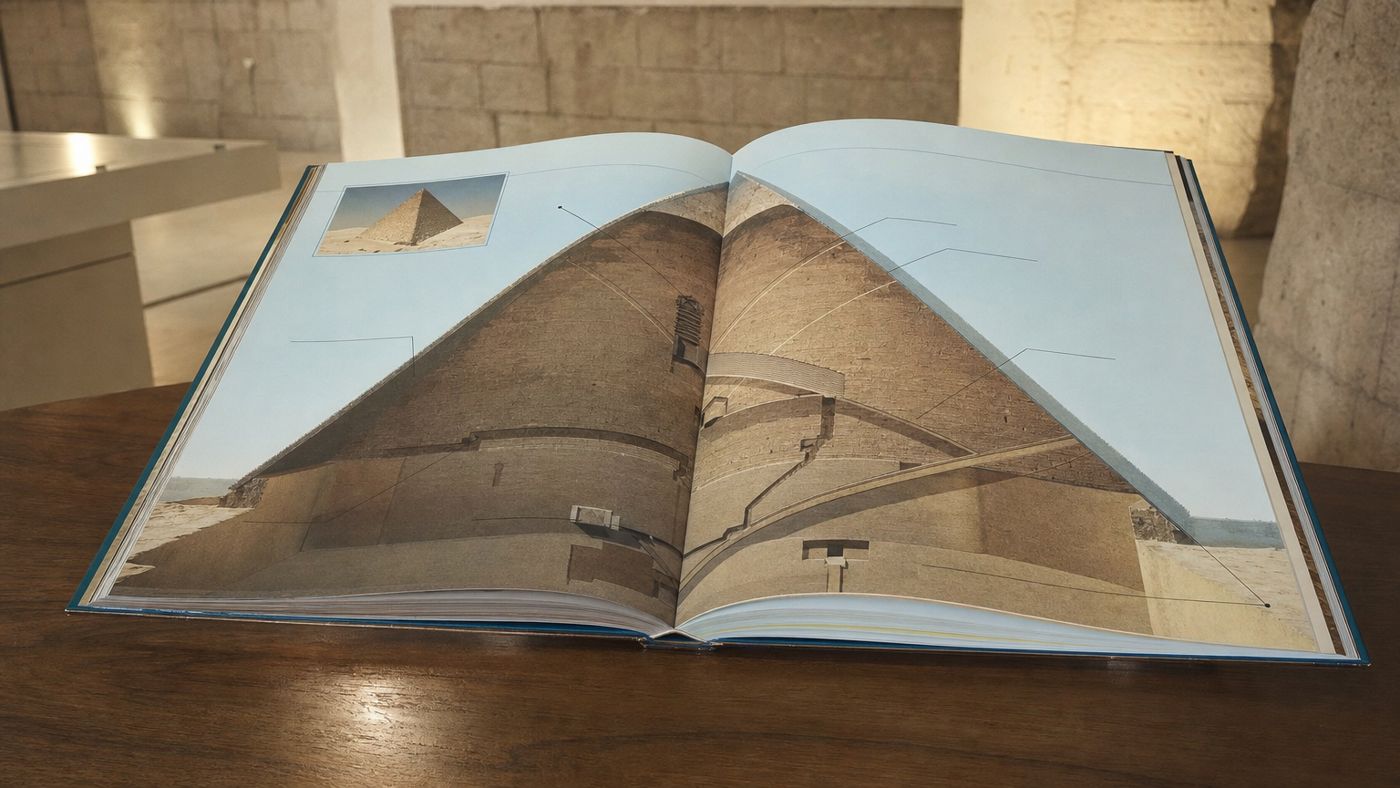
There is one exception to this restraint, and it comes from the children themselves. From about age eight, almost every child eventually asks if there's a skeleton in the pyramid. The honest answer is short and reassuring at the same time: no royal mummy has ever been found in the pyramids of Giza. The chambers were empty when the first people entered them in recorded history, and the stone sarcophagus in the largest pyramid is still empty today.
Two words are worth introducing early on. One is necropolis, meaning city of the dead: the pyramids don't stand alone; hundreds of smaller tombs of relatives and officials surround them. The other is the Nile, because without the river, neither the stones nor the people who moved them would have come to the site.
Frequently asked questions
What's inside a pyramid?
Narrow passages and a few empty chambers. In the largest one, there's a lidless stone sarcophagus. Everything else was either never there or was taken a very long time ago.
Does someone live there?
No. A pyramid was never a home, but a tomb. People lived in houses made of sun-dried mud bricks, which no longer exist.
How heavy is one of those stones?
Most weigh between two and three tons, about as much as a large car. A few on the inside weigh significantly more.
How did the stones get up there?
No one knows for sure. There are several theories involving ramps and levers, and none of them are proven. That's not an excuse; that's the honest state of things.
Were there treasures inside?
Probably yes, but none of it was found in the largest pyramid. What's in museums today comes from other tombs.
Are you allowed to go inside?
Yes, with a separate ticket. It's cramped, warm, and you have to walk hunched over for a while, which isn't suitable for every child.
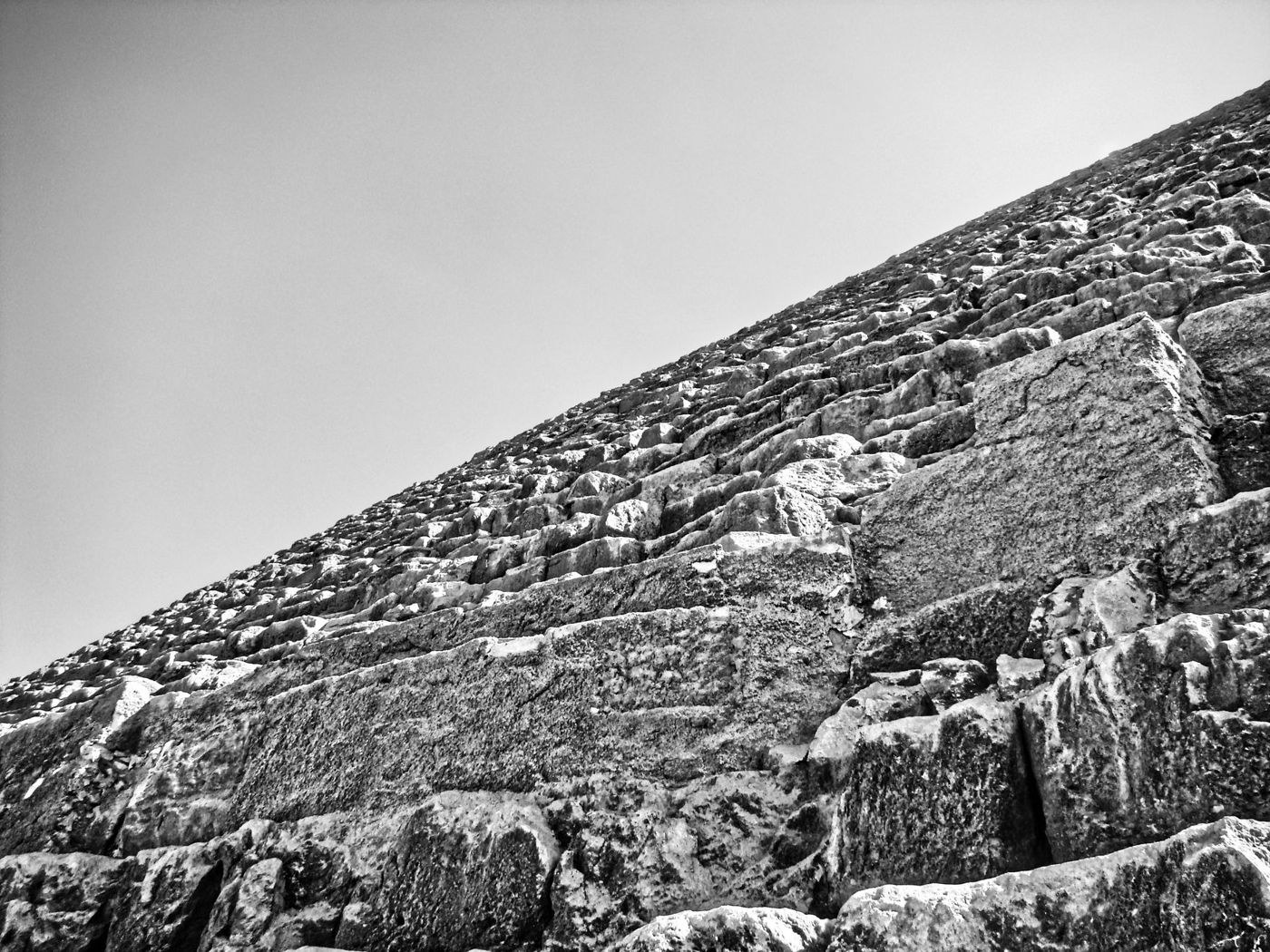
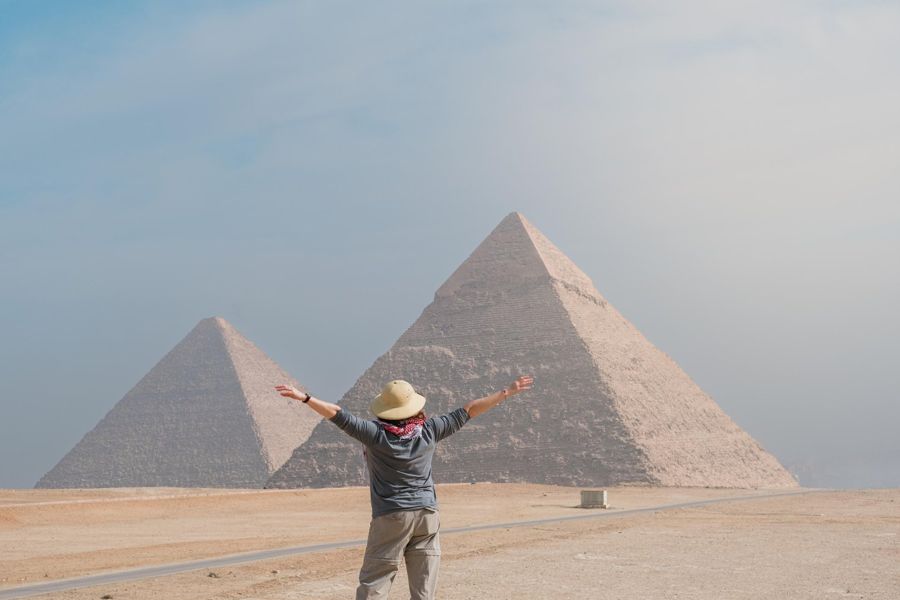

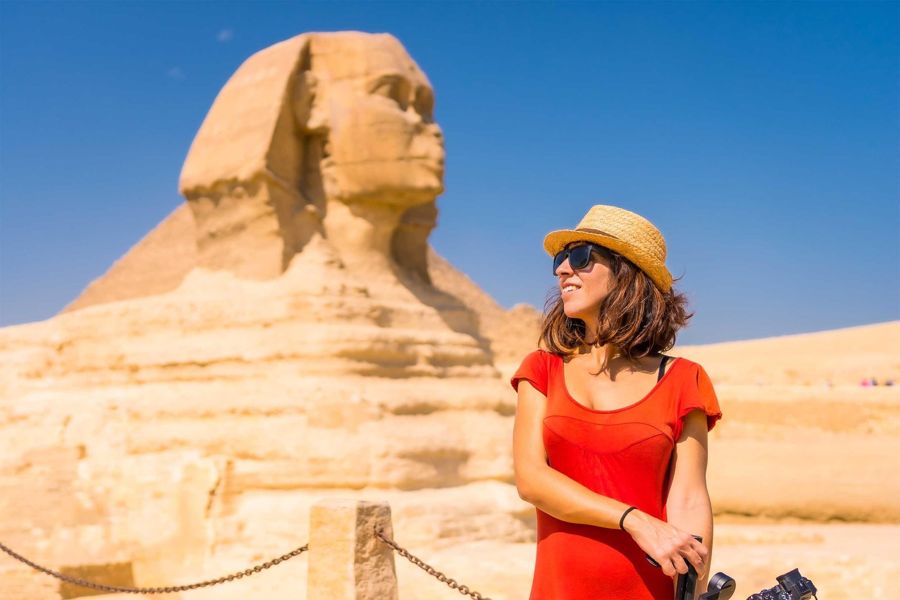
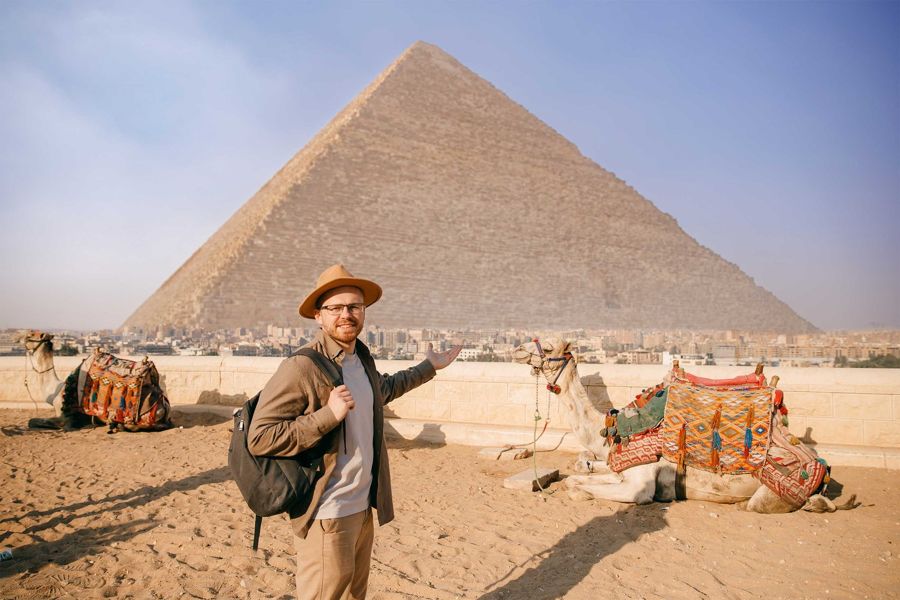
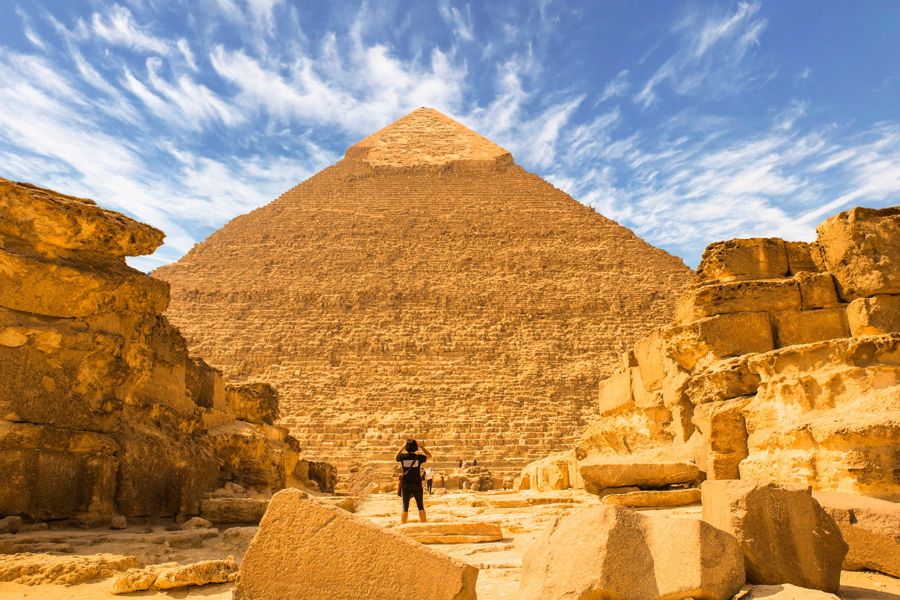
Plateau, Sphinx, and a sailboat ride on the Nile
- The boat ride breaks up the day, which is worth more than any extra stop when traveling with kids
- Five hours long, guided in German, with hotel pickup
- Plateau entrance and priority entry are included, with the pyramid interior as an add-on
- Free cancellation up to 24 hours before start
Two Misconceptions from Children's Books
Two misconceptions are so persistent in children's books that it's worth knowing them before your child brings them home.
The first is the slaves. Generations of schoolbooks and practically every older epic film show whips and chains. Excavations over the last forty years show something different: a workers' settlement with bakeries and breweries, medical care with healed bone fractures, named work crews, and tombs within sight of the pyramid that slaves would not have been granted. They were organized, cared for, and buried workers.
The second misconception is the gold treasure. Children expect a chamber full of gold behind every pyramid wall because they know the pictures from Tutankhamun's tomb. But that was a rock-cut tomb in the Valley of the Kings, a thousand years later and in a completely different place. In four and a half thousand years, only three small objects have been recovered from the largest pyramid at Giza, and none of them are made of gold.
Both misconceptions have the same origin, and you can show this to children from about age ten: images are stronger than evidence. The overseer with the whip and the golden chamber come from movies, while the workers' settlement and the empty coffin come from excavations. Anyone who has once realized that their mental image comes from a movie and not from a find has learned more than any year number could teach.
For school, the topic is, of course, firmly anchored. The Bavarian curriculum for the sixth grade at the Gymnasium explicitly requires that structures and works of art, including pyramids, be examined in order to draw conclusions about social order, culture, and religion. Other federal states set a similar focus in grades five or six. So if you're looking for a presentation, you're looking for exactly the question the curriculum asks: not how tall, but what does the structure reveal about the society that built it?
Three Things That Work at Home or in the Classroom
- Building pyramids with kids works best with sugar cubes. A step pyramid made of about a hundred pieces immediately shows why the base has to be so much larger than the top, and why the upper layers are finished first.
- Write your own name in a cartouche. There are freely available hieroglyphic alphabets; the appeal is that a child can recognize their name afterward, while others can't read it.
- Test a ramp. A heavy object, a board, a few round sticks as rollers: in five minutes, you can understand why ramps and levers dominate the whole discussion and why no one carried the stones.
Which Books and Videos Are Worth It
When it comes to sources, it's worth taking a detour to German-language offerings because translations from English often bring exactly the errors mentioned above.
For videos about pyramids for kids, the public broadcasting media libraries are the most reliable starting point. The "Sachgeschichten" archive of the Sendung mit der Maus can be searched by topic, and the children's programs on BR and ZDF have covered ancient Egypt several times. The advantage over a free video search is editorial review: what airs there has been fact-checked by experts.
For books, the "Was ist Was" series is the obvious choice, and it comes in the right level: there's a junior edition for preschool and beginning readers, a first-reader edition, and the classic volume for ages eight and up. If you're preparing a class, the German Education Server has a reviewed collection of materials for primary and secondary schools, run by the Leibniz Institute for Educational Research.
Online, Kinderzeitmaschine is made for readers aged eight to thirteen, has won multiple awards, and is publicly funded. What you should avoid, however, are the automatically translated fact videos that appear in recommendation lists. They are cheaply produced, factually unreliable, and, in my experience, lead to aliens within a few clicks.
Is It Worth Visiting with Kids?
The question remains whether it's worth visiting with kids. It is, but under conditions you should know about beforehand.
The site is large, open, and unshaded, and the distances between the structures are greater than they appear in photos. For a child, a morning there means significantly more walking than a museum visit. The electric shuttle takes care of some of that, but not the time in the sun.
Parents regularly underestimate two things. First, the approach from vendors and camel drivers, which is particularly targeted at families and can be unpleasant or fascinating for children depending on their temperament. Second, the interior visit: the passage is narrow, warm, and you have to walk hunched over for a long stretch, and turning back is difficult in oncoming traffic. Ask a child beforehand, not halfway through.
There's usually an unspoken age question behind it all: is it worth it for a preschooler? Honestly, they rarely remember much of it, and the effort is the same as for an older child. From about age eight, when the question of how comes naturally, the visit is much more rewarding.
What almost always works, however, is the scale at the base of the structure. A single block that towers over a child is more impactful than any number, and the question of how arises on its own. If you're short on time, it's better spent there than trying to walk around all three pyramids.
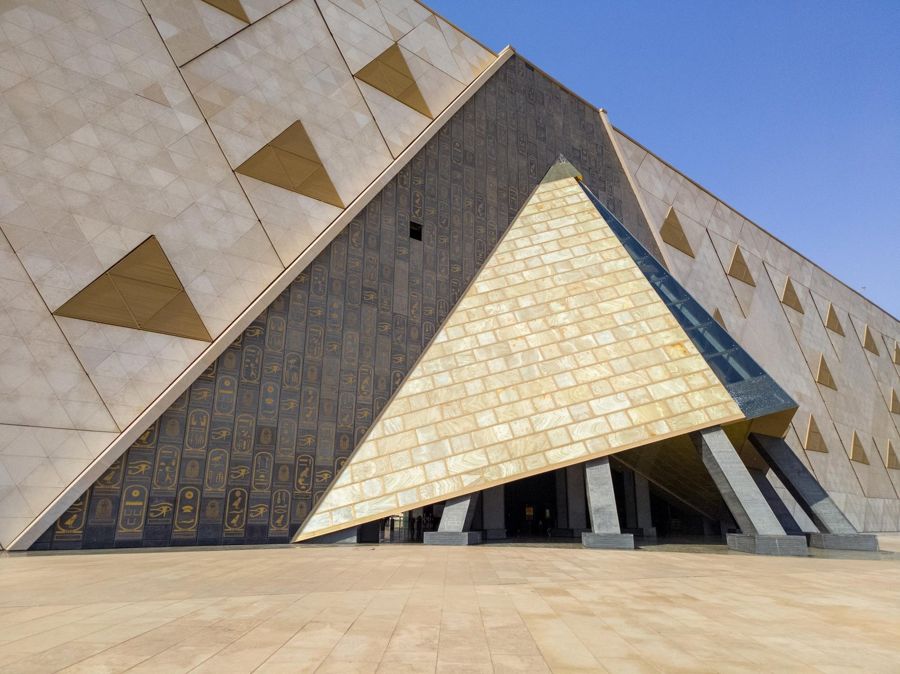
Guided day at the plateau and the Grand Egyptian Museum
With kids, what matters most is that breaks are possible and the day doesn't fall apart. Seven hours, guided in German, with pickup, plateau entrance, and lunch.