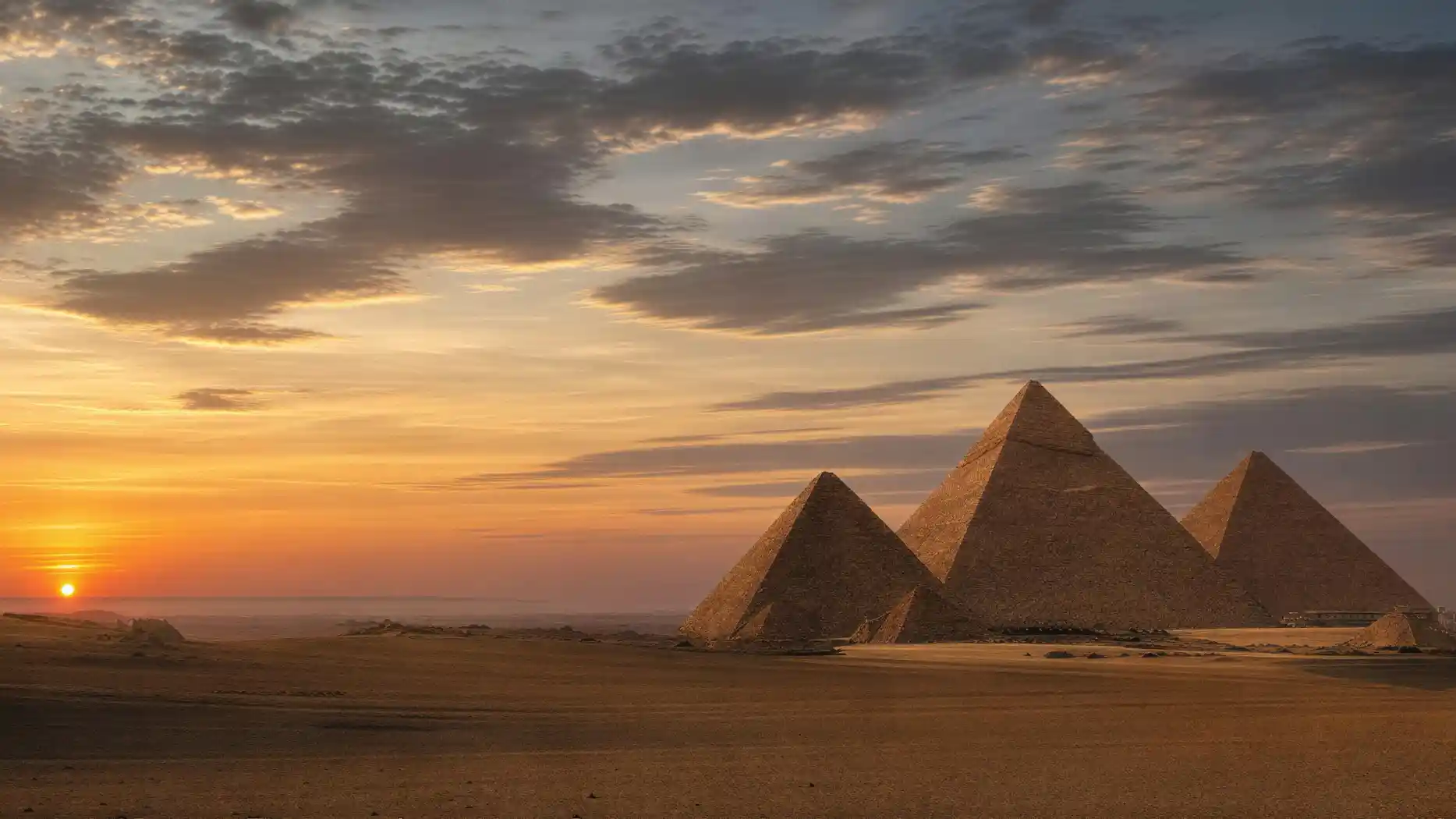
The question sounds like a conspiracy theory, but it is a perfectly normal archaeological question, and it has a surprisingly long answer.
There is indeed quite a lot beneath the site. The ground of the Giza Plateau is not a solid block but is riddled by human hands: burial chambers, shafts, passages, pits, and chambers on multiple levels. Some of it has been known for two hundred years; other parts have only been excavated in recent decades.
What does not exist is a connected underground complex, a city, or a tunnel system linking the monuments. Claims of this kind surface regularly, most recently in 2025, and so far none have withstood scrutiny. There is a separate page on that.
This page lists what is documented. It is less spectacular than a sunken city and considerably more interesting than nothing: a three-story shaft with a sarcophagus in water, three rock-cut burial chambers, an excavation site with thousands of shafts, and limestone that naturally forms cavities.
A preliminary note on terminology helps. Beneath the site there are three different things, and they are constantly confused: first, chambers that belong to the pyramids and were built with them; second, tombs of the surrounding necropolis that were added over two millennia; third, natural cavities in the limestone that no one created. When you read a report about the underground, you should first ask which of the three categories it concerns.
And finally, the question that preoccupies everyone involved: How would one find more chambers if they existed?
What Is Documented Beneath the Site
- Rock-cut burial chambers
- at all three great pyramids, wholly or partially
- Deepest chamber of the largest pyramid
- about 30 m below the base, unfinished
- Osiris Shaft
- three levels, lowest about 30 m deep, partially under water
- Burial shafts of the necropolis
- several thousand, spread across the entire site
- Boat pits
- cut into the rock, at several complexes
- Accessible to visitors
- only the interiors of the three pyramids, with an additional ticket
The Rock Chambers Beneath the Three Pyramids
The most obvious answer to the question of what lies beneath the Great Pyramid has been in every textbook since the 19th century.
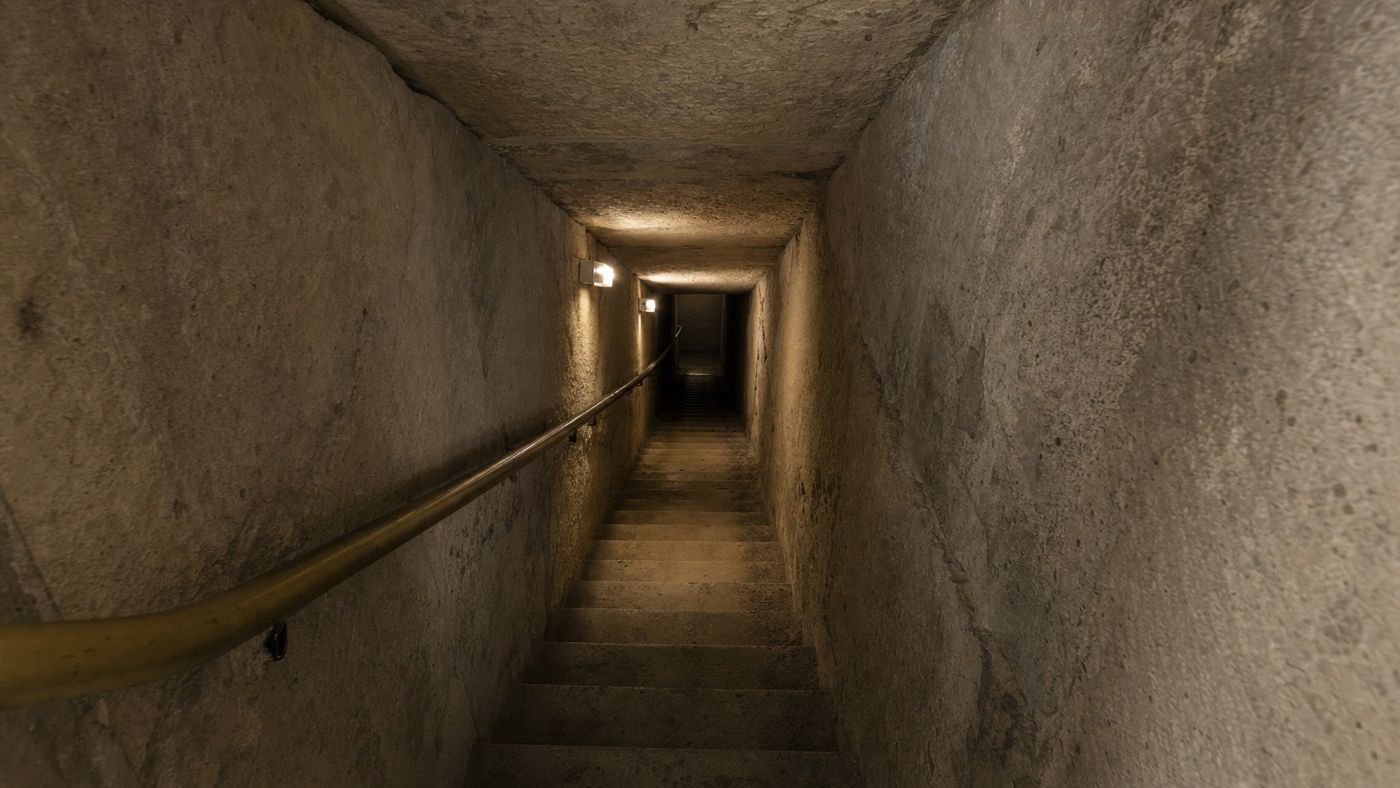
About thirty meters below the base lies a large chamber, cut directly into the bedrock, reachable via a descending passage over a hundred meters long. It remained unfinished: rough floor, an abandoned shaft in the middle, a blind passage leading south into nothing. The common interpretation sees it as a first, later abandoned construction phase.
The two neighboring pyramids look similar, with one difference: there, the underground chambers were actually used. The burial chamber of the middle pyramid lies largely in the rock and contains a sarcophagus; that of the smallest is entirely underground and lined with granite.
This is no coincidence but building tradition. Royal tombs originally lay underground, and moving the chamber up into the masonry was the innovation, not the rule. If you expect a chamber beneath a pyramid, you expect the usual.
Remarkable is the difference in effort. The chamber beneath the largest pyramid was driven into solid rock, including over a hundred meters of access passage, and then left. That is months of work for a result that was never used. For a project of this scale, apparently affordable, and a good indication that plan changes during construction were not unusual.
For visitors, this has a practical consequence. The official overview of the site lists the three pyramids as separate ticket areas. If you want to see an underground burial chamber, you get in most cheaply at the two smaller structures.
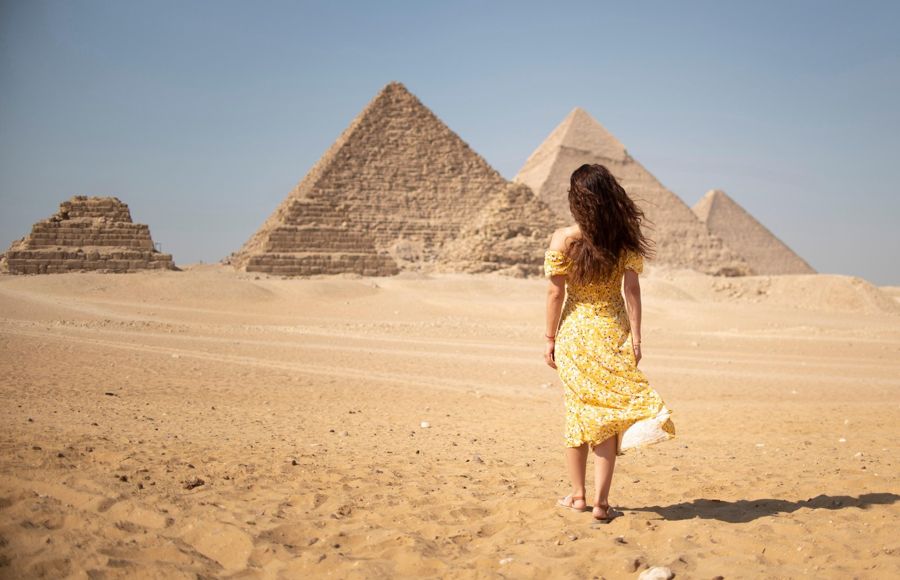
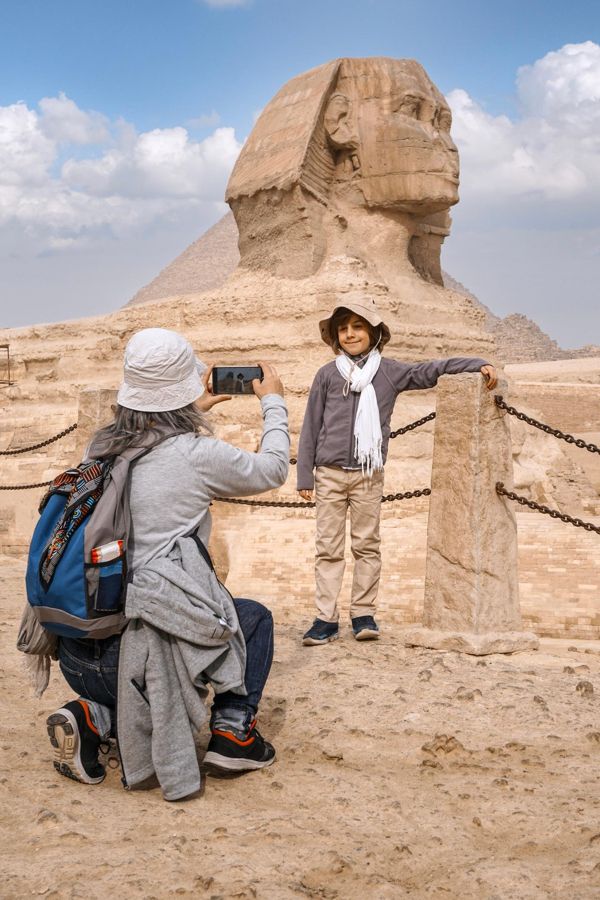
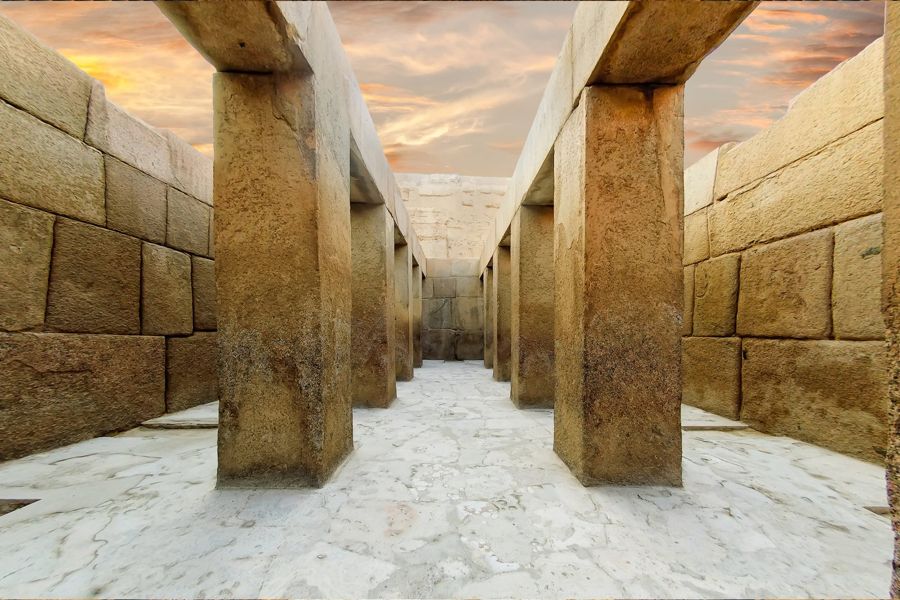
Half-day tour to the Pyramids of Giza and the Sphinx
- The burial shafts of the necropolis lie open in the terrain and are usually overlooked
- A licensed guide shows which openings in the ground are what
- Plateau entry, German-speaking guide, and hotel pickup are included
- Free cancellation up to 24 hours before start
The Shaft Beneath the Causeway
The most spectacular underground find on the site is hardly known, although it has everything a good story needs.
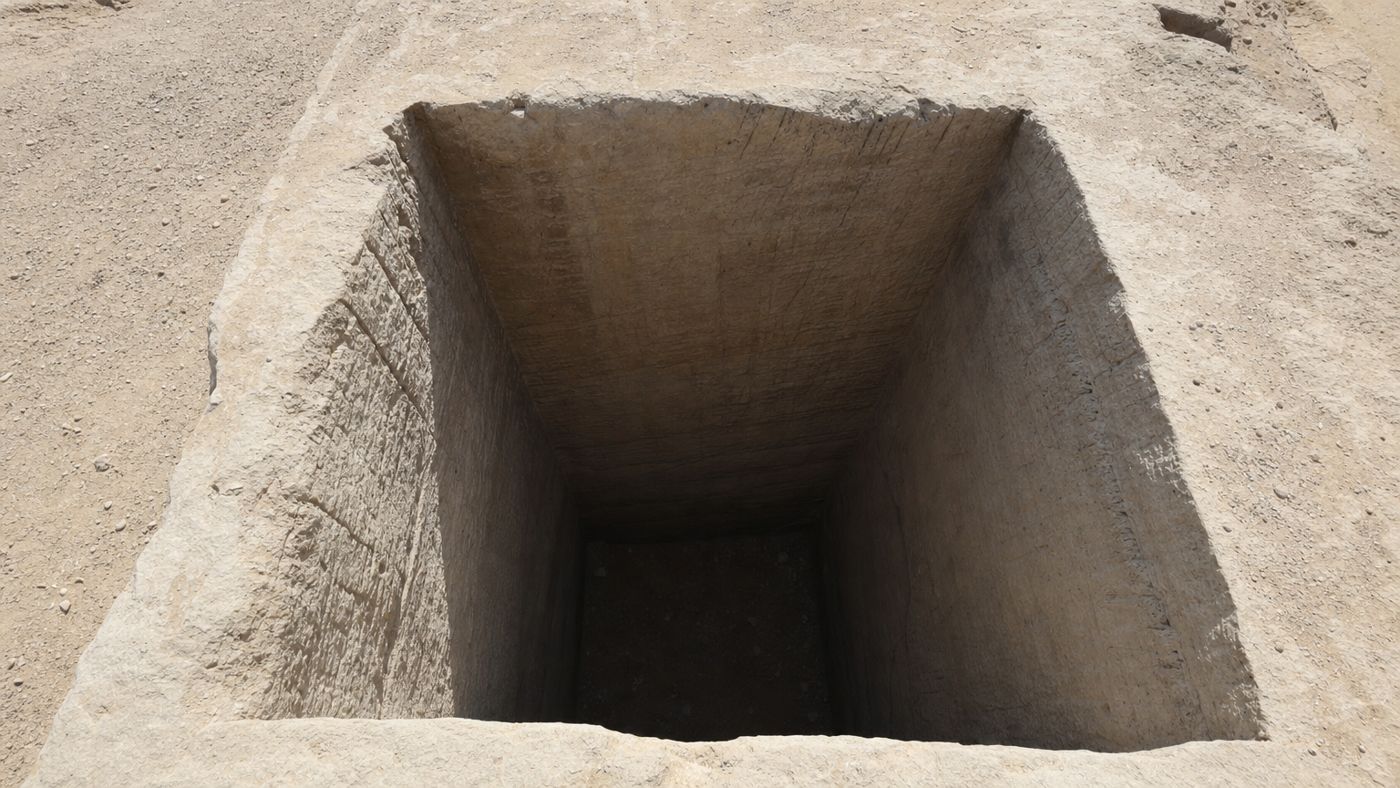
Beneath the causeway of the middle pyramid, about halfway between the Sphinx and the mortuary temple, lies a shaft that descends over three levels. The lowest is about thirty meters deep. There opens a chamber with a kind of island in the middle, surrounded by water-filled channels, and on this island stands a large sarcophagus.
The first complete excavation took place in 1999. The lowest chamber was under water, so initially only the lid of the sarcophagus protruded. It was pumped out, divers recovered material in advance, and cracks in the walls were monitored during the work. Found were burials from the Late Period, human remains, and grave goods. The excavator's excavation report describes a complex that was used over centuries in several phases.
The name of the complex, however, is misleading. It refers to the interpretation as a symbolic tomb of the god of the dead, not to a find. No one found a god there, and no one claims that.
Interesting is the dating. The complex was not built in the pyramid age but considerably later, and the burials in it belong to the Late Period, almost two thousand years after the pyramids were built. Although the shaft lies beneath a component of the Old Kingdom, it does not belong to it. That is a good example of the categorization question mentioned at the start: beneath the site does not mean from the same period.
None of this is visible. The shaft is not open to visitors, and that is unlikely to change in the foreseeable future: it is narrow, deep, partially filled with water, and has a single entrance.
Most of What Lies Beneath Is Tombs
The largest part of what lies beneath the site, however, belongs neither to the pyramids nor to spectacular individual complexes. It is tombs, and there are very many.
Structures beneath the pyramids of Giza in the strict sense are the chambers of the three royal complexes. In a broader sense, the underground of the entire site consists of a network of burial shafts: vertical holes in the rock, usually a few meters deep, with a small chamber at the end. Over six thousand tombs are known, and their number grows with every excavation campaign.
These tombs were also not created at the same time. The oldest belong to the pyramid-building period, the youngest lie two thousand years later, from a time when the complexes were already ancient monuments. When you open a shaft, you therefore initially do not know from which era it comes. That is exactly what makes chance finds on the plateau so laborious: every find must first be dated before it can be classified.
These shafts are the reason why the site looks so restless in geophysical measurements. If you walk over the ground with radar or resistivity measurement, you get anomalies in many places, and the vast majority of them are long-known or still unknown burial shafts, not chambers and not halls.
Add to that natural cavities. Limestone dissolves under water, and over millions of years cracks, fissures, and small caverns form. Part of the anomalies in the subsurface is simply geology.
These two effects together explain why reports of underground discoveries are so frequent and so rarely hold up. There are plenty of anomalies. The question is always whether someone has gone and looked.
Four Claims About the Underground
- True
Beneath the site lie chambers and shafts.
Three rock-cut burial chambers, a three-story shaft beneath the causeway, boat pits, and several thousand burial shafts, all documented.
- False
The pyramids are connected underground.
There is no evidence for that. The known passages each belong to one complex and end there.
- False
Beneath the plateau lies a city with halls and shafts hundreds of meters deep.
The 2025 claim is not based on any peer-reviewed measurement, and the methodological work behind it was withdrawn in 2026.
- Partially
One can visit the underground complexes.
The burial chambers of the three pyramids, yes, with an additional ticket. The Osiris Shaft and most burial shafts, no.
How One Would Even Find More Chambers
The most interesting question remains: How would one even find more chambers?
The gold standard is methods that damage nothing and still measure something. In the largest pyramid, that worked: muons from cosmic radiation were counted for months, and from the distribution one could infer cavities. For the underground, that is only of limited use because the particles come from above and a cavity beneath the measuring device casts no shadow.
For the ground, other methods are responsible: ground-penetrating radar, resistivity measurement, seismics. All three reach a few meters to a few tens of meters deep, all three deliver anomalies instead of images, and all three subsequently need a borehole or an excavation for confirmation. That is exactly where it fails, because interventions on a World Heritage site require permits and are granted sparingly.
What does not work, on the other hand, is satellite radar for great depths. The 2025 claim of extensive complexes was based on such a method, whose foundational work has since been withdrawn. The editors cite methodological deficiencies and statistical errors; the authors disagree.
There is another limitation that is rarely mentioned: the groundwater level. The lowest chamber of the Osiris Shaft stands under water, and that is not an isolated case. At the depth where spectacular complexes are suspected, everything would long have been flooded. Whoever claims a dry hall at a hundred meters depth implicitly also claims that it has remained water-free for millennia, and that in itself would require explanation.
Realistic is therefore a slow path. You survey areas, classify anomalies, dig at a few selected spots, and publish. That is how all previous underground finds have been made, and that is how the next ones will be made.
Frequently asked questions
What was found beneath the pyramids of Giza?
Rock-cut burial chambers at all three structures, a three-story shaft with a sarcophagus beneath the causeway of the middle pyramid, boat pits, and several thousand burial shafts of the surrounding necropolis.
Are there tunnels between the pyramids?
No. No evidence supports that. The known passages each belong to one complex and end there.
What is the Osiris Shaft?
A three-story shaft complex beneath the causeway of the middle pyramid, whose lowest chamber is partially under water. Fully excavated in 1999, not open to visitors.
Why not simply drill?
Because the site is a World Heritage site. Interventions require permits, and non-destructive methods take precedence.
Can one visit underground chambers?
Only the burial chambers of the three pyramids, each with a separate ticket. Everything else is closed.
Plateau entry as a QR code on your phone
Covers the site with its open shafts and boat pits. The burial chambers in the pyramids each require a separate ticket.