A packing list for visiting Giza differs from most others due to one single condition: everything you take with you, you carry for several hours, in the sun, over sand, and you cannot put it down anywhere in between.
There are no lockers on the site. There is also no way back to the car, because vehicles are not allowed on the site and your ticket is valid for one entry only. If you forget something, you do without it for this visit. If you take too much, you lug it around all morning.
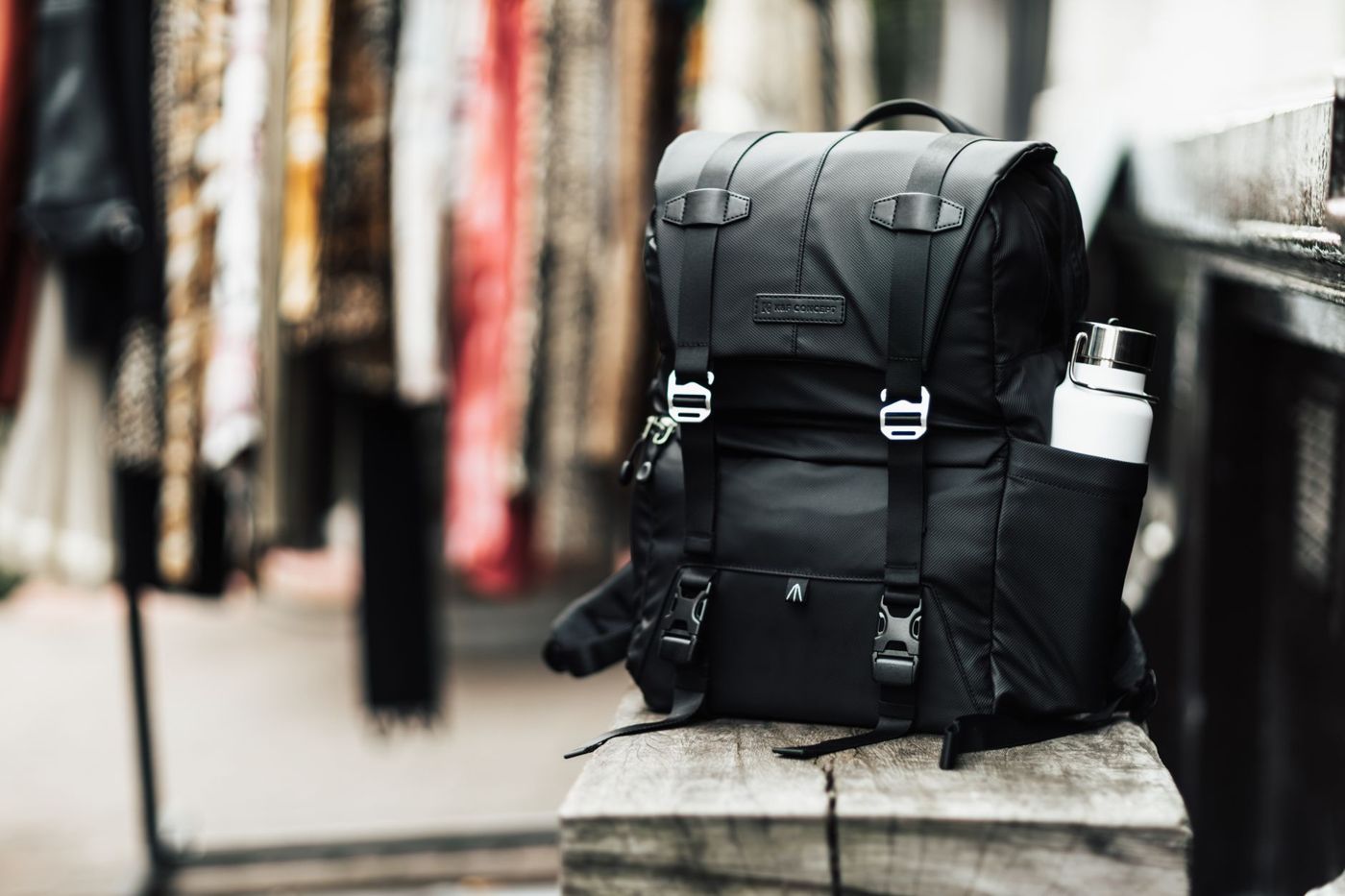
The packing question is therefore really a carrying question, and from this follows the basic rule: as little as possible, but the right things. A small backpack that you can forget about for four hours is better than a well-organized bag that becomes heavy after an hour.
That sounds like a minor detail, but it determines how the visit goes. The paths on the site are long, they lead over sand and rubble, and there is practically no shade between the structures. What you carry, you carry uphill in the sun. A bag that seems reasonable at home becomes a burden after the second pyramid, and no one likes to turn back because their own provisions have become too heavy.
This page therefore covers three things: what is regularly missing, what is not allowed at the entrance and inside, and a common misconception that also appears in some recommendations for this place.
The Basics and the Second Tier
About the basics, just this much, because they are covered in detail on two neighboring pages: plenty of water, small bills, headgear and sun protection, a charged phone, and something to eat. These are the things without which it becomes unpleasant, and they are listed on the pages about supplies and payment with their respective reasons.
One number from there deserves its own thought, because it determines the whole carrying decision: water is by far the heaviest thing you have with you. Three liters weigh three kilograms, and that is usually more than the rest of the backpack contents combined. That is exactly why many people take too little without consciously deciding to. The honest order is reversed: first the water, then the rest, and the rest must conform to what is still comfortable to carry afterward.
More interesting is the second tier, that is, what almost no one has on their list and what makes a noticeable difference here more than elsewhere. The reason is always the same: bright limestone, open sand, wind, and no shade.
Sunglasses, for example, are not a fashion accessory at this place but a necessity. The glare from bright stone and sand is considerable, and if you squint for hours, you will have a headache in the evening. Similarly underestimated are lip balm and a cloth: the wind carries fine sand, and it reliably finds lips, eyes, and camera lenses.
And then there are the things you only miss afterward. Wet wipes, because you constantly touch stone and there is nowhere convenient to wash your hands. An empty bag for sandy shoes or wet things. And a second hair tie or a cap with a chin strap for windy conditions, which occur on the plateau more often than the weather forecast suggests.
The hotel room as a locker. Because there is no storage on the site, proximity to your accommodation replaces the missing locker. Three hotels that cover this:
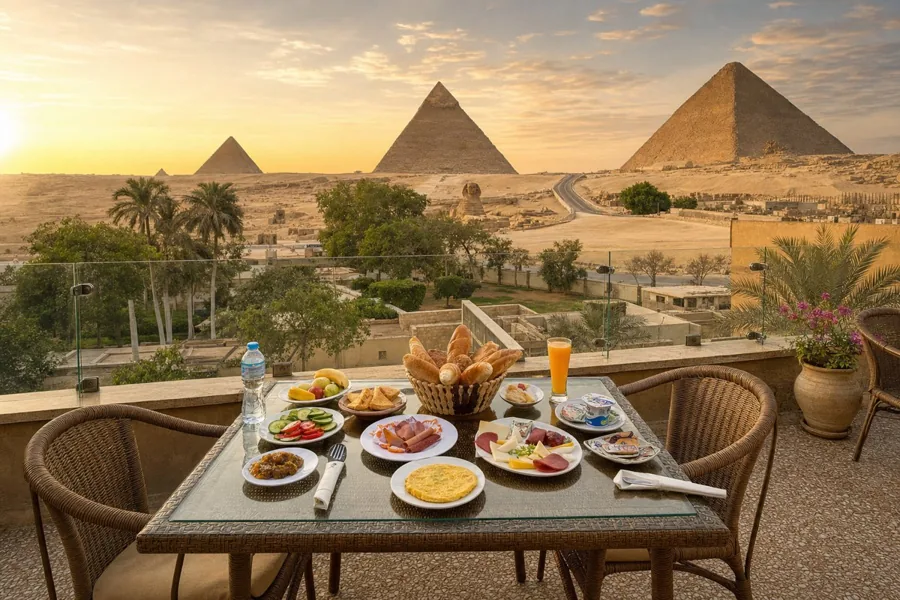 At the Sphinx
Giza Pyramids View Inn
- Good breakfast
- Airport shuttle
- Two restaurants
- 24-hour reception
- Free Wi-Fi
For those who want to see the Sphinx from their breakfast chair
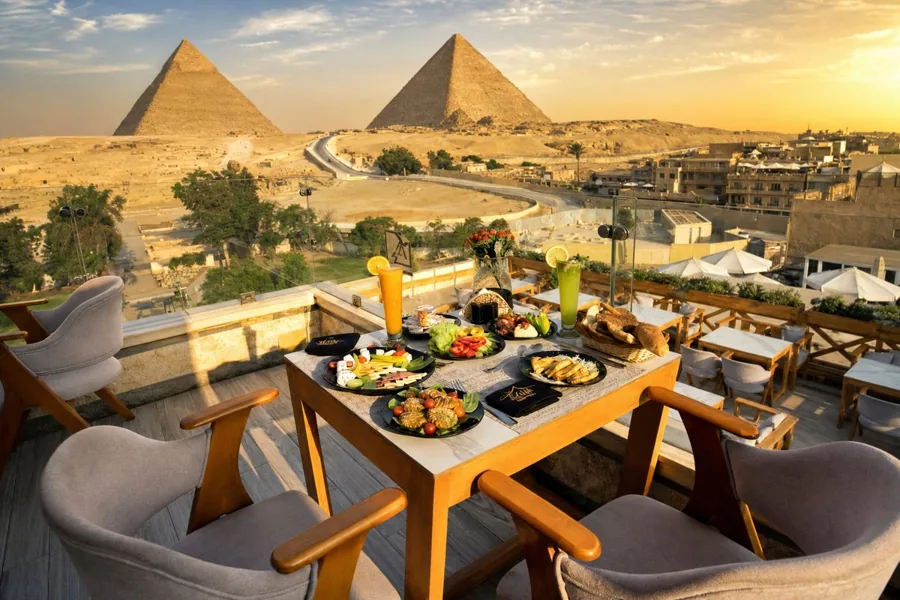 Most reviewed
Great Pyramid Inn
- Fabulous breakfast
- Rooftop terrace restaurant
- Bar
- Airport shuttle
- 24-hour reception
Most who want to stay in the neighborhood
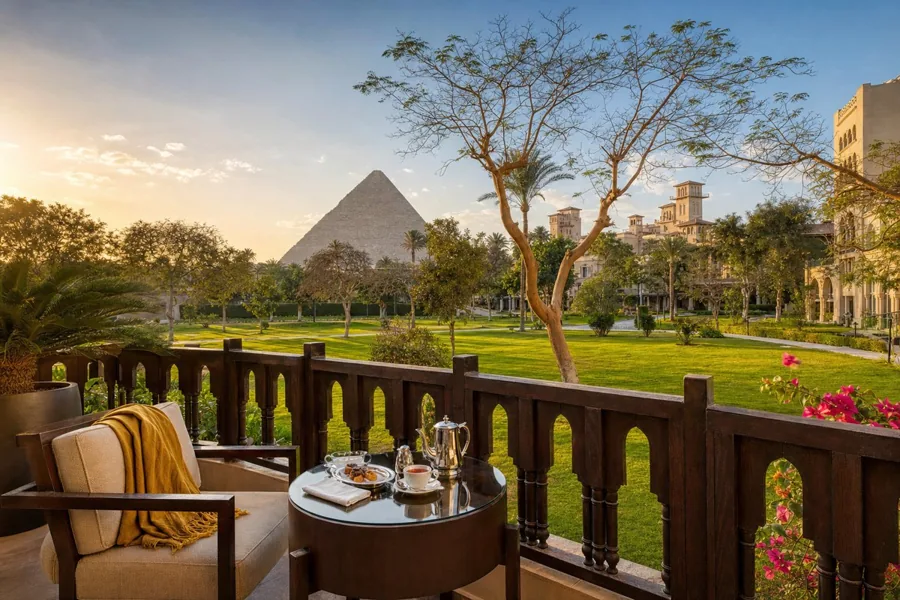 Garden & pool
Marriott Mena House
- Excellent breakfast
- Outdoor pool
- Spa and wellness center
- Three restaurants
- Fitness center
For those who want space, garden, and pool instead of a rooftop terrace
The Second Tier That Almost No One Packs
- Sunglasses, due to the glare from stone and sand
- Lip balm with SPF
- A thin cloth against wind and blowing sand
- Wet wipes or a small hand sanitizer
- An empty bag for sandy shoes
- Headgear that stays on in the wind
- A small supply of coins, kept separate from the rest of your money
What You Better Leave at Home
Now for the other half: what you better not pack at all.
First and foremost is the drone. Drones have been banned in Egypt since 2015, and bringing them in without a permit regularly leads to confiscation at the airport. This is not a gray area or a question of discretion; research teams at this site therefore work with kites and camera poles instead of flying devices.
Second is professional photo equipment. Photography for private use is officially free of charge, even with larger cameras. Explicitly requiring a permit are photo umbrellas, artificial external lighting, and equipment that blocks paths. A tripod is not mentioned in the regulation, but in practice it is often objected to, and a set-up tripod quickly falls under the blocked path. In the backpack, it is therefore not an accessory but a conversation at the entrance.
Third are large bags. There is a check at the entrance, and additional restrictions apply to the interiors of the pyramids. If you want to visit the interior, you should come with a small backpack and not with a shoulder bag that you would have to leave below.
And finally, valuables. Not because the site is dangerous, but because there is no place to put anything down, and because you lose more in sand, tight spaces, and crowds than in a museum.
A practical addition: what you take should fit in the backpack and not be carried in your hand. The ascent inside leads through a narrow, sloping passage where you have to bend down and need your hands. If you hold a water bottle, a camera, and a phone at the same time, you will put something down somewhere. The same principle applies outside: what sticks out openly in a side pocket gets lost in the sand, and you cannot find it again there.
The Long Layer for the Interior
One point remains where many recommendations are wrong, and persistently so: the long layer for the interior.
The usual advice is to pack something long-sleeved because it is cool inside the pyramid. That is not true. The interior of the largest pyramid is warm, stuffy, and humid, because many people breathe in a narrow, poorly ventilated stone chamber. This very humidity was the reason in the 1990s for closing the interiors for restoration. If you wear an extra layer there, you sweat more, not less.
A thin long layer still belongs in the backpack, but for a different reason: the early morning. Between sunrise and late morning, there is a significant temperature swing on the plateau, and in the first hour, which is also the best, it can be noticeably cool. By midday you no longer need the layer; then it is the thing lying in the backpack.
That is a small difference and a good example of a larger point: recommendations about this place have been copied from each other for decades, and some are only still true because no one checks them. What really goes on inside is covered on the page about the interior.
With that, the list is complete, and it is shorter than you would expect. Water, small change, sun protection, a charged phone, the small things from the second tier, and a thin layer for the morning. Anything beyond that should face the question of whether you really want to carry it through the sun for four hours. For almost everything, the answer is no, and that is the real packing list.
Small items to get beforehand
High-factor sunscreen, a wide-brimmed hat, a bottle of at least one liter, electrolyte tablets, closed comfortable shoes, and a power bank: all things that are harder or more expensive to get on site than at home.
Frequently asked questions
Are there lockers on the site?
No. Everything you take with you, you carry for the entire visit, and going back to the car is not possible.
How much water do I need?
More than most people plan for, and bought outside. Details are on the supplies page.
Can I bring a drone?
No. Drones have been banned in Egypt since 2015, and bringing them in without a permit regularly leads to confiscation.
Do I need a permit for my camera?
Not for private photos, even with larger cameras. For umbrellas and additional lighting, yes; a tripod is not mentioned in the regulation, but it is often objected to.
Is it cool inside the pyramid?
No, on the contrary: warm, stuffy, and humid. You do not need an extra layer there, but you do need one outside in the early morning.
How big can my backpack be?
For the site, a normal daypack is fine. For the interiors, additional restrictions apply, which you should ask about on site.