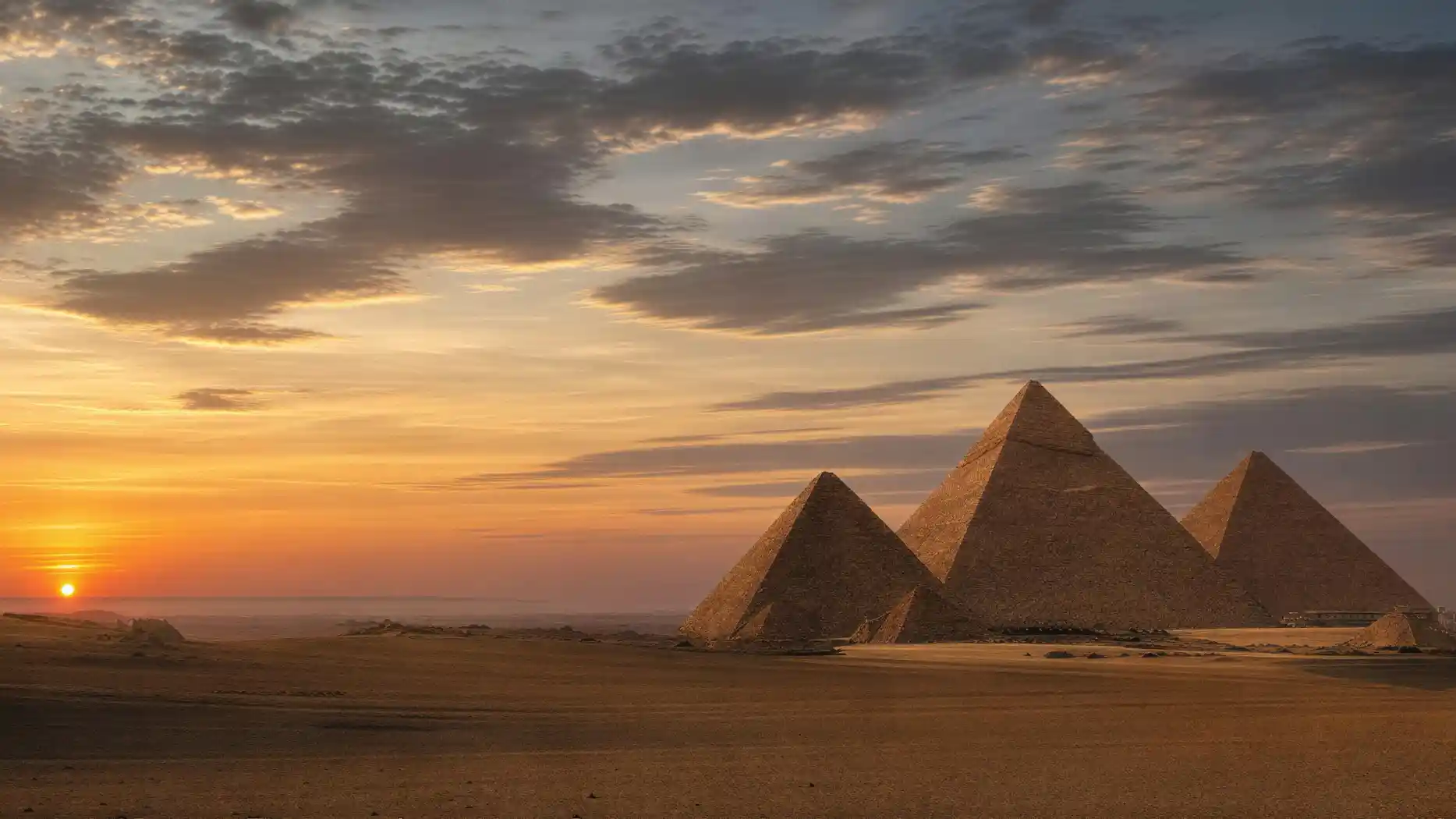
Let's start with the good news, because it's missing from most articles on this topic: things have improved significantly.
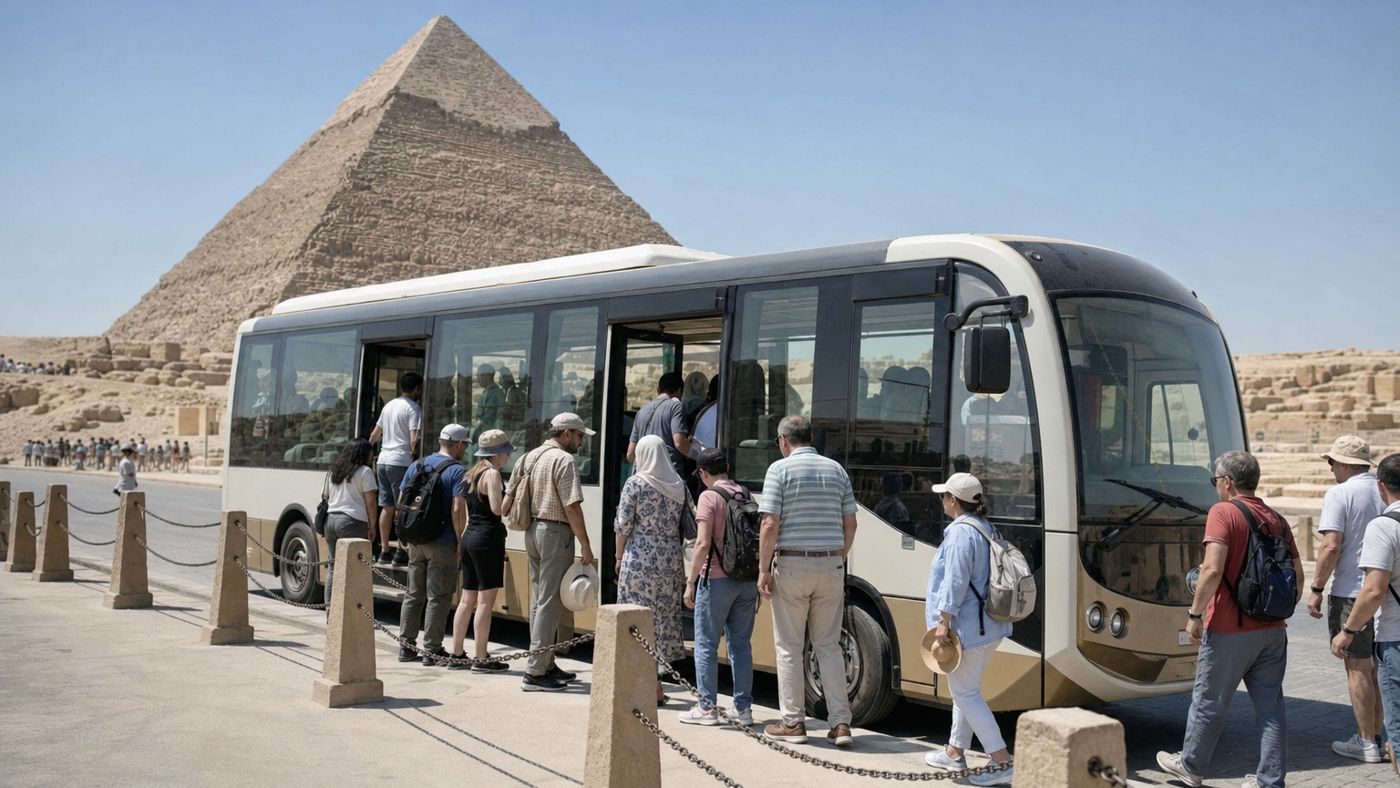
The site was notorious for decades. Anyone reading travel reports from before 2025 finds the same descriptions: harassment already in the parking lot, negotiations at every corner, camel handlers who won't leave you alone. Since the reorganization of the plateau, this has measurably changed. Camel and carriage ride providers have been moved to designated areas, private vehicles are no longer allowed up, a shuttle takes over the routes, and there is now a central complaint office for visitors.
Travelers who were there before and after describe the difference clearly. That doesn't mean nothing happens anymore. It means the likelihood has decreased and that since 2025 there is a place you can turn to.
What remains are essentially three scams. They've been the same for years, they work on the same pattern, and anyone who knows them practically won't fall for them. This page describes how they unfold, why they work, and what actually helps. The Federal Foreign Office does not list Cairo and Giza in its regional warnings; this is about money and pushiness, not safety.
The three scams at a glance
All three follow the same blueprint: they first create a situation from which you can't easily escape, and then they negotiate.
| Scam | How it works | What reliably helps |
|---|---|---|
| The price change on the camel | Very cheap price for mounting, then a completely different demand for dismounting or for the return trip | Book in advance and ride as part of a package, or agree on amount, currency, duration, and number of people in advance |
| The fake guide | Someone poses as an official guide or supervisor, accompanies you inside, and presents a bill once inside | Book a licensed guide in advance; don't let anyone accompany you on the site |
| The ticket tout | Claims the entrance is closed or moved, combined with an offer for a ride or ticket | Buy tickets online in advance; use your own navigation target |
- How it works
- Very cheap price for mounting, then a completely different demand for dismounting or for the return trip
- What reliably helps
- Book in advance and ride as part of a package, or agree on amount, currency, duration, and number of people in advance
- How it works
- Someone poses as an official guide or supervisor, accompanies you inside, and presents a bill once inside
- What reliably helps
- Book a licensed guide in advance; don't let anyone accompany you on the site
- How it works
- Claims the entrance is closed or moved, combined with an offer for a ride or ticket
- What reliably helps
- Buy tickets online in advance; use your own navigation target
None of the three scams work if the service is booked and paid for in advance. That's the common denominator of the countermeasures.
The camel trick
The most famous trick involves the camels, and it's more cunning than it sounds.
It works by separating two actions that for you are one. A price is offered, and that price is indeed valid, but only for mounting. As soon as you're seated and the animal has walked a bit, it turns out that dismounting, the return trip, or the animal kneeling down is charged separately, and at a completely different scale. If you're then sitting in the desert, several hundred meters from the starting point, you're no longer negotiating on equal footing.
This is exacerbated by the fact that a camel is not a bicycle. Dismounting without the handler's cooperation is difficult and, without practice, not entirely safe, because the animal has to kneel down for it. This dependency is exactly the lever.
The countermeasure is unspectacular and fully effective: book the ride as part of a service that is paid for in advance. Then there's no second point of negotiation, because there's nothing left to negotiate. If you do arrange it on the spot, you should explicitly clarify and have confirmed four details: amount, currency, duration, and whether the price is per person or for the group. Most disputes arise over exactly these four points.
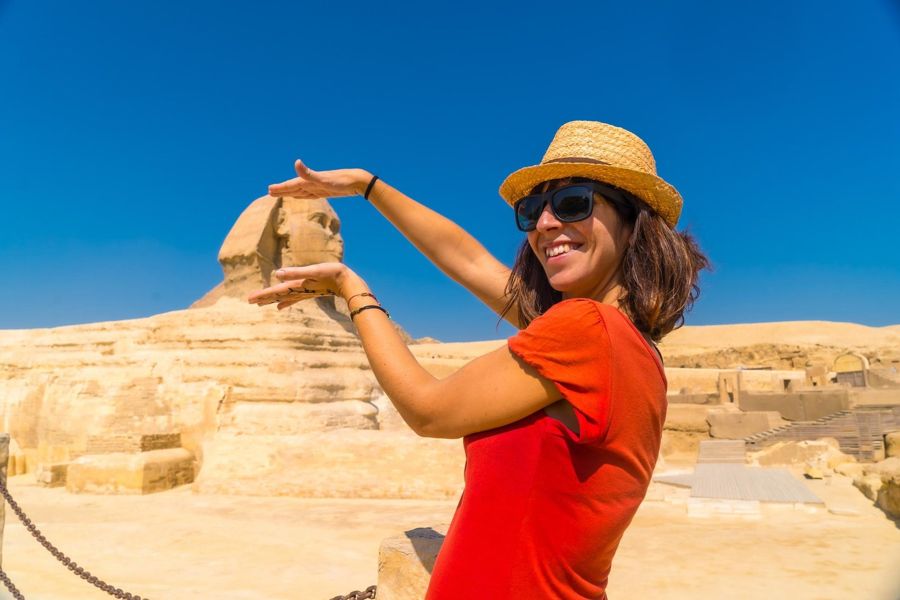
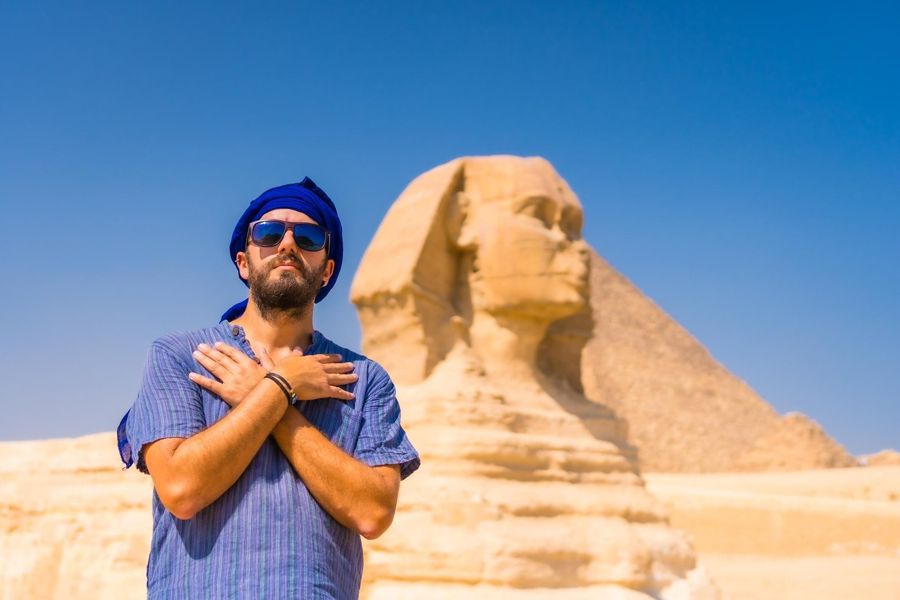
Private tour across the plateau with camel ride and lunch
- The camel ride is part of the booked service, so there's no second price
- Four hours with your own guide, no haggling on site
- Pickup and lunch included
- Free cancellation up to 24 hours before
The authority trick
The second trick is the most unpleasant because it works with authority.
It starts with someone appearing who looks like they belong: neatly dressed, confident, often with an ID that looks convincing from two meters away. This person approaches you at the entrance or on the site, offers orientation, walks along with you, explains something, maybe opens a barrier or leads you past a queue. After twenty minutes, the bill comes, and it's as high as it is because money wasn't discussed beforehand.
The important distinction here is this: licensed tour guides really do exist in Egypt, and they are good. The license requires a completed degree in Egyptology, archaeology, or history and is issued by the Ministry of Tourism. Anyone who wants such a tour gets a lot for it. Only it's not sold spontaneously at the fence.
This can be checked in advance. Travel companies must be registered, and the Egyptian Travel Agents Association maintains a public directory of licensed companies. If you book through a major platform, this check is already done.
The simplest rule for the site itself is: don't let anyone accompany you whom you haven't booked. Be friendly, but without exception. That sounds rude, but it isn't, because the other person knows exactly what's going on.
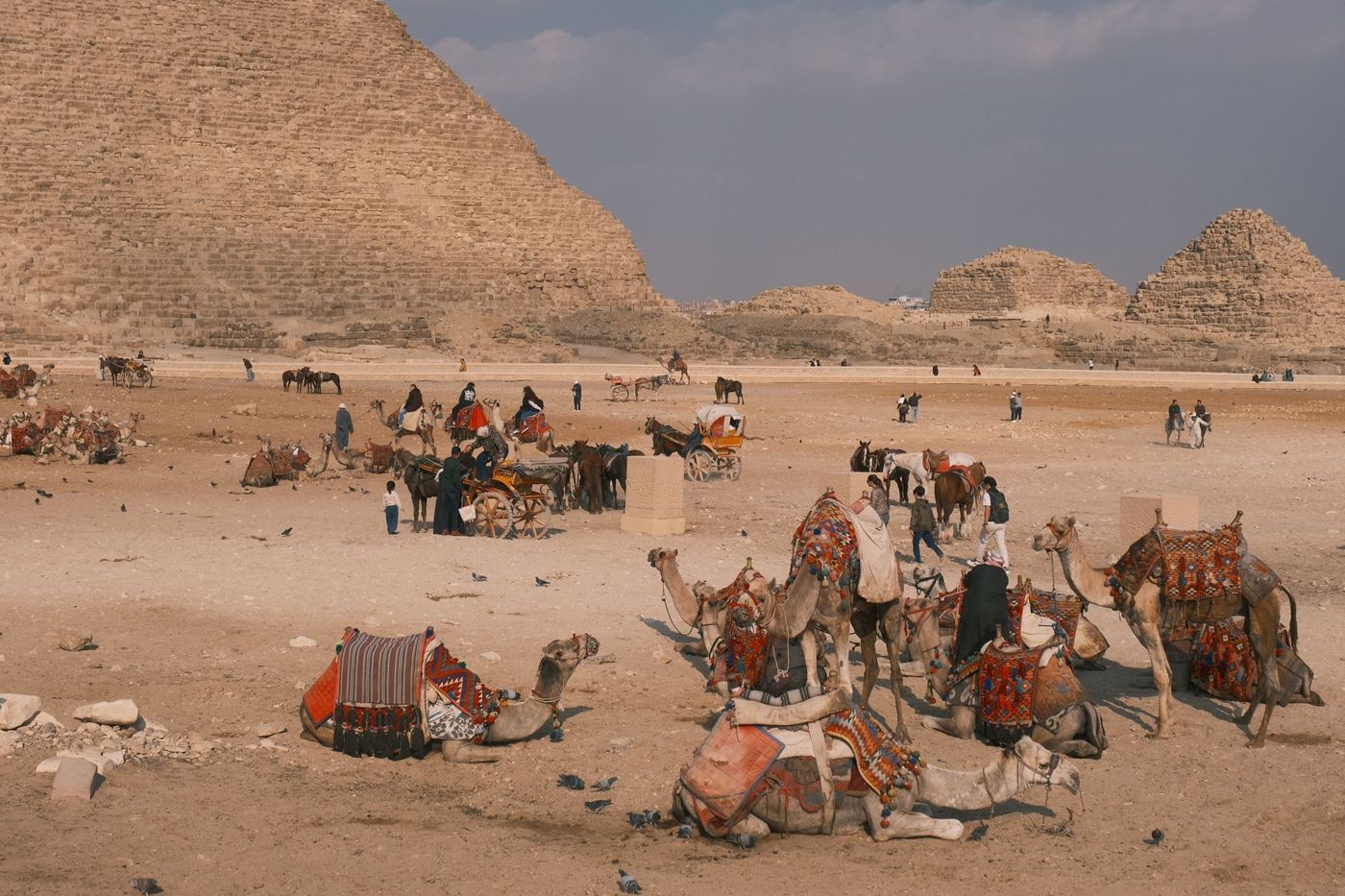
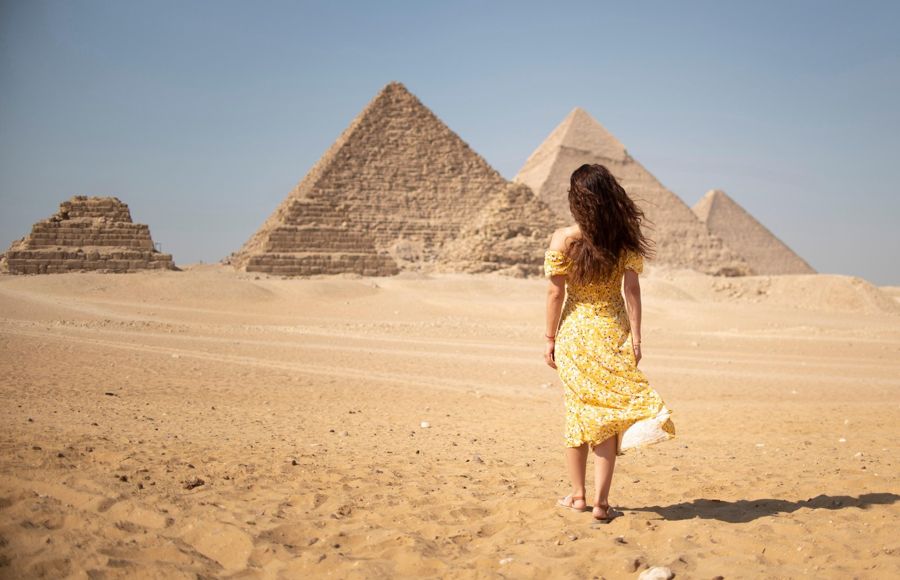
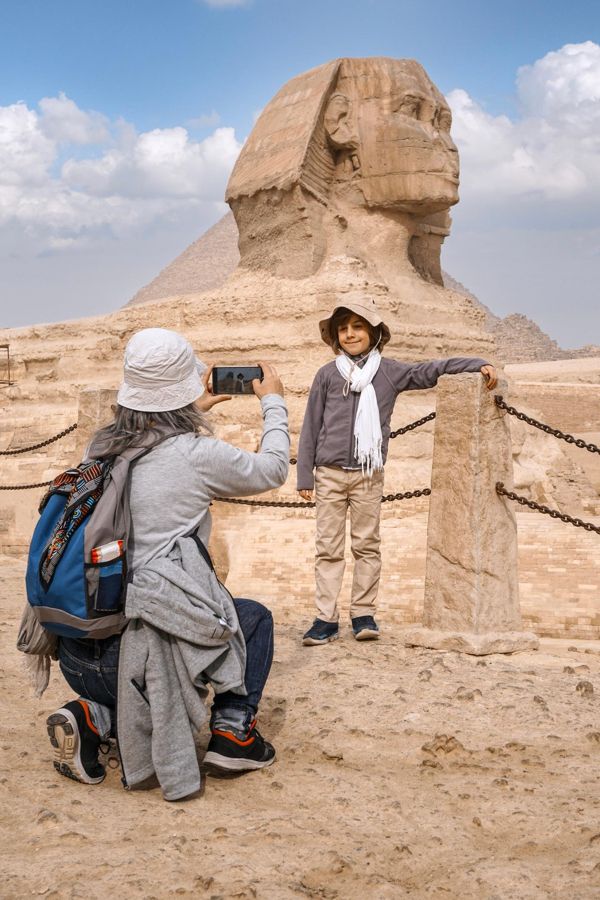
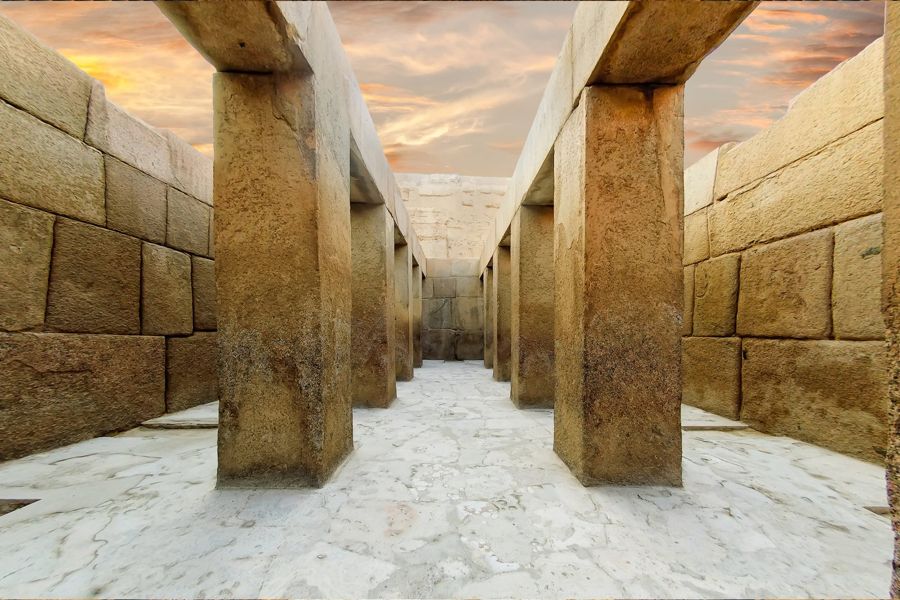
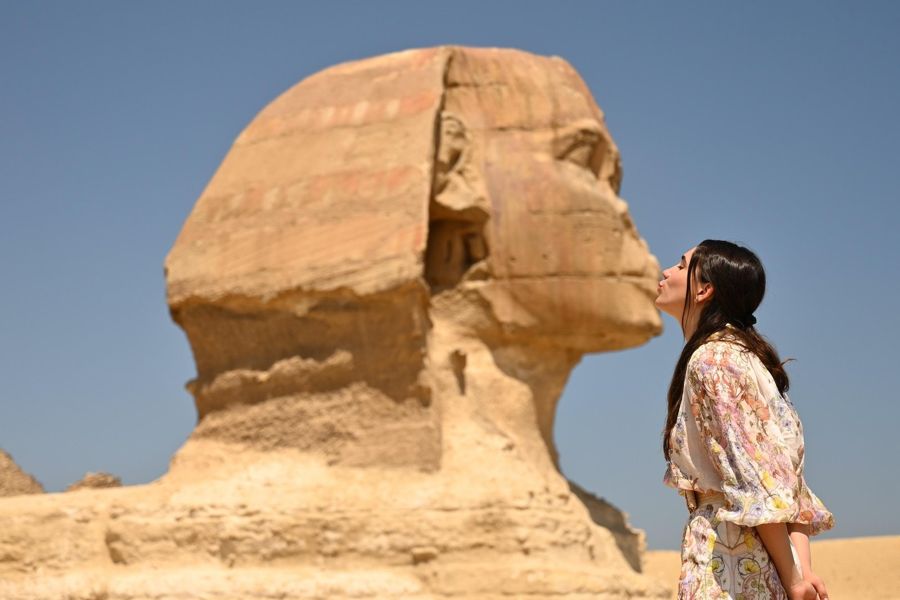
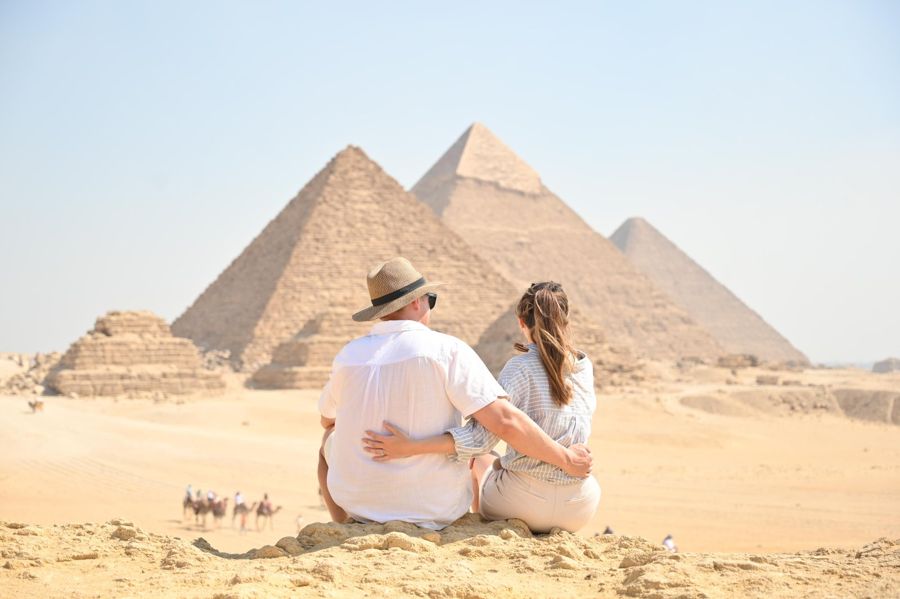
Half-day tour to the Pyramids of Giza and the Sphinx
- A licensed guide makes the fake guide irrelevant
- Hotel pickup, so the approach at the entrance doesn't happen at all
- Plateau entry and German-speaking guide included
- Free cancellation up to 24 hours before
The entrance really has moved
The third trick has gained new momentum in 2025, for a reason that would almost be funny if it weren't so effective: it has become true.
For years, touts at the metro station and on the access roads told people that the entrance was closed, moved, or only reachable via a certain route for which they happened to have a vehicle. That was invented. Since the redesign, the main entrance has actually been moved, from the old gate in the northeast to a new visitor center in the southwest. The story now sounds plausible because it has a kernel of truth.
There's also a second variant with supposedly discounted tickets. It works on the fact that there are indeed different rates, for example for students, and that the eastern Sphinx Gate has no ticket counter. Anyone arriving there without a ticket is in exactly the situation where an offer looks tempting.
Both are resolved with a single precaution. Buy your entry ticket in advance via the official portal of the Ministry of Antiquities or through an established provider, and set your navigation target yourself to the gate you want to use. Then any information on the roadside is irrelevant, regardless of whether it's true.
Plateau entry as a QR code on your phone
The code on your phone takes the basis away from the ticket scam. Especially at the eastern gate, which has no counter at all.
If it does happen
- Don't keep negotiating
As soon as it's clear that the price is different from what was agreed, the conversation stops being a conversation. Further arguments won't improve the situation.
- Pay the small amount if it's small
For small sums, paying and moving on is almost always the better decision than a dispute in the heat with an unclear outcome.
- Become visible
Walk toward the entrances, shuttle stops, or other visitors. These scams only work away from the crowd.
- Call the complaint office
Since the reorganization, there is a central number for the visitor area, reachable at the short code 19349 during opening hours.
- Report the incident if you booked
For a service booked through a platform, a complaint there is usually more effective than on site, because the provider has something to lose.
Frequently asked questions
Is it dangerous?
No. It's about money and pushiness, not safety. Violence is not the pattern of these scams; it's a situation from which you can't easily escape.
Should you generally avoid camel rides?
No. The problem isn't the ride, but the unclear price. As part of a booked service, the point of dispute disappears entirely.
How do I recognize a real guide?
By the fact that you booked them. Licensed tour guides are not sold spontaneously at the fence, and a shown ID cannot be verified on site.
Has the situation really improved?
Yes, and travelers who were there before and after also report this. Providers are confined to fixed areas, vehicles are no longer allowed up, and there is a complaint office.
A single rule from which everything follows
Finally, the classification that is missing from many pages on this topic and that makes the difference.
These scams are not a special Egyptian feature. They are the usual repertoire at any heavily visited place in the world where many strangers meet very few providers and no one knows the local prices. What distinguished Giza from other places for a long time was not the inventiveness, but the sheer volume and the lack of order.
That's exactly the point where something has moved since 2025. A designated area for providers, a driving ban, a shuttle, and a complaint number are unspectacular measures, but they take away the opportunity for the scams, and opportunity is the prerequisite for all three.
For your visit, one single rule remains from which everything else can be derived: always clarify money beforehand, never on the way. Whether you do that through a booking or through a conversation on the spot is secondary. What matters is that it's clarified before you sit on an animal, follow someone, or get into a car.
If you heed that, you'll spend the rest of the day looking at four-and-a-half-thousand-year-old structures, not watching out.