How the ratings are distributed
Share of offers in percent
The median is 4.68, the mean is 4.55. Less than one in eight offers remains below four stars, and only three out of 196 lie below three.
Own evaluation of 196 rated offers related to the Giza Plateau, as of August 2026.
Reviews of the Great Pyramid are a strange genre. A structure that has stood for four and a half millennia receives stars like a hotel room.
In German, the same thing goes by two words. Those who search for reviews of the Giza pyramids and those who search for ratings end up on the same portals with the same stars; the only difference is which word comes to mind first.
The average rating helps little here. No matter where you look, it sits somewhere between four and four-and-a-half, and this says little because this single number conflates two entirely different things: people rating the structure and people rating their day. The stone rarely disappoints. The day sometimes does.
Those looking for experiences at the Giza pyramids are rarely looking for a number anyway, but rather for what can go wrong. Therefore, not the rating, but the form of criticism is useful. If complaints concentrate on a few, always identical points, and if these points are avoidable, then a poor rating is not a warning about the place, but an instruction for your own visit.
This is exactly the case here, and it can be demonstrated. For this page, the ratings of 196 bookable offers around the plateau were evaluated, behind which stand over 55,000 individual feedback entries together.
How the ratings are actually distributed
The distribution itself is unremarkable, and that is already the first insight: the site is rated predominantly well, and significantly so.
It becomes interesting when sorting the offers by their type. Then it shows that the weak ratings are not scattered evenly, but cluster in one single place.
Fourteen categories can be meaningfully compared. Thirteen of them have a median between 4.51 and 4.87, thus close together and consistently good. The fourteenth sits at 3.18. It is the evening sound and light show, and the gap to the next weakest category is more than a full star.
A finding is rarely this clear. Whoever wants to know where poor reviews of the Giza pyramids come from at all has here the largest single item: from an evening program point that is currently being renovated, temporarily cancelled, and has nothing to do with the structure itself.
A second number from the same table requires context. Camel and horse rides achieve a median of 4.62 with almost 23,000 feedback entries, so they are popular by this measure. What such a rating measures is guest satisfaction, and nothing else. It says nothing about the condition of the animals, working hours, or whether this offer even has a future on the plateau. These two aspects must be kept separate.
Also practically useful is what is missing from the evaluation. Of 252 offers, 56 carry no rating at all because they are new or booked too rarely, so almost one in five. A missing rating is not a bad sign, but it is also no information, and with an offer without feedback, you bear the risk alone. Those who want to play it safe therefore look less at the height of the rating than at the number of votes behind it.
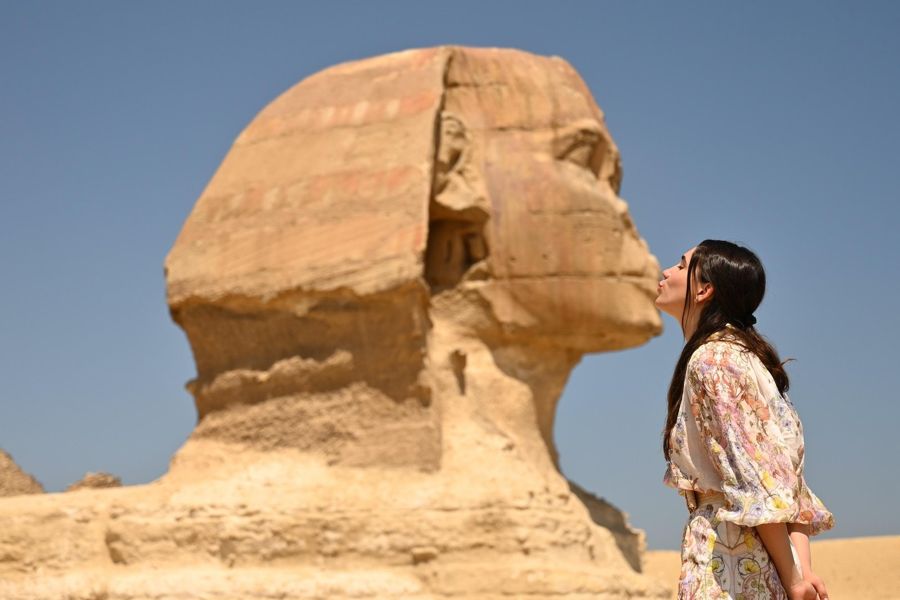
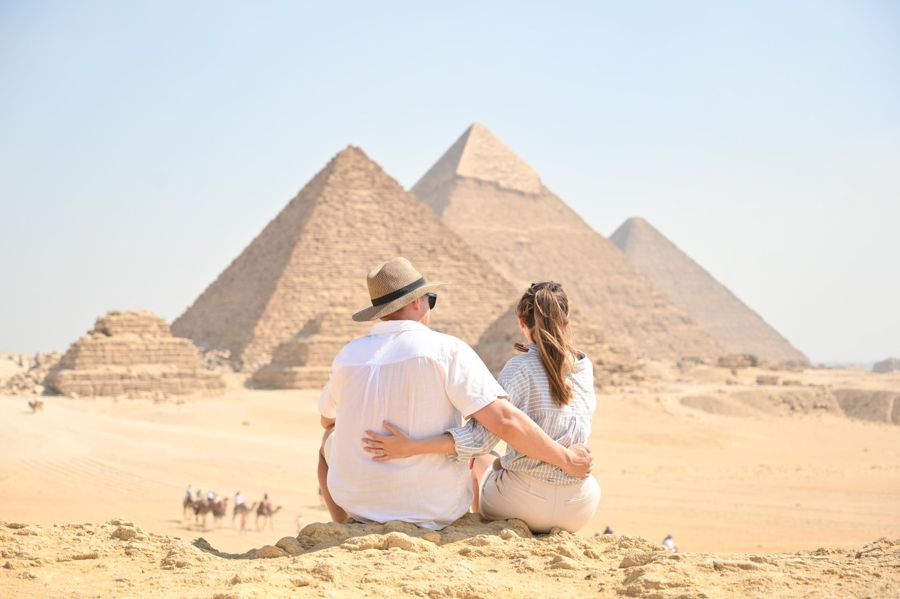
Guided half-day tour of the grounds with pickup
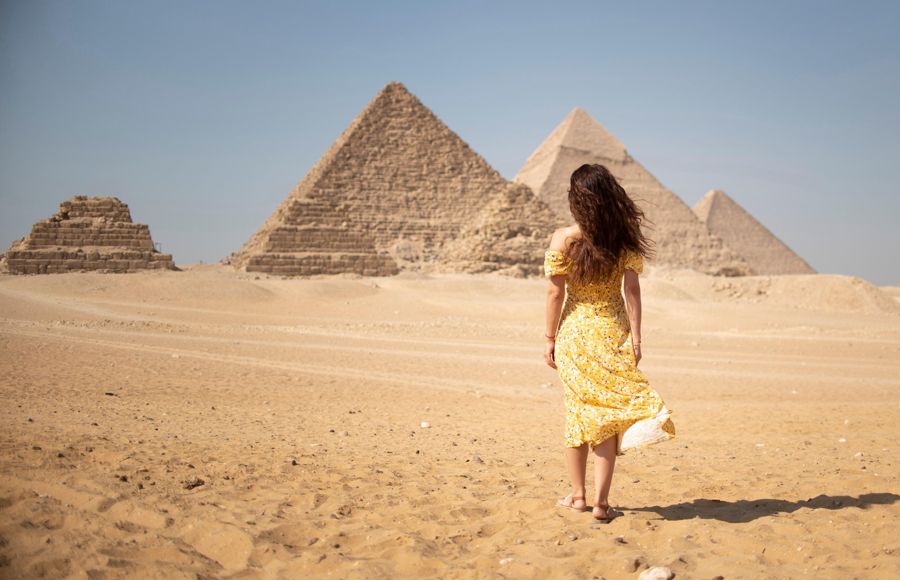
- A guide takes away exactly the pressure that appears most frequently in criticisms
- Five to six hours with a German-speaking guide and pickup at your accommodation
- Entrance to the grounds is included, lunch as an add-on, interior not included
- Free cancellation up to 24 hours before start
Median of ratings by type of offer
Seven of fourteen categories, sorted from weakest to best. The outlier stands at the very top.
| Type of offer | Median | Offers | Feedback entries |
|---|---|---|---|
| Evening sound and light show | 3,18 | 5 | 284 |
| Half-day tour of the grounds | 4,51 | 37 | 8.455 |
| Camel or horse ride | 4,62 | 29 | 22.882 |
| Access to the interior of the largest pyramid | 4,66 | 25 | 14.904 |
| Private tour with expert guide | 4,69 | 22 | 9.337 |
| Full day with the museum | 4,80 | 47 | 31.371 |
| Day trip from Sharm el-Sheikh | 4,87 | 10 | 2.047 |
- Median
- 3,18
- Offers
- 5
- Feedback entries
- 284
- Median
- 4,51
- Offers
- 37
- Feedback entries
- 8.455
- Median
- 4,62
- Offers
- 29
- Feedback entries
- 22.882
- Median
- 4,66
- Offers
- 25
- Feedback entries
- 14.904
- Median
- 4,69
- Offers
- 22
- Feedback entries
- 9.337
- Median
- 4,80
- Offers
- 47
- Feedback entries
- 31.371
- Median
- 4,87
- Offers
- 10
- Feedback entries
- 2.047
Own evaluation, as of August 2026. An offer can belong to multiple categories, therefore the columns do not sum up. A good rating measures guest satisfaction, not the conditions behind the offer; this applies especially to animal rides.
What an evaluation of 4,423 criticisms shows
Review portals are not just a source of ratings; they are also research material. A 2024 work published in the journal *Heritage* evaluated 4,423 visitor reviews of three Egyptian sites, including the Giza Plateau, and used text analysis to identify recurring themes in negative feedback.
Four points appear repeatedly there: unchecked commercialization that undermines the mood of the place; trash and environmental burden; crowding; and deficiencies in signage, transport, and visitor service. For Giza, the work explicitly mentions persistent monetary demands and intrusive sales tactics.
Something remarkable stands out in this list. The data comes from the time before the renovation of the grounds, and the renovation addresses exactly these points: orderly entrance with visitor center, ban on private vehicles, electric shuttles instead of crowding on paths, fixed contact points. Those reading criticisms today should therefore always check the date. Those looking up the Giza pyramids on Tripadvisor or another portal find feedback from several decades side by side, and the older ones describe a site that no longer exists.
Sales pressure has not disappeared. It has become more regulated, but it exists, and it is the point where good and bad days are most often decided. A central office for complaints has now been established, reachable via the short code 19349.
What is praised in the feedback and what is criticized
Pros
- The scale. Almost everyone writes that photos do not convey the size
- The proximity. You may approach the structures closely and touch the blocks
- The view from the observation point, by far the best-rated individual spot
- Since the renovation: the orderly process at the entrance and the shuttle
- The feeling of standing at a place about which one has read one's whole life
Cons
- Sales pressure and monetary demands, by far the most frequent criticism
- Heat without shade, especially between May and September
- The Sphinx is smaller and further away than most expect
- The interior is cramped, hot, and empty, and it costs extra
- The city begins immediately at the fence; the desert image is only correct towards the west
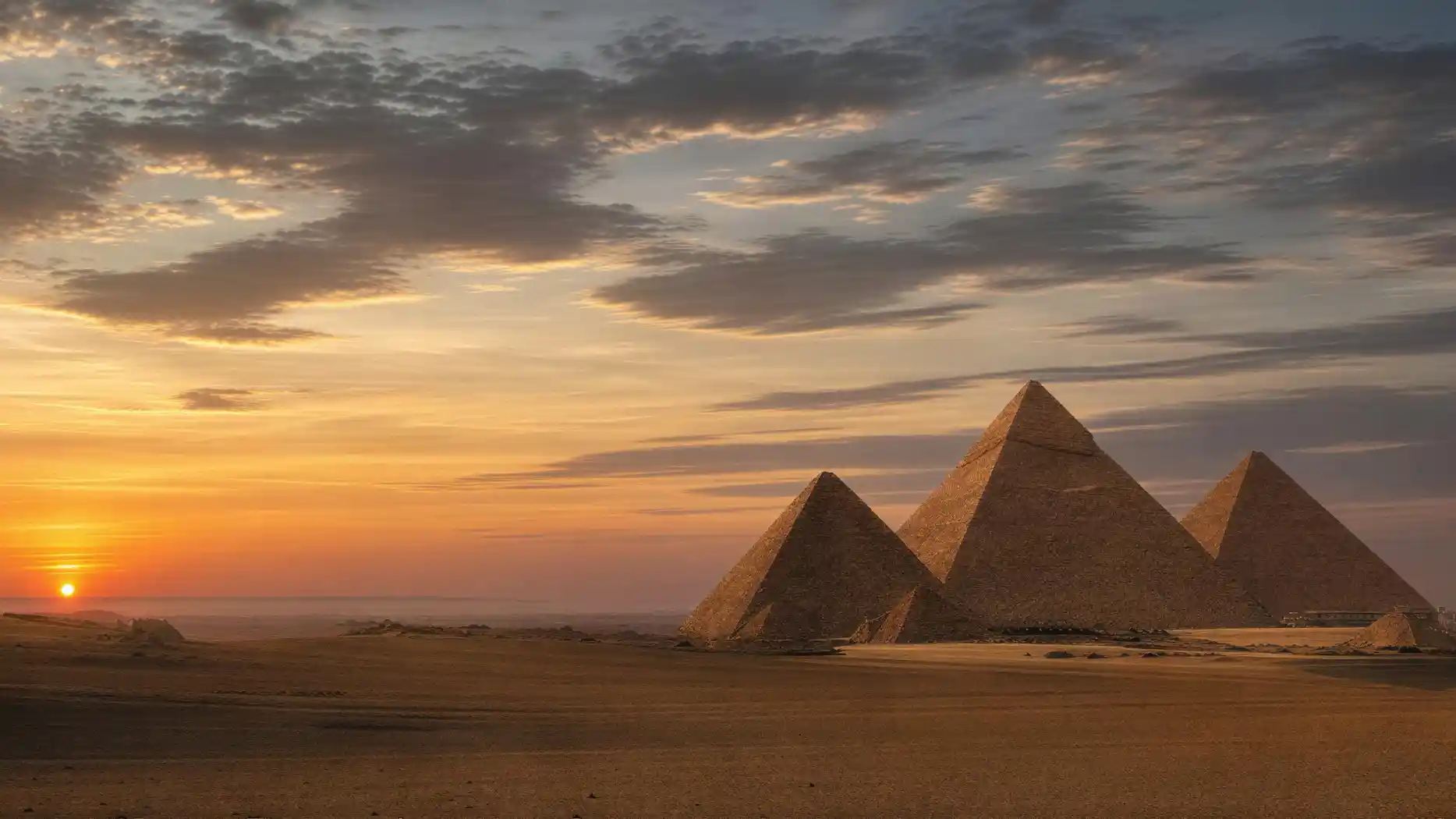
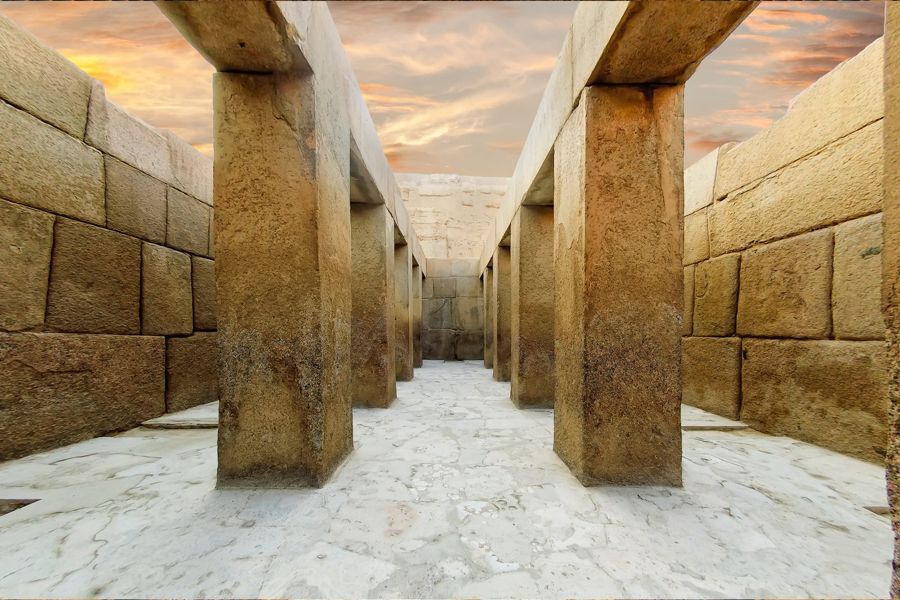
Those looking for what is considered the best-rated sightseeing spots in Giza regularly end up at the observation point and the Valley Temple, not the interior.
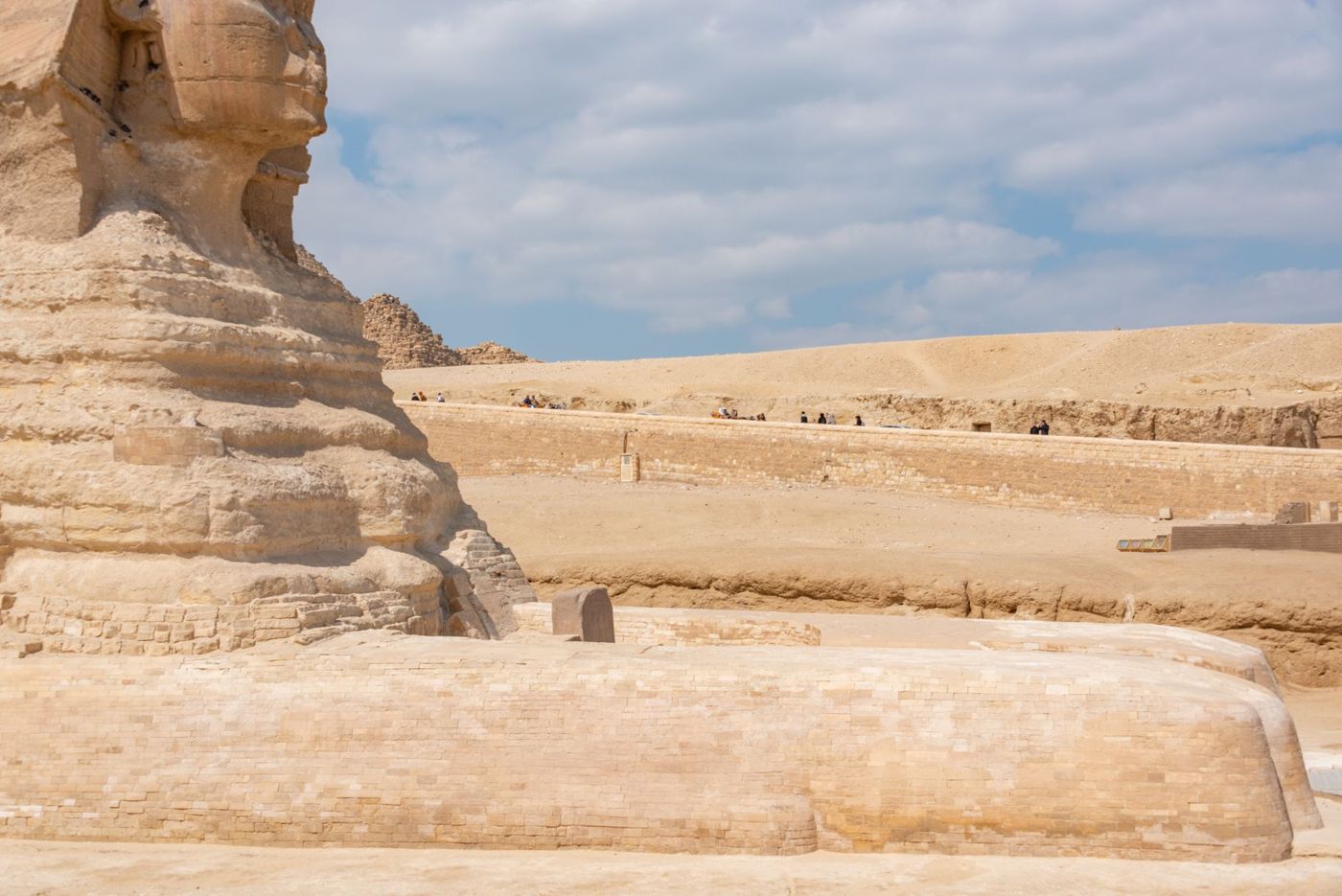
The most frequent complaint about the Sphinx
Among the reviews of the Great Sphinx, one complaint stands out particularly, and it is instructive because it feeds entirely on false expectations.
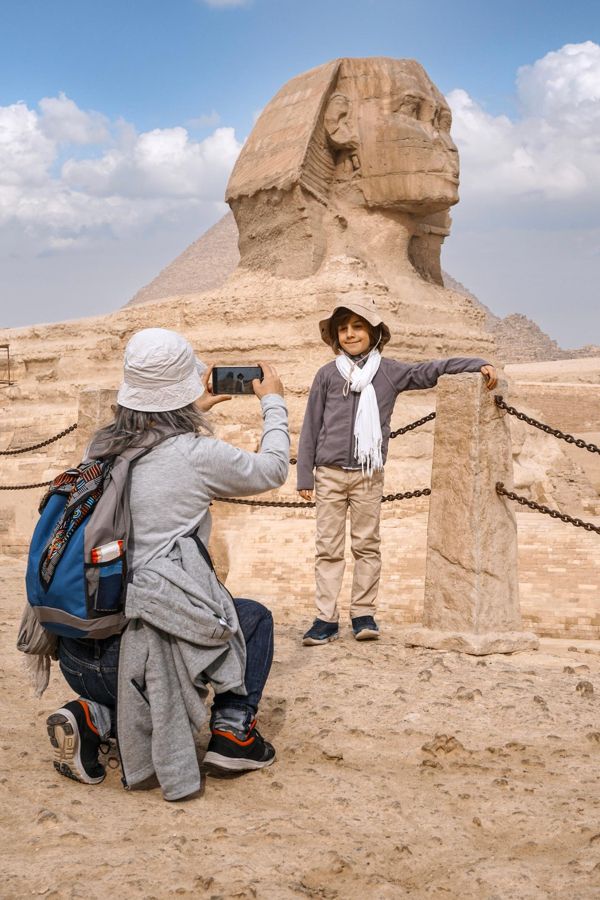
The figure is fenced off. One views it from an elevated terrace to the east, in the best case from a few dozen meters away. Standing between its paws is impossible and has not been possible for a long time. The area around the figure including the terrace belongs to the normal admission according to the official overview of the site; there is no separate ticket for it, and anyone trying to sell you special access there is selling you nothing. Those who have familiar close-up shots in their heads stand on the terrace and wonder where the rest has gone. Those who know beforehand what the view looks like are not disappointed, but impressed, because the figure is still twenty meters high.
Those reading criticisms get surprisingly far with three questions. First: How old is it? Second: Does it concern the place or the provider? A botched pickup says nothing about a structure. And third: Is there something verifiable in it, a time, an amount, a location on the site? Criticisms without such details are moods, and moods cannot be planned.
The rest of the criticism works exactly like this. The interior disappoints people expecting wall paintings and delights people who know they are entering an empty stone room. The heat hits everyone arriving at noon, and no one who was there at eight.
A final note regarding expectations of the structure itself. The sentence that the pyramid is smaller than thought appears in the feedback practically never. Conversely, many write it: larger than expected, and significantly so. The disappointments exclusively concern the surroundings, i.e., access, environment, providers, and weather. This is good news, because something can be changed about the surroundings.
So, is a visit to the Giza pyramids worth it? The evaluation says: yes, for the vast majority, and significantly so. What makes the difference is not the place, but the preparation, and that consists of three things: arrive early, know beforehand what you see, and do not engage in sales conversations.

Private airport transfer to an address in Giza
Sales pressure is the point that appears most frequently in negative feedback, and it does not begin on the grounds, but at the first ride. A pre-booked car with a fixed price handles this encounter before it happens. Free cancellation, immediate confirmation.
Frequently asked questions
How good are the reviews of the Giza pyramids on average?
Across bookable offers, the median is 4.68 out of five. Less than one in eight offers remains below four stars.
What do visitors complain about most frequently?
About sales pressure and monetary demands. This is both in the expert evaluation and on the portals by far the most frequent point.
What do the one-star reviews of the pyramids say?
Usually no judgment about the place, but about a single incident: a demand, a ride, a provider. Read them as a hint at what can go wrong, not as a rating of the structure.
Are older criticisms still relevant?
Only to a limited extent. The grounds have been renovated, the main entrance relocated, and vehicle traffic ended there. Feedback from before 2025 describes different conditions.
What is rated worst?
The evening sound and light show, by a significant margin. It is the only category that averages below four stars.