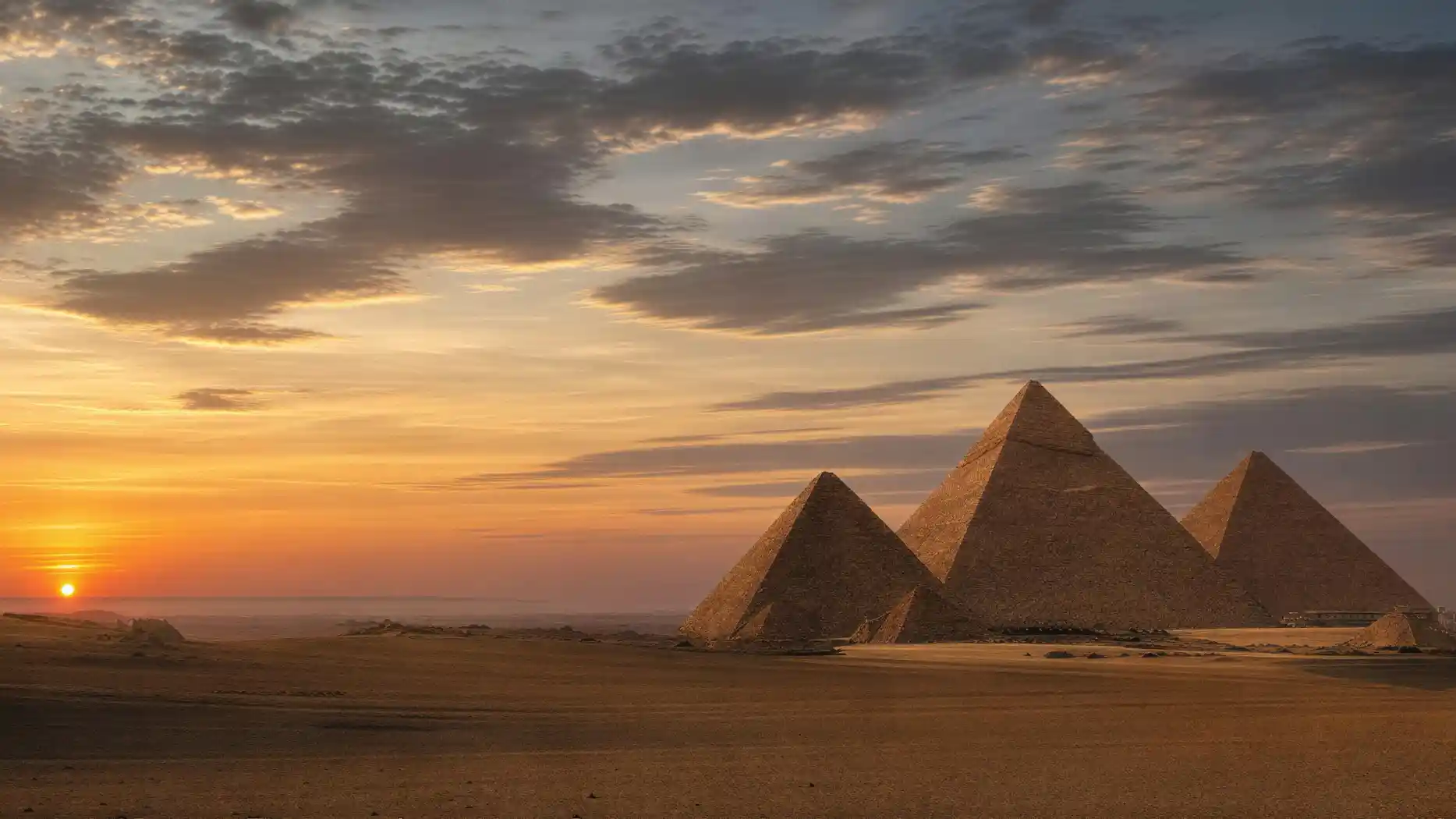
A panorama of the Pyramids of Giza is less a matter of the camera than a matter of distance. And you have to choose that distance, because you can't have both at once.
Up close, the mass is what impresses. A structure with a base edge of over 230 meters fills the entire field of view from a distance of 50 meters, and that impression is exactly why people come here. But then nothing else fits in the frame. From a distance, the arrangement works: the staggering of the three structures, their size ratios, the line they stand in. The price for that is that the mass shrinks to a silhouette.
That's why there isn't just one right viewpoint, but a handful that show different things. Three lie within the fence, two outside, and the last of those surprises most people.
Where the Viewpoints Are
- Panorama Point in the SouthwestInside, first shuttle stop after the main entrance.
- Dune Ridge South of the Third PyramidInside, further out, soft sand, with the restaurant on the ridge there too.
- Viewing Terrace at the SphinxInside, far east, right at the gate there.
- Roofs in the District East of the FenceOutside, facing west, over the residential buildings.
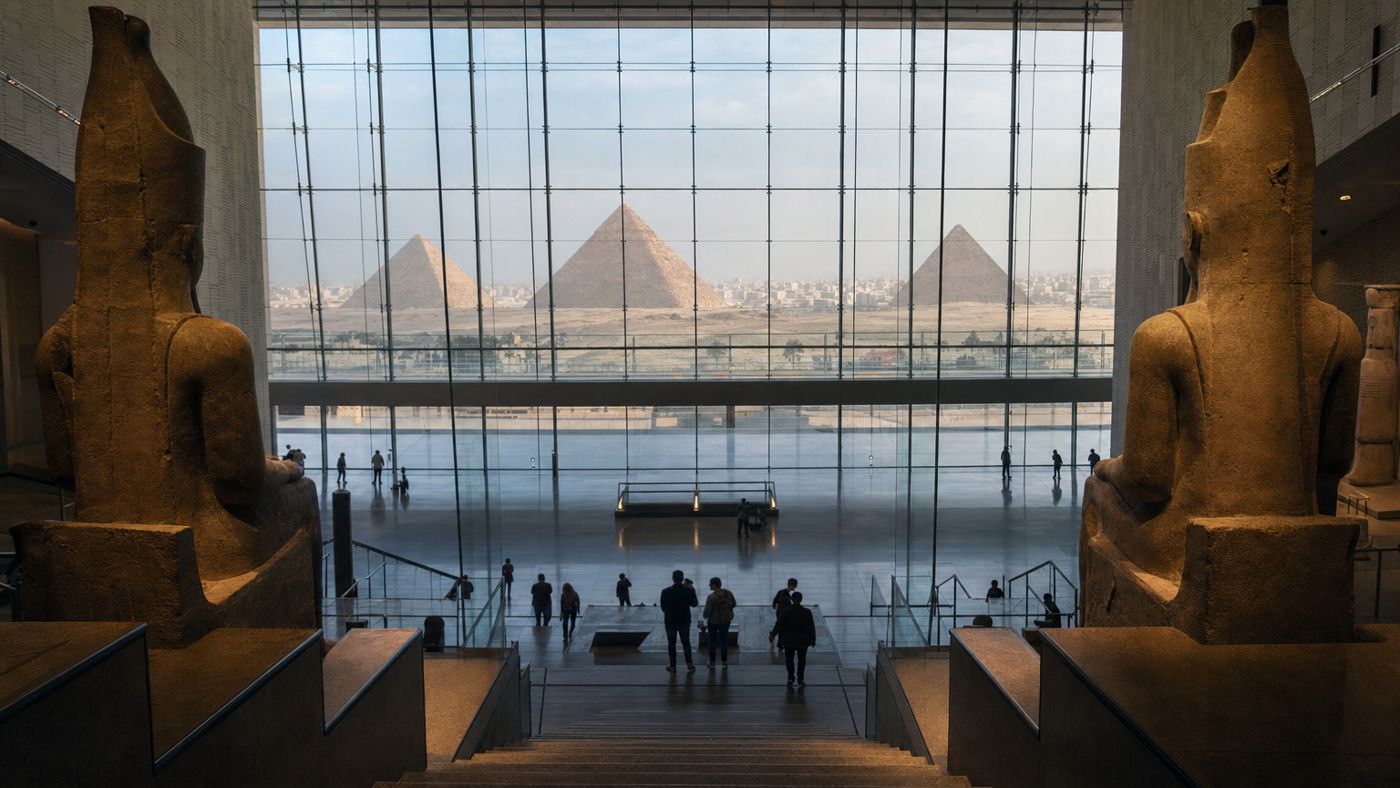
- Window Front at the Grand Egyptian MuseumOutside, about two kilometers northwest, facing southeast.
The terrain slopes down to the east. Those who go west and southwest gain elevation and thus an overview.
Three Spots on the Site
Within the site, there are three spots, and since the reorganization, they are easily accessible in order: the electric shuttle stops at them, and private vehicles are no longer allowed in.
The most famous is the Panorama Point in the southwest, the first stop after the main entrance. From there, the three large structures fit side by side in the frame, which is why practically every postcard comes from this spot.
If you walk further, you reach the dune ridge south of the third pyramid. There, the panoramic view of the Giza Plateau expands to include the smaller subsidiary pyramids, so that depending on how you count, up to nine structures are visible at once. The path leads over soft sand, and it's exactly here that the offer to cover the distance on horseback regularly comes up. How far you're allowed to walk there is handled differently; the supervisor at the Panorama Point is the authority.
The third spot is at the other end, far east: the elevated terrace at the Sphinx. It achieves something that no viewpoint in the desert can, namely bringing two completely different structures into a single axis.
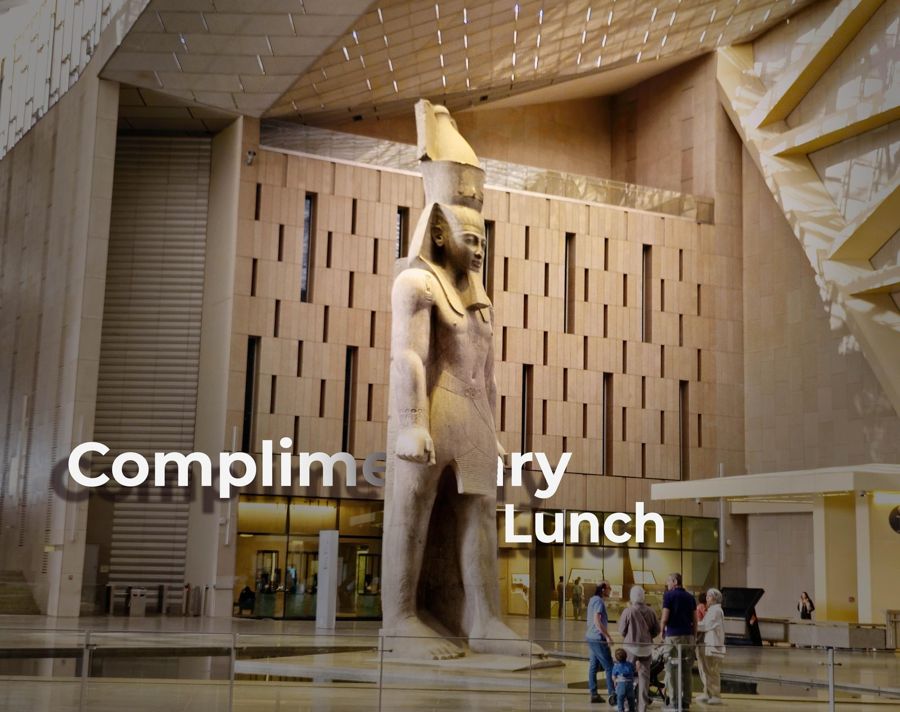
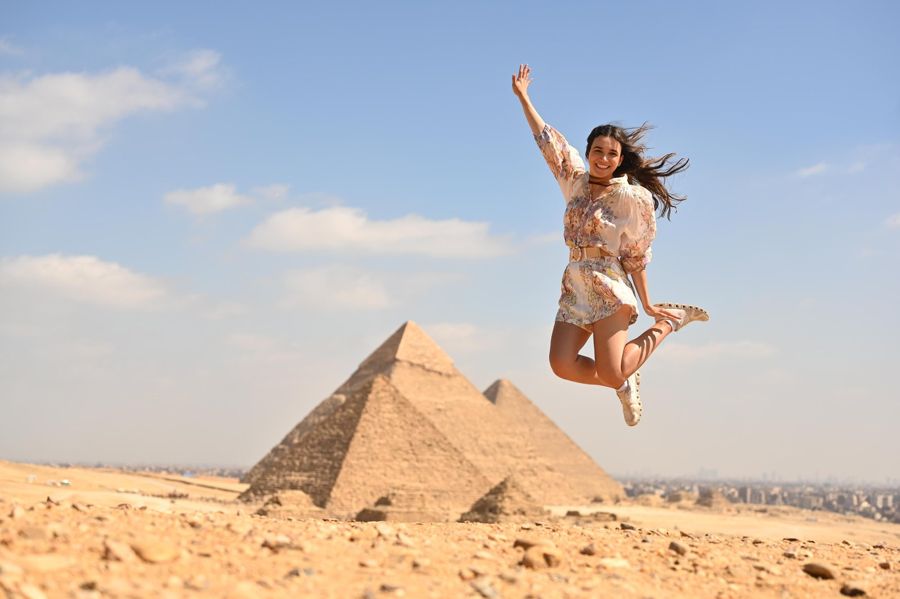
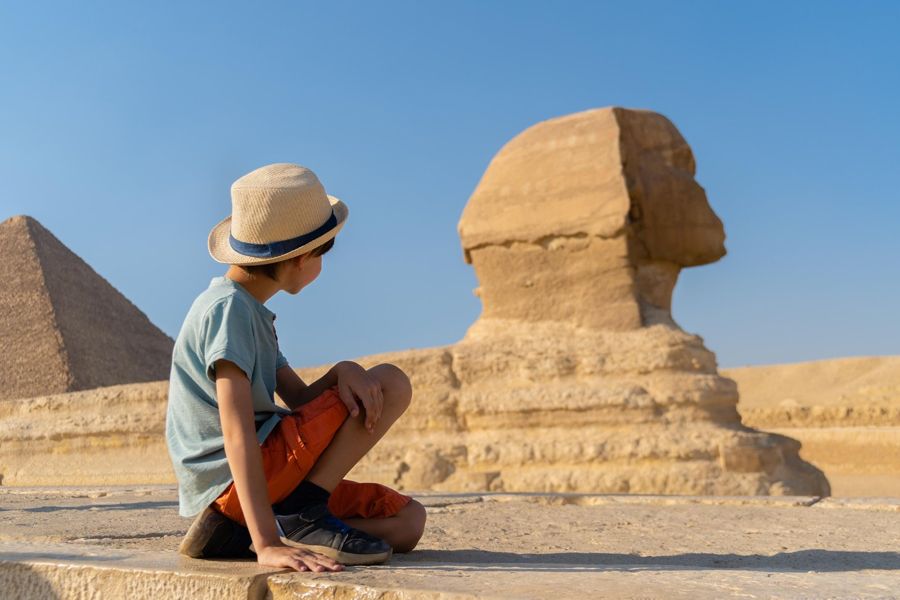
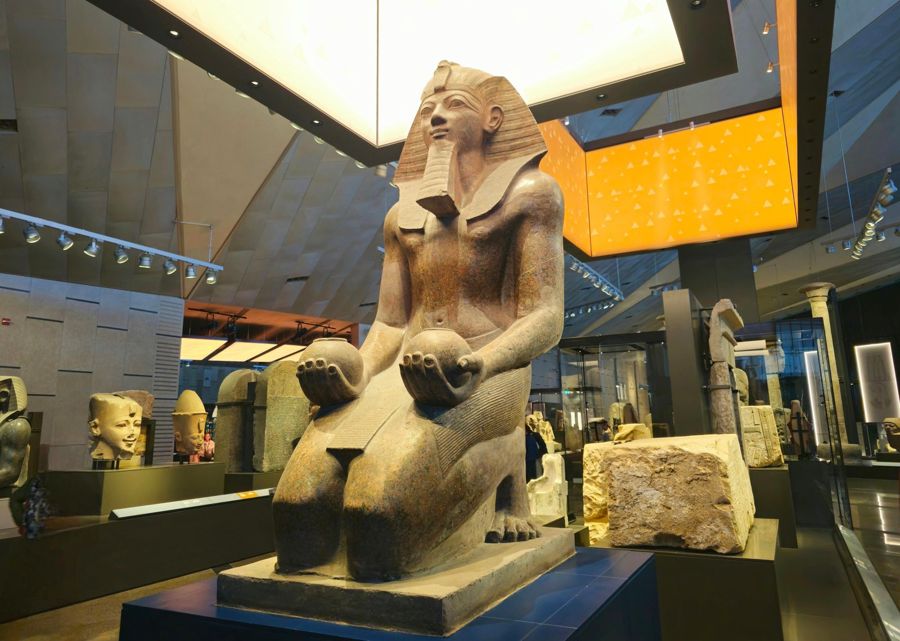
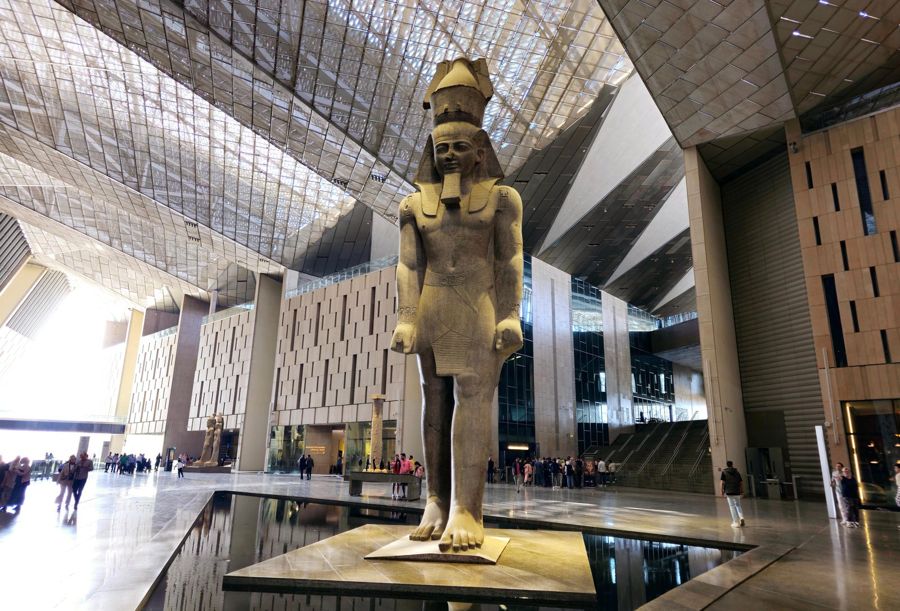
Full-Day Tour to the Plateau, Sphinx, and Grand Egyptian Museum
- Covers both ends of this page: the viewpoints on the site and the view from a distance
- Seven to eight hours with German-speaking guide, pickup, and lunch
- Plateau entry included, the interior of a pyramid explicitly not
- Free cancellation up to 24 hours before start
The Viewpoints Compared
Five spots, five different pictures. The ticket column often decides the selection.
| Viewpoint | Requirement | What's in the Frame | Best Time |
|---|---|---|---|
| Panorama Point, Southwest | Plateau entry | The three large structures staggered | Early morning |
| Dune Ridge in the South | Plateau entry | Up to nine structures, depending on how you count | Morning |
| Terrace at the Sphinx, East | Plateau entry | Sphinx with the second pyramid behind it | First hour after opening |
| Roofs in the Eastern District | No plateau entry | Structures above the residential buildings | Late afternoon |
| Window Front at the Museum | Museum entry | All three from a distance, indoors | All day, weather-independent |
- Requirement
- Plateau entry
- What's in the Frame
- The three large structures staggered
- Best Time
- Early morning
- Requirement
- Plateau entry
- What's in the Frame
- Up to nine structures, depending on how you count
- Best Time
- Morning
- Requirement
- Plateau entry
- What's in the Frame
- Sphinx with the second pyramid behind it
- Best Time
- First hour after opening
- Requirement
- No plateau entry
- What's in the Frame
- Structures above the residential buildings
- Best Time
- Late afternoon
- Requirement
- Museum entry
- What's in the Frame
- All three from a distance, indoors
- Best Time
- All day, weather-independent
Haze decides over distance. On clear winter days, the view from the museum to the structures carries easily; on dusty spring days, it can dissolve.
Outside the Fence
Outside the fence, the character of the image changes completely, in both directions.
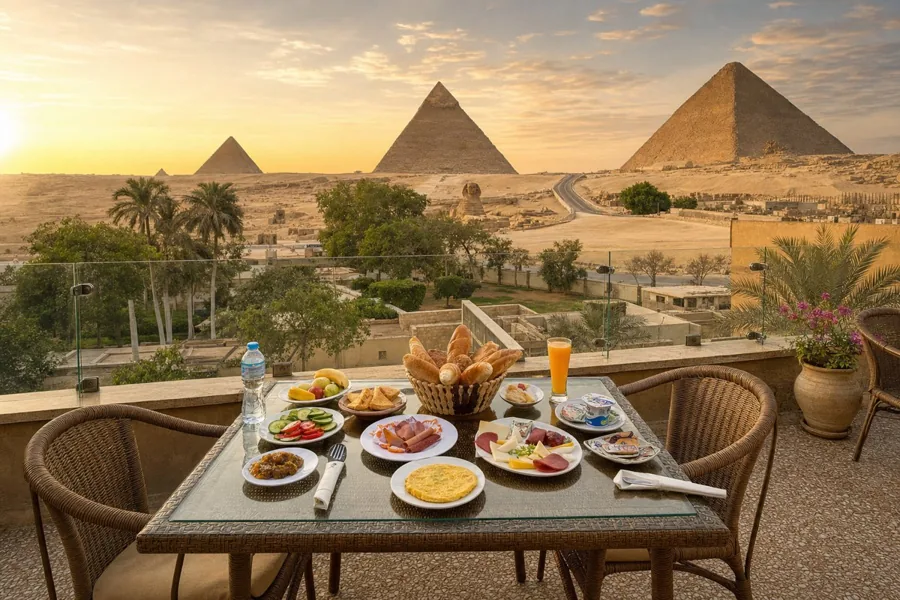
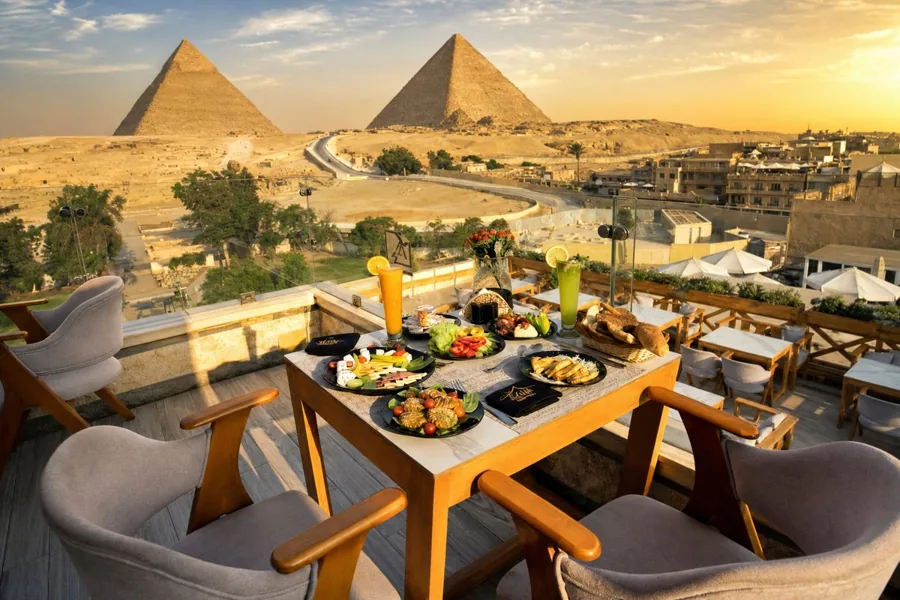
The roofs in the district east of the site provide the view that this place actually has: residential buildings, satellite dishes, clotheslines, and behind them 4,500 years. For that, you don't need a ticket, but a long lens and the willingness to sit on a terrace.
A desert panorama at the Great Pyramid of Khufu, meaning the view without any city, is hardly possible from outside. The reason is simple: the city reaches right up to the fence in the east and north. If you want to see the structures alone in the desert, you have to look west or southwest, and that only works reliably from inside. The famous emptiness in the pictures is therefore not a coincidence, but a direction of view.
The Most Surprising Viewpoint Is in the Museum
That leaves the surprising viewpoint, and it's not on the site at all.
The Grand Egyptian Museum stands about two kilometers northwest. At the top of its six-story staircase, lined with over sixty statues, columns, and sarcophagi, the path ends at a floor-to-ceiling glass wall, and behind it stand the three pyramids. That's no coincidence of the floor plan. The building was planned along axes toward the three structures, and the window front is the spot where this alignment becomes visible to visitors.
Practically, this panoramic view of the Pyramids of Giza is the only one that is air-conditioned, step-free accessible, and weather-independent. In high summer, when the path over open sand becomes a burden, that's not a consolation prize, but an argument.
On the site itself, there's a counterpart. The first restaurant ever to open on the plateau sits exactly on the dune ridge with the widest view, and its name counts the structures visible from there. That's also a viewpoint, just with a chair.
The view this page describes is best in the evening from a roof in the eastern district, and from outside the fence: the site closes at 4 PM, and the structures remain in the last light for hours afterward. Three houses with exactly this orientation:
 At the Sphinx
Giza Pyramids View Inn
- Good breakfast
- Airport shuttle
- Two restaurants
- 24-hour reception
- Free Wi-Fi
For those who want to see the Sphinx from their breakfast chair
 Most reviewed
Great Pyramid Inn
- Fabulous breakfast
- Rooftop terrace restaurant
- Bar
- Airport shuttle
- 24-hour reception
Most who want to stay in the neighborhood
 Garden & pool
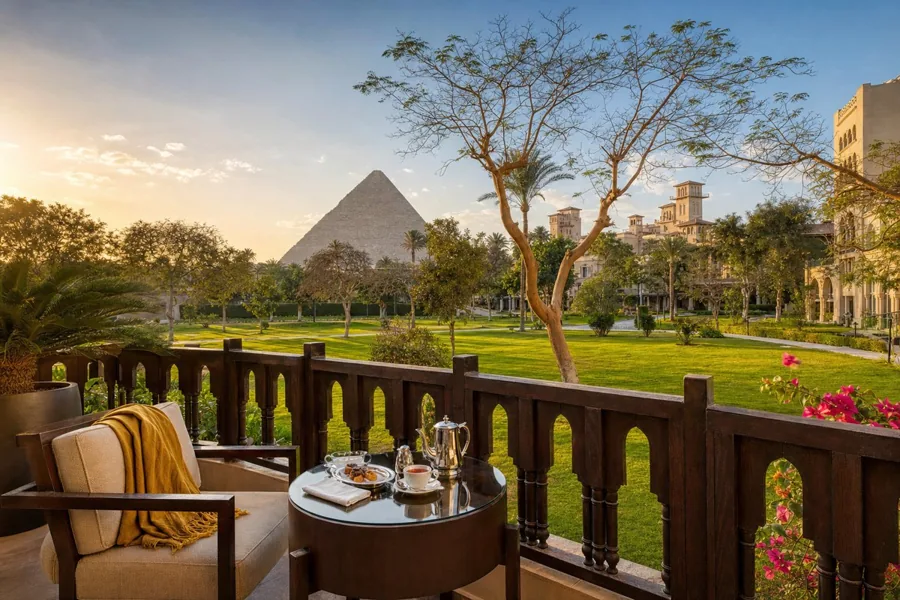
Marriott Mena House
- Excellent breakfast
- Outdoor pool
- Spa and wellness center
- Three restaurants
- Fitness center
For those who want space, garden, and pool instead of a rooftop terrace
Frequently asked questions
Which viewpoint at the Pyramids of Giza is the best?
That depends on the desired image. For the staggering of the three structures, the Panorama Point; for the largest number of visible pyramids, the dune ridge; for the Sphinx and pyramid in one axis, the terrace in the east.
Does the Panorama Point cost extra?
No. The viewpoints and the shuttle ride are included in the entry fee for the site, as indicated by the official overview of the antiquities authority. If someone there wants to sell you a separate ticket, they're selling you nothing.
Can you see the pyramids without paying entry?
Yes, from the streets and roofs east of the fence and from the museum. Both, however, show a different picture than the site itself.
How do you get to the viewpoints on the site?
By the electric shuttle, which is included in the entry, or on foot. From the main entrance to the Panorama Point is a good half-hour walk over open sand.
Is the view from the museum worth it if you've already been on the site?
It doesn't replace it; it complements it. From a distance, you see the arrangement of the three structures relative to each other, which isn't recognizable up close.