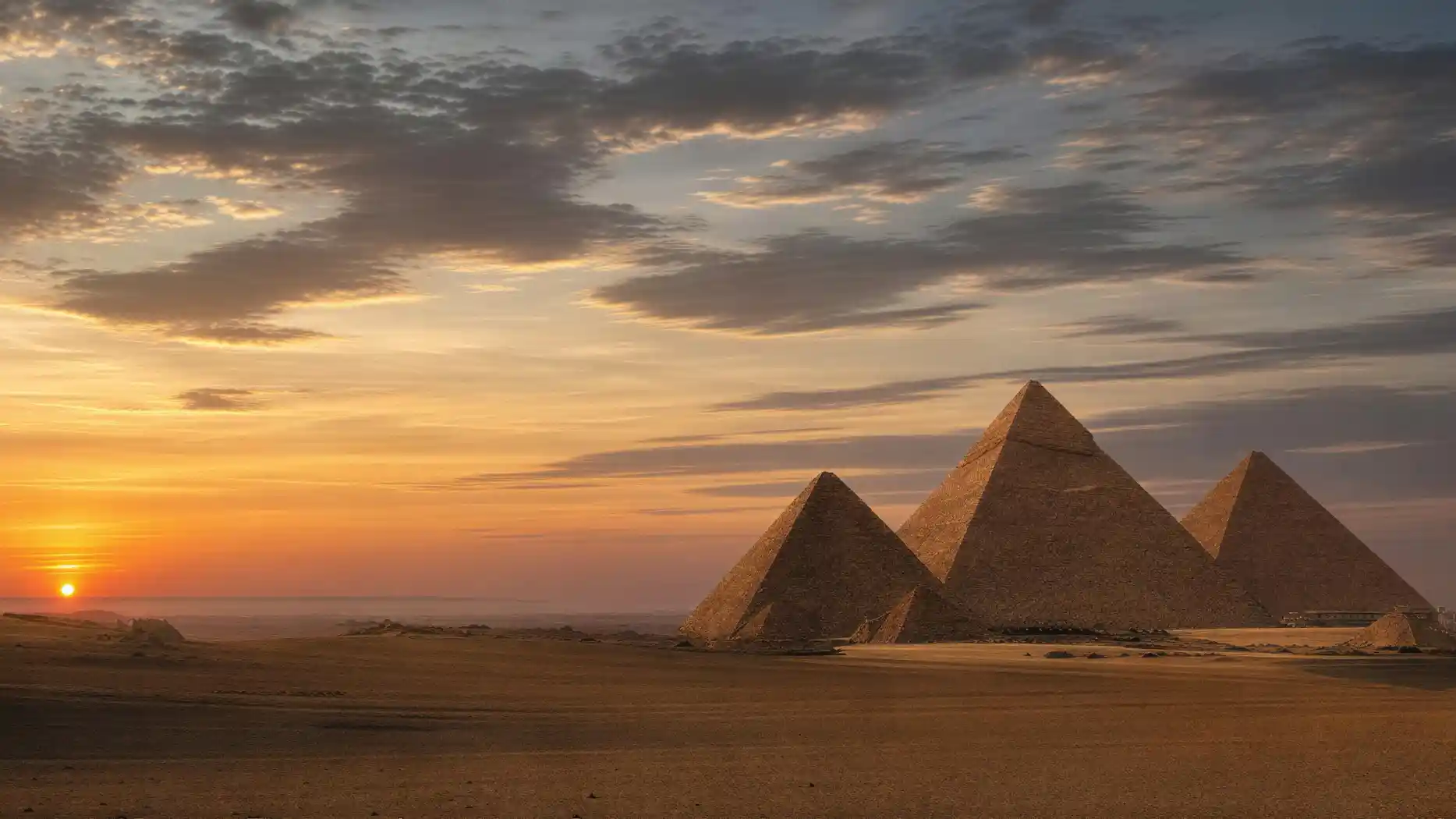
There are two kinds of secrets about the Pyramids of Giza, and they have almost nothing to do with each other.
The first kind consists of questions that experts are actually working on. They are usually unspectacularly phrased, concerning construction sequences, the purpose of individual rooms, or the interpretation of measurement data, and their answers would not shake any worldview. Nevertheless, they are real: no one knows them.
The second kind consists of questions that have long been answered, but whose answer no one tells because it sells worse than the mystery. How the blocks were moved, who moved them, why the sides point so precisely north: all of that is clarified, some for decades. Yet it is presented anew as unsolved every week.
This page separates the two kinds. First, three common claims in a quick pass, then the questions that are truly open, then a detailed example of what an alleged secret looks like when you think it through to the end. At the end, there is how a theory is made from an observation, and an honest answer to the initial question.
Three secrets in a nutshell
- False
Inside the Great Pyramid of Khufu, there is not a single inscription.
In the relieving chambers above the burial chamber, there are red markings from work crews that include the name of the builder. They are the only written evidence in the structure itself and are covered in detail on the page about the interior.
- False
The pyramid could not be rebuilt with today's technology.
It could be built; no one just wants to pay for it. What is missing is not a method but a reason: decades of construction time, a six-figure volume of stone blocks, and no use other than the structure itself.
- Partially
No one knows what the narrow shafts in the Great Pyramid of Khufu are for.
Here the mystery is true. Interpretations range from ventilation to symbolic paths for the king's soul to construction aids. None is proven, and this case truly belongs to the first kind.
The real open questions
Which brings us to the real questions. You can recognize a mystery of the Great Pyramid of Khufu that deserves the name by the fact that it appears in scholarly papers and not in video titles.
Four examples. First, the purpose of the proven cavities: above the Grand Gallery lies a cavity at least thirty meters long, behind the north side a corridor confirmed in 2025. That they are there is certain. What they served is completely open, and the most sober assumption, namely relieving the masonry, is so far just as unproven as any other.
This openness is not a failure, by the way. Measurement methods like muon radiography show where rock is missing, and nothing else. They provide outlines, not interior views, and as long as no one drills a hole, which is out of the question for conservation reasons, interpretation remains a matter of comparison with other structures. That is exactly why such questions take decades instead of weeks.
Second, the narrow shafts that lead diagonally outward from the two upper chambers. Some end in front of stone slabs, others do not reach the outer surface. For ventilation, they are poorly built; for a symbolic path to certain stars, the angles are remarkably precise. Both at once is possible.
Third, a find from 1925 that still satisfies no one: an untouched chamber with gilded furniture of the builder's mother, plus a sealed and empty sarcophagus. How a sealed burial without a burial comes about is not conclusively explained.
A fifth case concerns not a room but a process: the geometry of the ramps. That ramps were used is undisputed, because remains of them are preserved at several pyramids. What form they had at this structure is not, and the proposed models each have their own problem with material quantity, slope, or space. That too is a real open question, covered in detail on the page about construction methods.
And fourth, a very fresh case at the smallest pyramid. There, researchers from Cairo and Munich found in 2025 two small cavities behind the granite-clad east side. Whether a second entrance lies behind them, no one currently knows.
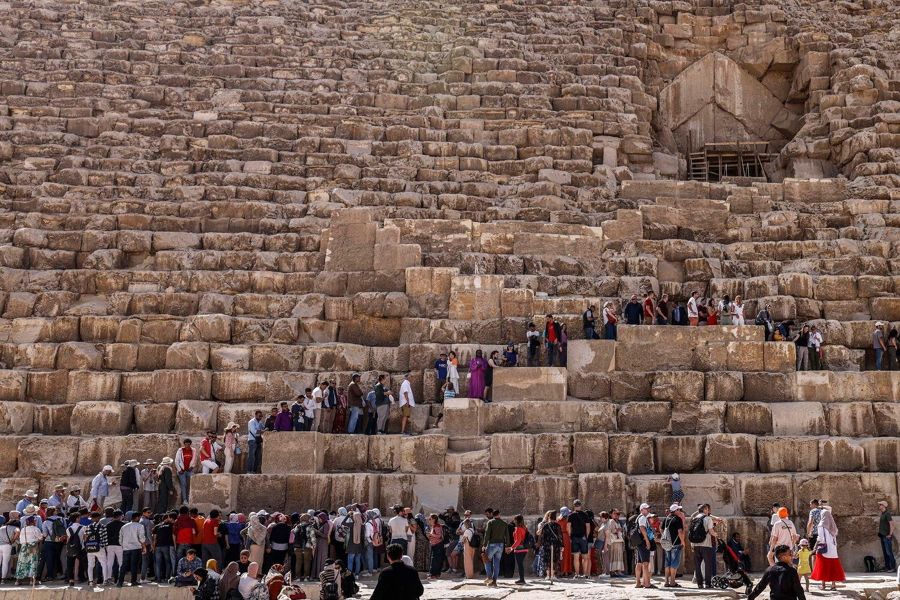
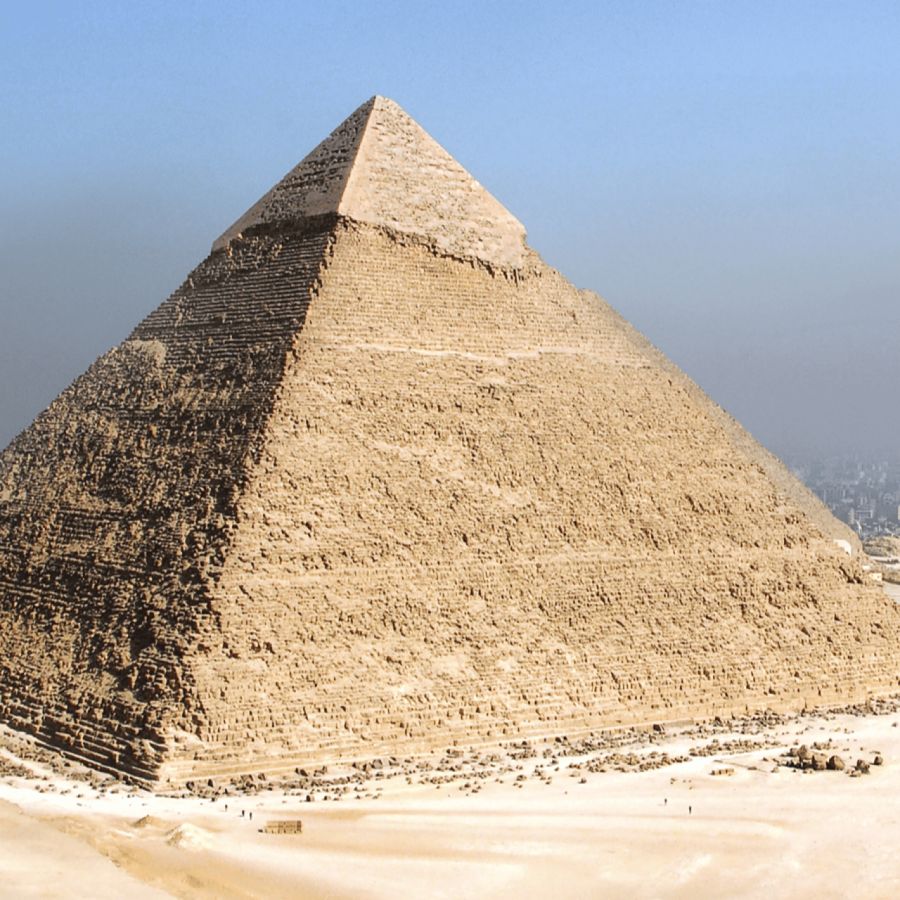
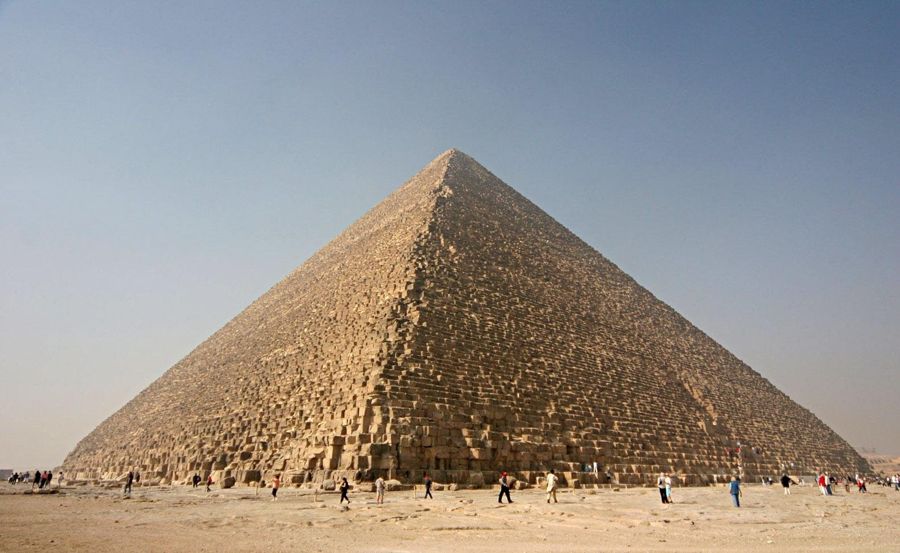
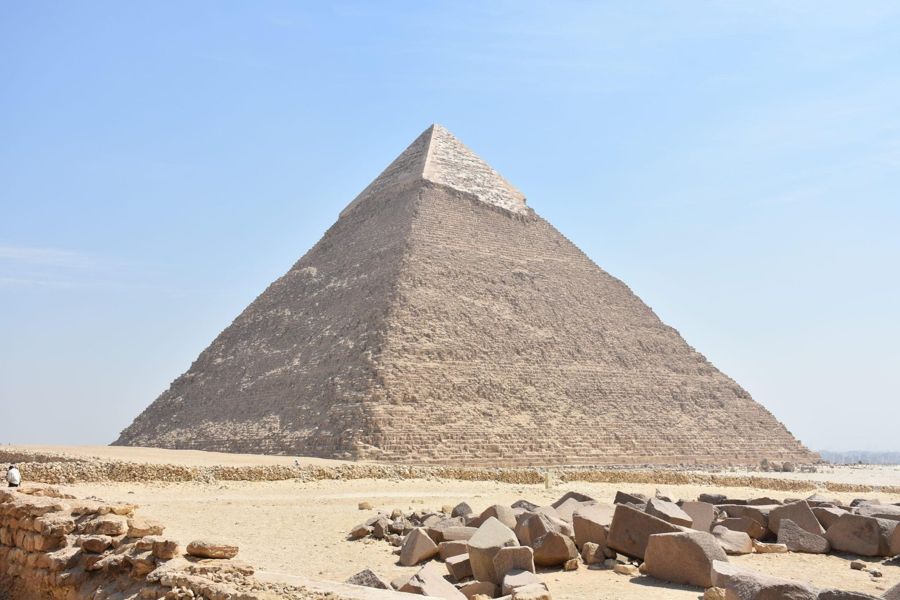
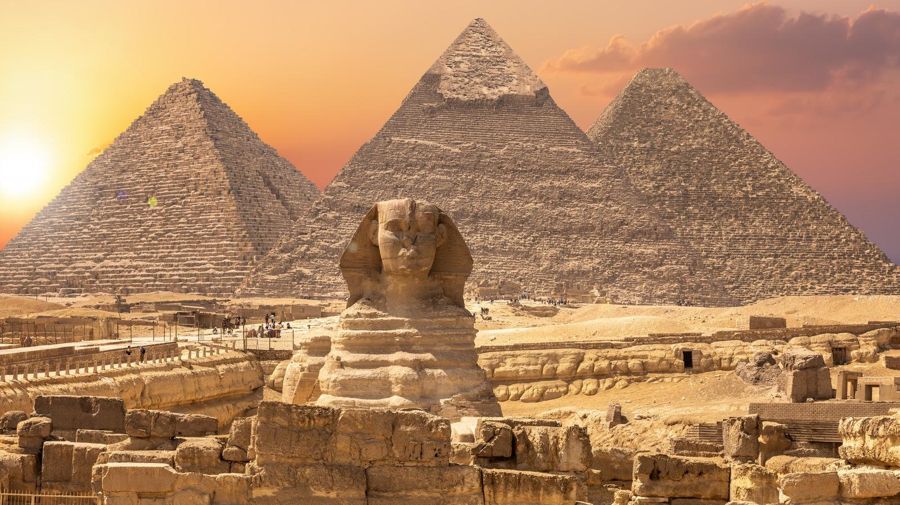
Guided half-day tour of the site
- Four hours with a German-speaking guide, because construction sequences are easier to explain on site than in a video
- Pickup and entry to the site are included according to the provider's information
- The product name additionally mentions access to the interior; whether and how it is included is stated in the current description and should be checked before booking
- Free cancellation up to 24 hours before, according to the provider
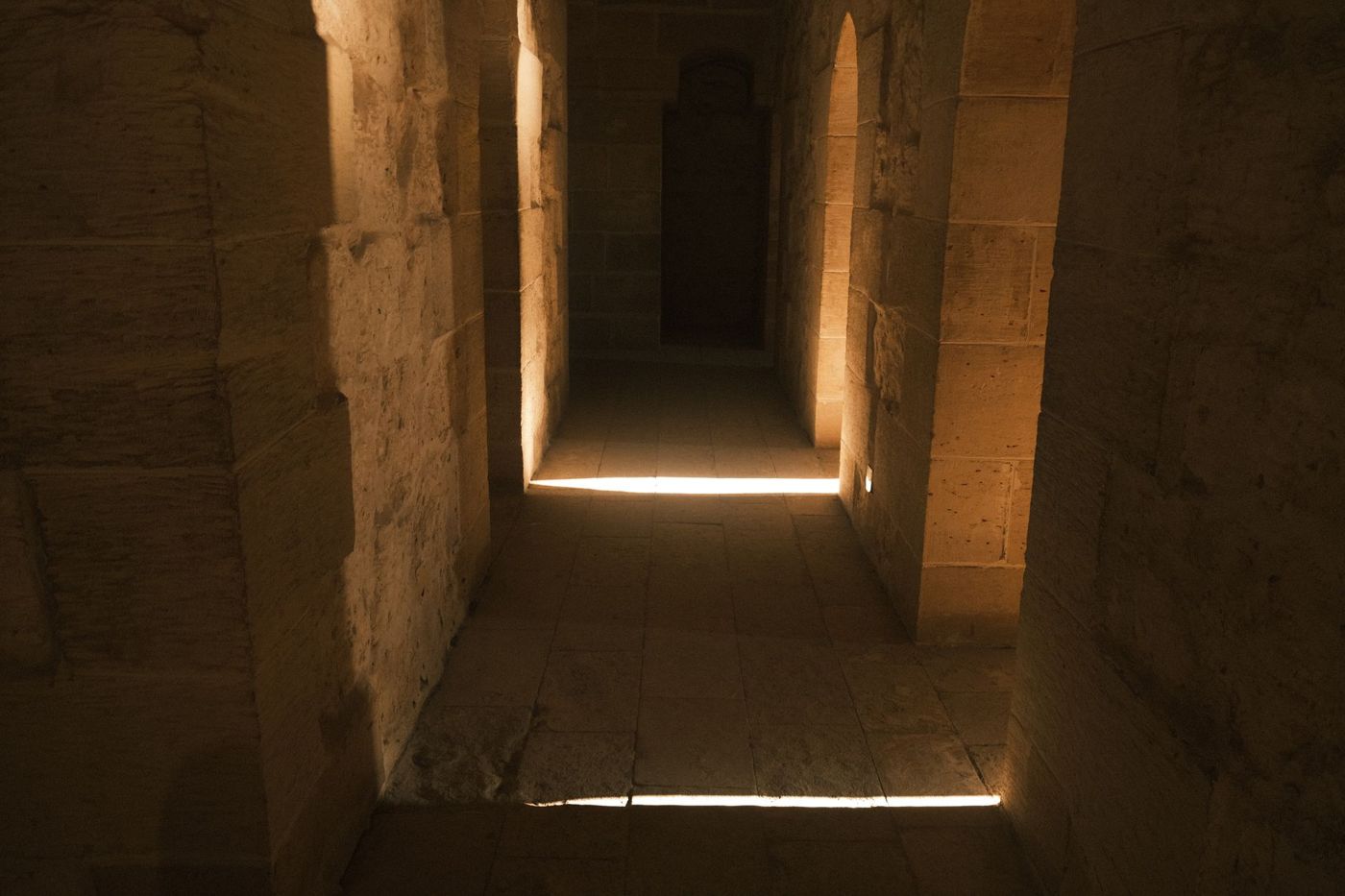
The sarcophagus that doesn't fit through the passage
How an alleged secret looks when you think it through to the end is shown by the sarcophagus in the burial chamber. It is considered one of the most famous secrets of the Great Pyramid of Khufu, and the observation behind it is completely correct.
The box of red granite is wider than the ascending passage through which one reaches the chamber. So it cannot have been carried in afterwards. Anyone hearing this for the first time thinks it is impossible, and exactly at this point the spectacular explanations kick in.
The actual answer is unspectacular and has been given by the scholarly literature for a long time: The sarcophagus stood before the roof. It was placed in its position during construction, when the chamber was still open at the top, and only then was building continued. That is not a trick but the obvious sequence when you erect a structure from bottom to top.
Nevertheless, the matter remains remarkable, just differently than thought. It shows that the chamber and its contents were planned together from the start, and it rules out that the room was added later. A supposed mystery thus becomes an argument, and a useful one.
The same pattern also carries the second major observation about this box. The granite on the inner sides has tool marks that seem too regular for copper tools, which is why unknown machines are regularly inferred. Here too, an ordinary explanation exists: saws and drills made of copper do not work by themselves but carry an abrasive, usually sand with a high quartz content. So it is not the metal that cuts but the grains it drags along. Replication attempts have confirmed this several times.
This is the pattern that repeats almost always. The observation is correct, the conclusion "that cannot have happened with normal means" is not. If you ask for a minute, when faced with an astonishing claim, in what order it was built, you get surprisingly far.
How an observation becomes a claim
The question remains how an observation becomes a claim. Anyone who follows theories about the Pyramids of Giza for a while recognizes an always identical process in four steps.
At the beginning is something real: a measurement, a component, an inconsistency in the sources. In the second step, the context in which the observation stands is omitted, namely the comparative structures of the same period, the construction sequence, the other finds. Without this context, every detail seems extraordinary. In the third step, the explanatory gap is filled, and with the explanation that generates the most attention. In the fourth step, rejection by experts itself becomes an argument, because it is read as evidence of suppression.
This last step is the most effective because it makes the claim irrefutable. Agreement confirms it, rejection also. At this point, one has left the realm of science, no matter how much measurement data stood at the beginning.
A second characteristic is the handling of numbers. Striking ratios can be found on any large structure if you have enough dimensions to choose from and can freely choose the unit. In a building with hundreds of edge lengths, angles, and heights, it is almost inevitable that some quotient comes close to a known natural constant. The finding is then not the constant but the number of attempts, which no one counts.
Anyone who wants to check without being an expert still has a good handle: Ask what the claim explains that the conventional interpretation does not explain. For most narratives surrounding this site, the honest answer is: nothing. They explain the same as the scholarly literature, just more exciting. The detailed examination of the individual theories is on a separate page.
Going twice helps more than any theory. Much that sounds mysterious clears up on the second visit by itself, when you have seen the proportions and construction sequence once yourself; those who live within walking distance can afford that. Three houses that cover this:
 At the Sphinx
Giza Pyramids View Inn
- Good breakfast
- Airport shuttle
- Two restaurants
- 24-hour reception
- Free Wi-Fi
For those who want to see the Sphinx from their breakfast chair
 Most reviewed
Great Pyramid Inn
- Fabulous breakfast
- Rooftop terrace restaurant
- Bar
- Airport shuttle
- 24-hour reception
Most who want to stay in the neighborhood
 Garden & pool
Marriott Mena House
- Excellent breakfast
- Outdoor pool
- Spa and wellness center
- Three restaurants
- Fitness center
For those who want space, garden, and pool instead of a rooftop terrace
Are the pyramids a mystery?
And so to the initial question. Whether the Pyramids of Giza are a mystery can be answered with a clear yes-and-no, and that is no evasion.
As structures, they are not. Who built them, when, with what tools, from what material, and on whose orders is as well documented as with few other buildings of this age. There are quarries, workers' settlements, administrative papyri, crew markings, and a continuous dating chain.
For a visit, that has a pleasant consequence. You do not have to believe anything or expose anything to feel something in front of these structures. The effect arises from scale, age, and precision, and all three are verifiable. If instead you arrive with the expectation of tracking down hidden knowledge, you will be disappointed, and not by the place but by the stories you brought with you.
As details, they very much are. The purpose of individual rooms, the meaning of the shafts, the content of the cavities, the empty chamber of 1925: these are open questions on which serious work is being done. They are smaller than the headlines promise and more interesting than the answer "it's long been clarified" suggests.
Frequently asked questions
What is the biggest unsolved mystery?
The purpose of the proven cavities inside the largest pyramid. That they exist is certain; what they served, no one knows.
Are there inscriptions inside?
Yes, red crew markings in the relieving chambers above the burial chamber, with the name of the builder. They are the only written evidence in the structure itself.
How did the sarcophagus get into the chamber?
It was placed during construction, before the chamber was roofed over. It is wider than the entrance and cannot have been brought in afterwards.
Was a mummy ever found?
Not in the largest pyramid. The sarcophagus was already empty and without a lid when the structure was opened in the Middle Ages.
Are the builders known?
Yes. Workers' settlement, graves of the builders, administrative papyri, and crew markings form a coherent picture of organized, paid work.
How do I recognize an unserious theory?
By the fact that rejection by experts is interpreted as confirmation. From that point on, the claim can no longer be refuted by anything.