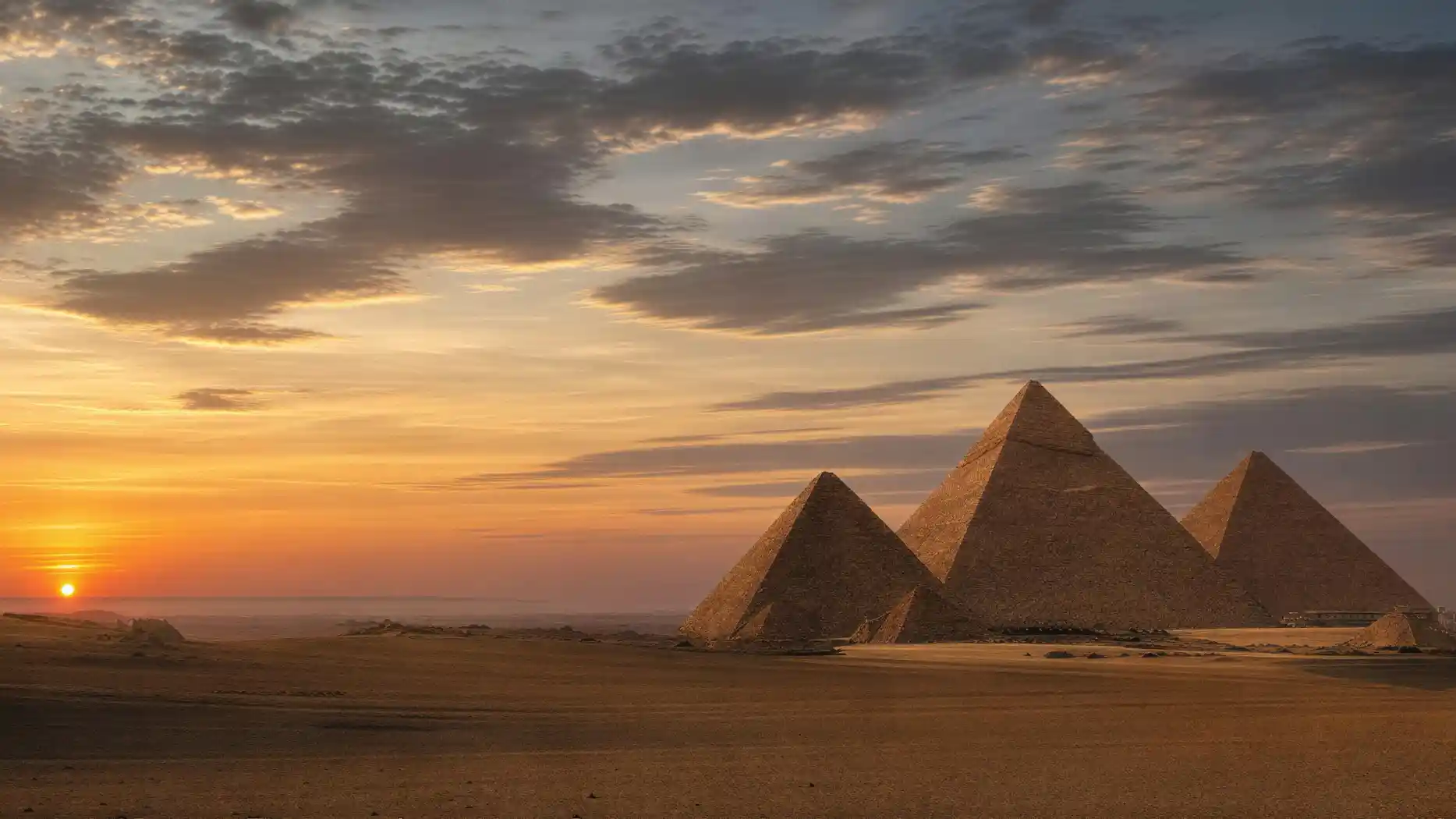
Giza month by month is usually presented as a temperature table. That's not very helpful, because a number of 35 degrees doesn't tell you what you can do on site. More useful is another figure: how many of the eight opening hours are actually usable. The site is officially open for about eight hours year-round, but in summer, the usable window shrinks to three hours. This page shows both values for each month and explains what the difference means for your visit.
Twelve months, converted to usable time
The temperature column gives the mean daily maximum according to the official climate data. The column next to it is the conversion of this page: the window in which a stay outdoors can be comfortably endured.
| Month | Mean maximum | Usable window | The month's quirk |
|---|---|---|---|
| January | 19 °C | the full opening hours | Cool enough for a jacket in the early morning, ideal during the day |
| February | 20 °C | the full opening hours | The country's strongest travel month, correspondingly crowded |
| March | 23 °C | the full opening hours | Start of the khamsin season, visibility can drop |
| April | 28 °C | until early afternoon | Body not yet acclimatized to heat, outliers over 40 °C occur |
| May | 32 °C | until noon | Last month of the khamsin, values clearly rising |
| June | 35 °C | the first two to three hours | Longest day, but the opening hours still lie in the heat |
| July | 35 °C | the first two to three hours | Peak, but low prices and little crowding |
| August | 35 °C | the first two to three hours | Nights barely cool down, mornings start warmer |
| September | 33 °C | until noon | Feels milder than August, but hardly is |
| October | 30 °C | until early afternoon | The turnaround, often within a few weeks |
| November | 25 °C | the full opening hours | Statistically the friendliest month of the year |
| December | 20 °C | the full opening hours | Shortest day, but the sun stays low and the light is good |
- Mean maximum
- 19 °C
- Usable window
- the full opening hours
- The month's quirk
- Cool enough for a jacket in the early morning, ideal during the day
- Mean maximum
- 20 °C
- Usable window
- the full opening hours
- The month's quirk
- The country's strongest travel month, correspondingly crowded
- Mean maximum
- 23 °C
- Usable window
- the full opening hours
- The month's quirk
- Start of the khamsin season, visibility can drop
- Mean maximum
- 28 °C
- Usable window
- until early afternoon
- The month's quirk
- Body not yet acclimatized to heat, outliers over 40 °C occur
- Mean maximum
- 32 °C
- Usable window
- until noon
- The month's quirk
- Last month of the khamsin, values clearly rising
- Mean maximum
- 35 °C
- Usable window
- the first two to three hours
- The month's quirk
- Longest day, but the opening hours still lie in the heat
- Mean maximum
- 35 °C
- Usable window
- the first two to three hours
- The month's quirk
- Peak, but low prices and little crowding
- Mean maximum
- 35 °C
- Usable window
- the first two to three hours
- The month's quirk
- Nights barely cool down, mornings start warmer
- Mean maximum
- 33 °C
- Usable window
- until noon
- The month's quirk
- Feels milder than August, but hardly is
- Mean maximum
- 30 °C
- Usable window
- until early afternoon
- The month's quirk
- The turnaround, often within a few weeks
- Mean maximum
- 25 °C
- Usable window
- the full opening hours
- The month's quirk
- Statistically the friendliest month of the year
- Mean maximum
- 20 °C
- Usable window
- the full opening hours
- The month's quirk
- Shortest day, but the sun stays low and the light is good
The temperature values are long-term averages and not a forecast; roughly half of the days lie above them. The usable window column is a planning figure of this page, not a measurement.
Where the third column comes from
The third column is explained here, because it is the only figure on this page that does not come from a source. The basis is the long-term climate averages and three local circumstances: The daily maximum is reached in the early afternoon, the morning is significantly cooler, and on the plateau there is no shade between the structures, so light limestone and sand reflect the heat additionally. Usable here means the time during which a stay outdoors can be comfortably endured without the possibility of retreat. This is a planning figure and not a measurement, and those who tolerate heat well can shift it later.
One point in this table deserves an explanation because it contradicts intuition: The longest day of the year is of no use to you here.
In June, the sun rises shortly before six and sets shortly before eight in the evening, giving over fourteen hours of daylight. However, the site only opens at eight and closes in the late afternoon. The extra summer hours therefore lie entirely outside the visiting time, precisely at the two ends of the day that would be pleasant.
In December, it is the reverse. The day is short, the sun rises around seven and sets shortly before five, but these hours almost completely coincide with the opening time. So in winter you lose hardly any daylight to closed gates, while in summer you lose a large part.
This leads to an uncomfortable insight for all who seek the early morning or the evening light: You never get either here, regardless of the month. Sunrise and sunset lie outside the visiting time all year round. What winter offers, however, is at least flat light within the opening hours, because the sun does not rise very high even at noon.
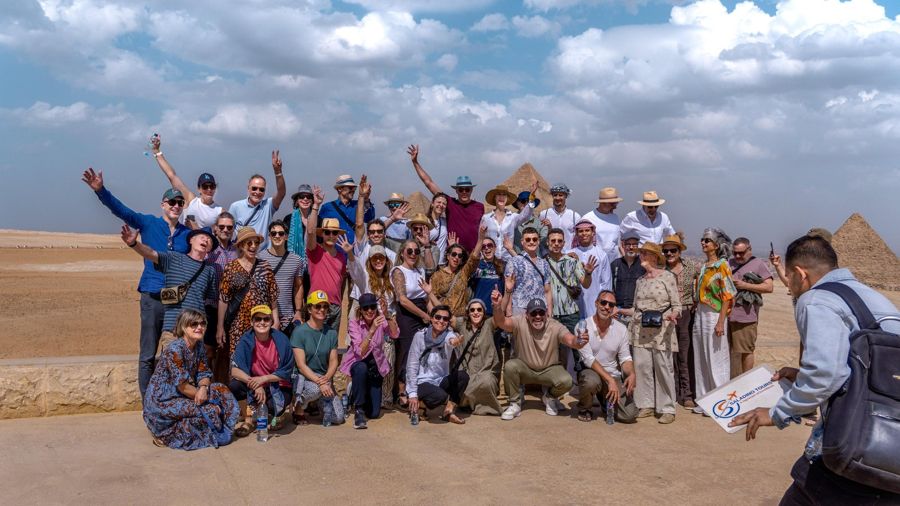
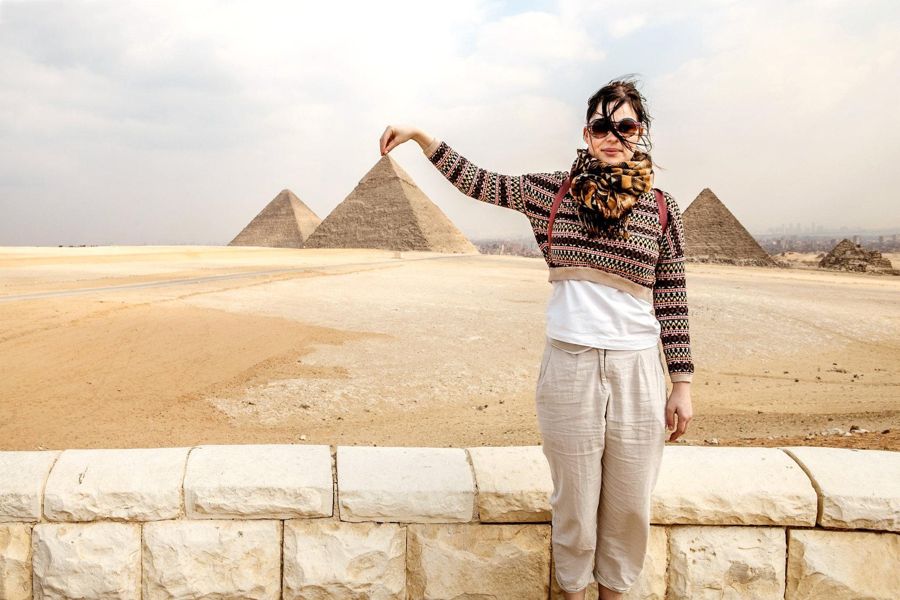
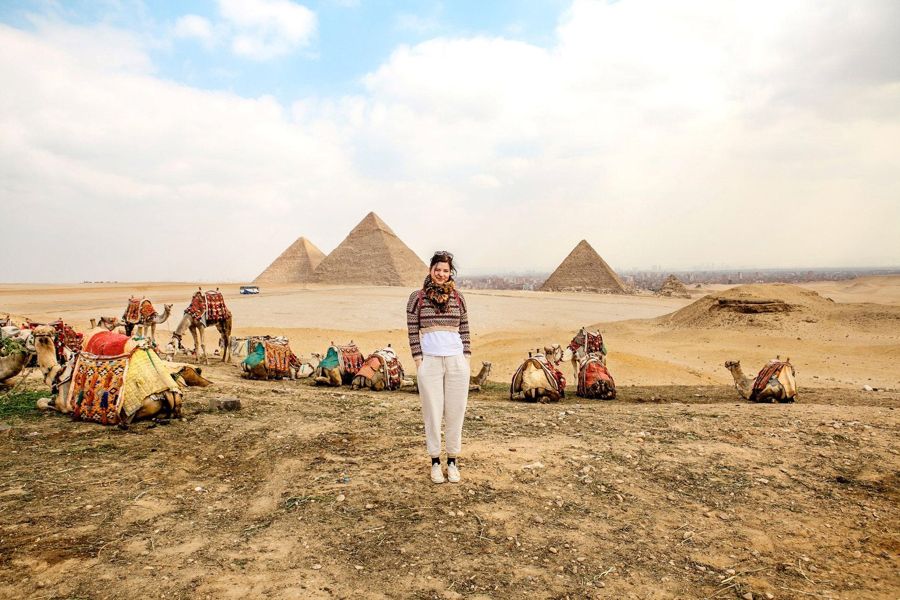
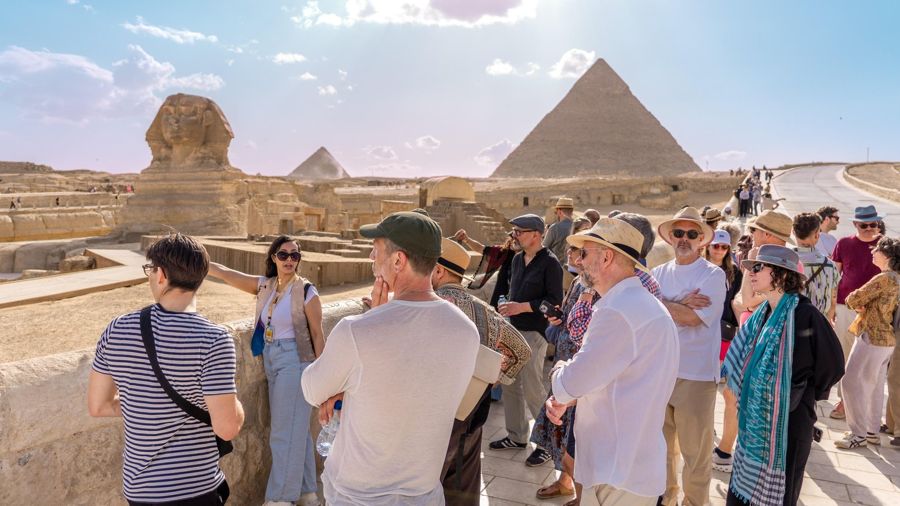
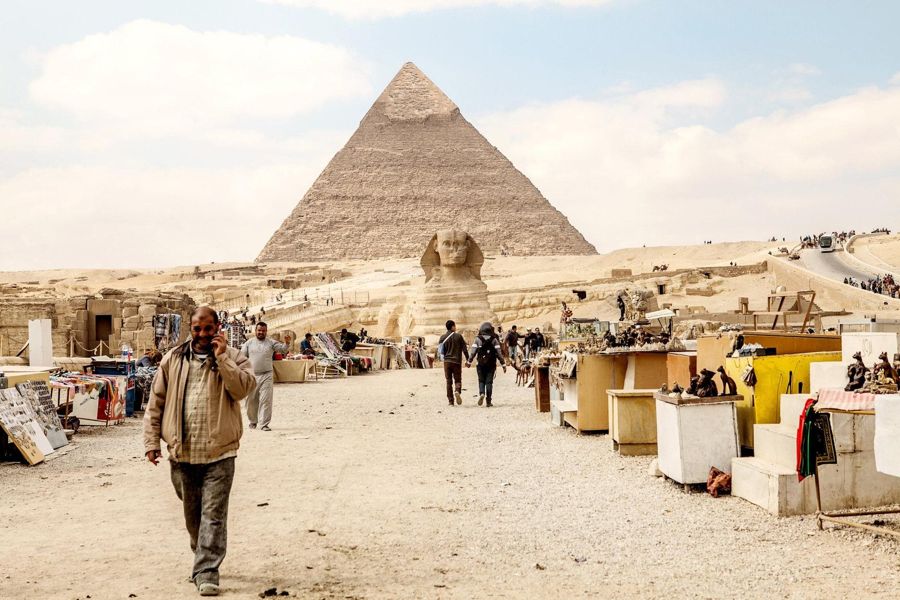
Half-day tour in the morning, with pickup
- Roughly four hours in the morning, exactly the window that is usable in the hot months
- Pickup from your accommodation and entry to the site are included
- German-speaking guide possible, interior visit as an add-on
- According to the provider, free cancellation up to 24 hours before, which is useful in spring weather conditions
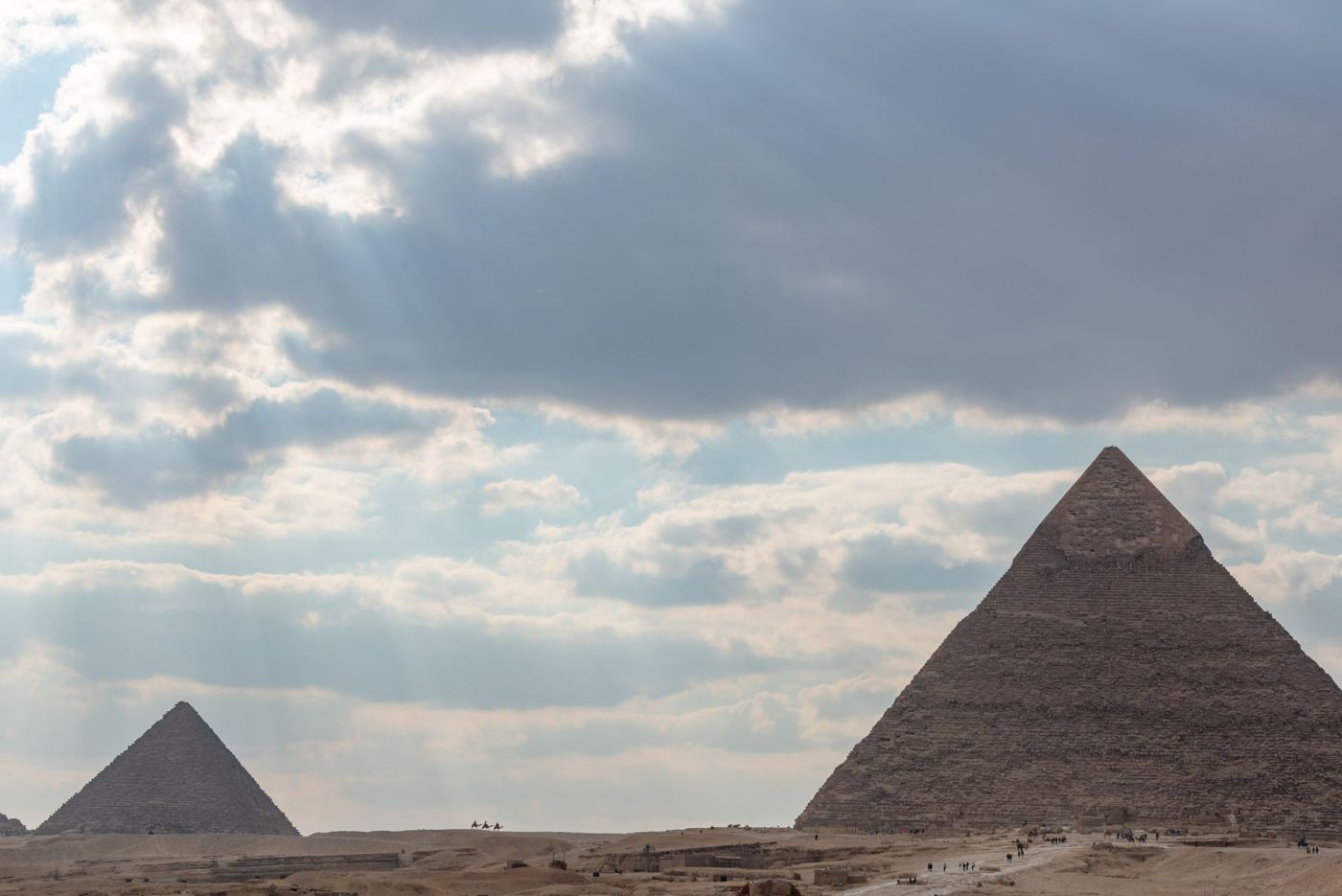
Three months with a quirk
Each month also has a quirk that does not emerge from the average, and three of them are relevant enough for planning to deserve their own paragraphs.
The first concerns spring. Between March and May, the khamsin blows, a dry, hot desert wind with dust and sand. During such a spell, visibility collapses, photos become dull and yellowish, and fine sand gets everywhere. The monthly average for April looks harmless; a khamsin day in April is not.
The second concerns high summer, and it is good news. June to September is low season, but not due to a lack of attractiveness, but because of the heat. Operations continue unchanged, prices are significantly lower, and with a morning plan from eight to eleven, the visit is entirely feasible. If you can organize the heat, you get the best price-to-crowd ratio of the year in these months.
The third concerns February. It is considered the country's strongest travel month, which means: good weather, high prices, crowded paths. Ironically, the month most guides recommend is the one with the biggest crowds.
And a note that changes every year: The Islamic calendar shifts forward by about eleven days relative to ours, which is why Ramadan and the Eid holidays fall in different months each year. They significantly affect crowds and opening hours and therefore have their own page.
Which month suits which visit
The question remains which month suits which visit, because it depends less on the weather than on what you plan to do.
Those planning a full program, i.e., the interior, the cemetery, the valley temple, and perhaps the fields to the south, need the full opening hours. That is November to March, with November and December at the top, because good weather and moderate crowds coincide there.
Those who want to take photos are better off in winter, for a reason rarely mentioned: The sun is then low enough even at noon that the stone layers show structure. In summer, it stands high, the light becomes hard, and the surfaces become flat.
Those who want to spend little choose high summer and plan the day around it. Eight to eleven at the site, then an air-conditioned program, and outdoors again from late afternoon. This is not a makeshift solution, but the usual daily structure in this region.
Those traveling with children or with someone who tolerates heat poorly should read the table more strictly than it is written. For these groups, the usable window shrinks by about one hour in every month, and in the four hot months so little remains that the question is no longer how to plan the day, but whether to postpone the visit. In the winter months, this deduction hardly matters, and that is exactly what makes November to February the actual travel time for families.
And those who have only one single fixed goal, such as the interior of the largest pyramid, can choose any month. This experience takes place indoors, lasts under an hour, and is almost independent of the season. It is warm there anyway, in January as in July.
What to bring in the hot months
In the months with the short window, the equipment decides whether three hours become four: high-factor sunscreen, a wide-brimmed hat, and electrolyte tablets for your bottle.
Frequently asked questions
Which month is the best?
November, according to the climate averages. Good weather, moderate crowds, and the opening hours are fully usable.
Can you go in high summer?
Yes, with a morning plan from eight to eleven. Prices are then significantly lower and it is less crowded.
Why is the long summer day useless?
Because the extra hours lie before opening and after closing. The site is accessible for about eight hours year-round.
When is it most crowded?
In February, the country's strongest travel month. Good weather and high crowds coincide there.
What is the khamsin?
A dust-laden desert wind that occurs mainly between March and May. It reduces visibility and ruins photos.
Is the interior season-dependent?
Hardly. It is warm and stuffy there all year round, regardless of what it is like outside.