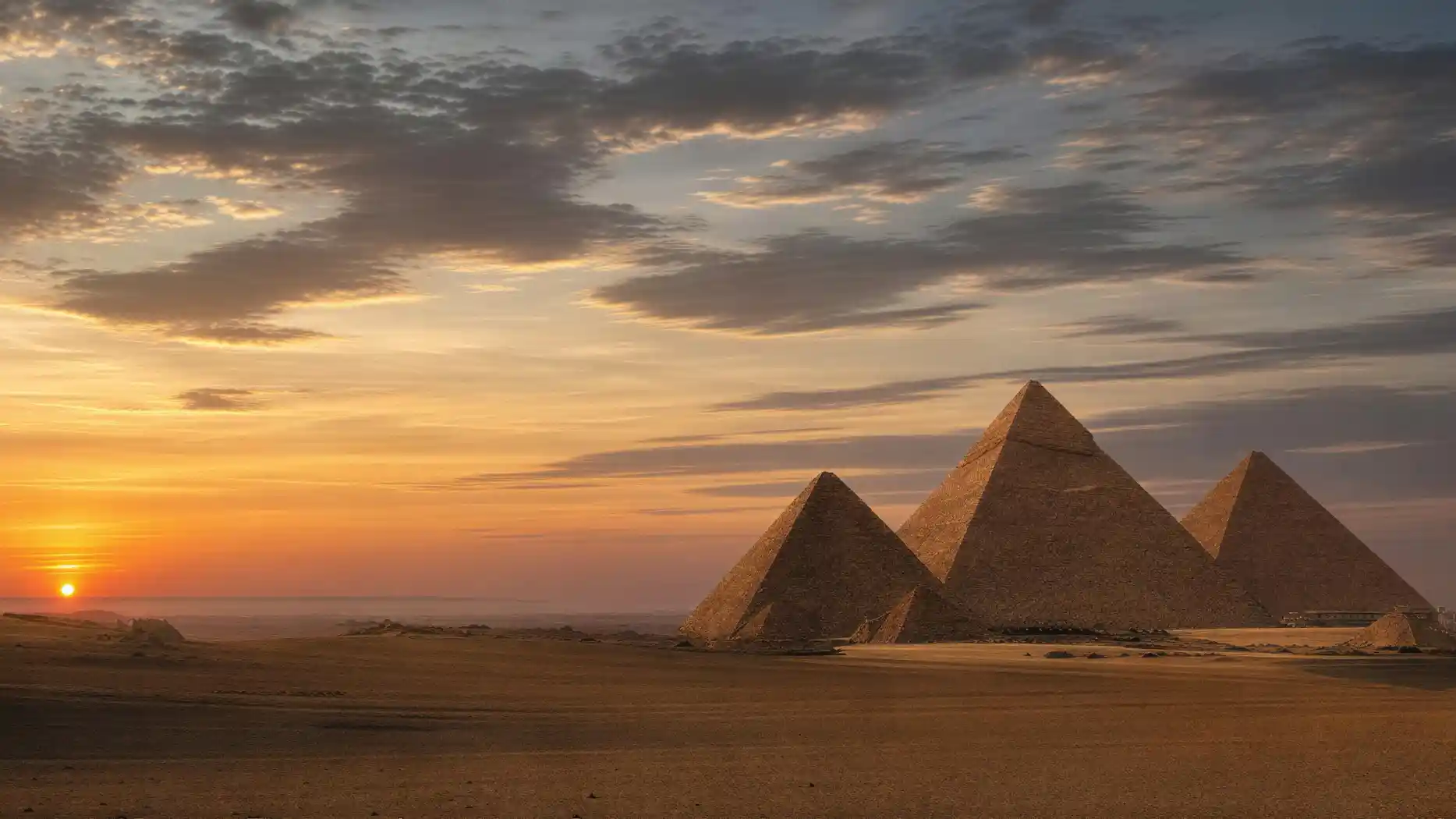
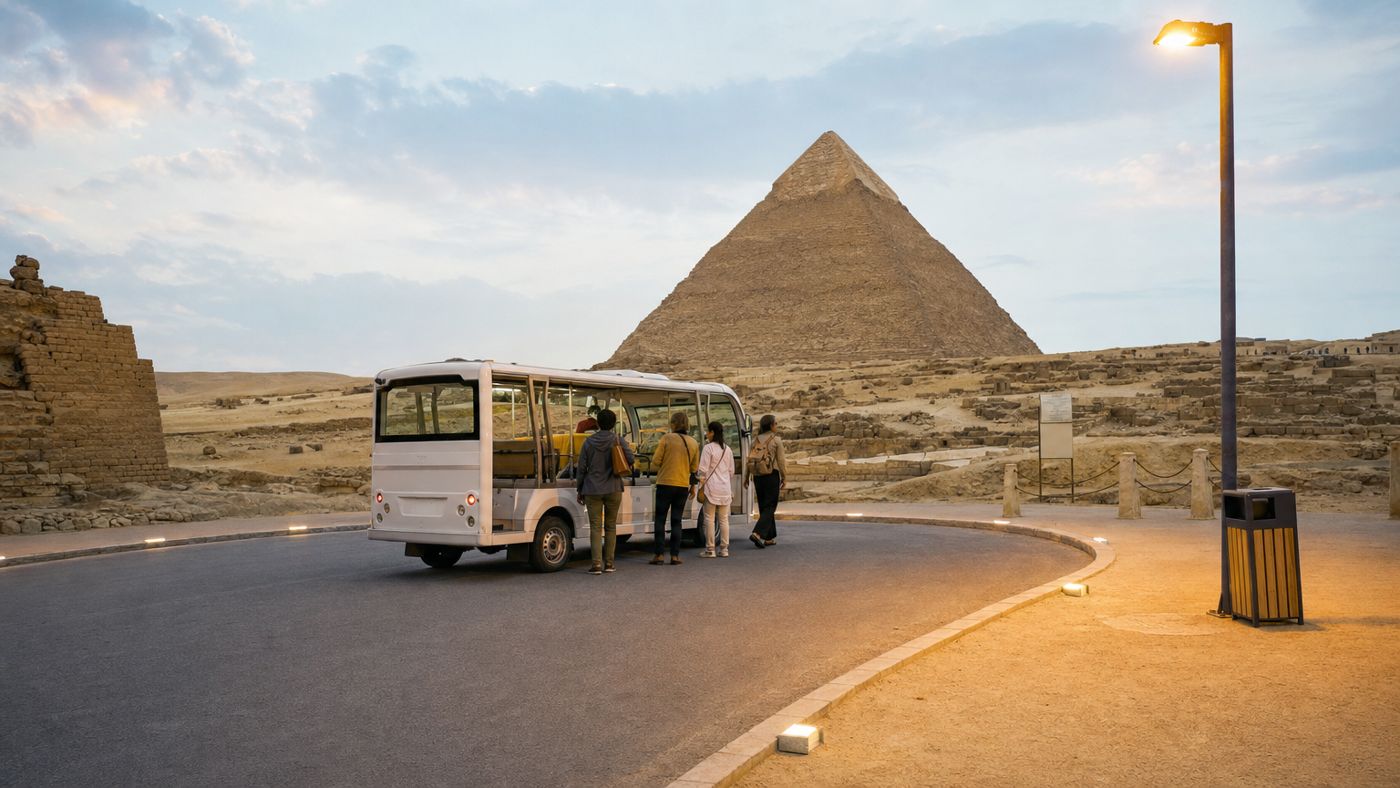
Electric shuttle on the Giza Plateau – that's the answer since 2025 to a question everyone has been asking since the driving ban: How do you get from one monument to the next without a car, when the distance between the largest and the smallest is nearly a kilometer, with loose sand in between?
The short answer: small electric buses run a loop service, stopping at the key points where you can hop on and off as you like, and they're included in the entrance fee. You pay nothing extra, you don't need a second ticket, and nobody tries to sell you anything on board.
That's pleasantly straightforward, but there are two catches that no brochure mentions. First, the shuttle is not a sightseeing tour with commentary – it's purely transportation; if you expect a guided tour, you'll be disappointed. Second, it doesn't completely replace walking, because there's still a short walk between each stop and the monument itself.
This page explains how to use the system, which points it serves, when it gets crowded, and when you're better off walking. The driving ban itself and arriving with a driver are covered on a separate page.
To put it in perspective, here's a look at the scale, because it explains why the system is needed at all.
According to a report from April 2025, forty-five vehicles were planned, running at intervals of about five minutes. The number of routes and stops is reported inconsistently, with most vehicles operating on the main line and the other routes served less frequently.
In practice, this means for you: on the main line, you rarely wait long. At the secondary stops, it can take a while, and there it's fair to ask whether walking isn't faster.
Comparing with the previous situation makes the benefit clear. In the past, tour buses and taxis drove right up to the monuments; those without a vehicle walked through the sand, and the combination resulted in dust, crowds, and engine noise at a place where you'd rather stand in silence. The shuttle solves exactly this problem, and it does so unobtrusively: small vehicles, fixed routes, no noise.
It's also important to note what the shuttle is not. It doesn't run on demand, doesn't stop between stations, and makes no photo stops. If you want to get off for a picture, you get off at a station and take the next vehicle later. That's exactly what the hop-on-hop-off system is for, and it costs nothing extra.

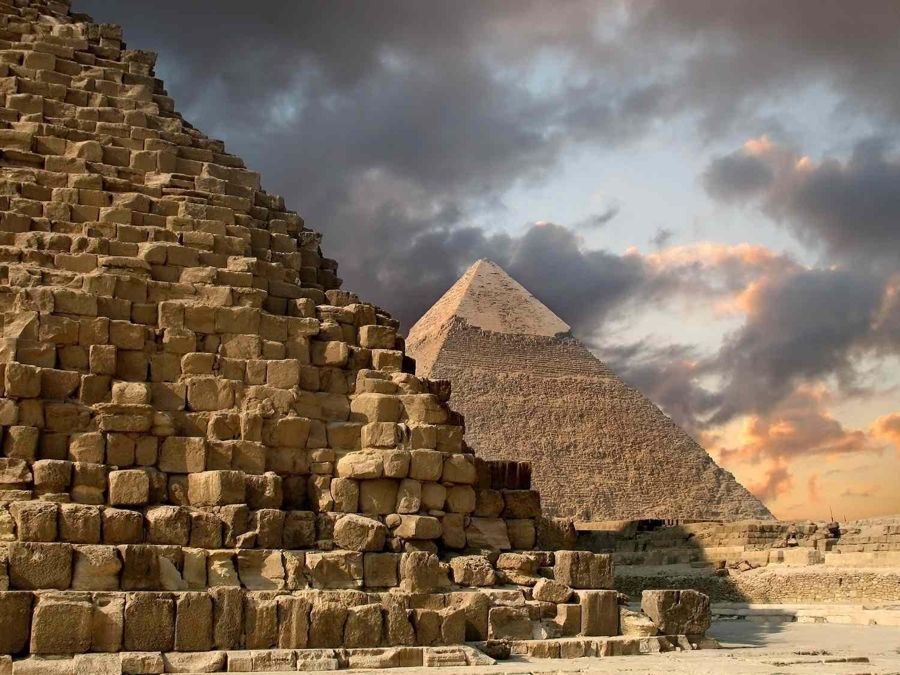
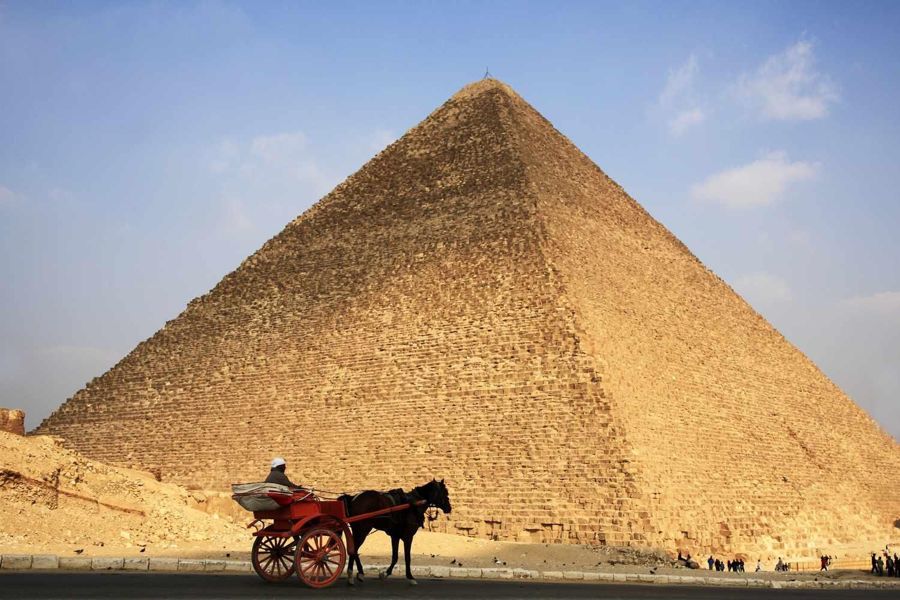
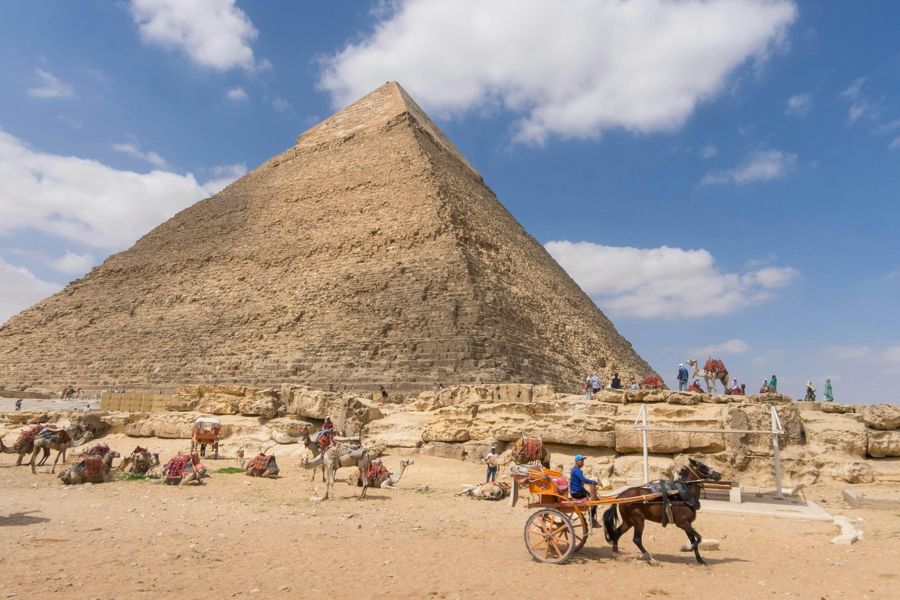
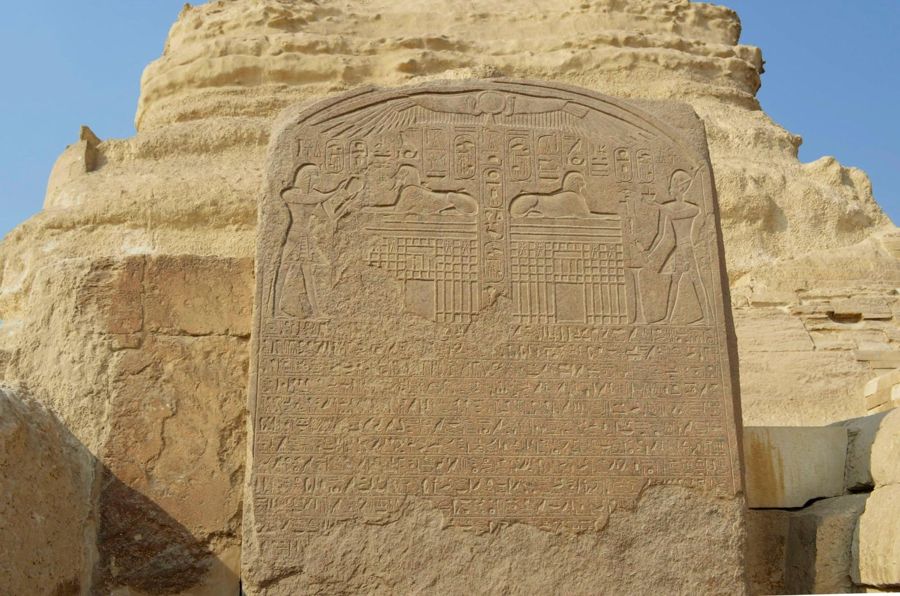
Guided tour of the site with entrance fee included
- The shuttle only transports; it doesn't explain anything; a guided tour covers exactly that part
- Four hours with German-speaking guide, entrance to the site included according to the provider
- Hotel pickup can be added as an option; lunch is not included
- Free cancellation up to 24 hours before, according to the provider
The stops and what's there
Confirmed stops on the loop. Walking times are rounded and apply from the stop to the respective monument.
| Stop | What's there | Further on foot |
|---|---|---|
| Visitor Center | Ticket offices, security check, restrooms, food outlets, parking area | Starting point, no monument in sight |
| Great Pyramid of Khufu | The largest monument, access to the interior with a separate ticket | a few minutes to the north side |
| Pyramid of Khafre | The middle pyramid with the casing stones at the top | a few minutes |
| Pyramid of Menkaure | The smallest of the three, plus the fallen granite blocks at its base | a few minutes |
| Panorama Point | The view of all three monuments in a row, the classic photo | immediately at the stop |
| Sphinx | The statue and the adjacent valley temple, east below the terrace | a few minutes, downhill |
- What's there
- Ticket offices, security check, restrooms, food outlets, parking area
- Further on foot
- Starting point, no monument in sight
- What's there
- The largest monument, access to the interior with a separate ticket
- Further on foot
- a few minutes to the north side
- What's there
- The middle pyramid with the casing stones at the top
- Further on foot
- a few minutes
- What's there
- The smallest of the three, plus the fallen granite blocks at its base
- Further on foot
- a few minutes
- What's there
- The view of all three monuments in a row, the classic photo
- Further on foot
- immediately at the stop
- What's there
- The statue and the adjacent valley temple, east below the terrace
- Further on foot
- a few minutes, downhill
The exact number of stops and routes is reported differently and may change. The points listed here are the confirmed ones.
How the shuttle works
Here's the process, which in practice is simpler than a description makes it sound.
You board at the Visitor Center after passing the ticket and security check. The vehicle follows a fixed loop. At each stop, you can get off, stay as long as you like, and continue on a later vehicle. You don't need a new ticket for that, and nobody checks the time when you reboard.
A full loop without getting off doesn't take long, but for a visit with stops at the main points, you should plan two to three hours. This time covers the three pyramids from the outside, the Panorama Point, and the Sphinx. If you also visit an interior, add another hour.
It gets crowded in a clearly limited window, namely late morning, when the tour groups arrive from the city. Before that and from early afternoon on, it's relaxed. Coming early has a double reward: cooler air and empty vehicles.
If you're traveling with a group, you should agree on a meeting point before the first person gets off. The vehicles are small, and a group doesn't always fit entirely into the same one; if you get separated, it's hard to find each other on the open ground between several stops. A fixed meeting point and a time solves that in ten seconds.
One detail about the order. Many people go to the Panorama Point first because that's where the famous photo is taken. The reverse order makes more sense: first the monuments up close, then the Panorama Point as a finale. The view from there is more impressive if you've stood below first and have the sense of scale in your body.
Ride or walk?
That leaves the question that actually arises on site: ride or walk?
In favor of the shuttle is the heat. Between April and October, the walk across open sand without shade is a serious strain, and the energy you save is otherwise missing in the afternoon. Also in its favor is the route to the Sphinx, which is not only long but also downhill.
In favor of walking is everything related to perception. The scale of this site reveals itself when walking, not when sitting, and the quiet spots away from the stops are only seen by those on foot. Between the two large pyramids, it's just a few minutes; taking the shuttle for that stretch is rarely worth it.
There's a third argument that is rarely mentioned and often decisive: the shuttle provides breaks. At over thirty degrees, fifteen minutes sitting, in the breeze and out of direct sun, is worth more than a water bottle, and those who allow themselves these breaks will last longer in the end than someone who stubbornly walks.
The sensible mix therefore looks like this: ride the long stretches, walk the short ones. Specifically, use the shuttle for the route from the Visitor Center into the site and for the stretch to the Sphinx, and walk between the three pyramids.
A word about operating hours, because they are often underestimated. The shuttle doesn't necessarily run from the first minute of opening and not until the last. If you arrive very early at the gate, expect to walk the first stretch, and if you stay until just before closing, don't rely on the last vehicle for your return. Reliable times are not published on the official site for the plateau or anywhere else publicly; ask at the entrance.
When the shuttle isn't enough
For guests in wheelchairs, the system is a partial solution. A first-hand report from February 2026 describes a mixed fleet: not every vehicle is suitable, staff will fetch a suitable one on request, and boarding is via a ramp that is steep due to the low curb. The paths between stop and monument still lead over unpaved ground. Exceptions to the vehicle ban can be applied for in advance, not at the gate. The same applies to families with strollers: the stroller can come along, but not everywhere.
Come twice instead of rushing once. Two to three hours cover the main points, but not the quiet corners; if you're staying within walking distance, you can spend a second morning on foot without the shuttle and without time pressure. Three hotels that cover this:
 At the Sphinx
Giza Pyramids View Inn
- Good breakfast
- Airport shuttle
- Two restaurants
- 24-hour reception
- Free Wi-Fi
For those who want to see the Sphinx from their breakfast chair
 Most reviewed
Great Pyramid Inn
- Fabulous breakfast
- Rooftop terrace restaurant
- Bar
- Airport shuttle
- 24-hour reception
Most who want to stay in the neighborhood
 Garden & pool
Marriott Mena House
- Excellent breakfast
- Outdoor pool
- Spa and wellness center
- Three restaurants
- Fitness center
For those who want space, garden, and pool instead of a rooftop terrace
Frequently asked questions
How much does the shuttle cost?
Nothing extra. It's included in the entrance fee for the site, and there's no second ticket.
Can I get on and off as I like?
Yes. It's a hop-on-hop-off loop. You stay at a stop as long as you like and take the next vehicle later.
Which points are served?
Confirmed are the Visitor Center, the three pyramids, the Panorama Point, and the Sphinx. The number of routes and stops is reported differently.
Is there commentary on board?
No. The shuttle only transports. If you want context, you need a guided tour or your own preparation.
How long do I need for everything?
Two to three hours for the main points, plus another hour if you also visit an interior.
Does it run very early and very late?
Not necessarily. Operating hours are not reliably published. If arriving very early or staying late, it's best to ask at the entrance.